

By: Maxwell Gawlick
Star Wars Battlefront and Star Wars Battlefront II (2015/17)
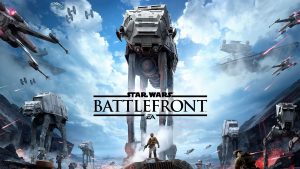
You’ve stolen the Imperial plans and you’re sprinting along the trenches of volcanic Sullust. You hear the howl of a TIE fighter and the rock around you explodes in flame. You and your ally find cover in a hangar and commence a brutal fight for survival against Imperial forces until you can be extracted.
This was my first experience with the 2015 Star Wars Battlefront game, and it was incredible. The visuals were stunning: the particles, explosions, and other effects were lifelike, and the sounds were impactful. You could customize characters so that you would have exactly the items you wanted. I spent hours playing it with my brother, but the novelty soon wore off. The few maps coupled with the lack of game modes made for little replayability. It had no campaign, making it mostly a multiplayer or split screen game. Its 2017 sequel, Star Wars Battlefront II, had a campaign and more game modes, but by then the novelty was gone and it felt like it was no more than an update to its predecessor; it was what Battlefront should have been on initial release. EA, the developer, had already undergone a crisis due to the community’s severe backlash at the game’s progression system. They did little to repair that breach in trust, instead turning the series into a Star Wars-themed Call of Duty clone.
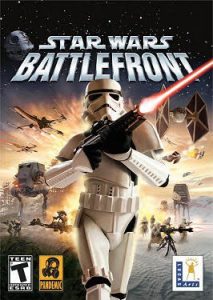
Star Wars: Battlefront and Star Wars: Battlefront II (2004/05)
The classic Star Wars: Battlefront and Battlefront II were released over ten years earlier than the new ones, and this is reflected in the games. The graphics haven’t aged well — everything looks rigid and choppy, the effects are flat, and the maps are mostly devoid of detail. However, they make up for this with a long main campaign whose story follows that of the movies, but from an interesting and unique perspective. It has a secondary single-player mode, “Galactic Conquest,” a turn-based campaign where you plan your domination of the galaxy as either the Empire or the Rebels and fight battles to achieve this goal.
There are a dozen multiplayer game modes, dozens of maps, dozens of characters, and dozens of vehicles available. The games also give you the ability to create and download custom, fan-made maps to provide near-infinite replayability. The versatility in play styles (the ability to crouch, roll, go prone, etc.) and the more team-based gameplay further enhances the lifespan of this game, even more so when played with friends. They never lose their novelty.
Verdict
The two series have a very different scope. If what you’re looking for are stunning graphics, sound design, and deathmatches where you can embody iconic Star Wars characters, the 2015/17 Battlefront games are for you. However, if you want hours of singleplayer and multiplayer fun on a variety of maps with plenty of different characters, vehicles, and items, and can stand the lower visual and auditory quality of earlier-made games, the classic 2004–5 games should be your go-to. The classic games will always be my first choice when it comes to cost-to-fun ratio; they provide hours upon hours of fun, costing no more than $5 for the duo during a Steam sale. The new games are only entertaining for a couple of weeks and the pair costs about $60 right now.


