Home Blog Page 222

Vancouver city council candidates discuss equity concerns

0
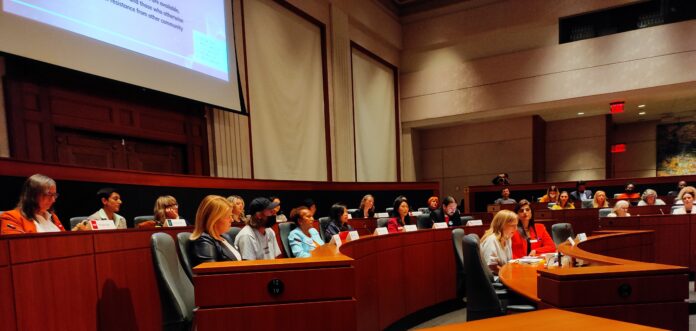
This is a photo from the SFU public square event where city council candidates are sitting at tables in front of an audience.
The panel conversation was followed by resident discussion and reception. PHOTO: Pranjali J Mann / The Peak

By: Pranjali J Mann, News Writer

On September 26, SFU Public Square and the department of gender, sexuality and women’s studies hosted a forum for Vancouver city council candidates to discuss issues of equity in the city. The event was moderated and organized by Ginger Gosnell-Myers and Women Transforming Cities (WTC): a “grassroot community of intersectional feminists.” 

Under WTC’s Hot Pink Paper Campaign, the organization has outlined eight key policy issues for candidates to address in their campaign. WTC’s campaign aims to amplify “the voices of communities who are otherwise not heard in the election process.” They work to hold the mayor and council accountable to the commitments they make. Key issues were centered in the conversation with the council and mayoral candidates. The issues discussed included the opioid epidemic, tenant’s rights, trans rights, and more.

Social Justice Programs 

Coalition of Progressive Electors (COPE) started off the evening discussing funding and council budgeting of social justice programs in Vancouver. Nancy Trigueros from COPE said it’s important to have a participatory budget process wherein the community and local organizations can give their input. “In budgets we need to do more, we need to serve the community and the priorities are very clear. We have people in the streets, we have women without houses.” This response and urge for participatory budgeting was echoed by other candidates as well. 

Housing Crisis

The next question related to the downtown eastside housing crisis. The conversation focused on single-room occupancy (SRO) accommodations in Vancouver. SRO’s are privately owned small one-bedroom hotels or non-market residence buildings that are made affordable for low-income individuals. On this, Morgane Oger from Progress Vancouver stated, “The situation in SRO’s in Vancouver is untenable. We have a significant number of people who refuse to participate in the SRO system because the servers are unsafe, and it’s just inhuman to ask people to go into dangerous situations when they’re safer outside.” She added, “We’re going to ask the city to set up the Vancouver Civic Housing Commission, which is going to act as a landlord and buy up land and make it available for rental in the mixed affordability model.” 

Tesicca Truong from Forward Together also built on the need of creating affordable housing by stating their party would work “with other levels of government, whether that be federal or provincial, to get some long term housing.” She added, “Being homeless is not a crime, and for too long we’ve been criminalizing poverty.”

Rebecca Bligh, incumbent councilor and returning candidate from A Better City (ABC) Vancouver highlighted the need for collaboration between various levels of government to work on the deep rooted housing crisis in Vancouver. 

Non-Partisan Association (NPA) Vancouver candidate, Melissa de Genova, also echoed the demand for collaboration between government levels and hoped to create low barriers to housing and opening newer avenues for social housing. 

Indigenous Reconciliation

VOTE Socialist and Green Party of Vancouver were asked to present their views on the issue of Indigenous self-determination and reconciliation, particularly for Musqueam, Squamish, and Tsleil-Waututh peoples. VOTE Socialist was represented by Sean Orr, who said, “I notice this is a colonial system that we’re working in [ . . . ] And we need to decolonize that.” He suggested some potential steps including giving Musqueam, Squamish, and Tsleil-Waututh peoples the right of first refusal for every land and stock sold, and returning Indigenous lands back. Orr expressed returning authority to Indigenous owners as a solution and stated, “Return that land [and] let the Musqueam, Squamish, and Tsleil-Waututh peoples build on that land however they see fit.”  

On behalf of Green Party of Vancouver, Devyani Singh said, “it is their land and they should have the right to say and be part of the economic development of this land which has been denied to them [ . . . ] I understand what it is like to be colonized.” She said the party will work alongside the community to “find innovative ways to include them at all levels of government, decolonize and truly work with them to make use of these opportunities.” 

Community Safety

TEAM for a Livable Vancouver called for “due diligence, accountability, and oversight” on the problem of community safety in the city. Their candidate Grace Quan, recommended having the position of a commissioner within the city police which would provide an “ombudsman approach so that people who are not getting the right responses from the traditional forces or different services, they have someone they can go to.” An ombudsman approach would include having a person in-charge to represent them and provide solutions outside of the institution’s existing hierarchy. This approach has been used in Ontario.   

Climate Change

The panel concluded with a question on climate emergency and “zero carbon mobility,” which was answered by candidate of Vision Vancouver, Lesli Boldt. She noted that under the city’s climate emergency action plan, work needs to be done to both “support transit enhancements” and green buildings. She declared that if elected, they would “extend the Broadway subway out to UBC so that students and folks on the West side can come in.” 

OneCity Vancouver’s candidate Iona Bonamis proposed placing amenities for residents closeby to enable less use of transportation, thus cutting carbon emissions. She said, “When you’re planning all types of uses to be located close together, you’re enabling people to walk or bike. [You could] transit to those places much more easily without having to get into a car, and so the climate emergency plan calls for 90% of people to live within an easy walk or [bike to] their daily amenities.”

You can get more information on the candidates and their campaigns, here

Horoscopes Oct 10th–Oct 16th

0
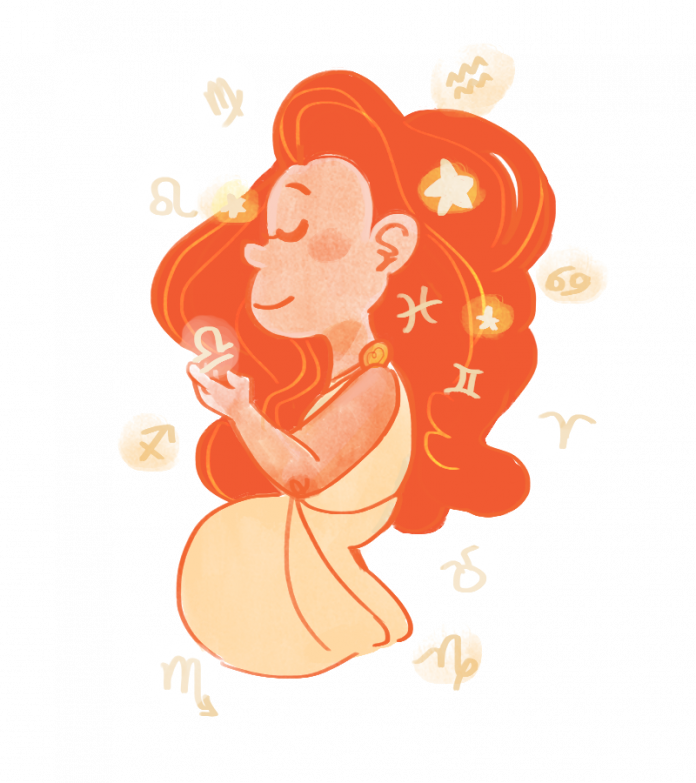
An illustration of a girl with long flowing hair. Astrological signs and stars shine around her.
ILLUSTRATION: Marissa Ouyang / The Peak

By: Kelly Chia, reader of the Stars and fanfiction

Aries:

Take literary inspiration and dress up as a scarlet “A” this year, as in Scarlet Letter. Not only will you show your teachers initiative by dressing as an A, you will also experience the public persecution of fitting your outfit through classroom doors! A+ for you, Aries!

Taurus:

Taurus, I’m feeling like you should dress up as specifically Rick O’Connell from The Mummy. No, the Stars haven’t been on a movie binge recently. Don’t you think you owe it to yourself to empower yourself with himbo energy?

Gemini:

The Stars aren’t sure you will dress up this year. You have like, a gazillion costume ideas, but ultimately midterms and finals may wear you down to dress up as a student trying their best. You know what? You’re doing great!

Cancer:

Ignore everything we just wrote about Gemini, because dear Cancer, this Halloween is your time to worship the Soothsayer of Forests: Hozier! We predict a flower crown and loose flowing outfits in your future. 

Leo:

Leo, you will be absolutely transcendent, darling. No, dressing up as a concept isn’t pretentious! Everyone deserves some glamour and sophistication, especially you, my dear. I love that you want to dress as “the vulnerability of being known,” or whatever that means! Superstar.

Virgo:

Virgo, no pressure, but you know you have to do this better than anyone else. You’ve been thinking about your Halloween costume concept since July, making foam pieces of armor, and putting it all together. Blow us away!

Libra:

Cringe culture is over, Libra. Who cares what people think? You want to pull out Scarlet Witch? Do it. You want to do a Winx fairy? Do it! Chase your bliss, and have fun.

Scorpio:

Do you remember when a few weeks ago I advised you to live your best 2014 Tumblr life? That’s right, babe, I think you should go all in. I think you should wear your SuperWhoLock shirt with pride. Or even dress up as a Supernatural character! I promise you will be adored.

Sagittarius:

The Stars divined your fate almost immediately, lucky creature! You should dress up as your comfort food, which is definitely some kind of soup. Just one look at your comforting ceramic shape should reassure everyone around you, just in time for exam season.

Capricorn:

Have you hit up a pumpkin patch yet? The Stars think you should take some time to relax and fulfil your childhood dreams of wandering through the pumpkin patch as a character from Narnia

Aquarius:

Oh, Aquarius, I think we are having some trouble getting your costume ready for you! It happens from time to time, some interception between the Stars and between me, their humble translator. Here, why don’t you take my trusty disco ball outfit. So you can be ballin’ and the belle of the ball!

Pisces:

We’re not sure if you are the kind to get in the spirit for Halloween, but you can still have fun! Take up some candy and carve out a pumpkin with your friends. Dress up as the Mario Kart characters together!

Top five ways to hide a pandemic

0
Illustration of a doctor grinning nervously at a lectern for a press conference. BC and Canada flags to the side of the lectern. A cloud is seen behind the doctor and the cloud can have words popping out like COVID statistics and dropping masking policies
Did you tell them to be kind yet? ILLUSTRATION: Youngin Cho / The Peak

By: Michelle Young, Editor-in-Chief

COVID-19 was declared a pandemic in 2020, but we’re over it now. It’s too much hassle and we’ve decided to focus on treating each other with the very real act of kindness and washing our hands instead of tangible protocols to curb the spread of the virus. Why clean the air when it could be full of germy ‘rona particles, anyways? In order to avoid any accountability whatsoever, here is a step-by-step guide on how to hide a pandemic: 

  1. Don’t say its airborne 

COVID-19’s primary mode of transmission is through the air — you know, aerosols we breathe in and out. However, actually saying that would cause people to panic! We don’t want the general public to be properly aware of their risk because that means we’ll have to invest in high-quality masks and filtration systems. That’s unthinkable. Instead, let’s tell people to wash their hands and pretend like we can put the onus on individuals to protect themself from COVID-19. (Spoiler alert: They can’t.) 

  1. Tell people it’s “mild”

Now that COVID-19 is extremely infectious, everyone is getting sick all the time. Instead of acknowledging we are in a huge surge, let’s just call it “mild,” and leave it at that. No need to explain that “mild” can also just mean “not admitted to the hospital.” Oh, and don’t mention that hospitalizations are rising, either.   

  1. Stop collecting data

How are people supposed to believe there’s no pandemic if we collect accurate data on rising cases and death rates? Instead, we’ll change the way we watch COVID-19 cases, so we can point our fingers at the statistics and refuse to acknowledge these aren’t accurate in the first place. We are not seeing a rise in cases, we just stopped testing wink everything is fine. 

  1. Pretend like reinfections and long term consequences aren’t real 

Everyone is getting sick all the time! Which is great for immunity — something that totally holds validity despite multiple people becoming continuously infected. Yes, this theory says that once infected, you’ll be better protected . . . but no one will notice that’s not actually happening, right? Oh, and long COVID? We’ll pretend like that isn’t happening, just don’t say anything. 

  1. Completely ignore the collapse of the healthcare system 

29-hour waits at the hospital and 10-hour waits for an ambulance . . . no one is getting the care they need. People are dying, and we simply refuse to do anything about it. The ER nurses have been complaining in the news, but no one reads that anyways! If they did, they would have realized by now that our hiding-the-pandemic tactics aren’t working

Need to Know, Need to Go: Oct 10–16

0
Illustration of a blue calendar, with "Need to Know, Need to Go" written on top
Arts & Culture events to catch around the city. Image courtesy of Brianna Quan

By: Petra Chase, Arts & Culture Editor

Looking to add some variety to your weekly routine or get out of a creative rut? Here are some free and inspiring local events that take place this week. Whether you’re staying remote, looking to explore campus happenings between classes, or determined to venture somewhere new, this list includes events for all of the above.

Collecting the Collector & Processing the Process: A Two-Part Exhibition of the bpNichol Fonds

Where: Burnaby Campus’ W.A.C. Bennett Library

When: Available until November 4

You have until next month to check out this unique display. Get insight into the creative process of Canadian avant-garde writer, ​Barrie Phillip Nichol at Collecting the Collector & Processing the Process archival exhibition. This two-part exhibition at Burnaby Campus’ W.A.C. Bennett Library displays Nichol’s diverse muses and projects. On the third floor, you’ll find materials from Nichol’s various collections, including robots, toy instruction manuals, and comics. On the seventh floor, take an in-depth look at the various stages of Nichol’s famous philosophical written work, Martyrology Book 5, from conception to outcome. Next time you find yourself in a lull between classes, why not stop by and draw inspiration?

Vancouver Outsider Arts Festival

Where: Roundhouse Community Arts & Recreation Centre

When: October 14–16 / Fri: 12:00 p.m.–9:00 p.m., Sat: 12:00 p.m.–5:30 p.m., Sun: 12:00 p.m.–3:00 p.m.

There’s lots to see and do at the Vancouver Outsider Arts Festival: workshops, live performances, and art displays from 60+ artists with “wildly diverse aesthetics.” Presented by the Community Arts Council of Vancouver, this annual festival is “Canada’s first and only festival for Outsider Art.” From pop music to Cantonese opera and poetry readings to paintings, don’t miss this opportunity to support diverse, hard-working artists and perhaps discover a new genre of interest.

Illustration Isolation: Online Life Drawing Event

Where: Remote via Zoom

When: Every Thursday / 4:00 p.m.–6:00 p.m.

Do you enjoy illustrating, or are you interested in trying it out for the first time in an inclusive environment? Then I have the perfect, recurring event for you! Illustration Isolation is a live online figure drawing class. Draw along with world-class illustrators using reference photography from skilled photographers, and watch and converse with guest illustrators as they work their magic. Artists of all skill levels are encouraged to join. I’ve never been good at drawing, but that won’t stop me from joining! What better way to release pent-up stress from a busy day than putting pencil to paper and letting your inner child loose?

Connect the Lingo

0
Illustration of a character connecting the words “connect the” and “lingo” with a pencil.
ILLUSTRATION: Alyssa Umbal / The Peak

By: C Icart, Staff Writer

  1. The term for when a baseball/softball player hits a single, double, triple, and home run in the same game.
  2. In volleyball, a player is referred to as (a) ______ if they move with the wrong foot to attack the ball.
  3. The defensive position for the area between the two faceoff dots on either end of an ice rink.
  4. The term for a poorly missed shot in basketball.
  5. The name of the culprit when a player accidentally trips over themselves.
  6. The name of the accomplishment when a bowler hits three strikes in a row.
  7. In football, this play results when the defensive team intercepts a pass and takes it all the way to the endzone for a touchdown. 
  8. The term for when a volleyball player distracts the opposing team by faking a spike while another teammate hits the ball.
  9. A swimmer is referred to as (a)  _______ save-up if they wait until the last moment to exert their energy.
  10. In soccer, a goalie performs a ________ kick when they throw the ball into the air and kick it before it hits the ground.

Answers

  1. Cycle
  2. Goofy
  3. House
  4. Brick
  5. Turf monster 
  6. Turkey
  7. Pick six
  8. Flare
  9. Sally
  10. Drop kick

Word bank: Flare, goofy, turkey, drop kick, brick, pick six, sally, turf monster, cycle, house

Two-Minute Drill: Charlotte Prangley

0
photo of Prangley mid-race.
Keep an eye on Prangley if bushes are near. PHOTO: Wilson Wong / SFU Athletics

By: Simran Sarai, Sports Writer

Charlotte Prangley is a sophomore on the women’s cross country team in her third year of a biomedical and physiology degree. Prior to joining SFU, Prangley competed for North Vancouver’s Argyle Secondary School and the Hershey Harriers. She specializes in the 800 m and 1500 m races.

Q: What is your go to pre-race song?

A: Usually something that’s lighthearted and upbeat. During the race, I like to repeat it in my head [to] set the pace.  I think [the last song I listened to] was Dog Days Are Over [by Florence + The Machine]. 

Q: What is the best course you’ve ever raced on?

A: I really like when they have hills. I liked last year’s Bellingham course [ . . . ]  it had a nice forest part, and then it also had some gravel, and some grass.

Q: If you could pick one Olympian to have lunch with, who would it be and why?

A: I think Mo Farah because I’m English, so I really like him. He’s also my cousin’s favourite. When we were younger, we would always follow his races and watch him. He’s been a big inspiration for me.

Q: What is your least favourite workout?

A: 1K repeats. We do this one at Burnaby Lake, which is like six times 1K. They’re super fast, we don’t get much rest, and they’re just really hard.

Q: How do you unwind after a race?

A: It honestly depends on the race. Sometimes if I’ve had a race that really drained me, I’ll kind of escape and go hide somewhere. I remember once when I was younger, I sat in the forest for half an hour. 

Q: What is something you wish people knew about cross country?

A: I wish they knew how big the races were. I feel like when you think of cross country races you only think there’s a few people. I remember before I did anything at SFU, I was used to racing with 50 people. But they’re actually very big — 150 people, sometimes 200.

Q: If SFU women’s cross country could have a team pet, what animal would it be? What would its name be?

A: I think I’d choose a dog.

(I guess McFog didn’t cut it?)

Q: SFU women’s cross country came out with superlatives, which one would you be assigned?

A: Most likely to do something clumsy. During our workout yesterday, during our warmup, I accidentally ran off a little bridge and fell into the bushes.

Robin Mitchell Cranfield’s unique analysis of the Ulysses universe

0
Headshot of Robin Marie Cranfield against a black background
Cranfield is a master’s student with an interest in typography and early modern publishing. PHOTO: Robin Mitchell Cranfield

By: Petra Chase, Arts and Culture Editor

Irish novelist James Joyce’s modernist novel, Ulysses, is widely known in literary circles as notoriously tedious to get through. With 732 pages of inventive language and experimental style, it’s considered a great feat to tackle the book in its entirety, and most people who take up the challenge surrender in the first chapter.

Set in a single day in Dublin in 1904, Ulysses has long been an enigma to me, which is why I was intrigued by print designer and illustrator Robin Mitchell Cranfield’s lecture at the Alcuin Society, “Banana Peels & Falling Stars.” Taking the audience through the challenging reading experience, Cranfield’s presentation made sense of Joyce’s chaotic universe by zeroing in on a seemingly trivial event in the book: a character dodging a threatening banana peel in his path.

The familiar slapstick trope of characters slipping on banana peels led Cranfield down a series of rabbit holes involving Charlie Chaplin, Homer, and The Muppets. Eventually, this led her to the James Joyce Symposium at Trinity College and University College in Dublin, where she presented on the topic this summer.

I was fascinated by Cranfield’s ability to find patterns within the ordinary objects that make up the book’s inventory, connecting them both to their typographical and literary significance. Describing the reading experience as “destabilizing” due to the sheer amount of things, she shared how searching for repeated objects helped her take a closer look at what Jocye was doing with the text.

For instance, a key motif that stood out to Cranfield was “sunlight becoming tangible through text,” which she found in the repetition of words like “coins” and “lemons.” This is juxtaposed with the uninviting, gloomy typeface. Interestingly, when Cranfield visited Dublin, she experienced firsthand how these glimpses of light reflected the cloudy weather and fleeting moments of sunlight characteristic of Dublin, where the book was set.

Cranfield is an English master’s student in the faculty of art and social sciences with an interest in typography and early modern publishing. She told SFU, “As we go through our day, we read hundreds, even thousands, of typeset words. But while one of the earliest things we learn is how to recognize the meaning of these words, many of us never learn how to really see the type that forms those messages.”

Cranfield is currently working on Wings, Waves, and Webs: Patterns and Nature, a children’s book set to release in 2023. She also has a podcast, where she shares essays, readings, and conversations about design.

The talk, which you can watch on Alcuin Society’s YouTube channel, is part of the Alcuin Society’s 2022 lecture series. Alcuin Society is a non-profit organization which “promotes the appreciation of beautifully produced books.” They host events, hold awards, and publish a journal called Amphora. The journal covers a wide range of book-related topics, including typography, type design, calligraphy, and the impact of digital technology on books.

Though I have never read Ulysses, Cranfield’s presentation vividly conveyed the mixed emotions involved in reading it, from frustration, to humour, to introspection. It also made me more aware of how book design affects the meaning of a text, something which many readers like myself take for granted.

An ode to friendly bus drivers

0
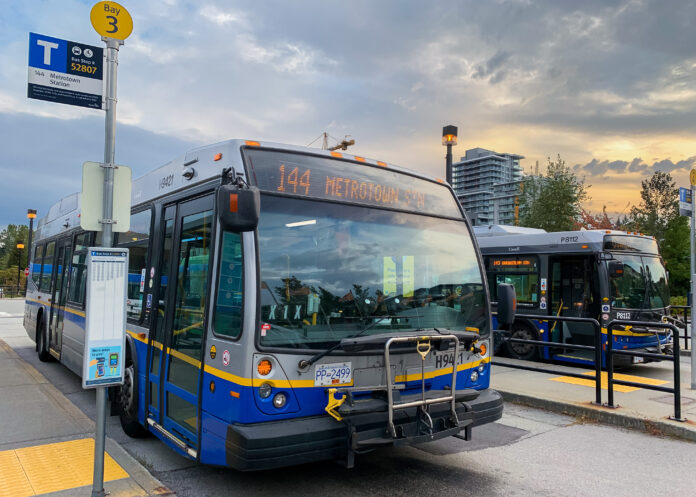
photo of the 144 metrotown to SFU bus
Why I always thank my bus driver. PHOTO: Jonadan Cheun / The Peak

By: Olivia Visser, Opinions Editor

If you’re a regular commuter, you’ve likely been in a situation that involved a less than friendly bus driver. Perhaps you were short .25 cents and denied service, or the driver couldn’t wait two seconds as you finished your sprint to the door. You were left a sweating, late-for-class mess, while passengers gawked in pity through their windows. Not all bus drivers are friendly, which is somewhat understandable given the abuse they face on a regular basis. The drivers who do make an effort to brighten everyone’s day therefore leave a real impact on transit users.

Bus drivers hold power in people’s daily lives. They carry us to work, school, and doctor’s appointments. We sometimes spend hours in their vicinity. Of course, drivers aren’t under any obligation to provide overly friendly service. Their job is to bring us to our destinations. However, basic decency should be commonplace. Those who go beyond, and take time out of their days to treat people with kindness, are truly something special.

I’m normally not fond of small talk, yet I can’t help but smile when I see a driver engaged in friendly conversation with a passenger. The other day a bus driver greeted and said goodbye to every single person. I mean, wouldn’t you be more likely to say thank you if you were met with a smile and “you’re very welcome?” Other, more subtle acts of kindness make a difference too: letting low income people on for free or low cost, or waiting for someone to take their seat before driving, shows they care.

Altercations with bus drivers aren’t an infrequent occurrence. Many people from marginalized communities, including disabled people, experience discrimination while taking transit. Unfortunately, this discrimination sometimes comes from drivers themselves. One North Vancouver resident alleged in a court case that a driver refused to lower his bus to sidewalk level. Daniel Sands, a wheelchair user living in Victoria, shared their experience of frequently being told there’s not enough room for them on the bus, despite other people being let on first. “That’s institutional ableism,” they said.

Long commutes suck. There’s no sugar coating it. You spend half your day in uncomfortable seats thinking about how nice it will feel to finally be at home in your bed. Not only is transit tiring and stressful, it can also be a traumatic experience for people who experience discrimination. Bus drivers who make an effort to improve their passengers’ days deserve to be appreciated.

Ukrainian creativity amidst the war with Dr. Bilaniuk

0
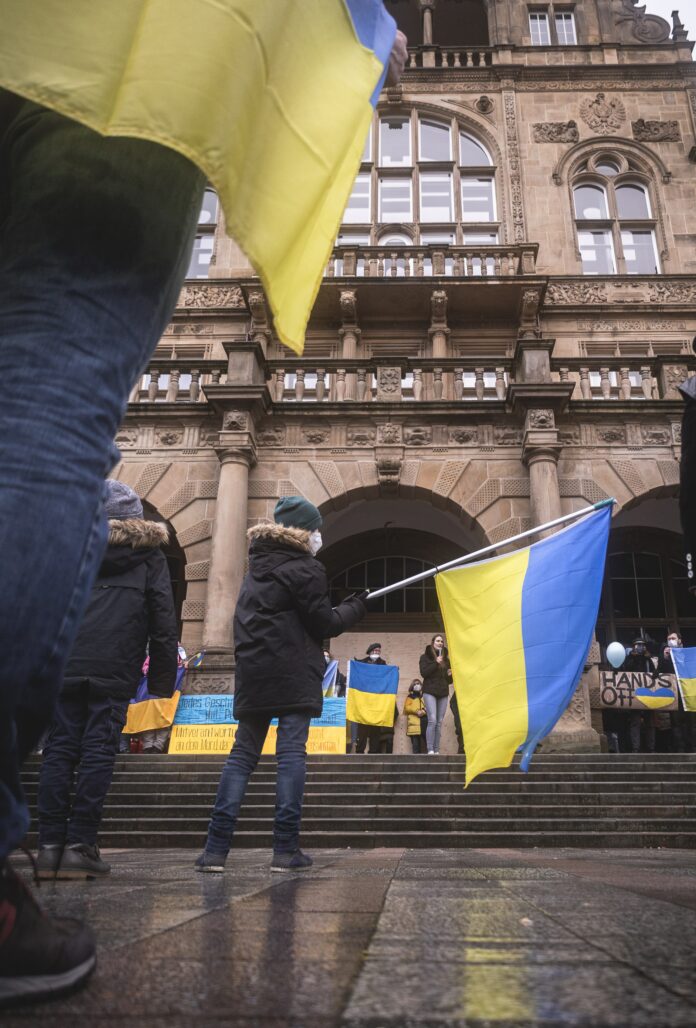
This photo is of people gathered in a group waving large Ukrainian flags.
Ukraine issued stamps commemorating the border guards who insulted a Russian warship. PHOTO: Noah Eleazar / Unsplash

By: Chloë Arneson, News Writer

Content warning: This article mentions violence, war, and death. 

On September 1, Professor Laada Bilaniuk delivered a presentation on Ukrainian creativity and resilience in the face of war. She focused on detailing the cultural creativity that erupted on social media since the Russian invasion in February. 

Laada Bilaniuk, who teaches anthropology at the University of Washington “is currently working on a book on the politics of popular culture in Ukraine.” Bilaniuk began the lecture by noting how Ukrainians have faced a multitude of horrors since the war began, including “destroyed buildings, looted buildings, death, maiming, [and] torture.” 

Bilaniuk said many did not expect Ukraine to fare so well against Russia. “Against the odds, Ukrainians have resisted not only militarily, but also on the cultural front, with an explosion of creativity.

“I’m going to be tracing the threads of memes, sayings, songs, and images that have been viral that express the way Ukrainians have been coping with what’s going on.”  

One viral phrase originated from a Ukrainian soldier from a small island who stood up to a Russian warship by telling them, “Russian warship, go f**k yourself.” The phrase became so popular that it was featured on official Ukrainian stamps, which sold 700,000 copies. “Wartime and horror seems to break down the barriers of vulgarity,” Bilaniuk said. 

After cultural erasure under years of Soviet rule, many Ukrainians are now embracing the “hybridity” of the two cultures. “Musicians and performers who started out embracing western style [ . . . ] have increasingly started experimenting more with using Ukrainian,” said Bilaniuk. She explained many Ukrainian artists are “turning back to the culture they grew up in and finding value in that.

“If anything, this war has done the opposite of what Putin and others in the Russian government wanted,” Bilaniuk said. “It’s pushed Ukraine away from the Russian sphere of influence.” 

Many of the jokes and art created during the war highlights the cultural differences between the two countries, according to Bilaniuk. It is showcasing that Ukrainian “cultural language has power.” Bilaniuk explained that the people of Ukraine want to demonstrate through media that “they’re not just second rate peasant little brothers to Russia.”

She stated many Ukrainians are embracing the decolonization of collective mentality. “While it has pushed Ukraine away from Russian language and culture, at the same time it has really united the government and the people.”

Local student disappointed that icebreakers don’t involve actual ice (and other literal disappointments)

0
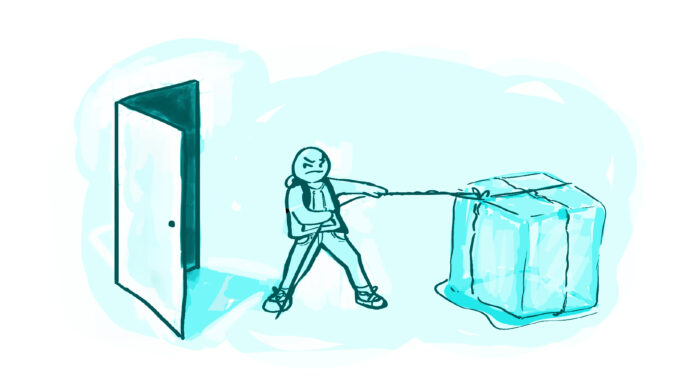
A person with a confused expression on their face, they've brought a giant block of ice to class with a piece of rope
ILLUSTRATION: Angela Shen / The Peak

By: Clarence Ndabahwerize, Staff Writer

VANCOUVER — A student showed up to an icebreaker at the Goldcorp Centre for the Arts with an ice pick and giant ice cube. Onlookers described initially being in shock until they found out the student in question was a theatre major who’d just watched the first episode of The Rings of Power. Enthusiastically, the young gentleman proceeded with great fanfare to have his couriers place the ice cube in the centre of the room before invoking the rite of Sigin-tarâg! Calling himself Sir Lit A. Rally, he brought extra ice picks and many more ice cubes so everyone could partake.

At the end of the evening, several ambulances rushed many of the attendees to St. Paul’s and Vancouver General. The young gentleman was the only one left standing. Revellers admitted that Rally was initially disappointed to find that the icebreaker was just a pizza party, but he appeared to convince everyone to BREAK THAT ICE for real! The attendees rushing to the hospital were described to be in a state of “frozen shock.” What a waste of ice, right? An internal university investigation concluded that some sort of Jedi mind tricks were at play by Rally.

However, this wasn’t the end of the debacle. Rally, after hearing of a potluck, brought several “lucky pots” to the potluck! To make things worse, the pots were empty, just apparently full of “lucky vibes,” in his words.

“I-I made a joke . . . ” sniffled Harald, “and Lit stole all my thunder. Not lit, man. Not cool!” Harald informed us that he was an exchange student from Hell, which he clarified was in Norway. He held a small bowl of mashed pecans with a small sign that read, “deez nuts.” Apparently, Rally had unleashed a cashew nut costume onto the icebreaker-potluck, which he’d been saving for Halloween.

The night ended with the fire department on scene when Rally tried to give Harald a literal taste of home. Seeing a potential for trouble, SFU took steps to quickly transfer an exchange student named Guy Fawkes to UVic to avoid a more grievous incident from unfolding! You’ll never guess what his nickname is.