Home Blog Page 223

ACORN calls on municipal candidates to act on housing crisis

0
This photo is an aerial shot of the suburbs.
There is an urgent need for affordable housing facilities as the population expands in Surrey. PHOTO: Tom Rumble / Unsplash

By: Pranjali J Mann, News Writer

BC Association of Community Organizations for Reform Now (ACORN) is calling for Surrey municipal election candidates to make the issue of affordable housing central to their campaigns. This call to action comes in as the city continues to face “significant pressures in its housing system,” as highlighted by the Surrey Housing Needs Report

ACORN is a local organization which focuses on community organization for issues of “social and economic justice” for low and moderate income people including “fair fees, childcare, internet for all, housing/tenant union, and social assistance.” 

According to the 2020 Surrey Housing Needs Report, the city was in “immediate need for 17,900 affordable rental housing units.” This number was never met, and the city now needs at least 18,600 new homeownership units within the next ten years to cater to its growing population. A report by ACORN noted, “With almost 50% of BC renters spending more than 30% of their income on housing,” BC is being referred to as the “eviction capital of Canada.” 

To find out more about this and the avenues of possible solutions, The Peak interviewed Leslie MacFarlane, co-chair of the ACORN chapter in South Surrey. 

The Surrey housing crisis includes a lack of “standards of maintenance” for landlords in Surrey, according to MacFarlane. Comparing the city to other densely populated ones like Toronto and New Westminster, she said, “in Surrey the standards basically only protect people about having working appliances, and the heat, and a few minor things. But they have nothing in place to actually protect them from mold or for things falling apart. And that’s a huge problem.” 

For this, she suggested landlord licensing as a way to add accountability from the owners’ side. Just like New Westminster, the licensing would allow for “enforcement of the Standards of Maintenance bylaw, ensuring that buildings remain in good condition.” This would act as a relief for tenants that suffer from substandard housing in the city. 

MacFarlane also asked for “right of first refusal” for tenants, which would provide them with the option to move back into the new units once their buildings have been redeveloped.  

When asked what other issues residents face in the city, MacFarlane shared, “we are losing our low to moderate income rental units faster than they’re being replaced, which means that people are being displaced by the thousands with nowhere to go.” 

For this, MacFarlane suggested all levels of government invest in building social housing. “As far as I can see, the only thing that’s going to solve [this issue] is if there’s social housing built that people could move into, that have the proper standards of maintenance to replace the drastic loss because there’s a huge, exponentially larger loss of affordable housing going on,” said MacFarlane. 

You can read more about the demands and efforts of ACORN, on their website.

SFU faces criticism over new varsity team name

0
Renaming reveals contentious process behind SFU’s new moniker. PHOTO: Krystal Chan / The Peak

By: Simran Sarai, Sports Writer

On September 6, over two years after SFU announced they were dropping “The Clan” due to its racist connotation with the “Ku Klux Klan,” SFU Athletics has chosen a new name. Moving forward, athletes will be known as the “Red Leafs” — a name chosen through consultation processes with the Varsity Team Name Working Group and the wider SFU community. 

According to a press release issued by SFU, part of the process included analyzing over 65 potential names, narrowing it down to two selections by the group. It was made up of “student-athletes, coaches, Athletic and Recreation Department staff, and student representatives from SFU First Nations, Métis & Inuit Student Association [FNMISA].” The two names were then brought forward to student groups, including the Simon Fraser Student Society and SFU Students of Caribbean and African Ancestry (SOCA). SFU said they “also sought feedback on the names from nine Host Nations.” 

Now, SFU is facing criticism from the same students who fought so desperately to have a new name adopted in the first place. Marie Haddad, co-organizer of the campaign to push SFU to change the previous name, spoke out on social media about the school’s choice to not include herself or fellow student organizers, Othniel Spence and Mason Glover, in any decision making processes. Spence and Glover were instrumental in garnering online traction for a name change. 

“I am saddened to say that I was never included properly within the process and am completely disheartened that Othniel Spence and Mason Glover did not receive any credit for our work that made a new name a possibility.”

In an interview with The Peak, Haddad said she felt “hopeless and deeply sorry for the people this name affects,” including those who might correlate the leaf to Canada’s ongoing history of colonization. “It doesn’t take much [more] than a simple Google search to know that the red leaf, symbolizing Canada, has gruesome colonial backing. Replacing a horrible racially insensitive name with a less insensitive name is not harm reduction, it is negligence.”  

Haddad only found out about the new name when the general announcement was released on social media. “It felt like a slap in the face,” she said, “I felt a wave of stress, of institutional betrayal, and carried this sorrow with me through the upcoming weeks.”

The Peak also reached out to Othniel Spence and Mason Glover for an interview, but did not receive a response by the publication deadline. 

The Peak spoke with a representative from FNMISA, who wished to remain anonymous. “The new name is the lesser of two evils,” they said, Every Canadian athlete who competes internationally falls under the red maple leaf.”  However, they believe the name was really chosen due to SFU’s affiliation with Nike, who gifted athletes uniforms branded with a red maple leaf in 2019. “Sticking with the new logo saves money and prevents further conflict,” the representative said. 

While SFU stated they had consulted with student groups, including FNMISA and (SOCA), the representative said these groups were last contacted about the name change in “mid-summer of 2020,” and “neither student association gave their approval on the two choices presented.”

Although the representative has personally come to terms with the unfolding of the process, they believe “the process could have been performed a lot better from the start. The Host Nations, the FNMISA, SOCA, other BIPOC student groups, and just more student engagement should have been present from the start.”

The Peak reached out to Theresa Hanson, senior director, SFU athletics and recreation for a comment, but did not receive a response by the publication deadline.

Student athletes weigh in 

The Peak also reached out to athletes who will compete under the Red Leafs name for their thoughts. Kaelan House, a member of the men’s cross country and track and field team, was excited to finally have a name to compete under. Jordan Thorsen, a third year goalkeeper for the men’s soccer team, acknowledged that the previous name had not been one that “a lot of the athletes could take ownership of.” He believes Red Leafs is a much more fitting name for the only Canadian NCAA school. 

On the other hand, Fourth-year point guard David Penney, had neutral feelings about the name. “I love that they changed it [ . . . ] but I feel like most of the athletes didn’t really get a say until we knew what the name was gonna be. We just heard about options, and I didn’t even know that the Red Leafs was gonna be an option,” he explained, “There was a disconnect between the two parties.”

Instead, Penney believes SFU should have taken the two-years to get opinions from athletic teams about the other 65 names proposed during the process. “Even a survey to just one team or all the players and coaches [would have been enough] It feels like it was very behind the scenes,” he said.

Somto Anyadike, senior running back for the SFU football team, echoed Penney’s feelings of disconnect. “I thought that when we were getting a new team name, we would have a school vote. I was kind [of] off put by that,” he shared. Anyadike and the football team suggested potential names like the “Mountaineers” to fellow teammates who comprised the working board. Anyadike understood the correlation between the new name and the school’s slogan “rep the leaf,” but after a whole two-year debacle, he “thought a little more effort would go into the name.”

The Five Vengeances is a badass play

0
2 warriors in kung-fu stances and fierce expressions surround a person in a white robe with half a skull face reaching forward against a yellow background.
Affair of Honor takes stage combat to the next level. PHOTO: Shadbolt Centre for the Arts

By: C Icart, Staff Writer

The Five Vengeances (T5V) is an action-packed play by Affair of Honor, a “fight and movement based theatre company” at the Shadbolt Centre for the Arts. The production combines the work of playwright, Jovanni Sy and multimedia design collective, Chimerik 似不像. ​​It’s a stunning reimagination of the Jacobean revenge tragedy genre, which, in the Jacobean period in England (16031625), depicted bloody portrayals of violence and murder in the name of revenge.

As a queer theatre kid, you didn’t have to ask me twice if I wanted to see a play about a queer love story. While it’s described as such, I think T5V would be better categorized as a queer revenge story. At the beginning of the play, Fury, a warrior, has already lost her beloved Bella and has returned to the kingdom for revenge against the Overlord who murdered her. She does so with the help of her friend, Shotgun. However, it won’t be so simple. The royal family is full of people with their own interests in mind. Fury’s quest for revenge is quickly complicated, and she’s forced to look at herself in the mirror and decide what’s truly important. 

When I got to the theatre, they had a content advisory for coarse language, violence, and sensitive subject matter, including depictions of non-consensual drug use and references to sexual assault. They also mentioned the effects used: haze, loud noises, and flashing lights. The play started with a bang, a dynamic fight scene to end all fight scenes — until the next one came along. One word came to mind: badass.

Considering the serious topics, I didn’t anticipate laughing nearly as much as I did. Before the play started, the people behind me debated whether or not the disco ball on the ceiling would be used. Spoiler alert: it was, in the most unexpected and hilarious way. 

The relatively minimalist set included two warped walls reminiscent of American Ninja Warrior, only shorter. That didn’t stop me from being impressed by the ease with which the actors ran up and slid down them. Much of the decor was digital, enabling them to use dynamic effects to enhance the numerous fight scenes.

T5V is over two hours long, but there isn’t a dull moment. Constant twists and engaging fight scenes made time breeze by. The play is described as giving “the feel of 1970’s kung-fu cinema,” and I couldn’t agree more. The music and special effects made it feel like I was watching an action movie all the way down to the slow-motion fighting. The effects highlighted how good the actors were at stage fighting because the lights and sounds aligned with their fast-paced moves. On top of hand-to-hand combat, they used a variety of weapons including swords, ropes, and ninja stars. 

The play reminded me how creative folks can be with theatre and reignited my admiration for the artform. I loved every second and had so much fun laughing and reacting with the crowd. Most importantly, seeing badass queer characters on stage telling stories that don’t center around being queer was so refreshing.

Sonia Furstenau meets with SFU350 and SFPIRG

0
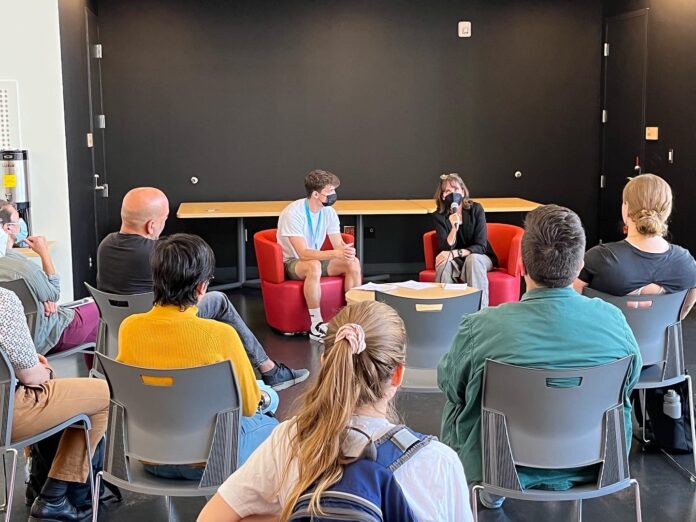
This photo is of Sonia Furstenau and Liam Mackay sitting at the front of an audience. They are engaged in conversation, sitting in two red chairs as people listen from the audience.
Furstenau discusses her solutions for Canadian politics on climate change. PHOTO: Federico Cerani / BC Green Caucus

By: Karissa Ketter, News Editor 

SFU350 and the Simon Fraser Public Interest Research Group (SFPIRG) hosted a meet and greet event with BC’s Green Party leader Sonia Furstenau. The conversation was held in the Student Union Building at the Social Stage on September 22. 

SFPIRG member Aida Mas Baghaie opened the conversation. “When I started thinking about climate and affordability, I really thought about how we just can’t afford to not react and address the issue of climate change.”

An example they noted of this is the recent flooding of BC. “On these unceded Coast Salish and [surrounding] territories, over the last few years we have seen so many devastating impacts of climate change,” said Baghaie.

The Insurance Bureau of Canada noted the cost to repair the damages of last year’s floods was $675 million. This cost only covers things that can be insured and does not include environmental or ecological damages caused by the floods.

In response, Baghaie noted instead of spending large amounts of money on repairing damages from climate change, this money could be put towards climate change mitigation and adaptation instead. 

I don’t think I would be here if I thought we were doomed,” said Baghaie. They believe there are strategies to address climate change, but “we can’t afford to have solutions that are only for the rich.

“A lot of what I believe the solutions and strategies to address climate change are, are actually things that are for the people, by the people.” 

After opening the conversation to the audience, an audience member suggested redirecting “fossil fuel subsidies into grants that allow homeowners to install heat pumps or buy electric cars.” Another suggested localizing food production, to which Baghaie added, “localizing food production in a way that doesn’t violate human rights because currently we rely on exploitative migrant work in order to create local food.”

SFU350 member Liam Mackay sat down with Furstenau to get her insight on the relationship between climate change and affordability. She began by noting “actually working together is better than fighting each other” in the political realm. 

Furstenau believes its important to change the way Canadian politicians view climate change because the issues we face with climate change “aren’t going to be solved by the methods that got us here,” according to Furstenau. “It almost seems childish to me now to look at our political system and to see it rooted in this finger-pointing, conflict-driven way, at a time when we have no time to waste.”

Mackay asked Furstenau what needs to be done at a local and international level to address the climate crisis. She said our government needs to stop subsidizing and funding the fossil fuel industry. She cited the billions of dollars of subsidies Canada puts into the LNG and the oil and gas industries. “If we were putting those billions into a clean energy transition, into a just transition where we support people and communities to be well and healthy, into food security, into ensuring water security, into transportation, we would be transforming the world,” said Furstenau. 

She feels it is unacceptable for governments to put “the extraction of resources and profit ahead of every other value.

“We have to remember what actually is valuable,” said Furstenau. “In a hyper-consumer culture of competition, perceived scarcity, and the loss of compassion that comes with that — we forget what’s real.”

One of Furstenau’s main concerns with our national politics is the amount of voter apathy amongst Canadians. Global News reported only 62% of eligible Canadians voted in our last federal election. “We have to demonstrate that governments have an important and positive role to play in these solutions,” said Furstenau. 

She said her suggestions of remedying voter apathy is based on the words of Tsleil-Waututh First Nation activist Cedar George-Parker: “We need to humanize our politics and Indigenize our institutions.”

The Outdoor Recreation Council of British Columbia hosts webinar on mindful outdoor use

0
Protecting the outdoors includes limiting litter, human waste, and legal land use. PHOTO: Amirul Anirban / The Peak

By: Olivia Visser, Staff Writer

The Outdoor Recreation Council of British Columbia hosted a webinar on July 20 on “cultivating responsible recreation practices.” The discussion focused on fostering mindful outdoor practices, and was triggered by the environmental and social impacts of an increased “surge in outdoor recreation.” The event involved five speakers with relevant expertise on outdoor recreation. 

Clara-Jane Blye is finishing up her psychology degree at the University of Alberta, with a focus on environmental psychology. She has studied park visitor behaviors across Alberta, BC, and Ontario. At the webinar she discussed a recent project that assessed environmental communication from the last 50 to 60 years, focusing on its ability to “advocate for environmental behaviors.”

Blye noted that understanding the “why” in environmental communication is crucial. She said “tapping into people’s moral norms or their ethics” while being specific about their harmful behaviors is one of the best ways to convey important outdoor practices. According to their study, effective environmental communication should involve targeting emotions like guilt, pride, and anger. A release from the Sea to Sky Destination Management Council highlights residents’ distress about litter, illegal land use, and human waste. Blye said tapping into someone’s pride involves reinforcing their positive behaviors. This might look like encouraging someone to “pack it out” instead of demanding they don’t litter. 

Stephen Hui, hiking book author and former Peak news editor said he “learned a lot about responsible recreation through hiking clubs.” Hui noted, “When I’m talking to people, they often ask “aren’t you worried you’re destroying these places by writing about them?” He responded  by saying he feels a “responsibility to provide the context” needed to use these spaces safely and respectfully.

Hui emphasized “everywhere we hike is Indigenous territory” and people don’t realize “a lot of these places are sacred.” As such, outdoor users should pay particular attention to every location’s specific guidelines. He listed four resources that inform his writing and recreation habits: Leave No Trace, WildSafeBC, Marine Trail Code of Conduct, and the Haida Gwaii Pledge.

John Rae works for the Sea to Sky Destination Management Council. He spoke about a new campaign called “Don’t Love it to Death” which highlights that increased outdoor recreation activity puts strain on “the environment, on communities, on residents, and on infrastructure.” This campaign consists of ads and posters distributed throughout the North Shore and Sea to Sky region. The slogan attempts to be “provocative without shaming.”

Brian Pratt is involved in the Four Wheel Drive Association of BC and is a Tread Lightly! educator. Both organizations offer education, training, and stewardship projects to offroad drivers. Pratt described local trips around Stave Lake with Tread Lightly! that taught new backcountry users about responsible back road travel before participating in  environmental and maintenance projects around the area. 

Sherry Lu is the Education and Learning Project Lead at BC Parks. She recognized “behavior change is a systemic issue that [BC Parks] can’t solve single-handedly.” Lu talked about four BC Parks partnerships that help promote responsible outdoor recreation habits: Camper’s Code, Discover Parks Ambassadors, BARE Campsite Program, and Hiking ExplorePACKS. BC Parks also has digital frontcountry and backcountry visitor guides on their website, as well as a self-guided online course for backcountry camping. The guides cover topics like campfire and bear safety, trip planning, and dog restrictions.

“While we’re all busy blaming others, few people are talking about the personal responsibility we all have to manage our own behavior and check our own attitudes,” Rae added. 

Simple practices like proper bathroom usage and packing out garbage make a big environmental difference, while sticking to safer trails can save lives.

A recording of the webinar is available on the Outdoor Recreation Council of British Columbia’s Youtube page. 

Surrey gets new waste reduction and recycling center

0
This photo is a close-up on recyclables. There are pop cans, plastic water bottles, and plastic containers piled on top of one another.
The construction cost for the facility is estimated to be $40 million. PHOTO: Nick Fewings / Unsplash

By: Pranjali J Mann, News Writer

Since September 9, Surrey residents have had access to a new waste and recycling facility. According to Metro Vancouver’s press release, the new disposal site is “designed to fit in with the community and has plenty of room for vehicles, preventing traffic backups on city streets.”

As the release outlined, the new center will include options for users to drop off items, join disposal queues, or pay a fee to recycle “yard trimmings, clean wood, food scraps, gypsum, and mattresses.”

The recycling facility is located on 154 Street in Newton, Surrey. As reflected by the close proximity of residents, the facility is set to serve the growing population of Surrey residents and their needs, according to city mayor, Doug McCallum. In an interview with the City of Surrey he said, “The much-needed new Central Surrey Recycling and Waste Center will serve our growing population, increase waste diversion, and help curb illegal dumping.” 

This central location will provide an alternative to the existing recycling facility in North Surrey at 192 Street. Jack Froese, chair of Metro Vancouver’s zero waste committee, said the new facility will allow users to save time, “reduce their travel distances by about two million kilometers per year — and as a result reduce greenhouse gas emissions by about 500 tonnes per year.” 

To incentivize the use of these facilities, Surrey will have “Disposal Day” events in place for its “residents to drop off unwanted waste and household items for free or at discounted rates from September 19–October 2.”        

Chair of Metro Vancouver’s board of directors, Sav Dhaliwal said, “With a 64% diversion rate, Metro Vancouver is already a North American leader in waste reduction and recycling.” Currently, Metro Vancouver operates two similar facilities in Langley and Maple Ridge. 

This new waste center is funded by Metro Vancouver under its five-year financial plan. Construction Business magazine, noted the site currently functions on “environmental and sustainability guidelines.” They also mentioned the possibility of expanding the kinds of recycling materials accepted and integrating “new innovation and technology” in the future. 

Dexter Bligh and Kat Kennedy discuss their journey from athletes to coaches

0
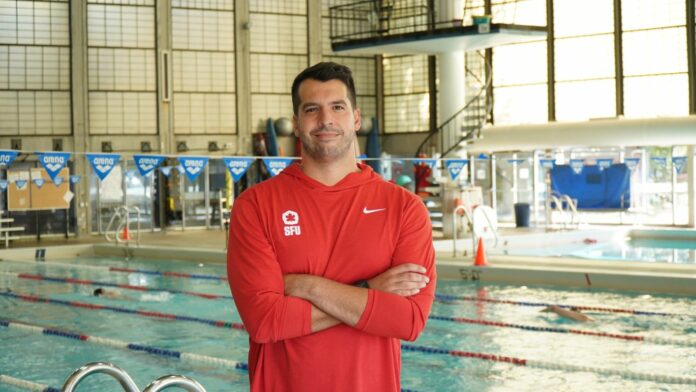
photo of Dexter Bligh
PHOTO: Jacob Hall / SFU Athletics

By: Simran Sarai, Sports Writer

At the beginning of September, SFU Athletics announced the hiring of two full-time assistant coaches — Dexter Bligh for the men’s and women’s swim teams, and Kat Kennedy for the men’s and women’s golf teams. The Peak reached out to both Bligh and Kennedy to find out how their coaching journey began, and how they ended up at SFU.

Kennedy picked up golfing when she was eight-years-old, and started competing when she was 13. She began to seriously think about pursuing golf at the collegiate level in high school. “By the age of 15 or 16, I knew of other girls I grew up with getting scholarships to university. So by that age, I focused on getting a scholarship to a university.”

Kennedy would go on to compete for the UBC Thunderbirds golf program, where she won 11 individual titles. Today, she is a Class “A” Professional member of the Professional Golfers Association of Canada.

While Bligh also grew up swimming as a child, his entrance to the coaching world was a little different. His mother enrolled him in a handful of sports growing up, hoping he would land on one he both liked and excelled in. Bligh didn’t have much difficulty choosing. “I was pretty bad at almost every other sport, so swimming was just kind of the one that stuck around,” he joked.

Bligh would go on to swim at a national level, competing against fellow Olympians Ryan Cochrane and Hillary Caldwell. However, his path took a bit of a turn as he began his post-secondary studies. “I would say I probably have a non-traditional journey to college sports, because I didn’t swim in college. I went to UVIC, and I decided at the last minute that I wasn’t gonna swim on the team. I decided I was gonna just lean into my academics a little bit more.”

Despite not competing, Bligh would find himself in a small teaching role. “I got a part-time job in the water, teaching little kids how to blow bubbles and stuff, which was a lot of fun. I just got lucky with a lot of opportunities that led me to coach at the next level.”

Kennedy similarly embarked on her coaching career through her employment at the Point Grey Golf and Country Club. “I had the opportunity to instruct some players at the facility, and that grew into something I was interested in, helping individuals get better. From that, I kind of knew a coaching path would be something that I had a love and passion for doing.”

So how did these two dedicated coaches end up at SFU? For Bligh, it was a journey a few years in the making. He started as the head coach at the Victoria-based Tyee Aquatic Club and Richmond Wayland Swim Club

“I was still looking forward to, what’s the next thing? What’s gonna keep me motivated? What’s the next level of swimming? Obviously, college sports are that. Professionally, I wanted to make sure that I was progressing as a coach.” Bligh felt like learning under SFU swim coach Demone Tissira was the next step.

Kennedy described her path to SFU as “a funny story.” She previously got to know SFU head coach Matthew Steinbach during her time playing at UBC. “Earlier this year, I was in the Lower Mainland playing a tournament, and Matt was caddying for a girl that I was paired up with,” she explained. “We started chatting through the rounds, and I asked him how the season went, and I kept asking questions. From that conversation, we kept talking, and somehow, the opportunity of assistant coach came up.”

As a former Thunderbird, we asked Kennedy how she felt now working for the cross-town rivals. “I will always love UBC, but now that I’m at SFU, connecting with all the players and the coaches, I am falling in love with the team.”

Here’s what you missed on Riverdale

0
Illustration of the text, “RIVERDALE OR NOT” done in the style of the show title, Riverdale
Pin the plot on the show!

By: C Icart, staff writer

There are currently 117 episodes of Riverdale. I have seen all of them. Any ridiculous plotline you can possibly think of has probably been done. At this point, I don’t think any of us can believe the show is real. Can you differentiate the real plotlines from the ones I’ve made up? For each question three are real and one is fake. Take a guess and along the way you’ll find out what you’ve missed on Riverdale

  1. I put a spell on you
    1. Sabrina Spellman (yup, that Sabrina) comes to Riverdale to resurrect all the first-born children in the town that were killed by the biblical plague caused by Percival (don’t ask me who this is, it’s a long story.)
    2. Sabrina Spellman helps Cheryl transfer Nana Rose’s soul to Cheryl’s body. 
    3. Kiernan Shipka, actress of Sabrina Spellman, writes a letter to the watchers begging for sweet release. 
    4. Sabrina Spellman puts her boyfriend’s soul in Jughead’s body because Jughead refused to be resurrected when she visited him in the Sweet Hereafter.
  2. The girl in red
    1. Cheryl and her girlfriend Heather (Choni forever! Just kidding, that relationship was a mess . . . ) resurrect Alice, Tom, and Frank (I’d tell you who these people are but do you really care?) 
    2. Cheryl’s girlfriend Heather uses her powers to allow Cheryl and Toni’s ancestors to spend one last night together in Cheryl and Toni’s bodies (Messy!!!)
    3. Cheryl performs a ritual to help Archie overcome his weakness to palladium, his kryptonite (because otherwise he’s indestructible, because all the main characters have superpowers).
    4. Madeleine Petsch who plays Cheryl makes a public announcement that she has developed an allergy to the colour red and will be on hunger strike until it is fully removed from her Riverdale wardrobe. 
  3. Out of this universe
    1. Archie is sacrificed by the town when he got Betty pregnant after they had sex next to the fertility doll Cheryl gave them after they decided they wanted to start a family together.
    2. Veronica sells Reggie’s soul to the literal devil (As far as we know, not the producers . . . yet) but only because Reggie sold hers first. Reggie is dragged to hell. 
    3. Cheryl declared Thornhill (where she lives) a sovereign state so now the town has lost its supply of maple syrup (this is serious business, it’s negatively affecting the town’s economy!)
    4. Cole Sprouse yells cut and orders someone to bring him an Advil to deal with the headache of playing three Jugheads at once.

Answers 

  1. I put a spell on you
    1. This is true! It happens in Chapter 114.
    2. Also true! Can’t remember the reasoning behind it but I’m sure it doesn’t make sense anyways. It’s in Chapter 99.
    3. This didn’t happen, but it probably should’ve. #freetheriverdalecast
    4. Yeah . . . Chapter 114 is a truly iconic episode.
  1. The girl in red
    1. It’s true! Percival (the bad guy) had executed them. Check out the resurrection in Chapter 116.
    2. If there’s one thing the Riverdale writers are gonna do is find a way to give us Choni content even when they are not together. It’s in Chapter 117.
    3. The special effects in this ritual scene added 10 years onto my life. I swear it’s true. Do yourself a favour, watch Chapter 109.
    4. In an interview she once said her mom would probably disown her if she dyed her hair. I mean . . . It’s probably a joke but even if it wasn’t it’s still better than her Riverdale mom being a serial killer. 
  1. Out of this universe
    1. True!  (Chapter 96)
    2. Also true! (Chapter 98)
    3. Why would I make this up? It’s true. (Chapter 96) In fact, all of these plot lines happen in Rivervale, a parallel universe to Riverdale. Why is there a parallel universe? Bestie, I don’t know . . . I think it’s related to the explosion that happened when Betty and Archie found the bomb Hiram (Veronica’s dad) put under Archie’s bed right as they were about to hook up . . .
    4. False. But season 6 is giving major Spider-Man pointing at Spider-Man energy.  

Confessionals: Halloween girlie refuses to be confronted by her own fears

0
An illustration of an envelope flying away.
There’s nothing scarier than confronting your fears! ILLUSTRATION: Jiamin Bai / The Peak

By: Ab-horror-nt and Valid (Kelly Chia, Humour Editor)

I am human. I am mortal. And alas, I think I have an all too relatable conundrum. The fall of all reputable Halloween girlies, the grand hamartia of everyone who claims they adore the spooky autumnal season: I have declared a war against all things that scare me. I like a tasteful amount of scary. I like consuming scary things at the emotional distance I hold between myself and a spider — I respect their existence in theory, but will avoid all eye contact. I think this is fair! I am NOT a Halloween fake fan, just a Halloween-sometimes-fan. I’m not just talkin’ about your typical Mike Myers and Chucky shit, either. Everything that scares me has to go. 

RECENTLY, YOUTUBE HAS DECIDED TO CROSS THIS TINY THRESHOLD I’VE SET. I’m not sure when it happened or how it heard, but it knows my every fear, I swear it on The Peak’s policy on publishing truthful narratives. It started with the 45-second ads about the new horror movie on Amazon. Upsettingly unskippable, but I guess it’s acceptable in late September. Sure. I’m a Halloween coward, I accept this. I’ll do what every coward does and look up the movies’ plotlines later so I can enjoy them in peace. 

But for YouTube to come for my blood and soul by casually pushing me towards every online dating application in existence . . . that, I shall never forgive. Fall is for being cute, witchy, and listening to every Florence + the Machine album in existence. It is not accountability season, contrary to what everyone is saying about every planet retreating into outer space. If you think I will be vulnerable to another human being on an . . . application, you’ve got the wrong Peak editor here, bucko. I only express my feelings to my Twitter following of 25 users like every god-fearing Zoomer. 

Then there’s the Grammarly ads that have cropped up as I prepare to write my first essay of the semester. No, I don’t need help. I don’t need to talk to my TA about my ten different essay ideas that I’ve barely narrowed down! I don’t need a robot to tell me my writing is at a seventh grade level and that my language is too “flowery.” Hmph. 

Who does YouTube even think it is? It’s not like the algorithm relies on my search patterns or anything . . . 

The calm before the storm: Sam Patton and the wrestling team’s preseason routine

0
Photo of wrestler Sam Patton holding his opponents leg mid-competition.
PHOTO: Paul Yates / SFU Athletics

By: Simran Sarai, Sports Writer

September has been a busy month for many SFU athletic teams with competitions coinciding with the start of the academic school year. However, there are some teams that have yet to compete this fall semester, like men’s wrestling. The Peak set out to learn more about what a typical training day looks like with junior Sam Patton. He said the team starts with a morning run — of course, a morning run for an athlete means something entirely more taxing than a scenic jog. 

“Usually we’ll start with a morning team run, we’ll run the trails. We’re lucky, being on the mountain, because the trail runs sort of simulate a match, with all the ups and downs. It works the lungs.” These morning jogs are just the preface to the day of practice that follows. “After the run, we’ll have an afternoon wrestling session,” Patton said. “On Monday, Wednesday, and Friday, it’s a hard practice. They basically kick us into shape.”

What does a hard wrestling practice during preseason look like? Well, it begins with a “dynamic warm-up for 10 minutes.” From there, the team launches into some light prep work as teammates pair off to practice moves before heading into drills. One important aspect of training the team focuses on is preparing themselves for scenarios they might encounter in competitions. Similar to live wrestling, Patton describes this as a “simulated game.”

These types of practices are designed to overload an athlete to the point of feeling a little burned out, testing both their physical and mental ceiling. “It’s a hard practice, but it’s rewarding once you get through it,” Patton said. After a gruelling day of work, what do wrestlers get to look forward to the next day? Training. “Tuesday, Thursday, Saturday, we’re in the weightroom lifting. Tuesday and Thursday mornings, we’re wrestling.” says Patton. Not to worry, the team gets a rest day on Sunday, an entire week after workouts.

With such a rigorous practice schedule, one might wonder what else these athletes could possibly fit into their schedule. On top of maintaining physical fitness, wrestlers have to stay motivated, mentally prepared, and up to date with coursework, while they wait for the season to kick off in November. Once the season does start, it runs all the way into March, occupying both the fall and spring academic semesters. “We really try and preach to the younger guys on the team to get ahead in your classes while we’re not on the road every weekend, and we’re not cutting weight,” Patton explained.

He uses the closeness of the men’s wrestling team as motivation to get through a tough practice at the end of a long week. “I’d say we’re a pretty tight-knit team,” Patton said. When they aren’t training together, they’re hanging out. “It makes it a lot easier when you have a close team and the guys are all fun to be around.” Patton added they often “watch [a] UFC fight or go out for wings.”

As much as the majority of the preseason is team-based, personal reflection heading into the season is also required. For Patton, this means a combination of things. “Personally, I do short-term goal setting, long-term goal setting, what I want out of the season as a whole, and what I want to take away from each practice or take away from each week.” While he has personal milestones lined up, Patton focuses on one thing come game time: visualizing. “If I hopefully end up in a big match, I’ve gone through that in my head multiple times, and it’s no surprise.” 

With just over a month of preseason remaining, Patton and his teammates feel like this year, luck is on their side. “There’s a few really talented individuals, who were either unlucky with injuries last year, or just didn’t quite have the showing they wanted at regionals. I think the team’s hungry. We’re gonna really attack the season, and I think we’re gonna see the results this year.”