Home Blog Page 595

SFU Quidditch win bronze medal at Quidditch Canada Western Regional Championship

0
The team continued to get better as the tournament went on. (Photo courtesy of Sarah SD Irvine)

This past weekend, the SFU Quidditch team travelled to Victoria to compete in the Quidditch Western Regional Championship. The team enjoyed a great tournament, finishing third despite nearly two thirds of the team being rookies, “which is nearly unheard of right now in Quidditch,” according to team captain Nathan Ross in an email interview.

The team finished third behind champions Edmonton Aurors and runner-ups Vancouver Stormcrows. SFU faced the UVIC Valkyries in the bronze medal match, and absolutely dominated the game.

In what has been a major transition year for the team, with 20 new faces joining the club, the coaching staff was very impressed by how quickly the team adapted to its surroundings at the tournament. The team learned quickly from their losses at the beginning of the tournament, and they played better as the tournament went on. In a perfect example of this, the team lost to Quidditch powerhouse UBC Thunderbirds at the beginning of the tournament, only to beat them when it really mattered later in the competition.

One of the team’s standout players was seeker Jake Burgi. According to Ross, Burgi made many clutch snitch catches that won SFU some important games, and really propelled them to their bronze-medal finish. Owen Goodman also enjoyed a fine tournament, wreaking havoc on the opponents’ defence while scoring goals at will. Kier Lindsay was crucial as a beater for the club, and she was a fantastic presence for SFU once he cracked the starting lineup. What’s most incredible about these performances, however, were that all three players are rookies, and they can only be expected to get better for SFU Quidditch as time goes on.

Veteran Christina Jaehrlich also had a great tournament, and she made her presence felt in every game she played. Her commitment to the team and work ethic made a big difference on the field, and this was a huge reason SFU did as well as it did with such a young team.

The strong rookie class will be important for the SFU Quidditch team in the future, as the team is preparing to lose some core players in the near future. Getting experience like this for the young players is huge as the team will rely on them for upcoming seasons.

If you are interested in joining SFU Quidditch, the team will be accepting new recruits next semester. Practices are on Monday and Friday nights, and are open to all players.

“We proved to ourselves that we can take a group and give them ~10 quidditch practices and turn them into medallists, and we just want to keep building the program here,” said Ross.

Peak pet contest participation trophies

1

Written and compiled by: Gabrielle McLaren

Check out the grand prize winners here

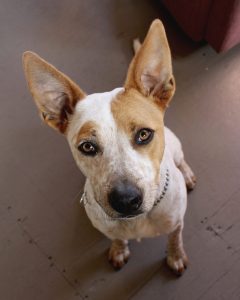
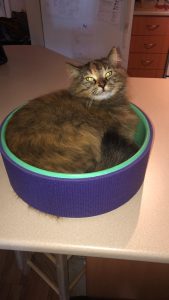
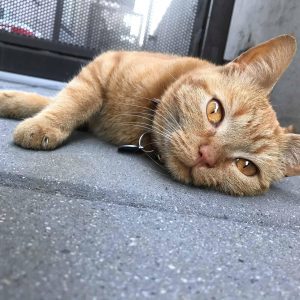
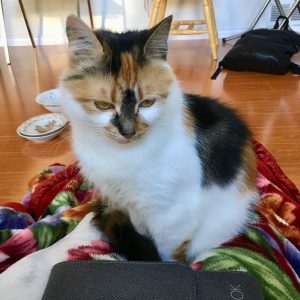
Eyes that see my soul and convince me it is whole: Louie

Longest pet: Scarlett

Comfiest pet: Aria

America’s Next Masterpet: Daisy

Baddest Boy: Argo

The Pet That Got Away: Peach

Mostest toeses: Claire

Both a pitcher and a belly-itcher: Acorn

Acorn

Most likely to succeed: Finnigan (white small doggo)

Straight-up fucking majestic: Finnigan (Lion doggo)

SFU Sports MVP (Most Valuable Puppo): Kuma

Biggest tongue: Arrow

Most likely to have a Tumblr: Pancho

Most mood: Wilson

Air Buddiest: Simba

Most likely to convince me to go to the Dark Side: Kylo Ren

Most chonkiest: Maeby

The Peak’s pet contest: grand winners

1
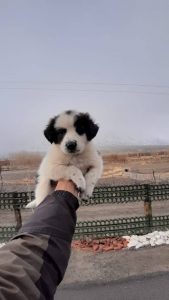
Guinness, named after the beer not the book. Winner of Peak Favourite.

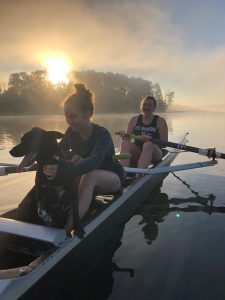
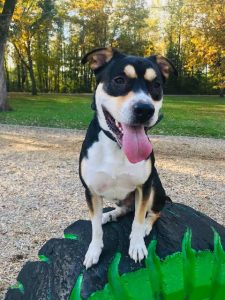
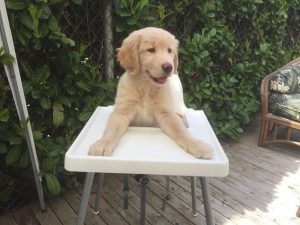
It’s no surprise that universities are welcoming cat and dog therapies on their campus and that dogspotting groups are flourishing on Facebook. Pet ownership has been linked to healthier owners, both physically, mentally, and emotionally. In case you missed October’s puppy therapy, we decided to print you a permanent version. You’re welcome. Thanks to everyone who sent us a picture of their pet!

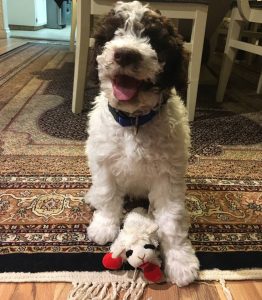
Most liked on Facebook: Charlie

“Charlie is a 5 month old Lagotto Romagnolo, and this is him with his favorite toy, lambchop. Lambchop is no longer with us.. in fact.. most of his toys have not survived. Lagotto Romagnolo’s are Italian dogs (pretty rare in North-America) and they are specially bred to find truffles.”


Best dressed: Lala

“I like to steal people’s socks”


Most unique: Artemedes

“ball pythons such as this one curl up in a ball when they are scared.”


Peak favourite: Guinness

“He is 13 and has never met a body of water he didn’t like, he’s torn ligaments in both his hind legs so he has to wear his PFD (puppy floatation device) now.”


Best fun fact: Harlow

“She is a stray dog from the Himalayan region of India. And based on the laws there, Because she is born there she is legally allowed to buy land there.”


Most photogenic pet: Puck

“He is 9 years old, and named after a Shakespearean character. He can sit, stay, shake a paw, sit pretty, etc. when offered treats, and he was adopted off the streets as a kitten!”


Most Memeable pet: Pico

“I love SFU Physics”

At first we thought that not everybody could be a winner, but as it turns out, that’s a lie. Check out our humour section online to find out which award The Peak staff decided to bestow upon your lovely pet.

If your pet is featured on this page, you will receive an email from promotions@the-peak to arrange for your prize to be picked up! If you bring your pet to our office while doing so there is no extra prize, but we will be super happy about it.

SFU volleyball barely falls short in 2018 season

0
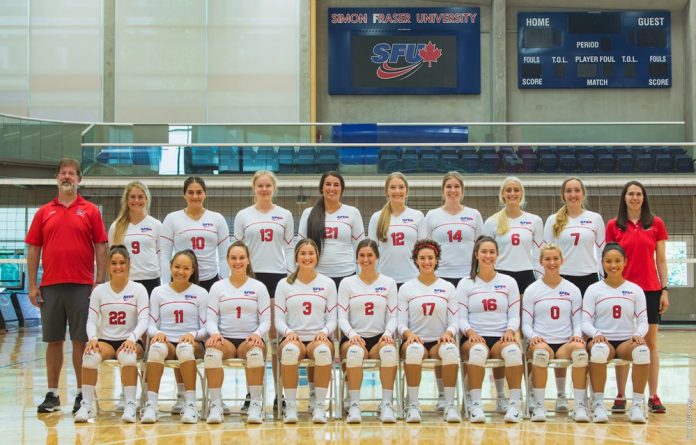
Depth was one of the key strengths for the Clan this season. (Photo courtesy of SFU Athletics)

On Saturday, November 10, the SFU volleyball team’s season had a bittersweet end.

The 3–0 set sweep over Saint Martin’s University marked the Clan’s fifth straight victory, but despite the team’s success down the stretch, they narrowly missed out on a playoff spot. That’s right: SFU’s 12–8 conference record was not enough for them to make the playoffs, despite the team finishing tied for fourth with Alaska in the GNAC.

Even though the team ultimately did not reach their goal, there is a lot to be pleased about with the Clan’s 2018 season and a lot to be excited about in the team’s future. When asked by The Peak via email on what she thought about the team’s season, head coach Gina Schmidt said:

We learned a lot as a team this season. Obviously our goal was to make the playoffs and we just missed out on that. [ …]  But we were definitely playing our best, most consistent volleyball at the end of the season and that is always what we want to see.”

One player who will not return, however, is Tessa May, who just wrapped up her senior season. Anybody that has followed the team during May’s time with the Clan knows how important she has been for SFU, both this year and in her three seasons prior. This season, May led SFU with 3.38 kills per set, 0.69 blocks per set, and 3.94 points per set. Her .369 hitting percentage was also second in the entire GNAC.

When asked about May’s play this season, Schmidt said, “Tessa spent her first three seasons being one of the most effective middle blockers in the GNAC and her senior season was no different. Despite dealing with chronic shin splints and limited practice time, Tessa has consistently been a leader on the court and in the locker room.”

Another strength for the Clan this season was team depth. For example, when libero Jayme Bratsberg was sidelined with an injury, Bianca Te stepped up and filled the role admirably. Look for this to continue into next season when Te will likely take on the role full-time, as Bratsberg just completed her senior season.

All in all, while the team is likely disappointed with missing the playoffs, SFU volleyball is in a great position heading into 2019. If the team takes 2018 as a learning experience and wins a few more of its close games next season, we could be looking at playoff volleyball in 2019.

Historic SFU men’s soccer season ends in disappointment

0
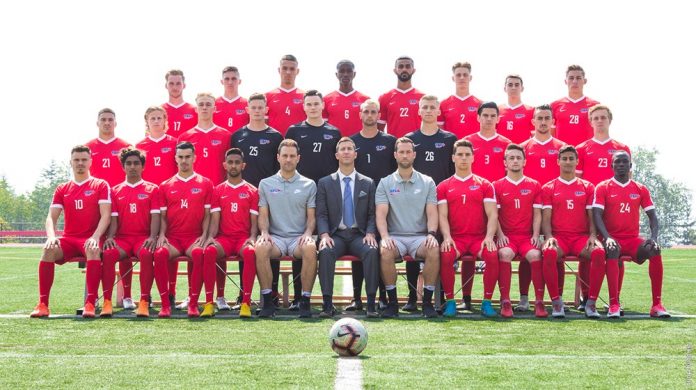
The Clan's 16 game win streak to start the season was one of the highlights for SFU Athletics in 2018. (Photo courtesy of SFU Athletics)

By: Victor Gouchee

The Simon Fraser University men’s soccer team has concluded their 2018 season and some may be left with a feeling of uncertainty.

For the first time in five seasons, the team began preseason away from Burnaby by training and playing exhibition games in Norway. This proved very beneficial; several new players had been added to the squad during the offseason, and the team’s coaching staff used this trip to develop connections between the guys.

The chemistry created in Norway was quickly evident on the field. SFU kickstarted the season with a four-game trip in California that ended in a perfect 4–0–0 — the Clan outscored their opponents 10–2 overall. The Clan went on to play four games without conceding a single goal, scoring 18 in the process.

Throughout this Great North Athletic Conference (GNAC) season, SFU dominated from start to finish. Game in and game out, the Clan was led by three of the best attacking players in the conference. Sophomore forward Matteo Polisi led the conference in goals (18) and points (47) while being second in the conference in assists (11), only behind fellow Clan teammate, Mamadi Camara, who led the way with 13.

The defensive end of the Clan was just as productive. Sophomore goalkeeper Luciano Trasolini led the conference with shutouts (11), save percentage (.810) and goals against average (.44).

The lone Canadian school ultimately took home all five of the individual honours. Head coach Clint Schneider was the GNAC Coach of the Year, but that is not the award he set his sights on.

“I have a great coaching staff and a great group of players that wanted to learn and grow,” said Schneider. “I appreciate the award, but I would trade it if that meant winning a national title.”

Senior fullback Michael North won Defensive Player of the Year, freshman centre back Joost Mangert won Freshman of the Year, and goalkeeper Luciano Trasolini won Conference Newcomer of the Year. Additionally, senior forward Mamadi Camara, in his last season with the Clan, captained his side and was voted the GNAC Player of the Year.

“It feels good to receive individual recognition for all of the hard work that I put in and I’m proud to receive that award during my last season at SFU, it’s a great way to end it. But it wouldn’t have been possible if we didn’t do so well as a team either so I’m grateful to my teammates and coaches for the unbelievable year,” said Camara.

As well as the individual awards, SFU also landed several players on all-conference teams. Both of the Polisi brothers, Camara, North, Mangert, Trasolini, and sophomore forward Connor Glennon received all-conference First Team nods. Junior full back Eric De Graaf was also named to the all-conference Second Team, and junior midfielders Rahid Rahiem and Quinn Dawson along with sophomore defender Florian Lagenegger were honourable mentions.

These awards recognized an extremely successful regular season. SFU ranked #1 in the entire NCAA DII due to their 16-game winning streak — a ranking, and win streak, they would hold until the last week of the GNAC season.

During that last week, SFU’s unbeaten streak broke against their border rivals in Bellingham, Washington. The game was more open than the games the Clan were used to playing in throughout the season, and Western Washington was able to get a goal in the first half, forcing SFU to try to come from behind for the first time this season. Ultimately, the Clan could not find an equalizer, and the team tasted defeat for the first time in 17 matches.

Despite the loss, SFU still clinched their third consecutive GNAC title. Therefore, they received an automatic place in the national tournament. As the #1 seed in the west, they would face either #4 Fresno Pacific, or #5 Cal Poly Pomona.

Being the #1 seed usually gives your school the chance to host the playoff matches. However, since SFU is the lone Canadian school in the NCAA, they are forced to host their playoff matches on American soil. Seattle Pacific University allowed SFU to host at their field, but the Clan still had no home-field advantage.

Cal Poly would end up disposing of Fresno Pacific to set up yet another meeting with SFU. This season, the Clan had beat Cal Poly, in Pomona, 3–0, and being the higher seed, SFU were heavy favorites heading into the contest. Both teams played conservatively in the match’s early moments, leading into a very even game for most of the 90 minutes. Scoreless after regulation, the game headed into extra time.

In the NCAA, extra time means playing on golden goal, or sudden-death overtime, which is not very common in other soccer leagues around the world. In the first half of extra time, Cal Poly knocked SFU out of the national tournament early for the third year in a row.

When asked what went wrong for the Clan, captain Camara had this to say:

“Nothing really went wrong. We lost in overtime because of the golden goal rule, so, if anything, the system is to blame for that. We executed the game plan and played well. Left everything out there. They probably have more experience in games like that since they made the national final and final four in the past four years.”

Additionally, head coach Clint Schneider said:

“Thought we played well enough to win the game. We had good energy and we executed the game plan . . . we just didn’t finish the chances that we created.”

Ultimately a disappointing end to a very successful regular season, SFU will be out for revenge next season.

“We will continue to work hard in the offseason to bring the best Canadian kids into the program. We will continue to help them grow and get better in the environment,” said Schneider.

Some of the best Canadian players on the team have now played their last game for SFU. Defender Michael North and forwards Dzenan Bezdrob and Mamadi Camara will move on from NCAA soccer now. The GNAC Player of the Year, Mamadi Camara had this to say when asked what his next move is.

“Don’t know exactly where, but I will be playing soccer again that’s for sure. With the new Canadian Premier League (CPL) starting next spring, opportunities for us Canadian players are promising. I just need a coach who believes in me like Clint [Schneider] did four years ago. The best is yet to come.”

 

SFU researchers look into technology to save lives and improve batteries

0
(Nano Calvo/Corbis)

Written by: Trevor Steele, Peak Associate


First responders might soon be able to save lives with hands-free drones

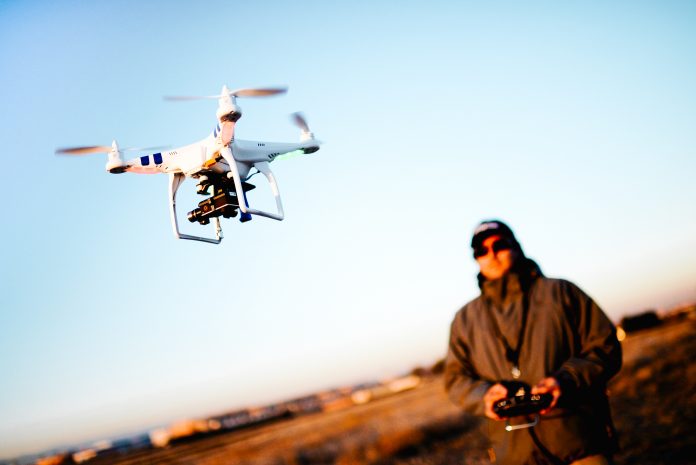
Researchers at SFU have started working on technology to control drones using only facial expressions or arm gestures. The aim is to facilitate search-and-rescue operations that use drones by allowing first responders to pilot drones without using their hands.

The trials are led by computer science professor Richard Vaughan in SFU’s Autonomy Lab, a research lab dedicated to increasing the capabilities and autonomy of robots.

There can be many advantages to using drones in rescue missions, including the enhanced accessibility they offer and their thermal energy detection camera. This means that the drones can be deployed to locate people by finding sources of heat, and they can go to areas that are not easily accessible for first responders.

Vaughan stated that the aim of the research is to eventually reach a point where communication with robots is as easy as collaboration with a co-worker or trained animals.

With files from SFU News.


Research shows graphite can increase efficiency of electric vehicle battery charging

Researchers at SFU are developing battery-cooling technology using graphite to improve the charging of electric vehicles. The new air-cooled battery chargers aim to improve upon the current cooling fans by reducing noise and improving the efficiency and reliability of the battery charging process.

The researchers, led by SFU professor Majid Bahrami of the School of Mechatronics Systems Engineering, have used graphite, a mineral abundant in Canada, to create a natural and cheap cooling method.

According to Bahrami, graphite acts as a useful coolant for all types of batteries: “Graphite has superior thermo-mechanical properties, including heat removal capacity. It’s also lightweight and corrosion resistant, making it excellent for the thermal management of power electronics and the auto industry,” he wrote.

The wide applicability of the technology has attracted interest from both business and government. Bahrami and his team have received funding from the federal and provincial government, as well as local energy companies Delta Q Technologies and Terrella Energy Systems. The financing is driven by Canada’s place as the fourth largest graphite exporter in the world and the lucrative thermal management and industrial heat control markets.

With files from SFU News.

SFSS CEO to move to new position at United Way

2
(Mark Burnham / The Peak)

Written by: Amneet Mann, News Editor


Simon Fraser Student Society (SFSS) Chief Executive Officer (CEO) Martin Wyant has accepted a new position as CEO of the United Way of Thunder Bay. The announcement was made on United Way’s website on November 5.

The SFSS has not yet officially commented on this announcement or its implications for the student society.

According to United Way’s announcement, Wyant will begin his position on December 3.

Wyant joined the SFSS as Executive Director in July 2015. Prior to working at the SFSS, Wyant worked as CEO at SHARE Family and Community Services.

The Peak has reached out to Wyant and the SFSS board of directors for further comments on the announcement and what it means for the student society, and will update the story as further information is revealed.

Senate discusses university emergency protocols and mental health support

1
(Chris Ho/The Peak)

Written by: Amneet Mann, News Editor


After two emergency incidents on Burnaby campus, senators at the latest SFU Senate meeting discussed the university’s current protocol for emergency incidents and potential steps forward.

Of the two incidents last month, one incident involved a violent attack by a student, and another was a medical emergency which led to a student’s passing. Senator Nancy Forde brought this discussion forward with senator Erika Plettner during the meeting’s question period, noting that these incidents “have prompted discussions with our colleagues and our students.”

“There is a sense of unease, and even fear, about situations such as these, prompted by a lack of professional training and how to deal with emergency situations and/or personal experience with past traumatic events,” said Forde.

“I want [ . . . ] to acknowledge that we did indeed have very difficult incidents, and that we have learned from each of these two incidents,” responded Peter Keller, senator and vice-president, academic and provost.

“I acknowledge that in the first incident, the outbreak of violence in one of the classrooms — while our instruction staff I think handled the situation at the moment extremely well, things did not go as smoothly as we would’ve hoped in the follow-up with students and the instructors.”


Discussion around university response protocols and steps forward

Senator Colin Percival noted that students talking about the incidents on social media were concerned about the poor cell phone reception in parts of the university. He asked if the university had moved to remedy the issue.

Keller responded that the university is looking into two options to improve cell phone connectivity on campus: the first was to install more receiver-transmitter stations, and the second was to improve the Wi-Fi network.

Plettner asked about the resources and protocols available for SFU community members responding to an emergency. In response, Keller referred to the work being done by the university’s Safety and Risk Services (SRS), which has a website and manages the SFU Snap app. Throughout the year, SRS holds emergency drills on earthquakes, active threats, and severe weather, among others.

Keller also noted that SFU had an extensive automated external defibrillators (AED) program. The defibrillators have been installed around the SFU Burnaby, Surrey, and Vancouver campuses alongside posters describing how to use them. AED locations are publicly marked in the SRS website, and according to Keller, SRS is working with IT services to add the AED locations to the SFU Snap app.

Keller added that SRS, SFU University Communications, and IT services are working to enhance how emergency notifications are delivered to communities.

Forde then asked about the short-term psychological support and follow-up provided by the university to survivors and witnesses of an incident. Keller outlined that Campus Public Safety would act as first responders in emergency incidents. Then, they would relay information to an incident response committee comprising university administration from Student Services, SRS, University Communications, and the president’s office. This committee would dispatch psychological support, which may include mental health professionals from Health and Counselling, Interfaith Centre staff, or an emergency response team from My SSP.

Plettner extended the question by asking about the protocol for providing long-term support to students affected by an incident. Keller emphasized that long-term responses are incident-specific, but that a response would be coordinated by Student Services and may involve a number of offices.

“The coordinated response plan will most often work alongside academic programs to ensure that those affected by the incident are provided with wrap-around care. So that includes care both from student services and the academic program,” said Keller.

Keller also assured Senate that the university was in constant communications with other post-secondary institutions on effective response protocols.


Questions on a broader stance on mental health and response protocols

Plettner asked whether the university should consider adopting the Mental Health Commission of Canada’s National Standard for Psychological Health and Safety, “given recent events and perceptions of safety on campus, as well as increasing rates of student distress and isolation.”

“This new standard is the first of its kind in the world and adopting it would enable SFU to take a proactive stance on these issues,” said Plettner. Plettner noted that there is currently no mention of mental health in SFU’s University Occupational Health and Safety, GP-17.

Keller stated that GP-17 had not been revised since 2005, and the university would look into editing the language in the policy regarding mental health.

Senator Jamie Scott asked whether the university has made progress towards a policy outlining a staff and faculty response to student suicides.

“In MBB [department] in the past few years, we’ve had a couple of student suicides and faculty didn’t really know how to deal with it,” said Scott.

“I’d also like to add that I think that there could be a little bit more professional development. We have a lot of help with teaching and learning, we don’t have a lot of help with a whole bunch other things that we’re kind of made to do,” added Scott.

In response, Keller noted that the university has embedded more training for teaching assistants and tutor markers, and is in contact with human relations and faculty relations to develop more training projects with respect to critical incidents.

Senator Daniel Laitsch asked for discussion regarding the mental health staffing at SFU relative to recommended student-to-staff ratios “and the perception that our current services are substantially understaffed [ . . . ] particularly at the Surrey campus.”

Keller responded that the university administration was aware of the issue and that the My SSP app was a step towards addressing it. Keller noted that the university intended My SPP to be used as a first response as it provides 24/7 support in multiple languages.

World News Beats

0

Written by: Youeal Abera


President Trump expresses desire to end birthright citizenship

In an interview with reporter Jonathan Swan, President Donald Trump has said that he will sign an executive order that would terminate birthright citizenship. The 14th amendment of the USA grants citizenship for those born in the country, regardless of the immigration status of their parents.

Just as he stated within his 2016 presidential campaign, President Trump has once again brought this plan to surface prior to the midterm elections.

President Trump did not give a timeframe for when this executive order would be signed.

With files from The Guardian and Axios.


Drake cites racial profiling as source of casino conflict

Musician Drake recently claimed he was a victim of racial profiling at Vancouver’s Parq Casino. As part of his Aubrey & The Three Migos Tour, Drake stopped by the Canadian city, where he performed two shows at Rogers Arena.

In an Instagram story published on his account on November 2, Drake described the incident saying, “Parq Casino is the worst run business I have ever witnessed….profiling me and not allowing me to gamble when I had everything they originally asked me for.”

The casino has since released a statement pertaining to the incident, stating that their communication with customers is amongst their highest priorities: “We are operating in one of the most complex, highly regulated industries and are always looking to better our communication and customer service,” read the statement.

Parq Casino has stated that they are currently looking into the nature of the altercation with the Canadian rapper.

With files from CTV News.


Floods in Italy claim approximately 30 lives

Flooding has claimed the lives of 12 people on the island of Sicily this week. With the loss of these 12 lives, Italy’s flooding has now raised its death toll to over 30 civilians.

Giuseppe Conte, Italy’s Prime Minister, expressed that the lives lost on Sunday are “an immense tragedy.”

Italy has experienced major storms in the last week of October. As the raging winds and rain continue, Italian Red Cross volunteers have been working to save citizens.  Italy’s Civil Protection Agency has proceeded to survey the dangerous conditions while issuing extreme weather warnings on their Twitter account.

The storms have ruined both land and infrastructure, devastating both the land and its people.

With files from Al Jazeera and CNN.


Plane collision in Ottawa kills pilot

A plane collision in Ottawa led to the death of an individual and the injuries of many others.

Two airplanes, in the midst of their flights, collided with one another in Canada’s capital city on November 4. One of the flights crashed in a pastoral area of West Ottawa, leaving the pilot dead and passengers hurt. The second flight was redirected to Ottawa’s international airport, where it safely landed. No injuries were reported on the second flight.

At the time of writing it is not known how many passengers were on the flights, or why the collision occurred. The Transportation Safety Board of Canada is currently investigating the accident.

With files from Global News and CBC.

Student Spotlight: The Escapes

1