Home Blog Page 594

Patricia Piccinini’s “Curious Imaginings” will take your breath away

0
Photo courtesy of Nuvo Magazine

By: Yelin Gemma Lee


Patricia Piccinini’s “Curious Imaginings” feels like a gift of an experience. It is very intimate, and it takes you gently into what the official exhibit website describes as a “world of oddly captivating, somewhat grotesque, human-animal hybrid creatures that look so lifelike that it can be overwhelming. This exhibit will make you rethink the way you were taught to think, and it will challenge you to come visit and experience something you have never experienced before. Pictures, videos, and even this article cannot begin to summarize or do justice to this groundbreaking sensual experience.


       Patricia Piccinini’s very lifelike transgenic sculptures explore science, genetics, ethics, and humanity. Her art will either make you revisit the way we are conditioned to think in regards to other living beings, or the impact that science and humans can have upon other creatures.


       Upon first looking at the marketing photos for the “Curious Imaginings” exhibit, I felt the hairs on my arms stand straight up. My first emotions were discomfort, curiosity, and a little fear. However, the actual exhibit itself was not the fearsome, negative emotional experience that I predicted it would be. In fact, I felt myself deeply moved by the compassion and life depicted on these creatures’ facial expressions.


       Piccinini’s exhibit is being shown at the historic Patricia Hotel until December 15, 2018. Upon signing in/purchasing tickets, you are told to go upstairs, where you meet a volunteer who introduces you to a small baby creature. This creature foreshadows the rest of what you are about to see.


      The exhibit occupies a whole wing of the hotel, and it is separated into rooms along one hallway, with descriptions outside the room to give you a bit of insight into the art that awaits you inside. Some of the rooms are audio or video-oriented. As you get closer to the end of the hallway, you overhear the noises from these videos — “curious” is exactly what you feel the whole way through.


      For me, this process really added to the exhibition and set it apart. It keeps you wondering what could be in the next room and gives you small pieces to absorb carefully, versus the overstimulation that you might experience at traditional art galleries.


      The creatures of “Curious Imaginings” were literally put together hair by hair with the utmost attention to hyperrealism; the skin is especially startling with veins, wrinkles, hair, and human imperfections. But the aspect that threw me off the most were the very lifelike facial features and expressions on those faces. You find yourself connecting and engaging with the exhibit, and despite not being able to touch them, you feel many sensations at once.  The vulnerability, nakedness, and the expressions of the creatures really invoke a whirlwind of mixed emotions — so much that at times, I felt either muted or moved to tears.


       Each room made me feel differently and the guiding descriptions gave a lot of power to the experience of the sculpture. As a whole, the exhibit dismantles the ideas we have around what is normal and what is strange. It bridges the gap that exists between humans and other living beings by asking us questions about humanity, and coexistence. “Curious Imaginings” will draw out the empathy and wonder out of you — don’t miss out on experiencing this truly unique exhibit.

Curious Imaginings is at The Patricia Hotel daily from until Dec 15. The exhibit is open 11am to 7pm. Tickets are available for purchase at www.imcurious.ca or on site at $15 CAD for students (with student ID).

The Guinness Book of SFU Records

0
Illustrated by Reslus

Written by: Jennifer Low

It’s about time SFU finally recognized us, its students, for all we do. From the countless hours of late-night Netflix binge-watching studying and essay-writing to the ridiculous amount of time we spend on transit, it’s time we get credit for our hard work.

SFU has released an official list of the hardest working students who have broken student records and finally made a name for themselves.

Rebecca Linden: Most hours spent staying awake studying for an exam

We’re all great contenders, but this student has gone above and beyond the call of duty. In breaking this record, Rebecca has transcended to a level of sleep deprivation where no one has gone before.

She went beyond the 24-hour mark of impaired coordination, memory, and judgement. She passed through the emotional rollercoaster of 36 hours, soon followed by the involuntary naps and zoning out of 48 hours and the hallucinations of 72 hours. It was a hard time, and it won her the title of the school’s Resident Zombie.

Joseph Glinton: SFU’s greatest essay writer on topics they don’t know anything about

This student never turned up to lecture, never did a single pre-reading, and turned in the greatest piece of literature known to humankind: “The B.S. essay.”

Joseph deserves to be recognized for his unedited, Red Bull-fueled masterpiece. Let’s be honest: the essay is so confusing and talks itself in so many circles that the TA and professor gave him a good grade only because they didn’t want to admit that they couldn’t understand it. You are exceptional, Joseph . . . exceptionally lazy.

Anonymous: SFU’s most notorious non-paying parking lot hog

Whoever has broken this record is out there. We know they are. We’ll never have enough proof, but they’re lurking out there, somewhere.

Chloe Ng: SFU’s top coffee consumer

This outstanding individual likely has unlimited funds and an unparalleled love for the caffeinated beverage. Likely carrying more than six cups of coffee to her two-hour lecture, Chloe is an inspiration to us all. While her productivity is questionable, her ability to keep her shaking hands steady enough to fill out a Scantron is commendable.

Faraj Dawoud: Most SFU merchandise worn at one time

Some people tolerate their school, some people like their school, but this record could only be shattered by a student who is truly in love with SFU.

Exclusively shopping for his clothes, dishes, supplies, and furniture at the bookstore, Faraj is the epitome of school pride, and he wants everyone to know where his degree came from. Although it is not known for certain, it is rumoured that he keeps asking where he can buy his own McFogg the Dog Mascot costume.

Anika Laghari: Most raccoon sightings

This student should also be known as the Raccoon Whisperer, as the masked animals seem to flock to her like moths to a flame. Anika’s Instagram feed is full of blurry filtered images of the majestic creatures, and others envy her ability to be at the right place at the right time. She lives on the Raccoons of SFU Facebook page, and her skills deserve some serious recognition.

Split on Vancouver Island road trip keeps Clan within one point of first place

0
Lenko's 33 saves were not enough for the Clan on Saturday night. (Photo courtesy of SFU Athletics)

By: Dylan Webb

SFU Hockey travelled to Vancouver Island this weekend for a two-game road trip, with four key points on the line, as they looked to maintain their tenuous grip on first place in the BCIHL standings. Unfortunately, they were cost that opportunity by the VIU Mariners on Saturday night at the Nanaimo Ice Centre after a tight one-goal loss.

On the upside, their defeat of the UVIC Vikes the night before, combined with a Trinity Western loss to the Selkirk Saints over the weekend, keeps the Clan within a point of first place in the league standings as the team nears its winter break.

On Friday night in Victoria, the Clan absolutely peppered UVIC goaltender Zack Wear. Sending a total of 60 shots at the net, SFU built up a three-goal lead through the first 40 minutes and held off a late push by the Vikes to secure a 4–3 win. The victory was the team’s second win of the season in as many games at the Ian Stewart complex in Victoria.

After the teams traded goals in the first period, SFU forward Mitch Ledyard tallied two goals in the second, one on the power play and one short-handed, to pace the offensive attack. The two-goal lead quickly turned into a three-goal cushion on a snipe from forward Jaret Babych. This insurance marker would prove to be needed as the Clan weathered a third-period storm that saw UVIC score two, and SFU ultimately held on for a one-goal win.

In goal on Friday night, Ryan Sandrin stopped 18 of 21 shots for the Clan to secure his third win in as many starts this season. Maintaining his perfect win-loss record as well as his stingy goals-against average, Sandrin once again performed well enough to ensure his team secured the win.

On Saturday night, a low-scoring affair between two of the main contenders for first place ended in favour of the Mariners: SFU may have carried a 1–0 lead for most of the game, but two late third-period goals from VIU erased it. Forward Graham Smerek had the lone goal for the Clan as they struggled to penetrate scoring areas and were kept to the perimeter for much of the game. Third-period goals from VIU forwards Kobe Oishi and Dallas Calvin, former Selkirk Saints captain, cost the Clan a victory that would have allowed them to leapfrog VIU in the league standings.

Multiple physical encounters overshadowed the strong defensive efforts from both teams in the game. Multiple penalties were handed out on more than one occasion – in one case, a total of 18 minutes in minor penalties were handed out to nine separate players on a single play halfway through the third period.

Between the pipes on Saturday, Michael Lenko started his seventh game of the season and took the loss to fall to 3–4 on the year despite earning second star honours for his 33 save performance. Holding the VIU offense at bay for the first two periods of play, Lenko suffered from a general lack of offensive support from his teammates and certainly gave the Clan a fighting chance in this game.

Following the Saturday night game in Nanaimo, coach Mark Coletta admitted that “we left points on the table on this road trip.” The disappointing loss on Saturday night, and a less-than-ideal finish to the Friday night game that allowed UVIC to make the game much closer than it should have been, is troubling. However, Coletta remains confident that the team has the key pieces and developing chemistry necessary to make a push for a first-place regular season finish and a BCIHL championship come playoff time.

The Clan will now have to wait 19 days until their next league action. Due to the loss of the Eastern Washington University Eagles from the BCIHL at the end of last season, what is now a five-team league is certainly suffering from some scheduling oddities through the first half of this season.

While the Clan now sit in third place, just one point back of the first place VIU Mariners, they are likely to see their spot in the standings shift significantly before their next game action. Trinity Western will play three games before the teams meet at the Bill Copeland Sports Centre on December 7 for the final game of the first half of the BCIHL regular season. Given this, the Clan will have to remain focused through multiple weeks of practice without the motivation of game action.

GSS Directors’ Elections: Know Your Candidates

0
(Chris Ho / The Peak)

Written by: Srijani Datta, Assistant News Editor


There are over 4,000 graduate students in SFU, who are spread across 38 academic programs in all three SFU campuses. All graduate students are represented by the Graduate Student Society (GSS), which is their student society and government. From November 19 to November 23, the GSS will conduct polling to elect graduate student representatives to fill the GSS Directors positions.

The Peak reached out to the candidates to ask them some questions pertinent to the positions they are running for.

Note: Candidate responses are unedited and do not reflect the perspectives of The Peak.


Director of External Relations (DER)

The elected DER will take on the responsibility of communicating with external parties, such as government representatives and other student societies, on behalf of the society regarding society advocacy initiatives such as the U-Pass.


Questions:

  1. Why did you decide to run for DER?
  2. What are some of the key issues specific to the graduate student population, across the three campuses, that you are looking to address and how will you do so?


Burahan Ceylan (Department of Political Sciences)

Photo courtesy of Burahan Ceylan
  1. I found the job definition of the position pretty appealing to me.
  2. I do not have a specific issue to address honestly. What I know very well is that I will do my best to serve in the interests of graduate student population and the SFU as a whole.


Matthew McDonald (Department of Economics)


Photo courtesy of Matthew McDonald


  1. I decided to get involved because there is a real need for co-ordinated advocacy and action around affordability, mental health and other related issues, which have reached a crisis point for the student population. Graduate students are acutely impacted by these problems, and I’d like the chance to represent them by running for a position with GSS, an organization that has access to many resources and effective channels to push for change. The Director of External Relations position in particular represents a great opportunity to make alliances with similar-minded student groups across BC. We need to pressure government representatives to assist grad students, a very important part of our future labour force and economy, with policies aimed at housing, childcare, and student grants/aid.
  2. Students at all three campuses face similar affordability issues. Horror stories about ‘renovictions’, abusive landlords, and a lack of housing obtainable within a graduate student’s budget are heard throughout Vancouver, Burnaby and Surrey. Mental health services are insufficient, oversubscribed and difficult to access. Many graduate students are trying to raise young children but find it tough to get an opening at a safe and reliable daycare. Obviously, these problems are massive and systemic, and will take years and much political willpower at all levels of government to resolve. However, creating programs specific to graduate students, like earmarked housing and daycare positions on and off campus as well as added mental health counselors and services, is possible now. If elected, I will be a steadfast advocate for the interests of SFU graduate students during this time of crisis.


Noortje de Weers (Department of Linguistics)

Photo courtesy of Noortje de Weers
  1. During one of [the Council] meetings in July, a motion was passed to remove the previous director of external relations from their position, thereby leaving the position unfilled. A second motion had already been drawn up to appoint an interim Director of External Relations (DER) to tie the GSS over until the next elections, but the Executive Committee had not been able to find anybody at such short notice, so there was a blank where a name should’ve been. They admitted that they did not think they could find someone to take the position, but I surprised everyone (including myself) by spontaneously putting myself forward as the interim DER. At the time I was asked why I thought I was a good fit for the position, to which I replied that I did not necessarily have any unique skillset that made me stand out from the rest, but that I figured that somebody helping to take pressure off the other Directors would still be better than nobody. I added that I was a quick study, and that I have no problems addressing difficult problems head-on. I was voted in unanimously.

Since that day in June, I feel like I have fully grown into the role, and that I can at this point confidently say that I now most definitely do have the skillset and know-how to successfully serve as the GSS DER. I have gone from scrambling to catch up to all the information in my portfolios to initiating events such as a Puppy therapy to promote mental health, and setting up a university-wide research participant recruitment system in collaboration with the Office of Graduate and Postdoctoral Studies. I now know the people within SFU that are relevant for my position, which practically means that I would not need to be transitioned into the role. I am currently no longer the DER, as my position was only for 4 months, so it ended yesterday. I am itching to get back at it though, as I really enjoyed my work as the DER, and I have big plans going forward. I really feel like I am making a difference.

2. The main issues that I will be working on are: mental health, communication, and graduate funding.

– One of the key issues that I was working on together with the Dean of Graduate Studies was to advocate to the SFU to institute formal mental health first aid training to all current and new TAs and MAs, hopefully as early as January 2019. Since we are working with TSSU as well, this training will also probably be extended to sessional instructors as well. This initiative arose from the violent incident that took place on campus on October 3. I would love to see this kind of training instituted for all members of staff and faculty as well, since I strongly believe that a lot of graduate students’ supervisors could benefit from learning how to recognize at an early stage whether their students are overworked, overly stressed, or suffering from mental health issues.

– In response to students’ reactions to the recent incidents that took place on campus, I want to work with SFU to improve and optimize communication with students regarding serious or troubling incidents on campus.

– in my role as the DER, I gave a speech to the provincial government during their 2019 budget consultation. I advocated for the newly instituted BC provincial graduate student scholarship to become permanent (it’s now only for 2 years), and to include international students as well, as it’s currently only available to domestic students. I intent to continue advocating for this, and to work with SFU to collect data on how this scholarship can help both domestic and international grad students.


Vivek Anand (Beedie School of Business)

Photo courtesy of Vivek Anand
  1. The responsibility for external advocacy campaigns that target all levels of the government to improve the lives of graduate students was the primary motivation to apply for this position. Negotiating for the U-Pass will be the first step towards improving their lives by cutting costs. SFU has 3 campuses across the 3 zones of Vancouver and the U-Pass covers those zones. Students in the respective campuses remain in those zones for most of their time during the year. A reduction in the price of the pass will ensure a fair deal. Besides a price reduction, I want to collaborate with SFU and TransLink to arrange for compass cards for students on orientation day in the respective campuses.

The motivation to improve the lives of people comes from some personal experiences. We can all be at our best when we know there’s someone to pull us up when we fall. In graduate school, we need support during our ups and downs so that we can focus on what we’re all here for. Being on the edge is not only harmful to one’s well being it also drifts one’s focus away from academics and extracurricular activities.

2. Off-campus housing: Approx. 70% of students at SFU come from outside of British Columbia. It is natural for them to be overwhelmed by a new place and SFU Residence cannot accommodate each and every student. There are people out in the city who openly take advantage of those students. Some of them try to scam them while others try to exploit them. This affects their personal well being, their academic performance and, their overall graduate school journey. From a very recent personal experience, I know how serious the issue can be. As the director of external relations, I aim to address this issue with SFU Residence and a Government agent or a Politician. The SFU housing website gives access to landlords in the Vancouver area to post ads so that students can contact them. I strongly believe, the following regulations need to be implemented on landlords approaching SFU for students: (a) a rental price ceiling  (b) mandatory inclusion of all utilities in rental fees (c) Active involvement of SFU Residence to address any conflicts. (d) Mandatory credit/background check of landlords

Moreover, an assurance from SFU and/or SFU Residence on the credibility of landlords will to students will go a long way in helping students secure accommodation before reaching Vancouver.

Coping with Stress through fostering a community spirit: The root cause of most of our problems as graduate students is stress. SFU consists of 3 campuses that hardly interact with each other. We are all aware of the challenges we face as SFU students. We face stress which roots from uncertainties, deadlines and post-graduation career opportunities. The best solution to deal with the stress is to foster a community spirit among all SFU students. Many students here are away from their homes and end up facing their stress in isolation as they feel reaching out to even fellow classmates is burdening them with their worries. The 3 campuses are under the same university but seem to function as independent entities. True strength lies in interdependence and we can all be successful by complementing each other’s weaknesses by each other’s strengths. Academics at SFU is very challenging and supporting each other will ensure that none of us fall out.

I aim to collaborate with student organizations and SFU Health and Counseling to host an event each month at a fixed location in the Vancouver area that is convenient for students across all campuses to commute to. The goal of the events will be to foster a community spirit among all graduate students and indulge in activities that the SFU Health and Counseling recommends as methods to make people happier and relaxed. From experience, I can confirm that a fresh mind can do wonders while a saturated mind can cause confusions.


Director of Finance (DF)

The elected DF will take on the responsibility of managing society finances and data. The DF will also be involved in initiatives to raise revenues.


Questions:

  1. Why did you decide to run for DF?
  2. How can you ensure the society’s finances are accessible and transparent? Any key investment or budgetary plan you plan to put in effect if elected?


Dapinder Singh (Faculty of Education)

Photo courtesy of Dapinder Singh
  1. This position is a great opportunity for me to engage with as my past experiences would help me a lot. Moreover finance is the lifeline of every organization and everyone has to pay out of his/her hard earned money. This is not enough to track the inflow or outflow of the funds but it is the judicious use of funds that matters. So that all of us as students do not find any issues related to finances such as unwanted hike in fees, scholarships availability, housing  or other issues which may hinder growth of students. My work is transparent involving one and all as I believe in- Be the change that you want to see in the world.
  2. I think as per your question society’s funds are properly accessible & transparent only when there is an excellent  management of financial resources and proper availability of information of the same.


For any key investment,  first I will have to have complete knowledge of operations such as society’s Income, expenses, assets, liabilities and cash flows etc. so that a successful budgetary plan can be put into effect.


Md Ashraful Alam (Beedie School of Business)

Photo courtesy of Md Ashraful Alam
  1. I have to say that I am really passionate about finance. That attracted me the most to apply for this specific post. I believe that my experience coupled with my academic learning and motivation, I can serve SFU and the GSS to my fullest extent. I think that I can learn a lot by becoming the Director of Finance which will enable me to work with the GSS with its different agendas as well as work with external stakeholders. Finally, this opportunity will enable me to interact with all the graduate students and I will have a great graduate experience.
  2. I can attest that if there is one thing that I am always thriving for, that is transparency. That is one of the core values that I deem to be important for any professional and it is also mentioned in my campaign material. Now, for being transparent, I will always be accessible to the graduate students, whenever the need arises. For different financial agendas, I will directly work with GSS and other parties to make the financial information accessible to all the graduate students whenever possible (except if there is any confidentiality, which is for the sake of SFU). Furthermore, I will always be available for any concerns from the graduate students and try to be at their disposal.


Finally, I am going to devise a financial budget after I get elected where I will definitely ensure optimal capital allocation to maximize the utility of our resources.  Currently, I can’t outright make any comment without looking at the current capital structure, sources of financing and uses of the financing and capital budgeting. Therefore, I can at least ensure one thing, my wholehearted endeavor will be to execute every financial decision in a way so that it will be optimal for SFU.


Director of Graduate Services (DGS)

The elected DGS oversees all services provided by the GSS to its membership, with the main two areas of focus being the Benefits Plan and the U-Pass. The DGS is also involved with financial aid provided to graduate students.


Questions:

  1. Why did you decide to run for DGS?
  2. What are some of the key graduate services that you are looking forward to improving or adding? Which is the most used graduate service at the moment and why?


Nicholas Page (School for International Studies)

Photo courtesy of Nicholas Page
  1. Having completed my B.A. in International Studies and Criminology here at SFU, I am well acquainted with the uniqueness of our institution, student bodies, and the politics between the two.
  2. It is my goal to provide you with the most helpful and efficient programs possible, whilst setting us up for future financial success. These include: improving accessibility to existing mental wellness programs; Enhancing our current UPASS benefits; Creation of a discount food & grocery program and Renewing the Holiday Hamper Program with support from Private Donors & the Private Sector.


Director of University Relations (DUR)

The elected DUR takes on the responsibility of liaising between the GSS and other SFU organizations, such as university administration and the Simon Fraser Student Society (SFSS). The DUR advocates for the society with these groups.


Questions:

  1. Why did you decide to run for DUR?
  2. What are some of the issues, specific to the graduate student population, that you are looking to address and how do you plan to work with grad students from across the three SFU campuses on those issues?


Thomas Budd (Faculty of Environment, Graduate student in the School of Resource and Environmental Management)

Photo courtesy of Thomas Budd
  1. I believe the Director of University Relations is a position where I could bring positive change for grad students.  Since the position was created at the GSS, I believe progress has been made, for both grad students and the University as a whole, due to the advocacy conducted by those who occupied this role over the past years.  I feel my background and experience at SFU will complement the responsibilities and requirements of the position in a way that would continue the excellent work of the previous directors.
  2. There are three issues that I look forward to making a priority during my tenure as Director of University Relations:
  • Affordable housing for graduate students: Graduate student housing is not scheduled to expand until 2028.  I will work with the administration in finding a balanced approach that will advance the date when new housing units become available to graduate students.
  • Supervision for the 21st century: I will work with SFU as part of their student experience initiative to improve the supervisory experience for graduate students.
  • Standardization of student representation at SFU: I will advocate for a uniform approach to student engagement across faculties and departments that supports meaningful student consultation practices.

To truly succeed in my role, I feel that I would need to remain connected to grad students and understand their diverse perspectives.  With the valuable assistance of the GSS staff, I would put in place a personal communication strategy whereby I may reach out to students of all three campuses throughout my term.  My goal is to continuously seek the advice of students and ensure that their message is heard by SFU’s highest executives. True advocacy requires the support of everyone. Together we can continue to build an SFU that reflects our values and remain responsive to our needs as students.

More information regarding all of the candidates and their profiles can be found on the GSS Elections website.

WWE 2K19’s got plenty for professional wrestling fans, but not much for anyone else

0
Image courtesy of Playstation

By: Gene Cole


WWE 2K19 is the most recent annual sports title in the WWE 2k game franchise, based on the shows from pro wrestling company WWE (World Wrestling Entertainment). I’ve been a wrestling fan for about two years, but having never played a game in this series, I was curious to look at it with fresh eyes. But while it should have everything I’d want, the quality of its content is scattered to say the least.

       To explain the basic game would be difficult, because there are a surprising number of game modes. The most “game-like” is the MyPlayer career mode, where you create a wrestler who rises in the ranks from wrestling in parking lots to the main event of Wrestlemania. If you want to wrestle in a digital space more though, there are also free play modes where you can fight as current and past wrestlers, an online multiplayer mode, and a Showcase mode where you play through famous matches throughout the career of fan-favorite Daniel Bryan.

      The wrestling itself in the aforementioned modes is sloppy, to say the least. There’s a lot of care given to all the animations and the diversity of fighting styles, but the game provides few tutorials, and there’s not much user-interface to help guide you in the ring. It feels very catered to long-term fans of the series who know how the system works, so if you’re new like me, you may quickly end up confused and frustrated. This is a shame, particularly since the career mode this year features such things as fantastical wrestlers like Matt Hardy doing actual magic and fights with zombie versions of legacy wrestlers like Triple H.

        But for those who fail to comprehend the combat, there’s still plenty to take in that doesn’t involve these clunky controls. The game has a bizarrely detailed character creator — you can let computers duke it out in the ring between any wrestlers in the game’s massive roster, and there’s even a MyUniverse mode where you can simulate WWE’s weekly shows with your own chosen rivalries and champions. Rather than a clunky combat game, it becomes more like the Sims as you create your own stories and put anything you can imagine into a wrestling game. Some of the interface in these modes can be difficult to learn, but the variety of options make it worth your time.

      WWE 2K19 can be summarized best in one word: sufficient. I found a lot of ways I could enjoy it, but it’s disappointing to need to make my own fun in a game that features the fantastical world and characters as the WWE. If you like professional wrestling and want this game, you will probably have a good time, and you might as well go for it. For most people, though, I highly doubt it’d really feel worth the time or money.


WWE 2K19 is available for purchase for $79.99 CAD on Steam, and is playable through PS4, and Xbox One.

SFU Horoscopes

0
Image courtesy of diptyqueparis-memento.com

Written by: Winona Young and Aaron Richardson

Terry Fox’s Sweet Sweet ‘do | January 10 – February 8

A real hero | Goes the extra mile | Everyone’s favourite,

You’re the one who everyone can’t help but love. You’ve had your fair share of struggles in life, but you’ve persevered. There’s really nothing to joke about. You’re just awesome.

The 145 that always comes for you | February 9 – March 7

Kinda smelly | Has personal space issues | Back entrance always open

You’re always there for everyone, even if you show up a little late or a little early (and a little smelly because you forgot to put on deodorant). Venus is in retrograde, so while others may call you easy for letting anybody be with you, you’re actually super welcoming! You may feel a little lonely so people hit you up when they need something, but don’t worry — you’ll find your ride-or-die homies soon.

An unopened textbook | March 8 – April 6

Pure and naive | Hopes to not be returned to the bookstore | Few ever get to know who they are on the inside

People never think much of you. But there is a lot people don’t know. They look at you and think that there’s not much more than what they can see. But if they only tried to get to know you, they might get a better grade on their final exam.

A parking spot on Burnaby campus | April 7 – May 5

Likes friends with money | Difficult to get to know | Can get you tickets | Gets used by everyone

Everyone loves you, and tries to meet up with you early in the morning. Usually, by around noon, your plans for the day are booked. Everyone tries to take advantage of you and use you without giving you anything in return. When you get annoyed and get them in trouble for it, they get really mad. But they always come back. They need you, but they’ll never admit it.

Mysterious koi in the pond | May 6 – June 4

Everyone wants to touch them | Will only interact with you once they’ve been fed | Very shiny | Literally a fish

Be sure to stay hydrated, because everyone is absolutely thirsty for you. Between all your classes that are exclusively in the AQ and your lunch dates with people at Mackenzie Café, try socializing with others outside of food. You’re a breath of fresh air, and quite literally one of the only living things on this campus.

Two back-to-back exams | June 5 – July 3

Will drive you insane | Will ask you questions you are not prepared for | Full of coffee and tears

You are perhaps everyone’s worst nightmare. You know how to make people cry at a moment’s notice, and are capable of making people burst into sweat and/or tears purely from the stress of being around you. You love the power, and use it at every opportunity.

A TA’s lonely office hour | July 4 – August 2

A bit of a grump | Always wants to help people despite no one ever asking | Can’t read your writing

It’s hard being a one-man wolf pack, and you’d know this better than anyone, being lonely and all in your cave. But don’t get too salty about your unpopularity — keep your chin up and remember your worth, because you are definitely not paid enough to put up with this shit.

An Avocado hookup | August 3 – September 1

Likes to live dangerously | Nicknamed Tinderella | Probably a first year

Reckless is your middle name (or maybe Chad, or Valerie — both are equally horny). Venus smiles down on you because you’re about to get the Tinder matches of a lifetime. And even though you have the impulse control of a first year, you’ve got hella stories to tell at Sunday brunches.

The unfinished SUB | September 2 – September 30

Talks big | Definitely overcompensating | Would totally re-elect Jas Randhawa

Your friends talk you up so much that, by the time people actually meet you, they’re always disappointed. No one knows when you plan to arrive at parties, but it’s safe to assume you’re going to be late. You regularly overbook your schedule, which forces you to cancel plans you had previously promised other people. You regularly get other people to pay for your expenses.

The wild Baby Chain-gangs | October 1 – October 29

Really annoying | Very loud | Why are they at university? | You’re jealous that they get to act out and scream in public

Although you are often described as the “baby” of your group, you are more accurately described as the “screaming herd of babies.” People are actively confused why you are constantly in their space, and try to ignore the annoying sounds you make every time they see you.

A paper handed in at 11:59 p.m. | October 30 – November 28

Really sloppy | Always has an excuse | Isn’t ever actually late but is always just barely on time

Your Tinder pic says hot, while your demeanor at 11:55pm says hot mess. You’re a real go-getter, and you’re never ashamed to get those brownie points by sucking up to your prof right before an exam. Constantly crafting excuses has turned you into quite the smooth-talker.

The neglected campuses of Surrey and Vancouver | November 29 – December 27

Hangs out at the mall | Actually really cool but no one cares about them very much | #underappreciated

You are a really cool and interesting person, who has a lot of value and is very fun to hang out with. Unfortunately, people don’t really give a shit about you. You have a small group of friends you regularly spend time with, and they always try to tell other people how nice you are. But barely anyone ever believes them, and even fewer take the time to get to know you.

13th Horoscope: President Andrew Petter himself | December 28 – January 9 (We couldn’t find your actual birthday online, so we just made up one for you)

Really engaging | A baller and a scholar | Genuinely likes SFU

You are definitely part of some kind of student organization who constantly tries to get students involved in campus life. You like to use words like “engage” and “vision” on a regular basis, but no one really knows what you mean when you say them. You don’t care and keep using them anyways.

At the: Commodore Ballroom

0
Image courtesy of Time Out

By: Kitty Cheung


Ambience: A-

Imagine walking into the depths of the Commodore, where multicoloured lights float gracefully along the walls and everyone there is cooler than you.

        I came to The Commodore to see The Internet, a band unique for its blend of hip hop, soul, and funk. The band was on tour after the release of their album Hive Mind. The stage and dance floor provided an intimate setting, bringing the performers so close to the audience that you felt you could reach your hand over the barricade to touch them. The Commodore also offers seating along the sides, with booths luxurious enough to make you feel like a 60s mobster.

        However, minus points for heavy sponsoring. A slideshow of advertisements was playing on either side of the stage during the wait for the performances. Although, I did appreciate the health and safety messages about not driving while under the influence.

Accessibility: B

Located along Granville St., the Commodore Ballroom is just a few minutes walk from both Granville Station and Vancouver City Centre Station. This venue is wheelchair-accessible, with an elevator from the main entrance. It is also a non-smoking establishment, which stands as a nice consideration for those with asthma or other respiratory issues. However, this show (along with most events at the Commodore) was 19+, which would have been a heartbreaker for younger fans.

Music: A+

The concert opened with Moonchild, a jazzy neo-soul band, who performed hits from their most recent album, “Voyageur.” These multi-instrumentalists were chock-full of energy as they seamlessly transitioned between keyboard, trumpet, saxophone and flute, making me wish I stayed in band in high school. Fans were grooving along to songs like “Cure” and “Run Away.” The members of Moonchild also stayed after the end of the concert, granting fans the chance to ask them about their music and take shameless selfies together under dim but alluring concert lights.

        Next came the main performers: The Internet. The setting of the stage was like a living room, complete with a couch, coffee table, and houseplants. Lead singer Syd came onto the stage, hopping onto the coffee table with a smooth and graceful swagger. As an MC, Syd was cheeky, funny, and relatable, introducing each song with an anecdote or joke before blessing the audience with her sultry vocals. Guitarist and singer Steve Lacy, another fan favourite, also stole the show with his pleasantly twangy guitar riffs and bucket hat.

       The sound system of the Commodore was up to par for its delivery of high-quality music. Their bass and volume were ideal for the chill sound of The Internet. In particular, Patrick Paige II’s bass in “Special Affair” came out beautifully, allowing for ultra grooving. There was even a drum screen, a transparent partition used by audio engineers to prevent louder instruments from drowning out quieter sounds and vocals onstage.

Overall: A

The quality sound system of the Commodore Ballroom allowed for a rich appreciation of both The Internet and Moonchild, whereas the intimate layout of the venue was ideal for both dancing and lounging.

SFU men’s basketball team play exciting season opener

0
Wilfried Balata led the Clan with 22 points in 27 minutes. (Photo courtesy of SFU Athletics)

By: Youeal Abera

SFU’s West Gym was surging with electricity on Friday night as the SFU men’s basketball team played a riveting game against the Humboldt State University Lumberjacks. With a continuously close score, the filled-out audience never ceased to cheer as the Clan persisted against an impressively well-rounded team. Both teams’ exciting and combative plays made for a monumental game to kick off the first-ever Div II tournament hosted by SFU.

Two minutes into the first half, point guard Michael Provenzano scored the first points of the game, eliciting euphoria from SFU’s fans in the gymnasium. Nevertheless, the Clan found some difficulty in besting Humboldt State within the first half. Despite their ardent efforts to counter HSU’s efficient teamwork, SFU struggled to work around the number of skilled shooters on their opponent’s team.

The points attained by the Lumberjacks were predominately scored by these particularly robust sharpshooters, as four of HSU’s players (Calvin Young II, Kameron Curl, Jackson Strong, and LJ Williams) managed to achieve double-digit points in the game. A lot of their points came from shooting guard Jackson Strong, a player who shot 5–12 from beyond the arc. As most of HSU’s first-half points were achieved by these four players, SFU’s Clan only managed to make 33 points against HSU’s 42.

As the second half commenced, the Clan’s efforts to take the Lumberjack’s lead trailed on. Although SFU reemerged with a tangible determination, HSU managed to gain a significant amount of points by capitalizing on a couple of turnovers. In spite of visible discouragement from the game’s score and a number of fouls called by the refs, SFU refused to remain complacent with the concept of defeat.

Perhaps emboldened by the crowd’s vehemency and relentless enthusiasm, the Clan managed to pivot the game’s trajectory within the final five minutes of the game. During these last few moments, SFU took the lead by a single point after guard Michael Balata hit an impressive triple. Even though the game ended with three free throws issued to HSU, SFU managed to take the victory by a score of 73–72.

Two noteworthy players who made significant waves in Friday night’s game were Balata and centre Julian Roche. Each player led the way for SFU’s performance, with Balata scoring 22 points and Julian achieving 18 within the duration of the season opener. Through a considerable amount of grit and resilience, Julian also brought in 11 rebounds (five offensive and 6 defensive). Balata, in a number of dead plays, was able to successfully create opportunities for his own shots, which greatly contributed to SFU’s win.  Both players maintained high bouts of momentum throughout the entire span of the game.

Although the Friday night match was only a season opener, the exhilaration borne of SFU’s last-minute win, along with the crowd’s corresponding cheers, made the event feel like the last game of a playoff series. It was a tough match, but the SFU men’s basketball team gloriously took the win during the final minutes of the second half. If SFU’s team were a Kendrick Lamar song, they’d rap, “Sit down, be Humboldt”.

SFU’s poetry club, The Writer’s Art, is calling all writers

0
Image courtesy of The Writer's Art

By: Winona Young

The art of writing is not lost on SFU student Encina Roh or her fellow club members. Proving that the pen is mightier (and more helpful) than the sword, their SFU club centred around poetry, The Writer’s Art, aims to help local writers and the local community alike.


       The Peak sat down with Roh, the club’s founder and co-president, to discuss what The Writer’s Art does, its impact throughout the years, and what they hope to offer to students all around.


      “So how our club has had a history of almost five years now,” Roh explained. “We began in 2014 [when Roh was in highschool], and from then on, we wanted to share our love of writing with the rest of the local community, and our school community.”


      The Writer’s Art uses their writing to connect and work with the community. For instance, the club often visited various nursing homes. In the past, they often visited places like the Guildford Senior Village and Elim Village. They go not only to visit the senior citizens, but also to  teach them about poetry, help them write, and run informal writing circles where they can share the poems they create.


      Another integral part of The Writer’s Art is how they uplift young BC poets through their “BC Youth Poetry Contest.” It is a competitive poetry contest which asks young BC high-schoolers (regardless of citizen or residential status) to submit an original poem.


      For this year’s BC Youth Poetry Contest, the theme is “Born from the Ashes.” Overall, Roh’s club aims to foster literary creativity and share their talent with the greater community of Canada.


      The club also gives its members opportunities to engage in workshops with retired playwrights, teachers, and professors. All in all, the Writer’s Art emphasizes its stance as a club for celebrating writers, and helping others.


       “There’s something really magical to see how you can impact someone else’s life . . . Even though you’re teaching seniors or young kids how to write poetry, you’re actually teaching something so much more.”


      With her work independently published at 15, Roh spoke of how she personally thought it was important to create a club among a sea of STEM-centric clubs at her high school.


      “Our club has been very big on lifting up other people and there’s no right way to write poetry, there’s no right way to express yourself,” she explained.


       Over the past few years of their club, The Writer’s Art saw many highlights, but the one that Roh chose to speak on was an experience during the club’s last visit with Surrey’s Elim Village senior citizens.


      Not only was The Writer’s Art visiting the Elim Village for the last time, but the members were nearly ready to graduate high school. So in response, the seniors gave them a gift.


      “All the seniors at that home they gave us notebooks,” Roh said. “And inside the notebooks each of them gave one of us . . . [was] a really long letter encouraging us, to wish us well in university, and to never stop writing.” To this day, Roh has kept her notebook, and is sure that other members have, too.


      To all other aspiring writers hiding in SFU hoping to join the Writer’s Art, Roh acknowledged how difficult it can be to put oneself out there. But Roh emphasizes that they welcome writers of all skill levels.


       To Roh, loving writing and helping others is all you need to join The Writer’s Art. “You don’t have to be an amazing writer, you just have to like writing, and you just have to like volunteering and giving back.”


SFU alumnus builds his compassionate legacy through Modern Warrior: Academy of Self Defense

0
Photo courtesy of Modern Warrior: Academy of Self-Defense

By: Yelin Gemma Lee        

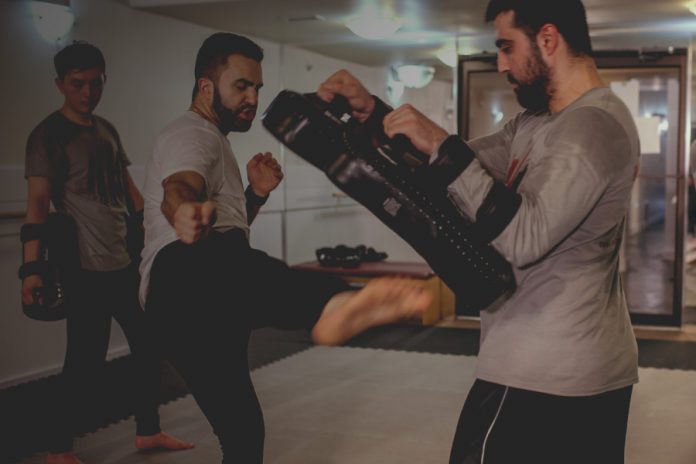
 “Keep going! Your spirit is in here!” Sasha’s encouraging, booming voice cuts through the music in a room full of students dripping with sweat, warming up for his kickboxing class. He is right there with them, circling the room to check in on his students and correct their form.

         Nearing two years since opening Modern Warrior: Academy of Self-Defense, SFU alumnus Sasha Tadayoni is taking the mixed martial arts community by storm. With his uplifting and groundbreaking movement, Tadayoni works to help individuals overcome personal obstacles and move towards personal empowerment and growth.


What is Modern Warrior?

          “Our mission is empowerment of our students: helping them achieve peace of mind and preparing them for whatever they might face out there in the real world.” said Sasha Tadayoni in an interview with The Peak. “We are not a fighting school, we are a school that focuses on real-time events, real scenarios, and the rule of law when it comes to self-defense.”

The Modern Warrior dojo is unique in that it prides itself in combining aspects of self-defense and traditional martial arts to create a balanced and effective weekly regimen.

“Sasha always stresses that it’s not about being better than anyone, or beating someone to a pulp. It’s about feeling — as a whole — equipped to defend yourself from very real threats and dire situations that could happen, or have happened to you,” said Cruz Velasquez, an SFU student who is also a Modern Warrior wrestling instructor.

“Honestly, I never could have predicted that I would be teaching self-defense because I never really saw how valuable my wrestling skills could be when applied outside of the wrestling field of competition.”

Modern Warrior’s self-defense training classes are based mostly on jiu-jitsu, kickboxing, silat, and wrestling. Modern Warrior is giving people of all ages and walks of life the opportunity to study a multitude of self-defense and martial-art forms, which fosters a space of intense discipline and personal growth.

“The whole mantra of modern warrior is train the mind, prepare the body. We want to encourage and empower others to always be a student, to always be learning,” said Velasquez. “Yeah, I’m an 11-year wrestling veteran but I find that Modern Warrior is teaching me new things all the time, in all aspects, whether it be teaching methods or different aspects of self-defense.”

Tadayoni is notorious amongst his instructors and students for making sure each individual gets the most out of his classes. One of these students is Nafisha Hussain, who also studies criminology at SFU.

“[Modern Warrior] has allowed me to both physically, mentally and emotionally expand my limits [as well as] achieve things that I had previously thought I wasn’t capable of,” said Hussain. “It’s an empowering and positive environment that encourages growth — as a whole.”

Tadayoni encourages the students to let their emotions flow, whether they be timidness, frustration, anger, or even fear and anxiety over the common mental obstacle of “flipping the switch” (turning on the intent to land an effective strike or to hurt somebody). For Tadayoni, there is no better place or time to express your emotions towards personal barriers and weaknesses than during class. He emphasises that the dojo is a safe place for all students to do this.

Once the instructor has a sense of a particular student’s personal obstacles, they can help students train them to overcome it, empowering the student and equipping them to face the things that make them feel vulnerable.

“No matter what past issue or current issue our students bring to our dojo, we are there to talk them through it, give them the encouragement they need, and generally be a great support and advocate for each student’s personal goals whether it include overcoming something major or not,” Sasha explains. “Patience is the greatest virtue that we can give to our students.”


How did it all begin?

Approximately three and a half years ago, Tadayoni experienced an injury that left the left side of his body paralyzed. Tadayoni found himself unable to walk and struggling with depression. While working through his personal difficulties, he watched local news explode with the upsetting reality of sexual assaults happening on local university campuses. He soon gained a momentous drive to do something about it, and from this was born a life dedicated to training himself and others.

“Not being able to walk [or] apply the things I have learned throughout my life to protect myself was not only disheartening, but foremost it was scary— it made me think ‘Oh my god, if something were to happen to me right now, how would I defend myself?’” Tadayoni recounted. “It was a very eye-opening moment in my life as it made me reflect on the fact that at least I have some self-defense training to help me. I could imagine that people with no previous training could be feeling even more vulnerable.”

“Seeing the sexual assault cases on the news every single day almost jolted me out of the depression I was experiencing from my injury,” Tadayoni said. “If I was not able to be active again, nor go into competitive fighting again, I could share my knowledge of self-defense and use it to equip other people.”

When Tadayoni is not teaching, he himself is training and working hard to pursue his personal dream to be a professional boxer in nationals. After years of healing and training for his first local fight since his injury, he fought in the BFL (Battlefield Fight League) kickboxing headlining fight on September 22, 2018, at Hard Rock Casino and won, broken nose and all. A group of his students and fellow instructors came out to see him fight and celebrate his huge personal accomplishment.

“I’ve been training [in] martial arts — specifically kyokushin karate — since I was six years old. I competed in the local, national and international level, eventually getting into the Canadian team,” says Tadayoni on his martial arts experience. “At 21 years old, I started practicing kickboxing and jiu-jitsu, trying to make myself as well-rounded of a martial artist as possible.”


What’s next for Modern Warrior?

All of the instructors at Modern Warrior bring their own teaching style, history, craftsmanship and passion to the dojo, and play a part in making it as lively as it is. Most if not all of these instructors compete and win fights in their off-time and tirelessly train so that they can continuously challenge their students.  

“My primary goal as an instructor is to get my students to feel confident in what they already know. What I want my students to take away from my class is not the theory or the specific moves, but to learn how to react upon your primary instincts when you have to fight— what we call ‘flipping the switch,’” Velasquez said. “We also want to make sure that as instructors of self-defense, we are not only there to train you but to also be there for you as a huge part of Modern Warrior is the mental training and it can come with tough barriers. Barriers that we, even as instructors, have struggled through.”

Instructors and students alike express their passion for MW by returning every day or every week to train. Some students fight in local karate or kickboxing competitions, and some are just enjoying the killer workout both mentally and physically.

“From my experience, Modern Warrior wasn’t something I expected, but it was a place I needed. That still rings true after 8 months,” said Hussain. “The classes they offer are so different, things I never anticipated I would ever be giving a try and now I’m enrolled in classes for things like wrestling and karate. In a way, modern warrior has opened many doors for me.”

Tadayoni’s passion for teaching self-defense has only grown since he opened the business. With his team of five instructors, he is working on expanding Modern Warrior as a movement through a semester-based curriculum. This is similar in framework to Tadayoni’s educational career at SFU, where he graduated with a BA in International Studies. Tadayoni is hoping to form a curriculum that can be passed down to future instructors at different dojos across Vancouver, Canada, and maybe even across the world in Japan.

“As instructors, we are nothing special nor superhuman”, says Tadayoni, “at the end of the day we all strive to be lifelong students: consistently eager to learn and grow.”

And what about Tadayoni’s advice for actual students at SFU, who may be going through their own hardships?

“Stop treating yourself as if you are so small,” Tadayoni said. “You can do a lot more than you think, and you are always stronger than you know.”