Home Blog Page 591

Board Shorts

0
Irene Lo / The Peak

Written by: Amneet Mann, News Editor


Board approves motion to extend subleases with CJSF and SFPIRG on a month-to-month basis

The original expiry date on the subleases allocating the Simon Fraser Campus Radio Society (CJSF) and the Simon Fraser Public Interest Research Group (SFPIRG) space in the rotunda was December 14.

It was noted that the two groups were currently in discussion with the Simon Fraser Student Society (SFSS) and had not yet agreed to the terms of the proposed agreement.

“We are authorizing the SFSS to send these agreements; we don’t have any authority to make a decision for CJSF or SFPIRG,” said vice-president university relations Jackson Freedman.


Board approves $4,729 for Christmas Carnival event

Vice-president student life Tawanda Masawi noted that the two-day carnival would be the last SFSS event of the term. The money would be allocated towards hiring a professional Santa Claus, photographer, and variety of arcade games.

The motion was passed by board majority with vice-president finance Matthew Chow voting against the motion.

“I’m not comfortable spending $4,000 right now on what we’re planning on proposing because I think there could be alternatives that we could create,” stated Chow.


Board reaches out to NEB regarding tank farm expansion

In response to a request from the National Energy Board (NEB) for comments on “marine-related shipping,” the board drafted and sent in a letter outlining their concerns with the Kinder Morgan tank farm expansion project. The letter addressed the tank farm with respect to the Westridge Marine Terminal, which is located at the bottom of Burnaby mountain.

Sarah Edmunds, SFSS campaigns, policy, and research coordinator, noted that as the comments were being reviewed by the NEB in connection to the Canadian Environmental Assessment Act, the letter reviewed the board’s concerns with the tank farm project from an environmental perspective. “There was still a little bit of a student safety piece in there, but it was focused more on environmental,” said Edmunds.


Board names new signing officers during CEO absence

In anticipation of the CEO position on board being empty following Wyant’s departure, Build SFU general manager Marc Fontaine and SFSS general manager Alejandro Reyes were appointed as full signing authorities with Scotiabank, the society’s financial institution. The general manager position was created and filled by Reyes in May 2018.

Fontaine and Reyes were delegated further financial authority with respect to payments such as reimbursements provided to clubs and student unions, payroll, and vendor payments.

Finally, as general manager, Reyes was appointed as a signing officer under SFSS By-Law 6.11 until May 31.

Wyant suggested that once a new CEO had been hired for the SFSS, the financial authorities be transferred back to the individual in that position, provided that two signing authorities remain on SFSS staff.

Reyes was also named as a staff liaison officer between the board and the Canadian Union of Public Employees (CUPE) following Wyant’s departure.

Comedic Poetry: Things more fun than final exams

0
Illustrated by Cora Fu

Written by: Youeal Abera

Racing down a hill
On a bike with no brakes —
Hitting a beehive
With my bare, entire face.

Walking on hot coals
And licking them too!
Eating spaghetti
With just a small spoon.

Swallowing worms
And slurping beetle stew.
Fighting Harambe
At the Cincinnati Zoo!

Listening to a hipster
Explain in detail
Why my taste in music
Is utterly stale.

All of these things suck, but please understand:
They are all more fun than Final Exams.

QUIZ: Which kid’s TV show permanently traumatized you as a child?

0

Written by: Aaron Richardson

[typeform_embed type=”embed” url=”https://peakmultimedia.typeform.com/to/R5ZEq6″]

Ascension is the passion project by SFU’s SCA students you need to see

0
Image courtesy of School for the Contemporary Arts

By: Hannah Davis


SFU’s School for Contemporary Arts (SCA) acts as a birthplace for creativity and collaborative artistic creation. Housing students from a multitude of departments, from dance to theatre and visual arts, to film to music and theatre production, the School for Contemporary Arts fosters collaboration between all disciplines and between students of different creative backgrounds. In the wake of all this creativity and imagination, comes a show like Ascension.

        This year, Ascension will feature six dance pieces set to six original musical compositions. It will include numerous films, as well as lighting designs by both SFU and UBC students. The show is produced and directed by SFU students, and funded by the Music Student Union, the Dance Student Union, and Simon Fraser Student Society. SCA provides space for such artists, that are even aided and supported by numerous faculty members for its production. The show is growing every year, and becoming increasingly collaborative.

        Ascension is an annual show established by a group of SFU students who wanted to put on an interdisciplinary production. Now in its seventh year, it still acts as a beautiful representation of what it means to exist and work in creative and collaborative spaces.

        As the production is extra-curricular, students who participate are doing so out of sheer love for what they do, whether they are a dancer, filmmaker, composer, performer, lighting designer, or otherwise.

        One of the goals for the Ascension in the future is to start including more disciplines in major creative roles for the show. All those involved in Ascension are deeply thankful for the support of students, friends, family, and faculty members.

        If you would like to experience a student-run show celebrating interdisciplinary and collaborative creation, come see Ascension this year, running on December 6th, 7th and 8th at 8:00pm in Studio T at the SFU Goldcorp Centre for the Arts: 149, West Hastings Street, Vancouver. All students are welcome. I urge all students come to Ascension if you would like to see a show that truly celebrates collaborative art-making, and honors the notion of creating for the love of creation.  

Tickets are $7 for students, $10 for seniors, faculty, staff and alumni. General admission is $15.

Chatting demo deals and beginnings with Keely, Max, and Isobel of the jazz-pop band the Escapes

0
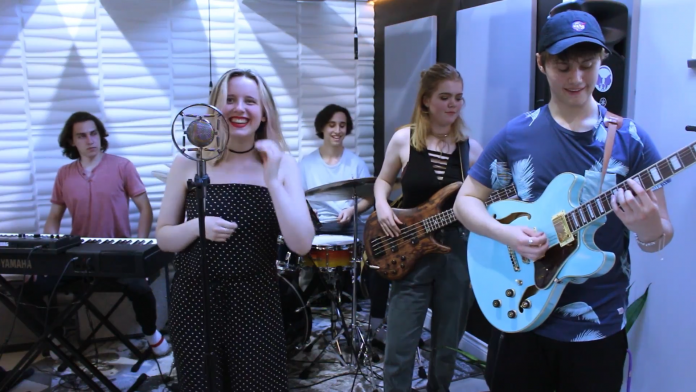
Image courtesy of the Escapes

By: Natasha Tar, Peak Associate


The five-piece, all-student band the Escapes lent three of their members for an interview with The Peak this past week. As we settled into sofas and chairs, I realized it was good luck to even get the three of them. “I take 15 credits and I work 25 hours a week,” explained bassist and third-year SFU communications major Keely Rammage-Scott.

       Perhaps this is familiar to many of us, but on top of that, of course, her and her bandmates must balance their music and songwriting. Lead singer Isobel Ralph, a third-year literature and religious studies student at UBC, summed it up for me: “The way that we all balance school and work and music is [we] just don’t sleep as much as [we’d] like.”

       Self-described as “groovy jazz-pop,” the Escapes formed over three years ago by accident. Max Cunningham, lead guitarist, backing vocalist, and SFU business student, explained that he started out in a band with his brother Rhett (the Escapes’ drummer) and Jack Wells (their keyboardist). Their singer at the time couldn’t make it to an upcoming show, so Isobel stepped in, learned all the songs within a week, and went onstage.

       “We played the show and it went really well,” Cunningham explained. “After a couple weeks, we started practicing together, and then Rammage-Scott got into the picture and from there it just went on.”

“We just write a lot,” Ralph laughed, trying to pick a favourite song from the many the band has created since their first, serendipitous show.

       Unfortunately, after leaving high school, the Escapes have been somewhat split. Wells studies in Ontario, but the band explained they often make the effort to connect with him and keep him in the loop. The other members keep up through messaging and meetings, despite their different schedules, schools, and work loads. As Cunningham put it, “The Internet is a powerful thing.”

       The Escapes recently landed themselves a demo deal with record label 604 Records, known for producing acts such as Marianas Trench and Carly Rae Jepsen. “We got to record three songs in the summer and try out everything, work with producers [ . . . ] It was honestly so fun,” Cunningham said. “We learned so much.”

       “We’ve been very lucky and very blessed to have been given this amazing opportunity to work with people that get us and where we are as people [and] as students,” Ralph added. “We’re obviously all still growing as musicians and as people, but even within the past year I think we’ve made great strides with where we are.”

       Because of their experience both inside and outside the recording studio, I asked the Escapes if they had any advice for aspiring bands and other musicians who are starting out.

“You hear the statement that ‘practice makes perfect,’ but that’s not something I personally believe in,” Rammage-Scott said. “I believe that practice makes you better.” She added that it’s important to stay focused on your goals and try not to compare yourself to others.

       She continued, “It’s really more about focusing on working on who you are as a musician, rather than trying to compare yourself to someone else’s standards [ . . . ] If you keep practicing, you’re not necessarily gonna reach perfect because in a creative form, I don’t think there’s an absolute perfect. Creativity is creativity.”

       Cunningham and Ralph agreed with her completely before heading into Forum Chambers for a cutthroat swivel-chair race.

Interested in how the Escapes got their name and who won the race? Check out the video interview at the-peak.ca.

10 things to do this holiday season in and around SFU

0
Image courtesy of 604now

By: Michelle Gomez

Winter Warm-up (Vancouver, Surrey, and Burnaby campus)

Take a break from studying and de-stress with SFU’s annual Winter Warm-Up. It will feature the usual: festive craft-making, games, fire pits, and holiday snacks. For students at Burnaby campus, there will be musical performances from fellow students, whereas if you’ll be at Harbour Centre, there will even be dog therapy!

Nov. 28 (Burnaby and Harbour) and Dec. 3 (Surrey)

12 p.m. – 2 p.m. | Convocation Mall/Harbour Centre Concourse/Surrey Mezzanine | Free


SFU FASS Gingerbread House Contest (Burnaby)

Celebrate the last day of classes with the Faculty of Arts and Social Science’s annual gingerbread house competition contest! Teams of five will each build and decorate a gingerbread house, with prizes awarded to the winning teams. Teams can either be a departmental student union or walk-ins that will be put into groups. It is free, but make sure to register online before.

Dec. 3

4 p.m. – 6 p.m. | SFU Burnaby AQ 3020 Arts Central | Free


Ascension 2018 (Vancouver)

Come support your artsy SFU peers at Ascension 2018! Ascension is a yearly production put on by SFU School for Contemporary Arts that is entirely produced by undergraduate students. It is an interdisciplinary show that includes students from the music, dance, production and design, and film programs.

Dec. 6 – 8

8 p.m. | SFU Goldcorp Center for the Arts, Studio T | $7 for students


Vancouver Christmas Market

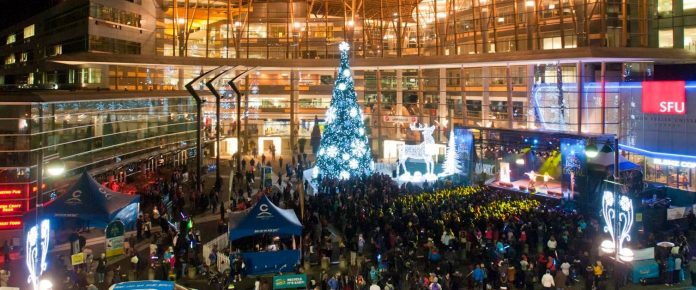
Vancouver’s annual Christmas market is back in Jack Poole Plaza at Coal Harbour. It is modelled after traditional German Christmas markets featuring German food, drinks, and gifts, all from local vendors. In addition, there will be a carousel and a variety of entertainment performing on the stage.


Nov. 21 – Dec. 24

11:30 a.m. – 9:30 p.m. | Jack Poole Plaza 1055 Canada Place | $10 online, $12 at gate


Capilano Suspension Bridge Canyon Lights (Vancouver)

One of Vancouver’s most popular tourist attractions transforms into a light festival every winter. Enjoy walking along the lit suspension bridge, treetop adventure, rainforest, and cliff walk. Be sure to try the beaver balls, and don’t forget to bring your camera!

Nov. 22 – Jan 27

11 a.m. – 9 p.m. | Capilano Suspension Bridge | $35 for students (includes annual pass)


Grouse Mountain Peak of Christmas  (Vancouver)

No December is complete without a trip up the Skyride to the peak of Vancouver. Even if you don’t ski or snowboard, you can spend the day skating on the outdoor ice pond, strolling through the Light Walk, and taking a sleigh ride. Not only does Grouse have the most stunning views of Vancouver from the top, but they also have beavertails (a.k.a. the real reason you want to go).

Nov. 23 – Jan. 6

9 a.m. – 10 p.m. | Grouse Mountain | $56 for mountain admission


VanDusen Festival of Lights (Vancouver)

Every year, the beautiful VanDusen Botanical Garden transforms into a Christmas scene straight out of the Nutcracker. If you love Christmas lights, mulled wine, and/or carousel rides, then the Festival of Lights is a must-see. The park also features a variety of food options and a dancing lights light show every hour. When leaving the garden, be on the lookout for the person handing out free tickets for Holiday Heights, which is yet another light display at the nearby Bloedel Conservatory.

Dec. 1 – 24

4:30 p.m. – 9 p.m. (until 10 p.m. Dec. 21–24) | VanDusen Botanical Garden | $18.50 online, $20 at gate


Little Dickens: The Daisy Theatre (Surrey)

Calling all theatre-lovers! Get your Christmas on with a raunchy marionette version of the classic A Christmas Carol. Toronto-based puppeteer Ronnie Burkett is back with another show of music, improvisation, and audience participation. The show will feature washed-out diva Esmé Massengill as Scrooge among other returning characters, and it’s sure to be a fun time!

Dec. 4 – 22

8 p.m. | Historic Theatre, 1895 Venables St. | $24 – 69 (depending where you sit)


Chanukah Celebration at the Vancouver Art Gallery

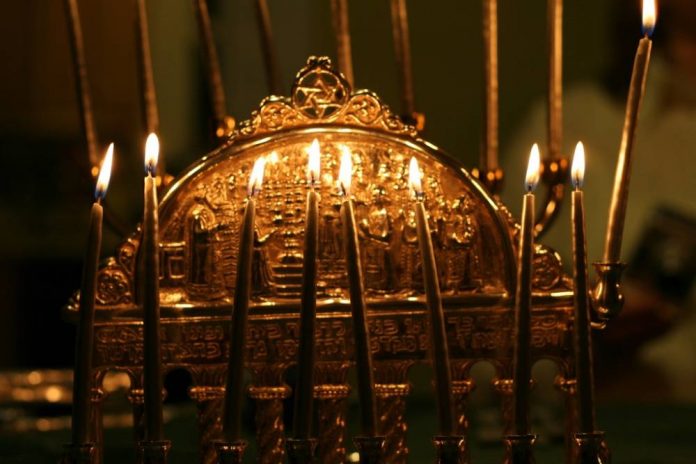
Celebrate Chanukah this year at the Vancouver Art Gallery with the lighting of Canada’s tallest menorah! Enjoy family friendly entertainment such as live music, fire juggling, and a gelt drop while you munch on latkes, hot cocoa, and donuts.

Dec. 6

5:00 – 6:30 p.m. | Vancouver Art Gallery, 750 Hornby St. | Free


The Nutcracker

Get into the Christmas spirit with the Royal City Youth Ballet’s rendition of The Nutcracker. Following 7 p.m. evening show on December 7, there will be two daily shows at 1 p.m. and 4 p.m. on December 8 and 9. Featuring stunning choreography, amazing young talent, and Tchaikovsky’s brilliant scores, the Nutcracker is a beloved Christmas classic that never gets old.

Dec. 7 – 9

Showtimes vary| Main Stage at Surrey Arts Center | $28 for students, $42 for adults

Dear Professor-such-and-such

0
Illustrated by Marissa Ouyang

Written by: Aaron Richardson

I am emailing to inform you that my incompetence as both a student and a human being has gotten the best of me yet again. This time, it has come in the form of me completely forgetting the paper that is due this evening at 11:59 p.m.

When I arrived home this evening and received the Canvas notification of the imminent deadline, in the midst of the all-too-familiar terror that accompanies such scenarios, I began to ponder what excuse I would use this time around.

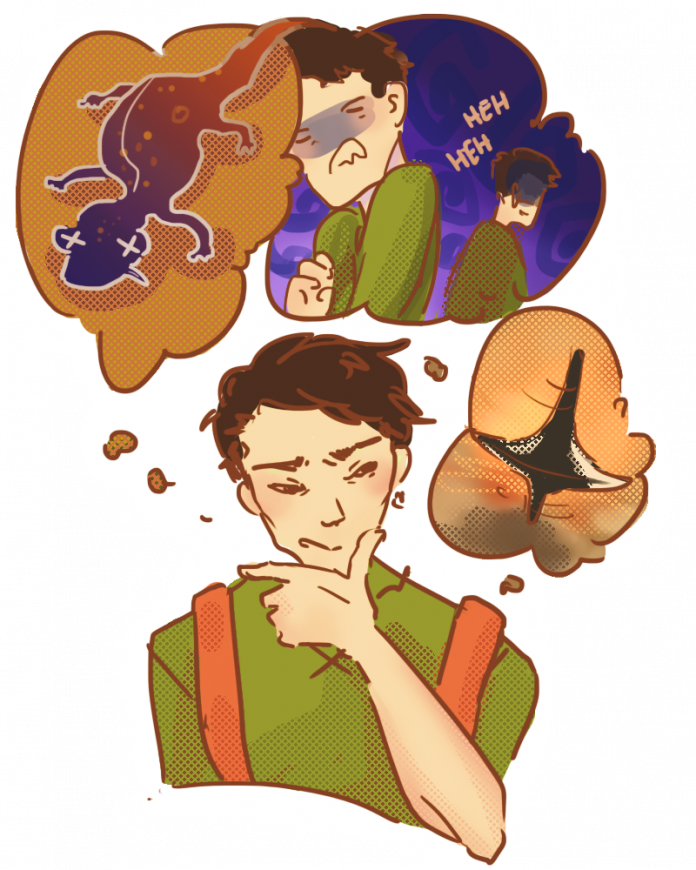
Had I yet informed you of the death of my brother’s salamander back in June? That was truly a hardship for all of us one that we endure to this day. Or perhaps an evil twin had been impersonating me in class all semester and had neglected to inform me of the deadline. Finally, I considered the likelihood that I had been incepted by some other student who was jealous of my clearly excellent, strikingly obvious intellect and work ethic.

By the time I realized that my typical excuses might not be as convincing as I had once believed, hours had passed. How many? I do not recall. But I can be sure that I could have produced an adequate C-worthy paper in that time had I used it more thoughtfully. Perhaps I could still accomplish such a task in the time remaining. But you must understand that coming up with excuses is hard, exhausting work, leaving me spent of any creative effort at this time.

I was once told by a very wise woman Loonette from The Big Comfy Couch something I am unlikely to forget: “Oh no! Granny’s gunna beat me after she sees this big mess.” It’s a sentiment that sticks with me to this day, and I can’t help but remember it at this time, for I have certainly made quite the mess of things. But, rather than attempting to hide the mess with some brilliantly crafted excuse, I decided that honesty was the best policy. This is why I am emailing you now.

You may be upset with me for not completing my paper. But consider it a gift from me to you. Rather than forcing you to read through the obviously coffee-fueled ramblings of a madman who thinks that 1000 words is a long paper, I have given you the freedom of never needing to experience or even witness the thoughts that run through my head all day. I hope that you appreciate this, and that you return the favour with a grade of your choosing.

Sincerely,
A student who you’ve probably never seen in class

P.S. My brother’s salamander did actually die. So if that is adequate justification for an extension, I will certainly accept it.


SFU men’s basketball team looks strong heading into GNAC season

0
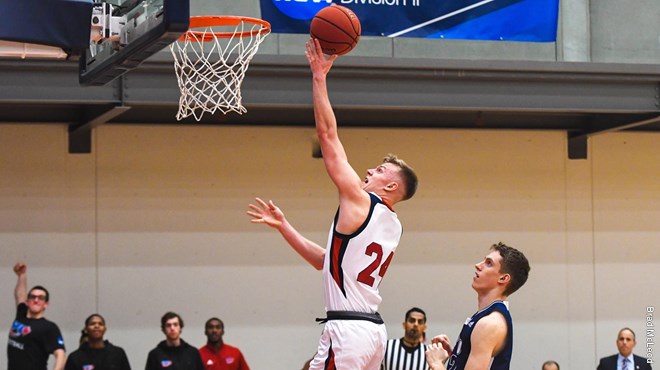
Drew Bryson had 24 points against Capilano University on Saturday. (Photo courtesy of SFU Athletics)

On Thursday and Saturday this past week, the Clan hosted both Columbia Bible College and Capilano University on Burnaby Mountain for exhibition matches. As expected, SFU proved to be the stronger team in both games. They have now won four games in a row after starting the season 0–2, and look poised to have a strong GNAC season when it begins on Thursday, November 29.

Vs. Columbia Bible College

Game one against Columbia was hardly a contest. The Clan dominated their opponent in the first half and never looked back, with the starters carrying SFU to a 15–4 lead. This dominance only continued as both teams started to rotate players. By the end of the first half, the score was 53–22, and everybody in the West Gym knew who would pull out the victory.

The game ended with a score of 109–43 for the home team.

Standout performers in this one were sophomore Graham Miller and freshman Wilfried Balata, who led all scorers with 19 and 15 points, respectively. Miller is returning from a season-long injury last year, and has looked like an integral part of the rotation for the Clan so far. He went 7–12 from the field in this one, and added in 11 rebounds, one block and two steals for a nice double-double in 26 minutes of play. Balata also had two steals, and got his 15 points in only 19 minutes on the court.

Vs. Capilano University

Saturday night provided a better contest against Capilano University, but once again, the Clan did as expected en route to a big win. Unlike the previous game, however, SFU got off to a tough start against their opponent, falling behind 15–7 early. The team quickly recovered, though, and went on a major run to end the half before taking a 49–37 lead into the break.

They continued this strong play into the second half, where they went on a 14–4 run to start the half. They eventually took the game by a score of 102–72.

Again, Balata had a strong outing, putting up 24 points and 13 rebounds in only 20 minutes of action. Furthermore, he went 7–15 from the field, 3–5 from three, and 7–8 from the FT line for an efficient line. When asked about Balata’s play so far this season, head coach Steve Hanson responded with:

“There is no doubt Wilfried has a bright future at SFU.  He is physically ready for the NCAA and has shown very early what kind of impact he can have on the offensive and defensive ends.”

GNAC Season

While the pre-GNAC-season success has been nice, Hanson and the Clan know that the team still has a lot to prove. They will play against Western Oregon University on Thursday, November 29 and Concordia University on Saturday, December 1 in their opening GNAC road trip.

“Our first two GNAC games in Oregon will tell us a lot about where we are at. We play the #1 (WOU) and #11 (Concordia) from last season. Both programs are tough and have made a lot of changes to their roster, but we have high expectations and our guys want to win both. There is no better way to go into exams than being 2–0 in league and that is our goal,” said Hanson.

On what the team has to improve upon heading into the GNAC season, Hanson had this to say:

“Consistency. We have to be consistent defensively and be tough every night.  We have so many players that can shoot, this will help on nights where others may not shoot it well.  However, we need to be really tough defensively in case we have nights the ball doesn’t go in — that is key.”

Jewish holidays and what they mean to SFU students

0
Image courtesy of The Georgia Straight

By: Gene Cole, Martha D, and Ruth Leavitt. Compiled by Gabrielle McLaren, Features editor. 

Editor’s note: Beliefs about whether or not the full name of G-d should be spelled completely vary throughout the Jewish community. This piece has respected the spellings submitted by our contributors.


Your crash-course on the Jewish calendar

The Jewish calendar is a modified lunar calendar, with a leap month added at the end of some years to ensure that the festivals remain in their correct seasons. The first month of the year is Nisan, in the spring; however, the calendrical year changes in the month of Tishri, on the day of Rosh Hashanah (there are complicated reasons for this, but that’s a whole other story).

Thus this list could begin in fall or in spring, and both are completely valid. Given that it is currently fall (Rosh Hashanah fell on September 9 this year, and began the Jewish year 5779) I started there for simplicity:

  • Rosh Hashanah, the calendrical New Year; the beginning of the Ten Days of Repentance to prepare for Yom Kippur
  • Yom Kippur, the Sabbath-of-Sabbaths, the holiest day of the year and one of atonement and reconciliation – with God, with community, and with yourself.
  • Sukkot, the Feast of Booths.
  • Shemini Atzeret and/or Simchat Torah, the “eighth day” of congregation and also the end and re-beginning of the cycle of reading the Torah scroll.
  • Hannukah, the Festival of Lights. A post-Biblical holiday about Jewish perseverance, whether you focus on the Maccabees or the miracle of the oil.
  • Purim, another post-Biblical holiday, is about Jewish survival of anti-Semitism as recorded in the Book of Esther. It has become a day of costumes and drunkenness, and tends to be the epitome of “they tried to kill us, we survived, let’s eat!”
  • Passover (Heb. Pesach), the Feast of Unleavened Bread. This holiday is celebrated in the recreation of the Passover seder, the retelling of the story of the Exodus around their table at home.

This is not an exhaustive list; there are many minor holidays scattered throughout the year, and some not-so-minor ones that recur — most notably, that of Shabbat itself, the seventh day of rest. In Jewish practice, keeping the Sabbath is a holiday all its own, with its own traditions, practices, and divergent observances among different people, cultures, and norms. – RL


Shabbat

Shabbat is a central part of Jewish living, celebrated every week from sunset on Friday to nightfall on Saturday. The origin of this comes from the Torah, where we learn that G-d created the world in six days and rested on the seventh. In his book The Sabbath, Rabbi Abraham Joshua Heschel refers to Shabbat as a “palace in time” because of the delight it brings to the soul and body, allowing one to focus away from the material everyday and into the holy space created in time.

To differentiate Shabbat from the other weekdays, there are 39 different kinds of restrictions on the work in which we can participate. Before sunset on Friday, it is traditional to clean up your home and wear nice clothes as if to welcome a bride or queen, which are common metaphors for Shabbat. On Saturday night, this time comes to a close through a ceremony called havdalah.

Shabbat is the warm smell of challah bread and the flickering candle lights, and saying kiddush with family and friends to sanctify Shabbat. It is taking a day for yourself to step back and relax, feeling your breathing slow down. It is finding thanks for all the blessings in your week. In addition, observing Shabbat illuminates central Jewish values like helping others, doing acts of kindness, and striving for peace and justice. – MD


Passover

Passover is up there as one of the biggest of the Jewish holidays, with its story being retold in tons of cartoons, from Rugrats to the Simpsons. The short version is that the Jews were enslaved in Egypt, and one Jew named Moses spoke up for his people and tried to convince the pharaoh to let his people go.

The name ‘Passover’ references the last of the ten plagues that G-d sent to the Egyptians, which was the death of each of their firstborn sons. To signal that their houses should be “passed over” to keep their children safe, Jews painted their door with sheep’s blood. After this night, Pharaoh let the Jews leave, but not before chasing them down once they began their journey. The Jews escaped with the help of one last miracle; the parting of the Red Sea so that the Jews could cross over to safety.

There’s something in the eight-day holiday dedicated to every part of this story. Alongside a synagogue service filled with prayer and song, Passover is greatly centred on a seder dinner: a long meal with prayers and retellings of the story, to help us remember our ancestors’ suffering and appreciate our freedom. This isn’t to say it’s sombre, though— while it’s still a serious affair, it’s a time for appreciating what we have and spending time with family.

There’s one other tradition key to this holiday: Jews are intended to avoid eating risen foods, particularly bread, during Passover. This is to show memory for the Jews who had to leave Egypt so fast that the bread they made didn’t have time to rise. One of the token foods of Passover, a fairly flat and dry cracker called matzah, is a dedication to the food they had to eat on their journey. – GC


Sukkot

Jewish holidays have a pretty common trend in terms of theme and story: the Jewish people were threatened, they escaped and survived, and now we celebrate our perseverance. Sukkot stands far from this trend by being a time to celebrate the fall harvest and rest. At its core, this holiday is a celebration of food, nature, and peace.

What makes this holiday memorable and fun are the traditions around it, which are far more visual than the typical seder dinner (see the entry on Passover). This is much because of where the celebration takes place: an outdoor shelter made of wood and leaves called a Sukkah, which lets us be closer to nature. Many families build their own for their backyard, but Synagogues typically have one of their own for people to use as well.

The other typical tradition involves a pair of objects called the lulav and etrog to represent food and nature. The etrog is a small citrus fruit, while the lulav is a palm branch with two types of twigs (hassadim and aravot) attached to it. On each of the mornings of Sukkot (which lasts around seven days), the prime prayer tradition is to shake these objects in all directions to show appreciation and acknowledgement for the Lord’s love and kindness.

It isn’t the most dramatic holiday, but it’s a pleasant one amidst many challenging days Jews face. As a kid, I can definitely say a highlight of my Jewish upbringing was walking around my Synagogue’s sukkah every year and being amazed at this beautiful, natural structure. – GC


Hannukah

First off, let’s establish that the answer to “how do you spell Hannukah?” is “with a different alphabet.” The variation of spellings in English comes from different preferences for the way Hebrew characters relate to Latin ones. Transliteration has a few rules with wiggle-room, so the variations that exist are all just as right, and just as wrong, as the others.

Hannukah is a holiday from a post-Biblical book called The Book of the Maccabees. The story as currently told is that after a battle fought to oust Greeks that were defiling the Temple, only enough consecrated oil remained for one day. Someone lit it anyways and it miraculously lasted eight days. To this day, we light the candles in memory of God’s miracles and they are symbolic of keeping tradition alive. Because the temple menorah ran on oil, food cooked in oil became symbolic too, making this the holiday of not just latkes, but jelly-filled doughnuts too. The story pushed out of focus by the miracle of the oil is that of Judah Maccabee, who led a group of rebels that ousted the Greeks after they rededicated their Jewish temple. While they were barred from the temple, they couldn’t celebrate Sukkot, so they celebrated it belatedly after they came out victorious against the Greeks. This belated Sukkot was turned into a holiday of its own, to celebrate the struggle to celebrate.

For a few reasons, the story of the oil has taken primacy over his. The Rabbis of the diaspora, centuries later, felt celebrating military victory might be dangerous, not just from outside but from inside as well, inspiring careless bravado that could get people killed.


Regardless of which miracle you promote, in essence their meanings are the same: that of perseverance, and trust that God will bring us through hardship when we feel like we may burn out before the end. Ultimately, the light in darkness — acutely felt in winter here in B.C. — will continue to burn. – RL

 

SFU’s Centre for Students with Disabilities changes name

0
(Chris Ho / The Peak)

Written by: Srijani Datta, Assistant News Editor


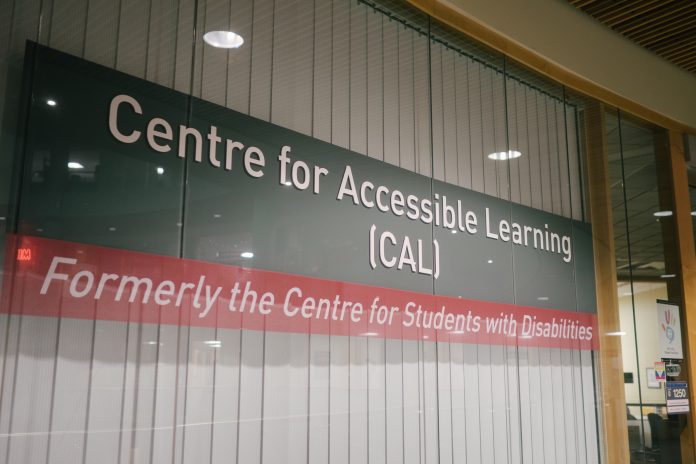
Effective November 2018, the Centre for Students with Disabilities (CSD) at SFU has changed its name to the Centre for Accessible Learning (CAL).

The centre works on a diverse range of issues aimed to make the campus more accessible. For example, the CAL website mentions that the centre works to ensure “physical access to the campus (including learning spaces)” and helps “adapt curriculum and delivery systems to meet the learning needs of people with disabilities and the community at large.” The Centre is also at the forefront when it comes to the University’s policy consultation work on diversity and inclusion.

CAL Director Mitchell Stoddard explained to The Peak why this change was made and what it entails over an email interview.

According to Stoddard, the name of the centre was changed for a number of reasons, including the “significant paradigm shift in the way disabilities are conceptualized.”

“The focus has moved away from the individual and onto the design of systems which play a significant role in the production of barriers for persons with disabilities.” – Mitchell Stoddard, Director, Centre for Accessible Learning

Stoddard continued that barriers for persons with disabilities are reflected most in the physical environment surrounding us, which can cause accessibility challenges for individuals.  According to Stoddard, SFU’s current building codes reflect a limited view of who makes up the community using the building, and the university’s policies and procedures can create and perpetuate such physical barriers.

“In considering the name change, we were also aware that some students who were affected directly by the systems in play at the institution did not relate to, or identify with, the term ‘disability,’” added Stoddard.

“As such, they were not coming to the Centre and we were not in a position to address the barriers that were impacting on their ability to engage fully in what the university offers.”

Stoddard noted that the name change was part of a continued effort made by the CAL to implement systemic changes which would arrange individual accommodations for persons with different accessibility needs.

Stoddard stated that all members of the University community have a role in supporting accessible and inclusive learning, and mentioned efforts such as the SFU’s Equity and Diversity Initiative, and the commitment, intention, and resources of the broader community as bringers of positive change.   

The CAL also collaborates on programming and research projects with several other SFU divisions like the various faculties, the Teaching and Learning Centre, and the Student Learning Centre, among others. Outside the university community, the centre also engages with the Ministry of Advanced Education and the Rick Hansen Foundation, which bank on the CAL’s knowledge on the diverse needs of different kinds of learners.