Home Blog Page 592

SFU student group aims to ban plastic water bottles on campus

0
(Chris Ho / The Peak)

Written by: Amneet Mann, News Editor


An SFU student group is lobbying to ban the sale of plastic water bottles on Burnaby campus.

Ban the Bottle SFU is made up of 15 undergraduate and graduate students, and it is led by Mireta Stranberg-Salmon, a student in the School of Resource and Environmental Management. In an interview with The Peak, Stranberg-Salmon explained that she was inspired to start the group because of a World Water Day event held earlier this year by SFU’s Pacific Water Research Center (PWRC).

During the event, the topic of bottled water at SFU came up. As a result, Strandberg-Salmon decided to approach Zafar Adeel, PWRC’s executive director, to discuss starting a bottled water ban at the university.

Before this, Stranberg-Salmon had led a similar initiative at her Burnaby high school and succeeded at banning bottled water at the institution.

“So I always thought it would be pretty cool if we could do it at SFU too,” she said. “But it seemed kind of big and scary so I wasn’t sure if it would happen.”

The original Ban the Bottle SFU group contained a mix of Adeel’s graduate students and Strandberg-Salmon’s own friends. The group is supported by PWRC, the SFU Sustainability Office, and the Simon Fraser Student Society (SFSS).  PWRC has agreed to help the group with promotional material such as printing stickers, and the SFSS informally agreed to help promote the group on its social media during a board of directors meeting held on November 9.

In an interview with The Peak, Adeel explained that if SFU were to enact this ban, the school would need to make three major changes. First, SFU would have to work with vendors and SFU Dining Services to ensure that bottled water is not sold anywhere on campus.

“I know some of these are contractual processes — they can’t be done overnight — but there’s a timeline that hopefully the university can put in place, particularly through their procurement, to enforce bottled water is not sold anywhere on campus,” said Adeel.

Second, SFU would have to ensure that there are an adequate number of water fountains and water bottle refill stations around campus. Adeel noted that in the Technology and Science Complex (TASC) 2, where his office is, there are no fountains or refill stations.

According to Ban the Bottle SFU’s research, installing a refill station costs approximately $2,200 in the first year, and approximately $200 in subsequent years for filter changes. Based on data presented by the refill stations’ displays, the group noted that in high-traffic areas such as the Academic Quadrangle, the stations had successfully avoided over 1 million disposable water bottles since being installed.

Third, SFU would have to raise awareness among the student body and faculty on why banning bottled water is important and on what alternatives are available. The group is investigating the possibility of launching a bottle-share program on campus — similar to the recently launched TumblerShare — so that individuals who forget their bottles at home can find cheap, accessible alternatives.

Adeel explained that the bottled water ban was an important initiative due to the environmental, health, economical, and social ramifications of bottled water.

“Globally it’s a major problem, and there’s millions of bottles which are ending up in oceans or in water bodies and are causing harm,” said Adeel. Bottled water has also been found to contain microplastics — the health effects of which are currently unknown — which are not found in tap water.

Adeel also noted that bottled water can also be expensive for students.

“Now, there is a time and place for bottled water [ . . . ] but to do that here on campus where you have ample access to very good quality water. . . Economically, it just doesn’t make sense.” – Zafar Adeel, Executive Director, PWRC

Finally, Adeel noted that a bottled water ban would align with the reputation SFU is hoping to maintain as an environmentally progressive university. Adeel went on to say that Ban the Bottle SFU would enable the university to make progress on its Zero Waste Initiative, working towards its 20-year sustainability goals.

The group is currently focusing on campaigning for this ban on the Burnaby campus first, as the Surrey and Vancouver campuses are under different contracts with vendors.

Stranberg-Salmon noted that the group’s next steps are to hold a meeting with SFU administration to better understand the type of obstacles the initiative might need to overcome, as well as the type of support the group can expect from the university. Ban the Bottle SFU is also looking to hold a movie night on campus near the end of November, during which they will screen a documentary on the topic and hope to gain further support and notice on campus.

As Ban the Bottle SFU begins to raise awareness among the student body and meet with university administration, Strandberg-Salmon noted that she had been encouraged so far by the responses and support the group had been receiving. “I’m really excited to be at a university that’s really encouraging student engagement and leadership [ . . . ] I didn’t really think anything like this could become a reality at a big school like SFU coming from my high school, but it seems like it could actually happen and so that’s really exciting,” she said.

Strandberg-Salmon followed up in an email with The Peak to add that she hopes a successful bottled water ban will inspire students consume less of other single-use plastic items and pave the way for other student-led sustainability initiatives at SFU.


With files from SFU News.

Album Reviews

0

by: Kim Regala and Kitty Cheung


ALIVE! By N’RTH

SFU Stephen Kloppenburg is the man behind the artist, N’RTH, and his album ALIVE! blends all of his musical influences to create a unique style fit for any fan of music — whether they be a hip-hop fan, an EDM enthusiast, or maybe even an indie rock fanatic.

       Undoubtedly the best in the album, his title track “Alive!” showcases this musical diversity quite well. Not only does he sing, but he also lays down some pretty impressive rap verses. However, it’s the guitar that steals the spotlight for me, from the way he layers different rhythms in the beginning to that enjoyable solo at the end. “Tongue Tied” comes in as a close second to best, as it is a definite head-banger that could easily get a crowd pumped.

       While most musicians spend their whole career aiming to perfect a sound that fits a particular genre, N’RTH steps outside of this norm and produces something that is beyond a single category. – KR


BALLADS 1 by Joji

As Joji’s debut album, BALLADS 1 infuses trip-hop and R&B with major sadboi vibes.

       Following a successful and meme-worthy YouTube comedy career as Filthy Frank, Joji transitioned into a more pensive and nuanced artist with the release of his melancholic EP In Tongues. As a producer and lyricist, he continues to deal with lost love and loneliness in BALLADS 1, a sentimental collection of romantic songs.

       While Joji does create chill beats with simple piano melodies to suit the subject matter of his songs, such as that of “ATTENTION”, he is also a master of juxtaposition. For example, the contrast of upbeat bops with darker lyricism can be heard in “NO FUN”, a track about losing friends and being content with solitude. Clams Casino also joins in for the playful and buoyant production of “CAN’T GET OVER YOU,” a darker exploration of infatuation.

       Heartbreaking and introspective, “SLOW DANCING IN THE DARK” is something you could imagine playing at a sadboi-themed prom, except no one would ask each other to dance because everyone would either be despondently sitting on the bleachers or staying home swaying by themselves.

The entire album is tinged with tender sadness, closing with the bittersweet ukulele melody of “I’LL SEE YOU IN 40”. So the next time you feeling like wallowing in sadboi despair, give BALLADS 1 a listen. – KC

Political Corner: The Brexit deadline is soon, and its consequences are only looking worse with each day

0
Photo by Phillip Lopez / AFP

Written by: Kelly Grounds, Peak Associate

After a year and a half of negotiation and internal conflicts, British Prime Minister Theresa May finally announced her party’s draft Brexit plan. Now, the deal will go to a special European council meeting to be approved and then back to the British Parliament for a final vote of approval.

The EU has been in intense negotiations with the UK ever since the referendum, and with the deadline approaching quickly (March 29, 2019), any deal would ease the divorce.

The issue is that May’s current plan has almost no chance of making it through Parliament and the European Council. May’s deal was even followed by discourse and division within her own cabinet; since the beginning of November, five of her party members have quit, including the Brexit secretary.

After the draft deal was announced, accusations of bullying and party pressure began to emerge. One report claims that only the environment secretary was in favour of the deal.

This lack of support is not promising for something that’s supposed to pad over a move as massive as Brexit. The lack of support should be a huge source of concern among the British public, and their concern could cause parliament to be more critical towards the deal.

If this deal fails, it is unclear as to what the UK will do. One possibility is a vote of confidence will be held in parliament, which could result in May being removed from power. But it could also result in a forced no-deal Brexit, which would be very bad for both parties but especially for the UK, as they do owe the EU an estimated 36 billion pounds.

Either way, after this much waiting for big progress to happen, it’s infuriating that Brexit somehow continues to be more worrying with every piece of news that comes along.

The best thing about legal pot is how little it’s shaken up our lives

0
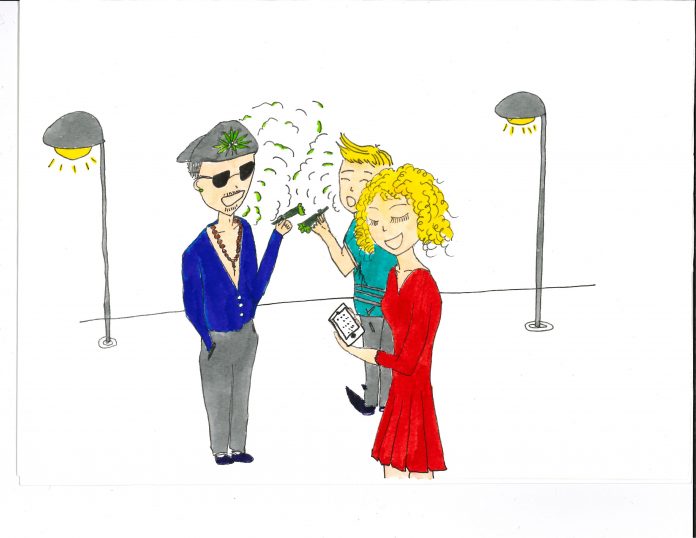
Illustration by Momo Lin / The Peak

Written by: Gene Cole, Opinions Editor

Cannabis has only been legal in Canada for a little over a month, but it’s no secret how much change it’s brought. Tons of businesses are opening and creating jobs across the country, and we’ve become an example of success that may influence other countries deciding whether or not to legalize. There have certainly been problems keeping up with supply and demand, and police attitudes are taking time to shift, but on the whole, things seem to be changing in a positive light.

In my personal experience, though, what’s made legalization a net positive is that its benefits have not really come at a social cost. I don’t have anything against it, but from this view, I’ve seen a ton of concerns about its legalization. People have feared it leading to greater safety risks or substantially increasing the number of unhealthy users.

So far, though, legalization has yet to really have these negative effects. If anything, it feels like a world that’s changing for those who use it, but not altering life in Canada as much as people feared.

While legalized pot is still new to Canada, it doesn’t seem to be getting used that much more than it was before. According to a recent federal survey, Canadian drug use has only gone up a few points, but marijuana is still quite minor compared to tobacco. Even just walking around though, it’s certainly not a plague upon our streets. At worst, there’s an occasional aroma from someone using it in the street, but this is something I’ve experienced every time I’m downtown for over a decade.

Cannabis’s non-invasive presence has also been helped by legalization being a rather smooth transition. Stores might have sold out online quickly since legalization, but spaces and policies for smoking it were implemented most everywhere just in time to make sure it isn’t used in public spaces. I’d certainly say SFU Burnaby’s designated smoking zones are an example of fixes that are working well to keep it out of people’s hair. I see it at parties, clubs, and concerts, but that’s always been the case — even before legislation — and it’s never truly been that invasive then either.

Even safety hasn’t changed all that much, in spite of the fears that people may have from the recent flurry of ads discouraging driving while under the influence. As reported by CTV News, people driving high on pot in Canada happens about as much after legalization as it was before. It’s awful that the rate isn’t dropping, but at least it’s a sign that there’s no need to worry about a sudden strain of impaired driving from cannabis users.

These successes also don’t really come as a surprise. Canada might have been trending on Twitter back on October 17, but the legislation has been ongoing for months, and the laws will continue to change over time. Within the coming months, we’re bound to see more cannabis supply and changes in public perception as it becomes a normal part of Canadian life.

Though I should correct myself: even before legalization, it was normal. Pot’s been an active part of our country for a long time, and things are moving as they should to keep it in the background for those who don’t want it.

This isn’t to say it’s been actually invisible, or widely loved. There’s still intense fears that it’s becoming so normalized that children will start taking it; it doesn’t help that there are also fears about the rise of edibles, especially back during Halloween. We’ve also been slow towards appealing marijuana-related crimes before the legalization in October. People are still in jail for various marijuana crimes that don’t exist as of last month, and that isn’t something to take lightly.

But in our day-to-day social lives, at least in Vancouver, things are relievingly similar to how they were before legalization. Legalizing pot is a shift that’s been in the works for a while, and it’s doing a lot of good without encroaching on the lives of non-users. When something’s worst-case scenario is just doing nothing, it’s a good call.

The social media trend of blackfishing is disturbing and unquestionably racist

0
Screencap from emmahallberg via YouTube

Written by: Youeal Abera, Staff Writer

On November 6, a Twitter user named Wanna created a thread which showcased a number of white women partaking in the racially insensitive phenomenon of blackfishing. The act, named after the term catfishing, is the practice of white women using makeup to appear black or biracial, with the incentive of garnering online followers by appearing more “exotic”.  

“Can we start a thread and post all of the white girls cosplaying as black women on Instagram?” Wanna wrote. “Let’s air them out because this is ALARMING.”

Following this tweet were posts from herself and her followers that showed a plethora of white women with cosmetically enhanced Black features, usually alongside photos of their more natural complexions to compare. With wigs and a considerable amount of makeup, their bodies began to bear darker skin tones, bigger lips, and thicker hair.

This type of imagery has been rampant online, and these pictures, aside from being extremely weird, are profoundly troubling. Under a disrespectful guise of being “trendy” and desirable, they call back to horrible discrimination.

This blackfishing trend is eerily like blackface, a practice where a white person would don dark paint and oversized red lips to emulate the stereotypical physical features of a Black person. This was done throughout 19th and 20th century to mock Black people and culture, but it still shows up in the modern day as a cheap, “comical” costume on days like Halloween. When looking at these Twitter and Instagram users, it’s difficult not to think that blackfishing sprouts from the same tree.

This is not to say that blackfishing is identical to blackface. Instead of making insubordinate caricatures of Black physicality through “comedic” face paint, these women instead aim to replicate idiosyncratic beauty traits of Black women. But while the motives might differ, the final outcome still is equally offensive.

For generations, Black people have been ridiculed for the features found on their faces and bodies. Big lips were considered clownish, thick hair distasteful, and darker skin ugly. These racist beauty standards, accentuated by the system of white supremacy within Western societies, made it so that Black physicality was considered “lesser” than typical Eurocentric bodies.

While blackfishing doesn’t intend to discriminate, it still works to emphasize and spotlight differences in skin, and disregards how white people have historically — and horribly — treated these differences.

The reality is that Black women still undergo a number of hurdles at their jobs, including the threat of termination, for wearing their hair naturally, while white women continue to be praised for adorning their heads with traditionally Black hairstyles. It speaks volumes into the harsh realities of white privilege that people so willing treat Black culture as dress-up just for popularity on social media.

New Fantastic Beasts sequel struggles to cast the right spell, but still enchants us with its wonders

0
Image courtesy of CNet

By: Jonathan Pabico, Peak Associate


Wands at the ready, Harry Potter fans! David Yates’ Fantastic Beasts: The Crimes of Grindelwald finally arrived in theatres. Unfortunately, this latest sequel to Fantastic Beasts and Where to Find Them will generate mixed reactions, despite its various instances of satisfying homage to the Harry Potter film franchise.

       Unlike Colin Farrell’s take on the character from the first installment, Johnny Depp as Grindelwald does not do much in this film. With Grindelwald’s crimes barely explored in the movie, Depp fails to deliver much tension with such a constrained role. His abrupt one-liners with other characters render him a mere caricature of archetypal villains from previous fantasy narratives. The only scene where Depp’s performance truly shines is his dramatic speech before the climax. Depp employs a theatrical charisma that, with the scene’s impressive staging and beckoning wide shots, instills a Shakespearean atmosphere that shapes this plot point into a captivating set piece for the story. Still, this scene does not compensate for Depp’s insufficient part in the movie.

      Although this sequel starts with a good opening sequence, the rest of the plot is confusing due to J.K. Rowling’s screenplay. It features too many subplots, detracting from the main characters’ journey throughout the story. Rowling provides a script that sadly becomes too expositional and sometimes even stale with its dialogue. Furthermore, the unnecessary focus on secondary characters offers nothing crucial to the film’s stakes and offsets the momentum for the movie’s ending. But, Dan Fogler (Jacob Kowalski) and Alison Sudol (Queenie Goldstein) are an exception to this pitfall through their endearing social dynamic that supplies most of the film’s heart.

      Despite the narrative’s shortcomings, Eddie Redmayne still provides a brilliant performance as Newt Scamander. Like the first Fantastic Beasts, Redmayne portrays Scamander as a socially awkward yet kind-hearted wizard. His scenes with many of the film’s magical creatures convey a heartwarming innocence that, when balanced with bright colours and uplifting visuals, perfectly contrasts with the story’s more dangerous and secretive wizarding world. Yet, Redmayne’s scenes with Jude Law as a young Albus Dumbledore are quite dry, especially given Law’s role is a little more than a glorified cameo.  However, Redmayne’s touching bond with Katherine Waterston (Tina Goldstein) counterbalances this drawback, even though their scenes together are not as enthralling as in the first film.

     Aside from Redmayne, the movie’s best set piece is the memorable appearance of Hogwarts. With James Newton Howard’s riveting musical score of the original Harry Potter soundtrack, the few scenes that feature this iconic school evoke sentimental imagery for fans. Hogwarts subsequently becomes more interesting to appreciate than most of the film’s story.

     Overall, this sequel is not as impressive as its predecessor. Whether as a devout Harry Potter fan or just an average moviegoer, the story’s flaws and successes will create mixed reactions. Still, David Yates’ Fantastic Beasts: The Crimes of Grindelwald is an entertaining fantasy adventure that instills the same wonder and awe first imagined by J.K. Rowling’s classic Harry Potter book series.

Long Story Short: Help is available

0
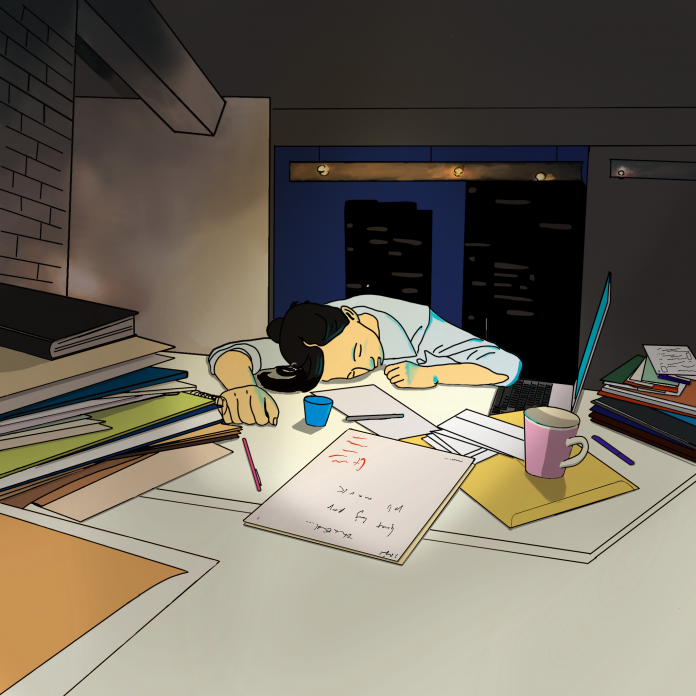
Image credit Tiffany Chan

By: Youeal Abera, Staff Writer

I’ve always been a person who takes pride in my work ethic. Whether it was at school or at work, I’ve made sure to be diligent in the tasks set before me. For the most part, this single-minded focus on work has brought me a significant amount of success — but it has also proven fairly detrimental to my well-being.

Somewhere in the midst of adolescence, I realized that work became my coping mechanism for dealing with my amalgamated anxieties and vexations. If I was having problems with a particular relationship, I’d ask my high school teachers about extra-credit assignments. If I was in a fight with friends, I’d look to pick up extra shifts at work.

For a while, this seemed fairly innocuous. My particular frustrations were very typical teenage problems, so there was little at stake when I continued to use my work ethic as my therapy. It wasn’t until this past summer that I realized just how unhealthy my form of coping really was.

This past June, I received the most devastating phone call imaginable. After being informed that my brother was in the ICU, my mother and I raced to Vancouver General Hospital to meet with my dad. Upon our arrival, we were informed that my brother had been stabbed a number of times, had lost a lot of blood, and was going to die within a short amount of time.

There is no way to describe what the doctor’s words did to me. I have never felt an emotion such as what I experienced that afternoon.

Five days later, my brother passed. My whole world collapsed.

It’s been five months since my brother has died, and each day feels worse. Thinking of my brother, and how he was so violently taken from my family, has evoked a significant amount of panic attacks over these past months. As someone who already grappled with anxiety, my brother’s murder has triggered a profound setback for my mental health.

When September rolled around, I ended up doing what I typically do in times of great turmoil: I dove into whatever work I could find.

Admittedly, at first I didn’t realize I had decided to inundate myself with a plethora of tasks and responsibilities. By the time October came, I began noticing some major differences in my health that seriously concerned me.

Two weeks before Halloween, I became completely reclusive. Instead of using my downtime to go out and see friends or do things that I typically love, I decided to stay home in bed. The desire to hide from the world had become frighteningly endearing. My eating habits would fluctuate between extremes. Perhaps the worst vexation that my mental health inflicted upon me was my inability to sleep at night. Instead of attaining a standard eight hours of rest, I’d spend my nights lying awake with the hopes of at least having three hours of sleep.

It was during these restless nights that I, foolishly, began looking for extra shifts at work. I thought that if I spent the majority of my time being occupied, then I’d have no mental capacity to think about the horrible things that were plaguing my life. I couldn’t have been more wrong.

On the week of Halloween, I became really sick. The lack of sleep ended up affecting my health way more than I had anticipated. So, I began to take care of myself by seeking help. I talked to people close to me about what I was enduring. I contacted my family physician and informed him of what I was dealing with. Consequently, I was redirected to other individuals and services who could assist me with the pain I was experiencing as a result of my brother’s death. With this help, I began to prioritize my well-being as opposed to ignoring it for extra shifts at work.

I’m still on this path of healing. Every day presents a new battle, one that tempts me with a distraction. However, what I’ve realized is that even with the amazing people in my life who can positively impact my mental health, only I can be the one who seeks and enacts healthier changes. It would be ridiculously easy for me to make some unhealthy decisions in the most devastating chapter of my life. I’ve come to see how important it is for me to practice self-care and what that looks like for my situation.

Now, when I have a panic attack, I call a friend to talk me through it. Additionally, when I’m enduring a restless night, I meditate with relaxing music. These changes may look small and insignificant, but they’ve encouraged a continual journey of self-betterment and healing in my life.

Sharing all of this is truly terrifying. Especially within the culture that I have grown up in, where the concept of men expressing vulnerability and pain stemming from struggles with mental health is a fairly taboo subject. Nonetheless, I believe that sharing your struggles with others can potentially contribute to healing, as those going through similar situations can feel that they’re not alone.

My greatest hope for those who are reading this and are struggling with mental health is that they understand that they too can seek healthier forms of coping.  Granted, every individual is in a unique situation and needs different kinds of support. However, healthier coping mechanisms exist and they are available. Seeking help for your mental health can be really scary, but the reward is truly worthwhile. Investing in your own health is worth much more than any job promotion or GPA score.

The sink-or-swim life of a TA

0
Illustration by RESLUS

By: Alexander Kenny, Peak Associate 

Teaching assistants, or TAs, are some of the lynchpins of SFU’s educational infrastructure. They lead busy, difficult lives: outside of their jobs, a lot of them pursue their own education, work other jobs, and juggle the rest of their lives. Being a TA is often a sink-or-swim situation, and without the proper support, taking the job can feel like starting off in the deep end.

To gain a better understanding of what being a TA is like and what challenges they face, The Peak sat down with Alicia Massie, a TA from the School of Communication at SFU.

When asked to outline the average week of a TA, Massie said it depended on a million factors, but she gave us an example from her own experience.

Imagine a week where a TA’s students have nothing due in class. The TA would review course schedules, check emails, go to school, attend lectures, lead several tutorials, go home, write notes about what happened in class, send emails to follow up with students and the course’s professor, and then Monday would be over. The rest of the week would be all about prepping what was necessary for the next class, staying in contact with the instructor (their supervisor), and preparing any materials for the next class. Between all that, they would be taking their own classes, attending their other job(s), and trying to — maybe — take some time to breathe.

“That week would be pretty low-key,” Massie said.

If something were due in her class, she would allot about five hours for every day that week for reading through and marking assignments. “Basically when things have to be graded, your life goes out the window,” she says.

Massie discussed how people become TAs and are assigned to classes.

“The number one priority person to get a job, if they want, is a graduate student within their own department.”

Often, graduate students rely on TA work to fund their graduate education in the first place. Many acceptance letters will guarantee a graduate student at least one course each semester to TA.

However, if there are more jobs than there are internal graduate students, then hiring will follow a hierarchy encoded in TSSU’s collective bargaining agreement. Generally: first graduate students outside the department are offered the position, then undergraduate students, and finally non-students. Massie noted that this is the process that has been negotiated into the TSSU’s collective.

“If you’re just a decent grad student who needs to work, you should get it. So there shouldn’t really be any exceptions. But it does happen,” she adds with a laugh.  

When we ask Massie about training, her answer comes quickly.

“Almost none,” she said. “It’s real tough.”

According to Massie, TAs receive almost no formal training before starting the position. The TSSU and the Teaching and Learning Centre offer one optional full day of workshops called TATF Day. These workshops cover topics like how to give constructive feedback, how to give a territorial acknowledgement, and how to support students in a writing intensive class.

“That training is the only training provided to TAs and TMs, and it was unfortunately something that the union had to pay for ourselves because the university didn’t want to give anything to us.”

“The university has not given us any training, and the only training we have, the union has had to do,” Massie said. “We would really love to be able to offer more comprehensive training, and have the university help fund it. We also teach most of their students, they should give us some training.”

“We are actively fighting for more training,” Massie said. “It’s a really tough job, and nobody walks into teaching undergraduates and is naturally good at it.”

Instead, many of the teaching skills that TAs have come from on-the-job experience.

“It’s a fabulous job,” Massie said. “I love it. And I think a lot of grad students do go into grad school because they want to teach. It’s really an amazing opportunity and it’s one of the best things about grad schools.”

In discussing the guidance that TAs receive, Massie said that TAs should have a relationship with their course instructor as support. “In a perfect world, [the course instructor] would be a senior faculty member, and they can sort of help you.”

However, relationships between professors and TAs are just as varied as those between profs and students.  Sessionals, for example, are in a strange place since they are often graduate students themselves.

“The sessional, a lot of the time, has really been thrown into a lot of work, without a lot of support. They often don’t make as much money, they don’t have the departmental or institutional support that you would if you were a prof, and you also have this TA help a lot of the time so you have to figure out that relationship, and all of your students.

“It’s a great relationship a lot of the time,” Massie said. “But it definitely can be very complicated.”

Much of the help that TAs receive comes from the social network between TAs in a department. This is how TAs gain tips and insight into how to do their job. Massie finds especially crucial for new TAs who can sometimes be thrown into classes they’ve just recently taken themselves

“That’s one of the best things about the union,” Massie said. “When we throw events it’s a lot more than drinking beer and meeting people, it’s like building solidarity between people from different departments and with different classes and different experiences so that we can say ‘hey, how do you do things’ and ‘what’s the way that you do it?’ since we don’t have formal training.”

The TSSU also assists TAs with employment issues, harassment issues, and offers plenty of other services to their members.

Massie describes her own experience as a TA glowingly. She considers herself lucky in the experiences she has had, the staff she has been able to work with, and the things she has been able to do. However, that doesn’t stop her from seeing institutional problems.

“This is what’s kind of frustrating, in my book, is that you might get lucky and you might get a really good prof and you might be in a department that provides you with support. But on an institutional level, from the university, there isn’t a framework,” says Massie.

“There isn’t a framework of support where they’re like, ‘Listen, these grad students do the vast majority of face-to-face teaching contact with our undergrads. Let’s figure out how we can help them do the best job they can and help our undergraduates get the best teaching experience.’ That framework doesn’t exist.”

Another issue for TAs, according to Massie, is that new TAs are often placed in introductory-level courses, since they require the least amount of very specific knowledge. However, this also means that they are thrown into the courses with the largest number of students. Many of these students have little to no university experience at the start of the course.

For TAs, these classes also involve balancing their work relationships with multiple TAs in the course, and an instructor who is also juggling a huge amount of students. Massie describes the situation as a catch-22:  “the newest TAs get the toughest jobs.”

When discussing the average TA contract, Massie noted that most TAs only get one course a semester.

“A standard contract if you want to work enough in a semester to afford to live is a five base unit contract… And that’s sort of your typical five-ish tutorials, maybe four, maybe three, depending on the students, then you go to lectures, have office hours, and you mark maybe up to 100 essays or something,” said Massie. “That is a standard contract and works out to about $750 per paycheque, so $1,500 a month. So, not a lot.”

Each contract is based on “contact hours” in which a TA is involved, which includes, tutorials, class time, office hours, grading, and prep work. These hours are tallied, added together, and divided by the number of hours in one unit. This determines how much a TA is paid. The idea behind this system is to make the payout less arbitrary than it might be if it simply counted the amount of classes a TA worked.

“It’s a little bit complicated,” she admitted.

Most TAs don’t make enough to depend solely on their TA paycheques, and so many of them work other jobs to be able to live and pay their own tuition. TAs might find other work on campus, work as research assistants for their supervisors, or find other jobs off campus. On top of that, they’re in graduate school the whole while.  

“But I like it,” she emphasizes as we wrap up our conversation.  

The Peak also sat down with Lillian Deeb, a Chief Steward at the Teaching Support Staff Union with years of experience as a TA in the School of Communication. Read more online at the-peak.ca.

Deeb explained that what is currently at the top of the TSSU’s list of issues is exactly what Massie described as the biggest issue: a lack of training and support framework. She explained a need for more support being needed for TAs throughout the semester as well as more thorough training.

Deeb also said that she is an advocate for having a Head TA, who is paid more than the average TA and tasked with being a continuously available resource to other TAs — which right now is a kind of labour that TAs are doing amongst themselves for free. She recalls having a Head TA being her saving grace when she had started working as a TA.

“There are always, inevitably, things that are going to come up, especially when you’ve never experienced the classroom from that side before,” said Deeb. “You’re never going to know what to expect, you might not even be able to conceive of the questions that you might want to know on that very first day before you’ve met any of your students.”

Another key issue for Deeb is making sure TAs are paid properly. Not only is working as a TA crucial for graduate students to fund their degrees, but graduate students are essentially paying for the opportunity to work, since the TSSU collective agreement notes that being a TA is graduate student work.

Deeb also brought The Peak up to speed on the ongoing, constant discussions between the university and the TSSU about increased training and support for TAs. She mentioned that TSSU had recently been invited to give feedback on training and support as part of a larger push across the university to support staff, and that the university has been receptive in these discussions.

“Obviously, the university is trying to do as much as they can with as little money as they can. That’s the nature of a budget,” Deeb said. “But these practical steps are something we’ve been suggesting for a long time. People always respond well.”  

For example, she described a recent discussing with the deans of FASS, who were considering putting on a faculty-specific training day.

“The conversation always seems to get stuck between ‘we want another training day’ and ‘yeah, but that’s not enough. How do we make sure there’s support all the time?’” Deeb said.

Friendship and family above everything for SFU cheerleading

1
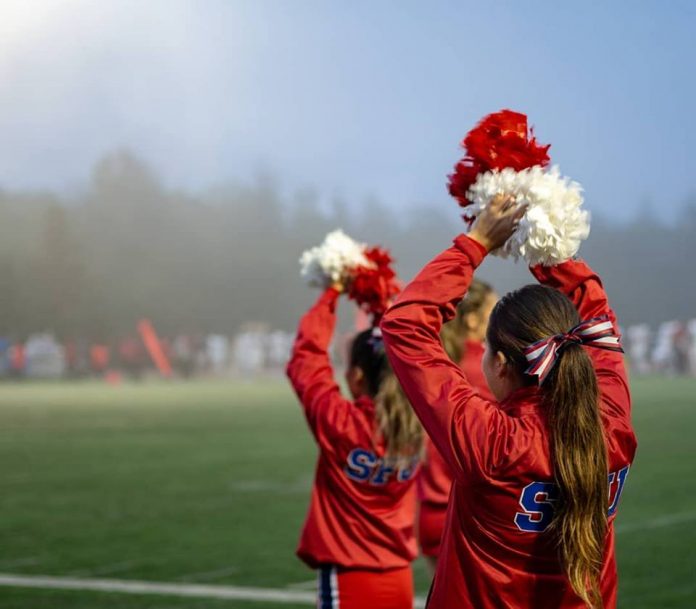
The red cheerleading team performs at SFU Football games as well as competes across North America. (Photo courtesy of SFU Cheerleading)

By: Michelle Gomez

If you have ever attended an SFU football game, then you have probably seen the lively cheerleaders hyping up the crowd. We set up a phone interview with head coach of the SFU recreation cheerleading team, Kevin Morse, who talked to us about the team.

SFU cheerleading is divided into two teams: the competitive red team and the developmental white team. There are about eight coaches in total, all experienced in gymnastics and/or cheerleading; Morse himself has done cheer since high school, and he has been involved in multiple cheer teams since then, including the SFU team.

The white team focuses on skill development, which leads up to a year-end performance for family and friends. Morse explained that other than good fitness, it is not necessary to have any cheer experience to join the white team.

“At the end of the day, the most important thing is athleticism,” said Morse. “For new athletes coming on the team, if they’re in relatively good shape, we can teach them most of the skills that they need.”

The red team mostly accepts students who have a background in either gymnastics or cheer. In addition to cheering on SFU at football games, the red team competes in cheer competitions across Canada and the US, such as the Canadian Cheerleading Nationals in Toronto and multiple American competitions in Florida and Washington.

In contrast to all-star cheerleading, which strictly focuses on the gymnastics aspect of the sport (such as tricks, flips, and pyramids), SFU cheerleading follows a collegiate cheer style. Morse explained that this entails both gymnastics tricks and the cheering aspect, with pom poms, signs, and megaphones. Cheer competitions judge these teams on technical skills as well as crowd-leading – how well the team leads the crowd through a cheer. According to Morse, it is similar to the popular film Bring It On, but with more cheering and less dancing.

One unique thing about cheerleading is the intrinsically co-ed nature of the sport, since most varsity sports separate athletes by gender. Morse noted that intramural teams that are co-ed have to meet a certain quota of men and women on each team to make the sport balanced and inclusive. In cheerleading, however, having a balance of both men and women is absolutely necessary for the sport.

“You need both men and women to be working together to do routines,” said Morse. “Both men and women are equal and valuable members of the team, so it’s a really good environment to build friendships and work on learning skills.”

Morse said that his favourite part about coaching cheerleading at SFU is “seeing athletic development and seeing the friendships that the team has, and getting to travel together and go to competitions.” However, he explained that winning at competitions is not the team’s main drive.

“There’s lots of personal development and really talented athletes there working hard and gaining new skills [ … ] we’ll see how we do competing this year, but at the end of the day the most important thing is that everyone is staying healthy and getting new skills [ … ] It’s nice to have a family of like-minded individuals to encourage each other.”

For those wanting to join, tryouts are always held at least twice a year, once in September and once in May. Spring tryouts are still a maybe for 2019; however, Morse noted that even if they don’t do tryouts in the spring, interested students with gymnastics or cheerleading experience can contact them individually about joining.

For more information on the cheerleading team you can visit their website.

What If: There were no microwaves on campus

0
Photo by Chris Ho/The Peak

Written by: Gene Cole, Opinions Editor

About two years ago, my family’s microwave finally broke down. Originally a wedding gift for my parents, it was an important mainstay in our kitchen for over two decades. It was tough to finally throw away the heavy little machine, but it more than deserved its rest.

Now that it’s gone, though, I can confidently say I don’t miss that microwave a single bit. If they all scuttled away from the campuses of SFU, I think everyone else would think the same.

Once these disappear, a whole lot of food suddenly becomes easier to eat. Your leftovers stay at home where you can cook them much better in the stove or oven — there, you can even do better than a boring reheat by adding in some fresher food mixed in as you re-fry that leftover pasta. The meals you make yourself are just going to get more creative as you work in some more veggies, salads, and other cold foods to get you through the day.

The greater bliss, though, will be the classes you have over breakfast or lunch. The damp, warm smell from the Tupperware they just reheated will be blissfully less pungent for the whole quarter of the lecture hall. The only thing we’ll have to worry about are the people who buy their hot food on the way, which you can already avoid thanks to the alarming sound of the paper wrapping.

I understand the need for a homemade heated meal on a rainy day, but for the most part, I’m confident that most people can wait until they get back home. Your diet might take a bit of a shift, but it’s far from a bad one.