Home Blog Page 590

SFU economics professor found dead in Colombia

0

By: Michelle Gomez, News Team Member

Three weeks after going missing in Colombia, SFU economics professor Ramazan “Ramo” Gencay was found dead.

     Gencay travelled to Colombia to attend seminars at the EAFIT university (universidad escuela de administración y finanzas y tecnologías), and was scheduled to speak at an event on Nov. 28. According to Global News, his last known whereabouts were at a salsa club in Medellín, Colombia on December 6, and he was spotted on camera at a hotel with several other people at 10:30 p.m.

     On December 13, SFU posted a statement about Gencay’s disappearance on their website.

     “We have not been contacted by authorities at this time and we do not have further information beyond what has already been publicly shared by his family,” the statement read.

     SFU went on to note that they were “providing support” to Gencay’s family, and that the school intends to aid the investigation however possible.

     Gencay’s body was recovered outside Medellín on December 24, and was identified using dental records on December 27.

     According to CTV Vancouver, Global Affairs Canada confirmed earlier in December that the department knew that a Canadian citizen had disappeared in the city, and are currently attempting to get more information regarding the death.

     Marianne Meadahl, assistant director of SFU communications said in an email to The Peak that SFU has not been involved with the investigation.

     SFU president Andrew Petter released a statement on December 27, saying “everyone at Simon Fraser University will be saddened by the tragic news of Professor Gencay’s death. He was an outstanding contributor to the university community and will be sorely missed by all who knew him.”

     In an email sent by SFU Communications on behalf of President Petter, he noted “I wish to reassure everyone that we will continue to do everything we can to support Ramo’s family at this sad and difficult time.” The email also lists resources available to affected faculty and students, including the Employee Family Assistance Program (EFAP) for faculty and staff, Health and Counselling Services for students over the phone at 778-782-4614 (9 a.m.–5 p.m), and 24/7 support for students through My SSP.

     Gencay’s daughter Rana also made a Facebook post. “He was a man who travelled the world over, from hitchhiking through Europe in his youth to travelling to dozens of countries and lecturing at world-renowned universities,” Rana’s post read.

     “His love for learning has inspired many at SFU and will inspire me to learn more and more everyday.”

     His dance instructor, Nina Perez, told The Star Vancouver that he was a dedicated student who “would always have something positive to say.” She noted that “it was a genuine pleasure to have him around.”

    With files from CTV News, Global News, SFU News, and The Star Vancouver.

Aquaman reaches the deepest depths of success

0
Image courtesy of Hollywood Reporter

Prepare for the king tide, DC Comics fans! The new Aquaman movie has finally come ashore in full glory. With a talented cast, breathtaking action sequences, and compelling themes, Furious 7 director James Wan provides an exciting narrative about the titular trident-wielding hero’s early beginnings.     

Jason Momoa powerfully reprises his Justice League (2017) role as Aquaman. Like in Justice League, Momoa portrays this ocean king as a cool but intimidating tough guy. He injects an offbeat humour into not only light-hearted moments with Amber Heard (Mera), but also more volatile scenes with Patrick Wilson (Ocean Master). At the same time, Momoa further explores Aquaman’s tribulations as a superhero and his philosophical journey, making for a riveting commentary about the struggle of belonging in an uncertain world.

The film evokes ethereal perils through its enthralling blend of exotic locations and alien realms. These intricate settings balance against the cast’s richly realistic performance to set up a world of elevated tension. This excellent world-building creates a strong foundation for the film’s portrayal of the Aquaman mythology.

By far, the best set pieces in the story are the exuberant action sequences. Wan employs captivating close-ups and rotating camera angles for the film’s fight scenes, imbuing each battle with a fluid, immersive visual style. He also layers the action with meticulous sound editing and well-executed slow-motion shots.

However, the story falls short in portraying three-dimensional secondary characters. Willem Dafoe gives an adequate performance as Aquaman’s mentor, but his role only seems to offer expositional dialogue rather than substantial involvement in the narrative. Aside from Dafoe, Nicole Kidman gives a heartwarming but fierce portrayal as Aquaman’s mother, Queen Atlanna, yet her character’s storyline becomes too akin to Michelle Pfeiffer’s role from Ant-Man and the Wasp.
Also, the villain Black Manta (Yahya Abdul-Mateen II) does not have as much screen time or relevance as the film’s other characters. Despite his awesome battle suit and his brutal fight scenes with Aquaman, Manta is only a glorified cameo. With no additional background on Manta, moviegoers unfamiliar with the comics may be alienated from him. Moreover, his main role in the story seems to just be a secondary villain, spearheading a subplot that prepares for a potential sequel rather than relate more explicitly to the main plot.

But overall, James Wan delivers a superb superhero action film with a talented cast and thrilling bouts. With Jason Momoa’s daring performance as the legendary Atlantean king, Aquaman is a worthwhile movie that exceeds expectations with its equally worthwhile story.

Highlights/lowlights for SFU sports in 2018

0
Jenna-lee Baxter becoming SFU women's soccer first ever NCAA DIV II All-American was one of the highlights of 2018 for SFU sports. (Photo courtesy of SFU Athletics)

From SFU men’s soccer’s unbelievable start to the 2018 season to SFU hockey missing out on the playoffs due to an ineligible player ruling, there were a lot of highs and lows for SFU sports last year. We reviewed last year’s sports events and picked out our favourite and least favourite moments that 2018 had to offer. Without further ado, here are the highs and lows for SFU sports in 2018.

Highlights:

Thomas Ford hired as new head coach for SFU Football

In January of 2018, SFU Athletics decided to name Thomas Ford their new head coach for the SFU football program after letting previous head coach Kelly Bates’ contract expire. Obviously, Ford was stepping into a tough job: the Clan hadn’t even won a game in the previous three seasons. While Ford was not the Canadian hire that some may have hoped for, after speaking with him on his goals for the program, and seeing the recruits that he’s brought in already, we believe this will be looked back on as the first step in rebuilding the football team.

N’Kosi Kedar Salam averaged 20.4 points per game in the 2017-2018 season. Kelsey Nikl / The Peak

N’Kosi Kedar Salam leads GNAC in scoring

While the SFU men’s basketball team looks to improve on a somewhat disappointing 2017–18 season this campaign, they will have to do so without N’Kosi Kedar Salam, who has now moved on to play professional basketball in Europe. Before finishing his SFU basketball career, however, Salam led the GNAC in points per game, ending the 2017–18 season averaging 20.4. His scoring was crucial to the team’s success, and he regularly took over games for the Clan. For these efforts, he was named to the GNAC All-First team, becoming the first SFU basketball athlete to receive this honour.

SFU men’s golf win GNAC title

Back in April, we got one of the best team performances of the year from the SFU men’s golf team at the GNAC Championships. All four of the team’s scoring players finished in the top five at the tournament, allowing the team to cruise to its second GNAC title in program history. The Clan won the tournament by nine strokes, highlighted by shooting seven under par in the first round of play. The only non-positive of the tournament was SFU’s Craig Titterington losing to Western Washington’s Ethan Casto in a playoff for an individual medal. Nonetheless, the SFU golf team’s performance at this tournament was a highlight for 2018.

14 All-American Performances by SFU Swim at National Championships

The SFU Swim team put together quite the impressive performance at the NCAA Championships in March of 2018. Andrew Woinoski, MacKenzie Hamill, Rolando Hernandez, Jessie Gibson, Kaleigh Sharkey, Erin Lawrance, and Kristen Olvet all finished with All-American performances, getting the Clan’s tally up to 14, and also broke a few previous SFU records in the process. The men’s team finished 18 in the nation while the women’s team placed 14.

SFU football win first game in years

After nearly four years, and 33 straight losses, the Clan finally got a win in 2018! It happened in Thomas Ford’s first game at the helm, in front of 1,265 fans at Terry Fox Field. What was most impressive was the dominating way in which it happened, as they team destroyed Willamette University 54–7. There is a pretty big asterisk on the win, though, since Willamette University is actually a DIV III school, but honestly, after so long, we’re happy to cheer for anything when it comes to SFU football.

SFU Sports Analytics Club hosts second successful VanSash event

In September of 2018, the SFU Sports Analytics Club hosted the Vancouver Symposium and Hackathon event at the SFU Harbour Centre. The event allowed for students to use their skills to transform real sports data into a meaningful project to present to judges from the Vancouver Whitecaps and other organizations. The event’s goal was for these students to be able to connect with the sports analytics industry, and compete with other teams to use the data provided in applicable ways. The event sold out, with roughly 100 students participating and over 20 judges and mentors attending the event.  

SFU men’s soccer kicked off 2018 with 16 straight wins. (Photo courtesy of SFU Athletics)

Men’s soccer unbeaten streak to start season

Of all the great team performances we saw from SFU in 2018, this SFU men’s soccer team may have been the most impressive. The team started off the 2018 season with 16 straight wins, going undefeated until after they had already clinched the GNAC championship. Over this period, the Clan got to being ranked #1 in the entire NCAA DIV II, and for good reason. They outscored their opponents 58–5 over this two-month stretch, and consistently looked dominant. By the end of the season, the Clan had four players on NCAA All-American teams, the top mark in the NCAA DIV II.

Jenna-lee Baxter’s 2018 GNAC season

If you watched the women’s soccer team play in 2018, there is no way you could’ve missed Jenna-lee Baxter. She was involved in everything the Clan did, and was a huge reason that the team led the GNAC in goals per game this season. She finished the year tied for the conference lead in goals (11) and assists (10), while leading the conference in total points. For her efforts, she was named a NCAA All-American, becoming the first SFU women’s soccer athlete to do so. What a way to wrap up her SFU career.

Both men and women’s cross country teams qualify for nationals

For the first time since 2014, both SFU cross country teams qualified for the national tournament in dramatic fashion. Fighting harsh weather conditions, including snow, both teams finished second at the West Regional Championships. Pierre-Louis Detourbe, Sean Miller, and Rowan Doherty led the way on the men’s side, while Olivia Willet, Sophia Kaiser, and Addy Townsend led the way for the women. After the race head coach Brit Townsend told The Peak: “It does feel like a best ever season, overall, at least since we’ve been in the NCAA.”

Men’s basketball host first ever SFU Showdown

At the beginning of the 2018–19 men’s basketball campaign, the team hosted the first ever SFU Showdown tournament on Burnaby Mountain. The first game of the tournament was fantastic, as it went down to the final few minutes where a three-pointer from Michael Balata had the crowd roaring. The Clan also won their second game of the tournament against Minnesota State University, getting them off to a 2–0 start on the season. Overall, the tournament was a great success, with three NCAA DIV II teams from the states coming up to compete in Canada, and hopefully is a sign for things to come for SFU basketball.

Lowlights:

SFU hockey season ends early due to ineligible player ruling

In March of 2018, it was announced that SFU would miss the BCIHL playoffs for the first time in team history after an ineligible player ruling forced the team to forfeit 11 games. The ruling stated that the player in question was deemed to be academically ineligible after failing to meet the BCIHL minimum academic standards in the fall semester, and more importantly, failing to let the team know. This mix-up ultimately cost the SFU hockey team a chance at a BCIHL hockey championship, and it was a horrible way to end an otherwise very successful 2017–18 season.

Kyle Jones misses men’s soccer season due to injury

Injuries are probably the worst thing in sports, and in 2018, a very unfortunate one took away the 2018 season for SFU midfielder Kyle Jones. After a successful 2017 season which saw Jones contribute heavily to a SFU GNAC title, Jones played in the Professional Development League in the offseason, where he tore his ACL. The 2018 season would’ve been his last season of eligibility for SFU, and he would’ve been an integral part of the team’s GNAC title run and playoff aspirations. We wish Jones the best on healing up for 2019.

SFU football will be looking forward to 2019 for their first GNAC win in years. (Photo courtesy of SFU Athletics)

SFU football fail to win a GNAC game again

While SFU football may have snapped a 33-game losing streak in 2018, they once again failed to win any games that actually mattered. On two occasions this season, however, they came close. Both times were against Humboldt State University, and both times the team fell by one possession, 16–23. Interestingly enough, Humboldt’s only two wins of the season came against SFU. While we are excited by SFU football’s new recruits and a program turnaround will still take some time, it would’ve been encouraging to see at least one GNAC win in 2018.

Men’s soccer shocked by Cal Poly Pomona for third straight year

Despite all the incredible feats that SFU men’s soccer accomplished in 2018, they still could not get past their arch-rivals Cal Poly Pomona in the West Regional Championships. The loss prevented SFU from advancing to the national tournament, where they would have certainly been contenders to take home the championship. Not only that, but the way it happened was heartbreaking, as Cal Poly capitalized on their only shot on target in the entire game to win the match 1–0 in the first overtime period. Whether you want to blame the loss on the Clan not being able to host the game at home, or just general bad luck, one thing is for sure: this was one of the lowlights for SFU sports this past year.

Holiday cookie recipe roundup

1
Image courtesy of Cooking Classy

By: Maxwell Gawlick, Gabrielle McLaren, Sakina Nazarali, and Natasha Tar

Ben & Jerry’s Chocolate Chip Cookies (from Ben & Jerry’s)

Traditionally added to ice cream raw, this fabled recipe also produces some of the softest and most flavourful baked cookies you’ll ever have. Plus, there’s the added benefit of asking people if they want some of your “BJs’”.

For 12 cookies.

Ingredients:

  • 1/2 cup butter, room temperature
  • 1/4 cup granulated sugar
  • 1/3 cup brown sugar
  • 1 large egg
  • 1/2 tsp. vanilla
  • 1 cup all-purpose flour
  • 1/2 tsp. baking soda
  • 1/2 tsp salt
  • 1/2 cup chocolate chips

Directions:

1)     Preheat oven to 350°F.

2)     Beat egg and sugar until fluffy; add vanilla.

3)     In a separate bowl, mix the dry ingredients (except for the chocolate chips).

4)     Fold flour mixture into batter until thoroughly combined.

5)     Fold chocolate chips into batter.

6)     Use a tablespoon to form balls of dough, press flat onto ungreased cookie sheet.

7)     Bake 11–14 minutes, or until just golden. Let cool 5 minutes before serving. – MG


Chocolate crinkles (my Mom gets her recipe from a Company’s Coming book that I don’t own, so this one is from Simply Recipes)

These cookies look complicated and delicate, and always stand out in a box of dainties. They’re also super fun to make, so whip out this recipe to simultaneously wow your relatives AND entertain the little ones so that you become the Cool Cousin.

For 50 cookies.

Ingredients

  • 1 cup unsweetened cocoa powder
  • 1 1/2 cups white granulated sugar
  • 1/2 cup vegetable oil (feel free to use butter or another oil — I bake with canola).
  • 4 eggs
  • 2 teaspoons vanilla extract
  • 2 cups all-purpose flour
  • 2 teaspoons baking powder
  • 1 teaspoon espresso powder (optional, but it will deepen the taste of chocolate if you have it on hand)
  • 1/2 teaspoon salt
  • 1 cup powdered sugar

Directions:

  1. Beat the first three ingredients, by hand or with a mixture. Heads up: your dough will look gross at first.
  2. Mix in vanilla and eggs, one at a time and thoroughly beaten.
  3. In another bowl, mix the the next three ingredients.
  4. Mix the dry ingredients into your gross black dough mix.
  5. Chill the dough for 4 hours or overnight. You can wrap it in plastic wrap, or chuck the whole bowl in the fridge if you can cover it.
  6. This is the fun step, which you’ll want to get your family’s younger and funner cousins involved with. Roll the dough into small balls with your hands (use an ice cream scoop or spoons to portion out balls for young bakers if needed), and then drop them in the confectioners’ sugar. Make sure to coat them well before placing them on a cookie sheet covered in parchment paper. Make sure not to crowd the cookies, 12–16 per sheet.
  7. Before baking, push down on the cookies with a fork genty. This will give the finished cookies more of a crinkle. Once that’s done, throw your cookies in the oven at 350°F for 10–12 minutes. – GM


Nutella Stuffed Cookies (from Delish)

Nutella lovers, these cookies are essentially therapy.

For 24 cookies.

Ingredients

  • 1 ½ cup of Nutella
  • 1 cup of softened butter
  • 1 cup of packed brown sugar
  • ½ cup of white sugar
  • 2 large eggs
  • 2 tablespoon of milk
  • 2 teaspoon of pure vanilla extract
  • 2 cups of all-purpose flour
  • 1 cup of unsweetened dark cocoa powder
  • 1 teaspoon of baking soda
  • 1 teaspoon of kosher salt (can be substituted with coarse sea salt)
  • Flaky sea salt

Directions

  1. Cover your baking sheets with parchment paper and scoop out 24 1-tablespoon size balls of Nutella. Place in the freezer for an hour.
  2. Use a hand mixer to beat butter and both sugars until you get a light and fluffy mixture. Add eggs, milk, and vanilla and beat until combined smoothly. Then add the remain ingredients and continue beating. Refrigerate your dough once whisked and blended.
  3. Preheat oven to 350°F and line a baking sheet with parchment/baking paper.
  4. Flatten a heaping tablespoon of cookie dough on some parchment paper. Throw one of your frozen Nutella balls on top, then place a second pancake on top of that. Pinch around the dough to seal.  When this is done, move the cookie to the covered baking sheet.
  5. Repeat step four until you’ve used up all your ingredients. Leave 2 inches of space between each cookie
  6. Sprinkle your sea salt over the cookies, and bake until your cookies have puffed up, around 15 minutes.
  7. Let cool for 5 minutes before serving. – SN


Pumpkin Spice Chocolate Chip Cookies (from The Busy Baker)

Pumpkin spice doesn’t stop being delicious once December hits! These cookies will make your home smell soooo good the neighbours might come over.

For 24 cookies.

Ingredients

  • ½ cup of melted butter
  • ¼ cup of brown sugar
  • ½ cup of white sugar
  • 1 teaspoon of vanilla extract
  • 6 tablespoons canned pureed pumpkin
  • 1 ½ cups of all-purpose flour
  • ¼  teaspoon of salt
  • ¼ teaspoon of baking powder
  • ¼ teaspoon of baking soda
  • 1 ½ teaspoons of cinnamon
  • ½ teaspoon nutmeg
  • ½ teaspoon cloves
  • ¼ teaspoon allspice
  • ½ cup chocolate chips

Directions

  1. Preheat oven to 350°F.
  2. Use a hand mixer (or whisk) to combine the melted butter, brown sugar, white sugar, vanilla and pureed pumpkin. Add the flour, salt, baking powder, baking soda, and spices to the bowl and continue whisking until combined.
  3. Scatter the chocolate chips within the cookie dough.
  4. Roll tablespoons of dough into balls and place on a baking sheet lined with parchment paper. Use a fork to flatten out the balls of cookie dough before baking.
  5. Bake at 350°F for about 10 minutes, just until the tops of the cookies start to brown. Let the cookies cool on the baking sheet for 5-7 minutes before serving. – SN


Raspberry shrewsburys

You didn’t know you could make something this fancy, did you? These will be your new jam.

For 20 large cookies.

Ingredients:

  • 2 cups flour
  • 1 ½ sticks butter
  • ½ cup and one tablespoon white sugar
  • 1 large egg yolk
  • Raspberry jam (or another jam of your choice!)

Directions:

1) Put the flour and butter in a food processor and process until the mixture resembles breadcrumbs. Alternatively, use your fingers. Add the sugar and egg yolk and process/mix with your hands or a spoon until the mixture starts to form a dough. On a lightly floured surface, knead the dough until it comes together. Shape into a ball, wrap in baking parchment, and chill for at least 30 minutes.

2) Preheat the oven to 325°F. Line a baking sheet with baking parchment. Roll out the dough on a lightly floured surface to about 3 millimetres /⅛ inch thick and cut out using your favourite cookie cutters (I suggest hearts, trees, and stars, but make sure you cut out two of each shape). Keep cutting shapes until you have an even number (probably 40). Use a piping nozzle or large straw to remove the centre from 20 of the shapes (or half of the even number of shapes you created).

3) Bake for 10–12 minutes or until lightly golden. Allow to cool slightly before transferring to a wire rack or plate. Cool completely.

4) Spoon jam onto the cookies that do not have a hole in them. Place the cookies with their centres missing on top of the other cookies and press until the jam is visible through the hole. Done! If you’re using tree cookie cutters, you can cut multiple holes in the top cookies so the jam makes them looks like baubles. – NT


Shortbread Candy Canes

If you thought shortbread was Christmassy enough, you were wrong. Shortbread dough is notoriously fickle and fragile, so this will take some patience, a good attitude, and a lot of flour to dust your hands and countertop. I maintain that these delightful cuties are worth it.

Amount of cookies depends on size — but aim for small cookies here.

Ingredients

  • Feel free to use your favourite shortbread recipe, or find one online. If you don’t have one, this one from AllRecipes is pretty standard. You need:
    • 2 cups of butter
    • 1 cup of white sugar
    • 2 teaspoons of vanilla extract
    • 4 cups of flour
  • Red food colouring

Directions

  1. Prepare your shortbread dough as directed in your recipe, and then seperate the dough in two.
  2. Put half of the dough aside. Mix in red food colouring into the other half.
  3. Roll out your red and white cookie doughs in strand, and twist them together. Remember the preface of this recipe: be gentle and patient. Working with shorter strands takes longer, but it ultimately easier. You’re also going to want to keep your hands and counter clean to avoid colour contamination.
  4. Once you’ve twisted together your red and white strands, cut them as big as you’d like your cookie to be, and twist the top of it to give it a candy cane’s hook.

Bake your cookies according to your recipe. – GM

What if . . . SFU Burnaby campus was flat

0

Written by: Gene Cole, Opinions Editor

I can’t say I’m sure how mechanically this would happen; either the campus would shrink down, or the rest of the world’s landmass would rise up. It would be a geological nightmare that would baffle scientists for decades. That said, this might be the ideal solution for when the crisis days of winter hit the mountain.

When the class cancellations finally come — and trust me, they will — there’ll be two types of students on Burnaby campus: the ones who stand awkwardly at the cold bus stop waiting for the slowest transit experience ever and the ones who make the slow pilgrimage down the mountain. The brave few of us who do the latter are going to take our time as we ruin our shoes, pray not to encounter traffic, and tumble down the steeper icy hills.

The flattened mountain is going to give the overflowing buses a much easier drive that doesn’t risk tumbling, while the walkers aren’t going to be descending a -40 degree angle. Traffic’s still going to go slow because nobody owns snow tires, but it’ll at least be manageable.

We’ll still be far from safe considering the snow, the dangerous drivers, and the state of being deep enough in a forest that police and ambulances still can’t come quickly in an emergency. That said, if we aren’t going to be able to solve those problems, the least we could get are some fantastically less treacherous hills.

What grinds our gears: People who smoke while walking on campus

0
Photo courtesy of @SFU via Twitter

Written by: Simran Randhawa, SFU Student

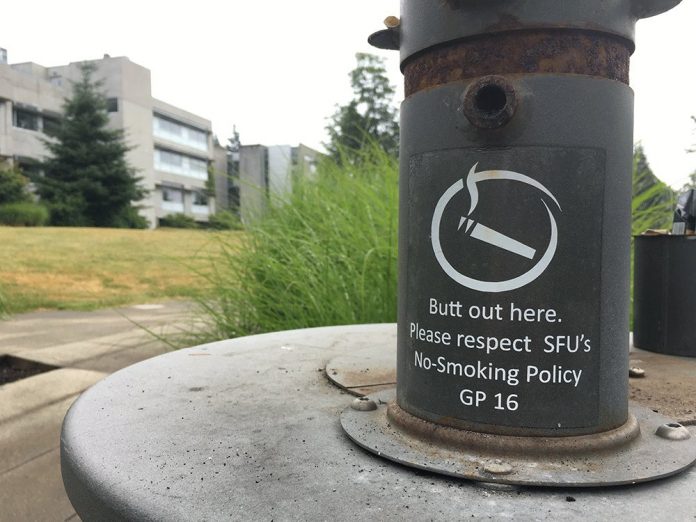
Most places have designated “smoke rooms” in order to reduce second-hand smoking, and all around SFU, there are specific written instructions not to smoke near grates or around people. Despite these, some people who are in a hurry tend to smoke on their way to or from one building to another.

I understand that smoking is addictive to a great extent and a way of relieving stress to some folks. However, others who don’t smoke didn’t sign up for this.

Walking and smoking is one of the epitomes of rudeness. Everyone walking behind you is now buried in an endless cloud of burnt cigarettes. God forbid the wind change direction, as the smoke then blasts right at me. If it’s raining, that cloud will even get trapped under my umbrella and keep me coughing even longer.

It’s bad enough that I have to unwillingly partake in this, but now I can’t walk without having to cover my mouth.

You want to smoke? Sure, have at it. Your body, your choice. But the same applies to people who choose not to. Don’t leave a cloud of smoke on the only paved path across AQ for others to cough on.

SFU’s Gries Labs looks for green solutions to pest control

0
(SFU University Communications)

Written by: Chris Baxter, SFU Student


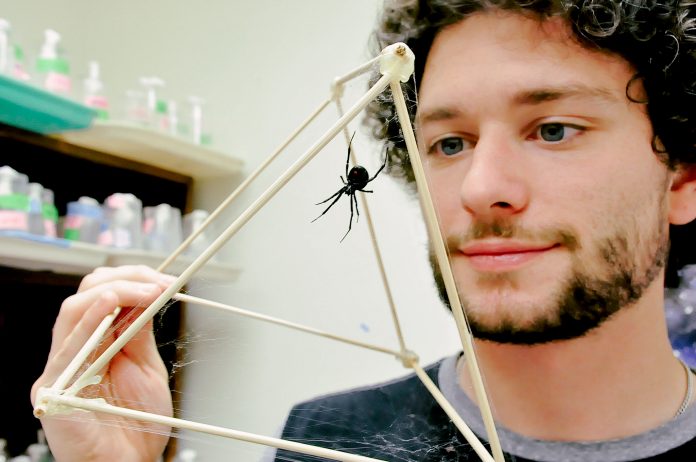
SFU grad student Andreas Fischer keeps his lab stocked with around 100 specimens of Canada’s most poisonous spider, the black widow, as he works to find environmentally friendly solutions to pest control. These black widows have been collected from a variety of spots around B.C., including right here in the Lower Mainland.

One of Fischer’s goals as a researcher is to work towards debunking common misconceptions around spiders. Fischer has been working with spiders for four years, and he’s never been bitten.

“Not even a close call,” said Fischer in an interview with The Peak. To prove the spider’s harmlessness, he demonstrated with a short stick playing the part of a finger. “You see it? She walks away. I poke her, and she [makes] zero attempt to bite.”

Fischer works in SFU’s Gries Lab, which studies insects, spiders, and other animals often labelled as pests. The research done there aims to better understand how these animals communicate as well as how they might be controlled and contained in urban and agricultural settings using environmentally friendly methods.

“If we understand the language of the spiders properly, we can trap them or repel them and reduce the amount of pesticides,” explained Fischer.

In total, Fischer has collected approximately 600 spiders, including around 100 black widows, all of which need to be fed by hand once a week, a job that falls to an “army” of research assistants.

These spiders and the webs that they produce are the key to creating a green alternative for controlling spider populations. The spiders’ webs are collected and washed using a solvent to extract pheromones, similar to extracting tea flavours from tea leaves. The solvent is then analyzed with the goal of identifying and then synthesizing particular pheromones that attract other spiders. The spiders can sense these pheromones through hundreds of tiny hairs on their legs which they use to smell.

The idea is to use the pheromones to attract or repel other spiders. If successful, Fischer and his lab will be able to create traps for spiders that can replace the environmentally damaging use of pesticides and fumigation.

The studies associated with Fischer’s research are incomplete and yet to be published within the scientific community, but Fischer is optimistic that his research can lead to a greener future. He points to the recent fumigation of a government building in Ottawa, which was reported by CBC News, as an example of where his work could make a difference. Fischer suggests that the fumigation is “unnecessary because the spider is not dangerous, and it’s [. . .] toxic to spray those pesticides.” Traps using the spiders’ pheromones could potentially eliminate the need for poisons.

However, one limitation Fischer highlighted was that each pheromone would only work on one particular type of spider. The pheromones from a black widow, for example, would have no effect on other types of spiders, continued Fischer. Therefore, each trap could only be used to attract one type of spider. This could still be useful, however, in instances such as infestations where it would only be necessary to remove just one species of pest, explained Fischer.

Fischer demonstrated a clear enthusiasm for his research subjects, as he noted “[spiders] have such a bad reputation for nothing. There’s no good reason to be afraid of spiders.”

With advocates for our eight-legged cohabiter like Fischer, a wider understanding and appreciation of the spider is inevitable.


With files from CBC News and Nature Conservancy of Canada.

Student Vending Machine

0
Illustrated by Siloam Yeung

Written by: Gabrielle McLaren

Hamish and Jo’s adventures in France Part 3: Adulthood is harder in France

0
Illustration by Siloam Yeung

By: Hamish Clinton and Jozsef Varga 

Welcome back to another episode of “Jo and Hamish’s life in Menton, the most South-Eastern town in all of France.”

For those of you reading this column for the very first time, here is a quick rundown of our situation: We are both third-year students in the French Cohort Program at Simon Fraser University (and just like most of the people reading this, we are proud of SFU, yet skeptical, and honestly not altogether loyal until we meet someone bragging about UBC at a pub). Our cohort at SFU is very small, and that’s one of the many reasons we love it.

However, now that we are on exchange in the tiny French town of Menton, our cohort doesn’t seem all that small after all. Sciences Po is a world-renowned political sciences university, blah, blah, blah, and it’s true that its Paris campus is very famous and relatively large. But over in the bottom-right corner of the country, you can find their lesser-known “Middle Eastern and North African Studies” campus. Here, the entire Sciences Po university population is about the size of a first-year criminology course. Yup, pretty much 300 students. That is all.

So yes, we have readjusted our definition of “small” since we landed in the nearby airport of Nice about three months ago. And the word “small” is not the only thing that has needed “readjustment.” After all these “readjustments,” our patience has been thoroughly tested.

If you ever come to France for a prolonged period of time, be warned that when it comes to credit cards, banks, and regulations in general really, please: DO NOT HOLD YOUR BREATH.

Living in France (a.k.a. The Home to All Bureaucracy, Our Living Fucking Nightmare, The Place Where Monetary Happiness and Security Goes to Die) has presented us with problems. These turned out not to be limited to our sketchy-TunisAir-ticket scenario, but also much closer to home, literally. Oh yes: the classic paying-rent-scenario.

It seems easy, right? You’re in France. Pay your French landlord the money you owe them, if not through the French bank account you should have opened upon landing in the country, as any responsible adult actually holding the reins of their own life would likely do, then at least by pulling straight cash out of an ATM and risking getting robbed at knife-point, and then physically handing them the cash!

You might be thinking: what are you so worked up about, boys? Why is this so hard for you? Why are you both seemingly incompetent and unable to fulfill the bare-minimum basics of being independent adults? It is only rent after all!

WRONG.

So. Very. Wrong. It is NOT “only rent” for us. Not only does our landlord not live in France (but in Italy, of course), but our French bank, for the longest time, failed to give us functioning debit or credit cards! We had our appointment to set up these accounts (drum roll please) nearly 70 DAYS before receiving actually fully functional cards . . . What the heck, France.

So we did the courteous thing to pay our rent: we went to Italy. We literally hopped on the train and went to Milan, where our landlord lives, with twelve-hundred euros cash in hand to meet up with them. For those of you at home, keep in mind that we are professionals and that we otherwise strongly recommend against pulling risky-ass stunts like this.

THEY WOULDN’T MEET WITH US.

No biggie though right? Upon rejecting us, they gave us an alternative: the option of going directly through their bank, which, turns out, has a branch literally in the building we are living in back in Menton, France (thank you for letting us know before we took a four-day trip across the border in the hopes of meeting up with you).

But, fun fact, upon our return to our little town, their bank outright refused to take our cold hard cash because we didn’t have a bank card. Makes sense, no bank card, no sketchy random deposit into a stranger’s account. But still: we had gotten our hopes up.

What was left then? Well, we may have overlooked a fun friend called “Western Union.” Yeah, this one’s on us. Here’s another fun fact, you apparently can’t transfer money internationally from a Canadian bank while you are also international. That said, our pal Western Union was actually there the whole time to pick up the slack (and the hefty transaction fees, as all good pals do). So we paid rent through Hamish’s account and asked our landlord if they had received confirmation the following day.

Guess what?

NOPE! Are you even surprised at this point?

Not only did they not receive confirmation but, upon further investigation, Hamish’s entire account had been frozen by his Canadian bank. Apparently someone’s first ever Western Union transfer being their max amount from a Canadian student bank account and being wired from out of country in the south of France to an unknown individual in Italy is “suspicious.” Classic. But honestly pretty reasonable. For once.

After some long-distance phone calls, and a whole slew of other call centre-related adventures, the bank finally decided we weren’t drug lords and let the transfers through. What is funny, though, is that Western Union has a waiting period when you send back-to-back transfers, so our full rent wasn’t able to be collected by our landlord for another eight days.

Needless to say, our landlord is not our biggest fan. In fact, they have since decided to sell the apartment we are staying in though that is a story for another time. The real takeaway here is that being stuck without bank accounts for the majority of your first three months in France has further reaching disadvantages than a simple blood feud between you and your property owner. We have missed out on so many opportunities.

For starters, there is something called the “CAF.” This is a fun little program run by the French government that gives poor freeloaders like ourselves money to be able to afford the rent that is occasionally difficult to get to your landlords (though not typically because of their physical location/lack of proof of existence, but rather because of a lack of funds).

It is wonderful. We like money. Moreover, we like free money that requires absolutely zero work on our part. We, after all, are stand-up citizens. A couple of decent guys who are willing to earn their way through life, but let’s face it, capitalism kills.

SURPRISE.

We needed French bank accounts, IBAN numbers, and BIC numbers linked to a French account to complete the applications to even begin the process of getting this beautiful free money.

Regardless of our own work-ethic (which, for you future employers our there, is nothing short of gobsmackingly, life-changingly, awe-inspiringly epic), we have literally been cheated out of close to 300 euros each so far, which is quite a bit for us students (feel free to check the current Euro-CAD exchange rate and cry for us some more).

On another note, being short a couple French bank cards caused us a little grief in the home amenities department. Primarily one amenity: Wi-Fi, which can only be purchased with French bank cards. The strange little word that meant nothing just a short few years ago but now runs our lives. What would life be like without Wi-Fi? What would life be like, sitting at home watching the fireplace and/or the new colour TV your family could finally afford? Or worse, playing in nature? Noticing the people walking by on the street as you walk to work or school?

Never fear, we can tell you that isn’t the case. Living without Wi-Fi in the home hasn’t been too tough since one thing France does have going for it is its cheap phone plans, which you thankfully can buy with a Canadian credit card. We managed to get 60 GB a month for €8.99… But regardless of how much we pay, the data doesn’t work at home when your dwelling happens to be underground. We don’t have a fireplace or a functional TV either so we have resorted to staring at the fridge instead. It makes some cool noises, so things aren’t all bad.

Joking aside though, the “needing a functional French bank account to have access to home Wi-Fi” debacle (catchy name, we know) has been a proverbial thorn in the side of our ability to complete school work. We need to leave the house every time we want to get an online reference to anything, check our emails, visit the French version of Canvas, or properly procrastinate with cute corgi videos on Instagram.

Just another reason why:

  1. Our lives are tough, and
  2. Why we are coming to hate the eternally lumbering machine that seems to be what keeps the French way of life forging on… slowly.

SFSS lobbies provincial government for lower student loans, open access resources, and sexual violence policies

0
(Photo courtesy of the SFSS)

Written by: Amneet Mann, News Editor


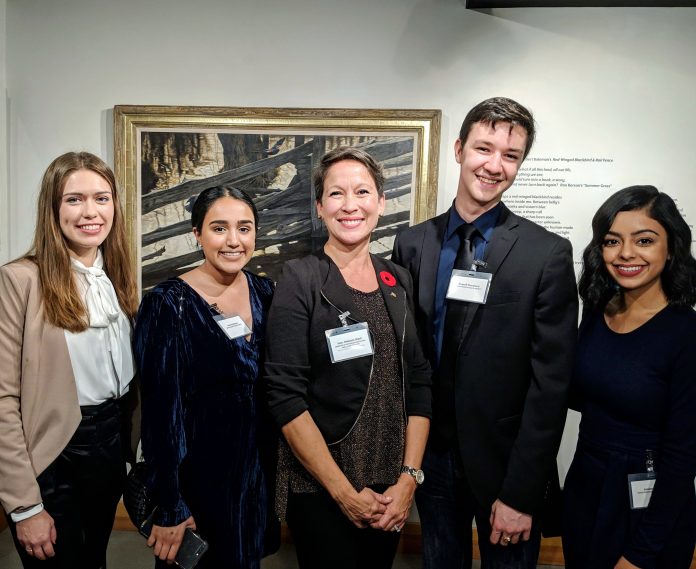
In a recent lobbying trip to Victoria, student directors from the Simon Fraser Student Society (SFSS) met with provincial government representatives to advocate for restructuring student loans, open-education resources, and a review of the sexual violence and misconduct policies of B.C. post-secondary institutions.

The SFSS partnered with UBC Alma Mater Society (AMS) and the BC Federation of Students (BCFS) during this trip, creating a lobbying group that represented over 200,000 B.C. students.

Like in past years, the SFSS has planned two provincial lobbying trips for this academic year. During this first trip, timed around the start of the provincial government’s yearly budget planning, the lobbying group makes recommendations which will impact budget considerations. The second trip is planned for the spring term, after the provincial budget’s release, so lobbying groups can see which student recommendations the government has taken into consideration.

“That puts us in a really good position because they’re expecting us to come. So they know that they can’t completely just ignore us because we’re going to be knocking on their door at the same time every single year,” said SFSS vice-president external Jasdeep Gill.

One of this lobbying group’s main causes was getting rid of interest on student loans and introducing needs-based grants.

“Students with less financial means end up paying more in interest payments and ultimately spend more for their education than their wealthier classmates who can afford to pay up front,” reads an SFSS executive lobbying summary.

Interest on student loans has been eliminated in Manitoba, Nova Scotia, Prince Edward Island, and Newfoundland and Labrador.

Gill relayed a message from B.C. premier John Horgan that, while these requests aligned with the NDP government’s original intentions, the province has had “a really tough two years,” and much of B.C.’s budget  was going towards rebuilding northern communities affected by the province’s major summer wildfires.

However, the group’s lobbying efforts for open-access resources (OAR) showed more promise. The lobbying group asked for a one-time $5 million contribution to BCCampus, an organization that provides open-education resources and support to students, and the ministers they spoke with reacted positively.

“They were really supportive of that [ . . . ] so I’d be really optimistic on that,” said environment representative Russell Dunsford.

The group also lobbied for a review of the sexual violence and misconduct policies across all 25 BC post-secondary institutions to ensure they were comprehensive and consistent across the province. They recommended a needs assessment to determine how much funding these post-secondary institutions would require to establish and maintain effective policies. FCAT representative Amrita Mohar noted that Burnaby-Lougheed MLA Katrina Chen reacted positively towards the initiatives.

“Lobbying can be a hit or a miss,” said Gill when asked how effective lobbying had been for the society historically. “It’s a lot more dependent on the team that you have and what their vision is.”

She noted that one of the SFSS’s large goals for the spring term was to bring together a group which included the University of Victoria and the Alliance of BC Students — alongside AMS, the BCFS, and the SFSS — to be able to represent every post-secondary institution in BC together, which has never been done before.

The SFSS is also looking to branch out into lobbying on a federal scale, specifically on the topic of the Kinder Morgan tank farm expansion. “I think it’s an important time for SFU to be represented and no one’s in a position there to do so. So if we’re not there, there’s absolutely no conversation around it,” said Gill.

In addition to increasing their lobbying visibility outside the university, the SFSS is looking to review their internal structure with regards to maintaining continuity between board years, higher research standards, and better communication between the board and the membership.

“With SFSS, something that I think historically we’ve kind of failed to do is pass the torch forward and keep it consistent,” noted Gill. According to Gill, a lack of internal structure and messaging forced the society to “reset” its lobbying efforts every year.

“We only have one-year terms whereas all these ministers are in for three, four, five years and they can have successive terms as well. So if they see a different group of students come in with a different set of priorities every year, it’s a joke to them,” echoed Dunsford.

“It’s really important that we invest in a structure that’s going to ensure that continuity and that’s going to make sure that future years are coming back to the ministers with the same asks, the same demands, and holding them accountable year by year.” – Russell Dunsford, SFSS environment representative 

The society has also recently moved to rename the SFSS Advocacy Committee the Federal Provincial Municipal Lobbying Committee and place it on hiatus while they undergo internal restructuring.

Gill noted that in past years, the committees’ proposals often had to be dropped because a lack of proper research meant that they could not be brought to provincial lobbying tables. The society is therefore moving towards shifting the responsibility of research from the Federal Provincial Municipal Lobbying Committee to SFSS staff members, allowing the committee to focus on communication and student engagement.

“We need at-large [representatives] that are able to bridge that gap between us and the membership so they know what we’re doing,” said Gill.

“This is the whole reason we exist,” said Gill, referring to the SFSS lobbying efforts. “So it needs to be communicated, otherwise all you get is negative dialogue. [ . . . ] Students need to feel like they’re actually making a difference, whether they’re the ones in that seat or not.

“They have a power just being a student, and just being a part of this institution,” she added.