Home Blog Page 623

You need to pay attention to the SFSS, even when it’s “boring”

0
Photo by Chris Ho / The Peak

Written by: Gabrielle McLaren, Features Editor

If you’ve been anywhere near The Peak, SFU Dank Memes Gang, or any other SFU-related online community, you probably know that the SFSS board of directors has recommended the impeachment President Jas Randhawa. A motion to impeach will be placed on the agenda of the upcoming annual general meeting (September 24), and Randhawa has been very clear that he will not be resigning or otherwise leaving his position as president in any other way, despite the complicated dynamic currently festering within the SFSS.

The news has already made huge waves. Even before The Peak was in any position to responsibly report on the developing situation, a “BREAKING NEWS” post on Facebook garnered eight shares, 21 comments, and over 100 likes. Other posts about the impeachment process and internal conflicts of the SFSS have also been popular, and people have had plenty to say in the comments. So clearly, undergraduate students are interested in this society that they “own.”

Here’s my question though: have you or anybody you know ever gone to an SFSS board meeting? They’re all public, with the exception that parts are just held in-camera for a various reasons. Do you even know how to find where and when board meetings are held? Honestly, I didn’t for a long time, and neither do many SFU students. While I don’t think anybody outside the SFSS knew just how bad a state the board is in, the fact that it’s not all rainbows and unicorns isn’t new.

Take Fall Kickoff, a cancelled event that also got undergrads upset — so much so that an online petition to save the concert was created. The Peak published a story about the cancellation on July 18, but on July 10 a Board Shorts recounting highlights from the SFSS board meetings noted that the SFSS was already struggling to find an appropriate date for the event, and didn’t even motion a budget for it. If students actually kept an eye on the board and its activities and meetings and plans, could they have known that Fall Kickoff was on the line before it was off the table? And isn’t knowing what’s going on on campus the first step of steering it into the direction you want to see it go to?

Another example: if you look at the comments on one of the most recent Facebook posts about the whole impeachment debacle (“Physical assault allegation made against SFSS President”), you’ll see students posting videos taken of members in the SFSS office, including two of the directors roughhousing. That is in no way appropriate workplace behaviour, but in the moment it was okay to be videotaped, and deemed acceptable. Why?

Because nobody gave an apparent, singular fuck about what the SFSS was doing. Nobody dropped by the board office, and nobody was keeping in touch. It’s only now that things have gone all cattywampus and people are watching that these videos are coming up as ammo to fuel one side of the argument, when really, this looks bad on everybody.

A 2011 Maclean’s piece makes a point I quite like: “When it comes to politics, boring is better.” Sure, we’re talking about student government right now, but the principle still holds. And yes, you should still care, even if it’s “just student government,” because according to their operating budget for the 12-month period ending April 19, the SFSS’ total expenditures is $2,692,767. That’s a lot of money — around of $750 from each full-time student if you look at their fees (excluding money they collect on behalf of other on-campus student societies). It goes to super useful things like the U-Pass and the Health and Dental Plan, and I’m not saying that the SFSS has no use or place on campus. But with that much of your money invested into the SFSS, don’t you want to keep tabs on how it’s being used?

Boring means that everything is running smoothly and efficiently. Think of a building when a fire alarm goes off: the noise is loud, everybody is moving, and there’s a lot of excitement and things to look at. But your building is still on fire. Wouldn’t it have been great if you’d kept an eye on it to make sure a four-year-old hadn’t accessed the matches by the door? It’s not quite as exciting, but in the long-run you’ve definitely won this scenario.  

Well, for this board, it’s a bit too late. All the matches have been struck and everything is on fire. It’s good that we’re paying attention now, but it should translate into students showing up at the AGM ready to vote — and to keep their eyes on the SFSS after the impeachment sinks or swims.

The Black Excellence in Blackkklansman

0

By: Youeal Abera, Staff Writer


Editor’s note: Spoilers included!

If a film has the ability to exceed the methodical expiry date of trend-propelled plots, then chances are, its value in society is imperative.

      Blackkklansman, directed by Spike Lee and produced by Jordan Peele, is the story of an African-American undercover cop who fakes his identity as a white supremacist to infiltrate the KKK. From this plot alone, Blackkklansman is one of the most incredible and thought-provoking autobiographical stories in cinematic history.

     The film begins with Ron Stallworth (John David Washington) being interviewed for a position on the Colorado Springs Police Department. Initially, Stallworth is warned that if he were to become the first Black policeman in Colorado, he would experience a tremendous amount of racism. After being hired, this warning comes to fruition as Stallworth experiences a substantial amount of implicit and explicit racism, even from those on his own force.

      By far, what serves as the most exciting element of Blackkklansman is Stallworth’s courage, particularly in his effort to dismantle the KKK from the inside. With the help of his partner, Flip Zimmerman (Adam Driver), Stallworth uses a concocted identity to ascertain the plans of the KKK by attending each meeting and function. On a number of occasions, Stallworth and Zimmerman’s façade is almost found out, stealing the breath of audience members each time. However, with Stallworth’s name and Zimmerman’s face, the protagonists of the story manage to fool the group of terrorists long enough that the KKK’s plans of death and destruction are foiled.  

      The most intriguing aspect of Blackkklansman, however, is its relevance to today’s political climate. Although Lee’s film takes place in the 1970s, much of the social and systemic debacle present in the film is mirrored in real life today, most notably in Trump’s presidency.

      For instance, former grand wizard of the KKK, David Duke (Topher Grace), tells Stallworth in their correspondences that he plans to transfer his views on terrorism, supremacy, and racism into the world of politics. Now, four decades later, the real-life David Duke has proudly cemented himself as an avid fan and supporter of Donald Trump, tweeting things like, Today Trump is a Hero! Trump is no Jesus but they hate him as much!!!!!!”.

     In addition to being an entertaining movie, this film intelligently exposes to audiences the deep history of America’s racist structures, and how they exists both in the criminal justice and political system. This is especially exemplified at the end of the movie, as Lee completed the film with footage of the chaos white supremacists enacted within Charlottesville in the summer of 2017.

     If you want a movie that will make you laugh and keep you on the edge of your seat, then Blackkklansman is the perfect choice for you. However, when watching the film, be sure to critically observe not only how racism and white supremacy operates, but also how these agents aren’t merely “things of the past.”

Band versus Band: SALES vs No Vacation

0

By: Max Huebner


Stepping out of the heavy summer air and into the cool, dim red glow of the Biltmore, your eyes are drawn immediately to the far side of the room. You pass over a ragged Persian carpet as you make your way through a small crowd of people. The stage is a little cramped but inviting, lit in a soft blue and framed by the fairy lights that line the walls of the cabaret. As the bands step onto the stage, a quiet atmosphere falls upon the venue, and the intimacy of the show becomes apparent.

From humble two-piece dorm room beginnings to indie/bedroom-pop staples, female fronted SALES and No Vacation both offer smooth, contemporary blends of intricate guitar riffs, with airy, wistful vocals, and laid back drum tracks. While there are some obvious differences in each band’s respective musical style, both convey a warm, almost melancholic emotion in their music. This was made apparent by the thoughtful sentiments collectively expressed by the crowd at their show at the Biltmore Cabaret.

No Vacation

No Vacation wove together upbeat and intricate melodies, with soft vocals and reverb heavy guitar. They created a paradoxical collage of calmness and erraticism that left listeners in a dreamy trance. After a year-long hiatus preceding their most recent EP, Intermission (2017), the band hasn’t missed a beat. No Vacation wasn’t afraid to pull from their older repertoire, and kicked off the show with an adaptation of their 2015 release, “Lovefool.” Even though the band hails from New York, and this stood as their first show in Vancouver, No Vacation provided a great set list, a polished sound, and lots of interaction with fans which made their concert a show to remember.

SALES

As the opener packed up, more and more people began to pour into the venue — it became apparent which band the majority of fans came to see. Playing an entire set with only a three-piece band, SALES stayed true to their minimalist musical style. The result was an extremely clean sound. The light, repetitive melodic guitar patterns used so frequently in their music hung in the air like a mellifluous mist, while the usual crisp and jagged programmed drums heard on their studio album translated perfectly to a live drum set. Although the crowded venue made the set slightly less intimate, the enthusiasm shown by the fans more than made up for it.

The Verdict

A relatively even musical performance from both bands makes it difficult to distinguish clear winner between them. However, given the rich and refined sound they managed to pull from simplicity, I would give the edge to SALES. Their experience shines through in their music, and the crowd’s eager attention was only further evidence of that fact.


Board Shorts

1
Irene Lo / The Peak

Written by: Gabrielle McLaren, Features Editor


Board approved a partnership between the SFSS and Refresh Financial

Vice-president (VP) finance Matthew Chow announced a new partnership between the Simon Fraser Student Society (SFSS) and financial services company Refresh Financial in the hopes of increasing personal financial literacy amongst the SFSS membership.

“I noticed a gap in terms of financial literacy and understanding how credit works,” Chow noted. He put this motion on the agenda and arranged the partnership in support of the SFSS’s pillar of financial wellness for students.

Refresh Financial will provide financial intelligence training to students free of charge in exchange for sending brand ambassadors to campus. According to the memorandum of understanding that has been established, Refresh Financial will also be fronting the costs for their brand ambassadors’ presence at events.


Board approved up to $691.31 for the club and student union collaboration event on September 11

This event will feature cupcake decorating to allow club executives and departmental student union executives to get to know members of the board of directors and ask questions that clubs may have regarding the SFSS. The original motion had to be amended to account for a higher number of RSVPs than anticipated, and to provide a vegan option to accommodate dietary needs.


Board resolved to accept the resignation of arts and social sciences representative Kailyn Ng

Ng submitted her resignation, which has been effective since that date, on August 24. According to the board chair Mohammed Ali, Ng’s resignation stems from her transfering to another university.


Board resolved to appoint science representative Natasha Birdi, at-large representative Mohammed Ali, and VP university relations Jackson Freedman as human resources representatives


Board discussed the upcoming Annual General Meeting

“There’s been a lot of confusion about what people can expect at the AGM, the process that’s been mentioned, any idea what’s going on [sic]. . .” said Samer Rihani, VP student experience. “The agenda has been set.”

The board reinforced that the special resolutions that SFSS president Jas Randhawa mentioned he would bring forward can no longer be passed by board, by Council, or by student petition. The board confirmed that Randhawa missed multiple deadlines to hand in his petition and “has not informed the board of any other decision he plans on making.”

“The special resolution for the impeachment of the President is the only additional item that has been approved by a majority vote to be on the agenda,” Rihani reinforced. “Any other resolutions will not be allowed on the agenda even if there is a petition brought forward [. . .] there is only one additional item that students can expect.”

The board also discussed making the vote on the special resolution a secret ballot vote, given the sensitivity of the issue. This is permissible according to Robert’s Rules of Order.

“There are a lot of people who are a bit concerned that [they are] friends with both sides of the special resolution,” Rihani admitted. The board hopes that the secret ballot will help students feel “no pressure while voting.”

According to the board, this will not stop students from finding out the results of the vote on the day of. Administrative supervisor Karen Atara is looking into establishing a neutral group of volunteers who are not affiliated with the SFSS or part of its membership to organize and tally the votes.


Board discussed the issue of SUB space

VP external relations Jasdeep Gill opened a discussion on the issue of space in the Student Union Building (SUB), drawing a link between the issue and the Board’s “internal conflicts.”

“In terms of SOCA, we’ve had this discussion multiple times, where the Board agreed that the SUB was a shared space model and every club and organization was supposed to use that model as equals,” Gill said. “Recently, what’s come forward is that Jas has been making deals on his own with these spaces, bringing forwards concerns that we’ve already discussed, that he’s personally voted against, but that he is now trying to use for his impeachment process that’s coming up.”

The board is firm in its first decision, and is hoping to develop a more in-depth response to the media attention the SFSS has been receiving. Rihani reiterated that Randhawa had previously sat on the Build SFU committee that had voted in favour of the shared space model.

Rihani noted that, as a date for the SUB’s opening has been set later than originally anticipated by the board, the board now has the flexibility to extend the subleases provided in the rotunda for longer the current end date of December 14. “So it is a good option that we could potentially explore the potential of a renewal of space.”

Rihani did point out that many of the groups in question were asking for a renewal of lease in the first place, but that by the time that the SUB would be open this board’s term would nearly be over, meaning that “it’s not a good idea for us to explore how that model would work, but we should definitely look into what the Rotunda will look like afterwards.”


Board takes steps to improve HR within the SFSS

On the agenda, the motion reads: “Be it resolved to appoint Jasdeep Gill and Matthew Chow to participate in identifying an appropriate third-party to work with the SFSS, CUPE, and employees to identify and develop strategies to resolve relationship concerns and workplace issues.”


The board discussed an agreement between the SFSS and Portside Pub

VP student life Tawanda Masawi brought the motion forwards to organize the first pub night of the year on September 27.

The event comes at no apparent cost to the SFSS as Portside Pub is hosting the event, although there was some unclarity regarding whether or not the motion needed to include an allocation of $300 for Portside Pub to arrange a coat check.

When some members suggested that the SFSS might supply a volunteer free of charge, it was deemed that the motion could not be passed until the board had more information.


Board discussed a motion to increase their Web Site & Tech Support budget by $9000 in order to redevelop the SFSS website

Communications, arts, and technology representative Amrita Mohar and the SFSS communications coordinator Sindhu Dharmarajah had previously recommended Ballistics Arts Media Studios Inc. as the preferred web development company.

“This is just the better, more efficient way,” Mohar concluded. “Basically, we pay this and it’s done. Also [. . .] I feel like we need to do this, just because we’re trying to make Campus Vibe and our website cohesive and one, so students are aware that Campus Vibe isn’t a part of SFU or whatever, it’s a part of SFSS.”

The original motion was amended by Mohar to replace SFSS president Jas Randhawa as one of the authorized signatories by vice-president student services Samer Rihani, along with Build SFU’s general manager Marc Fontaine. While the board agreed with this amendment, confusion persisted over where the funds for the $9,000 increase would be coming from.

“I think it’s a good initiative to pursue,” said CEO Martin Wyant, who was telecommuting to the meeting. “I just want to make sure that we identify where you’re going to pull the money from.”

“If you wish to have this website upgrade happen, then the money needs to be approved,” Fontaine said.  Later, he added that “If there’s concerns about the motion and it is not understood then I suggest that we should not vote on it today. It should be quite a simple motion, and board members should understand, since it was already discussed at FASS last week and at board the previous week or the same week. But if it’s unclear, let’s move on.”

The source of the funds remaining unclear, the motion was not carried.


Board resolves to approve up to $2,100 for SCC BBQ

In a motion added to the agenda by Gill, the board resolved that the Surrey Campus Committee (SCC) will match the contributions of the Mechatronics System Engineering Student Society towards the SCC BBQ for a value of up to $2,100.

“Recently we had the pancake breakfast at the Surrey campus which was very successful,” said Jasdeep Gill, vice-president external relations. “We want to carry forward that movement and make sure that people are still having some kind of activity after Fall Kickoff Week.”

The event will be held in September in the mezzanine, though the exact date has not been finalized.

Customer service confessions: Can I get a refund please?

1
Illustrated by Marcus Blackstock

Written by: Amal Javed Abdullah

Michelle scans the long weekend-day line as she walks towards the employee entrance behind the customer service desk for her afternoon shift, and sighs internally. It’s going to be a long day. She rings up a closed counter, and calls the next person in line.

A potbellied man in his mid-60s approaches. He is carrying a large cauliflower head in his right hand, and a shirt on a hanger in his left.

“Hello,” he says, “I’d like to exchange this shirt for another, and I’d like to return the cauliflower.”

“I can give you store credit for the shirt,” Michelle responds. “But we don’t return produce—”

“But you have a seven-day return policy,” he says.

“It doesn’t apply to produce, sir—”“Let me speak to your manager,” he demands. Michelle internally sighs again. This is going to be a really long day.

“What’s the reason for your return?” she asks.

“I bought this cauliflower here for $7. When I went home, I saw the same cauliflower in a flyer for $2. Why would I waste money on this cauliflower when I can get another one $5 cheaper?”

Michelle eyes the line of people behind this man who are beginning to get restless, and the length of this line is only getting longer by the minute.

“Okay, I’ll call up the manager,” she says, and rings Stacey, the acting manager on duty that day, who appears a short while later, the heels of her cowboy boots clicking against the cheaply-tiled floor.

Stacey is the type of woman who can strike fear into the hearts of men with one look. She’s six-foot-one, muscular, and the wearer of a glare that commands respect. The man eyes her with curiosity.

“What’s the matter here?” she asks in her thick Southern accent.

“I want to exchange this shirt,” the man says, raising his left hand, “and a return for this,” raising his right.

“We can give you an exchange for the shirt,” she says, “but produce is non-refundable. I’m sure Michelle’s told you that. I asked what the matter was.”

“Nothing’s the matter,” he responds. “If you can just process what I asked, I’ll be on my way.”

Stacey turns to look at Michelle, who nods with a knowing smile.

“And what is the reason for your return?” she asks.

“I can get a cauliflower head just like this one $5 cheaper somewhere else,” The man replies calmly. It’s downright impressive how the man has remained relaxed and unruffled this entire time. Any other customer like him would have raised a ruckus in pursuit of his ridiculous demand.

But Stacey wants to get down to business. “That’s all very nice, sir, but as I just told you, we can’t refund produce. Now, we can either do this the hard way, or the easy way. Either you accept what we just told you about your cauliflower, and Michelle here will give you store credit for your shirt. Or, I could have you banned from ever stepping foot again into my branch of this department store. Have it your way.”

The man hesitates for a second, looking Stacey up and down, taking in her athletic figure and her boots decorating her feet at the end of her black work pants. He can’t tell if she’s serious.

“Can I get store credit for the cauliflower too?” he asks cautiously. This one is an ambitious one, Michelle thinks.

“Michelle, turn the webcam on so we can put this man in our files—”

“Okay!” He exclaims. “I don’t need a refund for my cauliflower! But can I still return my shirt?”

TransLink’s publicity move with Seth Rogen feels hollow and deceptive

0
Photo by Maxwell Gawlick/The Peak

Written by: Gene Cole, Opinions Editor

This summer, Visa cancelled a deal they had with TransLink to temporarily swap prerecorded transit voices with audio clips from Morgan Freeman, who had news of sexual harassment allegations very close to the announcement. Once this fell through, comedy actor Seth Rogen ended up agreeing over Twitter to voice the various transit etiquette tips that play regularly in trains and stations. You can also apparently ask a bus driver to play it on the bus, if you feel brave enough to make such a request.

Opinions on TransLink definitely vary with students, with stances in just The Peak ranging from frustration with its goals to finding it underappreciated. But regardless of your judgement of how well it performs, its necessity is the key factor that people need to recognize.

This becomes harder and harder, though, as TransLink often works hard to mask the tremendous weight they carry. While this publicity move with Seth Rogen is meant to make Translink look fun, Vancouver’s transit system is inherently unable to take on a fun persona.

Right out the gate, it’s important to have context about just how large Translink’s weight is. Back in 2001, around 3,400 workers for Greater Vancouver public transit company Translink completed a 123-day strike. Stopping transit in most places and rendering vehicles unable to have maintenance done, it resulted in the company pursuing financial aid from the provincial government to increase its employees’ wages.

This strike had an intense impact. Many people had to quit their jobs or were laid off, simply because the city was crippled by its lack of transportation for workers and customers. If you ride transit daily and see the crowds who rely on it today, you understand how likely this outcome would be. This has become even more predictable since 2001, as the system has greatly expanded over the years, and can thus lead to even more immense tragedy when it fails.

With those sorts of risks in mind, Seth Rogen coming in to talk about how people should keep their feet off the seats feels hard to appreciate. There’s nothing wrong with a more creative way to inform riders of transit etiquette. But the use of a movie star famous for weed-based comedy is a move that feels very oriented towards giving the company a better public image, rather than towards improving the environment of a train car.

This focus on public image rather than utility is the ongoing problem with TransLink. Even its social media has slurries of fun posts where they parody song lyrics, while their mentions and replies are entirely made up of dry corporate responses to serious urgent questions. It keeps a huge divide between Translink’s characterization and the experience people have utilizing it.

So, is there a solution? The best suggestion I could think of would be for moves like this to entwine utility with the fun. With a memorable character like Seth Rogen’s, there’s potential to use these voice clips to advertise a better PA system, since it’s impossible to hear things on a train most of the time anyway. Alternately, it could be used as a starter to introduce clearer voice clips for announcing stations. Bringing in a friendly, popular movie star shouldn’t be the full benefit in and of itself — at least, not with a service that’s responsible for so much of the city’s ability to function.

Rogen and improved train etiquette aren’t the problem. The problem is that the publicity movements need to be more than just TransLink trying to look pretty. We don’t need it to be bland or to act like an ambulance, but it’s frustrating to look at how Translink behaves when it’s so dissociated from its necessity. Transit’s personality is incapable of being more than a utility in this city, and so these publicity moves just feel like a full mistake.

So how does the SFSS work anyways?

0
Image courtesy of SecurityRoundtable.org

By: Gabrielle McLaren, Features editor

When you open the SFSS’s website, their “about” page seems pretty straightforward: “The Simon Fraser Student Society is a student-led organization that represents and advocates for the interests of the 25,000+ undergraduate students at SFU. As an undergraduate student, YOU are a member of the SFSS and benefit from all the services and opportunities we offer.”

Great. But what does this actually mean and how does the SFSS do this? Since the society has been in the news recently, and since chances are (if you’re reading this) that you are, after all, one of the society’s owners, it’s worth taking the time to actually understand the SFSS.

The first thing you need to know is that the SFSS is a Society, according to the BC Societies Act. They’re governed by a constitution, which you can find online, that acts as their compass. Let’s have a look at the SFSS’s more specific composition and at some terminology you’ll often seen thrown around in relation to the SFSS.


The board of directors

Online, capitalized baby-blue letters yell at you that “THE BOARD [sic] OR DIRECTORS ENSURES THAT THE DIVERSE VIEWS OF THE STUDENT POPULATION ARE REPRESENTED.”

The SFSS’s governance system is called the Policy Governance Model or the Carver System. According to its website, “The model enables the board to focus on the larger issues, to delegate with clarity, to control management’s job without meddling, to rigorously evaluate the accomplishment of the organization; to truly lead its organization. In contrast to the approaches typically used by boards, Policy Governance separates issues of organizational purpose (ENDS) from all other organizational issues (MEANS), placing primary importance on those Ends.”

Every spring, the student body elects 16 directors. These 16 students head the SFSS and help to shape and direct the society. According to the board of directors’ webpage, “Each Director has the responsibility to make decisions in the best interests of all SFU students, and also will take lead on many school-wide projects and events.”

You can further break down the board into six executive officers, eight faculty representatives, whose responsibilities are all outlined in SFSS by-law 4, and two at-Large undergraduate students. According to by-law 5, all of them are expected to be registered at SFU for at least two terms during their tenure, and they receive a stipend for their work. All positions on the SFSS board are paid positions, as noted on the SFSS’s website, but the exact stipend for each director is not publicly posted online.  


President (currently: Jas Randhawa)

Job: Represent the society on all formal occasions, convene board meetings, be a voting member on all SFSS boards and committees, liaison between the board and its employees, ensure that all policies, collective agreements, and employment contracts are being adhered to, and do whatever else has to be done to keep things running.


Vice-president student services (currently: Samer Rihani)

Job: Organize activities and events for the SFSS’s membership, coordinate services for SFU students, compile the annual report of the board of directors for the AGM, take on any other duties delegated to them by the board, take on the SFSS presidency should he resign, be impeached, or abandon office.


Vice-president external relations (currently: Jasdeep Gill)

Job: Act as a liaison between the board and other student unions and societies, represent the society in events (such as conferences) outside the university community, and keep the board informed of any events, plans, or actions that external organisations might have that could affect the society or its members.


Vice-president student life (currently: Tawanda Masawi)

Job: Act as a liaison between the SFSS’s board or council and other student groups on campus, oversee the activities of faculty and departmental student unions, and liaison between them and the board.


Vice-president finance (currently: Matthew Chow)

Job: Keep track of the money received and distributed by the society, respect all by-laws and regulations related to funds, ensure that funds are properly deposited, deliver a report of the society’s financial affairs at the board’s request and one for the annual general meeting,  Gabriand coordinate the society’s budget and its legal and commercial affairs.


Vice-president university relations (currently: Jackson Freedman)

Job: Liaison between the board and the university, organize student representation on all university committees, community affairs, and activities.

Faculty representatives:

Job: Act as a bridge and spokesperson between board and the students and student groups of the faculty that they represent. When voting on board, they must give special attention to students of their faculty but vote in the best interests of the student body as a whole.

At-large representatives (currently: Mohammed Ali, other seat is vacant)

Job: No job description is provided on the SFSS’ board of directors’ members page.

The powers, duties and obligations of the board as a whole are all outlined in by-law 6, if you’re interested in more.


Staff

The SFSS is powered by a diverse staff of workers who put in all the administrative and coordinative work to make the society run. They cover everything from finance to communications to member services, and the Copy Centre. You can consult the full list of staff online, but here are a few you might hear about in the news or touch bases with on a more routine basis.

  • Chief Executive Officer (currently: Martin Wyant)

There is no job description provided for the CEO on the profile you can find on the SFSS’s website. According to the Board Candidate Orientation Manual, the SFSS’s activities can be divided into governance (deciding what the SFSS will do and how it will do it, which the board does) and operations (actually getting that done, which the staff takes care of).

The CEO oversees the board’s operations. He is in this way the society’s manager. The CEO is responsible for establishing board-established goals and accountable for their enactment. According to the manual, “With a strong Chief Executive Officer, the Board can expect the delivery of regular, timely, and quality reports on the performance of staff, as well as Society finances, projects, and programs.”

Every year, the CEO is evaluated by the president and two other board members to examine job performance and recommend his salary. According to the principles of the Carver system, “Furthermore, boards that decide to utilize a CEO function are able to hold this one position exclusively accountable.”

  • Build SFU general manager (currently: Marc Fontaine)

You know that ongoing construction project going on outside Maggie Benston Centre? Yeah, Marc Fontaine is the one supervising the construction of the Student Union Building. According to his Linkedin, he oversaw the initial consultation of SFSS membership to design the SUB, managed its creation from within the SFSS, and was essentially the head honcho of the whole thing.

  • Out on Campus coordinator (currently: Dani McNeil-Willmott)

Dani is responsible for Out on Campus, SFU’s Pride centre. They’re responsible for creating a safe space on campus for members of the LGBTQ+ community. They have previous experience working at the Cape Breton University Pride and Ally Centre, facilitating talks with medical professionals about queer and trans health, among other things.  

  • Women’s Centre coordinator (currently: Paola Quiros)

The Women’s Centre coordinator, like the OOC coordinator, is responsible for keeping the centre up-and-running and responding to members’ needs. In Paola’s case, that’s all self-identified women on campus. This includes supporting students in distress, referring everyone to appropriate support services, makng sure that snacks and other free resources are available, and helping other branches of SFU support their students to the best of their abilities.


SFSS Glossary

  • Abandonment (of a position) : According to by-law 17, a member of the board or the student council (see Glossary) is deemed to have abandoned their position if they are absent from two consecutive meetings without being authorized to do so by the board or council. Their position becomes vacant and must be filled in a by-election.
  • Annual general meeting (AGM): A meeting that must be held before October 31 every fall term for all members of the SFSS. All members are eligible to vote at the AGM on business proposed by the board (for example: amendments to the SFSS’s constitution or to any by-laws). This is where the annual report of the board, the vice-president finance’s report, and the auditor’s report will be received. For more information, see by-law 11. The next AGM will be on September 24 at 1 p.m. at the Leslie & Gordon Diamond Family Auditorium.
  • Auditor: Person who can access all documents and property from the society, board, employees, and members to audit the SFSS’ fiscal year and report their findings at the AGM. Think of them as the society’s outsider financial watchdog. They are appointed at every AGM.   
  • By-election : An election called by the board to fill a vacant position. These can only be held once a year, in the fall (unless enough positions are vacant to affect quorum). They are also run according to their own set of election procedures.
  • Constituency group: According to the SFSS’s website: “Elected, student-run bodies that represent undergraduate students that share an experience of oppression, systematic discrimination and/or barriers.” They are each represented at the student council by a councillor. Examples include the First Nations Student Association, Students United for Disability Support, or the Women’s Centre Collective.  
  • Council (also known as ‘Student Council’ or ‘SFSS Council’): Council is a group of students who meet at least once per semester. According to by-law 8, they are “the primary medium for discussion of: a) Issues of importance to members in different faculties, departments, or schools at the University. b) Advocacy and other such matters of general interest to members of the Society.” You can think of the council as the SFSS’s ears and eyes within the student body, who help them figure out what their membership wants and needs. The councillors you’ll find in student council are representatives from constituency groups, faculty/departmental student union representatives, and honourary members of the council (including SFSS directors) who may speak and attend meetings but who cannot vote and whose presence does not go towards quorum.
  • Department student union: As detailed in by-law 10, groups who “represent undergraduate students within the University Departments.” They must meet regularly and have a written constitution and by-laws approved by the council.  
  • Faculty student union: According to by-law 9: a group of students whose goal it is to represent undergraduate students within a faculty. They are overseen by the board of directors.
  • Member in good standing of the Society/of the SFSS: According to by-law 1, “a person who satisfies the requirements of by-law 2 and has paid all fees, fines and penalties levied in accordance with these By-Laws or the Society’s regulations.”
  • Resignation: According to by-law 17, a resignation is one way that a position on the board or the council can become vacant. A member of the board or the council is also considered to have resigned if they cease to be a member in good standing of the SFSS.
  • Special general meeting: Similar to AGMs, but they are only held if a petition signed by at least 5% of the board’s membership is presented to the president or if two thirds of the board or the council agree to it.


SFSS president petitions to bring forward new motions for a SGM

0

By: Amneet Mann, News Editor


With the vote to decide his impeachment nearing, SFSS president Jas Randhawa has come forth with his own motions for the student body to vote on in a special general meeting (SGM).

Randhawa is bringing forward four special resolutions to impeach vice-president university relations Jackson Freedman, vice-president student services Samer Rihani, vice-president finance Matthew Chow, and applied sciences representative Kia Mirsalehi.

On the same petition, Randhawa is bringing forward four ordinary resolutions to impeach CEO Martin Wyant, and allocate space in the new Student Union Building (SUB) to the First Nations Student Association (FSNA), the Simon Fraser Public Interest Research Group (SFPIRG), and the Students of Caribbean and African Ancestry (SOCA).


Original plans to add motions onto AGM proved unsuccessful

As discussed in a previous Board of Directors meeting, for a SFSS member — any SFU undergraduate student — to add a motion to the agenda of an annual general meeting (AGM) or SGM, the motion must be approved by the board, council, or at least five percent of SFSS members via a petition. Accordingly, Randhawa is proposing his motions in the form of a petition and seeking signatures from the student body.

Randhawa originally commented to The Peak that he intended to add his motions to the agenda of the AGM taking place on September 24. However, according to Rihani, Freedman, and Mirsalehi, the board’s legal professionals determined that Randhawa had missed the deadline to add motions onto the AGM as per the SFSS Bylaws and the BC Societies Act.

SFSS by-law 11 (2) states that the notice of an AGM or SGM must be given at least 21 days before the meeting.

Section 78 of the BC Societies Act states that “notice of a general meeting must include the text of any special resolution to be submitted to the meeting.”

Section 81 (4) of the BC Societies Act states that a proposal which is submitted to a society more than seven days before notice of the AGM is sent must include the proposal on the agenda sent out along with the meeting’s notice.

Randhawa commented that he does not agree with the board’s legal professionals on the matter of whether his motions may be added to the AGM agenda. “Since we have the scenario of what happens if a member’s proposal is submitted between the 21-day notice and the seven-day “window” before it — the proposal would still be received as there was a notice of submission,” wrote Randhawa in an email interview.

“I’m not sure as to whether the SFSS lawyer was called for follow-up, but he is not someone neutral on the ongoing issues, so we should not be requesting this information from him,” added Randhawa.

“My belief is still that member proposals should not be controlled or rejected by board members.” – Jas Randhawa, SFSS president

Anticipating that his AGM proposal would be rejected by the board of directors, Randhawa then amended his original intention and stated that he would move forward to call a SGM with the petition.

According to SFSS by-law 11 (8), the president must convene a SGM upon receiving a petition signed by five percent of members.


Responses to the motions

Randhawa commented on his exclusion of vice-president external relations Jasdeep Gill and vice-president student life Tawanda Masawi from his proposed motions to impeach as he does “not currently see any professional nor conduct related concerns for them to be removed as directors.”

Randhawa alleged issues of miscommunication and “being easily persuaded [by Wyant]” lead him to propose to impeach Rihani and Freedman. He also commented that Freedman and Wyant both refused to be flexible on their preferred date to hold the Fall Kick-off, ultimately leading to the cancellation of the event.

“I’m confident in my ability to come to my own decisions,” wrote Freedman in response. “While I greatly respect Martin’s expertise and role in our organization, I have made every decision at the board table this year of my own accord.”

Freedman went on to write that Randhawa himself was strongly and openly opposed to negotiating on the concern date.

The Peak reached out to Rihani regarding Randhawa’s allegations. “With such strange and invalid allegations being thrown around, I’d like to point out that along with the points made about the directors Jas is fighting against, he is not noting any single items or times that are examples of what he’s said,” commented Rihani.

“Matthew on the other hand has not lived up to the standards and requirements as stated in the policy for his role,” wrote Randhawa. He referred to Chow’s support in the alleged lengthy paid vacations taken by executive directors “without having developed an appropriate policy within the Finance and Audit Committee as he stated he would” as an example.

In response, Chow explained that the policy regarding vacation time had not yet been developed by the board due to the current lack of defined job descriptions for SFSS directors. “This issue was noted quite early on, so the Governance Committee and the Finance and Audit Committee both have it in our year plans to define director job descriptions and key performance indicators and to link to direction compensation and, thus, benefits,” wrote Chow in an email interview.

“It seems more reasonable to wait for reasonable justification as to how director compensation should work rather than create policy at the whims of a president who doesn’t understand the importance of internal controls,” added Chow. “If Jas had taken the time to understand policy holistically rather than cherry picking, he would be aware that I am acting in accordance with the principles behind my role, that is, fiscal responsibility and ethical disbursement of funds.”

Chow commented that, in the interim, he has been following the precedent set by previous years, which means allocating board members an average of 10 business days for the year.

Randhawa also alleged that Mirsalehi “has done very little work during his time on board,” and commented that he had often witnessed Mirsalehi “horseplay, drink alcohol in the board office, and constantly find ways to try and upset the team dynamic on board.”

In response, Mirsalehi stated that Randhawa had previously both critiqued Mirsalehi for his extensive involvement in board initiatives and specifically reached out to Mirsalehi for help in research due to his experience in researching.

“I find it appalling that Jas who has been trying to discredit my criticisms of him and my initiatives by claiming that I simply want to be involved with everything and do all the work, is now trying to claim that I have done very little work,” he wrote in an email interview.

“If Jas truly thinks horseplay is grounds for impeachment, then how is it that he somehow finds hitting another board member acceptable?” commented Mirsalehi.

Randhawa stated that, while he had been working and attempting to find resolutions to the SUB space negotiations between the SFSS and SFPIRG, FNSA, and SOCA, Wyant had persuaded directors “to speak out against providing these groups space.”

“I soon came to realize that I was no longer okay with Martin drafting all of my responses to student groups as they were upsetting a lot of people on campus,” wrote Randhawa.

Rihani responded to Randhawa’s allegations on behalf of Wyant. “All options agreed upon by the board are voted by the majority,” wrote Rihani. “Even during that period, Jas and I would agree almost unanimously on all decisions regarding space.”

“It’s clear that Jas and Martin actually had a great relationship,” added Rihani. “For Jas to be our main liaison and be in charge of communicating issues to our team, yet never raise a single concern about ANY of the mentioned parties until he was pressured during the impeachment process? This tells the board that his decision against Martin isn’t because he genuinely believes Martin has caused harm to our board in space negotiation, but rather a politically driven move to appear as though he has been advocating for these groups since the beginning of his term.”

“I find the motion emotionally motivated, and lacking justification,” wrote Freedman in an email interview responding to Randhawa’s proposed motion to impeach him.

“[Randhawa’s] interpretation [of society by-laws] has been incorrect on a number of occasions, and I have acted in accordance with society by-laws in every aspect of my position and throughout this difficult impeachment process,” Freedman continued.

Freedman commented that Randhawa’s allegations were “particularly interesting [. . .] considering a number of incidents throughout the first part of the semester involving his failure to consult the board of directors before spending student dollars unnecessarily.” Freedman referred to an incident in which Randhawa failed to consult the board before spending $1,125 on a Vantage Point board development session.

“The board votes on passing money via majority,” wrote Rihani.

“If [Randhawa] had a concern with the spending of student dollars via the board… he’d have to try and impeach all of us, himself included.” – Samer Rihani, VP student services

Rihani has since commented that the SFSS is currently in talks with the groups mentioned in Randhawa’s motions to “clear up some of the confusion between our President and the rest of the board.”

“Making petitions that promise space to groups that don’t even fall under the jurisdiction of a single board member is not only using these groups to individual advantage, but it’s disrespecting their ability to work out proper and fair deals with the SFSS,” wrote Rihani.

FNSA and SFPIRG declined to comment on Randhawa’s motions as they pertained to the organizations. SOCA confirmed that they were still seeking space in the SUB.


Questions raised regarding petition legitimacy

Mirsalehi alleged that some of the signatures Randhawa has been obtaining for his petition were being gathered illegally.

Mirsalehi provided screenshots to The Peak, showing text message conversations in which Randhawa had offered to sign individuals’ initials onto the petition, as evidence that student signatures onto the petition were being forged.

“If the pictures attached are truly indicative of how support is being gathered, than not only is the petition invalid, but also raises further questions of how far Jas and/or his supporters are willing to go to keep power and questions the validity of any of their actions,” wrote Mirsalehi.

Randhawa responded that all students that he had asked to sign the petition were informed on the contents of the document. “It is perfectly legal to initial someone else’s name onto the petition, with consent and permission. [. . .] Forgery is a crime if the signing is with intent to defraud,” he wrote.


 

Homesickness? We’ve all been there.

0
Image courtesy of Enjoymedia

By: Tessa Earnshaw, Michelle Gomez, Gabrielle McLaren, and Winona Young

When my parents helped me move into residence, I didn’t want them to leave. I talked to them

every day, but that only made me miss them more. Going home for Thanksgiving made it worse; I cried when I arrived, and cried even harder when I left. The homesickness made my heart ache.

I soon discovered that the best way to beat homesickness was to give myself a reason to want to be here. I made friends and we explored the city and went on adventures together. Making memories in my new home helped me feel less homesick for my old one.

– Tessa Earnshaw


This time last year, I was boarding a flight and heading to Spain for a semester abroad — my first time ever living outside of Vancouver. Not only was I living away from home for the first time, but I went completely alone.

My first two weeks surprised me in the sense that I did not feel homesick at all; I was meeting new friends, getting to know Barcelona, and making fun plans every day. But after the initial excitement, the homesickness settled in and I missed my friends, my family, and the delicious mountain water that I had always taken for granted.

The main thing that I found helped me was talking about my homesickness with my new friends from abroad, who were going through the exact same thing. Calling my friends and family was also a great way to keep in touch and remind myself of home. The feeling passed after my first month abroad; by the end of my exchange, I was extremely sad to leave and wished I could stay longer.

To other students struggling with homesickness: it will pass and you will wish that you had spent more energy enjoying your time in your new home rather than missing your old one.

-Michelle Gomez


I picked up my life to come to Vancouver quite willingly, without ever having seen the city before or knowing a single person here, except this long-lost cousin I’ve yet to touch bases with but who I might apparently recognize from a commercial he was in. Maybe this was stupid, but I was looking for an adventure.

I got one, and I’ve fallen in love with the city, the mountains, and the ocean, but homesickness inevitably struck (and will undoubtedly strike again). This was especially when things weren’t going well — when I could use a ride, when I was lonely, when I was stuck trying to figure out something my Mom could do in an instant, when nobody had spoken French to me in a while — that kind of thing.

My advice? Screw homesickness, and build a new home. It doesn’t have to be the same as home, but it should be a home. Build yourself a support system. You can’t miss the way your parents were always there to lend a hand if two of your friends are sitting on your floor and helping you build IKEA furniture while shouting double-entendres about the allen wrench.

Build new traditions for yourself to make home home; that way, when you do get home, you miss the fresh Poké you had at every study session with so-and-so. Do something you couldn’t do back home but can now; mine was having plants to water, care for, and look at in my bedroom. The best way to fight homesickness, for me, was by plunging myself even more into Vancouver’s beat when the homesickness hit.

-Gabrielle McLaren  


There’s two ways to deal with homesickness: positively, and poorly. So if you want to remedy your homesickness properly, I recommend dealing with it positively.

First up, food — use the opportunity of moving to explore the city for familiar comfort foods. It may taste different, but it helps you feel a bit closer to home.

Second, messaging apps are your friend. Long distance relationships of any kind are always hard to maintain, so work hard at maintaining them.

Finally, know that you don’t need to love Vancouver/Burnaby/Surrey/wherever you are. Even if this is a permanent or temporary place for you, remember that it will never be your home country/city/town. And that’s OK. Accept where you are as it is, and begin from there. Once you accept it, living with homesickness will just be the slightest bit easier.

-Winona Young

SFU volleyball falls to Seattle Pacific three sets to one

0
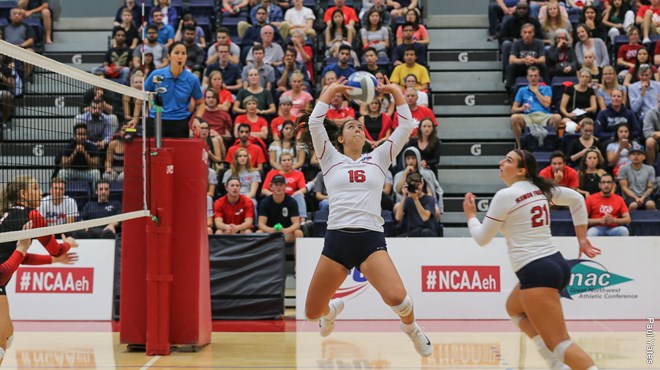
The Clan will now hit the road to face Central Washington University on September 13. (Photo courtesy of SFU Athletics)

On Saturday night, the Simon Fraser volleyball team lost their first game of the Great Northwest Athletic Conference (GNAC) season to Seattle Pacific by a score of three sets to one. After a fantastic first set, the Clan seemed to lose all momentum, losing the next three sets on their way to their first loss of the season.

A tight first set went to the home team, as SFU broke away from SPU to win 25–20. Betsie de Beer came up huge in the set, getting the last three kills (and points) for her team. At this point, things were looking great for the Clan, but they weren’t able to keep the momentum going into the second set.

SFU would go on to lose the next three sets 25–21, 25–18, and 28–26. The fourth set in particular was especially heartbreaking, as SFU had multiple chances to win the set before SPU got the win.

But what changed? This is what head coach Gina Schmidt had to say when interviewed by The Peak post-game:

“After we got blocked a few times we got a bit tentative. After the first set we were scoring well and they made some adjustments — their libero played great — and we didn’t find enough ways to score.” She added, “I think we let up on our serving and let them get into a rhythm offensively. They also started to serve tougher and our passing wasn’t where it needed to be and that made it harder for us to run our offense.”

Every loss is disappointing, but this one hurts especially because the Clan were favourited and had home court advantage. Coming into the season, SFU was predicted to finish third in the GNAC, while SPU was predicted to finish sixth.

As per usual, the crowd was great for the team, constantly cheering and bantering for their side.

“We love playing at home, and I know our team gets energy from the crowd [ . . . ] I just wish we could’ve given them a win,” said Schmidt.  

Peak player of the game: Tessa May

May had a fantastic game in this one, leading the Clan and tying for first with 15 kills on an incredible .462 percentage. She also added in one individual block and two block assists, finishing the match with 17 points.

What’s next:

SFU will now hit the road and face Central Washington University in Ellensburg, Washington on September 13. It will be a tough match for the Clan, as Central Washington has gotten off to a hot start: they are 2–0 in the GNAC and 8–1 overall. The game starts at 7 p.m.