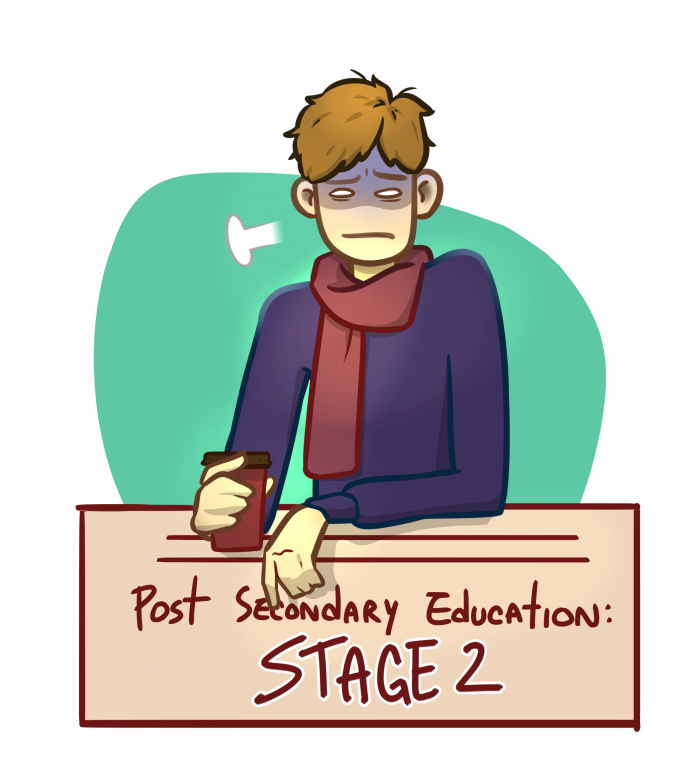
BREAKING NEWS: Reports are streaming in about two SFU students who have been caught in an infinite loop of talking about school for the last four months. Eyewitness reports say that this began at a party celebrating the end of the spring semester.
Before the party, the students supposedly were unacquainted with each other. Because of this, their conversation naturally started by talking about school. The conversation began innocently enough, with questions such as “What’s your major?” or “What classes are you taking next semester?” As the conversation continued, and they began to exhaust the topic of school, the questions became more and more obscure, while still pertaining solely to their post-secondary life.
Such questions included “Which bathroom on the westside of SFU’s Burnaby campus is your favourite,” “If you were to get a certificate on top of your double major and extended minor, what department would it be in,” “What is the most convenient class schedule you’ve had in the last three semesters not including summers,” and many more.
Unable to comprehend conversations that didn’t involve university, they eventually entirely exhausted the topic of new and novel questions, returning back to their original questions, and thus beginning the loop again. Experts estimate that since then they’ve completed approximately 400 loops of the same conversation without stopping.
“It could happen to anyone,” commented a handful of their fellow students on the plight of their peers. “Usually when I run out of topics involving school I just stop talking. But I can easily imagine how something like this could happen.”
“I tried to talk about something that wasn’t school once. But the student I was talking to just stared at me in disbelief, seemingly unable to understand the words that came out of my mouth. I’ve learnt to avoid those conversations with fellow students, and to stick to topics which they can understand.”
One might wonder how it is that these students could ask and answer the same questions over and over again for four months. But a handful of SFU psychoanalysts specializing in the unconscious mind have generated some hypotheses as to how this could happen.
The leading theory is that neither student is listening to the other, or even to themself. Instead, their minds are still on school. When they ask and answer questions, their minds are running automatically without any conscious awareness. Thus, they do not notice when they begin asking the same question for the eightieth time.
Rescue operations are currently underway. The first attempt was met with unfortunate, but unsurprising, failure. Noise-cancelling earphones were discreetly placed onto each student’s head, in hopes of isolating them from each other’s questions and breaking the loop. However, this had no effect on the students, and they continued on with their conversation as if nothing had happened.
“It’s as if they don’t even care what the other one has to say,” said the agent assigned the mission. “They are just talking to themselves, entirely oblivious to the fact they are engaged in a conversation with another human being.”
The rescue team was quite shaken and surprised by this harsh reality at first, until researchers informed them that this is actually normal behaviour for the typical student. Further attempts at rescue are still in the planning stages, but it is still unknown when they will be able return to society.
Even if they do eventually return, it’s possible that enough will have changed about their post-secondary life that the loop will begin all over again with entirely new topics of conversation.
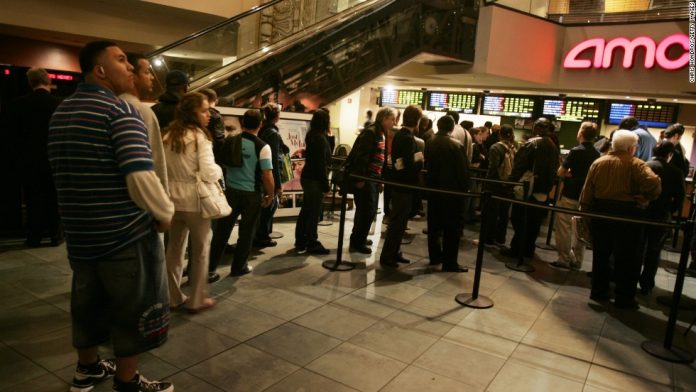
One of the things I think a lot of people have forgotten about recent blockbusters like Avengers: Infinity War is the way people had to buy tickets just to see it on day one. Even though I was by myself, I still needed to pre-buy a ticket with a reserved seat several weeks in advance just to avoid being stuck in the front row — or to see the movie at all. Theaters for the film were filled for the next week or two, and some people had to plan their movie trip nearly a month in advance.
Prepaying for our media has become massively common, but perhaps more so than it should be. This has been true with video games for a while. On one hand, it isn’t inherently negative — it makes things easier for those with disabilities who can’t stand in lines, and reserved seating makes it so you can sit with your friends without reserving seats. It also ensures you will always see the movie you want to see, and know when it’ll be sold out before you travel to the theater or buy your ticket.
But the benefits have come at a severe cost, as it becomes more and more the norm rather than an alternative. On a critical level, the effort to fill seats before a film’s release pushes a lot of blind consumption. Already, film reviews often face review embargos to prevent critics from discussing or spoiling the film too soon before its release. By pre-ordering so far in advance, viewers have nearly zero opportunity to know anything about the film besides what advertisers suggest. Pre-purchasing prevents us from consuming something because it’s good, and instead we have to gamble on the possibility of it being good.
This expectation of pre-ordering can also cause films to become an event, rather than art. We wait for the release to celebrate characters and a “once in a lifetime” story that’s built up to slowly from the film’s announcement. But the audience members aren’t the ones deciding it’s monumental — the producers make those decisions for us. They focus their marketing on highlighting the importance of release itself, rather than trying to sell us on the film’s quality. This isn’t to say going to a theater should be a somber experience, but it should mean more than just a place to spend time and money.
This pre-order expectation also hurts a lot of the benefits that pre-ordering is able to provide. Now that everyone is using the pre-order system, those who do have disabilities face the very problems they’re meant to be able to avoid. They’re right back to getting swept up in crowds — rather than getting reserved seats that benefit them, they instead need to plan way further in advance than regular viewers.
Big groups, meanwhile, have to go through a whole other big mess to organize trips. It’s hard enough to plan a week in advance, but planning for a two-to-three-hour movie, the beforehand meeting, and the travel up to a month ahead of time is ludicrous.
This certainly isn’t the biggest problem plaguing theaters, but there is a lot of fear to be had at how normal this is becoming with our theaters. As it grows in popularity, the downsides continue to grow with them while the benefits fully disappear. Pre-ordering tickets needs to be an alternative for the people who need to do so or who can use the service well, because it just doesn’t work as something to depend on.
Graduate student Yoda Yohansen has discovered the key to identifying which year students are in. The study on the typical habits and traits of SFU students aims to make it easier to stereotype students by what year they are in, and thus treat with the requisite level of respect. The five-minute study has broken records for how fast a research study can be completed. “No one believes this qualifies as a research study, but since I am a researcher, I say it counts,” Yohansen said. Yohansen also received funding for the study from the prestigious Canadian Institute of Social Sciences (CISS).
Yohansen said that a former colleague from his lab at SFU, now working at CISS, was so impressed with the study’s findings that he bought Yohansen a coffee. Yohansen grinned as he told us, “Few people can say they got funded by the CISS so early in their career.” Yohansen created a model based on facial stress-line manifestations a student has, using them to determine the student’s year of study.
When you see a newly enrolled first-year, you probably see an individual unburdened, without a care in the world. Yohansen explained that such a person is usually youthful-looking, and like babies or puppies, this often prompts a response from others.
“Just like how adults instinctively coo to babies or pet puppies, first-years create responses in older students,” said Yohansen. “Usually one of pity or irritation caused by the first year’s ignorance . First-years also don’t have any stress lines since they have not been burdened with the rigours of university life yet.”
Second-years usually have the greatest stress lines, Yohanssen says, since most programs use second-year courses to see if students can succeed.
“Courses like ECON 201 or CHEM 281 are designed to stress a student and see if they have what it takes to succeed in their field. So, usually, second-years look the most stressed because their future in their program is at stake.”
Second-years also have weak backs and misshapen spines as they still carry physical copies of textbooks.
Third- and fourth-years look remarkably similar to each other, Yohansen claims. Such individuals often takes courses at similar levels of difficulty and thus have similar facial stress characteristics. “With the advent of a four-year degree really becoming a six-year degree, students in their third or fourth year are more or less in the same stage of their program and look similar.”
According to Yohansen, fifth- and sixth-years have the widest range of characteristics, as a result of the wider variety of student types in this demographic.
“At this stage, students are thinking of attending a post-graduate school or are starting to think of their careers. Such individuals look remarkably similar to second-years and we often see a reemergence of the stress lines from after their second year,” he explained.
“However, many fifth- and sixth-years, owing to their long arduous experience in university, have simply given up, and such individuals swing the pendulum in the opposite direction and look at ease with life.”
Asked how this model can be applied to graduate students, Yohansen grinned again. “I’ll need more funding to determine that.”
Listen, we need to talk. I’ve kind of been feeling this way for a while and I didn’t know how to tell you, but enough is enough. I don’t think things are working out . . . with us. It’s not me — it’s you.
Let me just start off by saying that your Tinder profile was a picture of your dog. I fell in love with your dog . . . not you. In fact, of all the misleading things on your profile, of which there were definitely many, that picture of Rover was the cruelest.
Honestly, I should have known from our first date that you would be terrible to me. I think you paid more attention to that meatball on your plate than when I was opening up to you about how horrible my ex had been to me and the rest of my difficult past. When I was talking about the turmoil of my eighth-grade science project, I think you might have even yawned . . . although maybe you were just miming eating your stupid meatball. It hurt me so much, especially in retrospect, because throughout this relationship I have always listened to your problems and supported your interests.
In every relationship, there’s something that your partner does that annoys you. Some people are annoyed when their significant other plays video games, or works out at the gym too much, or studies more often than hanging out with them, but you? You collect pinecones. I barely even know how to react to that. Honestly, I can’t even count all the parks to which I willingly drove you so you could go and collect samples.
At first I thought it was cute how outdoorsy you were and how much you cared about the environment. But I barely saw you all autumn because you were too busy, and every time we did talk, all you did was talk about your pinecone collection. I tried to be supportive; I even went with you to that pinecone convention where there were only three people in attendance . . . including us.
When I discovered my passion for writing, you weren’t in the least bit supportive. When I completed my first manuscript, you never even read it. I know you don’t like to read, but I thought doing it for me would be the exception. Speaking of that manuscript, the whole time I was writing it, you refused to give me space. As soon as I got busy, you suddenly became so needy and insisted on texting me in five-minute intervals. Messages like: “What are you doing now?” and “Now?” flooded my inbox.
Maybe it was when I started to ignore them that you met someone else.
You could have at least had the decency to tell me about them in person. I still can’t believe I had to find out via your Snapchat Streak. At first, I thought it was an accident and that you would suddenly come clean to me, but it happened on seven separate occasions . . . featuring seven different people. My mother always hated you, and honestly, she was definitely right.
By the way, the other day when you saw me outside your house, I was only there to visit Rover. He is the only reason I still watch your Instagram story. We’re done.
I understand that it’s probably difficult for instructors to make a lesson plan that engages students every minute of every class. A detailed textbook and experience definitely aren’t enough, and sometimes you need help from some engaging speech to pad two or three hours of lecture.
But if I need to sit through another Last Week Tonight video on YouTube to introduce me to a topic in-lecture, I’m going to scream.
This isn’t to disrespect John Oliver or his show. His team works hard to research their topics and present it in a clear, entertaining fashion. It’s certainly faster paced than a TED Talk, the other go-to type of YouTube video for lecturers who need a change of voice. But being presented with his schtick with every class is immediately tiring. I would much rather an instructor tell us about these concepts in ways that apply to the material and field, rather than something intended for the masses.
This is to say nothing about the likelihood that the people who do enjoy John Oliver have likely seen all his videos at this point. They show up in the Trending section whenever they come up, where so many of us eat up our online media from. I do not pay several thousands of dollars for school every year to watch something that I have already seen or can watch in my free time.
Please, if you really want us to watch it, just assign it alongside the readings for the week.
Layla Cameron, a journalist, fat-stigma activist, filmmaker, and PhD student at SFU is this year’s recipient of the Nora and Ted Sterling Prize in Support of Controversy. She is being awarded for her work on body size and image issues.
Cameron’s doctoral research is in the field of “fat studies,” whereby she is researching and analyzing the representation of fat bodies in reality TV. She is currently internationally touring the first film she has produced, a documentary called “Fat Hiking Club.” The documentary is focussed on the work of the Portland, Oregon based organization Fat Girls Hiking that strives to “make the outdoors accessible for everybody and every body.”
Cameron told The Peak that she believes she has always been involved in some type of fat activism since her childhood. “I have been fat my whole life. And when you experience any kind of discrimination, there is an incentive to understand it and to resist it,” she said.
With the help of her parents who bought her feminist magazines to read from a very early age and because of her innate nature of being “very political,” Cameron found her way to fat activism and subsequently to fat studies.
To describe the various layers of fat activism, Cameron referred to fat studies scholar Charlotte Cooper’s categorization of fat activism in categories such as the political process, micro-activism, ambiguous, cultural and community-building activism.
Out of the different forms, Cameron stated her appreciation for the micro-level activism process, whereby you can have a one-on-one conversation about the issue with people such as your peers, your doctor, and so on.
She also expressed appreciation for the ambiguous fat activism, which can involve ensuring that there is fat-friendly seating in your house or abstaining from dieting. “Even the act of not doing something can be a form of activism,” said Cameron.
An interesting part of fat activism for Cameron, in comparison to other forms of activism, is that it makes a lot of space for people to make contributions to the extent that they are able. Cameron explained that if someone is disabled and cannot attend a protest march, they can always find other equally appreciated and valid ways to participate in fat activism.
Moving forward from formal definition and categorizations, Cameron explained to The Peak the issues that fat activists work with, specifically focussing on obesity.
Cameron described how we have constructed “fatness as an epidemic today, that is called obesity.” This has made it easy for international health organizations, like the World Health Organization, to declare “obesity as an epidemic despite it not meeting the requirement to be called an epidemic or contagious disease.”
She described how being obese and obesity are usually treated as synonymous to being fat, and that a fat activist would reject that. “Obese is a medicalized term for fatness, that pathologizes fat bodies, and renders them as having some kind of a disease,” stated Cameron.
While in some worlds being fat and being obese would overlap, but in the fat activist world, the term “obesity” is just medical jargon.
“Even if fatness is ‘unhealthy,’ or threatens your livelihood in some shape, way or form, that does not justify the discrimination and oppression that fat people face everyday.” – Layla Cameron, SFU doctoral student
She stressed that a fat activist would tell you that “even if fatness is ‘unhealthy,’ or threatens one’s livelihood in some shape, way or form, that does not justify the discrimination and oppression that fat people face everyday.”
The different kinds of institutional and systemic discrimination against fat bodies include the medical, the social, and the personal. She pointed out that there is a widespread lack of structural accommodation for fat bodies such as a lack of big enough seats in lecture halls and on buses and airplanes, arbitrary weight restrictions on kayak rentals, and limited sizes of life jackets. All these factors together make public spaces inaccessible for fat people.
With her documentary and research, Cameron strives to shine light on organizations like Fat Girls Hiking that attempt to counter these discriminations and fat stigma. These organizations try to make the world more accessible for different kinds of bodies, described Cameron.
Cameron also described the backlash she received for her activism and research, and how it has been usually directed at her body and appearance, rather than at the content of her work.
She stressed that that even though the situation is changing today, there is much work to be done, and it is important to have more conversation on these issues and be open to those conversations.
In the public letter, SOCA calls on SFU to intervene in their space negotiations with the SFSS. (Chris Ho/The Peak)
Written by: Amneet Mann, News Editor
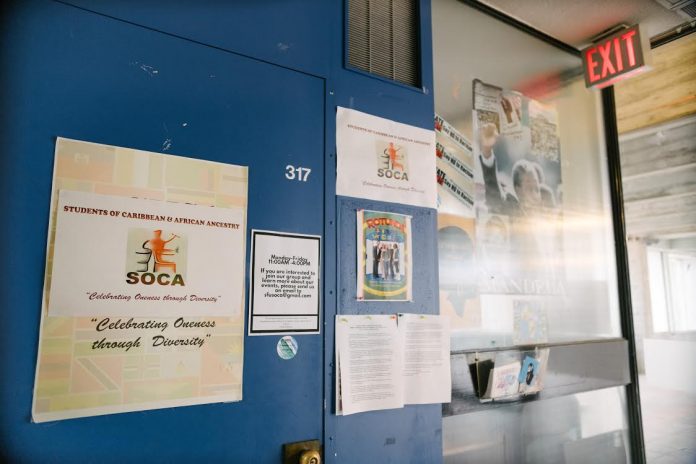
SFU Students of Caribbean and African Ancestry (SOCA) has published public letters on their Facebook page condemning the Simon Fraser Student Society (SFSS) for their treatment of marginalized groups on campus.
SOCA addresses the SFSS
In their public letter to the SFSS, SOCA noted that the student society’s conduct during negotiations regarding space for SOCA in the Student Union Building (SUB) “is a prime example of the SFSS using the power it has to suppress groups that the SFSS is supposed to work in alliance with.” According to SOCA, the SFSS has currently postponed meetings with the student group, failed to communicate clearly, and acted in “bad faith” during these negotiations.
Concerns regarding space allocation in the SUB by the SFSS have been previously brought forward by independent student groups in late 2017 and earlier this year.
SOCA has written that their experiences with the SFSS can be traced to “a lack of cultural and racial sensitivity training [within the SFSS] in dealing with marginalized people and marginalized groups.”
SOCA also raised concerns regarding the extent to which SFSS CEO Martin Wyant allegedly controls the SFSS’s space allocation decisions, writing, “we have become increasingly concerned with how operations are controlled by the CEO within the SFSS. Especially when those operations affect marginalized students.”
“There is a pattern with the lack of communication and an overall shredding of the relationships that SFSS has had with many groups including SOCA over the last three years,” added SOCA in their letter. “We wish the conscience of well-meaning board-members to hold itself to account [ . . . ] and realize that it’s the students who are in charge and you can make the hard decisions to fix these systemic issues.”
“On these posts by SOCA, the board as a whole acknowledges the tough spot we find ourselves in and can assure their community of groups that reside within the Rotunda that we are currently in the process of working with them to set up a place and time to work out some issues that SOCA themselves have mentioned,” wrote vice-president student services Samer Rihani.
Rihani added that, as an opening date for the SUB had recently been set, the SFSS board of directors was willing to continue talks with SOCA about extending their sublease in the rotunda beyond December 14, 2018.
SOCA addresses SFU
In a more recent public letter to the SFU administration, SOCA called on the university to “publicly support SOCA in our fight to retain a space on campus.”
SOCA requested that SFU be present in future negotiations regarding space SOCA holds with the SFSS, and that Wyant be excluded from future meetings.
“[Martin Wyant] has caused emotional distress; used marginalized groups as scapegoats and has eroded trust in the SFSS’s intentions due to his lack of empathy in dealings with us,” wrote SOCA.
In an email interview with The Peak, SOCA president Giovanni Hosang mentioned specific interactions with Wyant which turned space negotiations into an “unpleasant experience” for the organization.
Hosang mentioned an instance during a meeting with Wyant about why SOCA felt the organization played an important role on campus and deserved space. SOCA’s executive team was making reference to recommendations made by the United Nations and the Canadian government regarding anti-black racism. The recommendations “implore public institutions to address anti-black racism and create specific pathways for supporting people of African Descent,” wrote Hosang.
According to Hosang, Wyant responded by indicating that the recommendations made by the United Nations were not applicable to the SUB space negotiations between the SFSS and SOCA.
Hosang wrote that in another instance, Wyant suggested that one of the reasons the SFSS was unable to provide space for SOCA was because it is common for many groups to seek space with the claims that they are marginalized.
The Peak reached out to Wyant via email for comment on the above instances alleged by SOCA, but did not receive a response by the publication date of this article.
“These interactions and the actions of the SFSS evicting a black student group [. . .] is a textbook example of institutionalized racism against communities of colour where new developments render the most marginalized groups homeless.” – SOCA executive team in public letter to SFU administrators
“I am concerned to hear the allegations,” commented SFU vice-provost students and international Tim Rahilly. “The university wants to make sure that people who identify as racialized or equity-seeking groups feel that they belong at the university and the university supports them as individuals,” he added.
Rahilly commented that the university is unable to intervene in the negotiations between the SFSS and SOCA as the SFSS is an independent student society. “Individual students at the university are members of the SFSS. And it’s their society. [ . . . ] The university has no control over the actions [of the society]. It’s really the board of the SFSS that is really responsible.”
Rahilly noted that, if both the SFSS and SOCA were willing to resume communication, the university would be willing to “help move this dialogue forward and try to find a resolution that works for the SFSS and for SOCA.”
“But we can’t wave a magic wand unfortunately,” said Rahilly.
SOCA addresses SFU students
In a third Facebook post addressed to SFU students, SOCA has called on students to help raise awareness for their situation through social media using the hashtags #SAVESOCA and #BLACKSPACESMATTER.
SOCA has invited SFU students to sign a petition on change.org advocating against SOCA’s eviction from the Rotunda on December 14 and urging the SFSS to provide SUB space for the student organization.
Hosang has commented to Global News that “if [SOCA] doesn’t get a space by [December 14], there will be a sit-in.”
The student organization has been occupying space in the rotunda since 1997.
Increased parking rates in North Lot are aimed at creating more available parking spaces on Burnaby campus. (Israrul Haque/The Peak)
Written by: Srijani Datta, Assistant News Editor
Hourly and daily parking in SFU Burnaby’s North Lot and parking tickets have increased in price due to amendments to the university policy on Parking, Mobility, and Vehicle Traffic. The amendments were approved by the SFU board of governors on June 28.
The policy, which came into effect on September 1, varies the previously fixed hourly rate of $3.25 and daily rate of $13 which applied to all parking lots. Under this new policy, the North Lot will see a higher hourly rate of $5 as well as a higher daily rate of $25.
The hourly and daily rates in the other lots, such as the West Parkade and East Lot, will be maintaining their previous rates of $3.25 and $13, respectively.
These varying rates between parking lots on campus are meant to help manage parking supply and demand. According to SFU Communications and Marketing, these changes are meant “to help reduce parking congestion across the Burnaby Campus.”
Parking ticket prices are also being increased from $30 to $50. Any vehicle that has an unpaid ticket will be subjected to impound, while the student account associated with that vehicle can be placed on hold.
Additionally, SFU Communications and Marketing has announced that there is a new Residence West Lot where the all-day parking rate is fixed at $6.50, if the vehicle is parked before 10 a.m.
These changes are not to affect faculty and staff of the University who have monthly parking permits or who have bought “parking scrips.”
This will be the second year running VanSash for the SFU Sports Analytics Club. (Photo courtesy of VanSash)
The SFU Sports Analytics Club has been involved in many exciting projects in the past, working with professional organizations such as the Vancouver Whitecaps, the Vancouver Canucks, and Canada Basketball. What may be most impressive, however, is the club’s initiative to create their own sports analytics conference for other students in Vancouver. The second instalment of “VanSash” is set to kickoff in Vancouver this weekend, connecting students to the sports analytics industry. We sat down with SFU Sports Analytics Club co-president Dani Chu to discuss this event. Read below for more!
The Peak: So for people that don’t know, what is VanSash?
Dani Chu: VanSASH is the Vancouver Sports Analytics Symposium and Hackathon. It’s an event organized by SFU students to give other students the opportunity to experience and learn about the sports analytics industry, and to give them the opportunity to get a foot in the door and put their talent on display. The event is taking place on Saturday, September 22, 2018 at the SFU Harbour Centre Campus and is free of charge to attend for accepted students.
P: How did this event come to be originally?
DC: The event originated in February, 2016 when two of my classmates and I were complaining that there were no student focused events for sports analytics on the West Coast. Inspired by our participation in the 2016 NBA Hackathon and the Dr. Tim Swartz and Dr. Luke Bornn’s 2016 Cascadia Symposium on Statistics in Sports (CASSIS) we organized the first edition of VanSASH in 2017. We wanted to make it accessible to all and so there is absolutely no entry fee.
Josh Weissbock of the Florida Panthers explaining the challenges and strategies of working with qualitative scouts as an quantative analyst last year. (Photo courtesy of VanSash)
P: How did it go in your first year doing it, what did you learn from that?
DC: Our event was very well received in its first year. We had a great group of speakers from diverse areas of sports analytics. We had speakers from Academia take a look at sports through a statistical and a physiological lens and speakers from the Industry share their experiences. After a morning of speakers the participants had a day and a half to come up with data driven recommendations for the Vancouver Canucks and Vancouver Whitecaps. We learned a lot about how to run the day smoother and have made changes to narrow the focus of the event in order to give our participants the best opportunity to create an awesome project. Additionally, we learned about what food to order and not to order so our food selection will see a great improvement this year.
VanSASH participants look on at the Symposium last year. (Photo courtesy of VanSash)
P: What will the event look like this year?
DC: We are working just with the Vancouver Whitecaps this year and will not have the morning of speakers like last year. We feel like this will give our participants the time and energy to focus on their projects.
This focus has enabled us to broaden our base as well. So we have two big additions to VanSASH this year. The first is a Business Analytics Stream. We have been granted exclusive access to Vancouver Whitecaps sales and ticketing data, and have some very creative and interesting problems to tackle with it. This has made the event more accessible to students who are interested in learning how to make data driven decisions.
The second addition is that we have opened up beginner divisions within both streams. We have done this with the hope that not only are we giving students a platform to show their talent but also giving newer students an opportunity to learn new skills. We will be providing workshops for the beginner divisions taught by talented mentors from companies like EA, Cardinal Path, Flipboard, Keela, Dialpad, and SFU. Additionally, we have many high profile judges coming from SFU, Best Buy, the Whitecaps and even Major League Soccer (MLS).
Finally, the Whitecaps are offering a discounted rate for tickets to their game on Sunday, September 23 so our participants can hopefully continue to build the relationships they started at VanSASH.
P: How was any of this possible? Who helped you put this event together?
DC: First and foremost I have to mention our organizing committee. Lucas Wu, Matthew Reyers and Kristen Bystrom from the Department of Statistics, Eli Mizelman from the Department of Biomedical Physiology and Kinesiology and Andrew Ringer from the Department of Communications.
Second, I have to give a big thank you to our sponsors, the Vancouver Whitecaps FC who provided their exclusive data and prizes. Additionally, the Canadian Statistics Sciences Institute, Simon Fraser Student Society, Statistical Society of Canada, SFU Faculty of Science, SFU Department of Statistics and Actuarial Science, Statistics and Actuarial Science Student Association, and Sticker Mule, who are graciously providing us financial support, giving us the ability to provide our participants with better food than last year’s cheese pizza.
P: How did you gain the connection with the Vancouver Whitecaps?
DC: Our club’s relationship with the Vancouver Whitecaps started with Dr. Tim Swartz, a mentor and co-founder of our club, who had a relationship with the Caps. Dr. Tim Swartz is part of the Sport Analytics Group of professors at SFU and he organized research projects with his summer research students and the Caps. Additionally the students in the club have the unique opportunity where we help their scouting department film home games.
Last years winners of “Best Whitecaps Analysis”. (Photo courtesy of VanSash)
P: What can you say about the group of people who have registered for the event?
DC: We have a fantastic group of skilled participants who have applied and been accepted to the event. Some of the top sports researchers at SFU have teamed up to tackle soccer problems and across the board I see students with great technical skills, a passion for data, and an appreciation for the soft skills it takes to have your analysis make an impact.
P: What is the main goal for VanSash?
DC: The main goal for VanSASH is to give students the opportunity to be exposed to the sports analytics industry. Whether that’s getting access to exclusive data and presenting their analysis or learning tools and skills to be able to handle large data sets. It’s all about giving students a stage to perform.
P: What do you think about the sports analytics industry as a whole?
DC: I think it’s in a really great place right now and it’s only going to get better. You see more and more great public work being done and presented at Conferences across North America. We see reproducible research is on the rise within sports analytics and there has been a major push for more public data which will only make research better (to be specific I should shout out Ron Yurko and the Carnegie Mellon Sports Analytics Conference). Finally more and more top sports researchers are being hired by sports teams or by the leagues themselves.
P: Is there still room for people to join and how can they go about doing that?
DC: We are sold out of both Soccer Analytics Streams, but, we are still accepting applications for the limited spots that are available in the Business Streams. Students can apply through our website at www.vansash.com or at this link https://goo.gl/forms/MoUTmWYCFVJ9Jlv22. Additionally, if students cannot make this event in particular there many more opportunities to get involved with sports analytics at SFU. They can join the Student Club, or join our Sport Analytics Group journal club.
Editors Note: Andrew Ringer is a member of the SFU Sports Analytics Club and is a part of the VanSash team.
Can’t decide on a major? Been in uni for two years too long and still cycling through departments? Just can’t seem to pass that last PHIL 400 course? Have no fear — world literature is the major for you.
To list a few, here are some of the perks you’ll be looking forward to:
Think you know how to close-read? Think again. In your first course, you’ll learn how to read so closely the grease on your nose will make patterns on your overpriced bookstore-bought copy of some-random-book-you’ll-never-read-again. When you finish the course, you’ll start to overanalyze everything without being aware of it — from that new Christopher Nolan film to your distant and disillusioned relationship. You’ll get so good at making arguments and theses on the spot that you’ll start making them out of nothing.
If you’re a hoarder of books, then this is the major for you. You’ll end up sending thank-you letters to Amazon Prime and various websites that offer free PDF downloads of that impossibly-hard-to-find-18th-century-novel for saving your ass. That, or you try to cruise through the semester pretending like you have read three out of the six assigned novels. Ever heard the Japanese term “tsundoku”? It means to buy books and let them pile up unread. Accept it early — this is what you will become.
You’ll start hoarding theories, too. Forget trying to remember all the pop culture you used to love, because all of your brain space is going to be filled with philosophers and theorists. You firmly believe in your capability to regurgitate their ideas, and you try to, except they somehow emerge from you phrased in the vocabulary of a fifth-grader. And even then, people still don’t understand what you’re getting at.
You’ll have Dr. Deggan for at least one course per semester for four years. You’ll start speaking like him, and writing like him. Hell, maybe you’ll even dress like him. Your social life will slowly become performative, and your friends will start asking why you’re talking to them as if you’re playing a major role in a play. Oh, and get over your fear of public speaking, fast — seriously. Or tape your shaking hands to the podium. Because it’s all about presentations over here.
Lastly, along with all these benefits, you’ll get the pleasure of working in close-knit settings with about 10 of the same people in each course per semester. Get ready to know the names that attach to those faces, because you’ll see them again and again (and don’t get caught being the one saying “Hey . . . you!”). Anyway, there isn’t anything better than having such an entertaining major — and as a bonus, having the same people to laugh about it with, too.