Home Blog Page 521

Next Music from Tokyo brings a diverse selection of Japanese indie to Canadian stages

2
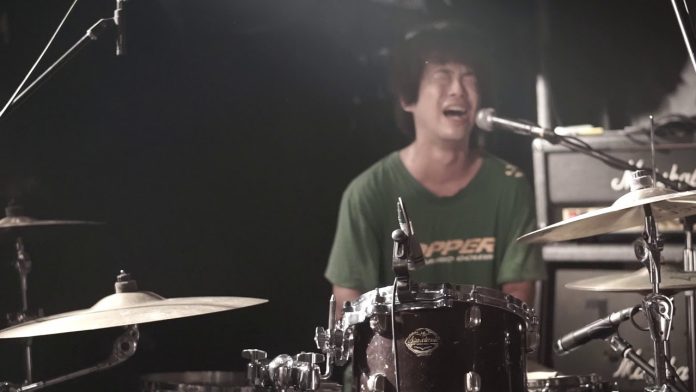
Kougou no Goraiko-z drummer, Great Hashimoto, performing in Next Music from Tokyo. Image courtesy of Next Music from Tokyo.

By: Kitty Cheung, Staff Writer

Dr. Steven Tanaka, a Toronto anaesthesiologist and UBC alumnus, spends his spare time organizing tours for underground Japanese bands to perform across Canada. Next Music from Tokyo is an annual (sometimes biannual!) tour that Tanaka has been paying out of pocket to organize since 2010. The purpose of the tour, according to Tanaka, is to “show fellow Canadians how fascinating and creative bands from Japan can be.

Intimate and charming, the show crosses the entire country with stops in Vancouver, Montréal, and Toronto. I was able to attend its 14th volume at the Biltmore Cabaret on May 20. This year, the line-up included five Japanese musical gems: imai, TAMTAM, Koutei Camera Girl Drei, Kougou no Goraiko-z, and Stereogirl.

Starting off the show, imai was a soft-spoken DJ who ended up blasting the Biltmore with his high-energy beats and vigorous stage persona. In the audience, I felt like I was witnessing an artist entirely in his element. The way imai moved to each of his carefully crafted melodies was dynamic and awe-inspiring.

TAMTAM was next, delivering groovy neo-soul. The audience went wild when the lead singer Kuro pulled out her trumpet and showered the Biltmore with smooth and powerful grace. They were my favourite band of the night, and I especially enjoyed how keyboardist Tomomin’s deep voice complemented Kuro’s delicate singing in a soothing euphony.

To preface the next performance, a friend beside me in the audience told me to get ready for an “anime rave.” I was still not prepared for the house beats, edgy coolness, and stoic-faced members of Koutei Camera Girl Drei. The all-female idol rap group was a far cry from any bubblegum J-pop groups I’d seen before, especially as they transformed the audience into a massive dance pit.

Kougou no Goraiko-z is a punk-rock and shoegaze band that may have actually torn down the Biltmore. This band would naturally transition from a cheeky and humorous bit to gloriously hard-hitting rock. The audience was immediately turned into an explosive mosh pit. Face. Melted.

Unfortunately, I had to leave the show early to catch the last SkyTrain (five bands in one night goes on late!) so I wasn’t able to see much of the last band, Stereogirl. However, this new wave alt-rock band of university students definitely had an edgy stage presence, with Tanaka even promising that they would “blitzkrieg NMFT14 with fun, energy, and passion in spades.

As most of the band members don’t speak English, it’s fascinating to see how these performers can reach beyond language barriers and shine through with their talent and creative performance styles. Because there isn’t a whole lot of space at the intimate venues that Tanaka chooses (like Vancouver’s Biltmore Cabaret), when the performers aren’t performing, they’re wandering around the venue, selling their own merchandise and enjoying the music of their fellow performers. Between shows, I actually had the opportunity to talk to the musicians in-person, fangirling in spite of our language barrier.

The show is absolutely something I would recommend to every music lover or really just any human being. Tanaka puts together an extremely unique and diverse line-up to put on a show unlike any other.

I reached out to Tanaka for an interview and was able to have all my burning questions answered over email. The full interview is online at the-peak.ca

Mental health in television: a spectrum

0

By: Melissa Campos, Kitty Cheung, Winona Young, and Zoe Vedova

Mainstream media portrayals of mental health issues and mental illnesses vary enormously, and it can be difficult to tell apart the good from the bad until you’re already almost done the first season. To save you some hours of disappointing TV viewing, The Peak has made a list of shows whose portrayals of mental health range from problematic to nuanced to complex perfection.

Image via cosmopolitan

13 Reasons Why (Season 1) 2/10

This show’s portrayal of mental health has been widely viewed as problematic. The narrative follows several high school students as they listen to 13 tapes made by their peer, Hannah Baker, explaining the reasons for her suicide. The show presents a strictly negative outcome of poor mental health in that the victim of bullying, abuse, and neglect has already taken her own life before the story even begins, portraying suicide as the only solution to overcoming depression and suicidal thoughts.

It also romanticizes mental illness and focuses solely on a victim’s desire for retribution against her assailants rather than promote a more positive message that stresses the importance of self-care and seeking help in overcoming mental health issues. The only redeeming message that the show somewhat conveys successfully is that anyone’s mental state can be affected by the way others treat them, and we should therefore seriously consider the possible negative repercussions of our actions before treating someone poorly. — MC

Image via Buzzfeed

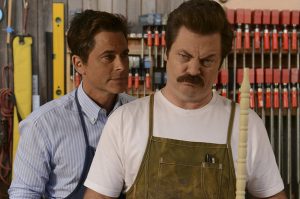
Parks and Recreation 7/10

You may know Chris Traeger, played by Rob Lowe, as a terminally sunny optimist with an obsessive love for exercise. You may also know him as the face of many a relatable depression meme — a mental illness his character actually began to struggle with.

While always seen with a smile on his face, government auditor Chris Traeger was diagnosed with depression later in the show. But his depression does not define Lowe’s character. He is enthusiastic about pursuing therapy, working out, and his career. Traeger’s character is a reminder that literally anyone, including your ridiculously peppy coworker, can deal with mental illness. —WY

Image via Netflix

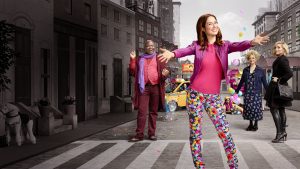
Unbreakable Kimmy Schmidt 7/10

Unbreakable Kimmy Schmidt follows a young woman as restarts to life in New York City — after being freed from a doomsday cult where she has been held captive for the last 13 years, of course. The comedy gives warm fuzzies all around and Kimmy’s everlasting optimism is infectious. While this quirky and bizarre show exudes a relatively humorous disposition, it also delves into Kimmy’s darker psyche as the seasons go on. As a survivor of sexual violence, Kimmy’s past trauma slowly catches up to her, showing up in physical and psychological symptoms.

While the show tends to oversimplify and play off Kimmy’s trauma in a lighthearted and humorous way, such as her admitting that there was “weird sex stuff in the bunker” during the pilot episode, the writers do a good job depicting Kimmy as someone trying to heal and move forward. Whether that’s through speaking with a therapist (played by show co-creator Tina Fey), confronting her captor, or reconciling with her mother, Kimmy is trying to start her new life. While not the most realistic portrayal of mental wellness and psychological trauma, Unbreakable Kimmy Schmidt brims with inspiring positivity and uplifting vitality. —KC

Image via pastemagazine

Jane the Virgin 8/10

Jane the Virgin is home to some of the best comedic and character writing The CW has seen since season 1 of Supernatural. While it is a comedy, the show hasn’t been afraid to deal with darker issues, like ADHD, anxiety, and even depression. It handles dark issues with a levity that is serious and respectful, but manages to still keep the tone light.

The titular character, Jane, deals with depression and openly sought out therapy after the death of her spouse. The show’s current season even deals with children having ADHD and PTSD! It’s a great day for dramatic telenovela-lovers and for mental health representation. Too bad Jane is on its last season. —WY

Image via indiewire

BoJack Horseman 8.5/10

What makes BoJack Horseman so fantastically poignant is its painfully realistic portrayal of mental illness, particularly depression. Back in the 90s, titular character BoJack starred in a popular family sitcom. Fast-forward to present day and he’s a depressed, washed-up, alcohol-and-drug-ridden has-been celebrity. The way this animated show deals with depression, anxiety, and loneliness is all too real.

All of the show’s main characters are flawed people (or anthropomorphic animals) going through tough shit. In its development of nuanced and multidimensional characters such as Diane Nguyen, Princess Carolyn, Todd Chavez, and especially BoJack, the show shines a grim, heartbreaking, and empathetic light on various forms of mental health struggles. A comedy at heart, BoJack Horseman intersperses hilarious bits with serious and stellar storytelling. —KC

Image via Netflix

Jessica Jones 9/10

The titular character, Jessica Jones, is initially the epitome of the hard-boiled detective trope. She’s a loner with a drinking problem and a foul-mouthed roughhouser, but damn is she a good detective. She is also diagnosed with PTSD.

What I admire about the show is that it doesn’t pull its punches when showing the loneliness, isolation, and hurt Jessica experiences. Her (adoptive) sister explicitly shows concern about her PTSD, while Jessica herself uses both healthy and unhealthy coping mechanisms. The show ultimately tells a story of a complex and hurting superhero who is also deeply human. —WY

Image via Wired

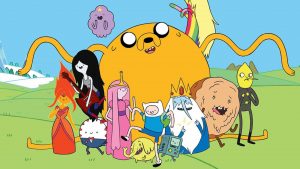
Adventure Time 9.5/10

Adventure Time drops you into a post-apocalyptic cartoon world saturated in absurdist humour, surreal scenery, and nihilistic plot lines. The show is tethered to reality through its stunningly relatable main characters and their experiences with PTSD and depression. Between fighting interdimensional monsters, reconnecting with estranged family members, and saving the universe, we watch leading boy Finn deal with the trauma he’s experienced.

Trauma is dealt over multiple seasons instead of the traditional singular episode on grief. It’s refreshing to see characters who deal with depression and PTSD without that being the entirety of their personality or character development. Yet, the Adventure Time still delivers the important message that your mental health is something you have to dedicate time to. —ZV

Image via consequencesofsound

Steven Universe: 10/10

Created by former Adventure Time writer, Rebecca Sugar, Steven Universe is a cartoon about a half-Gem half-human boy named Steven. Even though Steven Universe is a children’s show, it hasn’t been afraid to tackle serious issues. Topics like anxiety, PTSD, insecurity, depression, abandonment, identity crises, self-love, and even more are incorporated in the show.

And what’s better is that these topics are dealt with through the main characters, making them recurrent over the series. They’re not one-off specials. It reminds audiences that even though mental health and illness problems are scary, we have to remember to be unafraid and find strength in the power of love and empathy. —WY


With these shows in mind, The Peak wants to remind you that summertime sadness, AKA seasonal affective disorder, is a real thing. Be careful with the content you consume, especially with the ideas it may preach, and remember that no one is alone in their struggle — even half-Gem cartoon characters can have depression.

Need to Know, Need to Go: June 17-21

0
Image courtesy of SFU Public Square

By: Alison Wick, Arts Editor

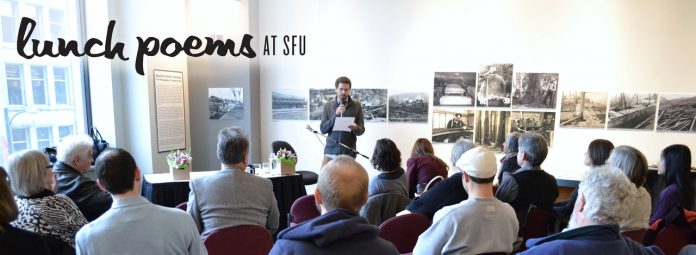
Final Summer SFU Lunch Poems at the Teck Gallery

Once a month, the Teck Gallery at Harbour Centre is transformed into a poet’s cafe. Two local artists are brought in by SFU Vancouver on the third Wednesday of every month to share their poetry with the SFU community. These hour-long lunchtime poetry readings are free and open to anyone with some time to spare and an ear to lend.

This Wednesday, Lydia Kwa and Kerry Gilbert are being featured. They are both multi-published and highly acclaimed writers whose lives and practices have taken them all over the world. After this, SFU Lunch Poems will be going on a break for the summer so this will be the last lunch poem until September! This Wednesday is your last chance of the summer to experience this unique community event that will add the perfect breath of art and culture to your day.

The last SFU Lunch Poems this summer is on Wednesday, June 19, from 12 p.m. to 1 p.m. in the Teck Gallery on the first floor of SFU Harbour Centre downtown. Attendance is free.

Image courtesy of Soleil O’wadi via Facebook.

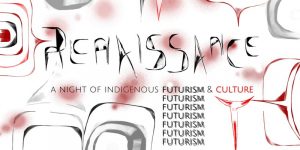
Renaissance: Indigenous Futurism and Culture

Friday, June 21, is National Indigenous Peoples Day, and there are many ways you can celebrate. One of the best ways, speaking specifically to non-Indigenous peoples, is to go out and support Indigenous art and artists however you can. Renaissance is an evening of performance and speeches being put together by local Indigenous artists. The event is being held as a celebration of Indigeneity, highlighting a gender and sexuality diverse group of artists.

Bring your tips and good energy for an evening of dancing, community, and celebration. This nighttime event is 19+ but is just one of the many events happening on Friday to celebrate Indigenous Peoples and Indigenous cultures in all their depth, breadth, and strength. Celebrations are happening at Trout Lake, as well as in Richmond. The Bill Reid Gallery will also offering free admission to the public.

Renaissance is on Friday, June 21, at the Clubhouse (238 East 1 Ave). Doors open at 8 p.m. and the show starts at 9 p.m. Tickets are sold on a sliding scale from $10-15 and can be purchased online or at the door. Their Facebook event page also writes that you can “bring your drum for FREE entry.”

SFU Fan Fiction – The Demon and the Concrete Man

0
Photo curtesy of Pixabay

Written by: Kelly Chia, Staff Writer


University > Simon Fraser University

The Demon and the Concrete Man

By: xxXRavenclaw_BeedieWannabeXxx

Chapter: 1/?

Updated: October 10th, 2016

Id: 694201111

[Disclaimer: owo Thaaaanks for reading my FIRST fanfiction~! Please leave constructive criticism, but don’t flame me or I will end you!!! ÒwÓ A million thanks to my English TA for being an awesome beta reader, so back off, hATERS] 

************************************Chapter1*****************************

My name is Kathearrynne (A/N: pronounced like Catherine, but not basic) Targaryen Dark Snow Ketchum.
I have startlingly high blood pressure and sunken red eyes that tell you I’ve been through Hell. Literally. I won’t get into it now, but at three months old, I had defeated Dracula… That’s where I got these fangs from. In my head, the song “Boulevard of Broken Dreams” by Green Day (A/N: if you don’t know this, get out of here, normie) plays on somber repeat. I did walk a lonely road, the only one that I had ever known… I never figured out friends, because everyone sucked figuratively. Suddenly, I was toe-to-toe to my next foe; the concrete behemoth that was called . . . Simon Fraser University.

It was my first day of First year. My ebony waist-length hair tipped with blue highlights – which I was BORN with – swayed side to side as I gazed upon my soon-to-be sacrifices. Miserable groups of red Welcome shirts passed me, undoubtedly admiring my all black ensemble. With a My Chemical Romance parasol on one hand, and an ironic Walkman in the other, I made my way through the campus.

I stalked my way to my welcome group, walking by the AQ pond, trying to find solace in the koi fishes when I bumped into him.

I was covered in goosebumps and my heart started beating against the accursed cage of my body. There he stood, a suave thing with curves and ripples in all the right places.

His outfit? An inconspicuous gray choice. His expression? Unreadable, yet noble. He looked like the guy that I wanted to ignore me, just like how I would ignore these meaningless studies. I fanned myself, darting my scarlet ruby eyes at him and at the floor hoping he would notice. I found myself lost in fantasies of us performing the default dance from Fortnite, staring lovingly at each other….

BUT THEN, I heard some IGNORANT student bawl, “Hey Catherine!!!!” I BORE my blood red eyes at them, even baring my canines to show that I meant business. How DARE they interrupt? Did they not feel the raw chemistry scorching the pond between us?

The student suddenly took a deep bow,  and loudly ejaculated, “SORRY, MILADY DARK SNOW TARGARYEN KETCHUM. I DID NOT MEAN TO DISRESPECT YOU.” (A/N: ugh, I’m sooo jealous of Kathearrynne… why can’t my interactions go this way?!?)

I was enraged, but I gave the offending student a chance to speak for their self.

The ignoramus began, “My name is Skye Drogon Pikachu… I have been waiting for you to fulfil your prophecy of taking over Simon Fraser University with your awesome parasol and cool swagger. Please, right this way, we must head to Welcome da—”

I interrupted Skye abruptly, pointing at my love. “Can’t you see we’re having a moment?!”

Skye paused, running their eyes at who I could be talking to, even though I was pointing directly at him. “Milady, all I see is that Terry Fox statue?” I was about to retort in my lover’s defence when I heard a crash over by the Convocation Square. With one last fleeting look at my love, I sped off!

***********************At the Convocation Square ****************************

Oh no. This was bad. Very bad. Before me stood the demon of exams in a corduroy coat and a fuzzy sweater, ready to claim my livelihood. The Professor..

“Your reign of terror is over, Professor! I will punish you in the name of the Moon!” I spat, pointing at the professor accusedly.

The Professor burst into wild laughter, “Muahahaha!!! Foolish girl! You think I’d let someone who would fall in love with a rock stop me?!” My heart dropped. This again…

The Professor screeched, jumping over me and placing glasses over my head, “Why don’t you see for yourself?!” Suddenly, my vision was incredible. I could see from here all the way to the bottom bus loop. I turned my blood red eyes to what the fiend wanted me to see… and only saw statues! This could only mean one thing…. The magnanimous man that I had fallen in love with….. had been turned into a concrete avocado!

“You sick son of a b—“

** Chapter End – Preview **

Author: Ooooh, that was a super spicy chapter, wasn’t it?! What do you think, mystery lover?

Concrete Lover: ……

Author: Oh, mystery man, you’re so charming owo! But you’re Kathearrynne’s love, not mine!

Concrete Lover: -blushie wushies-

Author: Awwww, what a cutie. Wanna read more? ;))) Give me 500 likes, and maybe I’ll continue Kathearrynne’s spicy adventures, unless she DIES.


Game of Thrones characters surviving SFU

0
Illustration curtesy of Cora Fu

Written by: Tiffany Chang, Peak Associate
Illustration by: Cora Fu

Game of Thrones characters can survive White Walkers, mad kings, and greyscale. But how would they handle being SFU students?

Joffrey Baratheon

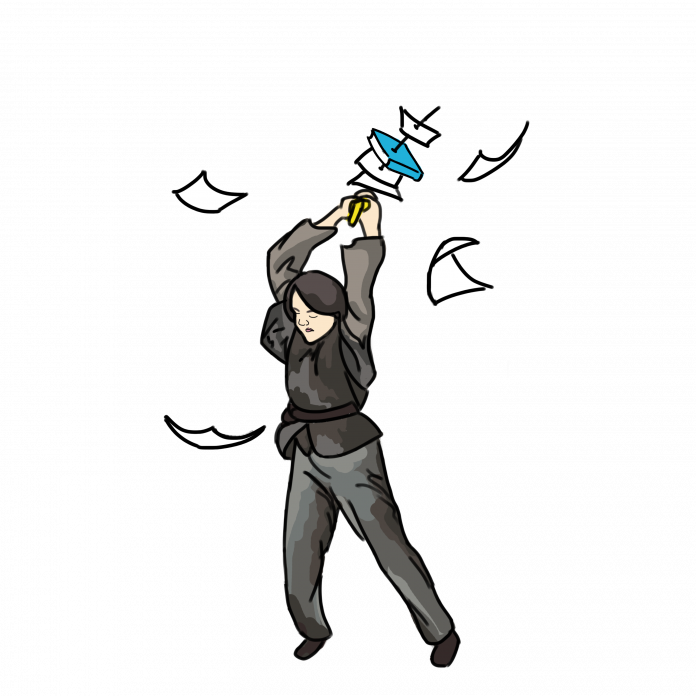
Joffrey is an entitled prince and would never study because he’d think he could pay his way through absolutely anything. Let’s be honest, the only reason why he’d probably be able to attend SFU is because mommy “negotiated” with higher-ups to let him in. Joffrey would be one of those pretentious, old-school political science majors who think poor people shouldn’t be allowed to vote because they don’t contribute to the economy. He’d strut into tutorial the week before an exam, demanding classmates give him their notes. The terrible incessant flirting with women during lecture would only lead to them throwing school supplies at him from all different angles while yelling, “You’re not the king of this landing, you little prick!”  


Khaleesi/Daenerys Targaryen

Dany is a badass transfer student who would totally see SFU as a great opportunity to conquer more governing bodies. Dany would be quick about it, too-discreetly signing up for all the extracurricular stuff available on campus during Clubs Days. Then, after finding out when the meetings are, she’d go to every single one at the beginning of the semester to convince the clubs to band together and overthrow the SFSS. Oh, and her beyond-cool mode of transportation: a motorcycle called “The Dragon.”  


Margaery Tyrell

Ah, yes. Just as much the former king’s wife as she is The Queen of Sucking Up. The perfect student putting in extra work, buying her profs breakfast, and visiting office hours every week. She does nothing inherently wrong of course. Sneaky, sneaky girl. Her main strategy: work hard to please the right people so she can know the ins and outs of everything.   Margaery’s goal would be for everyone to like her. That’ll make it easier to get what she wants. She’d somehow work her way to achieving both the SFSS presidency and making the Dean’s Honour Roll during her degree at SFU. A few scholarships might be thrown her way too, who knows?

Arya Stark

This kid’s got spunk and doesn’t let people push her around. This personality trait is useful when arguing with TAs or profs about being unhappy with a grade . . . I’ll bet in front of the entire lecture hall if that’s what it would take. Watch in awe as Arya intimidates them, sword in hand, into giving her a higher mark and make sure they change it before she’s satisfied enough to walk out to her next class, leaving them pale-faced and positively broken on the inside.

But her biggest advantage is her unfathomable determination, which has lead her to create The List. Arya’s roommate, Hotpie has confirmed she recites the names of all the classes and credits she’d need to graduate before going to sleep each night. Tucking into bed after a nighttime run, she’d lull herself to sleep muttering, “SA 105, ECON 230, large in-class presentation,  PHIL 220 …”


Out on Campus and Women’s Centre host memorial for Pulse shooting

0
Gudrun Wai-Gunnarsson/ The Peak

By Winona Young, Head Staff Writer

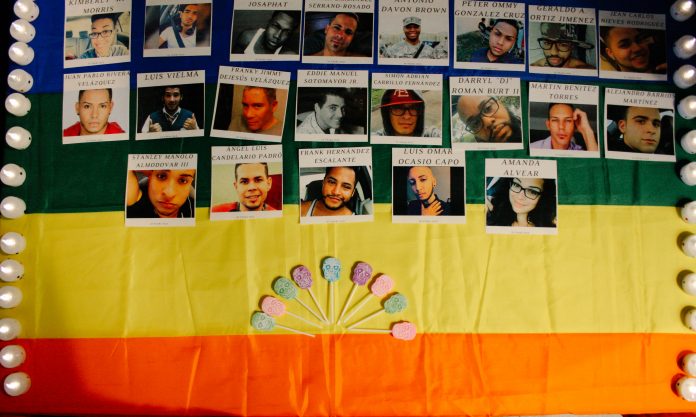
On Wednesday, June 12, the SFSS’ Out on Campus and Women’s Centre held a joint memorial for the Pulse Shooting at the Women’s Centre in the Rotunda.

The Pulse Shooting is still the most deadly shooting targeting the LGBTQ+ community in all of U.S. history. On June 12, 2016, in Orlando, Florida, a gunman entered Pulse and opened fire on its patrons. It left 49 injured and 53 dead. “Latin Night” was the theme that Saturday, and many of the victims were of Latinx and Puerto Rican descent.

To commemorate the shooting and honour its victims and survivors, Out on Campus (OOC) coordinator Ashley Brooks and Women’s Centre coordinator Paola Quirós held a memorial program marking its three-year anniversary.

In an interview with The Peak, Brooks spoke to why it was important that the two organizations collaborated on this memorial.

“It’s so hard to disentangle queerness from race, from disability, they’re so closely intertwined, and so that’s kind of [why] collaboration with the Women’s Centre was really important on this one,” he said.

“Pulse is so much more than 49 people killed in a nightclub, it represents a legacy of community trauma.”

The memorial began with opening words from both Brooks and Quirós, addressing the 40+ attendees present, detailing the program for the event. Workers from SFU Health & Counselling Services were on standby for any students in need of private support.

Quirós then introduced the event’s speakers, two Latinx women of the Vancouver LGBTQ2+ community, Nayieli Fuentes Vidal and Beatriz Pimentel. Vidal spoke in Spanish and her statements were translated to English by Quirós. Both Vidal and Pimentel spoke of their individual upbringing, their respective journeys with their sexuality, and what Pulse meant to their community.

Pimentel spoke of how Pulse’s events caused her to see a psychologist because she was so affected, and spoke of how often privileged individuals were not able to understand the trauma faced by other communities.

“You’re a privileged generation, honestly, so please know your power and exercise it,” Pimentel advised.

“Know your history and create a different one — a herstory.”

Following the women’s speeches, both Quirós and Brooks read passages aloud from the poetry anthology, “Pulse/Pulso: In Remembrance of Orlando.” Quirós began with the poem “The night poetry danced with us” by Amal Rana, followed by Brooks reading Julia Leslie Guarch’s “Shh. Shh. Be Quiet.”

After both recitations, Quirós along with SFU students Daniela and Andrea Romon, stood at the OOC’s alter made for the Pulse victims. All three read the names of victims one at a time aloud. Daniela Romon explained why she attended the memorial to The Peak.

“It’s really close to me, to my heart, because I identify as a queer Latina as well [ . . . ] I just wanted to show my respect, and show my support to my community.”

Romon also remarked on the importance of dance to Latinx community, and how remembering the shooting meant not overlooking the victims that were celebrating their identities at Pulse.

“We have to remember the lives with respect and remember how they were celebrating their lives at the moment,” she said.

“Remembering Pulse to me is like remembering how to celebrate life.”

 Aerin McRae and Alyssa Delia Malva were two of many students present at the memorial. Both were students in a special topics course on race and sexuality instructed by Sim Badesha, a PhD student, who were present at the memorial.

McRae in particular spoke about her admiration of the speakers.

“I should’ve brought tissues,” she said.

“It’s honestly amazing. Even just the way we speak about grief and loss, but not actually loss, is a really refreshing way too to just think about moving forward but not forgetting.”

After the recitation of the victim’s names, Brooks and Quirós read more poems before ending the event with final words from Vidal and Pimientel.

“It doesn’t matter how many times they kill us. It doesn’t matter if we are not the taste of others, began Vidal.

“What I really surprised about all of you is your silence, learn to speak, learn to say what you feel, learn to be your own selves, we are alive! We are alive [ … ] We will never die, remember that. Yes, bodies are just transformations. We are universal energy. And everybody is life.”

Doug Ford’s concerns about uniformed police marching in Pride is a convenient excuse not to go

0
In order to not appear bigoted, Ford obfuscates his reasoning for not attending yet another Pride march. Photo courtesy of Toni Reed via Unsplash

By: Gabrielle McLaren, Editor-in-Chief

Doug Ford, Ontarian premier and gift-that-just-keeps-giving, announced at the start of June that he would not be attending Toronto’s Pride Parade. As one CBC article pointed out, Ford breaks the tradition set by his openly lesbian predecessor Kathleen Wynne, who has marched in Pride as premier since 2013. Spokespeople have clarified that Ford will attend other Pride events — just not the parade itself. His reasoning? The police won’t be allowed to march in uniform.

Call me a sceptic, but I don’t buy the Conservative Party line that the premier is dedicated to “only attending events where everybody is included.” Especially since Ford’s track record with the police is rocky. Earlier this year, Ford was involved in a scandal surrounding his treatment of Ontario’s provincial police. In 2018, Ford axed a piece of legislature called Bill 175 which was set to meaningfully revamp and improve Ontario’s police watchdog system to make investigations more efficient and direct more resources towards crime prevention. In 2014, Ford was served a defamation notice by Toronto police chief Bill Blair while he was still serving as a city councillor.

With that in mind, I have trouble believing that this is about the police at all. Ford, despite his long-standing involvement in Torontonian municipal politics, has never marched in Pride. Not even prior to 2017, when Toronto Pride first barred uniformed officers from marching, a decision which was revisited and upheld earlier this year. Even if he disagreed with the ban, Ford could have voiced his disagreement without turning his back on queer Ontarians. He could have taken a cue from Green leader Mark Schreier, who called this “a decision for the Pride committee to make.”

Besides, whether or not the police should march in Pride is a heavily contested issue, given their historical role in oppressing queer communities, and their ongoing issues surrounding racial profiling and police brutality. Toronto’s queer community in particular has a strenuous relationship with its police force given the recent conviction of Bruce McArthur, a man guilty of eight first-degree murders over the course of 10 years in Toronto’s Village. The queer community says he could and should have been caught sooner, had police actively responded to public concerns.

Politicians aiming to be allies need to acknowledge these realities. Boycotting Pride is not nearly as useful as facilitating and searching for concrete ways to help rebuild trust and relationships between police and oppressed groups.

Unless Ford has to choose between the police or Ontario’s LGBTQ+ community, it’s clear that he doesn’t care about law enforcement officials. With this flimsy excuse, Ford joins the ranks of leaders such as federal Conservative leader Andrew Scheer, who provide superficial reasons, if any, to not march in Pride parades to avoid admitting straight up that they’re afraid of the gay cooties. Veiled languages and convoluting issues do not excuse politicians from refusing to make their beliefs publicly transparent.  

What Grinds Our Gears: Computers that let you down at the worst possible time

0
Illustration by Momo Lin/The Peak

By: Yasmin Khalili, SFU Student

It’s 8:30 p.m. The time has really flown by. You told yourself you wouldn’t procrastinate this hard ever again, but at least last time you started at 7 p.m, and now, now it’s 8:32 p.m. Your computer coughs to life as you boot it up.

Okay, breathe. You’re going to finish. You’ve done this before. You’re a pro at writing essays in a couple hours, and usually they aren’t half-bad! You are gifted in this sense, you tell yourself. Plus, diamonds are made under pressure, and you are a goddamn diamond.

What’s the topic again? Fish intake with low-level mercury contamination during pregnancy, and neurobehavioral effects in children. Okay, sure. Let’s get Google up in here and find some articles.

Word is open, your prof’s email with the rubric is open, Canvas is right on the submission page. Time to get 1000 words double-spaced in Times New Roman up in this Word doc! One . . . two . . . three . . .  nice you found four articles so far that are relevant. Too bad you need at least 10. Can Wikipedia count as one? Never mind. A few more tabs open won’t hurt anything. As long as you can ignore that grinding sound coming from the back of the computer.

Alright, let’s get typing. Hold on . . .  What’s this? Not responding? It’s 9:47pm now. Time to restart your laptop and find those tabs all over again. Maybe after tonight you will stop leaving your essay until the last minute? Or maybe you will just buy a new laptop instead.


Senate election concludes, five student senators appointed

0
Onosholema Ogoigbe/The Peak

By Ana Staskevich, Staff Writer

SFU has recently wrapped up its Senate election, where five candidates across various faculties were chosen to be governing representatives. Those elected to the Senate make decisions about SFU’s academic governance, which pertains to policy making, education, research, and scholarly priorities.

The Peak reached out to the successful candidates for questions and comments on their newly appointed roles. Here are the Senate candidates, along with the responses that were submitted.

FACULTY OF APPLIED SCIENCE

Giovanni HoSang, current president of the Simon Fraser Student Society (SFSS), ran unopposed and won by acclamation the seat for the Faculty of Applied Sciences.

Prior to the election wrap-up, HoSang vowed to push for “more open academic governance, setting [the university’s] priorities straight, academic hardship [extensions], and a better GPA grading scheme.” An important part of his candidacy will be securing the academic interests of students through a student-centric perspective.

“I am elated to have the opportunity to represent students on the SFU’s Academic governance body to ensure that what takes place happens in a very open and transparent manner,” commented HoSang.

FACULTY OF ARTS AND SOCIAL SCIENCES

Jennifer Chou will be representing the Arts and Social Sciences faculty.

Chou’s platform promises to tackle accessibility in the university, and creating more available financial support opportunities such as scholarships and bursaries. Additionally, Chou plans to “actively participate in discussing program initiatives and program terminations” to better communication for students.

“I am so honoured and grateful to have been voted in as a 2019-2020 student senator! I’m extremely excited to see what this year’s team can accomplish,” said Chou.

FACULTY OF ENVIRONMENT

Natasha Kimathi will represent the Faculty of Environment.

Kimathi has expressed her excitement to join the Senate and further help secure the interests of fellow students. As a dedicated member of Bachelor of Environment Student Union (BESU), she strives for environmental justice and a sustainable future.

“I am grateful to each and every student that voted for me this allowing me to partake in the SFU Senate and help bring about change, I look forward to working towards my intended goals.” stated Kimathi.

FACULTY OF BUSINESS

Shuna Ho, Faculty of Business, won a graduate seat.

Ho is interested in “foster[ing] discussions about multidisciplinary education” and catering to study abroad and international co-op programs, including intercultural engagement activities which will prioritize student interests.

FACULTY OF EDUCATION

Kau’i Keliipio won a second graduate seat representing the Faculty of Education.

As a prior Senate representative, Keliipio has vowed to continue to use experience to “ensur[e] that Indigenous students can be culturally safe and flourish in their pursuits at Simon Fraser University.”

FACULTY OF SCIENCE

A sixth mandatory seat will remain vacant until an election is called for an additional candidate for the Faculty of Science.

SFU hosts celebration of Rwandan resilience

0
Courtesy of Kwibuka25

By Gurpreet Kambo, Peak Contributor

“We’re titled today: 25 Years: Rwanda Remembers. But we’re here also to talk to the resilience, the renewal of the Rwandan people,” said SFU professor June Francis, at an event on June 6 at the Morris J. Wosk Centre for Dialogue, remembering the 1994 Rwandan genocide in which nearly a million people lost their lives.

“We ask that we all open our hearts and our minds [ . . . ] we’re not here for any other reason than to ensure that these events never happen again. In order to do that, we have to open up to the pain of memory. But we also need to salute the Rwandan people in their resilience.”

The event, officially titled “RR25: Remembering 25 Years of Reconstruction and Reconciliation in Post-Genocide Rwanda,” was organized by the SFU Institute for Diaspora Research and Engagement, along with local organizations Building Bridges for Rwanda and The Hogan’s Alley Society.  

The overarching theme of the evening was “resilience,” and the event hosted a lengthy list of speakers covering topics related to the Rwandan genocide and its aftermath.

SFU alumnus Lama Mugabo spoke about how Rwanda transformed from a “failed state in 1994, to a model state that a lot of countries around the world are emulating.”

“After the genocide, we also have to think about social inclusion,” said Mugabo, on the topic of women’s rights in post-genocide Rwanda.

“To the government’s credit, a new constitution was written that gave equal rights to women. Women now have the same rights as men to own property, but also in terms of elections. Because women were so far behind, they came up with [a quota] of 30% of women [ . . . ] women took that 30% and turned it into 64%,” he said, to applause.

“Oh Rwanda. Oh Motherland,” stated Fraser International College student Sandrine Umuhoza. “Lest I forget how you were bleeding, bleeding the blood of your own. How can we forget the rivers that were flowing blood, and the bodies that were eaten by the birds and the dogs.”

Umuhoza spoke about Rwandan women, particularly from the perspective of a young woman in Rwanda who grew up in the country after the genocide. “Our parents had to sweat blood and sacrifice a lot to ensure we had a safe place to call home. So it is upon us to ensure that our home safe for every Rwandan.”

Dr. Masahiro Minami, SFU assistant professor of counselling psychology, spoke about his work in Rwanda in facilitating reconciliation between survivors and perpetrators of the genocide. He shared a quote from a survivor who talked about the relationship they had formed with a perpetrator who had harmed them.

“Others who sought forgiveness, left when they received it from me. I’ve never seen them since. But he’s different [ . . . ] he continues to show his apologies in actions, and it makes our relationship stronger.”

Minami later noted that an application for an expanded facilitation program had been submitted to the Rwandan government.

There were several other distinguished speakers and attendees, including Soline Nyirahabimana, Rwandan Minister of Gender and Family Promotion, and Dr. Diane Gashumba, Rwandan Minister of Health.

Steven Kega, a student at Thompson River University, discussed his experience growing up in Rwanda and his research on Rwandan plant ecology.

Dr. Regine King, a professor of social work from the University of Calgary, spoke about her research into the long-term psychological well-being of survivors of the Rwandan genocide.

Also announced at the event was the RR25 Legacy Project that will consist of a biannual conference and study tours to Rwanda. Mugabo spoke to its importance.

“Very often, because people don’t understand the complexity of Rwanda history and development history when we have public conversation about Rwanda, the conversations tend to be diluted and before long the discussions veer away to topics that people are more familiar with.

This time we hope to engage people who have visited Rwanda and sharing their experience on Rwanda to understand how the Rwandan model can be useful for the diaspora to build resilient and sustainable communities here in Canada.”  

The event ended with a few words from Dr. Francis. “We heard a lot about resilience, we heard about being better together, about youth and the future, about forgiveness. We also heard a lot about pain, and the hope that this will never happen again. I wish I could say from what we’ve heard that this will never happen again. But what we’ve head here should give us courage.

We had a question at the end that asked, ‘How can we learn to rise from these ashes, and continue on, with a kindness? To stand in the very places that turned a blind eye?’ That is forgiveness from you as well.”

In the Q&A period that followed, one member of the audience asked about what many have called a genocide currently occuring against the Uighurs, a Muslim minority in the Xinjiang region of China. “It’s very sad, I lost contact with my family members over two years ago [ . . . ] all phone numbers disappeared, not in service. How can we help them?”

Though there were few specific answers, Dr. Francis complimented her courage and requested a moment of silence from the audience for the individuals lost and in danger in that conflict.

Reflecting on the event to The Peak, Mugabo stated that: “The feedback from the audience is positive. We are told that the event exceeded their expectations.”

“Most of people who spoke to me said they learned a great deal about Rwandan history. They said it was refreshing to hear what works in Africa. Most of the time, they hear negative news and complaints about what doesn’t work.”

Likewise, volunteer Gaelle S. Ingabire wrote in an email interview that: “I wanted to help in changing the narrative about Rwanda. Given that most of the times stories about third world countries are about wars, poverty, famine, you name it. With this event we were given an opportunity to show more than that and shine a light on the journey led by Rwanda after the 1994 genocide against the Tutsi,” she said.

Concluding, she noted, “choosing to remember is a way to mourn the lives that were lost and also honor every person that helped in putting an end to the genocide. Moreover, in order to make sure that we don’t make the same mistakes, we must learn about the past ones. We need to know and learn about our past in order to have a better future.”