Home Blog Page 515

Student Loneliness: You are not alone in feeling lonely

0
Image courtesy of Max Nelson via Unsplash

By: Kelly Chia, Staff Writer

When SFU undergraduates Jennifer Yi, Keith Chan, Grace Kim, Renmart Buhay, and Matt Li entered Map the Systems, they had no idea that they would go on to place second in SFU’s finals. The global competition asks students to explore a social or environmental challenge by looking closely at the factors that feed into it. The team decided on a local issue, choosing to research Metro Vancouver post-secondary students, aged 18-30, struggling with loneliness. Their report describes “the problems, solutions, gaps, and opportunities to address student loneliness in Metro Vancouver.” 

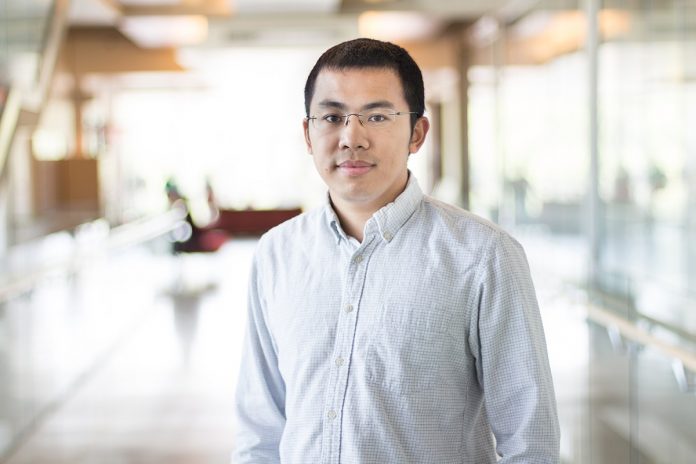
I had the pleasure of sitting down with Yi and Chan to discuss their report and ask them some questions.

In their report, the team suggests that the major reasons for loneliness in post-secondary students are financial, academic, and societal pressures as well the overall geography of Vancouver.

“I noticed that [in] Vancouver, compared to other cities I’ve been in and my friends have been in, there was kind of a perception of loneliness or just [having difficulty connecting],”  Yi says, recalling her own personal experience of moving to Vancouver. Factors such as extensive transit times can deter people from going out to socialize. This is pertinent when many popular events are also centralized in central Vancouver, which may be too far a trip for many people.

Despite being aware of their feelings of loneliness and perhaps even desiring to change their situation, many students find it difficult to confront or address these feelings.  A particularly moving comment from an anonymous student on the team’s visual report reads, “I don’t think people know where to go when they’re sad or lonely. Or who to reach out to.”

This hits home for many SFU students who lament the “commuter campus” status of their university. As an involved student at SFU, Chan notes that SFU’s Burnaby campus in particular has a general culture of students wanting to go home early after class. “No one wants to stay,” he says honestly. 

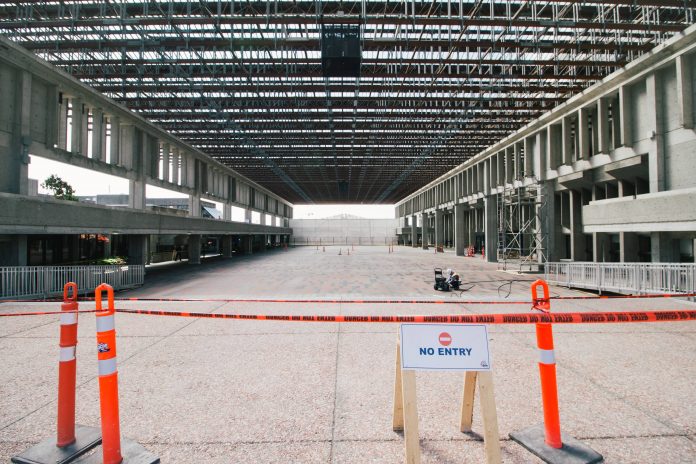
Yi suggests that SFU has three major factors that contribute to students’ loneliness and difficulty engaging in the school community: a lack of awareness of opportunities to meet people, financial and academic pressures, and the ongoing construction on the campus. 

When asked about the biggest difference in campus culture at the Burnaby campus compared to the Surrey campus, Chan responds, “The biggest difference is the physical space of Surrey, they hold events [ . . . ] and everyone has to pass by those events on their way to class.”

In contrast to the open and central location of the Mezzanine, Chan explained that the Burnaby campus has two bus loops, which means that some students might never see events happening on different sides of the campus. Some business students might arrive at SFU and only stay in West Mall Centre (WMC) for their classes and not go to the Academic Quadrangle (AQ). Likewise, some students might only stay in AQ and won’t go to WMC. Especially in Burnaby, Yi says that a central space is needed where students can physically see what’s happening on campus. 

In addition, finding events online at SFU can be overwhelming for students. “Each club has its own Facebook page, its own Facebook events, but if I was out on a Friday night looking for something to do, [I] wouldn’t know where to start,” Chan states, “SFU does have an official events page, but when I looked at it, a lot of the events were not for the [average] student. They would be [niche events] an average student wouldn’t go [to, like one for the] PhD Thesis Defence for the Department of Mathematics.” 

Yi adds that universities could look into creating positions for students, dedicated to social experiences would help communicate events for the students more effectively. Both Yi and Chan agree that having a physical space that students could hang out in as well as having one events page to go to would promote a stronger student community and alleviate post-secondary student loneliness. 

Yi and Chan acknowledge that SFU club leaders and administration are trying to address loneliness as a problem affecting the student population mentally. “SFU Health and Counselling has a lot of events that happen quite frequently (like programs and workshops),” Yi remarks, “SFU wellness [also] provides tea sessions, bunny yoga, and things students do enjoy.” 

Students can also now access My SSP, an app that gives post-secondary students “access to 24/7 mental health support through web, app, phone and chat platforms.” 

Yi notes that spaces like the Women’s Centre, Out on Campus (OOC), and the Centre for Accessible Learning are important physical spaces, especially for marginalized groups at SFU. In the team’s report, Ashley Brooks from OOC calls for these spaces to be protected as he believes there is “a need to support spaces for marginalized populations, [such] as queer spaces, which are currently being priced out and forced to move towards online spaces which leads to more shallow connections.”

Overall, the team give crucial attention to loneliness in Vancouver in their report. Particularly interesting was how the geography of the Burnaby campus can specifically alienate students. Finally, the report outlines possible causes for student loneliness as well as  some changes administrators can make. These include providing mental health services and a central hub where students can find events, which would help strengthen the student community at SFU. Click here to read the written report, and here for the visual report.


Editor’s note: In the spirit of the report, here are some resources for students to get connected on campus.


  • SFSS Clubs Directory Website : Interested in getting involved in student clubs at SFU? Even if you missed clubs day you can still find out  about all the different clubs SFU has to offer on the SFSS website. You can find information on how to join, and when different events are occuring.
  • SFU Events Webpage :  All the information for SFU’s events in one convenient location! This site gives you all the details of what’s happening on SFU campuses and how you can get involved. (BONUS for broke students: Many of these events are free which is indicated on the website.)
  • Join The Peak :  YES, a fantastic way to know what’s going on at SFU is to write for the paper that reports on said happenings… and you get paid! It’s as easy as sending an email to The Peak’s promotions / social media manager ([email protected]) telling us which section you’re interested in contributing to. 
  • Facebook Groups: There are many, many, many groups out there to connect students and build communities.
  • Volunteer! : Volunteering is a great way to learn about your school’s community, develop new opportunities and skills as well as meet many new people. Check out SFU’s myInvolvement website which is described as “your one stop shop for on-campus opportunities! Through this portal, you can register for career and leadership development programs; apply for volunteer and paid positions; sign up for campus events and workshops; and access your Co-Curricular Record.”




Enrolment dates: Exposed

0
Photo curtesy of Pixabay

Written by: Trevor Roberts, Peak Associate

It’s that time of year again. After weeks of uneasy waiting, the students of SFU finally receive their enrolment dates. 

While often dismissed as inconsequential, a person’s enrolment date is often the difference between them spending ridiculous amounts of time and money on something they hate and them spending ridiculous amounts of time and money on something they strongly dislike. 

Yet, the university’s explanation of using things like GPA, units completed, and scholarships to calculate these dates has kept the truth about how these dates are allocated hidden from students for years. It is time to expose the enrolment process. 

Enrollment Lie  Enrollment Truth 
Enrollment dates are decided by an unbiased group of hard-working SFU admin, dedicated to the success of all students. Enrollment selection begins with professors meeting in an underground lair underneath Convocation Mall* where they drink grad student blood to keep young.


*Due to construction, they were forced to hold their ritual in Halpern Centre

SFU cares for each faculty equally  Students are sorted into Beedie and non-Beedie students. Beedie students are given top priority, as part of a legally binding agreement that forbids Beedie students (or their parents) from buying the rest of the university and turning it into an oil refinery
There is no favouritism for wealthy students   All non-Beedie students are divided into groups based on how much tuition they have paid over their lifetime to SFU, with those that have the ability to pay the most given the next highest priority. This is done in hopes that wealthy students will donate to SFU after they graduate early. However, this priority is reversed for students who have spent more than five years at the university, individuals that the process refers to as “lifers.”
There is no prejudice against any student  Deans rate how difficult each student’s name is to pronounce, and give the most difficult ones low priority in an effort to delay having to say their names at convocation. 
First-years always get good enrollment dates Each incoming student is individually kidnapped and placed in a classroom somewhere in Robert C. Brown Hall, and given priority based on how many days it takes for them to make it out. The students then have their memory erased so that this information can never be released to the student population.


What SFU needs: better bus shelters

0
Bus shelters that protecc when nature attacc. Illustration by: Tiffany Chan / The Peak

By: Winona Young, Head Staff Writer

Is there anything worse than walking up to the sea of students fresh from their afternoon lecture, all congregated at the upper bus loop at 5:30 p.m.? Yes! It’s SFU’s lacklustre bus shelters — especially the lower transit centre, now that it has been relocated away from the larger shelter covers and security phone. SFU-goers are herded into those tiny shelters like overcrowded cattle running on too little coffee.

WHAT WE LACK

  1. Overhead shelters that protect people from harsh sunlight, rain showers, snow, and brisk gusts of wind
  2. Ample seating for sitting passengers
  3. Leveled terrain that is neither dangerously close to a curb nor too bumpy for passengers using wheelchairs or with strollers
  4. Heating and cooling mechanisms for climate control 
  5. Weather-proof seating 
  6. Lighting system to keep the area lit past sunset
  7. Nearby security-call button for the safety of passengers
  8. Mosquito netting at the lower transportation centre 

THE VISION

Introducing the SFSS (Shelters For Sweaty Students in the summer, or Shelters For Shivering Students the rest of the year). Inside this glass box with solar roof panelling that helps power the LED overhead lights, this bus shelter will beat sitting in the AQ for relief from the elements. With multiple wooden benches and a stylish rectangular shape, the SFSS allows for multiple students to feel safe and comfortable while waiting for their ride. The shelter includes a built-in fan for the summer and a radiator for the winter. Doors open automatically so commuters need not worry about gripping germ-ridden handles that are too hot or cold. And passengers commuting after a late night class can feel the slightest bit safer in this well-lit area with security just a phone call away thanks to the built in landline.

WHY SFU NEEDS IT

Commutes are an integral part of the majority of SFU students’ lives. That’s thousands of students traveling on and off the mountain, enduring every little weather change directly while waiting for transport. And let’s face it, TransLink bus schedules will never be perfect. But with SFSS bus shelters, there will be fewer students out in the sweltering heat or heavy snowfall waiting for a bus that may never come. There’s already enough to gripe about with SFU being on a mountain, but with these shelters, at least we can make the cattle of students a little less cranky on their commutes.

SFU Construction Watch: Week 10

0
Andres Chavarriaga/ The Peak

[09/07/19]: This story was corrected from an older version. James Bremner was misidentified as the project manager of the Student Union Building (SUB). 

[09/07/19]: This story was corrected from an older version. The projected completion date for the Residence Building Phase 1 was originally listed as August 2020. It has been corrected to Spring 2021.

By: Onosholema Ogoigbe

SFU Construction Watch: the segment where we aim to provide accurate and up-to-date information about construction happening around our campuses.

SFU Surrey 

Surrey Sustainable Energy and Engineering Building (SE3P): The building was completed on April 2019 and will be open for classes in the Fall 2019 semester. 

SFU Burnaby 

Freedom Square/Convocation Mall: As previously reported by The Peak, the floor in front of the stage in Convocation Mall is completed. The stage and the stairs leading down into Freedom Hall and Convocation Mall, however, are still under construction. Both these sites were paused in order to allow the convocation ceremonies take place. The work is set to be completed by October 2020. 

Academic Quadrangle (AQ): According to SFU Facilities Services, the AQ is currently undergoing renewal construction from the Starbucks plaza to the AQ plaza. The public plazas and subsurface waterproofing is being replaced. The construction in the AQ is slated for completion by September 2020.

Student Union Building (SUB): Located on the south side of Freedom Square, the Student Union Building is still under construction. 

The SUB is expected to be completed in the Fall 2019 semester.

Residence Building Phase 1: Located on the former Louis Riel residence site, Phase 1 of the residence building is still under construction. The building consists of two seven-storey buildings housing 482 single rooms for first-year students. It is slated for completion by Spring 2021.

Residence Dining Hall: Currently, the Dining Hall is set to undergo two construction projects: one to expand the Dining Hall, and one to renovate the existing building. Neither of these projects have begun. The expansion is set to be completed by August 2020. The renovation has no expected completion date.

Lorne Davies Complex Stadium: According to the SFU Facilities Services website, the stadium currently being built on the field outside of Lorne Davies Complex Stadium is intended to have 1,818 individual seats and 10 accessible seats. The project is set to be completed by Summer 2020.

Corix Biomass: According to SFU Facilities Services,  the proposed Burnaby Mountain District Energy Utility Project is  “an extension of the regulated district located on South campus road.” 

The project is set to be completed by Summer 2020. 


Research Roundup for June 2019

0
Photo: Courtesy SFU News

By: Paul Choptuik, Coordinating News Editor

Socioeconomic status correlated to heart attack and stroke risk

Research published in The Lancet has found a link between education level and cardiovascular disease and stroke risk.

Professor Scott Lear, a member of SFU’s Faculty of Health Sciences and the Pfizer/Heart & Stroke Foundation Chair in Cardiovascular Prevention Research, was one of over 40 authors of the findings.

The study, conducted in 20 countries, used education level and a household wealth index based on assets and “housing characteristics” to determine socioeconomic status.

The study had over 150,000 participants, from five low-income, 11 middle-income, and four high-income countries. Over 10,000 participants were located in Canada.

The study found that education, not wealth, was the socioeconomic factor that was linked most closely to cardiovascular disease, especially in low and middle-income countries.

With education being such a strong indicator or determinant of health, education is actually what we consider a modifiable factor, whereas wealth is not as modifiable,” Lear told SFU News.

“If we give people money they don’t suddenly become healthy, but if we strive to better educate our population, that will result in improved health because there is a more direct link between education and health outcomes.”

The research is part of the Prospective Urban and Rural Epidemiological (PURE) Study, which currently has 225,000 participants in 25 countries.

Potential smartphone solutions for women’s reproductive health in rural areas

Zhendong Cao, SFU graduate and research assistant in the school of engineering, has developed a method to use smartphone cameras that in the future may help with diagnostic testing.

Taking a smartphone that has software modified to analyze the coloured pixels and UV light in a photo and coupling it with a container that Cao has also created to block out light and interference, the device hopes to carry out testing similar to that of a microplate reader, which is both heavy and costly.

This could be used to see how much estrogen is in a sample, as this hormone leaves a “signature” based on color absorbance, which in turn could help determine reproductive health.

According to SFU News, “if commercialized, health-care workers could see the results provided by the smartphone testing kit to inform female patients about their daily reproductive status in real time so they can make decisions about family planning and overall reproductive health.”

In the long term, the technology could possibly be used for cancer detection, food safety, or livestock health, according to Dr. Ash Parameswaran, Cao’s thesis supervisor.  

Happiness in giving found in ex-offenders

Research published in the Journal of Experimental Social Psychology has demonstrated that ex-offenders who spent a small amount of money on others felt more happy than their counterparts who spent it on themselves. 

The research was led by Katherine Hanniball, a clinical psychology PhD student in the Faculty of Arts and Social Sciences. Hanniball recently won a Vanier Canada Graduate Scholarship for $150,000 to support her studies.

Participants were split into two groups. One group spent money on themselves and the other group gave to charity. 

According to SFU Communications, previous research has found links between generosity and happiness in other groups, but this study is the first to do so with ex-offenders. 

With files from SFU News.

Be critical of scientific reporting, even outside of class

0
There’s no point in all this education if we’re going to let faulty reporting dupe us. Photo by Chris Ho / The Peak

By: Ben McGuinness, Peak Associate

You’re at the checkout, eyeing a chocolate bar. You’re well aware that it’s a slab of fat and sugar, so how do you justify grabbing one? Well, according to some sensational articles in a magazine on the rack or something that just got shared on Facebook, chocolate might just be healthy for you!

At SFU, we’re often asked to apply critical thinking to the information and theories presented to us. But this skill shouldn’t stop once our assignments are done. Every day, we’re bombarded with misleading information as a result of corporate agendas and attention-seeking viral media. As educated citizens, we should be the first to sniff out questionable information.

Chocolate is a frequent topic of misleading headlines and oversimplified articles. For example, an article from Live Science titled “Elderly brains get a boost from dark chocolate” reports that the flavanols (a compound found in many foods) in dark chocolate can be good for us. With a semblance of nuance, the article cites the researchers’ cautions that the topic needs further study, but also “that there is no harm in adding flavanols to a diet.”

A good journalist should place the findings being reported into real-life context. For example, the above article should let us know that the flavanols in chocolate could be good for us, but that the limited effect probably doesn’t cancel out the unhealthy impact of all the chocolate you’d have to eat to reap the benefits.

Part of a journalist’s responsibility to the public is to find important scientific research and report it in layman’s terms. But as news media increasingly becomes an industry instead of a service, and as attention grabbing headlines become vital to online virality, the temptation grows to blow scientific findings out of proportion for dramatic effect.

A more insidious side of this problem is that the search for exciting science to publish goes hand-in-hand with corporate public relations. An editorial from Vox describes how the chocolate industry turned dark chocolate into a “health food” by funding research into its health benefits, which just so happened to come out positive the majority of the time.

Journalists and bloggers need to be transparent about their reporting processes, and the limited practical application of the studies they report on. This includes avoiding attention grabbing headlines that mask the details of the study behind the fun information which comes first. If readers don’t get through the full article, they are likely to take away an overly optimistic yet incorrect message.

Unfortunately, readers cannot blindly trust the news to do it right. As students, we have to keep our critical thinking caps on. We should also limit how much time we spend surfing headlines in our social media scroll, because even the best of articles might have misleading titles. If something seems too good to be true, it probably is!

Let’s be real, we’re going to reach for that chocolate bar with or without the science to justify it. But that decision should be our own, not the result of bad reporting on science.

What grinds Our Gears: Why are students still sweltering through summer classes in 2019?

0
Can we at least get some electric fans going, please? Illustration by Momo Lin / The Peak

By: Tiffany Chang, SFU Student

You know what sucks? The lack of air conditioning on campus. As someone who sweats buckets whenever I’m at school during the summer, it downright pisses me off. 

Needless to say, summers in the last few years have been scorching hot. Despite this yearly inevitable unbearableness, I’ve definitely noticed that SFU does very little to even temporarily relieve us from it. 

The newer lecture halls in the third floor of the Academic Quadrangle have AC, which I acknowledge and appreciate. However, these few rooms aren’t enough when accounting for the overall comfort level of all students. Considering the institution is turning 54 years old, I’m really shocked that incorporating more indoor heating/cooling systems hasn’t appeared on anyone’s radar yet. 

I mean, we’re privileged to receive a higher education, sure, and we need to pay our dues, OK, but is walking into buildings that feel like saunas supposed to be one of them? Having no way to prevent ourselves from melting when the temperature measures 30 degrees C outside isn’t exactly helping our “university experience.” 

I dread having to deal with this for the remainder of my degree. I hope SFU does more about the indoor climate issue soon . . . hopefully at least a semester or two before I graduate.  


Islamophobic acts on campuses show that SFU needs more cross-cultural awareness

1
Islamophobic vandalism at two SFU campuses shows that Muslims are still being targeted for hate. Photo by Chris Ho / The Peak

By: Mishaa Khan, Peak Associate

Mishaa Khan is a student at SFU and the secretary of the SFU Muslim Student Association.

Recently, two events took place at SFU targeting the Muslim community: a man urinated in the prayer area at SFU Surrey while saying profanities about Muslims, and another individual stole money from the Muslim Student Association’s (MSA) charity box at the Burnaby Mountain campus. Both of these incidents took place during the end of the holy month of Ramadan, a day before the Islamic holiday, Eid. These events and countless others off campus suggest that Islamophobia is still present in liberal cities and institutions like the Lower Mainland and SFU, respectively. 

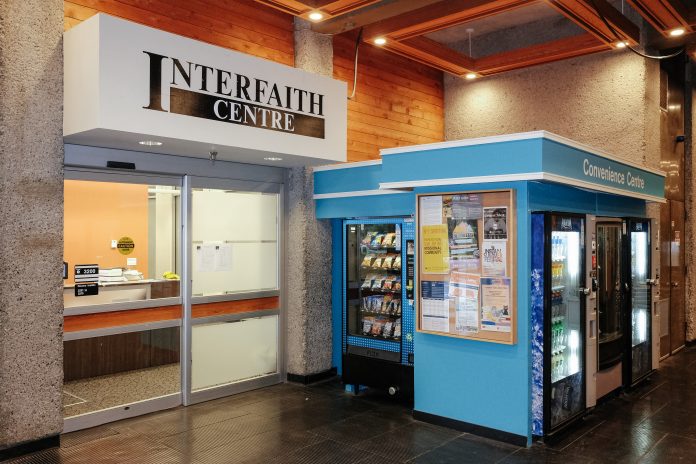
Behaviour like this is unacceptable and the fact that Muslims are still being targeted on campus shows the need for religious organizations like the MSA and the Interfaith Centre. They are able to support Muslim students and address problems they may face, like these two incidents. 

Local news channels, SFU, and the Interfaith Centre are working with the SFU MSA to make Muslims on campus feel more secure by raising awareness, increasing security, and trying to provide religious groups a permanent place at the SFU Surrey campus. 

However, despite all these attempts, many Muslims feel unsafe, unwanted, and targeted at SFU. This is because in addition to the incidents that occurred on campus, many commenters have responded to the reporting with hate speech and harsh comments online. For example, in the now-removed comment section of the article published by News 1130, one individual wrote, “This sounds like another hijab hoax, really phoney” while someone else responded in a tweet, “Take the word ‘news’ out of your title. Replace it with (Lefty garbage islamist propaganda).” 

During my two years in Canada and SFU, I have been fortunate enough to encounter very few Islamophobic attacks. However, one incident that I remember clearly to this day happened when a man approached me on Clubs Day and told me that ISIS enforces Islamic rules, that Islam is a hostile religion, and that women are degraded in Islam. As a practicing Muslim woman, I felt frustrated and upset at his comments and the misconceptions many possess about Islam. It results in division, discrimination, and conflict when there can be peace, acceptance, and harmony, instead. 

This isn’t me crying for help or playing the victim card. The larger point is that we need to fight unfounded hatred from all sources. We’re constantly reminded of radical actions by so-called Muslim groups, but the irony is that Islamophobes share the same misguided, dangerous ideology as radical groups because they both misuse religion to target others, especially Muslims. 

The SFU MSA tries to combat this discrimination by holding events like Islam Awareness Week every semester, or weekly booths where individuals can come and ask Muslim students questions about what Islam is really about. Yet despite these efforts, as recent events have shown, Muslims are still being targeted at SFU, which means the community needs to take more large-scale steps.

We need people who aren’t Muslims to speak up and support us as well. This means asking questions about Islam from reliable sources (e.g. SFU MSA and scholars) to get rid of misconceptions, befriending Muslims, and speaking out if you witness any Islamophobic incidents. 

This can be done by attending MSA events or reaching out to an MSA member through [email protected] or their Facebook page. The MSA invites students to learn what Islam really is about by engaging in discussion at events or information booths.

Staff Study Songs: Peak recommended music to zone in and focus

0
Photo by Marvin Meyer on Unsplash

By: Kitty Cheung, Jennifer Low, Gabrielle McLaren, Nicole Magas, Ana Staskevich, and Alison Wick

For the start of midterms, some of The Peak staff collaborated on a list of their favourite study music. From all-inclusive genres to specific albums, find their listening recommendations, along with samples of each, below. May the music below inspire you to study or the article help you continue to procrastinate.

WALK THE MOON — Ana, Staff Writer

Studying has always been a struggle for me, simply because procrastination is a millennial prerogative and ambition is difficult to come by in the student realm. Aimlessly browsing your notes hoping for a last-minute epiphany is never good in silence. I am the type of person who enjoys an upbeat and driven environment, which is why WALK THE MOON has the perfect mix of genres to get me focused. Dabbling between synth-rock and indie pop, the band’s ‘80s vibe throws you into a world of vibrance and aspiration. Rather than getting lost in a sea of slow baroque and blues, WALK THE MOON will give you much needed studying motivation and is perfect to zone out to when you need a break from those arduous math equations.

What if Nothing (Album Trailer) – WALK THE MOON

Classical Music — Nicole, Opinions Editor

I’m the kind of person who can’t study or do homework with any kind of words or chatter swimming around in my ears. However, I do occasionally like to listen to music to keep me going. Naturally, the only music I can concentrate with is classical music. My favourites are: “Hungarian Dance no. 5” by Johannes Brahms for when I need something to tap my foot to, “Arabian Dance” by Tchaikovsky for when I really need to concentrate, and “Concerto L’inverno” by Vivaldi when I’m about to fall asleep at my fifth hour of reading. Without words or aggressively catchy choruses, classical music allows me to actually block out the world and get shit done.

Hungarian Dance no. 5 – Johannes Brahms

Hadestown Original Broadway Cast Recording — Gabrielle, Editor-in-Chief

I was late to the Hadestown party and shocked that I hadn’t heard of a post-apocalyptic/Great Depression-inspired musical retelling of the Orpheus and Eurydice myth. I have very specific tastes and this checks many boxes. Anaïs Mitchell’s music has a surprising range of instruments and emotions; in 13 songs, you get some jazz, blues, soul, ballads, big Broadway ensemble songs, and even random noises like train horns. Personally, this variety keeps me awake when I study. The breaks I need to take to sing along or process the more gut-wrenching songs are also good, and I’ve caught on to the poetically catchy lyrics quickly. You’d get more songs and story from the non-Broadway original cast recording, but then you’d miss out on the amazing vocals of André de Shields (Hermes) and Eva Noblezada (Eurydice). You don’t want to miss those; these people and this soundtrack won Tonys for good reasons.

Hadestown on Broadway Song Medley

Songs to Break Up To and Songs to Make Up To by Ta-Ku — Kitty, Staff Writer

Ta-ku’s Songs to Break Up To is a beautifully crafted collection of beats. Smooth, refined, and orgasmic to the ears, Ta-ku’s mellow electronic style is suitable for any people who study to lo-fi and hip-hop (if you’ve ever searched for study music on YouTube and clicked the thumbnail of that anime girl falling asleep over her books, I’m looking at you!). This Australian producer incorporates sounds like chains clinking to evoke feelings of heartbreak. He later follows up with another EP called Songs to Make Up To, a more optimistic response to experiencing love. I would recommend both of these EPs, as most of the tracks are instrumentals which can lull you into both tender love-ache and full-on study mode.

Beginning to end – Ta-ku (Songs to Break Up To)

Against the Current — Jennifer, Features Editor

You’d think I’d be happy that I don’t have to suffer through midterms this semester but alas, school always finds a way to make sure you are constantly busy. With so many essays and projects to get through, the only thing that keeps me on task is my productivity playlist. Back in 2016, I discovered the American pop-rock band, Against the Current. Their fast-paced and energetic music switches between pop rock, pop punk and alternative rock sounds. Because every song almost has its own genre, I am always engaged with every song that comes on my playlist.

Lamp — Alison, Arts Editor

Lamp is my new study and transit music. Lamp is a Japanese alternative, jazz, and indie pop trio who have been making music in Tokyo since 2000. Their songs are dreamy and musically complex, layering vocals, synthesizers, flutes, and more. They are at once relaxing and energetic and help me focus on writing, reading, or thinking about nothing. They sound like sunshine and I recommend you listen to them to cure sadness, boredom, and distraction. Although when I have to write an essay in a day, I go for Charli XCX on shuffle because she has energy and hype for days. Vroom, vroom. 

「シンフォニー」– Lamp

Interstellar: Original Motion Picture Soundtrack Kitty, Staff Writer

Elegant and contemplative, Hans Zimmer’s film score for Interstellar (2014) will gracefully complement any kind of studying. A slow and powerful piano melody is repeated throughout the soundtrack in a theme minimal enough to not be distracting when you’re trying to focus on homework. As the soundtrack transitions between songs and builds up tension throughout the story, the listener is subtly pulled into quiet contemplation. Whether you’re pursuing knowledge by hitting the books or going on your next space adventure, the original motion picture soundtrack for Interstellar will guide you through a beautifully inquisitive journey.

Full album:

Adulthood 101: Employee Rights to keep in mind in the workplace

0
Illustration credit, Tiffany Chan

By: Grace Lo, SFU Student

Unless you find that you’re the long-lost heir to, say, a small European kingdom called Genovia, you’ll probably find yourself working a job at some point in your life. Whether you’re in co-op or working a retail job to bring in that extra moolah, no matter what kind of work you do, here are some basics to keep in mind at your B.C. workplace, especially if you’re a busy student who spends more time looking over assignments than browsing governmental sites. 

* The following information is taken from the British Columbia Employment Standards.


Your time at work

  • Standard work hours are eight hours a day and 40 hours. Think of this like a soft maximum limit for your hours at work, but it can be exceeded as long as employees receive overtime pay. This may or may not pertain to you, depending on what kind of work you do. 
  • There’s also a minimum daily hours of work. If you are scheduled to go to work, you must be scheduled for at least two hours. Even if your employer has nothing for you to do, you will still be paid for those hours.
  • Of course, you also have to fuel up in the middle of your shift. While coffee breaks are not guaranteed (bah!), if you work more than five hours in a row, then your employer must give you a 30-minute meal break. Though the meal break can normally be unpaid, if your workplace requires you to work through your meal break or otherwise be available, you should be paid for that time.


Your time away from work: because your life ≠ work

  • You should be given at least 32 hours in a row off from work every week. If for whatever reason you have to go in to work, you are entitled to overtime pay. You should also have at least 8 hours between each shift.
  • Split shifts are when you work different shifts over the course of a single workday. These shifts should occur within a 12-hour timeframe, and you will receive regular pay (unless it exceeds standard hours to qualify for overtime).
  • You can also request time off for different reasons. After a year of working, you’ll receive paid vacation days; this amount varies depending on your tenure with your workplace. If need to take a leave of absence, you will need to let your employer know when you’ll be gone and for how long, and why you need to take said leave. If you’re sick and need time off, you might be required to have a doctor’s note depending on your employer.


Getting your paycheque

  • Your employer is required to pay you twice a month. 
  • Recently minimum wage was increased from $12.65 per hour to $13.85 per hour on June 1, so double-check your pay stubs! This is part of a larger plan to increase minimum wage over the course of the next couple of years. 
    • There are, however, exceptions. For example, minimum wage for a liquor server is currently at $12.70.
  • Remember the standard work hours I mentioned above? If those standard hours are exceeded, you are entitled to overtime pay for the time that you work over the standard work hours at either 1.5 or 2 times your regular pay rate (depending on your employer), unless you have an averaging agreement. Note that even with an averaging agreement, you still cannot work more than 12 hours a day without overtime, nor more than an average of 40 per week.
  • If you are scheduled to work a statutory holiday, it is important to double check if you are qualified to be paid. 
    • If you have been on staff for 30 days and have worked 15 of the 30 days before the statutory holiday, you will receive an average day’s pay, plus time and a half for your hours worked. If you work more than 12 hours, you will be getting paid double-time.
    • If you don’t qualify, you will receive regular pay for working statutory holidays.
  • You might see a little bit extra at the end of your paycheque, whether they’re overtime and statutory holiday wages, vacation pay, etc. If you work for gratuities and tips, you  might get to keep all the tips you make or you might be pooling your tips with other employees, depending on your workplace and position.
  • You will also see deductions, such as income tax deductions made based on the TD1 tax form you filled out for your employer when you started working with them. If your workplace offers insurance that you opted in to, you may also see deductions for premiums.
  • Business expenses cannot be deducted from employee wages. For example, if you have a dine-and-dash at your restaurant, or if you’re the unfortunate individual the office printer finally gave out on, that cannot be deducted from your wages.


Leaving the workplace

  • While you’re not legally required to let your employer know you’re leaving, it’s generally good practice to give your employer at least two weeks’ notice before leaving your place of work to give them time to prepare someone to fill your position or arrange for your exit (returning work equipment, getting paperwork done etc.). If you do give notice, your employer can choose to terminate your employment sooner than your notice date.
  • If your employer terminates your employment, they must give you written notice and/or payment. The length of notice and amount of payment given depends on how long you’ve been working with them and is outlined in your job contract.
  • Your employer does not need to give you any notice or compensation if they fire you for “just cause.” This means that the employer has a valid reason to end your employment, such as not meeting standards of employment or committing a serious offence at work.
  • After you leave the workplace, make sure to pick up your last paycheque plus whatever miscellaneous wages you might have accrued over time (e.g. vacation pay, overtime, compensation)! If you quit, you should have your final payment within six days of your last day at work. If your employer terminates your work, they should have your final payment within 48 hours of your last day at work.


If you have more specific concerns or other questions about working, below are some resources that can help guide your inquiries.

  • Employment Standards guide: This is like the tl;dr of the Employment Standards Act that will take you through most things that you will encounter in your workplace
  • SFU Co-op: If you’re doing co-op or considering doing co-op, this is probably your starting point. They also have more specific information on things such as what to expect at your workplace.
  • WorkBC: Think of this like the Career Centre of Real LifeTM. WorkBC offers resources getting a job, training, and can be a gateway to more specific resources.
  • Employment Standards Act: If nothing above answers your question, the best place to go would be the source of the law. It’s dry, it’s hard to read, but it has everything laid out in specific legal terms.