Home Blog Page 516

10 things I never knew about Canada as an international student

0
Image courtesy of Ali Tawfiq via Unsplash


By: Simran Randhawa, Peak Associate

1. Canadians are actually really polite

I never knew that Canadians are actually as nice as their stereotypes make them out to be. People apologize and say “thank you” like their life depends on it. Being in Canada has had me successfully saying thanks while exiting a SkyTrain; it seems to become a habitual reactionary response after a while. 

2. Education is harder than some people might think

I’m from India, and the common misconception is that the education system in Canada is comparatively easier. To some extent, that might be true. But that doesn’t take away from the hardships faced by students in Canada on a daily basis.

Educational hardship in Canada isn’t limited to the course load during the degree itself either. It extends to the pressures of post-grad job hunting and finding the money to pay for expensive post-secondary education.


3. Canada’s history of oppression

Through the art of colonization, the majority of historical accuracies seem to have been eliminated. We don’t get to see the history of Indigenous peoples taught at the same level as the rest of the historical content.

Unfortunately, I was as oblivious to said history in my first year in this country. I did not know anything about the land that I was benefiting from, nor did I know who this land truly belongs to. I never knew the truth of the beautiful land we now call Canada. Worst of all is the fact that the atrocities faced by the Indigenous population from the beginning of colonization and into today are still left out of history books and news. 

All this historical information (and more) is consistently being hidden or brushed aside, a common practice in all previously colonized nations. However, in a country like Canada, which boasts of its efforts to help Indigenous communities, I never knew that such methods of rewriting history still exist.

4. Forest Fires

I never knew that forests could spontaneously catch fire in 20-degree C temperature. Mind you, in India the temperature rises up to 50 degrees at least every summer, but the episodes of spontaneous combustion are next to none. In Canada, on the other hand, the forest fire incidents are very common. In fact, the 2018 forest fires engulfed up to 12,985 square kilometres in British Columbia alone, leading to a state of emergency.

5. Drinkable Tap Water

Drinking water from the tap: I NEVER knew that someone could drink water straight from a tap and not be riddled with typhoid. That’s something that only a small percentage of people in the world have access to, and I think it’s important not to take it lightly. Having access to safe drinking water every time you open the tap is rare, and unfortunately many places don’t have this luxury. 

6. Universal healthcare

I never realized that Canada has universal healthcare, nor did I know what that term entails. Universal healthcare is publicly funded and actually takes care of your day-to-day medical necessities.

This option saves people of all walks of life from losing their savings in times of  medical concern. It works on the model of equity, serving people based on their need rather than their ability to pay. I don’t understand why more countries don’t have this model, or something along similar lines.

7. Disparity in educational qualification

It saddens me to learn that educational achievements from different non-Western countries aren’t valued in Canada. People from my country (India) can be doctors or lawyers, but they are lost in the crowd in Canada and end up working at minimum wage jobs. 

8. Raccoons

I never knew that Canadians treat raccoons and other wildlife the same way they treat puppies. There is such fascination when it comes to viewing a wild raccoon that Canadians need to be reminded to maintain their distance. In Toronto, citizens once held an elaborate vigil for a dead raccoon forgotten by animal services which quickly was noticed as something that would occur “only in Canada.”  Even people around SFU seem to worship these animals. 

In fact, the SFU population has gone so far so to make a Facebook page called Raccoons of SFU, and petitions are passed along to make raccoons our mascot.

Note: Raccoons are a wild species, and so have the potential of being dangerous. Raccoons in B.C. are not a rabies vector. However, this does not mean that they don’t possess the danger of getting aggressive. Anyone coming in contact with them should bear that in mind.

9. Taxes

I never realized the amount of taxes attached to everything in Canada. My oblivious attitude to this factor could very much be because I didn’t have to deal with taxes when I wasn’t an adult. However, when you earn minimum wage and work towards paying for living and education, every tax burns like a pain never felt before. 

Nevertheless, the funds collected from these taxes, at various levels of our government, go towards bettering our lives as a community. This is seen in our transportation services, like the SkyTrains and busses which make traveling so much easier and more environmentally friendly.

10. Discrimination

As mentioned above, Canadians are nice, polite, and all around welcoming. However, Canada isn’t immune to the virus infecting our entire planet: discrimination. 

Although we might not see this discrimination as outwardly portrayed as in the United States, it is nonetheless here. It’s of a systemic form. You see it in the slight undermining of your identity through comments like, “How can you speak English if you are from India?” or the constant lack of effort people put into trying to pronounce your name correctly. 

Goodbye SFU: A soon-to-be grad reflects

0
Courtesy of SFU

By: Anindita Gupta, Peak Associate

“Goodbye SFU” is something I have wanted to say ever since my first ever set of midterms. But now that it is going to be reality, I don’t feel ready to leave.

My first memory of SFU is when I drove to university for the first time ever. As an international student, I had only seen the building while sitting in my home in Nairobi, Kenya. Yes, I had been on tours — the virtual ones. I knew some people by their names and profile pictures thanks to the SFU Fall 2015 group on Facebook. But after that drive, it was all real. I could touch and feel the buildings, and these people that I had met virtually were very different in person! The first time the taxi drove up Gaglardi Way, I finally saw the elevated floors of the AQ that I had only seen previously online.  

When I look back on my time at SFU, it was everything I had hoped and dreamed of . . . topped with some stress and anxiety. 

I began classes and made friends with people in both the communications and psychology departments: these spaces, I knew, were going to be like home for me for a long time. I wasn’t living on residence yet, so I always felt a little left out when all my “lecture friends” talked about going to the Dining Hall together after every class for a meal. That was OK, because I had found a bunch of commuter students, just like myself — but to overcome that and meet more people who didn’t necessarily live on campus, I ended up joining 16 clubs on my first Clubs Day! 

After the end of my first university semester and after having dealt with what really writing a paper is like, I remember feeling overwhelmed, but with a sense of achievement. For my first break, I flew back home to Kenya. Soon, I realized that there is no sadder feeling for an international student than having to get back to university after that first break.  

I was miserable, after spending only two weeks with my family, to be back to the snowy land of Vancouver. But I began to live on residence, and this is where I found my home and family away from home. It was amazing to have the glorious 24/7 goodness that was the Dining Hall. I was so happy to step up from my regular meals of pastas and Mr. Noodles! I stayed in residence for an entire year: moving between the Towers (#teambrae) and McCow. I met some of my closest friends and the most fascinating people through the SFU residences, and I am ever so grateful for that. 

So, my first goodbye to SFU was to residence when I finally left campus to try to really “adult” with a couple of my friends. After endless hours of studying, serious discussions, serious laughs, and the sight of Trump becoming the president of the United States, it was really tough to say goodbye to the Dining Hall, mainly! We suffered the very first day after moving out when we realized what a struggle it was to get groceries, walk home, and actually produce food out of it! 

My second goodbye is what’s coming up in a few months: a goodbye to all of SFU. It still makes me anxious thinking about the near future, where my schedule will not revolve around classes. Meeting with TAs and advisors in their offices, rushing to a class on the fifth floor of the AQ that I still can’t easily find (after having had class there for three years or so), bumping into people unexpectedly at the gym or the line at Tim Hortons: these seem like they have been a part of my life for so long, and now, they’re about not to be. 

Applying for jobs is similar to being waitlisted for a course: you don’t know whether you have the job or the course for a few weeks, and you live in that world of fantasy where you try to tell yourself this job/course isn’t all that great and there are better ones out there. But at the same time, you imagine your life with the job/course and just how perfect you think it’s going to be. 

I know that I am not going to find something worthwhile the second I’m out, but to even walk the walk out of SFU feels surreal. Even though I’ve been wanting to be done with school ever since the first semester, I don’t feel ready to leave. The SFU bubble is a very comfortable one to be in. 

If you don’t have a course you’d really like, you talk to one of your advisors and they’ll help you out. If you’re applying for a co-op and you don’t end up finding anything great yourself, the co-op advisors find you something good in the lightning round. If you are confused, slightly or massively, by anything in your courses, your professors and TAs are always around for extra help through so many different means. 

But now, once I’m out and if I ever feel lost, I have to be ready to find my way — without any of the wonderful people that have made my SFU journey easier.

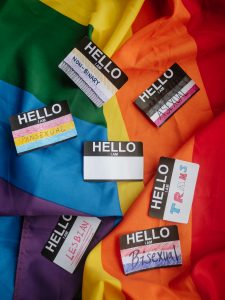
Long story short: I’m still figuring out my sexual identity, and that’s fine

0
Image credit Tiffany Chan

By: Kelly Chia, Staff Writer

Despite having a wonderful group of friends and resources that help me accept myself, I have not had an easy time navigating my sexual identity. Throughout high school, I spent time trying to put different labels on myself. But I wasn’t sure they fit me quite right. While I recognized in others that sexuality was fluid, I could not assign that same leniency to my own journey. I desperately craved a label that suited me. I knew I was queer but had not gotten very far from that realization. 

I have always put the process of discovering more about my sexuality on the back burner. It  seemed more like a burden to express this part of myself, and to look any deeper would only hurt me. Something that still affects me is a conversation I had with my parents a few years ago. My parents were talking about a family friend who had come out as bisexual and was in a relationship with their significant other. They described her sexuality as an indicator of her promiscuity and indecision. 

Though they claim to be supportive of gay rights, my parents still treat queerness as a punchline. I grew up with comments from my family about how gay our waiter seemed, and was expected to laugh because it was harmless to them. I was “allowed” to have a girlfriend, but my parents ultimately expected me to marry a man and give them grandchildren. 

Instead, I explored my sexuality in quieter ways, looking for role models in the media. I strongly rooted for Quinn and Rachel on Glee growing up, because I deeply related to the repressed gay subtext that I saw in Quinn’s character. I was also infatuated with Haruka Tenoh/Sailor Uranus from Sailor Moon. She had a beautiful relationship with Michiru Kaioh/Sailor Neptune, one that I admired and would learn to use as a model for my own relationships. The crooning voice of Haruka’s voice actor, Megumi Ogata, also sent butterflies to my 11-year-old stomach. Looking back, I didn’t take my attachments to these characters seriously because they were just characters, but they were a part of one of many moments where I learned I was not straight.

Chris Ho/ The Peak

I really started trying to define my identity almost as an act of defiance against the heteronormative ideals my parents presented before me. When I was in high school, I thought that I was pansexual, because I did not want gender to affect my romantic or sexual attraction to the people around me. Of course, just because I did not want gender to affect how I experience attraction did not mean it didn’t play a factor in how I experienced it. After this, I thought bisexuality was a more fitting label for my sexual identity.

But there were still so many internal biases about my sexuality that troubled me. I had to admit to myself that I was scared of claiming who I was when I was still wondering if I was “bisexual enough.” The more time I spent not knowing who I was, the more I was consumed with guilt about my place in the LGBTQ2+ community. At 20 years old, I had not experienced a committed romantic relationship, though I had held crushes for long periods of time.

 “Can my queerness really be valid if I haven’t been in a romantic relationship?” I asked myself this constantly. I know now that when I could look at a woman and a man, I recognize that I feel different kinds of attraction to them, but it generally does not go beyond that. I spent so many years denying that I might identify on the asexual spectrum, because I assumed that it was a normal part of a relationship. I now recognize that experiencing sexuality as a secondary factor to a relationship is something I see in myself, too. 

Learning how I can change my labels as I develop has been both a humbling and safe journey thanks to how much more information I have today compared to when I started wondering about my romantic feelings. I am still so young, and to be absolute about my identity would be great, but to be confused is also okay. From campus resources like the Women’s Centre and Out on Campus to my friends who listen to my circular thoughts about the validity of my queerness, I am so thankful for having a strong support group that accepts my journey. 

Contemporary Alaska Native identities and cultural tourism in Sitka

0
Cover of Bunten's 2015 non-fiction book. Image Courtesy of Nebraska Press.

By: Ana Staskevich, Staff Writer

Alexis Bunten is an Native Alaskan (Aleut/Yup’ik) scholar and ethnographer. With a PhD in cultural anthropology in hand, Bunten is involved in Indigenous and environmental foundations including the Native-led hub, Bioneers. Her book titled So, How Long Have You Been Native? (2015) has won the Alaska Library Association Award and gives great insight into the nature of Alaskan tourism and Indigenous engagement within the industry.

As Bunten was working on completing her doctorate in anthropology in 2003, she compiled her research within Sitka into this book that employs a brilliant mixture of ethnographic observation, personal memoir storytelling, and academia. In the book, Bunten details her experiences as a tourist guide for Tribal Tours, a tourism company situated in Sitka, Alaska, as part of her required fieldwork for her graduate studies. She explains that she chose Tribal Tours because it was run by the Sitka Tribe of Alaska, of the Tlingit People, and she wanted to work for a nation different from her own. 

The beginning passages of Bunten’s book paint a vivid picture of the coastal town that is Sitka, bringing to life the daily interactions between locals and tourists. Bunten goes on to share her experiences with rivalling tourism companies and even tensions within her group of coworkers. She refuses to shy away from the distasteful encounters with tourists, emphasizing issues of racism, social skins, and colonization by applying personal anecdotes.

However, Bunten’s writing can fall short in various areas by being too repetitive and cumbersome. Her habit of adding detail-heavy, and sometimes unnecessary, passages can disengage readers from the experience. The book otherwise still provides enough perspective to tie up a satisfying conclusion.

So, How Long Have You Been Native? is a perfect read for those who are interested in Indigenous tourism, the politics of labour, and the cultural values of Alaskan Natives.

Board Shorts: June 27, 2019

0
Irene Lo / The Peak

By: Onosholema Ogoigbe, News Team Member

SFSS hears presentation on vaccines

Ajit Johal, a clinical instructor at the UBC Faculty of Pharmaceutical Sciences, gave a presentation about vaccine hesitancy and making vaccines available on campus. The presentation was titled “Looking at the unmet need of protecting adolescents and young adults against vaccine preventable diseases.”

Read more here

Accessibility Committee at-large reps appointed

The board has appointed Andrew Araneta, Vivian Ly, Ana Lozitskaia, and Mikaela Basile as student at-large members on the SFSS Accessibility Fund Committee for the Summer 2019 semester.

This follows from a discussion from the May 30 meeting about the board developing an accessibility standard policy. SFSS president Giovanni HoSang had provided The Peak with a statement about how the committee would be able to meet and work on developing such a policy for board approval after the appointment of at-large representatives.

Project expense process

Following inquiries from board members, SFSS Executive Director Sylvia Ceacero stated that having the board approve low-cost expenditure requests delayed projects. She reminded the board of the process for expenditures tied to projects: low-cost expenditures are to be processed immediately though her and outlined in their committee meetings. This allows the committees to get their funds approved on time, and the board would still be aware of the funds being used. 

“What I’m getting at is that [. . .] we should have one method,” she said of the request process.

Bill Reid Gallery’s water honours us celebrates connection between local Indigenous women and water

1
The inside of the Bill Reid Gallery early on a Friday morning. Alison Wick / The Peak

By: Ben McGuinness, Peak Associate

qaʔ yəxw – water honours us: womxn and waterways is a mixed-media exhibition by a collective of local Indigenous women artists at the Bill Reid Gallery. The exhibition, curated and created by the ReMatriate Collective, blends themes of matriarchy and water, resurrecting the traditional power of Indigenous women amid their intersectional oppression in the colonial settler-state of Canada.

The Bill Reid Gallery, named after and featuring the work of late Haida artist, is an easy-to-miss cultural jewel tucked away behind a cathedral and lush green courtyard just off of Hornby Street. If you go early on a weekday as I did, it is usually very quiet. 

Though as thoroughly modern as any Vancouver fixture, the two-story Bill Reid Gallery is subtly shaped like a traditional big house: a large open area with an arched ceiling, a surrounding balcony forming the second floor; wooden stumps for seats, trunks for display stands, and a totem pole watching over all. No matter what’s on display, the Gallery’s collection of excellent Haida carvings, jewelry, and prints are always on show.

Upon entering, I found myself revisiting Bill Reid’s materials and struggling to locate the qaʔ yəxw exhibit. The program informed me that this was intentional. The exhibit was placed to flow organically with the usual offerings, and the inclusion of a carving, Reflections by Veronica Rose Waechter (Gitxsan), and beadwork was intended to blend the women’s work on display into the, typically male-dominated, world of public carvings and mixed-medium Indigenous artwork.

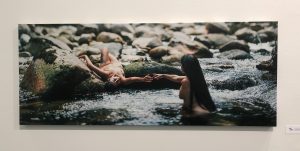
You know you have landed on the exhibit, however, when you come across the photography pieces. The works of ReMatriate Collective adopt branded iconography to take scenes of First Nations women at work in the water and form a statement about celebrating and giving power to these taken-for-granted labours. We Are Enough and The Space In Between by Lindsay Delaronde (Mohawk) and Dionne Paul (Nuxalk/Sechelt)feature two Indigenous women in intimate moments of energy and knowledge transference. The multi-part works in St’langng Laanaas Clan by Kali Spitzer (Kaska Dena) are strong yet vulnerable portraits of artist Audrey Siegl (Musqueam), creating space to remember her sister Maria Siegl and the many other Indigenous women lost to different violences in the province.

The Space In Between by Lindsay Delaronde (Mohawk) and Dionne Paul (Nuxalk/Sechelt). Image from the Bill Reid Gallery courtesy of Alison Wick.

These photography pieces stand out from the permanent collection at Bill Reid, yet the damp, muted, and unmistakably West Coast green colours, along with the deep darks that capture the nooks and crannies of the subjects’ skin, somehow make these pieces perfectly at home next to Reid’s works. 

The themes of matriarchy and life-giving water are present all through the exhibit, and the distinction between these two themes is intentionally fluid. For local First Nations like Tsawwassen, water is a major feature of the land and of livelihood, but the exhibit also aims to reclaim its connection to the women who are made of water, live from the water, and are fundamental to life like water. In these pieces, water represents a reconnection to the land and summoning the power of ancestors to overcome today’s oppressions against Indigenous women.

The qaʔ yəxw exhibit is fairly small, so it may be worthwhile to combine your visit with the next upcoming feature at Bill Reid. SFU students are admitted for free, so the space is well worth being acquainted with. I encourage you to make time for this celebration and showcase of local Indigenous women and sacred connections to water — you will not leave disappointed.

qaʔ yəxw – water honours us: womxn and waterways will be featured at the Bill Reid Gallery until October 2, 2019. SFU students and Indigenous peoples enter for free.

Need to Know, Need to Go: July 1–5

0
FIC's Breaking the Silence poster image. Courtesy of FIC.

By: Alison Wick, Arts Editor

FIC Art Exhibit on Mental Health, July 2-5

On Tuesday, July 2, the Fraser International College is hosting an opening reception for their art exhibition, Breaking the Silence: Reflecting on Mental Health. The event is sponsored by My SSP and keep.meSAFE in collaboration with guard.me insurance and seeks to start open conversations about student mental health and well-being.

The exhibit will feature “paintings, poetry, music, sculpture, film, and more” according to Nadine Dodd, the media contact for the event. Additionally, a performance and discussion will be held every lunch hour during the week-long run of the exhibit. The event and exhibition are meant to connect FIC students, and the SFU community at large, over the real struggles being faced by those living and learning at SFU. The work is entirely done by FIC students, staff, and instructors.

The Breaking the Silence: Reflecting on Mental Health exhibition will open on Tuesday, July 2, from 12 to 2 p.m. and the exhibit will run from 10 a.m. to 4 p.m. for the rest of the week in FIC Lounge 2200.

Clueless at the Vancouver Art Gallery — July 3

For the second time, the Downtown Vancouver Business Improvement Association (DVBIA) is hosting eight Summer Movie Nights at the Vancouver Art Gallery (VAG) plaza. The free summer series is kicking off this Wednesday with a screening of ‘90s cult classic Clueless. The event is outside and open to all ages — although the shows start after sundown, which is 9:20 p.m. this week. The DVBIA is putting on a film every Wednesday until August 21 in the recently renamed šxʷƛ̓ənəq Xwtl’e7énḵ Square on the North Side of the VAG between Howe and Hornby.

This is one of many outdoor film screenings happening in Vancouver this summer. The Evo summer series with Fresh Air Cinema is back every Tuesday from July 2 to August 20 at Second Beach in Stanley Park, Sunset Cinema is returning to Queen Elizabeth Park on July 17, Waterfront Cinema starts July 11 at Canada Place, and other weekly series throughout the Metro Vancouver area will be showing free outdoor films all summer. The R2R Film Festival for Youth is also bringing back its Outdoor Summer Film Series in August, showing three independent festival films and hosting animation workshops at Ron Basford Park on Granville Island.

Clueless will be playing in the šxʷƛ̓ənəq Xwtl’e7énḵ Square on the North Side of the Vancouver Art Gallery and is set to screen after sunset which is expected to be around 9:20 p.m. on the third.

Woodward’s Community Singers weekly Thursday workshops

Originally formed in 2009 in anticipation of SFU Woodward’s opening, the casual choir has moved from Harbour Centre to Woodward’s to its current space at SFU 312 Main St. Since February, this weekly workshop has been running there every week with support from SFU’s Vancity Office of Community Engagement. 

The class is free, neither sign-up nor experience is required, and drop-ins are encouraged. The workshop is run like a choir rehearsal, with a director instructing the usual 25–30 participants. The style of music sung in the choir includes “gospel, folk, popular, and contemporary traditions,” according to their event page, and it’s further described as “informal, fun, playful, and profound.”

They operate year-round, but the Woodward’s Community Singers are entering their last month of weekly workshops for the summer, so there are only four more chances for intrigued novice or experienced singers to join.

The Woodward’s Community Singers workshop is this Thursday, July 4, at 6 p.m. on the ground floor of 312 Main St (access from Cordova entrance). They will meet at the same place and time on July 11, 18, and 25 (the final day).

Kwadacha by the River screening: consent, consultation, and colonialism

0
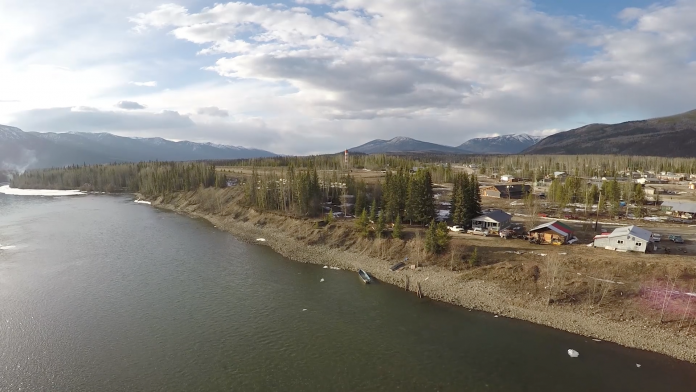
The Kwadacha community has been suffering the effects of the unapproved dam project for 50 years. Image courtesy of Lantern Films.

By: Alison Wick, Arts Editor

Kendra Strauss, director of SFU’s labour studies program, described the W.A.C. Bennett Dam as one of many contemporary resource projects where “wealth [is] generated through dispossession.” In her introduction for the screening of Kwadacha by the River, Strauss talks about the realities of resource exploitation projects — of who benefits without loss, and who loses without benefit.

Kwadacha by the River is a 20-minute documentary about the W.A.C. Bennett Dam project and its impacts on the Kwadacha nation and community. The dam was a massive energy engineering project in the 1960s in northern B.C. that involved damming and flooding the Peace River. The area affected is as large as France.

The screening was held at the Vancouver Public Library’s Central branch on Tuesday, June 18, and was put on by SFU’s labour studies program, department of sociology and anthropology, department of english, and the Faculty of Arts and Social Sciences. 

The event, Strauss continued, is a result of her and her colleagues participating in the Decolonizing Teaching: An Integrated Seminar Series and Grants Program. She says that the distribution and circulation of this film came up in post-seminar discussions as a concrete way for them to use their institutional privilege to create space for Indigenous Peoples and their experiences. The evening was comprised of some introductions, the screening, and a Q&A discussion about the film, the dam, and the many other resource exploitation projects like it.

The film mixes archival footage, personal interviews, animation, and images to tell the story of this dam, the flooding it created, and the damage it has caused. Opening with stories and images of how the river was before the flooding and its importance to the Kwadacha people, we come to understand the short timespan of this project and its destruction. This is very recent history. The river as it was before is living memory, as is the ignorance and ill intentions of BC Hydro.

When a river is flooded, a lake is not created — an area is flooded. The film shows how these are two very different environmental changes as the “lake” created by the flooding is unusable. The water is dangerous, full of debris, and so big that it actually changes the weather. The fish from the lake cannot be eaten and animals drown in it because it is too large and treacherous to cross.

Elders and community members also recount the lack of consultation and notice that was given to them concerning the project. Some people had to evacuate their campsites while others returned from trips to find their vehicles and houses underwater. The flooding buried traditional traplines, plants and medicines, grave sites, and more under metres of water that was never meant to be there.

“We never got nothing out of it, just suffering,” says one elder at the end of the film. 

“The lake, it changed a lot of lives and we’re still feeling it today,” says another. 

The film ends by showing the facts that, initially, BC Hydro promised that the community would receive free power from the project, but this promise has never been fulfilled. The community is today powered by a diesel generator, which they pay BC Hydro for.

The short film was actually funded by BC Hydro, Lantern Films co-founder and film director Dave Shortt informs us. BC Hydro was updating the dam’s visitors centre and approached the production company to create a film for the centre. Although the company was skeptical of the project, they ended up negotiating with the electricity company to make the film an equal collaboration between Lantern Films and the Kwadacha Nation. They even secured that the final words and decisions about the film would rest with the Kwadacha community, meaning BC Hydro had no creative control over the film. The short documentary could thus be a true reflection of the perspectives and experiences of the Kwadacha community.

The community was involved at the filmmaking level as well. During the Q&A, Shortt and community member Cathy Warren talk about how the film’s animated sequences were created by youth at a community high school during animation workshops. Mitchell McCook, the third speaker on the panel, who works for the Kwadacha Nation, also expressed the collaborative and community centred nature of the project. Rather than going into the community and extracting information, the production gave skills and power to the community.

In the discussion following the film, direct comparisons are drawn to projects like the Site C Dam. The conclusion is that these projects follow the same trajectory as the W.A.C. Bennett Dam: being approved and built without Indigenous consent or proper consultation, benefiting big corporations, and harming the Indigenous communities whose unceded territories these projects exploit and profit from.

The short film is an accessible, compelling, and vital piece of filmmaking that tells a story most British Columbians don’t know about but are deeply connected to. The evening itself was a timely discussion about how the Canadian government and resource companies have yet to truly learn and change from their past mistakes.

Kwadacha by the River will be available to take out from the SFU Library soon. You may find it in our W.A.C. Bennett Library stacks in July.

Board Briefs Thursday, June 27

0
RESLUS/ The Peak

By: Paul Choptuik, Coordinating News Editor

SFU Burnaby parking rate changes

At the latest Simon Fraser University Board of Governors meeting on June 27, Mike Cordoba, alumni order-in-council, spoke about changes in the SFU Burnaby campus’s parking rates that will come into effect July 1. 


Stating that these changes were in response to increases in the regional parking tax, Cordoba noted that it provided an opportunity to “rebalance current lot prices slightly,” to encourage more even usage across SFU’s parking lots.

Daily hourly rates will be increasing by $0.25, while the increase in daily max rates will vary. Monthly permit parking rates will also be increasing, with the notable exception of Residence West Lot, which will see a $9.88 reduction in the monthly rate. The exhaustive list of changes can be found online on SFU Parking and Sustainable Transportation’s website.

“It should be noted that SFU has not increased its permit parking rates since 2013 and the hourly rates have not increased since 2010, except for special increases in North Lot in 2018 to encourage parking in other lots,” Cordoba also stated.

New certificate programs announced

Christopher Lewis, order-in-council, reported that as per the recommendations made to the Board of Governors by SFU Senate during their meeting on May 21, three new program proposals were approved.

They are the Certificate in Creative Technologies in Digital Journalism within the Faculty of Communication, Art and Technology, the Certificate in International Studies in the School of International Studies within the Faculty of Arts and Social Sciences, and the Graduate Certificate in History in the department of history within the Faculty of Arts and Social Sciences. 

All programs will be effective Spring 2020.

SFU joins the International Sustainable Campus Network 

Martin Pochurko, vice-president of finance and administration, reported that SFU had joined the International Sustainable Campus Network (ISCN).

Pochurko noted that this involves a commitment to the ISCN’s charter, which can be found online. According to the ISCN, “signatories to the charter commit to follow and support five calls to action.”

These include “[embedding] sustainability in all aspects of the university” and  “[creating] an environment that cultivates resilient, empowered, caring and engaged students, staff, and faculty who will contribute to the health of people and places.”

SFU is the second Canadian university to join the network of over 90 universities worldwide, including Princeton, Harvard, and UBC, the last of which was the first Canadian university to join the network.

Lot 21 Approved

Porchuko also reported that Lot 21, a proposed housing project for mature students, had been approved. 

“We’re glad to see that moving forward, 90 units will be built in UniverCity,” stated Porchuko.

When complete, the project will target graduate students and students with families, a point that had been clarified by president Andrew Petter.

“One little correction: it says here ‘targeting grad students with children.’ In fact, it’s targeting graduate students and students with children.”


SFSS Board hears presentation on potential vaccine outreach services

0
Chris Ho/ The Peak

By: Paul Choptuik, Coordinating News Editor

Ajit Johal, a clinical instructor at UBC’s Faculty of Pharmaceutical Sciences and owner of immunize.io and TravelRx, gave a presentation to the SFSS Board of Directors on vaccines at the June 27 meeting. Johal has had previous experience working with Sylvia Ceacero, SFSS executive director, on advocating for vaccinations for seniors.

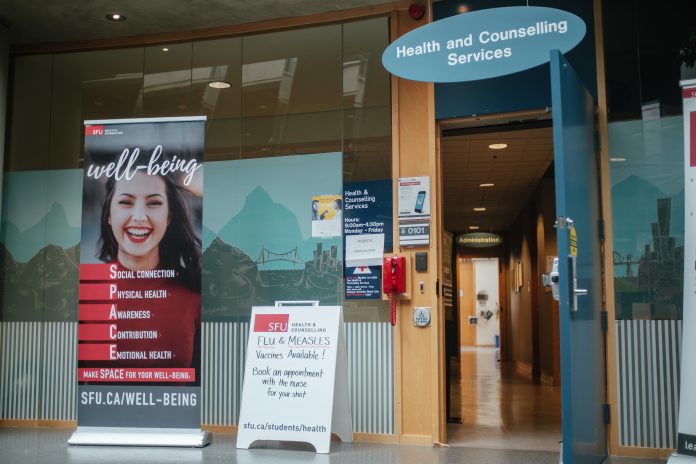
With the overall goal of raising awareness and potentially bringing mobile vaccination services to SFU, Johal detailed which preventable diseases university students may be at risk of contracting, which vaccines are publicly funded, and which ones are not.

Highlighting the resurgence of measles, the risk of meningitis on university campuses, and the risk of contracting diseases like hepatitis and traveler’s diarrhea abroad, Johal illustrated the particular dangers to students.

Noting the gaps that some students may have in their vaccination history, or a lack of records making it unclear, Johal pointed out that the SFU Student Drug Benefit Plan allows for $150 per year for vaccine coverage. 

“That’s coverage on the table that you could utilize to access protection for vaccine preventable diseases,” Johal added.

Johal also noted that, board willing, there could be opportunities for students, especially those in the health sciences, to collaborate on an awareness program or even help in a mobile clinic.

“Health sciences, it would be good to collaborate with them to design some educational material [ . . . ] we don’t want them giving people unsolicited medical advice, they could always shadow any of our healthcare professionals.

“They can certainly help people with intake forms.”

Concluding his presentation, Johal stated his desire to work with the SFSS in particular to create a “healthy campus.”

“We are looking to work with the [SFU] Student Society to provide education, awareness of these diseases, working to create onsite clinics, run programs, partner with health science students, partner with other disciplines in healthcare,” Johal elaborated.

After the presentation, the board asked a number of questions.

Nick Chubb, applied sciences representative, asked whether Johal would need money from the SFSS. Johal clarified that he was not looking for money, just support.

“It would be good to have health science students volunteering,” Johal reiterated.

“It’s not just pushing people to get vaccinated, we also want information too. So even if people just want to have a conversation, they want to ask questions, they have access to that too.”

Tawanda Chitapi, vice-president finance, asked Johal what the best way of raising awareness was in his experience, with Johal responding that he has found word of mouth to be the most effective.

“Students will talk to one another like, ‘Hey, I just got this vaccine, it was super easy. I just went to this place at this time,’ and that’s what happened with workplace staff. That’s how we drove up immunization rates.”

Christina Loutsik, vice-president student services, asked what resources could be distributed and about human papillomavirus (HPV), which had not talked about in the presentation. 

Johal thanked Loutsik for the question, telling board about the World Health Organization’s (WHO) campaign to end HPV causing cervical cancer. He added that the National Advisory Committee on Immunization wanted people, regardless of age, to be immunized.

“There is a catch-up program for those born in 1994 or later, those born before, it would be a private vaccine,” Johal added.

Shina Kaur, vice-president university relations, inquired about international students who may not have attended high school in Canada and received the same vaccines.

“International students, they get caught up on everything. What the health units do for them is they just immunize based on history, it’s a blank canvas and they update everything, unless they can produce records,” Johal responded.

Concluding the discussion, Ceacero suggested a small working group could be formed to explore this partnership.

“If the board is agreeable, Ajit and I will connect again, and involve Christina, and involve other board members who are in health sciences and we can have a little working group to figure out how to move ahead with this, I think it could be very beneficial to our students.”