Home Blog Page 311

Horoscopes January 17–21

0
An illustration of a girl with long flowing hair. Astrological signs and stars shine around her.
ILLUSTRATION: Marissa Ouyang / The Peak

By: Sara Brinkac, Cosmic mailman

ARIES: Sorry I haven’t gotten out of retrograde. I accidentally had caffeinated tea at 8:00 p.m. last night and my orbital schedule has been a nightmare. 

— Mercury


TAURUS: I get that you’re really into the phrase, “The early bird gets the worm,” but you are neither a bird nor early to anything. So why do you keep trying to eat worms?

— Earth


GEMINI: If you say anything bad about my dance recital last night I will lose it. I swear I’m not above telling everyone about that one time you farted in the Denny’s waiting area.

— Venus


CANCER: WOW. I can’t believe you actually fell for that lie your close friend told you two days ago. I had no idea you were such a complete sucker! Well it’s only going to cause you moderate to grave consequences so don’t worry too much.

— The Sun


LEO:  I know I said “never go to bed angry” but dude — you look terrible. Just spitballing here but maybe get some sleep and instead channel that anger into raising a suburban family.

— The Moon


VIRGO:  Your mom called and told me to tell you that you have to start calling me dad now.

— Jupiter


LIBRA: Sometimes it feels like you’re just one big joke to everyone and no one sees you for who you really are. I get that. I’m here if you ever need me to take that shit for you.

— Uranus


SCORPIO: Nothing is impossible if you believe in yourself. Even when people with a “doctoratesay you aren’t what you want to be and try crushing your dreams with “scientific criteria,”  keep believing, friend.

— Pluto


SAGITTARIUS: Do you ever feel forgotten just because you don’t have a funny name or controversial size? Yeah, me too. Just know that I see you and you’re beautiful. 

— Neptune


CAPRICORN: You should consider starting your own chocolate bar line. It’s an extremely lucrative business opportunity and great for personal branding!

— Mars


AQUARIUS: I watched you on Google: Street View last night! Your performance was so incredibly realistic! I especially liked when you “tripped” on that curb and made the child cry. Keep up the good work sweetie — here’s hoping for that Oscar!

xoxo

— Saturn


PISCES: You’re so wound up. Sometimes in life you just gotta float aimlessly for a bit. Who knows, maybe you’ll find a hot ball of rock gas and the two of you can spark a new life together.

— A passing asteroid

 

Top Ten Vancouver indie bands

0
A hand flicks through a collection of vinyl records
Local resident’s collection of Apricot Pit Vinyls.

By: Sara Brinkac, Humour Editor

  1. The Tiny Hat Trio

Hailing from Commercial Drive, this 2010–14 indie folk cover band is a staple of the Vancouver indie scene. While some critique the band for having no original songs, we believe their ability to add a unique Vancouver flavour (primarily through multi-coloured tiny hats) makes this band an easy Top Ten pick. Their cover of Mumford and Sons “Little Lion Man” reworked as “Little Mountain Man” will bring tears to your eyes.


  1. Colton and the Granola Boys

A new band to Vancouver, this ukulele foursome has taken the city’s vibes by storm. Colton and the Granola Boys can always be spotted playing in their trademark performance attire — Patagonia sweaters, rolled up pants, and bare feet. On behalf of The Peak and indie kids everywhere — keep living your truth boys.


  1. Disgruntled and attending a post-secondary institution (DAPI)

With a list of accolades as long as their name, this band’s timeless music speaks to the souls of twentysomethings across Vancouver. Classics of DAPI include “The administration at my school sucks,” “Fuck UBC,” and “Asking for my 19th extension.” For three years in a row, they have been voted Vancouver’s “best music to procrastinate to” and boy could I tell you more about that.


  1. The Knit Sweater Cruisers

Rolling up to (and then playing) every gig on their cruiser boards, this band will have you going with the flow all night long. Their knit sweater coziness and laid-back attitude combine for a great fall beach sound. As an added bonus, the band has recently released a line of matching knit sweaters and snapbacks that have quickly become a Vancouver fashion trend.


  1. Housing Crisis

Members of this indie punk band are paying $1,100 a month to live with five other people and they are not happy about it. Their melodic lead guitar paired with monotone vocals make songs like “Pet fees should be illegal” a favourite of angsty listeners everywhere.


  1. Apricot Pit

Much to the band’s chagrin, most people assume this is a Peach Pit cover band. But what makes this band such an indie icon is that only true underground fans will know that Peach Pit actually began as an Apricot Pit cover band. What unfortunately has stood in their way of public fame — but once again has strengthened their credibility on the indie scene — is the band’s insistence that their music only be released on vinyl.  Apricot Pit contracts also stipulate their music may only be sold in record stores with a minimum of two judgmental clerks working at a time.  


  1. The Kits Cats

When they’re not at Kits beach playing volleyball, these cats can be found skating down Granville Street or at their famous home dance parties. A truly unique beach, skateboard, party sound, this band’s vision is most potent on their 2019 album Ollie and Molly.


  1. Locally Sourced

Energized by only the most ethical and fresh food, wearing the most original and friend-made clothing, Locally Sourced is the epitome of Vancouver indie bands. Unlike most bands each member has their own unique style and vibe, making for an extremely disjointed band visually. But two things unite them as a powerhouse musically: veganism and astrology.  


  1. Home Brew

The most stylish band in Vancouver, Home Brew makes it a policy to only be seen with ethically sourced cotton clothing, long coats, Doc Martens and, of course, holding a mason jar of home brewed coffee. Personal favourites of the band are “Sipping on that Grouse Grind” and “Bean talking with my neighbour.”


  1. Kasey and the Thrifters

With thrifted outfits and instruments alike this experimental folk funk band is a leading voice in the Value Village scene. Their newest single “I lost my baby driving downtown” has topped vegan café charts for three weeks and is a leading song recommendation amongst people who want to show off their music taste.   

DRgTmba Sidioh asdFlkpsss

0
A good boy and a good writer. PHOTO: Jamie Street / Unsplash

By: Toby, dog

Kasdj aadskj  aska asfdknana dklang  iuasne  adkja dfkla   ksdfnmx nmzdjkdfjksmn mmxckj jkfsdjdfnmadjkjkvxhenasnmdvjk jk jkfsanaesmnshkjxzn,xz,.xc ./czklasz m zhjcasdhjacs nmzxjhkasdnsdjkh czmn,mxm,cjkcasuiaencbz jklzcad zmz  .ca,.zlx/c ‘;vz/V\zzc,jkzcncentyscadffffffffffffffffffffffffffffffffffffffffffffs akjaklsfdjhfasgdhgssxklkrgtrfiof

Comics

0
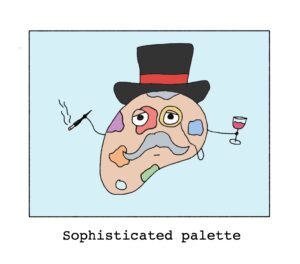
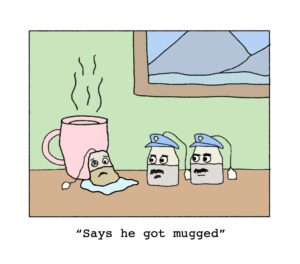
ILLUSTRATION: Sara Brinkac / The Peak

By: Sara Brinkac, Humour Editor

SFU majors take on society’s minors

0
A woman looks off into the distance inquisitively.
Students produce juicy opinions.

By: Charlene Aviles, Staff Writer

After The Peak staff had an aggressive debate regarding pineapple on pizza, we sent a reporter to investigate the topic. They approached several students at SFU Surrey’s Mezzanine. We hope with these interviews The Peak will settle this age old debate — and protect the sanctity of our pizza parties — once and for all.

Does pineapple belong on pizza?

Criminology:

If I remember correctly, somewhere in section four of the Canadian Criminal Code, it states pineapple on pizza is technically a criminal offense. The minimum punishment for this crime is making another pizza from scratch. Now, whether pineapple belongs on pizza is a whole other question. Pineapple has the right to legal representation and a fair trial just as much as any other pizza topping. But if you ask me, the current state of pineapple pizza reform is abysmal. People just pick pineapples off as if they mean nothing and don’t give them a fighting chance to lead a fruitful life. Progressive change needs to take place in the current group order/sharing system.


Computer Science:

1


English:

Of course it doesn’t belong on physical pizza. People rarely appreciate the artistic merit of pizza restaurant menus anymore. Pineapple on pizza was meant to be an allegory for the disjointed flavours of society and the polarization that is occuring in our modern world. Pineapple represents the sweetened innocence of youth and the optimistic desire for change. This juxtaposed against the aged and melting cheese of older, traditional generations is fascinating. It forces us to question whether these two flavours can find harmonious balance or if we are doomed to a society of constant opposition. It’s actually quite riveting stuff! 


Business:

Yes, as long as it’s not fresh, imported pineapple that absolutely destroys your cost-benefit ratio — and not in a good way, dude. Also, if a customer wants pineapple on their pizza, they’ll have to pay an extra $5 per order. Life is all about maximizing production efficiency and minimizing consumer surplus, bro. Go big or go home!


Visual Art:

Yellow on yellow? That’s appalling. You would need to complement the pizza with purples. An intermediate colour wheel could work too I guess — if you’re feeling adventurous. But you’d need to add blues, greens, and oranges to the pizza. Hmmm, yea. That would actually make for a really nice pizza scheme. A pineapple, grape, blueberry, celery, pumpkin pizza — beautiful!


Kinesiology:

Pineapple absolutely belongs on pizza! Eating natural sugars can help you maintain a balanced and healthy diet. But it’s not enough to have plain pineapple! We need to take it up a notch by sprinkling protein powder on top of the pineapples. This way, we can have a cheeky little cheat day with pizza but still work towards that New Year’s resolution goal! 


Math:

I don’t know.*

*When approached by our reporter, the math major seemed to be in a state of extreme stress and confusion. A state which quickly descended into intermittent mutterings about Ramsey’s Theorem, imaginary units, and complex numbers. When asked their opinion on whether pineapple belongs on pizza, the student began repeating the words “I don’t know.” Staff at The Peak are unsure if this answer was related to the pineapple on pizza debate or their homework. 


Philosophy:

Does anything really belong? Personally, I subscribe to the Cartesian a posteriori tradition — if I can imagine pineapple on pizza, then pineapple on pizza necessarily exists and therefore must belong on pizza. But what is a pizza when you think about it? Maybe we shouldn’t be concerning ourselves with the trivial details of life like pizza and instead work to understand the root of the debate — “What is?” How could you be sure that’s even a pizza?

David Penney looks forward to the new year

0
Close up shot of David Penney passing the ball off while being tightly defended.
David Penney passes the ball to a teammate versus Western Washington for one of his eight season-high assists. Michael Potash / Western Washington Athletics

By: Charlene Aviles, Staff Writer

Name: David Penney

Pronouns: He/him

Major: Health Science, third year

Position: Point guard, #3

Favourite basketball player: Myles Powell

David Penney is a sophomore on the SFU men’s basketball team. In 2016–17, he became a National Preparatory Association (NPA) All-Star and his team placed second in the NPA Championship. In an interview with The Peak, Penney reflected on his growth as an athlete.

His transition from tennis to basketball was the first step in paving the way for his basketball career at SFU. At seven years old, he caught people’s attention by dribbling his tennis balls. Soon thereafter, he was invited to a basketball camp, where his love for basketball began.

Recognizing SFU’s academic and National Collegiate Athletic Association opportunities, Penney chose to sign in 2019. After moving from Guelph, Ontario, he fell in love with BC’s beautiful nature.

As part of his game-day routine, Penney listens to Drake’s Do Not Disturb during the pregame shoot. He explained calming lyrics motivate him before a match. 

“My biggest pregame ritual that’s a staple in my life right now is [running] out to the court. And before I run out, Ill [ . . . ] splash water on my face, pick myself up, and I’ll take a snack, like grapes.”

On his performance this season, Penney noted the games against UBC and Western Washington University (WWU) stood out the most. At the SFU Showdown game against UBC on November 20, 2021, SFU won the Buchanan Cup by a score of 82–90. In the match against WWU, Penney scored 15 points.

This season he hopes “to win a conference championship.” In addition to his goals of improving his leadership skills and the team’s chemistry, he also strives to be a well-rounded student.

“It’s more about what you do outside of class and practice time. Are you willing to put in extra hours to become a better basketball player and a better student?” said Penney.

According to Penney, stellar basketball players go above and beyond by being selfless and prioritizing teamwork. “Somebody who’s selfless is somebody who creates their own shots, creates shots for other people and does things for the team.” 

He attributed his success as an athlete to “being able to build a strong support group.” Penney credits head coach Steve Hanson and the assistant coaches with pushing him to improve his communication skills as a leader by being more vocal. 

“I think guys trust me a lot more now that Im playing. Im playing more and Im more comfortable talking to them. And I think that theyve made me just a more patient and kind person, which has made me a better basketball player.”

If he had any advice for his younger self, it would be, “Not to be so hard on yourself. When things aren’t going right, that just means you got to keep pushing harder and never get down on yourself. And trust that if you work hard, good things will happen.”

Penney writes his motto “faith over fear” on his basketball jersey and shoes to motivate himself. He explained his faith in God inspires him to continue working towards his goals.

“If I believe in God, I believe God is there to help me, then I have no fear because I fear nothing but God. So everything in front of me will be handled by myself and God,” said Penney.

He added, “I shouldn’t be afraid of failing because I know I’ve done the work to succeed.”

Penney is most looking forward to the team’s home games against Seattle Pacific University (January 22, 2022, at 7:00 p.m.) and WWU (February 26, 2022, at 7:30 p.m.).

You can watch Penney play at his upcoming home game against Montana State University Billings on January 20, 2022, at 7:00 p.m. Students can claim their free tickets by presenting their student ID.

The “nice Canadian” stereotype distracts from our colonial shame

0
The Canadian flag waves in front of a clear blue sky. The top of a Canadian Parliament building spears the sky in the background.
The Canadian Parliament is built on unceded land. PHOTO: Jason Hafso, Unsplash

By: Kitty Cheung, Assistant Production Editor

Content warning: mentions of Indigenous genocide 

I say this as a Canadian — one with maple syrup flowing through my veins and icicles hanging off my Timbit-loving ass — we are morally vile. The “nice Canadian” is a misleading stereotype that erases and diminishes our shameful reality of colonization. “Our country” was built on the genocide of Indigenous peoples, a foundation which is nothing short of insidious, cruel, and villainous.

Sure, Metro Vancouverites may politely holler thank you’s to bus drivers and tag our land acknowledgements, but there are still entire Indigenous communities without clean drinking water. Access to clean water is a basic human need and a fundamental human right. Our dear democratically-elected government isn’t even trying to get this right. 

The fallacy of the “nice Canadian” puts us on an undeserved pedestal. Migrants from outside of Canada flock to this supposed promised land, many unaware of the nefarious history that made this land “free.” I recognize I am extremely lucky to be here and have access to the freedoms and privileges that I do. But it’s a manifestation of my gratitude that I practice my freedom of expression and criticize Canada’s failures. 

When the mass grave of 215 Indigenous children was found at a Kamloops residential school in 2021, it opened a global conversation around Canada’s shameful history. News headlines began circulating, presenting the discovery as shocking. The stories framed this event as the beginning of a national reckoning. For some, perhaps it was a beginning — however, these realizations of systemic racism should have come a long time ago. The Truth and Reconcilliation Committee released 94 calls to action in 2015, yet many remain uncompleted. Why did the dialogue around the discovery note this as some kind of revelation? This implies these deaths were a surprise, when many Indigenous survivors were already painfully aware of the truth. 

I presume part of this shock comes from the fact that we’ve convinced ourselves we’re so nice, so polite, and oh-so-progressive. When you live with this stereotype as part of your national identity, it’s easier to ignore the colonial horrors that are still ongoing today. 

To challenge this stereotype, we need to learn our history and keep a focus on our actions (or lack thereof). Don’t stop at residential schools and water rights. These problems are mere parts of a wide and repulsive colonial project. 

Other evidence can be found in the near-extinction of bison in 1800s North America. These animals were mass-hunted and left to rot in an attempt to starve out Indigenous peoples of the Plains and coerce them into signing treaties. The Sixties Scoopextending from 1960 well into the 1980s — was responsible for thousands of Indigenous children being “scooped” up by social workers without warning or their families consent and adopted into Euro-Canadian households. Many of these children faced abuse and the erasure of their cultural identities. To this day, there’s still a gross overrepresentation of Indigenous children in the BC foster care system. Alongside these cruel stories are plenty more of Indigenous strength and excellence, but this is an article pointing out Canada’s colonial shame — I’ll leave you to do your own research. 

If you live on this land and proudly claim to be a “nice” Canadian, question whether this country deserves your pride. Know that loving Canada means realizing and defying its deeply rooted flaws. Know that we must criticize ourselves as a nation instead of hiding behind a stereotype. How else will we grow?

Impacts of biowearables on children

0
Illustration of a young child looking at their own biowearable, the biowearable is emitting a glow on the child’s face.
Biowearables’ feedback on the physical body can have psychological effects on children. ILLUSTRATION: Nazmus Sakib / The Peak

By: Kelly Chia, Staff Writer

Researchers at SFU’s Tangible Embodied Child-Computer Interaction Lab (TECI) are concerned with the ethical effects of biowearables on children. Biowearables refer to apps or wearable devices that track data from the body, such as Fitbit watches. TECI researchers are strongly urging parents to have conversations with their children about using this technology.

The Peak spoke to postdoctoral researcher Dr. Alexandra Kitson, who works in the TECI lab alongside Dr. Alissa Antle

While there is significant research on data privacy with technology like biowearables, Kitson noted a gap in the research surrounding how they made people feel. Biowearables provide feedback on their users’ physiological states, a process TECI worries would affect growing children psychologically.

Kitson is concerned that children will treat the biowearables’ feedback as an authority on their health. She explains biowearables were not initially made for children. “It was really meant for elite athletes trying to push their performance, so it is very performance centric.

“So for kids, that could be quite dangerous because they’re getting wrapped up in all these numbers which don’t even make sense for them because all the numbers are based on adults. I think designers should be thinking about children and not using adults’ metrics for data. And also being transparent in the kind of things that these wearables can or can’t do.”

Recognizing that these devices will only become more popular, TECI is working on ways to give children tools to grow their agency when using these devices. Kitson held a maker’s workshop online where children would develop a breathing sensor with parts TECI shipped to them. As they created these devices, Kitson asked the children to reflect on what their sensors were doing. In these workshops, Kitson observed how technology can affect children’s judgement, such as the presence of red lights meaning the light is “bad,” and green lights meaning it is “good.”

“If kids are actually engaged with the making of these things and think more critically about the kinds of decisions that go into making them in the first place, [they realize] there’s not some all-knowing designer,” Kitson said. “Even when we have the best intentions, there are some unintended consequences with these technologies.”

TECI published conversation starters on their website for parents to use to talk to their children about biowearable devices. The questions centre around how these devices could be addictive and how they make them feel. Kitson also pointed to the biotech design cards on the website to help parents learn more about how these technologies work and how they can continue the discussion with their children.

Kitson directs people to think more critically about how biowearables may affect children’s growing identities and to have conversations with them about how these devices can help or impact the ways they think about themselves. “We need to give children more tools to help navigate that space and to recognize when our inherent assumptions are embedded in the designs of these biowearables,” Kitson said.

To find out more about future maker workshops and read about TECI’s research on biowearables, visit their website.

Need to Know, Need to Go: Jan 17–23

0
Illustration of a blue calendar, with "Need to Know, Need to Go" written on top
Arts & Culture events to catch around the city. Image courtesy of Brianna Quan

By: Gurleen Aujla, Peak Associate

Vancouver Outsider Arts Festival | Runs until February 16 | FREE | PoMoArts | Online and in-person

The Community Arts Council of Vancouver presents the Outsider Arts Festival as a touring exhibition. The purpose of the festival is to spark conversation around “who and what counts in the art world.” Self-identified “Outsider Artists” often face social exclusion and other barriers to the mainstream art world. Participating artists will showcase pieces that challenge stereotypes and tackle pressing social issues, such as restorative justice. The exhibit can be viewed in-person at the Port Moody Arts Centre or online at PoMoArts.ca. 


Lunch Poems: Molly Cross-Blanchard & Hasan Namir | January 19, 12:00 p.m.–1:00 p.m. | FREE | Online

Held on the third Wednesday of every month, this edition of Lunch Poems features Molly Cross-Blanchard, a white and Métis writer and editor, and Hasan Namir, an Iraqi-Canadian author. New and returning participants will engage in a celebration of our local poetry scene. Remember to bring your “curiosity, open mind, and love of words.” Participants must register in advance through Eventbrite


Is Capitalism Working for Us? | January 20, 12:00 p.m.–1:00 p.m. | FREE | Online

The Vancouver Public Library (VPL) and PuSh Festival are hosting an art installation titled Capitalism Works For Me! True/False. Artist Steve Lambert crafted an interactive billboard where people “vote on capitalism in its relation to their own lives.” To mark the project’s launch, VPL is hosting an online conversation on questions such as “are perceptions of capitalism changing?” and “who does this system benefit or leave behind?” Panelists include Steve Lambert, organizing expert Alejandra Bravo, and legal scholar Joel Bakan, with CBC journalist Anita Bathe as moderator. Register on the VPL website.

Urban Studies co-operatives advocate for inclusive social sustainability

0
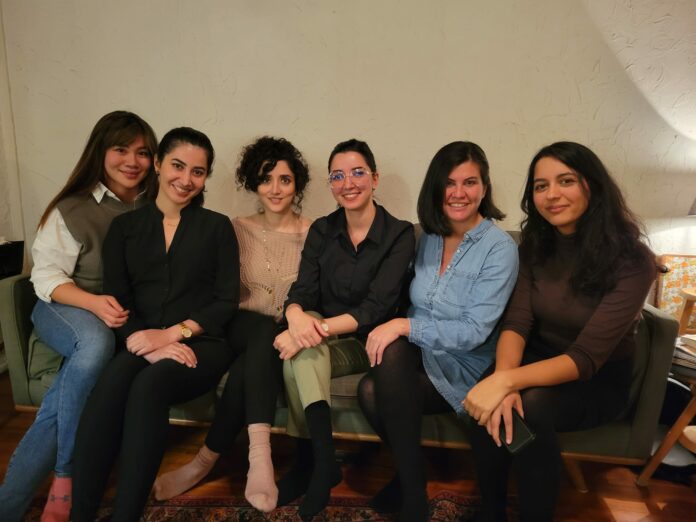
Six women sitting next to each other on a couch
The founders of City in Colour and Citopia, from left to right: Dionne Co, Ghazaleh Akbarnejad, Rahil Adeli, Farina Fassihi, Fiorella Pinillos, and Aman Chandi. Photo courtesy of City in Colour and Citopia

By: Yelin Gemma Lee, News Writer

Six migrant women of colour from SFU’s Masters of Urban Studies program founded City in Colour (CiC) and Citopia, two sister co-operatives tackling barriers for socially sustainable urban planning. The Peak spoke to members of CiC and Citopia to find out more about their ongoing work.

Rahil Adeli, co-founder of CiC and Citopia, discussed the exclusion of marginalized communities and the impact from lack of diverse opinions in urban planning. “City in Colour aims at engaging communities that are often not engaged.”

When talking about the motivations for founding these co-operatives, the members mentioned being informed and impassioned by their personal experiences within their own racialized communities.

“We saw our perspectives missing in how our cities are shaped and wanted to create a place where we felt inspired and supported to create cities where we felt belonging,” said Aman Chandi, co-founder of CiC. “We want to empower communities so that they feel that they are able to shape their cities and not find city planning a daunting exercise!”

According to the founding members, the two sister urban consultancy co-operatives are separated due to differences in focus areas and the large scale of their collective mission. 

“City in Colour is focused on developing community-led planning solutions to create more equitable cities and Citopia is focused on data-driven strategic planning in addition to participatory planning and community engagement and design,” explained Chandi. 

In November 2020, CiC formally began operations under Solid State Community Industries. According to their website, this network of co-operatives based in Surrey, BC aims to “address the economic immobilities of racialized migrant youth.” 

Although they operate separately, they share many mutual interests and frequently work together. CiC and Citopia are currently collaborating on Towards a Feminist City of Surrey, a project funded by the Federal government’s Feminist Recovery Grant. This three-year project supports Surrey’s public institutions including SFU Surrey “in their efforts to hire, retain, and support racialized women in the workforce.

“The collaboration between City in Colour and Citopia allows us to draw on each other’s strengths and networks while at the same time allowing each co-operative the freedom to pursue each of our own mission and vision,” said Dionne Co, co-founder of CiC.

Ghazaleh Akbarnejad, co-founder of CiC and Citopia said the two co-operatives will continue to work closely together to achieve their mutual goals including “system change initiatives and engaging underrepresented communities for positive impacts.” 

Akbarnejad explained CiC will continue to center inclusive community forward engagement in their work using creative methods like workshops to achieve their goal of spatial equity. Citopia plans on using data-driven community engagement towards its vision of socially sustainable urban systems in areas such as housing, transportation, and economic development.

“Our dream is to live and work in cities and workplaces that acknowledge the existing race and gender-based discrimination and attempt to be inclusive and thriving for all community members including BIPOC,” said Adeli. 

To find out more about City in Colour and Citopia, check out their website and one of their recent video projects for community engagement, 2020 in 3 words.