Home Blog Page 297

You can’t pour from an empty cup

0
It’s impossible to say yes to everything and have time to look after yourself. PHOTO: Annie Spratt / Unsplash

By: Maya Beninteso, Peak Associate

I had a friend — let’s call her Willow. This friendship progressed to the point where we confided in each other regarding difficult topics — like any other close friend. But, over time, I became less of a friend and morphed into her (100% unlicensed) therapist. Of course, I wanted to support her, but not to the extent she expected. I tried to rationalize my therapist-esque role in her life by telling myself she needed my support. But, there is a fine line between being supportive and full-on therapy sessions — that line is called a healthy boundary. 

The day I realized this friendship did not possess healthy boundaries also happened to be one of the most significant days of my life. Without going into too much detail, this was a day I needed Willow’s support the most. I went to her house and she, knowing I had just experienced a hard day, didn’t ask me how everything went and decided to use me for another “therapy session.” I tried telling her I was in no position to support her but she started venting anyway. When I reiterated that my mental state was pretty poor she instantly got aggressive and said I was being a bad friend. 

This is where I should have reasserted my boundary. Instead, I internalized her words and genuinely believed I was not living up to my mandate as her friend. Was I a bad friend? How could I have navigated the situation differently to make her feel more supported? My rumination was interrupted by a text apology from Willow and, without hesitation, I forgave her. 

I have since learned that apologies without change are manipulation, something I wish I knew before the following incident.

A few months later, I went over to her house again one evening. My mother and I have a ritual of watching reality TV shows together and I eventually decided to leave to do just that. As I got up to leave, Willow told me I couldn’t. I thought she was kidding and I laughed, but her face remained serious and I realized she wasn’t kidding. She physically blocked me from leaving her living room and it took me a solid 10 minutes to convince her to let me go. Then, like a mature adult, she proceeded to steal my shoes. 

After yet another five minutes, she gave me my shoes back. That meant that I could leave, right? Wrong. Willow stood in front of her front door, physically blocked me from leaving, and asked, “Are you not going to hug me before leaving?” For context, Willow and I never had a friendship that included physical touch and she knew I wasn’t comfortable with it. I said no and I had to ever-so-lightly slide her over to leave through her front door. 

I sprinted to my car, promptly left, and I never returned. 

During my reflective drive home, I had tears streamed down my face. I realized I was not valuing and asserting my own boundaries and had let Willow walk all over me, resulting in a toxic friendship. In the weeks following that experience, I struggled with asserting the final boundary of ending my friendship with her. After weeks of dry-texting Willow, and failing to respond enthusiastically, I finally conjured up the courage to send a lengthy text detailing how I felt. I expressed a lack of interest in continuing the friendship, especially considering the numerous incidents that appeared to escalate in nature. It was difficult, but I finally communicated this boundary and have consistently held it for the past year and a half. I do still see Willow occasionally, but I have remained firm on my decision to end the friendship.

I allowed Willow to drain me when I already felt empty. In hindsight, I should’ve heeded the warning that a former colleague and friend used to tell me. She would say, “You can’t pour from an empty cup.” I would shrug it off as if my cup wasn’t experiencing a full-on drought due to my lack of boundaries. I just never knew a person who I considered a close friend would be the one to stretch me paper-thin. 

Shortly after resolving my situation (and attending numerous therapy sessions), I had an epiphany. I was always checking in with others, but I never had the self-compassion to check in with the most permanent person in my life: me.

I started journaling as an opportunity to check in with myself and I started communicating my boundaries to loved ones. You cannot expect others to read your mind — you need to take charge of your boundaries and communicate your needs. I found this to be quite challenging but, nonetheless, I needed to take care of myself first. 

If you need to cancel plans with a friend because you need the day to yourself, that’s completely valid. Just try your best not to do this last minute. Take the time to regroup and rest. This will likely feel daunting — I know it did for me — but what’s the harm in placing boundaries? If someone doesn’t respect the boundaries you place, then they are not someone you want to be associated with. You deserve to have your boundaries honoured. I didn’t lose Willow. I let her go.

While my experiences were difficult, they further provided me with perspective and a sense of empathy. Before venting to my friends, I always ask if they are in a good, safe mental state to be on the listening end of a rant. And, at the end of my rants, I always end on some sort of positive note. 

And, on that note. . .

My dear readers, here’s to setting healthy boundaries and filling our cups.

Eternity Martis is SFU’s 2022 Non-Fiction Writer in Residence

0
exterior of W.A.C. Bennett library
The event featured readings from both speakers’ books and their insight on non-fiction and activism. PHOTO: Gudrun Wai-Gunnarsson / The Peak

By: Gurleen Aujla, Peak Associate

On January 20, 2022, the SFU Library and SFU Public Square hosted a virtual reading and Q&A event with award-winning authors and journalists, Eternity Martis and Kamal Al-Solaylee, to launch the non-fiction Writer-In-Residence program. 

The program began last year and aims to celebrate and emphasize “the power of non-fiction writing to share knowledge beyond academia.” 

The event began with Martis and Al-Solaylee doing short readings from their books. “Writing in itself is radical resistance,” Martis said. “It is a triumph. People can try to stop you from speaking your truth but no one can take your words away from you.”

When asked about navigating vulnerability when sharing your own story, Martis said, “Writing about yourself is really scary because you’re putting your heart, soul, your tears [into it].” She added, “Putting that into your book and living in the world that we live in where people can tear it apart so easily, that scared me a lot.” 

Martis connects non-fiction writing to different resistance movements and its importance in enacting change. 

“If we think about slavery, if we think about Jim Crow, if we think about residential schools, that has come from a lot of non-fiction,” Martis explained. She added the importance of non-fiction stems from documentation of these events so that we don’t replicate them. “I think it plays a massive role in resistance movements,” she added. “We get people reading, consuming, and then being so outraged, so touched, or so anything that they go out and act.” 

She recalled being told in her early writing days, “You don’t know whose hands your work is going to end up in.” Her work has been read in institutions and by police forces, lawyers, politicians, and decision-makers. “They get to make that change. The change comes from everywhere and resistance starts with words.”

When writing her memoir, Martis combined sharing her personal experiences with statistics on the commonality of issues surrounding race, gender, and gender-based violence on university campuses. 

Martis questioned how she could make the issue so visible that people could not look away. She said writing about her lived experiences as a Black student at Western University navigating predominately white spaces was a tool to show that such systemic issues are not isolated, but are very common. 

“When we look at the political [and cultural] climate that you’re in today, personal writing and sharing our stories has never been more important.”

Al-Solaylee added non-fiction writing is a bridge between fiction and journalism. Its writers bring in fictional elements, such as scene-setting and storytelling, and journalistic style.

This year’s Non-Fiction Writer-in-Residence program will feature a series of workshops on topics including non-fiction book proposals, memoir and personal essay writing, and how to write about trauma.

Martis’ work has been featured in The Huffington Post, CBC, and Maclean’s, among others. Her best-selling debut memoir, They Said This Would Be Fun: Race, Campus Life, and Growing Up, describes “what it’s like to be a student of colour on a predominantly white campus.” 

Al-Solaylee is the director of the UBC School of Journalism, Writing, and Media. He authored the best-selling memoir, Intolerable: A Memoir of Extremes, and is a two-time finalist for the National Magazine Awards. 

For more information on the non-fiction Writer-In-Residence program and the event recording, visit the SFU Library’s website.

Dr. June Francis speaks on anti-Black racism in Canadian schools and universities

0
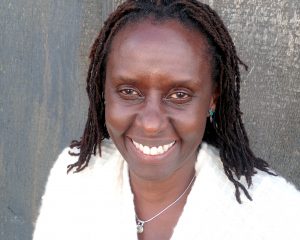
portrait of Dr. June Francis
PHOTO: Waltraud Greif

By: Yelin Gemma Lee, News Writer

BC Black History Awareness Society hosted Dr. June Francis, associate professor at the Beedie School of Business, for their Black History Month opening event. Her lecture, “History of Anti-Black Racism in Schools and Universities,” focused on historical and current case-study examples of institutional anti-Black racism in Canadian education. 

“We were intentionally erased from the history of this country in the same way that we have been erased from the history of the world in many areas because it was an intentional part of the colonial strategy,” said Francis. “From the time that we were liberated and before, we know slaves fought for the right to be educated. So this fight is not a new one, but it continues.”

Francis explained how the myth of white superiority shaped colonial education logic. She said the narrative of an advanced and enlightened Europe was made possible by ideologies of white superiority by scholars such as Voltaire and David Hume.  

“Anti-Black and anti-Indigenous racism were intentionally there to support colonization. It was there to promote ideologies to dispossess Indigenous communities globally [ . . . ] and to justify Black subjugation and slavery,” said Francis. 

She emphasized Canadian curriculum at all levels of education needs to stop teaching Black inferiority, which is “not only done by exclusion, by who tells the story, but by how we tell a story.” Francis explained she was not taught the historical significance of Black success. “When I grew up, I thought William Wilberforce was who ended slavery. That was the narrative I was taught,” she said. Francis explained she later learned about Sam Sharpe, who “led one of the major slave rebellions globally.” 

She called for stories of Black heroes, resistance, and excellence to be embedded into education. “When I look at these beautiful young children seeing [Sharpe] as their hero, it just makes my heart glow.” 

Francis also noted key names who are a part of Canadian history such as Leonard Braithwaite, Canada’s first Black member of provincial parliament who moved the motion to end segregated schools in Ontario. 

She reminded the audience that the last segregated schools in Nova Scotia closed in 1983, only 39 years ago, and still exists today in the form of de facto segregation. She explained de facto segregation takes place when there is a high concentration of white and wealthy students in certain areas. Francis called for an examination of what these schools teach such as offering ballet versus African dance.

Francis also noted contemporary news stories of racism experienced and condoned in schools. She cited the fight to have the Cecil Rhodes sign removed from a Vancouver elementary school yard and said, “What’s missing behind these stories is the work and advocacy that still primarily rests on the backs of the Black community.” Cecil Rhodes was a 19th century politician and businessman in Southern Africa whose white supremacist beliefs and policies gave him the title “architect of apartheid.” 

She brought to attention the field of marketing and its history of racism in the form of advertisements that promote racism to a mass audience. 

“I entered a field of marketing and realized my own education did not address the ways in which advertising promoted racism as part of the foundation of the very discipline I was a part of,” said Francis. “I collected this work myself because I wanted my students to understand that when you see racism in advertising, it’s because it was foundational to its intellectual origin.”

Francis said the Scarborough Charter is a source of hope and opportunity as “it calls on universities and colleges to commit to promoting intersectional Black flourishing.” Some of the commitments include collecting “race disaggregated data,” supporting Black research, Black representation across all university levels including senior administration positions, and support for Black caucuses and student organizations. On November 21, 2021, SFU signed onto this Charter.

“We need to go up a steep hill because we have a long way to go and a short time to get there. Let’s make this as steep an incline as we can. We must go on and build on the work and remember the work that has been going on for decades in this province,” said Francis.

The recording of this event can be viewed on the BC Black History Awareness Society’s Youtube. For more information and upcoming events by BC Black History Awareness Society, visit their website.

Joy Johnson discusses rapid testing availability on February Senate meeting

0
AQ building and pond with people in background
PHOTO: Allyson Klassen / The Peak

By: Yelin Gemma Lee, News Writer

President Joy Johnson announces SFU will be receiving shipments of rapid tests

SFU president Joy Johnson emphasized SFU values community perspectives and is working closely with public health to ensure a safe return to campus. In response to concerns of rising cases on campus and poor communication, Johnson said although there have been positive cases on campus, they “have not heard any reports about large clusters of infections.”

Johnson reported SFU will soon have limited access to rapid tests. Due to the current limited supply, they will be following public health guidance which means these tests will only be given to symptomatic individuals. 

“Based on the guidance from the BC Centre for Disease Control, we’re going to be allocating the first shipment of rapid tests to priority groups. These groups are students living in residence and housing, Indigenous students, and faculty and staff working in-person on our campuses including front-line food service, janitorial, and security contractors,” said Johnson.  

Johnson said as more shipments of rapid tests arrive, they will be looking into wider distribution and access. 


Senate discuss concerns about course deadline extension

Former SFSS president Gabe Liosis said UBC Vancouver Senate had recently approved an extension of course drop deadlines “to extend a compassionate and flexible approach to students during the unusual start to the Spring semester.” 

According to Liosis, the Senate committee of undergraduate studies (SCUS) had discussions of implementing similar measures but ultimately decided against it. 

Liosis asked for a “thorough overview” of the committee’s argument for and against the measure, and the committee’s reason for not implementing these measures.   

Elizabeth Elle, vice-provost and associate vice-president learning and teaching responded. Elle said the question of whether or not to extend course drop deadlines was mainly due to the concerns of students not knowing what to expect of their courses within the first two weeks of online learning. 

“Course expectations, the assessment mode, the content, and even information about the instructor would have been clear during the first two weeks of term,” said Elle. “The student members of SCUS helped the committee understand that a major concern they were hearing from other students was the uncertainty regarding how the term would unfold.” 

Elle said to address this uncertainty, SFU sent out an announcement on January 11 of a definite return to campus on January 24. The in-person return to campus was met with resistance from students, staff, and faculty. A walkout took place on the first day of in-person classes, and multiple petitions and student groups called for remote options for the Spring semester.

She explained another reason to keep the current course drop deadlines was an issue of fairness for many students being put on waitlists for courses — keeping the current deadline would allow these students to add themselves to classes should others drop the course within the start of the semester. 


Senate approve motion for Master of Science in Professional Cyber Security  

Vice-president academic and provost Catherine Dauvergne moved the motion for Senate to recommend the proposal for Master of Science in Professional Cyber Security in the School of Computing Science to the Board of Governors for approval. Senator Eugene Fiume seconded the motion.

Senator Colin Percival raised his concerns on the motion.

“Although I think this is a wonderful program, I am slightly concerned by the fact that it seems to be taught entirely by people on the academic and theoretical side of the field,” said Percival. “I think it would be very advantageous to the students going through this program if they had some contact with people actually working out there in the field.”

School of Computing Science professor Uwe Glässer clarified the program is training and application-oriented, featuring two six-credit lab courses in collaboration with industry partners. 

The motion was passed and the program is expected to take effect in Spring 2023 or later.

Monday Music: Slow jams to groove to while sipping your morning coffee

0
"Monday Music" in giant yellow block letters with a red background
Monday Music: your weekly themed playlist. Image courtesy of The Peak.

By: Makena Leyh, SFU Student

Whether it’s a doubleshot blonde shaken espresso from my favourite local café or the watered-down dark roast my partner brewed two hours ago, coffee is a necessary part of my wake up routine. However you get your daily dose of caffeine, why not sit back and savour your morning pick-me-up? Enjoy the start of your day with this sweet playlist of easy listening tunes.

“Ugotme” by Omar Apollo

Image courtesy of Omar Apollo

This song is short but sweet, similar to an espresso con panna. Apollo packs a healthy serving of bluesy guitar riffs and silky smooth vocals into this lovesick tune, which sits at only two minutes and seven seconds. The song follows Apollo as he surrenders his attempts convincing himself he’s “barely in love” to admit his love interest “takes his breath away.” From beginning to end, “Ugotme” is carried by a strong, steady beat that is absolutely addictive to listen to. If the jazzy guitar and sappy lyrics still don’t have you convinced, then maybe you just woke up on the wrong side of the bed.

“Just Friends” by Amy Winehouse

Image courtesy of Universal Island Records Ltd.

If you don’t know and love the late British singer-songwriter Amy Winehouse from her 2000s hits like “Rehab” or “You Know I’m No Good,” then you are definitely missing out! Seriously though, were you living under a rock in 2006? Maybe you were just a baby then, but that’s no excuse to avoid Winehouse’s unforgettable voice for all these years. “Just Friends” might not have hit the charts as hard as her other songs on the Back To Black album, but this reggae-inspired tune definitely deserves a spot on your playlist now. Winehouse’s expressive and soulful vocals layer perfectly on top of the laid-back rhythm, just like the foam on the top of your cappuccino.

“Every Kind Of Way” by H.E.R.

Image courtesy of RCA Records

H.E.R. is the queen of producing sexy slow jams, and this one can be paired wonderfully with a hot and steamy caffé mocha, or maybe even a flat white. Honestly, this mellow track will go well with whatever you’re drinking this morning, even if it’s an iced oat milk latte. The song is fantastic in every kind of way (see what I did there?), from the seamlessly flowing beat and bassline to the passionate and vulnerable lyricism. “Every Kind Of Way” makes it easy to envision a romanticised morning with your love; sunlight pouring in through the blinds, freshly-washed pyjamas, and — of course — good coffee.

Pokémon: Legends Arceus is the breath of fresh air this franchise needed

0
Screenshot from Pokémon Legends Arceus game, where a pink-haired player is crouched by a large eevee and an even larger Luxray in a grassy area
Plenty to explore in this world. Screenshot courtesy of Kelly Chia

By: Kelly Chia, Staff Writer

Like many kids in the 90s, Pokémon has cemented itself into my life. It’s how I met my best friend, and I think my shelves of Pokémon plushies speak to how much this franchise has affected me. 

Unfortunately, the main game series have always been formulaic. You catch Pokémon and defeat eight gym leaders. You always know what to expect: a game that takes maybe 10 hours to play through, leisurely. In fact, many players create their own challenges to make the games more difficult.

But recently, developer Game Freak has been trying to implement open world elements. Instead of a linear storyline, players are able to freely explore the world and chase whatever objectives they want. In Sword and Shield, they introduced the Wild Area, a place where players encounter scaled-to-life models of Pokémon in grass and water. I still remember the fear I felt when I accidentally ran into a giant Onyx (a surly rock snake). 

Pokémon: Legends Arceus takes this concept of encountering real Pokémon in the players’ world, and emphasizes exploration before anything else. 

Catching Pokémon is a pleasure since you’re catching them in real time, not on a turn-by-turn basis like the previous games. I can get 10 Pokémon in the time I used to spend whittling down the health of one. Battles actually feel challenging, and they’re much faster than they used to be. You can run around, giving the battle more angles and making them feel more lively. 

This open world concept is something Pokémon has desperately needed. When you encountered Pokémon in previous games, you’d run in a patch of grass, and a screen would pop up, putting your character in battle. In Legends, you actually see Pokémon in nature. It was a delight to run around the Starly that would flock to the skies if you were too loud; or see Spheal — a round seal Pokémon — roll around to greet you. 

More importantly, I was humbled by the large Pokémon who wanted to stomp me.

You see, there’s a mechanic called Alpha Pokémon, where the Alphas are much larger and aggressive. When I walked into the first area of the game, I was greeted by an Alpha Rapidash — a unicorn with a flaming mane. Scary, right? But this is a Pokémon game. I figured I didn’t have to fear death, so I innocently marched right up to it. The damn unicorn blew a giant flamethrower, sending me running for the hills. 

It was thrilling. I truly respected how formidable these Pokémon were. 

I also have to give a shout out to the villagers your character meets. In this world, people are more wary of Pokémon. This is such a contrast to a series where it’s well established that Pokémon and humans are friends. I loved helping the villagers meet Pokémon they’re inspired by and see their relationship with the Pokémon grow. 

Unfortunately, the game’s graphics are nothing to write home about. The sublime sight of watching Pokémon play in the ocean is marred by how sad that ocean looks. For a big franchise, the graphics are half-baked. Still, I’ve never expected beautiful graphics. Most of the time, I’m too busy relaxing with Legends’ gorgeous soundtrack to notice the grass. 

Despite the subpar visuals, I’m having much more fun with Legends than I can remember with any Pokémon game. 

Game Freak has spent over 20 years producing essentially the same formula. Legends is a marked difference in the franchise’s history. Seeing Pokémon this animated compared to the static encounters I’m used to gives me hope for its future. I hope to Arceus that games like Legends are here to stay.

Black excellence at SFU

0

by Tamanna T., Staff Writer and Marco Ovies, Features Editor

Dr. David Chariandy 

Courtesy of SFU

One of the most accomplished professors at SFU is Dr. David Chariandy. A professor who teaches creative writing and literature, Chariandy is also a well-known writer for his fiction and non-fiction works. His first novel, Soucouyant, was nominated for over 11 literary awards. Additionally, he won the Rogers Writers’ Trust Fiction Prize for his second novel Brother, which deals with themes of masculinity, race, and identity. 

Both in and out of the classroom, Chariandy aims to highlight Black authors. With the help of Student of Caribbean and African Ancestry (SOCA), he organized an event last December which platformed writers such as Dionne Brand, Christina Sharpe, and Canisia Lubrin. In the classroom, Dr. Chariandy told The Peak he teaches Black Canadian literature, for the “rich, complex, and historically deep body of texts” they offer.


Dr. June Francis

portrait of Dr. June Francis
PHOTO: Waltraud Greif

Dr. June Francis is an associate professor in the Beedie School of Business and teaches marketing. In an interview with The Peak, Francis explained, “My work at SFU has always been about creating spaces of flourishing, particularly for those most often disadvantaged by our structures, policies, and practices. As a Black professor I am painfully aware of the ways in which some racial groups are erased from research, teaching, and near absent from decision-making roles.”

Francis is also the co-founder of The Co-laboratorio, a project which works to encourage collaboration between different sectors and create “resilient solutions” with policymakers and local governments. Additionally, she is the director of the Institute for Diaspora Research and Engagement at SFU. Francis’ involvement doesn’t stop there. She was also a key member in the motion of SFU hiring more Black faculty. Her myriad list of accomplishments includes being Chair of the board of Hogan’s Alley Society, which works towards the advancement of people of African descent.

Her research focuses on “amplifying the perspective of those whose voices are usually at the periphery, particularly those who are Black, Indigenous, and racialized.” 


Dr. Yabome Gilpin-Jackson

Photo courtesy of SFU

Dr. Yabome Gilpin-Jackson is a scholar and organizational developer who works towards equity, diversity, and inclusion (EDI). She was recently named SFU’s first vice-president, people, equity, and inclusion and has worked in leadership roles at many organizations including Fraser Health

Gilpin-Jackson founded the Supporting Learning and Development Consulting Inc, an organization focused on helping businesses develop processes for systemic and social change. She has received many prestigious awards, including the Harry Jerome Professional Excellence Award in Canada. A published author, Gilpin-Jackson has written numerous books and articles on issues of Black identity, inclusivity and leadership like Transformation after Trauma: The Power of Resonance and Identities

In an interview with ROOM Magazine, she said, “What my work is centred around is this passion for human development. No matter where we are, we can all develop further, and there’s always possibility for our thinking and our persons to expand. That expansion, for me, is about furthering our individual and collective potential as humanity, and I’m super passionate about that.”


Balqees Jama

Courtesy of Simon Fraser Student Society

Balqees Jama is the president of SFU Students of Caribbean and African Ancestry (SOCA) and actively promotes inclusiveness and equality of international and Black students of SFU. 

Black and Indigenous people are the backbone of community care and advocacy at SFU. We’ve achieved historic milestones, many of which benefit the wider community,” she said in an interview with The Peak. 

Currently pursuing a degree in international studies, Jama has previously served as a member of the Board of Directors in Simon Fraser Student Society (SFSS) as well as the Simon Fraser Public Interest Research Group. Jama has had an important hand in SFSS’ fight for inclusivity. Among other initiatives, she penned and brought forward the motion of hiring more Black faculty at SFU. “Black people are not activists by choice; it’s a matter of survival. It’s hard to put yourself out there, as being Black and vocal often means having a target on your back. However, I’m learning the importance of organizing in Black love and joy. So in 2022, that’s exactly what I’m doing!”


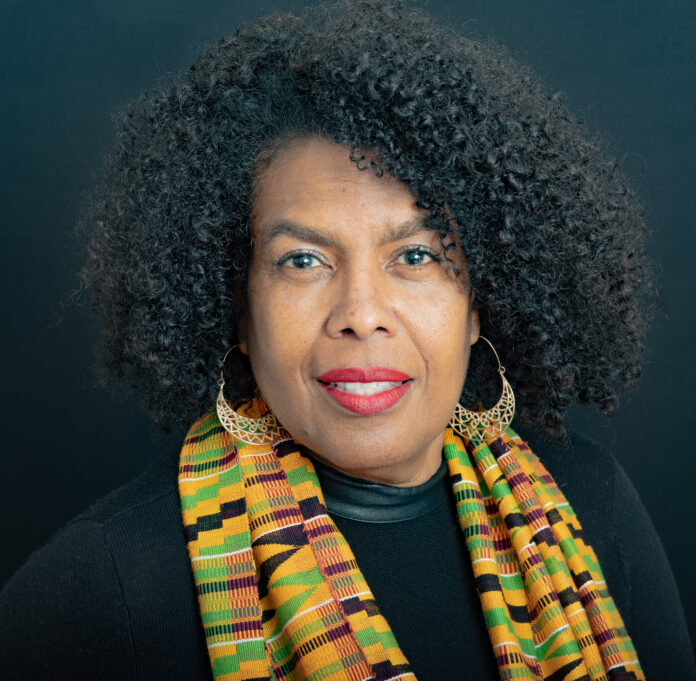
Eternity Martis 

PHOTO: Corey Misquita

Eternity Martis is SFU’s current Non-Fiction Writer in Residence. Hailing from Toronto, Martis is an award-winning journalist whose work has been featured in multiple magazines and newspapers, including Vice, CBC, and Huffington Post. She is also a critically acclaimed author for her bestselling memoir — They Said This Would Be Fun: Race, Campus Life, and Growing Up

In an interview with Ryerson University about They Said This Would Be Fun, Martis said, “I don’t think that race gets talked about enough — it’s quickly dismissed as ‘not everything is about race’ or ‘talking about race is divisive.’ The fact that systemically, people of colour continue to be precariously employed, have poor health profiles, are victims of state violence, among many other issues, means that everything is about race — we just don’t want to admit it, or perhaps we don’t even see how. Writing this book, I didn’t want to sound like a broken record, what I wanted to show was the ways that race permeates every institution around us — university, police, media, even our own families.”


Osob Mohamed 

PHOTO: Gudrun Wai-Gunnarsson / The Peak

Osob Mohamed, a recent graduate from the Faculty of Health and Sciences Bachelor program, is an important part of the SFU community. She was the SFSS president amidst the pandemic, from 2020–21 and worked diligently towards developing SFSS’ Issues Policy on reproductive rights. She had an integral role in helping students navigate the first year of the pandemic, prioritizing student mental health when anxiety and uncertainty were at their highest. During her time with the SFSS, Mohamed accomplished many feats like leading the charge on the elective grading scheme and supporting the marginalized communities

In an interview with The Peak, Mohamed said through her experience on the SFSS, she’s had the chance to “improve the student quality of life at SFU academically, financially, and health-wise.” 

Currently, Mohamed is “an alumni member of the SFU Black Caucus, and is working as a consultant to the university in the creation of a Black Student Centre.” She envisions this to be “a space for Black students to gather, receive tailored support, enjoy events and programming, and enjoy a space just for them!”


Juliane Okot Bitek

Photo courtesy of Seasmin Taylor

An Acholi poet, Juliane Okot Bitek was the 2020–21 Ellen and Warren Tallman Writer in Residence with SFU’s Department of English. Her book titled 100 Days dissects the effect of the Rwandan genocide on memory. It was nominated for multiple awards and won the INDIEFAB Book of the Year award for poetry in 2017. 

In an interview with PRISM international on 100 Days, Bitek said “As a Canadian, Ugandan, and Kenyan-born person, I cannot honestly draw political borders around where my responsibilities lie. Others can write about what they will but I must write about issues that affect all my ways of being, all of them.”

Bitek’s other poems like “Migration: Salt Stories” and “Gauntlet” were nominated and shortlisted for various awards, and more of her works have been widely popular online and have been anthologized in Love Me True. She has also held the title of the Poetry Ambassador of Vancouver.


Tricia-Kay Williams

PHOTO: Metamorphosis Counseling

Tricia-Kay Williams is a clinical counsellor working with SFU’s Health and Counselling. Her expertise lies in trauma, relational issues, anxiety, and career issues. She has previously worked as a residential youth worker and as a social service worker. 

Williams is an advocate for anti-racism which directly affects Black communities and is working actively with organizations to adopt an anti-racist approach in their policies. She has her own counselling practice, Metamorphosis Counselling. She also runs a YouTube channel, Meta Transitions, to promote growth in many areas such as career, mental health, and physical wellness.   


Food For Thought: Choori

0
Person in thinking pose with a thought bubble overhead featuring a photo of choori
A sweet walk down memory lane. Illustration: Alyssa Umbal / The Peak

By: Ira Rishi, SFU Student

As someone who hates vegetables, growing up in a vegetarian household was very difficult for me. I was extremely picky about the dishes I ate. Needless to say, I gave my family a tough time. While sometimes my mother would use her power card to ensure I was eating a full meal, other times she’d accommodate my pickiness and make something special. Her go-to dish was simple and nostalgic — choori. 

While there is no formal knowledge about this dish’s history, choori is commonly eaten in many desi households. 

Choori is an extremely effortless dish made by crushing up piping hot and fresh-off-the-stove chapatis and adding in ghee and sugar. Chapatis are a type of Indian flatbread cooked on the stove. 

The first step of making choori is to make chapatis. In the typical Indian style, you need a 2:1 ratio of whole wheat dough and water. The water is added to the dough in intervals, as adding all of it will only make a mess (you don’t want the dough to be drowning in water). 

When you start kneading the dough, it might be a little dry at first, so you can add more water as needed. The dough should be kneaded using knuckles — because that’s what helps soften the dough — and it should be kneaded until the dough is soft, yet firm enough to hold its shape. Then, the dough is divided into small balls, just a little bit smaller than the palm of your hand, and rolled out using a rolling pin. 

To cook the rolled-out chapatis, they’re placed on a hot circular griddle, commonly called a tawa in India, and cooked on both sides. You’ll know your chapati is cooked properly if it puffs up like a balloon — that is when it is taken off the tawa and torn into smaller pieces. 

After crushing the chapatis, a spoonful of ghee and two spoonfuls of sugar are added. It is important for the chapatis to be fresh and hot as the ghee and sugar will melt, making the warm, cozy mess that is choori. 

I’ve always loved choori, but it’s a rare treat for me now. When I first moved to Canada, it dawned on me that I hadn’t had choori in years and it was now only a distant memory from my childhood. Even when I tried to find the ingredients and assemble them myself, choori was not the same. It was upon being separated from this dish that I realized there’s more to food than just sustaining life. Choori allows me to stop and take a moment to relive my childhood. 

If you’re interested in making choori, you can check out Chef Sanjeev Kapoor’s online recipe. While I grew up on a different recipe, Chef Kapoor’s certainly provides you with some ideas about how this dish can be customized to your liking.

My perfectionism nearly ruined me

0
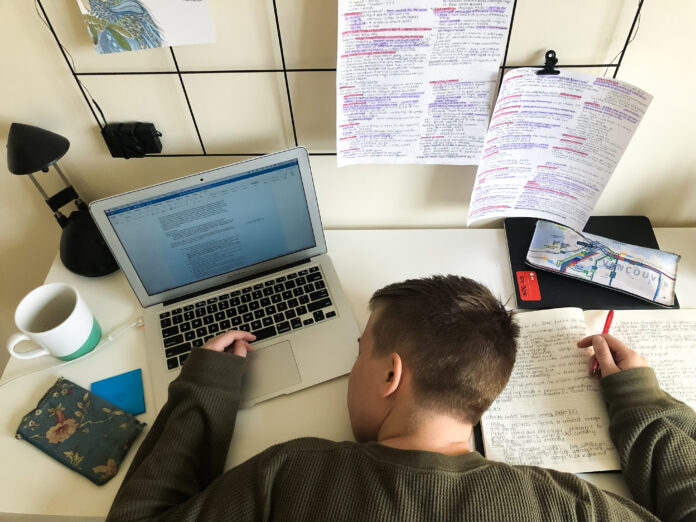
A person face down on a desk fallen asleep with notes scattered all across the desk
I would sacrifice my well-being for an A. PHOTO: Allyson Klassen / The Peak

by Maya Beninteso, Peak Associate

You knew my type in high school. I always sat in the front row and was a part of too many student councils and clubs to remember. I was a multi-sport athlete. I was the valedictorian of my graduating class. I was the person who believed a 90% on a test was a definite nail in my academic coffin. 

In short — I was your textbook overachiever.

As the first person out of my immediate family that went directly to university after graduating high school, I felt an immense amount of pressure to continue my legacy as the “golden child.” This isn’t because my family placed any sort of emphasis on academic accomplishment — they couldn’t have been more proud of me — but I felt the need to prove I wasn’t a fraud (the imposter syndrome was real). 

This is the mindset I carried into my first semester here at SFU. Of course, my grades didn’t magically drop since I kept my good work ethic from high school. However, I found myself obsessing over my grades to the point where I would get sick to my stomach over every email notification from Canvas.

One year ago, I had a 1,200 word essay and I decided at the last minute my writing wasn’t good enough. I deleted the entire paper (yes, every single word) and started all over again at 1:00 a.m. the day it was due. It wasn’t because it was a bad paper — I just didn’t think it was perfect. It had to be perfect, or else my world would obviously implode. This behaviour was positively reinforced because I ended up with an A+ on that paper. So, I continued to do this exact routine of deleting and editing and obsessing until my perfectionism caught up to me. 

Last semester was the worst for this, but it taught me an invaluable lesson I will carry with me for the rest of my academic career. Each assignment and exam — no matter how small it was — was accompanied by debilitating anxiety that resulted in me being bedridden. I would get so ill I thought it had to be COVID-19. My signature academic drive ironically drove me to physical illness. Sitting in front of my computer during one of my online midterms, accompanied by a half-used box of tissues and a bowl — just in case — was a truly humbling experience. 

My life lacked balance. My Google Calendar was filled with my school and athletic training schedule, but I failed to take care of myself first. I always preach balance is key and there I was willingly prioritizing school over my own well-being. I wanted to believe I could do everything and, while I could try, doing everything under the sun cost me my well-being and happiness. I knew something had to change.

That same semester, I made a friend in my upper-division psychology course. We sat next to each other in lecture and became fast friends purely because of our shared nerdy tendencies. We would make jokes using material from the class, which were thoroughly appreciated by the professor (I definitely cannot say the same for the students in the class). We also shared the same academic drive and similar experiences with school-related anxiety. Because we identified so heavily with one another, we were able to help each other through the semester. 

By the time our final rolled around, our typical nausea-inducing anxiety was not nearly as severe. Not only that but, the night prior to our final exam after three weeks of studying together, we decided to have fun. We went out to Lafarge Lake to walk around and see the lights. It was truly an en-light-ening experience. I would’ve never dared to go out the night before a final exam, but I’m glad I did. My newfound friend and I leaned on each other and ultimately taught one another this: you can be a stellar student and have fun. Just because I am going to schedule more time for myself doesn’t mean my grades will drop. 

I started to realize my worth isn’t limited to a grade I receive in some class whose contents I will likely not recall. What matters most is making memories with loved ones. Prioritizing my well-being. Living as opposed to barely surviving.

Long story short, I survived last semester, but I am not going to merely survive this semester. I’m going to enjoy it.


Need to Know, Need to Go: Events to wrap up Black History Month

0
Illustration of a blue calendar, with "Need to Know, Need to Go" written on top
Arts & Culture events to catch around the city. Image courtesy of Brianna Quan

By: Sara Wong, Arts & Culture Editor

Homegoing: Blackness and Belonging Across the Canada/US Border | February 17, 6:30–8:00 p.m. | FREE | Online and in-person

As part of the SFU history department’s Highlighting Black Histories series, Homegoing touches on the nuances of Black Canadian experiences. Lecturer Debra Thompson will discuss “the boundaries of racial belonging” inferred from the question “but where are you really from?” Thompson, a Canada Research Chair studying racism in democratic societies, will use her research on race politics — alongside personal experience — to explore the Black diaspora. Registration for this hybrid event is available via Eventbrite.

SOCA events | February 18 and 28 | FREE | Online

Join the Students of Caribbean and African Ancestry (SOCA) as they wrap up their 2022 Black History Month event schedule with a trivia night and Movie Monday. On Feb. 18, SOCA is partnering with the African Students’ Association and Somali Students Association to present Family Feud, Jeopardy, and Kahoot-style trivia. And on the 28, SOCA is showing the 2015 documentary The Black Panthers: Vanguard of the Revolution, which highlights the political and cultural significance of the American Black Panther Party. This event will take place on Zoom. Register through Eventbrite.

Chop It Up | February 19, 6:00 p.m. | $27.54 | Online

This community organization was created by two local business owners: Asha Wheeldon of Kula Kitchen and Chris Boreland of Elbo Patties. The goal of Chop It Up is “to bring folks together through a common love for food and culture.” Their upcoming cooking class will focus on 100% plant-based recipes and feature guest speakers Firina Achor, Lilian Umurungi-Jung, and Roger Collins on re-imagining Black businesses. Register for Chop It Up’s next event on Eventbrite. A sliding scale payment option is available by entering the code “BFM” at checkout.

VIFF Black History Month program | Dates and times vary | $10 | Online and in-person

From poignant dramas to pop culture documentaries, VIFF’s selection for Black History Month aims to provide audiences with more opportunities to engage with Black storytelling and filmmaking. Standouts in this year’s lineup include The Learning Tree — a semi-autobiographical coming-of-age film about Gordon Parks, the first Black director on a Hollywood film — and Poly Styrene: I Am a Cliché, which follows the punk rock icon’s daughter as she traces Styrene’s career around the world. Visit VIFF’s website to see showtimes and book tickets for any BHM program.

Via Kanana | Now until March 6 | $15–45 | Online

In this South African dance showcase, choreographer Gregory Maqoma and Via Katlehong Dance use a variety of moves to challenge “those in power and the unfulfilled promises made in the transition to democracy.” Incorporating the styles of pantsula (a flat-footed dance created during Apartheid) and gumboot, a rhythmic dance focused on stomping and handstrokes, Via Kanana promotes Black visibility and creativity. For more information about the show and to purchase the livestream, visit DanceHouse’s website.

VAG events | Dates and prices vary | In-person

The work of veteran Vancouver-based artist Jan Wade is currently on display at the Vancouver Art Gallery (VAG) in an exhibit titled Soul Power. Drawing inspiration from her mixed cultural identity and lived experiences as an African Canadian individual, Wade’s multi-media pieces embody “political, social, spiritual, and material transformations.” Soul Power is available until March 13. Outside the VAG is a separate exhibit called Dynamic Diasporas, which also highlights local Black trailblazers. As part of the Vancouver Mural Festival’s Winter Arts lineup, running now until February 27, Dynamic Diasporas uses archival materials to amplify the accomplishments of people like Rosemary Brown and Barbara Howard.