Home Blog Page 276

Your 2022 SFSS presidential nominees

0
PHOTO: Gudrun Wai-Gunnarsson / The Peak

by Gurleen Aujla, Peak Associate

This year we have six candidates running for the Simon Fraser Student Society (SFSS) president position. Voting takes place February 15–17 through SFU Mail. 

Shariq Ahsan (he/him), Independent

Why did you decide to run for SFSS president? 

I’ve been involved with the SFSS for a long time. In that time, I’ve seen the student body lose faith in the SFSS and feel like they can’t rely on it. I want to show students that the SFSS is worth getting involved with and that real change can happen.  

What are your plans to support students during the ongoing COVID-19 pandemic? 

I want to make sure that the university gives [students] ample time to make informed decisions about their education. We’re going online for a semester, fine, give us ample notice so students who have families, commitments, etc. can plan accordingly. Our administration should empathize with the situation of students.

If elected, what would be your top three areas of focus? 

Firstly, I want to provide students [with] platforms in which they can voice their concerns and opinions. Secondly, I want to focus on empowering our clubs, unions, and groups on campus to better reach their membership. Finally, I want to regain the trust that many students have lost in the SFSS.

What leadership skills will you bring to this position? 

Above all else is my willingness to make sure the student body is heard. I have had the privilege of working with a lot of people in my many years as both a DSU/FSU President and it has provided me with many different perspectives. A true leader empowers his membership.


Liam Feng (he/him), Independent

Feng wearing a mask pointing at the camera in black and white
Liam Feng, Independent.

Why did you decide to run for SFSS president? 

I’m the most accurate student representation you’ll get. I struggle with schoolwork, I sleep at 2:00 a.m., I’m ambitious to change things despite a lack of experience/qualifications. And if I don’t get elected, you better believe I’m finding some other way to make a change.

What are your plans to support students during the ongoing COVID-19 pandemic? 

Excellent question. You best believe I am going to reopen that Student Union Building. I’m gonna give students more space to be people, and that is going to support them in the most direct way.

If elected, what would be your top three areas of focus? 

My three areas of focus: 

  1. You. 
  2. Making that sketchy inner council more trustworthy, and more importantly, verbally open. 
  3. I want more people to hear about [the SFSS] and care about it.

What leadership skills will you bring to this position? 

I can hustle. I’ll film commercials in the middle of the night to get votes. I busted into common rooms and lecture halls for nomination signatures. I can craft posters to catch attention in a certain way, because this election is worth gunning for.


Vincent Huang (he/him), SFU Change for Better

Huang smiling with a lighthouse in the background
Vincent Huang, SFU Change for Better.

Why did you decide to run for SFSS president? 

I love making positive impacts [on] people. By having discovered what the students need (and more in the future) and what can be improved at SFU, I could see myself [making] changes as SFSS president while working together with others on the same page and supporting one another.

What are your plans to support students during the ongoing COVID-19 pandemic? 

Other than adding 50 hand-sanitizer stations throughout the campus, I would love to improve the students’ mental health by offering a platform that allows students to voice their concerns and [be] heard, and providing more games like ping-pong tables for students to have fun between their busy schedules.

If elected, what would be your top three areas of focus? 

  1. Students’ mental health and beliefs that every one of them matters. 
  2. Free finance and investment education to emphasize its importance, allowing students to apply it in real life as early as possible. 
  3. Career simulations or workshops to polish the skills needed in workplaces through reliable practices.

What leadership skills will you bring to this position? 

As a leader, my people (including the students) are important. I will bring my selflessness and empathy for anything they need while providing directions and support so that they can learn, grow, feel rooted and belong in the community, and become the best versions of themselves as they should.


Dilraj Nijjar (he/him), Independent 

A headshot of Nijjar on a black background
Dilraj Nijjar, Independent.

Why did you decide to run for SFSS president? 

I joined SFU in Fall 2020. In these two years, I realized there is very little student involvement in SFSS decision-making. That’s when I decided that I will get students the transparency and power they deserve. It’s time we take back control of what’s rightfully ours.


What are your plans to support students during the ongoing COVID-19 pandemic? 

Because of COVID-19, students are divided into two major groups: those who want online classes and those who prefer in-person. They both have valid reasons. My plan is to demand a hybrid option for the first group while resuming in-person classes for the second group.

If elected, what would be your top three areas of focus? 

Top three areas of focus: 

  1. Push for bylaws that will make transparent decision-making a duty and not a choice.
  2. Providing better mental health resources, especially for international students. 
  3. Get a better extended health plan. 

What leadership skills will you bring to this position? 

I was the school president of my high school for three consecutive years and advocated for gender equality and more. Just a few weeks ago, I, along with a few friends, organized and led a BC flood relief food drive and collected donations of more than half a million dollars.


Helen Sofia Pahou (she/her), Stronger Together Party
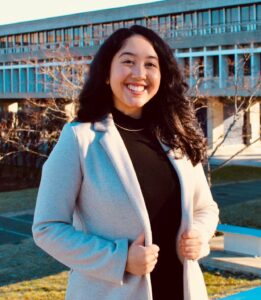
A full body shot of Pahou smiling in front of the AQ
Helen Sofia Pahou, Stronger Together Party.

Why did you decide to run for SFSS president? 

Collectively, my team and I agreed that the SFSS is in dire need of change. At such turbulent times, students deserve an SFSS that fosters a student-centric, resourceful and welcoming government that serves all. If elected, I hope to reinforce that while rebuilding trust between students and the [SFSS].

What are your plans to support students during the ongoing COVID-19 pandemic? 

My team was [the] first to conduct a survey about students’ perspectives on the Spring 2022 return-to-campus. The barriers students face throughout the pandemic aren’t universal. Folks have different experiences and needs. Thus, I hope to foster a holistic SFSS that is careful in cultivating data as a guide for decision-making.

If elected, what would be your top three areas of focus? 

Out of a myriad of issues needing improvement, three key areas I’d focus on are: 

  1. Raising students’ awareness of their benefits and services via virtual town halls. 
  2. Empowering the SFSS Council with coherent policy training. 
  3. Utilizing periodic data-driven methods to include students within collective decision-making models.

What leadership skills will you bring to this position? 

Formerly as SFSS vice-chair and councillor for political science, I offer salient knowledge that’s central to the Society’s organization, procedures and bylaws. As [an] SFU senator, I advocate for improving student policies. However, being resilient is my most essential skill. I hope it’ll inspire students to be resilient too.


Sophonie Priebe (she/her), SFU Progressives
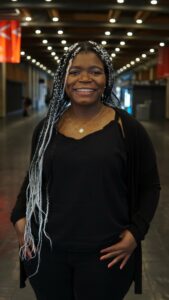
A full body shot of Priebe smiling inside of the AQ
Sophonie Priebe, SFU Progressives.

Why did you decide to run for SFSS president? 

To build on the legacy of radical student activism and build joy, celebration, and empower the community.

What are your plans to support students during the ongoing COVID-19 pandemic? 

As SFSS president, I will increase [student] supports through the distribution of the $400,000 passed previously to acquire resources to support students during the pandemic, such as N95 masks for students, push for hybrid learning on campus, and continue pushing for [the] introduction of rapid testing sites on campus.

If elected, what would be your top three areas of focus? 

I want to bring this spirit of community to the SFSS and build on the work that progressive student activists and allies have done. I will focus on advocating for student rights and equity, building a community of care and solidarity uniting all students, defending student safety during COVID-19.

What leadership skills will you bring to this position? 

I have a host of leadership skills from my previous experience with other amazing student groups. This past year, I got involved with a lot of efforts to build community, whether it be at the Gender, Sexuality, and Women’s Studies Student Union, the Students of Caribbean and African Ancestry or the Society of Arts & Social Sciences, I have helped to amplify students in any way I am able.


 

Pole dancing breaks the shackles of impending prejudices

0
A woman with her head back kicking her foot out on a pole with a white flowing dress.
An ultimate test of strength, flexibility, and endurance. Photo: Pixabay / Pexels

By: Vanshita Sethi, Peak Associate 

A pole dancing class is the very melting pot of diversity: participants of all occupations, ages, and genders express a full range of emotions like sensuality, anger and joy while working the pole. Pole dancing dates back to the 12ᵗʰ century, when it was performed only by men. China and India saw the emergence of the pole in various forms. While Chinese acrobats displayed acts of strength and skill on poles, standing as tall as nine metres in height, Indian wrestlers used wooden poles to train — a sport referred to as Mallakhamb

Pole dancing has seeped into dance genres worldwide including belly dancing, tango, rumba, and moulin rouge. However, the sensual hoochie coochie dance of the 1890s was the true pre-cursor of pole dancing. 

Nowadays there are three main genres of pole dancing: artistic, sport, and exotic. Looking for self-expression? Pole artistic combines music and movement to create a story. Those looking for a workout should take a shot at pole sport. Unlike its artistic counterpart, sport involves little dance and all acrobatic pole movements. Last but not least is exotic — meant for strappy heels and sensual moves. Professional dancers can compete at international competitions like “Miss Pole Dance World” or national competitions like “Miss Dance Pole.” 

Pole dancing is redefining the face of fitness wherein a few swings and lifts on the static pole can leave you catching your breath. However, the journey of pole dancing into what it is today wasn’t an easy one. Usually dismissed as a feminine erotic dance form, it has been a struggle for pole dancing to claim its much-awaited recognition as a competitive sport. It wasn’t until 2017 that the Global Association of International Sports Federation granted the International Pole Sports Federation official observer status as a legitimate sport — although it is yet to be recognized in the Olympics

But pole dancing is not just limited to tests of physical strength. AnnaKia, a professional aerialist and owner of House of Baelien told Vogue, “I was [ . . . ] struggling with the loss of my identity.”  For many, pole dancing has become a powerful symbol of pushing their bodies to the limit and embracing their sexuality while hanging upside down in the air. AnnaKia added, “Pole is for everyone and every body! As a whole we want to welcome everyone into our little piece of heaven.”

The beauty of pole dancing lies in its ability to allow participants to connect to their bodies on a much deeper level by exploring how they can move on the pole. It can give you a whole new appreciation of your body while allowing you to have fun doing so. Pole dancing can be anything you want it to be based on your comfort level: from a simple twirl to more demanding acrobatic positions. When you are on the pole, the world is your oyster. 


Sex, love, and podcasts: three recommendations for sex-positive content

0
Collage of three podcast covers. From left to right: Honeydew Me — two women in hot pink jumpsuits drinking cocktails; Girls Gotta Eat — two women mid-laugh, holding wine bottles; How C*m — a woman in bed holding a banana in one hand and a red book labelled “sex” in the other
Dive into discussions exploring sex and sexuality. PHOTO: Gudrun Wai-Gunnarsson / The Peak

By: Hannah Kazemi, SFU Student

Honeydew Me

Hosts Emma Norman and Cass Anderson step out of the bedroom and into the real world to do what many of us have been conditioned not to do: talk about sex. They bring sex-perts such as doctors and sex therapists into the conversation and ask the questions we’re a little too embarrassed to ask. They even take it a step further and individually explore sexual experiences that may be intimidating for the first time, and reflect on their experiences with the audience. Nothing is off limits: How can we effectively communicate our preferences and desires to a partner? How can we make boring sex more fun for ourselves and our partner? What the hell is mutual masturbation, and how can it spice up a relationship? With a focus on sex education for all genders and encouraging confidence in one’s sexuality, Honeydew Me discusses the good, the bad, and the awkward when it comes to sex and becoming comfortable in your own body.


Girls Gotta Eat

If you’re into comedy, hosts Ashley Hesseltine and Rayna Greenberg are your go-to gals! Full of witty humour and personal anecdotes, Girls Gotta Eat is a must-listen. They talk candidly about countless awkward Tinder dates, the time they sent a dirty text to the wrong person, how to plan a hookup, and more. Hesseltine and Greenberg chat about everything to do with sex, love, and relationships. In the process, they destigmatize sex and remove the stigma that typically comes with owning and embracing sexuality. There’s no shame in a bad Tinder date or a booty call gone wrong. Confidence is key, and there’s no shortage of it here. Girls Gotta Eat is all about being unafraid to explore sex, pleasure, and desires, even if it’s awkward, new, and doesn’t exactly go as planned.


How C*m

How Cm was started to help host Remy Kassimir reach “the big O” for the first time and is dedicated to exploring how and why so many cis women struggle to orgasm — either by themselves or with a partner. Kassimir brings in unofficial sex-perts such as porn stars, comedians, and other fun guests to talk all about orgasms. They also give tips and tricks to help Kassimir and her audience achieve their first orgasm. When someone with a vulva can’t orgasm, there are often feelings of shame, pressure, and failure that come with it. Many can’t orgasm from penetrative sex alone, but no one really tells them there are other ways. You might be thinking, “how cm?” Kassimir discusses this typically taboo topic with no shame, and empowers her audience to take control of their sexuality and explore what feels good. No more fake orgasms!

HIV Made Me Fabulous unpacks link between social inequity and sexual health

0
A woman laughing on the right with positive reviews on the left hand side
The film is narrated by Juno Roche (pictured above), whose personal story about living with HIV is featured in the film. PHOTO: Courtesy of Life and Love with HIV

By: Yelin Gemma Lee, News Writer

SFU health science professors Dr. Allison Carter and Dr. Angela Kaida presented their national study through the short film HIV Made Me Fabulous which premiered publicly for the first time at an online event on November 26, 2021. The researchers conducted a survey with over 1,400 women living with HIV across Canada who were part of the Canadian HIV Women’s Sexual and Reproductive Health Cohort Study.  

The Peak spoke to Carter, adjunct professor at SFU faculty of health sciences and senior lecturer at the Kirby Institute to learn more about the study. 

“We wanted to disseminate our research findings to a wide audience but we also knew that affecting people’s attitudes and emotions around HIV would require more than just sharing information and statistics and the science around undetectable = untransmittable,” said Carter. 

“We wanted to provoke emotion. And so we partnered with an incredible filmmaker, producer, and director Edmond Kilpatrick whose film uses embodied storytelling to connect with audiences.”

Carter explained the study focused on women’s individual health priorities and concerns such as satisfaction, pleasure, love, relationships, and sexual activity. One of their core findings was the diversity of experiences with sex and sexuality. About 49% of women in the study were not sexually active, whereas the other half were involved in several different relationship types. One in two women in this study viewed sex as an important part of their lives.

“There was a common thread of social inequity being related to sexual health outcomes so violence, poverty, HIV stigma, sexism, so women who scored higher in those areas tended to have poorer sexual outcomes,” said Carter. “I think that’s a really important finding because it tells us a lot about how we can promote sexual health — not just for this population but for the population as a whole. So, promoting sexual health is also about addressing social injustice.”

Carter said the main motivation of the study was to try and shift the narrative of women living with HIV from risk and disease to pleasure and positive sexual health. She said much of the public is still unaware of “undetectable = untransmittable,” which means that, with treatment, people who have an undetectable viral load of HIV in their blood cannot transmit the virus to their sexual partners.

“We hope that science can disrupt embodied prejudice and stigma and improve health and relationships and quality of life for women living with HIV,” said Carter. “Certainly we need to be, at the same time, as a society, addressing gender inequality, stigma, violence, and all of these other social determinants that can play a major role in outcomes for women living with HIV.”

Writer and campaigner Juno Roche wrote and narrated the film based on her experiences as a transwoman living with HIV since the 1990s. Carter said Roche was selected due to the provocative and radical perspectives present in her writing, which challenge preconceived prejudices.

Before public screening, the film underwent six to seven private screenings where discussions and a survey were conducted among “women living with HIV, service providers, clinicians, students, educators.” Carter said they used the feedback to create a discussion guide accompaniment for the film to facilitate positive conversations about the film’s themes.

“I think for a lot of women living with HIV they saw themselves and they saw their lives reflected on screen. Both the struggles, as well as the triumphs.”

Carter explained the biggest institutional issue that needs to be addressed is HIV stigma and the criminalization of non-disclosure of one’s status. Despite believing Canada has come a long way through the efforts of many activists, Carter believes there is more to be done. “We need more structural interventions around HIV stigma, to promote the latest science within the public, and to address discriminatory practices, behaviours, attitudes, and knowledge in the public. 

“That work really needs to be grounded in intersectionality and thinking about the diverse experiences of women living with HIV.”

The short film HIV Made Me Fabulous can be viewed through the Life and Love with HIV website, along with the accompanying discussion guide and survey. This film is based off of specific studies on sexual activity, sexual importance, relationships and love, and social justice and sexual health.

Monday Music: Songs that celebrate queer sexuality

0
"Monday Music" in giant yellow block letters with a red background
Monday Music: your weekly themed playlist. Image courtesy of The Peak.

By: Petra Chase

For many young adults, public school sex education is inadequate and promotes harmful messages surrounding queer sex. I still battle with the shame I was taught to feel at a young age. Music has always helped me work through these feelings and reminds me to be proud of my sexual identity. Here are three sex-positive songs that reflect this.

“Silk Chiffon” by MUNA feat. Phoebe Bridgers

Image credit: Saddest Factory Records / Dead Oceans

“Silk Chiffon” takes on a new meaning in this frivolous pop song. Electronic pop band MUNA and singer-songwriter Phoebe Bridgers capture the giddy infatuation and temptation of a potential meet cute. Who can resist noticing the cherry lipstick of a stranger or running into a pretty girl at the drugstore? With a message as lighthearted as the breezy melody, the lyrics, “If it feels good to me / Oh why wouldn’t it be?” is the perfect reminder your sexuality is valid.


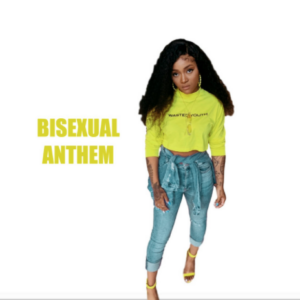
“Bisexual Anthem” by Domo Wilson

Image credit: Domo Wilson

There are a lot of misconceptions about bisexuality, which even get perpetuated in the queer community. In her rap song “Bisexual Anthem,” Domo Wilson destroys them all, reminding you not to forget about the “B” in LGBTQIA2S+. As a bisexual woman, I’ve always felt pressure to “pick a side” and also felt dating men made me less valid. Listening to Domo Wilson’s unapologetic truth helped me dispel these illusions and regain my confidence.


“Fast Car” by Syd

Image credit: Syd Solo

“Fast Car” is a hazy sapphic reverie set against a synth backdrop. “I wanted to make something for the gay Black girls,” Syd shared in a press release. “I want them to see themselves in this and in me.” Syd’s sultry voice is beautiful in this track, especially as she sings, “We gon’ piss some people off / but right now that’s where we belong / right here in your fast car.” This is the perfect song for setting the mood with a sexual partner, or fantasizing about them.

Contract Worker Justice releases report on poor working conditions at SFU

0
Blusson hallway with a cleaner’s cart in the center.
Workers report poor benefits and low wage under the current contract system. PHOTO: Gudrun Wai-Gunnarsson / The Peak

By: Karissa Ketter, News Writer

The Contract Worker Justice (CWJ) group has been pushing SFU to hire their cleaning and food services workers in-house. They recently wrote a report detailing the poor working conditions of these workers and presented it to the SFU Board of Governors (BoG) on January 27, 2022. 

CWJ co-hosted a virtual presentation of the BoG meeting with SFU350. At the meeting, representatives of CWJ presented their findings. The three presenters included co-founder of CWJ and communication professor Dr. Enda Brophy, president of CUPE 3338 Fiona Lenfesty, and SFU dining hall cook Jeremy Ebdon. 

Brophy noted CWJ has been endorsed by all major SFU constituencies (undergraduate students, graduate students, and faculty), the Burnaby mayor, and three Burnaby MLAs. 

University of British Columbia and University of Victoria hire their workers directly. Brophy noted this means their workers “fare better than SFU’s contracted workforce in every single category, including wages, benefits, and access to campus services.

“They can’t even use our libraries or access Wi-Fi on campus,” said Brophy. 

SFU’s workers make less than a living wage, “receive significantly fewer paid sick days than other SFU employees,” and have limited access to health and dental coverage, according to CWJ’s report. This is because the contracting-out system “pushes down wages by incentivising companies to minimize labour costs at the expense of the workers,” according to the presentation.  

While CWJ receives less than a week of paid sick leave, SFU employees are eligible for at least one week of sick leave and up to 26 weeks after more than five years of employment

In an interview with The Peak, PhD student and CWJ coalition member Jade Ho discussed the report in more detail. She explained CWJ conducted interviews with the workers throughout Fall 2021. In these interviews, they found the companies have been telling workers to limit their interactions with others.

According to Ho, “The companies actually have told them things like, ‘We don’t want you to talk to people. When you see them, simply say hello and goodbye,’ and ‘if people come and ask you questions about your work, tell people that you are a new employee and you don’t know anything.’

“They would like to be treated and respected,” said Ho. “There’s quite a lot of separation and silencing.” 

In the report, workers emphasized the lack of respect and dignity in the workplace: “What is probably more important to me is to be treated with some respect, and not be talked to rudely or be disrespected at my place of work. People in the university — students or faculty — can sit at their computers and work only because we do the dirty work and clean up things. Their workspace is safe and clean because we do all the physical labour in cleaning up.”

Ebdon, who is also a member of Local 40, BC’s union for hotel and hospitality workers, said, “Many of our workers are afraid to speak up for fear of retribution from management.” He reported numerous workers are not taking their break time to keep up with operational requirements due to chronic understaffing. 

Ebdon said management has mostly ignored workers’ concerns regarding working conditions. 

Workers expressed concerns for COVID-19 safety while working on campus. “They would daily tell us about the COVID-19 safety regulations and make us sign documents saying we understood the protocols, and then ask us to go work in places where it was impossible to maintain these protocols,” said one worker in CWJ’s report.  

Ho noted that vice-president finance and administration Martin Pochurko responded to their presentation by saying, “I would remind the Board that, of course, the presentation that you’ve seen today is one perspective.” He added the service workers’ employers who were in attendance “would have different views on some of the topics discussed today.”

Ho commented on Pochurko’s response in her interview with The Peak. “We think that we have presented is not just an ‘equal perspective’ to the financial side because this is people’s lives on the line. This is not just people’s working conditions, because people’s working conditions affect their quality of life.” 

In a statement to The Peak, Pochurko wrote, “SFU values the cleaning and food service workers that work on our campuses and it is very important to us that they are all treated fairly. Although we have not been able to validate the accuracy of this report, we are concerned about the experiences described within it,” said Pochurko. 

SFU recently hired another third-party company, Deloitte, to analyze the in-house and contracted working conditions at SFU. While CWJ has previously expressed concerns about this decision, they are waiting for Deloitte’s results and the university’s response, according to Ho. 

Deloitte is a private consulting company with “a tendency towards privatization.”

Currently in progress, Deloitte’s report “includes interviews with key stakeholders, including the Contract Workers Justice leaders, the employee unions and the current companies providing these services. The SFU executive team will be reviewing those findings over the coming months to develop recommendations and next steps,” according to Pochurko. 

Ho encourages students, staff, faculty, and the SFU community to read CWJ’s report. “One of the key things about our report is not just a summary of the things that we found, but some of the specific quotes that are from the workers. So I encourage you to take a look at the report and look at some of those quotes of what the workers have said of each grievance that they have been sharing with the research team.”

Ho reported, “Workers hold an incredible amount of pride in their job. They are passionate about being part of the university community. We asked them, ‘Do you feel like you’re part of the university community?’ and they said, ‘When it comes to our work conditions, we really don’t feel like it.’ But when it comes to interactions with students, they really do feel like they are a part of the community.”

To find out more about the CWJ campaign, visit their website or social media.

Five video games for a cute and cozy date night at home

0
A PlayStation controller lying angled against a purple and turquoise background
Make your next gaming session last all night long. PHOTO: Taylor R / Unsplash

By: Kelly Chia, Staff Writer

My partner and I really enjoy playing games together — solving a puzzle feels much sweeter when you have someone cheering you on, even if they’re chuckling at you a little. Below, I’ve listed games by price, platform, and length. Whether you’re in a relationship or want some wholesome challenges and raucous laughter with your friends, here are some of my favourites to play on date night!  


It Takes Two

$54.99 | Playable on Windows, PlayStation 4, PlayStation 5, Xbox One, and Xbox Series X/S | 2 players | ~6–8 hours

Your protagonists, Cody and May, are a married couple on the brink of divorce. Then, they’re tossed into a fantastical world made by their daughter and are forced to work together. You work with a partner and face funny obstacles like furry gangster squirrel tails. The game is often light-hearted, and the story is well-written. It’s stunningly animated, making every moment a joyful one. 

You can choose to play this game from two separate devices, or play together on one screen with split-screen play. It’s wholesome, sweet, and wonderful to look at! The price is pretty steep, but it’s on sale on Steam often. At the time of writing, it’s $27.49. 


We Were Here
Free | Playable on PC, Xbox, and PlayStation | 2 players | ~2 hours

Where It Takes Two is a whimsical look into repairing a fractured relationship, We Were Here takes a decided swing into an atmospheric thriller. You and your partner are tasked with overcoming puzzles together to escape an abandoned castle. It Takes Two has visuals to guide you, but We Were Here relies heavily on using your voice to help each other through each puzzle. This means you have to work closely in what feels like a two-player escape room! 

We Were Here is the first installment of a series with three sequels: We Were Here Too, We Were Here Together, and We Were Here Forever. If you like this, check those games out too!


Stardew Valley

$16.99 | Playable on Android, PlayStation 4, Nintendo Switch, Xbox One, Mac, Linux, Windows | 1–4 players

I couldn’t not list this game here. Stardew Valley is a classic choice. The two recommendations above are puzzle games, but this is a long-form game you can enjoy with your partner. Basically, your protagonist is despondent with their corporate position and has inherited their grandfather’s old farm. While you can play this as a single-player game, playing it with a friend (or three!) lets you share more resources. Getting to work together to turn your farm from a middling plot to rich fields with all the farm animals is really rewarding.


Heave Ho

$11.49 | Windows, Mac, Nintendo Switch | 1–4 players | ~3 hours

This game is a surprising amount of fun. You have to grip onto each player’s hands to get across the level. You’re basically swinging across all sorts of limbs and platforms trying not to fall. My friends spend a lot of time hollering at each other as we swing! This is the game you want to play when you just want something short and amusing.


Monster Prom 2: Monster Camp

$15.99 | Windows, Linux, Mac | 1–4 players | 1–3 hours

I chose Monster Camp over Monster Prom here because you can interact more with your fellow players. This is a hilarious dating sim where your goal is to ask out a variety of monsters, from the head witch of a coven to a computer. I was drawn to this series for its customization. At the beginning of the game, you choose between four playable characters, and pick pronouns regardless of how the characters present. Your character can then date anyone in the game. There is a broad range of queer representation in these characters. Many storylines explore the characters’ identities and their feelings of romance — and often, world domination! 

It does feel like a long game to play in one sitting because there’s a lot of dialogue, but the narrator’s lines and thirst always make my friends and I laugh.

My first time wakeboarding

0
A woman pictured wakeboarding putting up a 'hang loose' sign to the camera.
Celebrating the little victories can make the journey much more enjoyable. Photo: Ron Lach / Pexels

By: Charlene Aviles, Staff Writer

When I was 16 years old, I started wakeboarding at a church summer camp. At first, I was too shy to join my friends, but with persistence, they convinced me to give it a shot. It took me a while to learn, but any sign of growth, whether big or small, pushed me to keep going.

Everyday, the parent volunteers started the wakeboarding sessions at 7:00 a.m. Since it was my first time, I decided to start by watching my friends. Everyone else on the boat was very experienced, so I felt intimidated to practice in front of them.

Once I was ready to begin, the boat’s owner, Vincent, showed me how to strap my feet to the wakeboard. Then, I gave my friend my glasses and jumped into the water. On top of trying a new sport, I had to guess the direction and speed of the waves.

Vincent instructed me to lay down on my back and bring my knees to my chest. Once I grabbed hold of the rope, he revved the engine. The boat drove forward faster than I anticipated, causing me to fall face first into the water. After seeing my friends glide on the water gracefully, I wondered if I would be able to stand up at all.

The second time around, Vincent instructed me to hold onto the rope tighter. My friends cheered me on. They encouraged me to be patient and keep going. This time I was able to hold onto the rope, but I wasn’t able to stand up. As soon as the boat moved, I collided with the water again.

Wakeboarding was challenging because it was nothing like the other watersports I’ve tried — kayaking, swimming, and tubing. A tight grip and good balance weren’t enough. I needed to match my movements to the speed of the waves, but since it was my first time, I didn’t know what to expect. I tried twice more until my time was up.

Since I couldn’t stand up the first few rounds, Vincent was kind enough to give me another chance, but the result was the same every time. Not to mention, the rope got tangled in the propeller, stalling the boat and prematurely ending my second attempt. 

Later that week, I had the chance to wakeboard again. For the first half, I still couldn’t figure out how to stand up. One of my peers, Jeremy, gave me a few pointers on how to steer myself. To my surprise, something clicked and I stood up! Feeling the adrenaline rush, I screamed so loud in disbelief, proud to have achieved my goal. I didn’t stand for long since steering was new to me, but I took the time to soak every last second of it. Finishing my turn, I enthusiastically hi-fived everyone on the boat.

Even though I started wakeboarding years ago, I still remember the relief of accomplishing what I set out to do. Despite it taking longer than I wanted, and only being able to stand for a few seconds, what’s important is that I followed through on the goal I set for myself. Sometimes half the fun is getting there. 

Mainstream media needs to address its sex stigma

0
A couple are leaning into each other. Both appear somewhat femme, and look like they’re enjoying themselves.
We can’t break down stigma without addressing something directly. PHOTO: Zackary Drucker / The Gender Spectrum Collection

By: Maya Beninteso, Peak Associate

Doing it, the devil’s tango, knocking boots — these are all euphemisms used to avoid a simple three-letter word: sex. Why do we feel the need for all these euphemisms in order to avoid one word? Despite sex being a part of many of our lives, it is heavily stigmatized in culture, conversation, and the media. The best way to combat the taboo nature of sex is to make it less taboo — and start an open conversation. 

So, let’s talk about it.

I understand why sex isn’t necessarily our go-to dinner conversation: the amount of bodily fluids — and the noises — can be unappetizing. However, our habit of hiding sex has translated into a culture of shame. Wanting sex should not evoke discomfort — nonetheless, shame and sex appear to be a common pair. 

The media has an influence on societal views pertaining to sex, and contributes to feelings of shame. The media — and society in general — are especially vocal when it comes to women who choose to engage, or not engage, in sex. These messages swing between prudishness: the resistance to sexual expression, and sluttiness: a slur directed at those who take ownership of their sexualities. Though there is nothing wrong with either behaviour, the lack of space for women to be sexual without stigma is a problem. 

Ideas regarding sex are instilled at a young age. I recall passively listening to T.I’s “No Mediocre” at my high school basketball game and feeling disturbed about the artist’s criticisms of women who have pubic hair. What we need is more songs that send messages of empowerment and that normalize sexual desire — especially in women (such as WAP by Cardi B). 

TV shows and movies need to do their part as well. A good start would be adding discussions surrounding sex, consent, and contraceptives during climactic scenes. I can’t remember the last time I watched a movie with a sex scene that contained a conversation surrounding (or using) protection without plot-based motivation. That is inherently problematic. For one, sexual encounters on the big screen aren’t usually representative of real sexual experiences — and it’s important they begin fostering a culture of consent. 

Sex isn’t always some life-altering event, or “picture perfect” in the way film depicts it to be. Sex scenes are highly choreographed — it is normal for sex to be uncoordinated, light-hearted, and filled with laughter — I wish dramatizations could capture this instead of providing viewers with false expectations. 

If your sexual encounters aren’t intricate dances, you need not feel ashamed. Your sexual experience isn’t the problem — the way film portrays it is. Sex may not always be spontaenous, in reality sex may require a little extra planning and a discussion surrounding safe sexual practices prior to the encounter. The media’s simple addition of the aforementioned steps could aid in normalizing healthy sexual behaviours, and hopefully render the purchase of contraceptives less embarrassing. Engaging in safe sexual practices shouldn’t feel embarassing at all. This is an example of what destigmatization could look like — a world where purchasing contraceptives for safe sexual practices isn’t embarassing. 

At the end of the day, we need to acknowledge sex for what it is. Whether we choose to pursue it or not, sex is a behaviour that is done by just about all multicellular life. Let’s start time-appropriate open conversations even around the dinner table — so that we can all engage in something that’s intended to be pleasurable without shame. 

The stigma ends here — it ends with us.

The Inside Scoop: Super Bowl Edition

0
Up close shot of a football on an NFL field
Matthew Stafford and the Los Angeles Rams have the edge. Photo: Dave Adamson / Unsplash

By: Isabella Urbani, Sports Editor

1.) Who is going to win the Super Bowl? 

Los Angles Rams (67%)

Cincinnati Bengals (33%)

Sample size: 12 

2.) Will the difference in scores between both teams be over or under seven points?

Over (44%)

Under (56%)

Sample size: 9

3.)Will there be more than three interceptions in the game?

Yes (75%)

No (25%)

Sample size: 8 

4.) Will Bengals kicker Evan McPherson miss his first playoff field goal? 

Yes (11%)

No  (89%)

Sample size: 9 

5.) Who will gain more yards for their team? 

Tee Higgins (Bengals) (33%)

Cooper Kupp (Rams)  (67%)

Sample size: 6