Home Blog Page 207

SFU dance team brings school spirit to basketball games

0
photo of the SFU dance team.
Photo: SFU Athletics Dance Team / Instagram

By: Natalie Cooke, News Writer 

There’s plenty of fun to be found at SFU men’s and women’s basketball games. Puppy therapy, heritage nights, concessions, and giveaways were regularly a part of home games. But the most constant form of entertainment was SFU’s very own dance team, run and established by students since 2014

In addition to cheering and handing out merchandise during the game, the dance team performs a routine during half-time. In an interview with co-captains Dessie Barton and Kara Silverberg, The Peak learned about the work that goes into performing at games, and how new and seasonal dancers can find a home on the team.

Barton and Silverberg explained how the team’s presence gives SFU strength through numbers. “Hyping them up and creating more exposure for games allows them to play to their fullest potential.” 

The co-captains were especially excited about their current dance routines. “Our team has put a lot of hard work into our dances. We are so incredibly proud of them for how far they’ve come and for putting it all out there on the court.”

The most enjoyable aspect of being a part of the dance team is “the comradery with teammates.”

“We both started at SFU without knowing many people,” said Barton and Silverberg. “Joining the team made us feel like we had found our place.”

Barton and Silverberg had similar upbringings into the dance community. Barton started dancing when she was three years old, and continued to find more passion in dance as she grew older. “Dance has always been an outlet for me to destress and focus on something that I am passionate about; it feels like an escape. This is why after I graduated from high school, I knew I needed to continue my dance training.”

Silverberg also danced from a young age, and explained that despite moving to BC, dance became her home away from home. “This team was my way of continuing the art and giving me peace of mind and comfort in this new place.” 

Barton and Silverberg want to share these same sentiments with their fellow dancers. “We pride ourselves on providing SFU students with an outlet to continue their dance experience post-high school. Every team member is a part of our family.”

To join the performance dance team that takes part in the half-time show, you’ll need to attend auditions in September. There is no specific dance experience required; however, there are a limited number of spots on the team. Performers “train for five hours per week, and the whole [fall] semester is spent working on techniques and learning dances.”

If you’re looking for something more casual, there’s also a training team that allows you to take classes between March and April. Classes are taught in the “following styles: jazz, street jazz, hip-hop, lyrical, and contemporary.” To register, please refer to the SFU Athletics and Recreation website. The schedule can be found on their Instagram page (@sfuathleticsdanceteam).
Exploring Michel Dumont’s wearable art

0
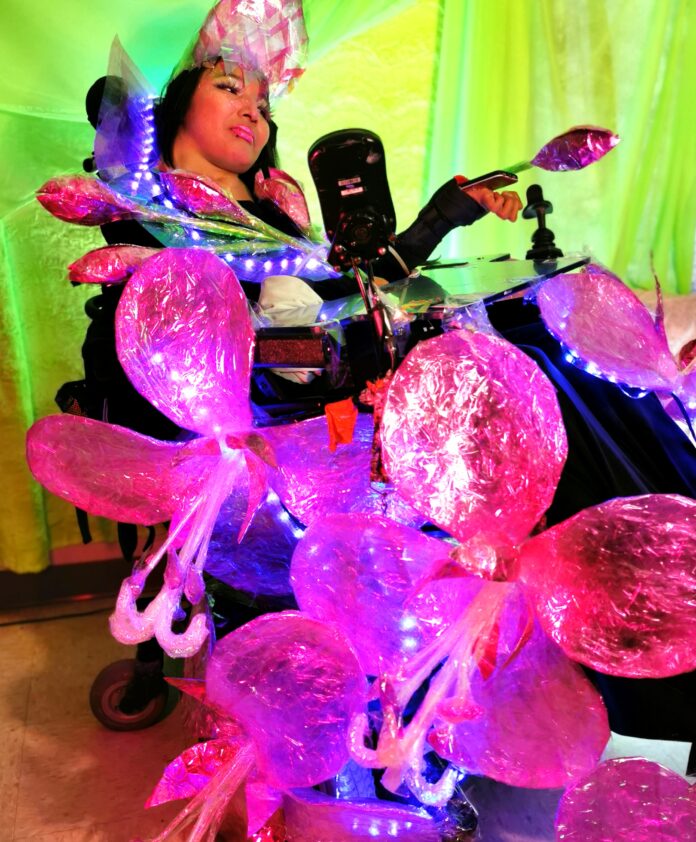
An Indigenous model in a wheelchair wearing a shimmery dress made of fireweed flower. The dress consists of large fireweed flowers and flower petals adorning the wheelchair, with LED lights and purple fringe.
PHOTO: Michel Dumont

By: Petra Chase, Arts & Culture Editor

At the core of his drag queen-“christened” trademark, House of Dumont, Michel Dumont is an “old, queer punk” whose commitment to love is infused into his creative work. Dumont is a “Métis, Two-Spirit, disabled artist” based in Thunder Bay, Ontario. His “wearable art, installation, and mosaic” incorporate elements of goth, camp, the ‛80s, and glam. In an interview with The Peak, Dumont shared some memorable moments thus far in his career, and his experiences navigating his disability in the arts world.

Dumont’s interest in costume crafting began during childhood, inspired by the Halloween costumes his mother, aunts, and grandmother would make by hand. “I had to be incredibly thrifty, working minimum wage, so I was constantly collecting clothes and up-cycling and embellishing with leather patches or painting,” he said.

After developing a sensitivity to multiple chemicals later in his life, Dumont could no longer work with many materials he was used to, such as leather and dye. It was from experimenting with non-toxic materials like “cellophane and packing tape,” combined with his expertise in dressmaking, that he produced his first wearable sculptures to don the runway.

In 2019, Dumont’s runway design at his local Definitely Superior Art Gallery’s 11th annual Derelicte costume contest brought him success. Named the “ice princess dress,” he described his design as an “angry drag queen dress with spikes.” The costume’s aquamarine, soft, iridescent glow juxtaposed with icicle-like spears give off a delicate yet fierce persona. To top it off, the model wore a diamond-shaped crown lit up with a bright blue frame.

A few years later, his wheelchair costume made with fireweed made it into Vogue. What made the design special was that Maggie Sofea, the Indigenous model who wore it, was also the inspiration for the dress. Dumont met her in the drag community, and was inspired by one particular drag show where he and a group of drag queens lifted her to the second floor to see the show. “I wanted to show resiliency of that moment where the community came together to uplift this person who would’ve had an extreme barrier to culture if we all hadn’t pitched in to make it accessible,” he said. “Fireweed is this flower that pops up after a fire, and it’s one of the most beautiful flowers that is resilient.”

It’s this same sense of mutual assistance present in the close-knit arts community of Thunder Bay, where artists from a diverse range of disciplines work together and collaborate. “We all depend on each other and we share our skills,” he said.

Dumont also opened up about experiencing access barriers due to his invisible disability including chronic back pain, mobility issues, and chemical sensitivity. For instance, he said “art galleries paint the walls fresh in between each show, so I have to wait two or three days [ . . . ] before I can even walk in the room.” 

“It can be difficult to tell people ‘I’m sore.’ I have this leftover baggage to minimize my disabilities or try to cover for [other people],” he said. “I’ve had to learn how to ask for accommodation.” For instance, asking for a supportive chair for his back is now a requirement when working with an organization.

“I initially used to be kind of shy, like ‘they don’t really mean it when they ask if I have accommodation needs.’ I was skeptical,” he said. “And then I realized, people are asking about my accessibility needs because they really want to facilitate something successful. So, I had to learn to trust other people.”

Dumont also attributed many of the opportunities he’s received in recent years to the internet, and its ability to connect artists and audiences around the world, especially during the pandemic. “I got into a couple of international shows because everyone was [online] in lockdown,” he said. While he’s never been to BC for concern over the risks of being exposed to mould, he was able to showcase his wearable art in Vancouver Pride virtually. 

Dumont’s first solo exhibit, Mukwa Dodem, which showcases his mosaic work, will take place during May in Toronto. The title of the exhibit means “I am bear clan.” He wrote, “As a survivor of intergenerational trauma stemming from Indian Day School, my work often explores emerging themes in anti-colonial urban indigenous and queer identities.”

He’s also gearing up to participate in Indigenous Disability Awareness Month (IDAM) in November. Started in 2015, IDAM brings awareness to the significantly higher rate by which Indigenous people experience disability in comparison to the general population. The unique barriers experienced by Indigenous people with disabilities are linked to colonialism.

 “My work seems to resonate with people and it’s humbling and it makes me want to cry,” he said. “I started making art full time about eight years ago. I was 48. And, so, life can begin at 50.”

Follow Dumont on Instagram at @madbear67, twitter at @micheldumontart, and TikTok at micheldumont3.

The SFSS Council emphasized security changes for the upcoming year

0
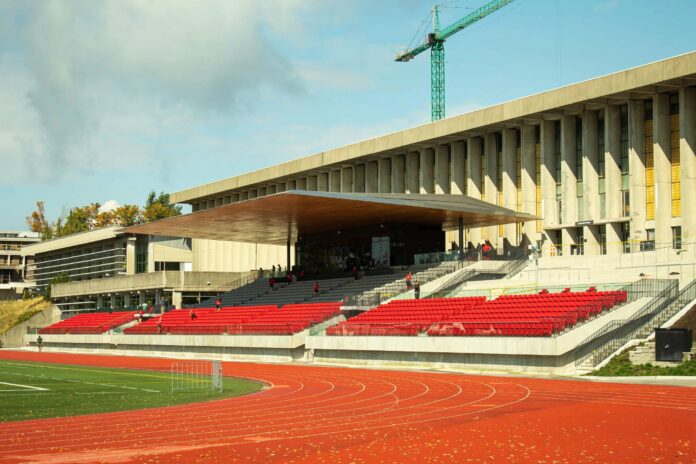
This photo is of the SFU stadium at the Burnaby Campus. The stadium is empty but it is a sunny day.
PHOTO: Krystal Chan / The Peak

By: Natalie Cooke, News Writer 

On March 8, The Peak attended the Simon Fraser Student Society’s (SFSS) bi-weekly Council meeting. The highlights from the meeting include discussing the new student health care committee and the approved funding for the 2023 Faculty of Applied Science Winter Formal.

Data Privacy and Security

Rastko Koprivica, who was the vice-president of finances and services, at the time of the meeting, addressed the issue of data privacy and security in the most recent SFSS Council meeting. It was noted, “The society relies heavily on non-domestic data storage mediums [ . . . ] The storage of data outside of the country, especially pertaining to personal information of members and society staff, pose questions of liability and protection of social data.” 

In the upcoming fiscal year, the SFSS will conduct research to determine where the society should store data. The current Council emphasized their recommendation for the upcoming executive committee to centre “privacy of member and employee information: a key priority to consider when making decisions in regards to information technology services of the society.” 

New Student Health Care Committee   

The SFSS is prepared to include students in important matters regarding SFU services; there is intention to form a new student health care committee. Abhishek Parmar, the acting president of the SFSS, said: “Students do not have enough input into their health care services [ . . . ] A committee should be established to ensure input, increased engagement, and researched health care matters throughout the fiscal year.” 

Despite their intention to create a new healthcare committee, no action or further discussion was taken at the time. 

FAS Formal 

The SFSS is preparing for the upcoming faculty of applied science (FAS) formal. At the February 8, 2023 Council meeting, the SFSS had approved spending $10,000. Their budget is going towards an evening that “has seen more interest than originally expected, where the current waitlist for the event is already halfway full with many people looking to purchase tickets.” 

FAS was requesting an additional $5,000 for the formal. The additional funding was passed unanimously.

It’s OK to live with your parents as an adult

0
PHOTO: Amirul Anirban/ The Peak

By: Jerrica Zabala, Peak Associate

There’s this assumption, especially among older generations, that living with your parents means you haven’t matured yet or you’re behind on the milestones you “need” to be an adult. Living with your parents or guardians should be more normalized because the cost of living is beyond unmanageable in the Lower Mainland.

Boomers and Gen X can talk shit all they want, but I’m staying with my parents until I can save up for a down payment on a house. Even my parents understand this absurd housing market, and give me the privilege of living under their care until I have financial stability. For many of us, our parents have been our financial, emotional, and social safety nets since we were young, so there’s nothing wrong with extending your stay to get ahead.

In reality, if you’re completing any type of higher education, you’re going to take at least 26 years depending on if you’re studying full-time or part-time. If you’re paying for your education, it helps to have a roof over your head, not worry about rent, or tip-toe around roommates. Even if you have to take out student loans, living with your parents gives you the ability to save more money than you would living alone. This is a huge advantage that can set you up for long-term financial security.

That’s not to say that there aren’t any disadvantages to living with your parents. For me and most likely other students, we pay with our mental health regardless. You run the risk of still being viewed as a child, having to personally communicate about physical and emotional boundaries, or enduring the invisible contract of being a “fake” renter. However, no amount of societal pressure, unsolicited life advice, or invasion of privacy will ever amount to how much I get to save so I don’t enter the “real world” in debt.

It’s time to let go of the belief that young adults need to move out as quickly as physically possible. With that being said, if you’re lucky enough to live in comfort with parents who are letting you stay just a tad bit longer, don’t be ashamed. 

Donatello’s advice to new and current SFU students

0
An 80’s style illustration of a wise raccoon looking off into space.
ILLUSTRATION: Raissa Sourabh / The Peak

By: Hana Hoffman, SFU Student

Hey there, I’m Donatello. I’ve been living at SFU and observing life here for longer than you can imagine, and it has come to my attention that some of you need my wise advice today. I’m happy to share my knowledge, but I really hope you read these tips and take them seriously because I had to skip my dumpster diving sesh with the raccoon community just to write this down.

  1. Get the free stuff.

You’re paying so much to be at SFU, so make the most out of it! The most important day of the semester is Clubs Day because almost every table has something to giveaway, including snacks and prizes. It’s basically trick-or-treating, except you have to talk a little bit and possibly sign up in order to get the prize. And, during the semester, you’ll see some tables here and there doing the same. I do want to mention one life hack to save time: if you join some clubs, just skip all the regular meetings and only attend the special events where they’ll have free food. Otherwise you’ll leave too much food for me and my friends! In addition, I expect you all to enter every single SFU giveaway. If you’re not already, then get started right now! Eyes on the prize, friend.

2. Enjoy nature, don’t hate it.

Although you must hate waiting in the freezing weather for the bus, slipping down the stairs, coming home in soggy shoes, and carrying an umbrella everywhere, there are still numerous reasons to be grateful to live on a mountain. With the earth’s temperature increasing, you might not get much cold weather anymore when you’re older. Don’t take the present for granted; go sledding on Burnaby Mountain, or get a cup and scoop up some free unlimited snow cones. Plus, on the occasion that it’s not foggy, you’ll see amazing views from campus! You can brag to your friends from other schools about how much higher you are than them, both geographically and academically, I hope!

3. Use my “eat, sleep, slay, repeat” method.

First of all, if it’s dark around your eyes like me then you’re not getting enough sleep. Don’t worry, my fellow raccoons, this only applies to humans. It’s also important to eat healthy, because you’d create a bad image of SFU if you’re seen eating packaged snacks and creating more garbage at a school known for its sustainable research and planning. Most importantly, I advise you to slay everyday fur real! I’ll even chant about it for you to get it in your head. Get good grades, get those A’s, get in shape, get that pay. Dash your way, through the rain, slay the day and get that praise. Okay. . . this is kind of cheesy, but you get the point, right? Make the most out of your years at SFU because you can’t paws time. I am spittin’ raccoon rhymes! AHEM.

To all new and current students, follow my advice and you’ll be thanking me later. From the bottom of my little raccoon heart I wish you the best. And if you ever see me or my raccoon friends hanging out on campus, please take a picture and post us on your socials. We wanna be famous!

— Donatello

Dear CAL: we want Subway Surfers side-playing in our lectures

0
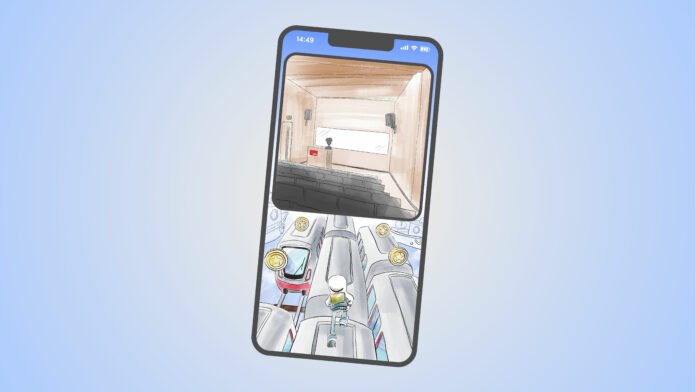
Illustration of Subway Surfers on a phone.
ILLUSTRATION: Christina Cao / The Peak

By: Dev Petrovic, Peak Associate

Dear Centre for Accessible Learning,

Word around campus tells us you’re able to pull some strings and make things happen, and we wanted to get in on that. We are the SFU Centralized Union for Mid-focused Students, or, as we are commonly referred to: the chrnically oline. We do not claim that term. But anyone can form a union, so here we are. At this time, lectures at SFU do not include side-play videos of mobile games like Subway Surfers. We demand this changes across all SFU campuses — if that means ignoring CAL students’ needs even more to get it done, so be it. It’s the only way to make SFU an accessible place for everyone. 

We are students who have adapted to the simultaneous streaming trends of TikTok, and now only have the attention spans to consume information if there’s side-by-side video footage of a stranger playing a mobile game. You may wrongfully believe this would be a distraction for other students. This is partially true: they would be distracted from fully experiencing the Subway Surfers stream while partially paying attention to their lecture. The psychology checks out and the method is foolproof. 

Since lectures are already boring, SFU has nothing to lose by integrating mobile game side-streaming, and will only gain brighter individuals with a “renewed sudden interest” in their major and excellent “endless runner” game skills. These are valuable and highly applicable assets to students entering the post-graduation world in this economy. Sometimes we can learn just as much about quantum physics from Subway Surfers as some old guy with glasses and a ten-yer, whatever that means. Alternatively, SFU is also welcome to expand their range of educational videos to include ASMR soap-carving (teaches you how to waste soap), slime-making (chemistry), and hydraulic press compilations (sexy). 

What would this cost SFU? Money from their budget. But, finances and logistics are hardly relevant since money is more of an imaginary concept and side-streaming is a heavily integrated, highly valued, and relied-on aspect of society. Most importantly, with these integrations SFU would become the first university in the world to recognize and utilize Subway Surfers side-streaming as a mode of educational support. You can’t get any more engaged with the world than that! 

It’s critical for students’ health and well-being to be given the same opportunities to thrive despite systemic and institutional barriers, which is why this should be the priority and not anything else. Based on research (a cute way of saying we don’t have to prove it), students who get what they ask for from their universities — like Subway Surfers side-play — are far less likely to write hate mail to a certain student resource created to advocate for and accommodate students. Its also historically true that universities who don’t do exactly as they’re told will be very sorry and shouldn’t be surprised when an anonymous hacker hijacks every SFU monitor to stream Sandwich Runner, the mobile game. Our point being, if you care about us at all, you’ll just do it — even though we’ll probably make it happen anyways. 

Sincerely,
SFU CUMS (Centralized Union for Mid-focused Students) 

Connect the Lingo

0
Illustration of a character connecting the words “connect the” and “lingo” with a pencil.
ILLUSTRATION: Alyssa Umbal / The Peak

By: Natalie Cooke, News Writer

Word Bank: goalkeeper, airball, shank, 19th hole, double dribble, muff, cut shot, bunt, meet, nutmeg

  1. When a player stops dribbling and then begins again, or dribbles the basketball with two hands, they commit a ________ dribble.
  2. This soccer player usually wears a different colour than their teammates on the field.
  3. Time to relax and grab some lunch at the ________. 
  4. When a football player makes contact with the football, without successfully maintaining possession of it. 
  5. When a softball batter chooses to tap the ball instead of swing.
  6. A volleyball attack where the player spikes the ball “at an extreme angle across the court, making it nearly parallel with the net.” 
  7. The libero received the serve but their pass was a  ________. The ball flew out of bounds!
  8. You ________ an opponent in soccer when you kick the ball through their legs, instead of trying to go around them.
  9. She tried to make a three-point shot, but instead hit an ________. 
  10.  Another word for a swim competition.


Answer Key

  1. double
  2. goalkeeper
  3. 19th hole
  4. muff 
  5. bunt 
  6. cut shot 
  7. shank 
  8. nutmeg 
  9. airball 
  10.  meet

What’s with all the shouting in karate?

0
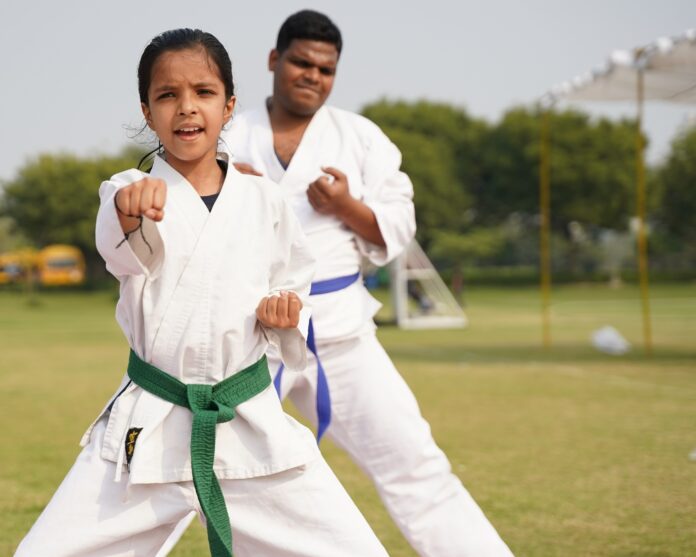
photo of two people performing karate.
PHOTO: Ashima Pargal / Unsplash

By: Matthew Cheng, SFU student

One of the biggest questions people have about karate is why practitioners yell when they punch or kick. They do it to practice kiai (pronounced “key-eye”) — the official word to describe the sounds heard when performing an attacking strike. “Two Japanese characters make up the word: Ki means ‘energy,’ and ai means ‘to unify. It’s essentially the “convergence of your energy.”

To perform a kiai, athletes need to exhale during the technique instead of holding their breath. If an athlete holds their breath, their muscles will tighten up. This tension makes the body slow and rigid. When hit with a flood of adrenaline, it’s normal for your breathing to become more shallow because your airways are expanding to take in more oxygen to your muscles. Kiai can be a tremendous help in steadying your breathing. 

It’s important that the sound comes from your stomach and not your throat. In order to do that, you’ll have to trigger your transversus abdominis, which sits on either side of your abdominal wall. If done correctly, the pressure in your stomach should push the shout from your mouth as you exhale. The kiai is similar to vocalizations practiced in other sports. In boxing, competitors grunt to exert power, while in sumo wrestling, competitors use stomping as an intimidation tactic while entering the ring. Kiai can also be done for reasons beyond breath control: from gathering strength to intimidating your opponent. The real consensus is that it sounds different for everyone and is interconnected with a person’s spirit

This week at SFU

0
PHOTO: Sebastian Brinkman / SFU Athletics

By: Simran Sarai, Sports Writer

Home Games

Friday, March 24: softball vs Northwest Nazarene (Idaho) at 12:00 p.m. and 2:00 p.m. 

  • Beedie Field
  • First regular season home game 

Saturday, March 25: softball vs Northwest Nazarene (Idaho) at 12:00 p.m. and 2:00 p.m. 

  • Beedie Field 
  • Second of four consecutive games against Northwest Nazarene 

Away Games

Monday, March 20: women’s golf at Colorado St. Pueblo Pack Spring Invite (all day)

  • Day two of the event

Saturday, March 25: lacrosse vs Brigham Young University at 2:00 p.m.

  • Riding a three game win streak 

Saturday, March 25 to Sunday, March 26: track and field at the UBC Open (all day)

  • Second meet of the outdoor season 

Letting go of the future to be aware of my present

0
PHOTO: Stormseeker / Unsplash

By: Daniel Salcedo Rubio, Features Editor

Content warning: mentions of disordered eating and harmful behaviour.

Happiness is such an elusive concept; we look for it in every corner only to realize it’s still far away. We keep thinking we will eventually find it after some great achievement or in the company of someone else. I’m only 28 years old, and I feel I’m nowhere close to having any meaningful wisdom. For the past couple of years, I’ve lived in a continuous state of autopilot. Even before the pandemic started, I felt my life was becoming monotonous. I was already shutting down my awareness — I was just performing the same tasks and activities on the same days, every week, every month. Don’t get me wrong, I think finding a routine that works for your lifestyle is an essential part of finding a balance between leisure and responsibility, but moving through time without awareness of either removes all the obligations and enjoyment of both.

I’m not entirely sure how it all started, but in hindsight, I realize I was moving through life without any notion of awareness during the last year of my undergrad degree some five years ago (yikes). I had just come back from studying abroad, where every day truly felt like it could have been a short novel on its own. I was ready to apply that same motivation for life back in my own city, but I just couldn’t. I got extremely anxious about life after graduation. I started looking for a job in my field and had to navigate through an ocean of rejection, with each new failed interview feeling like a bigger wave of disappointment than the previous one — I thought I was going to drown. One day I got it: a great job with great pay in my field, and I thought I could finally breathe again, but the air didn’t last long — a month later I was back to the beginning. I kept looking for the next big thing to bring me joy: the next promotion, the next event, my next achievement, and soon after I finally got them, I would find myself back at the bottom of the ocean.

I was dissatisfied with my life despite having everything one could need. I had a great job with pay well above the average for my age bracket, caring friends, a great relationship with a wonderful person, and most importantly, I had a place to sleep and a full pantry. I didn’t go to a psychologist; I was afraid and I grew up in an environment where the stigma surrounding mental health was always present. I kept thinking, “you just need this one more thing, then your life will be better.” My eyes were always on the goal, but my mind was never in the present. I just kept moving through life on autopilot, jumping from tiny bits to tiny bits of awareness and enjoyment. One day I got a promotion, six months later I got accepted into SFU, and six months after that I was moving my entire life to Canada. Don’t get me wrong, I worked for these achievements, they’ve brought joy into my life and I’m proud and grateful for them — but I don’t remember enjoyment in between them. It wasn’t until I moved to Canada that I truly felt something was wrong. This had been a dream in the making for more than a decade; yet, my first few months here were filled with anxiety and confusion. “I made it!” I repeated to myself day after day, but I still found myself barely eating and barely going outside my room in residence. I was confused. This had been the big achievement that I had been working so hard for, it was the ultimate goalpost, the surface I had been trying to reach with all my strength —  I wasn’t sad nor happy, I just felt . . . nothing.

I decided I needed to take a step back, to chill the fuck out. Of course, that’s easier said than done when living in one of North America’s most expensive cities with an income that wasn’t enough to sustain me long-term. I had also just started a new degree — it seemed like the worst time for me to chill. There was so much to do, and so many new things to achieve. And there I was again, setting new objectives for myself, setting my happiness in goals yet to achieve, setting myself up for failure — until one catalytic moment happened. One goal I had been looking forward to and that felt so close was torn into pieces, never to be achieved. I was broken, I moved from barely eating to just not eating at all for days, from barely going out to literally not leaving my room once in an entire week. I took a step back; not by choice, but by force.

Thankfully I didn’t stay long in that dark place. I gathered myself slowly, built myself back up, and started to look for happiness wherever I could find it. A year ago, a friend gifted me a book called The Things You Can See Only When You Slow Down and while I haven’t really read it, the title kept bouncing around my head, telling me, “you need to slow down, you need to appreciate the things around you.” So, I made the conscious effort of being aware of what I did and what was happening around me. I would try to no longer play music or something on Netflix just to get background noise. I would instead stop and try to focus and enjoy one thing at a time.

I started going outside, walking through the trails of Burnaby Mountain just to hear the leaves rattle with the wind, and I would wake up early just to listen to the noise of cargo ships in the distance. I decided to romanticize my life — I imagined myself as a character in a Studio Ghibli movie, finding magic and joy in doing the most mundane things. Taking the Expo Line suddenly felt like being on the Sea Railway of Spirited Away. I found joy by slowing down and being grateful for the tiny things that make my life special, and I even started a daily gratitude journal.

I wrote every other day what I was grateful for, from tiny things like my technological gadgets to more complex things like relationships with my friends. I must admit that I felt silly writing about why I was grateful for the change of seasons and it was kinda hard to find things to be grateful, but now I genuinely appreciate these things I used to take for granted. But don’t assume that I’m fooling myself, I’m well aware that the anxiety will likely come back. I’m still setting goals for my future — I even started 2023 with a list of 28 things to do before turning 29 — but now, my happiness isn’t solely bound to them.

I want to finish by saying that I’m truly happy, I’m enjoying the present while still looking forward to the future. I’m still switching to autopilot, but I’m no longer jumping between tiny bits of happiness; instead, I’m jumping between tiny moments of autopilot. I started going to counselling because I know my Studio Ghibli trick will not last forever, but I will still enjoy it while it does. If there’s one piece of advice I could give you, it’s not to wait until you’re broken into pieces. If you need help, look for it or ask for it. SFU Health & Counselling is open for you and British Columbia also has a list of resources you can access when needed. Take care of yourself, for yourself.