
Backlash reportedly not the British Museum’s tea and crumpets

By: Sasha Rubick, Fact Checker
In 2025, the British Museum unveiled an online exhibit titled Colonialism: A Digital Experience. The paywalled, by-subscription-only website was created to make stolen artifacts more accessible, and held the controversial mission statement, “History belongs to everyone, as long as it is nailed to the floor in London.” After facing severe backlash, the museum has released a statement, which is as follows:
In the spirit of democracy that Britain has historically propagated worldwide via peaceful invasion, the British Museum welcomes socratic dialogue. An itty-bitty verbal tiff between neoliberals — why, that’s our tea and crumpets! But myself and my wigged compatriots at the British Museum have been quaking in our wellies seeing the insurrectionist whinging of the tabloids this past year concerning our online exhibit. Nonetheless, in an act of gracious neighbourliness, we have axed the website [hold for applause]. We thusly present our defence of our actions to our noble countrymen; esteemed representatives of the Nobel Foundation; and the mob of complaining, unsavoury internationals; in that order. In the spirit of settler-colonialism, ‘tis high time that we situate this kerfuffle behind us and pretend it never existed. Off we go!
Firstly, we at the British Museum have been positively knackered by the ludicrous idea that we should somehow “return stolen artifacts to their rightful owners.” Hast thou no sense at all? The foremost concern of the British Museum is the protection of stolen artifacts. The prerequisites of a nation to protect its own artifacts are as follows: 1) an arsenal of nuclear weapons, and 2) a squadron of silent soldiers in very tall hats. Until one possesses both, they are in no position to protect their own cultural lineage, and we shall benevolently undergo the task on their behalf. By God, imagine if somebody threw soup at it, or misplaced it with their improper archival skills. Nothing like that would ever happen in London.
Moreover, we at the British Museum think that one culture is being neglected amidst this dialogue — why has nobody mentioned British culture? Theft is our great nation’s most beloved pastime; we love it even more than football and transphobia. Be it the Benin Bronzes, the Rosetta Stone, or the Parthenon sculptures; what is consistent is that we rob indiscriminately . . . or maybe a tad bit discriminantly (shhh). The British Museum has borrowed artifacts, and now we’re stealing money by loaning those artifacts to the very people we borrowed them from! Likewise, it is time-honoured British cultural practice to keep old, dusty artifacts around and claim that they’ll rake in tourist dollars. Just look at our monarchy! And do pray tell, why oughtn’t an upstanding institution such as the British Museum partake in traditional British ritual?
Our online exhibit was truly ingenious, and we will not apologize for it. After all, we achieved our ultimate goal: stealing the credit for stealing! When you think of “stolen artifacts,” you think of the British Museum — that’s what we call a mighty-good PR move. We’ll gladly steal away your tourist dollars, because we profit from the belief that one needs an aeroplane ticket to see stolen artifacts. By all means, languish in the futility of seeking repatriation across the pond; and forget that collections, museums, and universities right in your neighbourhood do the exact same thing. Ta!
A letter from your old friend, GERD

By: The one and only GERD
Dear — no, let’s skip the formalities, we’ve known each other long enough. You probably know who it is already, but just to make sure you don’t mistake me for the other guy you hate — AKA lactose intolerance. It’s me, Gastroesophageal Reflux Disease (GERD for short). You call me “the ultimate life ruiner,” and while it lowkey stings, I try to convince myself that it’s just a term of endearment for you at this point. You may be wondering why I’m suddenly reaching out to you, considering that we’ve technically known each other for a good couple of years now, but we never had a proper conversation. Like a real, one-on-one, heart-to-heart talk. They say “better late than never,” right? So here I am, being the bigger “person” so to speak, and initiating this difficult but much needed conversation . . . via a letter. Finally, GERD gets heard.
It’s truly upsetting seeing how estranged we’ve become and how much you’ve come to despise me, when all I’ve ever done was be here for you through thick and thin — I’ve always been the one constant in your life. Who was there for you when you’d pull all nighters studying, while eating spicy instant noodles just to stay awake? That’s right — me. Who did you use as an excuse to avoid consuming culinary biohazards, like the suspicious chocolate chip cookies made by your coworker’s five-year-old who wipes his runny nose with his hands? ME. “Sorry — I can’t have chocolate, it’s a GERD trigger,” you said, just last week. And not once, in all these years of our union, have you ever thanked me. One might say I’m close to your heart, because . . . you know . . . the heartburn. But I don’t think you feel that way, and it really hurts my feelings!
I’d also like to point out that framing me as the villain in this story has been more than unfair. From your perspective, I ruin the fun by giving you stomachaches and heartburn, but have you ever considered how your actions affect me? I want to have some peace and quiet around here, but how can I when you consume foods that summon me from the pits of the intestinal chambers? Your doctor gave you a list of trigger foods to avoid, and yet you actively choose to consume said trigger foods. And don’t get me started on those disgusting fruit-flavoured calcium carbonate tablets that you take whenever you get acid reflux. Would you want to be doused in powdery fruit-flavoured chalk? The golden rule is to “treat others the way you want to be treated,” so why is it okay to do that to me? And remember when you unfairly blamed me for giving you a stomachache after eating triple cheese pizza, when it was — I’d argue — mainly lactose intolerance’s fault? And yet I took all the blame until you finally decided to get that checked out. You complain about me being “sour,” but wouldn’t you be sour too if you were me?
As heartburn-inducing as it was to write this out, it had to be done, because you really ought to reflect and take responsibility for your own actions rather than blaming me for this whole ordeal. I hope that after reading this letter, you finally see the situation from my point of view and show me a bit more compassion.
— GERD
Horoscopes June 15–21

By: Abbey Perley, Assistant Production Editor
Aries
March 21–April 19
Tangerine matcha latte
Aries, tangerines may be as bright as you, but the novelty is getting a little out of hand. When was the last time you even ate a tangerine? This combination is what you thought could kickstart your summer, but all it will really do is stoke the thrill of being a trailblazer. At least you’ll know you’re meeting your Vitamin C intake. The stars are taking bets on if you’ll gatekeep this or make a TikTok about it (or both, somehow, for social validation).
Taurus
April 20–May 20
Banana bread matcha latte
Just because you like to be cozy doesn’t mean your drink orders must follow suit. The stars are seriously wondering if you even wanted a matcha at all or if you were just craving banana bread. Now you have both. Please consider taking up baking instead of drinking whatever this is.
Gemini
May 21–June 20
Dirty matcha latte
Gemini, you don’t have to drink dirt just to stay relevant! When indecisiveness has been ruling you to the point where you have to layer two caffeines on top of each other, you should know something needs to be re-evaluated. The stars believe in your ability to get through one full drink of one kind without getting bored, and are simultaneously concerned about how FOMO is impacting your lifestyle. Check in with yourself once the caffeine from this doozy wears off.
Cancer
June 21–July 22
Usucha
It’s OK to admit the world can be a bit too much for you. You can’t be bothered with all the toppings and syrups and cold foams and milk substitutes that modern society possesses. Sometimes you just want to reconnect with how all of these drinks began in the first place. The stars think this is a good time to return to your roots and remember where you started. Some people may call you boring, but the word they should be looking for is classy.
Leo
July 23–August 22
Raspberry danish matcha latte
Your desperation for success can get a little out of hand sometimes (all the time). This is another case of that desperation making itself known. This drink is the embodiment of throwing synonyms at your essay just to hit word count and look pretentious. Raspberry? Doable. Danish? Not unless they blend up a pastry to make it (which is unlikely, but would maybe contribute to it being $9). Like your essay, this drink sounds intriguing but just by the name, we all know you’ve lost the plot.
Virgo
August 23–September 22
Pumpkin spice matcha latte
Pumpkin spice as a matcha flavouring should be a recession indicator, and perhaps it’s time for you to chase this trend. Instinctually, pumpkin might be up there with the last things you would consider pairing with matcha. However, the stars (or a sponsor?) would like you to look a little closer and consider that the warm earthiness of both ingredients make for one robust drink that would suit your equally-as-earthy nature. Please try it! This entry has been sponsored by Big Pumpkin!
Libra
September 23–October 22
Strawberry matcha latte
To bond with the enthusiastic strawberry matcha community, you are completely OK with being like other girls and romanticizing your daily life beyond belief (mostly to remain functional). As endearing as this is, the stars urge you to find your matcha-life balance elsewhere; they are afraid a less-than-average latte may be your last straw(berry).
Scorpio
October 23–November 21
Mango matcha latte
Like you, this drink can be quite temperamental depending on if it’s mango season or not, but it’s a staple that you’re always determined to try regardless. At times, the mango’s sheer strength can make the matcha nearly invisible to the tongue. The stars would like to ask if you feel more like the mango or the matcha in this scenario, and possibly consider how that affects other people.
Sagittarius
November 22–December 21
Ube matcha latte
You’re a risk-taker, and what better way to prove it than trying one of the most volatile combinations possible? The success of this drink depends entirely on the quality of both compounds. The high-risk, high-reward nature makes for an adrenaline rush — just don’t crash and burn when it inevitably tastes artificial at least 50% of the time. Big Pumpkin has sponsored this entry to remind everyone that pumpkins grow in the ground just like ube.
Capricorn
December 22–January 19
Double shot matcha latte
You’re someone who needs to ensure everyone in your life knows you’re a busybody. You might think the L-theanine in matcha makes you seem morally superior to a coffee drinker, but just because you can doesn’t mean you should. The stars urge you to check how many grams of matcha are in one shot so you don’t spend the next five hours vibrating instead of addressing your to-do list (which they know is long; you have a lot to accomplish, after all).
Aquarius
January 20–February 18
Blueberry matcha latte
Usually, the stars see blueberry paired with hojicha, but you seem to want all that is different. You might experience disappointment more than the average person. You say that builds character, but this just means you get to talk about experiencing disappointment in your daily life. Big Pumpkin has sponsored this entry to tell everyone that pumpkins have a longer shelf life than blueberries and therefore have a higher ROI(FM) (Return on Investment (For Matcha)).
Pisces
February 19–March 20
Matcha milk tea with pearls
Let’s be honest. You were at a bubble tea shop and didn’t feel like a fruit tea. None of the other milk teas had the specific energy you were looking for. For someone as nostalgic as you, the fond memories of your matcha experiences persist even when away from matcha cafes, which influences your order everywhere else you go to an alarming degree. It’s debatable if this even counts as matcha and you probably knew that while ordering it, but unlike some matcha snobs, you’re just here for the vibes.
Recent Andes virus outbreak on the MV Hondius cruise

By: Marie Jen Galilo, Staff Writer
On April 1, the MV Hondius cruise departed from Argentina with two Dutch passengers who were carrying the Andes virus, leading to a boat-wide outbreak. In their latest update, released on May 28, the World Health Organization (WHO) shared in a report that there are 11 confirmed cases, two probable cases, and three deaths linked to the hantavirus.
On May 16, BC provincial health officer Dr. Bonnie Henry announced the first confirmed case of Andes virus in BC. Four passengers from the cruise were brought into BC. Initially, they were asked to isolate for 21 days. One passenger, who is a Yukon resident, tested positive for the virus but has since recovered, according to BC health officials. Following this confirmed case, the isolation time for the other passengers was extended to 42 days, the maximum incubation period for the Andes virus. The other three passengers are currently asymptomatic but remain in quarantine until June 21.
Hantaviruses are a group of viruses — submicroscopic bodies that require a host to reproduce — that include more than 20 species. The viruses primarily use rodents, “such as rats, mice, and voles,” as hosts. According to the University Health Network (UHN), common modes of transmission include inhalation of air particles from “rodent droppings, urine, or saliva,” as well as the consumption of “contaminated food or water.” The Andes virus is the only identifiable species known to have the capacity of human-to-human transmission: following prolonged, close contact with an infected individual, although these transmissions are rare. According to the WHO, this is “defined as being within 2 meters for a cumulative period of more than 15 minutes.”
The specific species of hantavirus on the MV Hondius cruise was identified as the Andes virus, which may “cause a condition called hantavirus pulmonary syndrome (HPS),” according to the UHN.
The Peak spoke with virologist and SFU associate professor of health sciences, Dr. Masahiro Niikura to learn more about hantavirus. He shared, “The severeness of the disease and the transmissibility — how contagious a virus is — [are] totally different things.
“The virus that can cause a pandemic is [one that is] easily transmitted in the human population. Hantavirus is not.”
— Dr. Masahiro Niikura, virologist and SFU professor of health sciences
Hantavirus is shed mostly in the urine.” COVID-19, for example, is primarily spread through airborne particles or respiratory droplets. Although both viruses can spread in multiple ways, the current understanding of how the Andes virus spreads makes it “easier to control, to contain.”
Dr. Niikura emphasized that the location in which the virus replicates is often where it will be transmitted. “If the virus is replicating in the upper respiratory tract, the virus is more likely to be shed from the mouth, like cough, sneezing, or saliva,” he shared. Currently, “it is not clear whether the virus is present in this way or how long it might survive in respiratory particles,” according to Scientific American. “In many cases, hantaviruses are replicating deeper inside of the body.”
Currently, there is limited progress in the development of vaccines and treatment for the hantavirus, which Dr. Niikura said may be due to a lack of demand. “Because this virus is not highly contagious and human cases are so rare in developed countries, the demand for an effective vaccine is limited,” he shared. In Argentina, Andes virus cases are numerous, especially in tight-knit rural communities. More cases are cropping up in the country’s populous capital, Buenos Aires.
The Peak also reached out to BCCDC for a statement, who shared that “the risk of being exposed to hantavirus in BC is low,” but advised people to “avoid dust that could be contaminated with the saliva, urine, or droppings of infected deer mice.” In BC, “Workers and homeowners can be exposed in crawl spaces, under houses, or in vacant or occasional use buildings, such as cottages, trailers and garden sheds, that may harbour mice. Campers and hikers can also be exposed when they use infested trail shelters or camp in other deer mouse habitats.”
For information on how to identify and protect yourself from hantavirus pulmonary syndrome, visit the BCCDC website and HealthLink BC.
Road closures on Broadway causes uncertainty for local businesses
By: Niveja Assalaarachchi, News Writer
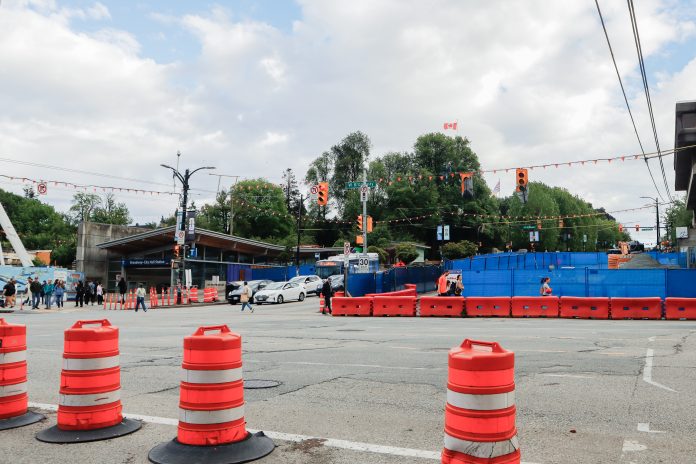
On May 6, the BC government announced the latest detour developments along Broadway in Vancouver. A road closure and a subsequent road detour is set to occur in July on West Broadway between Cambie street and Alberta street. These changes will last for about six months after the FIFA World Cup. Vehicle traffic will be rerouted to West 8th street between Alberta and Ash Street. Due to this road closure, businesses in the affected area will have reduced traffic, with sidewalk accessibility and limited parking.
This road closure is a result of the Broadway Subject project: a $2.9 billion provincial project that will extend the Millennium Line from its current terminus at VCC-Clark station to Arbutus Street and Broadway. The project has faced numerous setbacks with an original project completion date of 2025 being pushed to the fall of 2027, as a result of construction issues.
The provincial government shared in a statement that the closure is necessary in speeding up road reconstruction along the corridor, claiming that the detour “will reduce disruption from 14 months to six months.”
The Peak reached out to Rania Hatz, who is currently serving as the executive director of the Cambie Village Business Association, to understand what businesses in the area feel about the new road closure.
She shared that while businesses expected the road closure to come to their area, they were shocked at the timeframe of the detour. Hatz claimed, “There wasn’t any consultation, and nor was there any notice. We were given notice 20 minutes before the press conference about this. So there are people who renewed leases, not knowing that traffic would be diverted.”
Hatz critiqued the lack of consideration shown to businesses by various levels of government.
“These are people, this is their livelihood, this is their business. They get up every morning expecting to go to work and make some money for their families. We’re not talking the billionaires, we’re talking the ma’s and pa’s”
— Rania Hatz, executive director of the Cambie Village Business Association
She proposed that the municipality could offer a tax break to properties affected by the road closure. She noted that this could allow property owners to lower their tenants’ rents as a form of relief to businesses in the area. “We’re not talking about compensation since they’re not wanting to do compensation [ . . . ] but at least they could stop charging them money.”
In a statement to The Peak, the City of Vancouver said that it “is supporting the province to help make this pending closure efficient to reduce the overall duration of road reconstruction of the Broadway Subway Project.” The city also highlighted two tax reliefs, targeted land assessment averaging and the development potential relief program pilot, on offer for “eligible light industrial and business properties.”
The BC Ministry of Transportation and Transit shared with The Peak that the building of each of these underground stations “requires a tailored approach to complete this phase of work, while minimizing impacts on the surrounding community and travelling public.” They added, however, that “this will be the final full closure of Broadway for the project.”
The Millennium Line extension will add five additional underground SkyTrain stations connecting to the new Arbutus terminus station: Great Northern Way-Emily Carr, Mount Pleasant, Broadway-City Hall, Oak-VGH, and South Granville. At Broadway-City Hall station, a new station will directly connect the Millennium and Canada Line for the first time.
Motion to support Vancouver’s sex workers faces dramatic reduction
By: Lucaiah Smith-Miodownik, News Writer
Content warning: mentions of disappearance, murder, and serial killer Robert Pickton.
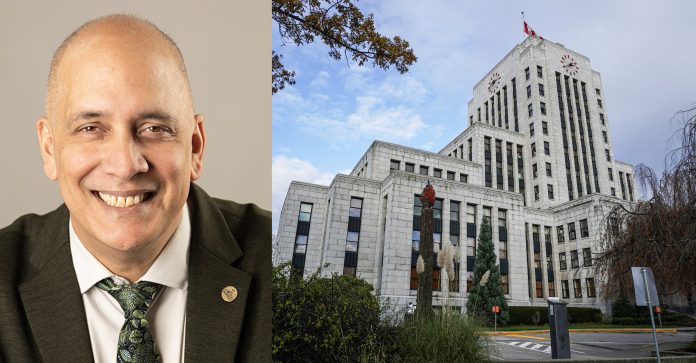
At the Standing Committee on City Finance and Services on May 20, Vancouver Green Party councillor Pete Fry introduced a motion aiming to uphold “the City’s responsibility to maintain adequate, community-connected capacity to support sex worker safety.” Fry included a call to reinstate a second sex work social planner, after the role was slashed to only one active position earlier this year. The motion passed with amendments, which eliminated this commitment. The Peak corresponded with Fry, WISH Drop-In Centre Society, and the City of Vancouver for more information.
Those in the support position “function as liaisons and planners working directly with people and organizations with lived and professional experience,” Fry explained. They “specifically are not representing or reporting to law enforcement — with a focus on understanding and identifying risks and trends, and creating safe environments in work places and urban realm.”
These positions came as direct recommendation from a Commission of Inquiry, led by former attorney-general Wally Oppal. Their 2012 document Forsaken: The Report of the Missing Women Commission of Inquiry was designed “to inquire into the failures of policing forces between 1997 and 2002 who were investigating the disappearance and murder of dozens of women in Vancouver’s Downtown Eastside, and particularly the police investigation of serial murderer Robert William Pickton.” Pickton “was charged with murdering 26 of the women” — although he claimed to be responsible for the death of 23 more — and was found guilty on six counts of murder, according to The Canadian Encyclopedia. He died in 2024 serving life in prison.
This document highlighted many negligent police behaviours surrounding the murder investigation while it was ongoing, as well as systemic issues that led to the vulnerability of women working in the sex trade, including being unhoused and substance use issues. Oppal made a total of 65 recommendations to the government to take “action to directly address women’s vulnerability to violence and serial predation.” One of these recommendations was “that the City of Vancouver create and fund two community-based liaison positions to be filled by individuals who have experience in the survival sex trade.”
Fry’s proposal also acknowledged the immediacy of reinstating the second position, given the city’s upcoming summer events. “There are reasonable and credible concerns about increased risk of violence and harm to sex workers around FIFA events, driven by heightened policing, displacement, venue-area controlled zones, and the erosion or loss of safety supports and peer infrastructure,” the motion reads. Similarly, “during the Olympics in Vancouver sex workers faced heightened police harassment without arrest.”
The original motion also noted that “sex worker safety advocates, SWAN Vancouver, report calls relating to violence and safety concerns increased by 64% between 2024 and 2025, with further increases projected for 2026.” They note that “increasing housing scarcity, economic pressure, escalated violence, service defunding, and the loss of peer-led organizations have compounded new risks for sex workers.” Recently, the sex worker support organization PACE “permanently closed its 24/7 Vancouver drop-in centre after 30 years of operations due to a lack of funding,” according to CBC. Vancouver currently has no 24/7 sex worker support centre. According to Halena Seiferling, executive director of Living in Community, this leaves many with nowhere to go, as “most organizations aren’t open and operating when sex workers need to access them,” as reported by CBC.
Still, the second sex work social planner role was originally cut as part of the city’s effort “to shave costs in response to a direction from mayor Ken Sim’s ABC Council majority to freeze property taxes this year,” according to CBC. The amended motion, which was proposed by ABC councillor Lisa Dominato, included “no commitment to rehiring the worker.” Dominato asserted “that instead of having two sex-worker support staffers there should be a focus on safety across multiple city departments,” according to the Vancouver Sun.
The Peak reached out to councillor Dominato for comment, but did not hear back by the publication deadline.
The City of Vancouver noted that “for the past several years, the city’s work related to sex worker safety has been delivered within a broader planning focus on community and gender safety, including women’s equity, 2STGD+ [Two-Spirit, Trans, and Gender Diverse] safety and inclusion, and MMIWG [Missing and Murdered Indigenous Women and Girls] responses.” The City said to The Peak, “As part of this work, some functions are changing or being realigned while ensuring service priorities continue to advance. Community and gender safety, including efforts to support sex workers and related organizations, continues to be a priority in the city.”
For Fry, however, “the role of the sex-support worker is a highly demanding and difficult job that helps protect this community in ways that other departments, such as the police, can’t,” he shared with The Vancouver Sun.
WISH Drop-In Centre Society, whose mission is to “improve the health, safety, and well-being of women who are involved in Vancouver’s street-based sex trade,” echoed concerns regarding the City’s decision. “Council heard almost an hour of testimony from 20 people with lived experience who spoke about ways the sex worker safety planners provide an essential resource for both individuals and sex worker serving organizations. They received hundreds of emails as well,” the organization told The Peak. “It’s really hard to reconcile the amount of public support shown for these knowledgeable workers with the decision to cut their two-person department.
“There is so much misunderstanding about sex workers’ rights, and discrimination related to sex work stigma, that specialized knowledge is required to have an impact on sex worker safety”
— WISH Drop-In Centre Society
WGOG: If the sun is down, my pen should be too
By: Sania Shenasa, SFU Student
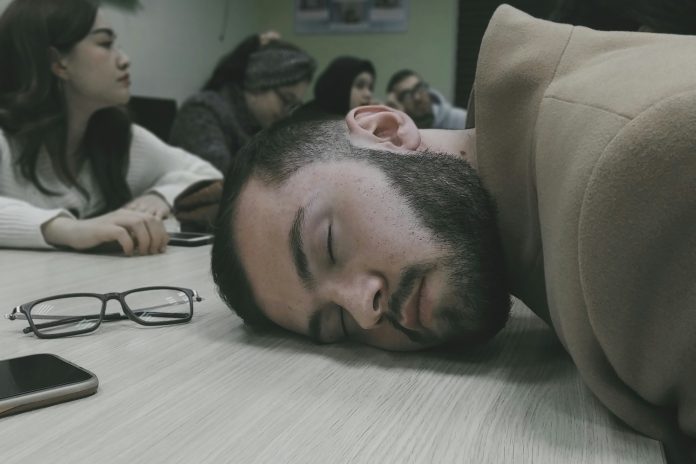
There’s a specific feeling that you experience once you hit the 3 hour mark into a final and the world outside has gone pitch black. By 9:15 p.m., your brain isn’t even “testing” anymore, it’s just static — static and grasping at words to write out onto the paper.
The 7:00 p.m.–10:00 p.m. exam slot should be a crime. SFU is already notorious for those early morning 100-level math classes that defy the circadian rhythm, but this late-night slot? This is its evil twin. In April, there were 51 exams starting at 7:00 p.m. Are they testing our knowledge or testing our physical and mental endurance?
Cognitive performance relies on a mix of basic alertness, sustained attention, and executive functions like problem-solving and catching your own mistakes before turning the exam in. All of that drops massively in the late evenings.
“Night owls” have a delayed cycle that tolerates late hours, but the rest of us hit a wall in memory and attention as the evening wears on. It feels like we are being penalized for our brains naturally shutting down as the sun dips below the horizon. At this point, we’re being graded on our ability to ignore our body’s natural urge to relax or eat dinner.
These late night exams sabotage our sleep schedules and grades! If the sun is down, so should my pen. SFU, please: have the courtesy of letting us fail our exams while it’s still light outside so we can at least enjoy the scenery on the bus ride home.
Political Corner: BC MLA Tara Armstrong shouldn’t be in her position

By: Jonah Lazar, Staff Writer
Content warning: mentions of anti-Indigenous, transphobic, and anti-semitic language.
Tara Armstrong, a member of the legislative assembly (MLA) representing the Kelowna-Lake Country-Coldstream district in the BC legislature, caused an uproar by implying that the New Democratic Party’s (NDP) approach to Indigenous rights in BC is reminiscent of Nazi ideology. Following condemnation from Premier David Eby, fellow MLAs, and the speaker of the legislature, she withdrew her statement. However, a motion to have her apologize failed, and no other disciplinary measures have occurred. This is not the type of person who should have the power to influence our laws. Constituents in her district organized a recall petition, but have not been successful in calling a by-election. This is because currently, you need 40% of a district’s voters to sign the petition; that’s 18,000 people. Even though only 27,000 people actually voted in the last election. The signature threshold should be based on how many people voted, to make it easier to hold their elected representatives accountable — something we’re clearly struggling with.
While debating the K’ómoks Treaty Act, which would function as a land-back agreement for the K’ómoks First Nation, Armstrong baselessly claimed that the NDP is attempting to create an Indigenous ethnostate that is similar in nature to the Nazi slogan of “blood and soil.” This Nazi phrase was a rallying cry in the justification of a mass genocide of disabled, queer, Jewish, Roma, and other marginalized people living in Germany and various of their WW2 occupied territories, such as Poland. This comparison by MLA Armstrong is referring to the adoption of the Declaration on the Rights of Indigenous Peoples Act, which is an act that aims to reconcile with the Indigenous Peoples whose traditional land BC was founded upon. This act is a legal codification of the United Nations Declaration on the Rights of Indigenous Peoples, which largely focuses on the right to self-determination, to practice cultural traditions, and to use traditionally inhabited lands for Indigenous Peoples. This statement is doubly offensive; it is insensitive to the victims of the Holocaust, as it minimizes the experiences of those who suffered this tragedy and equates respect for Indigenous Peoples to Nazism, which is extremely bigoted.
Her use of these inflammatory statements in a deliberate, patterned way to play on the irrational fears and prejudices of people living in BC. This is far from the first time that Armstrong has been at the centre of controversy. She also labeled the tragic Tumbler Ridge shooting a result of “transgender ideology,” and put forth a bill to repeal BC’s Human Rights Act, which was voted down. Since being elected, she has left the conservative party, helped found the OneBC party with staunch residential school denialist, Dallas Brodie, and then later abandoned it.
Constituents in her district should be able to remove her from this elected position. However, the current demand of 40% of eligible voters in the riding to sign a petition for the removal of an MLA is hindering constituents’ ability to practice such an act. The only successful petition occurred in 1998 and the MLA, Paul Reitsma, resigned prior to it taking effect. Unless you have the resources and are well organized, 40% of the voter base is only attainable on paper.
While it’s beneficial for our legislature to have adequate protections for MLAs to avoid a constant revolving door of representatives, for barely one MLA to have ever been successfully recalled in BC history shows that the system needs rewriting.
A threshold to trigger a by-election that was proportional to the actual voter turnout rather than net constituents, of which many do not turn out to vote, would better reflect the voice of the district. Because 18,000 signatures is a very lofty threshold, one that the legislature will know is unlikely to be met, Armstrong will continue to poison the legislature until the next provincial election. It is unacceptable to give her space to harm to Indigenous, trans, and other marginalized people from her seat.
Club Profile: the Filipino Student Association
By: Marie Jen Galilo, Staff Writer
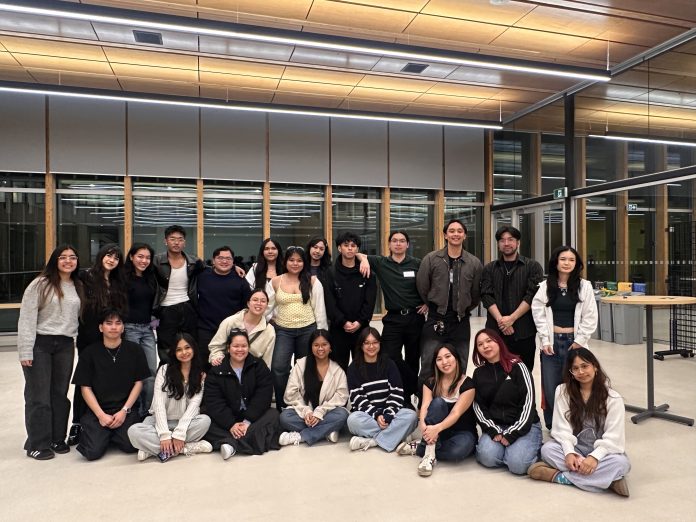
SFU’s Filipino Student Association (FSA) was founded in 2021 by Filipino international students who recognized the need for a community on campus, a space for Filipinos — who make up around 3% of the student body. Off the heels of an eventful spring semester, I spoke with Unique Mariano, the club’s president.
Mariano joined the FSA when she started her academic journey at SFU, where she studies psychology. “I wanted to find my community,” she said. She started out as a graphic director, back when the club was still “a baby.” She became communications director, then vice-president of communications, before becoming president this summer.
Her journey included moving to Canada when she was 14, leaving behind many of her family members back home in the Philippines. It wasn’t until university that she decided to start putting herself out there, she tells The Peak. When she joined the FSA, she found a family, and the other members “share that same sentiment.” The FSA was “founded through love” and “the humour is Filipino humour.”

The club consists of members from different age groups and those who were born and raised here, those who are mixed Filipino, and immigrants from the Philippines. This diverse composition creates learning opportunities which strengthen every member’s connections to the culture. Those who grew up in Canada teach the others about “the other side of the Filipino Canadian community,” while fluent Tagalog speakers teach those who don’t know the language. Mariano gushed over how heartwarming it was to watch members become more comfortable speaking the language, and grow into their Filipino roots.
Throughout the year, the FSA hosts a variety of events, including icebreakers, Christmas parties, and karaoke nights to share Filipino culture with the rest of the campus community. They collaborate with Filipino associations in Langara, Douglas, and UBC and other SFU groups, including the karaoke club SFU Peak Frequency. During these events, the FSA serves Filipino food from Filipino businesses — two of their favourites are Plato Filipino and Pangpanga’s Cuisine. “Filipinos bring their friends who are not Filipino,” she reminisced. “That’s so Pinoy, and it’s so cool that they’re enjoying it.” Pinoy is a slang term for anyone of Filipino descent.
Mariano’s favourite FSA event so far has been Pistang Sari-Sari, which was hosted in the SUB ballroom a couple of years ago. “Pistang” translates into fiesta or festival, while “sari-sari” means variety — local Filipino artisans, business owners, and performers were invited. The event holds a special place in her heart because it was the first event she helped organize. She said the process of planning it felt like a lofty dream. “‘You want to invite more than eight Filipino business owners and bring them to SFU during summer?’ Summer’s very hard for clubs because no one’s at SFU. No one’s going there just to go to a club event,” said Mariano. The event ended up being a massive success with a reward of nearly 100 attendees.
The FSA will be resting over the summer semester, but they’re planning a variety of events for fall that students can look forward to, including online events on Discord, fundraising events, study sessions, and Tagalog workshops. You can keep an eye out for those on their Instagram, @sfu.fsa or TikTok with the same name.
When asked about her favourite Filipino holidays and traditions, Mariano highlighted “pasko,” or Christmas. In the Philippines, the Christmas celebration is four months long, starting in September because September is the first month ending with “ber.”
As a second-generation Filipino Canadian, Mariano’s story resonated with me. One of the core values of our culture is the importance of family — loved ones give us the strength to keep going even when confronted with challenges in life. Pasko is also one of my favourite Filipino traditions — I’ve always looked forward to waking up to my family playing Christmas music on September 1.
There’s always a reason to celebrate in Filipino culture, which Mariano also loves — Filipinos always find a reason to bring family and friends together for even the smallest moments of joy in life. “There’s no dull moment,” Mariano said. “What are we doing inside the house, let’s go karaoke, right? Those are the stuff I really treasure as a Filipino.”
Mariano’s favourite part about being Filipino is how hospitable Filipinos are, even if it’s your first time meeting. “You just start chatting right away,” she said. She also loves how joyful Filipinos are and how contagious that joy is. “Whenever I hangout with my friends or with the Filipino club, we always laugh,” said Mariano. This is something I couldn’t agree with more — whenever I’m with my Filipino friends and family, everyone ends up smiling, and the harmonies of joyous laughter make the world a brighter place.
For those who are trying Filipino food for the first time, especially ones that aren’t so mainstream, Mariano recommends dinakdakan, a dish originating from Ilocos. It consists of grilled pork, onions, and chili peppers coated in a tangy calamansi (a native citrus fruit) dressing. “My parents are Ilocano,” she said. “I think that’s one of the best Filipino foods.” She also recommended bicol express, a rich dish consisting of pork simmered in coconut milk, balanced by the spice from chili peppers. For dessert, Mariano enjoys yema, which is a sweet, milky candy made from egg yolks and condensed milk. In regards to shape, “it needs to be triangle,” she specifies. Finally, an honourable mention was the Filipino homestyle peanut butter. “It needs to be the orange lid and it needs to be sold in ‘palengke,’ or Filipino marketplaces,” she said. “It doesn’t have a brand, you don’t know who’s cooking it — it’s just so good.”
A way that Mariano bridges the geographical distance is by learning about current events happening in the Philippines. “One of my ways to still be connected to my culture is to look and listen, and read articles about the Phillipines, read news,” she said. That includes “Filipino pop culture.”
For students interested in joining, Mariano assured, “Don’t be afraid to reach out to the club. We’re super friendly [ . . . ] If you saw our events in the SFSS SUB ballroom, come in and enjoy.” She continued, “Don’t be afraid, don’t think that you’re not Filipino enough. You are.
“Being Filipino is not just about if you have the blood of a Filipino or if you grew up in the Philippines,” she said.
“If you have a Filipino heart, you’re Filipino.”
— Unique Mariano, president of the Filipino Student Association
Pinoy Festival 2026 fosters community
By: Sia Garg, SFU student
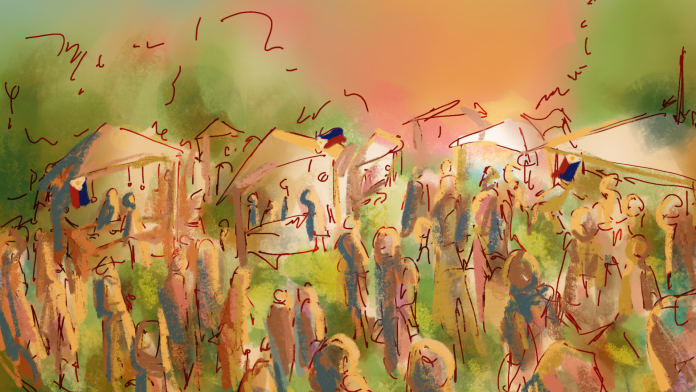
June is Filipino Heritage Month across Canada, and in BC, this year’s community celebration is the 4th annual Pinoy Festival, taking place at Swangard Stadium in Burnaby, on June 20 and 21. The festival’s organizers are connecting their celebration of Filipino culture to the spirit of unity seen on the world stage during this year’s FIFA World Cup summer. The Peak got in touch with Paul Clemente, the chairman behind this year’s festival, to learn more.
At the heart of the festival, we have a focus on the Filipino concept of bayanihan, the tradition of communities coming together to support one another.
As Clemente has put it, that spirit will be reflected throughout the events, being entirely “volunteer-run,” and built through the efforts of local community groups. Many have come together to help each other out and to create something beautiful that showcases the Filipino culture, heritage, and pride. Every feature, ranging “from the art exhibit to the family fun park” has included community groups who spent months preparing booths, performances, and cultural showcases that will fill the festival grounds throughout the weekend.
Kicking off the weekend, the festivities will begin on Saturday with the Solidarity Parade, one of the festival’s signature events. Led by a marching band, the parade features “contingents from Filipino organizations representing different regions, provinces, interests, and associations.” Participants are invited to arrive in traditional attire, carrying communal banners, and performing chants that past participants have described as creating a lively and colorful atmosphere. Other immigrant communities will also march alongside the Filipino community, highlighting the festival’s broader message of solidarity across an array of ethnic and cultural diversity.
The remainder of Saturday includes an opening ceremony, cultural performances, and a Philippine cultural fashion showcase. Later in the evening, the festival will be shifting gears with a DJ show collaborating alongside Tables Tutors DJ Studio, involving 11 DJs, “alongside some breakdancing, and a special performance by Vino [Cuenca], a national Canadian beatboxing champion.”
The following Sunday will be filled with live music, with bands performing throughout the day. Hungry attendees will be glad to hear that across both days, there will be a large selection of many featuring food trucks and stalls serving everything from sizzling street food to classic home-cooked Filipino classics, such as chicharon bulaklak and ginanggang, as well as a Beer Garden, a pop-up marketplace featuring local handmade goods, and interactive community booths, all of which are worth lingering around a little longer.
However, we also got a sneak peek at one feature Clemente is hoping to receive a lot of attention this year: the Arnis showcase! Arnis is the national martial art of the Philippines, and will be demonstrated live by local clubs who will be coming down to offer visitors a chance to experience an important part of Filipino cultural heritage firsthand.
Don’t miss out on this exciting opportunity to celebrate Filipino culture without having to travel a long distance. Gates open at 9:00 a.m. and the celebration runs until 10:00 p.m. for both evenings. Admission is free, which gives visitors many opportunities to celebrate Filipino culture together with family or friends!
Stay up to date with the festival by following their Instagram page @pinoyfestivalca.

