Home Blog Page 208

New Music: Vivek Shraya releases single and announces new album, Baby You’re Projecting

0
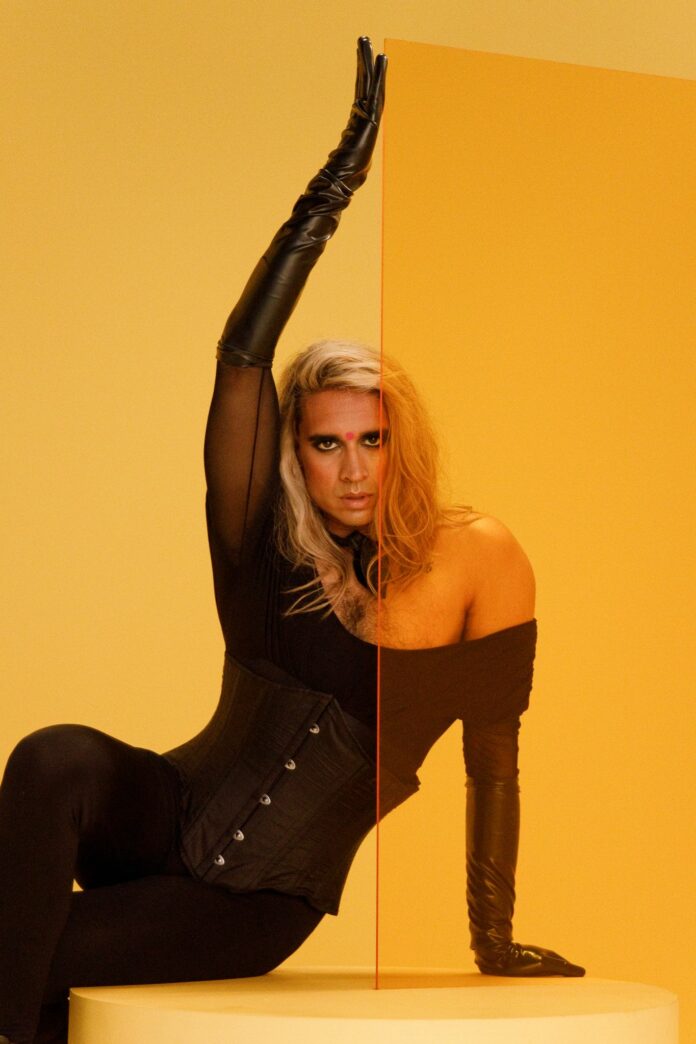
Vivek Shraya wearing skintight black bodysuit, leather gloves, and black leather corset sitting in a front of a yellow wall. One hand is extended up touching the top of a glass through which half a part of her is filtered through a darker yellow shade. She has dark black makeup and a red bindi on her forehead looking fiercely into the camera.
PHOTO: Vanessa Heins

By: C Icart, Staff Writer

My first encounter with Vivek Shraya’s work was through her book, I’m Afraid of Men. Shraya’s powerful account of her relationship with masculinity in the context of homophobia, transphobia, and misogyny was unfortunately very relatable for me and helped me find language to talk about fears I was experiencing. While the book opens with “I’m afraid of men because it was men who taught me fear,” she goes on to highlight how her gender nonconformity (or gender expression) is the reason men (and women) fear her. 

In her new single, “Good Luck (You’re Fucked),” Shraya explores another kind of gendered fear: the anxieties vocalized by men in the post-#MeToo era. The song is aimed at men who fear being cancelled because of “how hard it is to even talk to women now.” Shraya is shutting those claims all the way down, and honey, it’s a banger. The lyrics are badass and unapologetic. Her confidence is infectious; paired with a punchy instrumental and disco-style vocals it’s almost impossible not to dance. 

The song emerges from a collaboration with James Bunton (producer and co-writer), Alanna Stuart and Kamilah Apong (background vocals), and Drew Jurecka (string-work). While she has been releasing music independently for twenty years both as a solo artist and with her brother as the band Too Attached, “Good Luck (You’re Fucked)” is the lead single for her label debut album Baby, You’re Projecting, set to come out in May.

Shraya is a multi-disciplinary artist and has received multiple awards and critical acclaim in fashion, writing, theatre, music, and visual art. She is “currently adapting her debut play, How to Fail as a Popstar, as a digital series with CBC.” It’s so exciting to watch her continue evolving as an artist in her 40s. She has said: “What I love about songwriting as a 40-something is that you’ve really earned and experienced the feelings you are writing and singing.” Her lived experience comes through in “Good Luck (You’re Fucked),” as she sounds so sure of herself.

I’ve been listening to the song on repeat and it makes me feel so empowered. I recommend it to anyone who’s tired of listening to men complain about the “hardships” of cancel culture. Add “Good Luck (You’re Fucked)” to all your feminist and dancy playlists and keep your eyes peeled for Shraya’s upcoming projects. If you’re looking for me sometime this spring or summer, hopefully I’ll be on a dancefloor surrounded by all my favourite women and femmes dancing and belting “You don’t care about my friends, you just care what they think about you. Guess what? They don’t! You don’t even cross our minds!”

Listen to The Peak’s regularly-updated “New Music” playlist on our Spotify profile.

The west is villainizing the Chinese government

0
digital illustration of someone reading a newspaper with the Chinese flag on the front
ILLUSTRATION: Alyssa Umbal / The Peak

By: Karissa Ketter, News Editor

Content warning: mentions of anti-Asian violence and racism. 

China has consistently been featured in western news for one reason or another these last couple years. Beginning with the COVID-19 outbreak, western media and government officials have villainized China for their role in the pandemic. 

Should we be critical of the Chinese government? Absolutely. They have recently committed their own share of violence against minority groups, including over one million Uyghur Muslims being put in concentration camps. We should also be critical of their ever-expanding surveillance state and social credit system used to collect personal data and monitor behaviour. However, the west’s media framing of China goes beyond a critique of their government and falls into manufacturing severe and misplaced hatred for Chinese culture and citizens. It’s time news outlets take a hard stance against such divisive rhetoric.

At the start of the pandemic, United Nations Secretary-General Antonio Guterres posted to Twitter, “The pandemic continues to unleash a tsunami of hate and xenophobia, scapegoating and scare-mongering.” 

Human Rights Watch attributes the rise in anti-Chinese sentiment to conservative government leaders in western countries. A prominent example of the blatant racism and xenophobia in western politics is Majorie Taylor Greene, a US republican party representative. According to Vice News, Greene was trying to “do the Red Scare all over again — this time with Chinese citizens living in the United States.” The Red Scare was a government-manufactured fear of communism after the Russian Revolution in 1917. Throughout the 20th century, it resulted in multiple false accusations, and “is often cited as an example of how unfounded fears can compromise civil liberties.”

In 2021, Greene publicly declared her aim to deport everyone in the US with Chinese background if they’re loyal to the Chinese government. How she would prove loyalty is unclear, but the tactic echoes back to World War II, when the US detained Japanese Americans in concentration camps and publicly questioned their loyalties. 

Anti-Chinese sentiment is not exclusive to the US Republican party, either. Canada recently announced plans to introduce a “foreign influence transparency registry.” This came after months of demands from the Conservative Party to address allegations of Chinese election interference. The new registry could result in criminal charges to anyone who refuses to disclose “arrangements, registrable activities, exemptions, information disclosure,” and “compliance.” The list appears intentionally vague, and there’s little information on what would qualify as foreign influence.

Manufactured hatred for Chinese people exists across the globe. Senior government officials in the “United Kingdom, Italy, Spain, Greece, France, and Germany have latched onto the COVID-19 crisis to advance anti-immigrant, white supremacist,” and “xenophobic conspiracy theories.” The result is the demonization of refugees, foreigners, and anyone from East Asian descent. 

Unfortunately, their scare-mongering tactics worked. From 2015 to 2020, “unfavourable views” of China spiked from 55% to 73%. This was accompanied by a rise in xenophobia and hate crimes across the world. The Vancouver Police Department reported 204 incidents of anti-Asian hate crimes in 2020 alone.

Three years into the pandemic, this manufactured hatred for China has lingered. Most recently, an alleged Chinese “spy balloon” was spotted off the coast of South Carolina. The US used a fighter jet to shoot down the balloon. China responded to the incident and said the airship was a civilian vessel drifting off course. Their Foreign Ministry added, “The Chinese side has clearly asked the US side to properly handle the matter in a calm, professional, and restrained manner [ . . . ] The US use of force is a clear overreaction and a serious violation of international practice.” While the device’s true purpose is still unclear, western media outlets were quick to adopt the Pentagon’s unfounded spy balloon allegation, making claims of espionage. Fear-mongering without solid facts only exacerbates international division.

The anti-Chinese rhetoric created by the US has more consequences than awkward international relationships, though. One in four Americans think of China as an enemy. This has led to disgusting acts of violence against people from East Asian descent. 2022 reports find that anti-Asian violence in the US increased 339% compared to 2020. Violence against Chinese people continues to be reported worldwide, with Vancouver being titled the “anti-Asian hate crime capital of North America” after seeing a 717% increase in reported attacks in 2020. 

News articles that stir hatred and division are a sensationalized version of reality, and they contribute to widespread prejudice against East Asian people. We can’t point fingers at the Chinese government’s failures without acknowledging mistakes made by our own. For instance, Canada’s intelligence agency, CSIS, has been given permission to spy abroad and even break local laws in overseas countries. That’s not to mention the fact that the last residential school only closed in 1996, and a settlement for reparations was reached just this year. Canada still has a lot of work to do. We can and should discuss current events without perpetuating an “us vs. them” narrative.

SFU350 calls for the SFSS to divest from Scotiabank

0
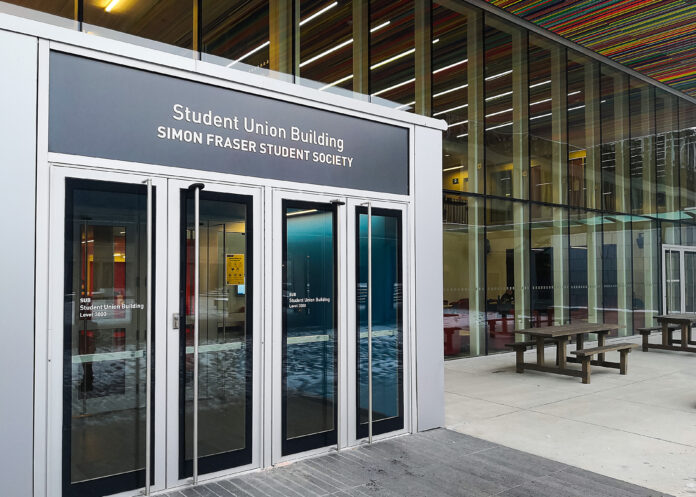
This is a photo of the outside of the Student Union Building at the SFSS Burnaby campus. The photo is a close up of the doors. Above the doors the sign reads “Student Union Building, Simon Fraser University”
PHOTO: Afsaneh Keivanshekouh / The Peak

By: Aditi Dwivedi, News Writer

Editor’s note: Chloë Arneson, who was interviewed for this piece, is a former Peak employee. The Peak acknowledges and has taken steps to prevent conflicts of interest or potential bias from influencing the article. 

On March 1, SFU350 organized a sit-in in the Student Union Building at the SFU Burnaby campus. They were calling for the SFSS to divest from Scotiabank. The non-violent protest was, however, put to a stop by SFSS staff, citing they did not obtain permission to host the sit-in.

SFU350 is a student-led club that promotes divesting from fossil fuels. They called for the SFSS to “cut their ties” from Scotiabank, the second largest funder of fossil fuel projects in Canada. The sit-in was organized in tandem with Banking On A Better Future, a non-profit organization that mobilizes youth climate justice activists to address financial support for fossil fuel projects. 

Representatives from the SFU350 called on SFU students to sign their open letter. The letter was addressed to the SFSS during their peaceful sit-in. After the SFSS staff shut down their sit-in, SFU350 later released a statement condemning the actions of the SFSS for curbing their right to protest. They noted, “Protests don’t involve booking space. They involve taking up space.” 

In an interview with The Peak, executives of SFU350, Jaden Dyer, Natasha Ivkov, and Maryam Shakeri talked about their efforts to help the SFU community divest from fossil fuels. 

According to Dyer, “The SFSS purports to represent students and their interests, but is using our money to support the banks’ fossil fuel lending. So it’s our role to hold them accountable as students.”

Dyer explained the sit-in on March 1 was organized at the same time as other sit-ins by climate justice groups from universities across Canada, like University of Alberta, University of Toronto, and University of British Columbia. They all pressued their student unions and universities to switch banks and educate them on the roles that big banks — RBC, CIBC, and Scotiabank — play in funding fossil fuel projects. 

Ivkov discussed the SFSS response to their demands. According to her, their response can be summed up as “a tentative yes,” and that the SFSS “have expressed interest in investing in renewables and investing in credit unions instead of banking with Scotiabank in the future.” She added that SFU350 understands the divestment, if it occurs, would be a slow process since the SFSS has “ties to Scotiabank that they have to abide by.” 

Addressing the protest on March 1, they said, “The problem we encountered with the SFSS was not exactly about the topic and our demands for the sit-in but more, the logistics of it.” According to the SFSS, a prior booking needs to be obtained to host an event in the Student Union Building. Ivkov however, called their actions “unjustified,” stating the difference between events and protests. She added the purpose of the sit-in is to “have a spontaneous demonstration that is not booked in advance.”

Since then, the SFSS executive committee has released a public apology letter in solidarity of the cause upheld by SFU350, acknowledging the “lapse in judgment” on their end, and reaffirming their support of the freedom to protest. The statement also noted, “We want to acknowledge that many of the members of SFU350 belong to racialized groups and thus experienced further harm due to racial disparities in policing and security. We take concerns about discrimination very seriously and are taking internal action to discuss this factor further with our staff.”

Additionally, according to a statement given to The Peak by Chloë Arneson, acting vice-president of university and academic affairs, “The concerns about our relationship with Scotiabank align with our Issues Policies and also reflect the broader societal change that is happening right now [ . . . ] We are an organization that handles a lot of money and it’s critical to consider the impact of how we are managing that money.”

Arneson added, “I don’t want our organization to be unwelcome to change or criticism. I want SFU350 and any other students with concerns to know that my doors are always open if they have concerns regarding the SFSS.”

Find out more information about divestment from fossil fuels on SFU350’s website. Sign the open letter calling for the SFSS to stop banking with fossil funders on Action Network’s website.

When disaster strikes, these dogs don’t just sit and stay

0
A photo of a grey dog with blue eyes.

By: Daniel Salcedo Rubio, Features Editor

I come from Mexico, a country where, as unbelievable as it might sound, we have nearly annual earthquakes in September, now known as “earthquake month” by the locals. I know such a thing doesn’t exist, but when three substantial earthquakes occur on the same date in different years, you begin to question logic. The 2017 earthquake was a particularly bad one, trapping many under the rubble and claiming the lives of over 350 people. Thankfully, aid organizations, the government, and even citizens mobilized quickly to support the affected regions throughout the country. Stories like this one are full of heroic people, risking their lives to aid and save those affected by catastrophes; but they are not alone. More often than not, they’re accompanied by heroes who walk on four legs and are paid in belly rubs. Yes, I’m talking about man’s best friend: dogs.

Search and rescue (SAR) dogs have been around since the 17th century, with the first historic account of formal training taking place in Switzerland. St. Bernard dogs were trained by monks to find the path back to their monastery, but these dogs also helped those lost in the snow — apparently a dog named “Barry” saved 40 people in a span of 12 years. The use of SAR dogs continued, with a total of over 30,000 dogs aiding medics to find wounded soldiers during World War I, and later specializing as “rubble search dogs” at the end of World War II, finding people under the rubble of bombed houses. Naturally, in the early ‘70s, a systemic approach to train and deploy rubble search dogs in catastrophic situations such as earthquakes was developed. Canada has adopted similar training programs; in 1995, Jim Galloway became the first RCMP coordinator for the “Civilian Search and Rescue Service Dog Program” — now called the Canadian Search Dog Association (CSDA). Ever since, organizations like the Vancouver Island Search and Disaster Dogs Association Canada and the Canadian Search and Disaster Dogs Association were formed and continue to operate. Today, these organizations are part of a larger network of over 120 SAR dog organizations spanning 39 countries, demonstrating the impact of SAR dogs in disaster response efforts.

The importance of SAR dogs was demonstrated once again during the Turkey and Syria twin earthquakes. Many countries, including El Salvador, South Korea, and Mexico, deployed SAR dogs on-site to help locate and rescue survivors. These dogs have proven their value on-site time and time again; Delta, a black labrador from the K9 Search & Rescue NI, and Ecko, a Belgian Malinois from the Mexican Navy, have been fundamental to locate and find survivors under the rubble. Their impact doesn’t end there, shown by many more success stories from SAR. Baillie, an Alberta border collie, was deployed on-site to provide aid in the southern Alberta massive flood of 2013. Jet, a labrador retriever from Halifax who “was involved in hundreds of hours of operational searches,” retired in November 2021. Mexican rescue dog Frida has helped save over 50 lives in several natural disasters and even became a beacon of hope for many locals.

Despite their incredible value and contribution to search and rescue efforts, the use of SAR dogs might also be a subject of controversy. This was highlighted by the recent tragic death of Proteo, a Mexican rescue dog who died during a rescue mission in the Turkey and Syria earthquakes. While the deployment of SAR dogs can be incredibly effective, it also comes with risks for both the dogs and their handlers, particularly in hazardous and unstable disaster zones. One can also argue that it might be best to invest resources in the development of SAR-related technologies like drones to both improve the efficacy of SAR operations and ensure the welfare of both dogs and handlers. It is important to acknowledge the potential ethical concerns surrounding the use of SAR dogs for these purposes, particularly in situations where they may be subjected to physical trauma. Due to these concerns, SAR organizations have developed guidelines and procedures for the deployment, care, and retraining of SAR dogs and their handlers. These are steps that help ensure their welfare and effectiveness in future disaster response efforts.

The bravery and dedication of SAR dogs and their handlers can’t be overstated — from St. Bernard dogs that saved lives in Switzerland over four centuries ago to Delta and Ecko saving lives in Turkey and Syria these past couple of weeks. Thank you, Frida, Baillie, Proteo, and every single dog and handler that has put their lives in danger to rescue those in need. You’ll all be remembered in history as the heroes that you are. Below you will find some of the organizations and fundraisers you can donate to that are currently supporting those affected by the Turkey and Syrian twin earthquake catastrophe:

UNHCR: Provides shelter, tents, and blankets, as well as other non-food items, hygiene, and medical items.

Red Crescent Response in Türkiye: Distributes hot meals to people outdoors and in emergency shelters and sends its’ national blood stocks to the affected regions. They are calling for monetary donations and blood donations.

Médecins Sans Frontières: A non-profit organization of medical professionals that provides medical services to people affected by natural disasters.

CDP Turkey & Syria Earthquake Recovery Fund: Provides targeted financial support where needed the most “in collaboration with local partners.”

Earthquake Solidarity Fund — BC, Canada: Raise funds to support local organizations, providing essential supplies to those affected.

Rolling through history: The rich cultural legacy of roller skating

0
A photo of a person of color in roller skates. No clear location of where the photo was taken.

By: Nercya Kalino, Staff Writer

Many groups of people who face challenges in society find community and solace with those who face their same issues and develop bonds over common interests. Such common interests can come in the form of geek culture, arts, or sports — like roller skating. Many of us have seen a music video or a show where people are roller dancing, and if you’re like me, you are amazed at how effortless this looks. But beyond that, there is an immersed history of community and liberty in roller skating. While roller skating is not exclusive to one racial group, Black people have had a significant impact on many roller skating styles in present day.

Roller skating in Canada dates back to the 1880s when the first roller skating facilities were opened in Toronto. In 1961, the Canadian Roller Skating Association was established, later to be renamed Roller Sports Canada in 1995. In the earlier years of roller skating, George Berry, one of Canada’s notable roller speed skaters, would lead as the winner of the North American championship and later be announced as the world’s champion. Artistic roller skater Kailah Macri, who started roller skating in grade school, is also recognizable within skating culture.

In Black communities, this sport has been adopted into many lives, and appreciated for its history. One of the first sit-in protests of the Civil Rights Movement “didn’t involve sitting at all — it was a skate-in.” Skate-in protests persisted throughout the ‘60s, both Black and white skaters organized boycotts and blockaded segregated rinks. The rinks functioned as rally points for racial equality, this can be dated back to the protests of segregation of roller rinks during WWII. The National Association for the Advancement of Coloured People played a role in arranging legal obstacles to segregated roller skating rinks in Flint, New Jersey, and Cincinnati among many other towns and cities. It was only later in the ‘60s that the roller skating rinks became desegregated.

Another influence that played a role in roller skating and its development in the African-American community was music. In the ‘50s there was a change in how music was played in the rinks: there was a switch from organ music to vinyl records to popular radio music. This coincided with the American musical revolution of the ‘50s, where rhythm and blues (R&B) became “the most popular music created by and for African-Americans.” During this period of time, independently owned radio stations were dominated by R&B vocalists like Etta James, Ray Charles, James Brown, and Fats Domino, the latter became “one of the most essential first-generation rock & roll stars.” The music industry in the ‘50s had a huge impact on roller skating as well as other areas of American artistic and social culture. This was a trigger for the emergence of “‘style’ roller skating” in the African-American community and the eventual wide spread of African-American culture to a white audience in a new era of racial tensions in the United States.

In present day, Black communities in Canada and the United States enjoy and commemorate its significance as part of Black history. Documentaries, music videos, and events alike continue to preserve and honour the rich history of roller skating in the Black community. Many might focus on the physical aspect of roller skating, but its true essence lies in the way it continues to foster a sense of community and connection among those who practice it. Its particular history tells the story of the people that came together through this sport. Many skilled Black skaters have gained recognition for both their abilities on the rinks and for promoting inclusivity in a sport that has had a positive impact on recreational opportunities for the Black community. Roller skating provided another moment of solace and empowerment during the rise of the BLM movement. When the movement faced violence and unrest in the midst of isolation brought by the pandemic, women of color led this nostalgic activity. The communities created through roller skating brought a “sense of escapism.”

Roller skating’s revived popularity is not limited to the United States — the sport has become a popular pastime in British Columbia as well. This year there have been events like the Van City Soul Skate hosted every Sunday by the Rolla Skate club, which have been dedicated to the BIPOC community. One of the reasons they did so was to give credit where it’s due, considering how prevalent portrayals of white people dominating the sport are in the media.

It’s not just the physical benefits of roller skating we should consider; for the Black roller skaters of Vancouver, it goes back to the community and history of the sport. It has a great span of cultural significance and history to the Black community, but you don’t need to be Black to enjoy it. You can look forward to summer in Vancouver; roller skating in Stanley park along the seawall with a group of friends, or with a community that aligns with your interests. We’ve all seen how roller skating is coming back into mainstream media, but it’s beyond aesthetics and fire shoes — it’s a lineage of Black culture.

Black History Month is over, but Black history continues

0

By: C Icart, Staff Writer

Another Black History Month (BHM) and Black Futures Month have passed, so, I’m taking this opportunity to reflect on the mixed feelings that often come up for me this time of year.

Even though I’m a Black student, writer, and researcher, I feel like I’ve been less and less invested in BHM as I got older — I’m still trying to unpack why. Growing up, BHM was one of the only times of the year I got to learn about the achievements, contributions, and stories of Black people in school. In my teenage years, I often took the opportunity during BHM to educate others by giving presentations or coordinating activities related to Black history.

February became my cue to tell people who only knew about Rosa Parks and Martin Luther King Jr. about Marsha P. Johnson, Africville, and Marie-Joseph Angélique. I could keep mentioning names, and I could spend this entire article telling these stories, but frankly, you should google it.

Spending my Februarys educating non-Black people for free — who often don’t understand why it’s even important — is no longer appealing to me. Also, I think that there is still a problem with the way Black history is often taught as something completely separate from other histories like so-called Canadian history. The experiences of Black people in this world are relevant to everyone. This is not a separate history that can be taught as a list of “interesting facts” on top of “mainstream” historical events. Why is slavery, for example, perceived as Black history and not Canadian history? Forced labour is part of what made Canada what it is today. Black history can’t be separated from the broader narrative of Canadian history.

This separation has often made me feel othered. So, instead, I’d rather surround myself with Black community year-round and support their healing and growth as much as they support mine. I had the opportunity to chat with SFU student and activist Balqees Jama who “​​spent this BHM resting intentionally and basking in joyful moments.” Jama also values connecting with community during BHM. She “took part in community spaces like Couch Jams, which celebrates Black creatives and artists” and spoke at the Vancouver Public Library about Black social media spaces. Jama ended the month “attending SOCA’s BHM Cultural Night, a wholesome night filled with laughter and traditional finery.”

Despite the change in how I approach BHM, I would never argue that we no longer need it. While BHM remains important, there is always the opportunity to learn the history and experiences of Black people as we continue to face challenges like police brutality and the erasure of Black experiences in mainstream education. This year, the month started off with Tyre Nichols’ funeral. Following the circulation of the video of his arrest on social media, his funeral was also televised. This continued the longtime practice of sharing videos of Black death. In addition to ongoing police brutality, there have been continued efforts to remove or at least heavily edit the curriculum for Advanced Placement (AP) courses in African American studies in the United States. In fact, “more than two dozen states have adopted some sort of measure against critical race theory.” This makes it almost impossible to discuss Black History and racism in the classroom.

These so-called “anti-woke” groups exist in Canada as well, and have been applying similar tactics. Groups like “Blueprint for Canada” push for the election of school board trustee candidates that support regressive views. They are often anti-LGBTQIA2S+ and align themselves with figures such as Dr. James Lindsay, a vocal critic of critical race theory, and Bruce Gilley, who has controversially argued for the “benefits of colonialism.” These groups often rely on misinformation “to rebrand bigotry as a resistance movement.” The “wokeism” they claim to be fighting against in schools and society at large is not real, but the right-wing hate for civil rights and social justice is.

This is the backdrop of this year’s BHM: increasing division and campaigns trying to prevent conversations about historic and ongoing injustice. Living in this context is exhausting. So what can be done about this and who is responsible for doing it?

Hiring a Black person once a year for diversity training is not enough. And honestly, this year it feels like fewer and fewer companies are doing that. Many Black content creators have taken to social media to talk about how they are receiving fewer opportunities this year. This year, “the rush of opportunities to partner with brands for Black History Month initiatives — many of which emerged within the past two years, following the murder of George Floyd in 2020 [ . . . ]  — appears to have faded.”

When the options seem to be either performative corporate activism or mostly silence, the latter doesn’t seem so bad. Or at least it feels a bit more genuine. Regardless, the outpouring of public support and donations to Black organizations after the murder of George Floyd did matter and it did make a difference.

The month may be over but it’s definitely not too late for non-Black individuals to show up. Don’t rely solely on the Black people in your life to show you the way. Do your own research. As Jama told The Peak, “Every institution has a responsibility to centre Black folks, highlight contributions, and highlight Black histories and futures. It’s 2023 and we’re past ‘listening and learning.’” She added, “Support Black businesses, update your curriculums, and fund Black youth! I also want to remind everyone that Black people deserve respect and support year-round!”

There is so much work left to do to tackle systemic racism in our communities. Public education, donations to Black organizations, support for Black initiatives, having difficult conversations with family members, calling out your friends for saying certain things — even when there are no Black people around — are part of the many ways to fight anti-Blackness. If you need more ideas, you can check out this list.

And if you’re Black and you made it this far in the piece, you really didn’t have to. But I love you and I hope you take care of yourself. If you’re looking for community or ways to get involved in Vancouver, you can check out SOCA and the Vancouver Black Library.

Sports in Dialogue: Fundamental sports movies

0
Illustration of two people watching sports movies together on a couch.
ILLUSTRATION: Hailey Gil / The Peak

By: Isabella Urbani, Sports Editor, and Simran Sarai, Sports Writer

Bend It Like Beckham (2002)

The term “Bend it like Beckhammay pay homage to English soccer legend David Beckham’s legendary curling free-kick shot. But the movie Bend It Like Beckham chronicles Jesminder “Jess” Bhamra, a young British-Punjabi woman’s, dreams of becoming a professional soccer player much to the chagrin of her parents. While trying to rebel against her parents’ cultural norms, Jess is also navigating her newfound friendship with teammate Jules Paxton, and a blossoming romance with her soccer coach, Joe. Jess takes viewers on one hell of a journey as she struggles to be true to herself and be a “good” daughter to her parents in a movie that weaves cultural differences, love, and high stakes together. 

Simran: I’ll be honest, I loved this movie growing up. It was so wonderful to see my culture represented on the screen, and in relation to a sport that I loved! I think Jess was definitely an icon for a lot of young girls struggling to balance athletics in more traditional households.

Isabella: Very true. It was refreshing to see a sports movie, especially a Disney one, go against the grain and focus on marginalized voices in sports. It was equally as nice to see the main conflict of the story be Jess’ battle to honour her roots while playing the sport she loved, instead of having the antagonist be an opposing team. One storyline that was not appreciated was the romantic relationship between Jess and her soccer coach. I can’t believe that movie had me rooting for that relationship with every fibre of my being. Yuck! Talk about an ugly power dynamic.

S: Joe dating Jess was definitely a little questionable. I mean a lot questionable. Also, his attempt to relate to Jess’ experiences with discrimination was entirely ridiculous. There’s an entire meme of him saying, “I’m Irish, of course, I understand what that feels like!”

I: That was a definite swing and a miss. It comes off as ignorant. Not to mention, Joe was able to have a successful career in soccer without being subjected to racial hate on the field. 

S: But strange player-coach relationship aside, this movie was one of the first sports films I saw that blended a desire for athletic excellence and satisfying cultural expectations. I felt very seen when I watched it growing up, and I still love it to this day. It is definitely a family favourite in my household!

I: As a woman in sports, although I can’t directly relate to Jess’ battle to be seen as a person of colour, I can relate to feeling like an outcast in both my family and in my profession. While I salute this movie for trying to tackle a lot of real-life issues like discrimination and homophobia, there’s this one scene where Jess’ mom becomes furious because she thinks her daughter is dating her teammate Jules. As if dating someone of the same gender is more of a cause for concern than dating someone much older, who’s your coach. This movie definitely has all the eye-catching jokes of an early 2000s movie, so be aware that it’s a little outdated. 

McFarland, USA (2015) and Gotta Kick It Up (2002)

Director Niki Caro brought tears to eyes when she brought this heartwarming story inspired by real events to screens worldwide. Former football coach Jim White must relocate his family to small-town, McFarland, California, which is home to a strong Latinx population. After being fired as assistant coach to the McFarland High School football team, White decides to form a cross-country team.

S: I ran cross country in high school and I remember our coach taking us to watch McFarland, USA on opening night in theatres. It’s definitely a cheesy, feel-good sports movie, but I think the message it sends is so important. Hearing about these young boys who were able to harness the ability of sport to grow into their self-confidence and skills, and then go on to lead lives they are all proud of, is a real-life story that I’m so glad made it onto big-screens.

I: In full transparency, I just watched this film the other day because Simran recommended it. But it didn’t disappoint. I’m a sucker for sports films that have less to do with a sport itself, and more to do with the experiences that the team goes through. It reminds me a lot of a Disney channel movie called, Gotta Kick It Up. The movie is centred around a predominately Latina dance team that tries to assemble a competitive squad amongst other white schools which pour more money into their teams. 

S: I haven’t seen Gotta Kick It Up yet, but I am so glad that producers and directors started making more films focused on the differences between high school sports programs in higher and lower-income neighbourhoods. It’s a very real problem that we experience here in BC too, and I think that telling these stories through film is a great way for younger people to learn about the issue in a comprehensive way.

I: Athletic funding is definitely not divided up equally. Teams that do better typically get more money. But how does this help unsupported teams become successful? It often takes miracle seasons like the one seen in the movie for teams to get the funding they deserve, which isn’t easily achievable. If you do watch the movie, the scene where Coach White is explaining how scoring works in cross country by comparing  it to golf, one of the runners chuckles and says, “You think we play golf?” I laughed so hard, I had tears coming out of my eyes. You just have to watch it to appreciate how perfectly the line was recited. 

Up until now, I never realized just how many sports films Disney released in the ‘90s and 2000s. Growing up, I never thought of movies like Johnny Tsunami and The Thirteenth Year to be “sports films.” They were just about two teenagers struggling to adapt to new environments while playing sports. Interweaving sports into these characters’ lives just added authenticity to the films. And if authenticity is what we’re after, sports films need to continue to be representative of the issues characters face outside of their sport. The exciting sports montages and game clips viewers get to experience might be what they remember most after an initial watch of a film. But genuine storylines and experiences are what make people come back and enjoy rewatching these films years later. 

Lowering inflation isn’t enough to fix the rising cost of living

0
A photo of different denomination bills from both Canada and the United States

By: Olivia Visser, Opinions Editor

Browsing news and social media these days feels increasingly dystopian. News feeds present articles about Canadians cutting back on prescription medications, working two jobs, and changing their minds about having children in this economy. Wealth disparity has always existed under capitalism, but income inequality is rising rapidly, and seemingly daily. Many people point to inflation — the rising cost of goods and services alongside decreasing purchasing power — as a major culprit. While inflation plays a large role in exacerbating wealth inequality, we must also turn our attention to other institutional barriers that the Canadian government fails to address. An under-regulated housing market and costly groceries are two factors that amplify systemic poverty. It’s time we debunk the myth that addressing inflation will suddenly make all our financial problems disappear.

The Inflation Problem

Inflation is a concept that’s difficult to understand, and difficult to pinpoint a single cause for. According to the Bank of Canada, inflation typically rises when “the demand for goods and services is more than the economy supplies.” The value of inflation is assessed based on how quickly the Consumer Price Index (CPI) rises. In simple terms, the CPI compares the price of goods from one period of time to another. In a perfect world, prices change at a rate so slow it doesn’t impact spending or saving habits. The Bank of Canada refers to this as price stability. Capitalism is far from a perfect system, so there are endless factors that contribute to continuously shifting prices.

The most recent inflation surge impacting North America began in 2021, shortly after the pandemic started. In June 2022, inflation reached 8.1% in Canada — the highest it’s been since the ‘70s. Supply chain disruptions due to COVID-19 and the war in Ukraine contributed to this number, as well as a shift in spending habits; many people slowed down their use of services, and began spending more on hard goods to get by.

Definitions aside, there are significant reasons why inflation is frequently on the minds of citizens, economists, and policymakers. Few people can keep up with the current pace of inflation, which directly affects their purchasing power and ability to save money. It also impacts less “essential” services in industries like beauty and recreation, which puts people out of jobs. Combating inflation seems like the most reasonable solution to the rising cost of living — right? Unfortunately, it’s not that simple.

Typically, policymakers increase taxes and interest rates in attempts to reduce inflation. This can help, but it only goes so far. In an age ripe with global humanitarian and environmental crises, stagnant wages, and corporate greed, lowering inflation won’t do enough to address rampant systemic inequalities.

Beyond Inflation

There are more than a few industries seeing costs rise faster than the rate of inflation, which is concerning. In Canada, the price of groceries has risen to around 31% depending on the item. Food banks have been seeing record numbers of visitors as a result. According to CTV News, they’ve seen a 35% increase since March 2019. Lowering inflation wouldn’t necessarily alleviate the burden of expensive groceries, nor would it address the fact that wages aren’t increasing enough to meet our daily needs.

There are a few actions the government should take to assist with grocery prices, though there is no “easy fix.” According to CTV News, the NDP is urging the Canadian government to “recognize that corporate greed is a significant driver of inflation.” This is a crucial recognition, as food is essential to survival. Grocery prices shouldn’t be rising at a higher rate than inflation. The NDP is urging CEOs and corporations to pay their fair share by “closing tax loopholes.” They also called for an “affordable and fair food strategy.”

It’s safe to say that we should have better public resources for people in need of groceries. Charity-based organizations like food banks are important, but they’re not enough to ease the pressure of rising food prices. Beyond that, they’re certainly not a long-term solution for the country. The head of the International Monetary Fund told BBC that governments should subsidize food and energy costs for low income individuals. Doing so would alleviate the stress of living paycheck to paycheck to cover grocery bills, and reduce the need for food banks, many of which offer limited food options with poor nutritional value.

The Housing Crisis

The housing market is another domain with numbers that don’t reflect the rate of inflation. Prices have risen 318% since 2000, with fewer people being able to purchase or even rent homes these days. CBC News mentions that a “slowdown in new housing construction,” which started in 1970, “left Canada with far fewer homes per resident than the G7 average.” A shortage of housing isn’t the only problem, though. The average rental cost across Canada sits just above $2,000, with landlords contributing to highly inflated prices.

The commodification of something as essential as housing is disturbing. Large-scale investors like corporate landlords play a large role in Canada’s rental market crisis. These entities purchase large amounts of properties and monopolize the market. CBC News notes that 20–30% of Canada’s rental housing is owned by “institutional landlords,” and 200,000 units across the country are owned by “real estate investment trusts.” These investors often buy and trade housing in the stock market. Often, rent increases made by landlords fall under the realm of price gouging. While landlords can only increase rent alongside the rate of inflation for existing renters, they’re allowed to hike prices up further when tenants move out. For instance, rent increased 18% last year for new tenants — more than double the rate of inflation at its most recent peak. Without stricter rent control measures, affordable housing is a reality that few renters can experience.

Evidently, the Canadian government has plenty of work to do regarding housing and rent control. The privatization of housing means profit will continually be prioritized over individuals’ well-being. Canada needs to limit the amount of properties investors can own, and funnel government dollars into social housing. There’s no easy way around this — the country needs more housing, and that housing should not fall into the hands of corporate investors going forward. This would be a huge step toward providing for those without houses, and securing the futures of young people who are unable to afford rent. We shouldn’t have to spend all our income keeping roofs over our heads.

Research has found that affordable housing improves employment opportunities by giving people the opportunity to attend or return to school, thus developing their careers. It also allows for economic growth by granting residents disposable income to spend on goods and services.

There’s no easy solution when it comes to the alarming cost of living in 2023. Inflation rises and falls; even if the government manages to “fix” inflation or it naturally decreases, there are lingering systemic disparities that can’t be overlooked. Addressing the food and housing crises will remarkably alleviate financial strains exacerbated by inflation. No one should have to skip meals or spend their entire income on housing themselves.

SFYou: Dr. Rebecca Cobb’s Close Relationships Lab

0
A photo of three women hugging and laughing with a city skyline as a background
Remember that love is the one thing you can keep sharing and it will only keep growing.

By: Maya Beninteso, Peak Associate and Research Assistant in the Close Relationships Lab

“The love of your life.” “The one.” “Your person.” These expressions reference an assumption and expectation that has been set by society — monogamy. Despite monogamy only being pervasive for the last 1,000 years, this idea that you must find one person, and one person only, to meet all of your romantic and/or sexual needs is untrue. You’re not confined to monogamy; other relationship structures exist, such as consensual non-monogamy (CNM). CNM relationships include all relationships where all partners receive explicit consent to engage in relationships with others. There is a clear lack of understanding surrounding CNM relationships, which has contributed to its stigmatization. This lack of understanding is what Dr. Rebecca Cobb, director of SFU Close Relationships Lab, intends to address through her latest research endeavour. SFU Close Relationships Lab studies the change and development of romantic relationships and how “factors such as psychological health, attachment security, and communication” affect relationships and sexual satisfaction.

Cobb’s inspiration for the study derived from several experiences throughout her career, the most notable being through her Transition to Marriage Study that included following newly-wed couples through their first two years of marriage. Cobb and her research team assumed the couples were all monogamous, however that didn’t appear to be the case. During the study, Cobb inquired about their sexual relationship with their husband, to which the participant responded, “It’s going pretty well, but mostly that’s because of my boyfriend.” This incited reflection on the “assumptions we make about relationships in society.” In the following studies, Cobb began asking participants whether they had “exclusivity agreements” or if they were in CNM relationships. Cobb found “up to 15% or 18% of people in [these] studies were non-monogamous.” This finding is consistent with an article in The Journal of Sex Research that suggested up to 20% of individuals have been in an open relationship.

Cobb sought out to explore the experiences of those in CNM relationships and the intricacies with which these relationships are associated. Although there were a variety of motives, a main theme regarding reasons for engaging in CNM was the “idea of living one’s true authentic self” and “a sense of ‘this is who I am.’” Other reasons included: making them happy, providing them with a sense of autonomy, giving them a sense of interconnectedness, and being an authentic way to live their life.

Cobb found the study was “far more diverse . . .  than any other study” she has done. For sexual orientation, she found 27% identified as pansexual, 22.5% as bisexual, 20% as heterosexual, 13% as queer, and the remaining few as unlabeled, demisexual, or gay.

Despite a growing population of individuals engaging in CNM relationships, there are many incorrect, preconceived notions as to why individuals engage in CNM relationships: Cobb noted the most important one surrounds sex. “People are not becoming involved in CNM relationships simply to have more sex, ”she explained. Other misconceptions about CNM relationships include: engaging in CNM due to an unfulfilling primary relationship and a lack of commitment. These misconceptions have been disproven because typically, CNM relationships originate from a happy and secure primary relationship, and there needs to be a certain level of commitment from all parties involved.

Cobb explored discussions surrounding boundaries for individuals in CNM relationships. In her experience, while there is “consistent attention to boundaries” and the renegotiation of boundaries, there is rarely a time when individuals explicitly discuss them beforehand. Cobb noted these conversations occur before and throughout the relationship. The time or method by which these conversations take place is “different depending on how [they] got into a CNM relationship.” Regardless of the differing times at which these conversations take place, Cobb noted that “the spirit of clear, open, transparent communication is dominant.” A way by which communication differs between some CNM relationships is whether or not partners adopt a “don’t ask, don’t tell” policy, or if they wish to know the details of their time spent with other partners. There’s an expectation for partners to be respectful, thoughtful, “and caring about each other.”  There isn’t just one way to love or engage in relationships — there are many.

Don’t tell me to “go to therapy”

0
illustrated speech bubble saying “you need therapy”
ILLUSTRATION: Angela Shen / The Peak

By: C Icart, Staff Writer

These days, telling someone to “get therapy” or “get help” is such a common read. But even when said with good intentions, saying this to someone unprompted is kind of rude. Don’t get me wrong, the openness with which Gen Z talks about mental health and therapy is a good thing. It contributes to destigmatizing these topics. However, it’s also led to some disturbing trends. 

Somewhere in the sea of jokes and memes about men needing therapy, we lost our way. Now, it seems like instead of just appreciating when therapy works for us or people we know, we are now judging those who don’t go to therapy. For instance, “on dating apps, being in therapy can vouch for your emotional soundness, while not being in therapy may be considered a red flag.”

You have no idea what someone’s circumstances are. On top of being condescending, you might be recommending an option that is inaccessible to some because of its cost. Others may be avoiding therapy because of its stigma. However you look at it, therapy is a privilege. 

Finding the right therapist for you can be a challenge as well. If you’re already down and struggling, “shopping” for a therapist can seem like a pretty daunting task. The times in my life where I could barely brush my teeth are not the times I wanted to spend hours searching for a therapist that was going to make me feel safe as a Black, queer, and trans person. I needed someone that I’d mesh well with, whose practice meets my needs, whose price works within my budget, and whose waitlist wasn’t a mile long. Jumping through all those hoops to end up seeing someone who isn’t a good fit is a pretty demoralizing experience. Personally, some therapists I’ve had in my teenage years have said some stigmatizing and alienating things to me, and it’s part of the reason I haven’t gone back. 

On top of that, therapy isn’t the only way to work on your mental health. Assuming that you are doing more internal work than others, or that your mental health is better than someone because you go to therapy and they don’t — is misguided. Exercise, art, journalling, self care, self-help books, and support from friends and family are possible alternatives

Writer Julladonna Park highlights how telling someone to “get help” pathologizes them as well. “Nobody is entitled to an upfront explanation of these complex and intersectional reasons for avoiding therapy,” Park writes. 

Are you using the phrase “get therapy” to insinuate that someone is “crazy” or “sick?” Are you doing it to discredit them? That’s not okay. Everyone’s needs, resources, capacity, and lived experiences are different. Therapy (and as a reminder there are many kinds, not just “traditional” talk therapy) is meant to be a tool to help people improve their health, so it’s time we stop using the term in such toxic ways.