Home Blog Page 161

Vancouver Whitecaps FC advance to the playoffs

0
A photo of the Vancouver WhiteCaps game
PHOTO: Emilio Garcia / Unsplash

By: Kaja Antic, Sports Writer

Vancouver’s highest level of soccer has reached a new height this season, as the Vancouver Whitecaps FC have secured a playoff berth for the second time under head coach, Vanni Sartini.

The last time the team reached the playoffs was following a Cinderella run after Sartini was named interim head coach in 2021. The Whitecaps concluded the season with seven wins, five draws, and two losses: far better than what the team was anticipated to do. Vancouver eventually lost to Sporting Kansas City in the first round of the playoffs.

While the Whitecaps did not qualify for the playoffs during the 2022 Major League Soccer (MLS) campaign, they were victorious at the 2022 Canadian Championship, beating out Toronto FC in penalty kicks during their fourth and final game to win the Voyageurs Cup.

The Whitecaps were once again awarded the highest prize in Canadian soccer, after beating CF Montreal 21 on June 7 at BC Place to win back-to-back Canadian Championships.

Adding to this collection of trophies, the Whitecaps won the 2023 Cascadia Cup, an exclusively Pacific Northwest trophy, after securing two wins against Portland, one win against Seattle, and benefiting from a draw between both teams.

The game that allowed them to clinch the coveted playoff spot this season was an October 4 win against St. Louis City SC, with goals coming from striker Brian White, midfielder Sebastian Berhalter, and the first as a Whitecap from wingback, Richie Laryea

It hasn’t yet been confirmed who the Whitecaps will be playing in the MLS Cup playoffs, but the team has gained entry to the first round, which will be played in a best-of-3 format — a new feature for the MLS postseason. The Whitecaps’ opponent for the postseason will likely be revealed when the final whistle for the 2023 MLS regular season blows. 

The ‘Caps faced a formidable opponent in the reigning MLS champions, Los Angeles Football Club for “Decision Daylast week. A win would give Vancouver a top-four spot in the league’s Western Conference and home-field advantage for the first round. If not in the top-four, the Whitecaps will be playing their first playoff game since 2021 away from Vancouver, but would return to BC Place for the second game in the best-of-three.

As the MLS regular season comes to a close in the coming weeks, the focus turns toward the MLS Cup playoffs. With recent FIFA World Cup champion, Lionel Messi, and Inter Miami CF mathematically eliminated from the post-season, active MLS fans will have to turn their attention to other clubs still in contention for the MLS Cup. The Whitecaps should definitely be a team to watch with the outstanding scoring duo of Ryan Gauld and Brian White, and young players like Ali Ahmed and Simon Becher

After a remarkable season from the Vancouver Whitecaps, the team now looks to add another trophy to their collection for 2023, with more success seemingly in the future for the young Canadian club.

NHL pride tape ban politicizes 2SLGBTQIA+ allyship

0
PHOTO: Mark Landman / Unsplash

By: Kaja Antic, Sports Writer

The week before the 2023–24 National Hockey League (NHL) regular season was set to begin, commissioner Gary Bettman banned specialty warm-up jerseys, explaining how pride jerseys had become a “distraction” last season. Hours before the first puck was even dropped, the NHL doubled down in corrections, updating restrictions to include any alterations to players’ gear or uniforms on the ice.

This ban included the use of pride tape, a specialty rainbow sports tape used to represent 2SLGBTQIA+ inclusion in sports. The tape had previously been used by teams across the NHL for the different organizations’ Pride Nights, which will most likely disappear from team calendars going forward.

I, along with many other 2SLGBTQIA+ hockey fans, am disappointed but not surprised.

When multiple players refused to wear team pride jerseys during the 2022–23 season, many people defended it, justifying the decision to not wear a piece of clothing with a rainbow for 20 minutes during the warmup as a showing of “personal beliefs.” 

As a result, the league decided to protect the bigoted actions of their players, rather than protect the queer fans who help pay their bills. Specialty jerseys were cut, but not only for team Pride Nights. This ban includes other themed nights such as Hockey Fights Cancer and Lunar New Year.

This ban obviously exists largely because of Pride Nights. Without the controversy stemming from grown men not willing to wear a rainbow jersey, this ban on literal tape would not be happening.

The NHL will hide behind their shameful actions, bowing to kiss the boots of bigotry rather than fight for the basic human rights to exist. Instead of growing the game, the NHL has once again turned its back on a massive group of prospective fans searching for acceptance in an already not-so-friendly sporting environment

I grew up a hockey fan, and I will someday die a hockey fan, but it’s so hard to love a sport that very obviously does not love me back. The NHL can say they are just prematurely avoiding the bad press, yet this is causing much more of an uproar. They still stay silent while the bigotry they enabled takes aim at the 2SLGBTQIA+ fans speaking out.

Hockey is not for everyone, and the league has made that abundantly clear. Teams bowing to these new rules are not free from criticism either, with newly-appointed Canucks captain, Quinn Hughes, saying the team will support “off the ice,” while the team’s general manager, Patrik Allvin, deflected any responsibility, hiding under the outdated guise of following league rules.

Until there is actual pushback and use of the forbidden pride tape from players within the league, these words of support “off the ice” are meaningless. You can say you support the 2SLGBTQIA+ community all you want, yet by following the archaic “rules” of this outdated league, you’re still pushing aside the concerns of the community, which is especially worrying considering the current attack on 2SLGBTQIA+ rights in Canada and the United States. 

For a league that pales in comparison to other professional sports and is desperate for growth, the NHL sure is keen to keep the same viewer base year after year until rendered obsolete. We can only hope they realize the error of their ways, but the league doesn’t seem interested in supporting marginalized communities — only suppressing them. 

Miss Planet Earth is on fire

0
Earth wearing a sash that reads “Miss Planet Earth.” She has long eyelashes and purple eyeshadow and she’s wearing red high heeled shoes.
ILLUSTRATION: Ananya Singh / The Peak

By: Hailey Miller, Staff Writer

This year, Miss Planet Earth has reached new heights by setting her own personal best for the hottest summer on record. What an achievement! She’s really got a thing for outdoing herself. From sizzling hot sidewalks to fiery forests, she’s a force to be reckoned with, so you’d better watch out. Miss Planet Earth is all the rage right now, and she’s getting more attention than the moon’s highly anticipated astrological updates. What a diva: taking over her friend’s spotlight and burning bright into the night. A rivalry is clearly underway. The tabloids simply can’t keep up with her blazing tactics.

This woman literally owns an entire planet empire, and she acts like she’s got the whole world wrapped around her little finger. She gets more action in a day than anyone else would in an entire lifetime — if we ever make it that far, thanks to Miss Planet Earth’s outrageously hot body temperature melting away every last remnant of climate romance. She finds particular satisfaction in leaving her mark wherever she goes. 

Fleeing without a trace has no place for Miss Planet Earth. This diva really gets around, and she makes it known. Lately, she’s been spotted burning up forests and asphalt alike, melting ice sheets, and creating sweatboxes like never before. One minute, she’s steaming hot in the desert, and the next, she’s gallivanting around the Arctic, causing a heated debate among the glaciers. She stakes out residence in the tropics, then throws a curveball on the other side of her not-so-glorious tilting globe to fire up the cold polar sphere. 

This woman is so contradictive, she changes her mind faster than the weather itself. She’s more stealthy than Nancy Drew and Sherlock combined — appearing and vanishing out of thick, smoggy air and causing environmental mood swings faster than you can say “Climate Diva.” Miss Planet Earth loves nothing more than to bathe in the fossil-fuel-filled sizzling spa that is her melting core and pretend like her entire world isn’t completely on fire.

Don’t even think about getting Mother Nature started on her feud with her ex-bestie, because you know Miss Planet Earth is already heated enough as is. One raging comment between those two and the whole globe will tilt upside down. The people of the planet have spoken, and they can no longer take the heat! If you thought Miss Planet Earth was a diva, you haven’t seen climate activists protesting against the fact that their dear nemesis is firing up a storm. Miss Planet Earth really needs to have a word with the big, bad corporations of the world, and get them on her fiery side. 

Rumour has it Miss Planet Earth is slated to make an appearance on this year’s World Records of Things that Shouldn’t Be World Records awards show. Surely, she’ll be sizzling up the red carpet faster than you can strike a match. Someone better call the fire department because she’ll be hotter than the annual firefighters’ calendar. I’m sure as she’s reading this fiery little tabloid, she’s hiding out, kicked back while enjoying a nice cup of smoldering asphalt as she fires up her latest plan of letting it all burn to the ground. Trouble’s coming, so get out — oh wait, I don’t think you can!

Three thought-provoking short films by SFU students

0
PHOTO: Courtesy of Yousif Kairee

By: Hailey Miller, Staff Writer

Genesis is an archive collection of 11 short films from students in the Film Student Union at SFU’s School for the Contemporary Arts (SCA). All films are available for screening online on the SCA’s website. Some students in other majors among the SCA were also involved in these short films for contributions in composing scores, acting, and assisting in production. Below is a review of three that stood out to me.

A grainy photo of a gray sky with a group of crows flying.
PHOTO: Courtesy of Colleen Bayati

Birds I View (2023)
Directed by Colleen Bayati

This short by Bayati, a third-year year film student, features a bird’s-eye view of settings and objects up close with a comedic background narrative about the narrator’s hatred of birds — voiced by six individuals and accompanied by differing camera angles. Everyday settings such as city streets, landscapes, skylines, and stairwells are filtered by a dreary atmosphere and a grainy, shaking camera effect. Bayati’s use of camera angles achieves what she describes as “an experimental hybrid film.” Although the perspective of the birds is mundane and comical throughout, the portrayal of these creatures reminded me of the wonder of birds in their natural habitat. The soundscape, which includes both audible dialogue and buzzing insect sounds, adds dynamic to the piece. The different camera angles and cuts between scenes lets the audience experience how a bird — or an insect — would typically observe their world. This approach creates a seamless effect of varying points of view from short clips compiled together. 

A record player displaying Bossa Nova and Iron Maiden album covers.
PHOTO: Courtesy of Mimi Huszti and Carlo Marchet

Breaking the Silence (2022)
Directed by Mimi Huszti and Carlo Marchet 

Both first-year film students, Huszti and Marchet’s work features the everyday sounds of a person’s morning routine. They become more disturbed by these mundane noises as the morning progresses. Huszti and Marchet’s audio techniques heighten the experience of discomfort — I felt as though I was living vicariously through the main character’s emotions. The directors focus on minute sounds: a boiling kettle, a ticking clock, and a train whistle in the distance. The sounds and instrumental components, like orchestral and synth music, become more chaotic and fast-paced as the character’s unsettled behaviour rises. Huszti and Marchet shed a new light of curiosity onto what would otherwise be a mundane morning.

PHOTO: Courtesy of Yousif Kairee

Marigold (2023)
Directed by Yousif Kairee 

This short by a first-year film student features the protagonist’s internal dialogue being narrated and spoken aloud as she combs through memories of past events. She begins with optimism about her dreams to attain fame, before spiralling toward self doubt as she questions her worth and success, recalling an argument with a friend. Sound and audio effects, like distorted background noise as the main character narrates her thoughts, heighten her internal contradictions. It felt as if I were experiencing them alongside her, and as though I was placed in the same atmosphere as her thoughts. Camera angles and settings vary as the person shifts from self-confidence to disappointment, and questions her worth. Kairee’s approach to filmmaking is realistic yet experimental at the same time. 

Consent Beyond Binaries encourages conversations around consent

0
This is a photo of a couple hugging, while lying down on their bed. They are wrapped in eachothers arms closely.
PHOTO: Becca Tapert / Unsplash

By: Eden Chipperfield, News Writer

On September 19, The Peak attended a workshop organized by SFU’s Sexual Violence and Prevention Support Office (SVSPO), discussing the importance of “Consent Beyond Binaries.” The discussion was led by two prominent leaders on the topic: non-binary and queer author, Kali Boehle-Silva, and “somatic educator, award-winning speaker, author, restorative justice advocate, and lesbian Jewish feminist,” Marlee Liss

The discussion aimed to encourage a conversation about consent that goes beyond the binary of yes and no. Both speakers noted there are great “complexities and limitations of the yes and no.” Boehle-Silvia explained how consent is sometimes more complex than a simple yes or no. Sometimes the answer may elicit further conversation from all parties. Discussions about intimacy should not involve convincing someone to violate their boundaries, but allow parties to speak about comfort levels.

The message from Boehle-Silvia is that consent looks different at every changing moment. Some intimate activities may be a yes, others may be a no, and there are also instances where someone may not consent to one activity, but be open to another. In other words, this gray area is a place where more conversation should take place before taking action. 

Liss elaborated that viewing intimacy as a spectrum of yes and no creates room for discussions or “negotiating desire.” Negotiating desire refers to allowing more thought and “more space for us to make adjustments, to address limitations, and to get creative and potentially playful as well, really opening the door for so many different possibilities.” 

During the conversation, Liss was reminded about queer experiences she had at a younger age, including the mixed emotions of excitement and enthusiasm, but also the feelings of internalized homophobia. Liss discussed how navigating consent and boundaries by speaking them out loud improved her journey of the queer intimate experience. 

“Before it gets too hot, having conversations about boundaries and desires beforehand is really important, talking about aftercare.” An example of some conversations to have before intimate activites include,  “What do you want to do afterwards in order to care for one another? Short term [answers] could be cuddling, getting a snack, anything’s valid! Long term could be, ‘How do we want to interact with each other in class for the next week in order to make sure it doesn’t feel icky for either of us?’” said Liss. 

The last question for the event revolved around building more consensual connections and exploring how individuals can begin practicing consent beyond the binary. “I don’t know is a powerful statement in between yes and no,” said Boehle-Silvia. “The phrase is a helpful reminder that we are always learning and growing and that we can change, and that just because we don’t know something right now doesn’t mean that I’m not going to know forever.” Holding that phrase can be an important step in encouraging more conversation to happen between all parties, before anything takes place. 

The SVSPO is currently holding its 2023 campaign, Tell Us Why Consent Matters, where individuals can create a sign answering SVSPO prompts. The signs will be shared on their social media channels. 

To find out more about the SVSPO and to access their resources, visit their website at www.sfu.ca/sexual-violence. 

iPads should have calculators

0
Woman wearing an off-the-shoulder purple sweater looking at an iPad
PHOTO: Anna Shvets / Pexels

By: C Icart, Humour Editor

I think it’s time we all came together and called on whoever is in charge of Apple (no, I will not look it up) to put a calculator on their wannabe PearPads. It is absolutely ridiculous that when I want to calculate how much money my upcoming TA paycheque will be, I need to Google 0 x 0 instead of being able to do it directly on my iPad. 

Apple, some of us can’t count, or have moral and ethical objections against the practice. We need to have quick access to a calculator directly on our devices. This isn’t rocket science! I mean, even if it was, I couldn’t do it because I’m pretty sure you need a calculator for that. 

Apple will create bulky goggles no one asked for before giving us the calculator we are allll asking for. I don’t want to see “a tight integration of hardware and software” that would allow me to look so incredibly uncool (or like I’m perpetually ready to scuba dive). I want y’all to “integrate” a calculator into the iPad, thank you. 

When I was looking up the list of basic human rights in the Universal Declaration of Human Rights, I noticed that the “right to have a calculator specifically on your iPad” was not listed. That is a grave oversight. Because often, when someone is saying something to me and the math is not mathing . . . Are you still following? Let me give you examples. 

For instance, when a fuckboi is engaging in advanced and nonsensical boy math calculations in order to justify their misogyny or weaponize their incompetence, I could bust out my iPad calculator and be like, “the numbers don’t lie. The odds of you seeing me again are 0%.” OR when an employer who is generating a surplus every year “cannot afford to pay their employees,” I think having a calculator on hand to offer to them would greatly reduce these issues. 

Anyway, that was too much math for me today. Thank you for bearing with me while I was in my STEM era. Let’s all keep up the good fight and one day we will get that iPad calculator. 

In solidarity, 

Bestie

Roaming accurately portrays the messy and exciting navigation of young adulthood

0
An illustration of two comic blocks featuring two characters in Roaming in a purple and peach color scheme. A character with a buzz cut is wearing a backpack and touching their head, and a character with long hair is smiling while taking a photo with a camera.
ILLUSTRATION: Courtesy of Drawn & Quarterly

By: Alex Ileto, Peak Associate

As a fourth-year university student, I still hesitate when referring to myself as an adult. All my peers and I appear to be at drastically different phases of lives, even though we’re the same age. This is the age when you’re either taking your first driving lessons, backpacking across Europe, or getting married and having two kids — it’s a confusing time, to say the least. For the longest time, I felt like a teenager trapped in the body of a young adult, and thought I was the only one who felt this way. 

Roaming, by Jillian Tamaki and Mariko Tamaki let me know I’m not alone in that sentiment. Released this September, Roaming is a graphic novel about three college freshmen embarking on a girls’ trip to New York, where they must navigate through the brazen city and their own journeys of self-discovery. Zoe, Dani, and Fiona are naïve, confused, curious, and have extremely varied levels of self-confidence — a perfect description of what it’s like to be at this stage in life. 

The three girls are easy to relate to and empathize with. From their highs to their lows, Zoe and Dani represent high school friendships that somehow manage to stand the test of time in post-secondary. Although initially comfortable and excited to be around each other, the two girls must confront how their individual self-growth has impacted their friendship and how they must move forward with these new personalities in play. The dialogue seems so natural, it’s as if you’re in the room with them when each scene plays out. 

Alongside the captivating story are the visuals, which are detailed, refined, and beautiful. The Tamakis allow New York City to breathe through and jump off the pages. Everything from the Museum of Modern Art to Central Park is wonderfully illustrated and makes the city come to life across 400 pages, adorned in pretty peach and lovely lilac colouring. 

After finishing in one sitting, I sat for a good hour and processed a bag of emotions that suddenly overcame me — warmth, heartbreak, and a yearning for adventure. Roaming is the type of story that makes you pause, take a deep breath, and admire the people you love. It’s the book you reach out to when you’re feeling a little lost, just to know you’re not alone. An ode to lasting friendships and the messy but exciting journey of self-discovery we all must endure as young adults, Roaming is the perfect book for university students.

Get a copy of Roaming at Massy Books online or in-store.

Club Profile: Pursuit of Happiness

0
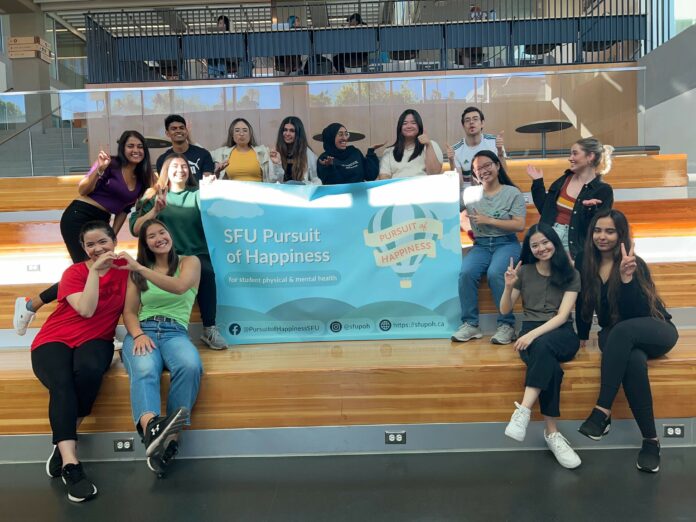
A photo of a group of young adults holding a sign reading “SFU Pursuit of Happiness.”
PHOTO: Kateleen Paran / The Peak

By: Vee Babbar, Peak Associate and Member of SFUPOH

Peek-a-boo, SFU! Halloween is just around the corner, so let us bring out our festive flair and make some memories. As everyone knows, midterm season can be full of fear and dread for most students. According to SFU Health Services, 84% of SFU students report that their mental health interferes with their academic performance. SFUPOH (Pursuit of Happiness Club) strives to reduce this number by organizing stress-relieving events, where students can make friends in a respectful environment and engage in exciting activities. As a member of SFUPOH myself, I got to speak with Ivan Flores, former vice-president of human resources and an active volunteer in SFUPOH, so we can share more about what SFUPOH does. 

First, the upcoming Halloween event: to kill some of that spooky stress this Halloween, SFUPOH is hosting a Pumpkin Carving event on October 24! Pumpkin carving begins at 6 p.m. and includes a Halloween movie. More information about this event and all the exciting activities will be posted on the club’s Instagram handle, @sfupoh.

The SFUPOH’s mission is to “promote the importance of mental and physical health by providing engaging events throughout the semester.” According to Flores, SFUPOH organizes events meant to “provide a safe and supporting environment for students to have fun and chill, but to also bring awareness to mental health.”

A memorable event for SFUPOH was Bob Ross day. “We had a day at SFU where we put [on] a Bob Ross video and just painted, and followed the [. . .] video,” Flores said. Apart from fun events, SFUPOH also organizes events revolving around physical health. For example, there was a yoga and nutrition session, where a yoga instructor and nutritionist each hosted a 30-minute session to help students learn about healthy eating and living. According to Flores, events like these have been a huge success, and both organizers and attendees loved being a part of it. I had the opportunity to attend the yoga night, and it was a rejuvenating event that marked the beginning of my own meditation journey. With the right guidance and a cheerful session with SFUPOH, I found a new healthy habit. 

Flores also spoke about their random acts of kindness event: “We gave goodie bags [. . .] just to spread positivity around midterm season.” SFUPOH makes an effort to promote inclusivity and foster a positive environment by going beyond physical and mental health — sometimes they just actively interact with the community. 

When asked how to join the club, Flores responded, “There’s two ways for joining the club.” The first way is by being an active volunteer in the club. Positions are typically posted on the club’s Instagram once every semester, so if you are interested in the position description, be sure to apply. The club has several coordinator positions, like external relations, marketing, and human resources. But, be mindful when applying as every member is hired for at least two to three terms.

The other way is to be an active collaborator with the club, and to participate in events open to the public. According to Flores, working with the SFUPOH is a great way to develop organizational and leadership skills that can help students’ career growth. There are plenty of networking opportunities, so meeting new people and making solid connections will become your forte. Overall, Flores wanted to convey the importance of maintaining mental and physical wellness. “Mental and physical health are very important to talk about [. . .] One great thing about SFUPOH is that everyone values the importance of speaking up about it, and secondly, the other message is that, everyone’s welcome.” SFUPOH aims to promote the importance of overall well-being and nurture a safe and supportive network for students. With engaging events and an inclusive environment, the club addresses the challenges to overall wellness experienced by the members of our community.

Muslims are not a race

0
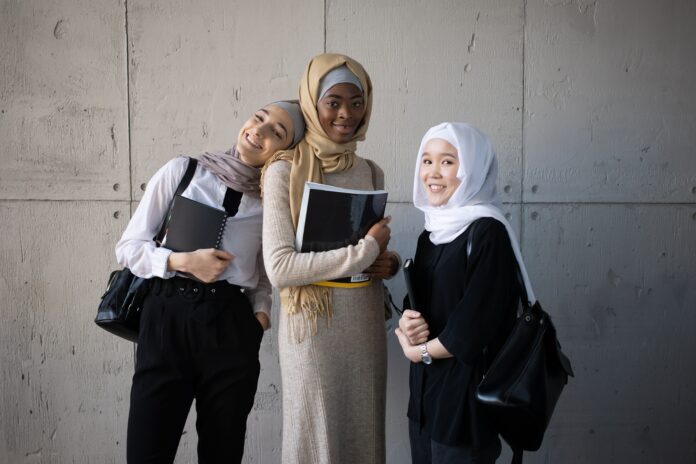
A photo of racially diverse muslim women
PHOTO: Monstera Production / Pexels

By: Sude Guvendik, Staff Writer

Content warning: mentions of Islamophobia and racism. 

We must break through the notion that all forms of prejudice are equal. This idea isn’t just misguided; it’s a deliberate act of intellectual dishonesty. Especially with increasing Islamophobic incidents, a dehumanization media campaign, and the spread of anti-Palestinian racism and anti-Muslim bigotry, we should recognize the difference between racism and Islamophobia. Muslims are not a race, and the attempt to pigeonhole Islamophobia as just racism obscures the complex motivations behind this unique form of bias.

One of the main issues with framing Islamophobia as racism is it implies race is the only factor that matters when it comes to discrimination against Muslims. This perspective fails to acknowledge the diversity of the Muslim community and the factors that contribute to anti-Muslim bias. 

Thinking of Islamophobia as only racism is not just misleading; it’s detrimental to broader efforts aimed at combating discrimination in all its forms. It reduces Islam, a diverse religious tradition, to nothing more than a cultural marker of non-white people. This framing disregards the varying experiences of religious minorities in a world influenced by factors like race, class, gender, and sexuality. 

While racism is often a significant component of anti-Muslim hatred, not all forms of prejudice against Muslims can be accurately categorized as racism. Attempts to racialize Islamophobia fail to consider the wide array of reasons people may harbour anti-Muslim sentiments. Islamophobia is not solely about race; it can also be driven by religious or ideological differences, misunderstandings, and other complex factors that are not adequately addressed when we limit our perspective to racism.

The concept of “racialization” suggests that Muslims can be racialized even though Islam itself is not a race. It argues groups like Arabs and Muslims can face exclusion and discrimination resembling explicit racism, even in the absence of a formal notion of race. However, Islamophobia is not a purely racial concept. Racialization hinges on the idea of physical and social differences, a concept incompatible with religious groups, who do not inherently possess these racial distinctions. Muslims face discrimination not solely because of racism, as they come from varying backgrounds. Islam welcomes people from all walks of life, regardless of their race or ethnicity. 

We’re not contesting the fact that racism and Islamophobia intersect. We’re not ignoring the instances where racism plays a role in anti-Muslim prejudice. But our grievance as Muslims is with the growing trend that indiscriminately lumps all manifestations of Islamophobia under racism. Racism, in the conventional sense, is prejudice, discrimination, or antagonism rooted in perceived racial differences. Contemporary discussions have expanded the definition of racism, viewing it as a systemic issue rather than a matter of individual beliefs. From this perspective, racism isn’t just about personal bias but the systemic consequences it produces.

Another significant problem with framing Islamophobia as racism is that it can lead to an overuse and misuse of the term. This can undermine the effectiveness of legitimate anti-racism efforts. We must be accurate and specific when identifying instances of racism to ensure the term maintains its power and relevance.

While racism undoubtedly plays a significant role in some cases of anti-Muslim prejudice, it cannot be the only lens through which we view this complex issue. Instead, it is more productive to view it as a multifaceted problem that includes religious discrimination, cultural bias, and a host of other factors. 

We can combat Islamophobia in much the same way we confront other forms of bigotry and racism. Islamophobia isn’t limited to overt rhetoric like calls to ban Muslims. Bigotry can manifest in subtle and insidious ways, often going unnoticed. By educating ourselves on these subtle manifestations and recognizing our own implicit biases, we develop awareness and the capacity to address these issues. Implicit biases exist in all of us, but raising awareness of them empowers us to work towards their elimination.

The 1 Million March 4 Children brings out fierce support for SOGI 123 curriculum

0
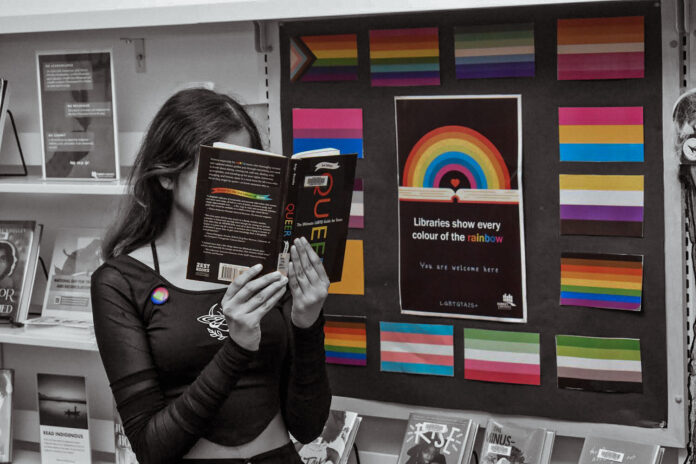
This is a photo of a student in the libarary. There are rows of bookshelves behind them, and they are holding a book titled, “Queer: The Ultimate LGBTQ Guide for Teens.” They are also standing in front of a rainbow poster which reads, “Libraries show every colour of the rainbow, you are welcome here.”
PHOTO: Amrit Kamal / The Peak

By: Eden Chipperfield, News Writer

Content Warning: mentions of anti-2SLGBTQIA+ violence.

A sea of protesters gathered in Vancouver on Wednesday, September 20. The 1 Million March 4 Children protest crowd was split between those protesting against the Sexual Orientation and Gender Identity (SOGI 123) curriculum being taught in schools, and those advocating in support of the curriculum. 

The 1 Million March 4 Children is an anti-2SLGBTQIA+ movement, supported largely by groups like the Freedom Convoy; the organization is led by far-right activists, and has been linked to anti-2SLGBTQIA+ incidents. The movement aims to end the SOGI 123 curriculum in schools. At the time of writing, a second protest is planned for October 21. This has pushed the Coquitlam library to postpone their drag queen story time reading. The RCMP said they are concerned for the safety of attendees and performers, with the ongoing “high-risk” anti-SOGI protests, according to RCMP Cpl. Alexa Hodgins. 

SOGI 123 introduces students to a spectrum of ideas about sexual orientation and gender identity to promote a welcoming environment free from discrimination. The curriculum was first presented in 2016 by the BC United party (previously BC Liberals). In 2004, the Vancouver School Board (VSB) put forth their own “stand-alone” version of SOGI. Today, SOGI is present in 60 school districts across BC and Alberta. 

SOGI 123 teachings discourage gender-specific stereotypes, help explain different family structures, and are proactive around transitioning students. Furthermore, they encourage children to ask questions and engage in proactive allyship. 

Support for SOGI 123 has been significant after 1 Million March 4 Children’s first march, including a statement from various school district parent advisory boards including Vancouver, Langley, Surrey, Nanaimo-Ladysmith, Vernon, and more. The statement noted, “We firmly assert that any group endeavouring to undermine or segregate our communities has no place in the inclusive environment of BC public education [ . . . ] We believe SOGI inclusive education reflects diversity including the acknowledgment of multiple genders and sexualities, which plays a pivotal role in educating our students about the world they inhabit.”

However, with the show of support, there is a prominent opposition that claims SOGI 123 is “too adult” for children. They aim to eliminate teaching pronouns, gender identity discussions, and ban gender-neutral bathrooms. The 1 Million March 4 Children across Canada had many protesters who joined the rally to “protect [their] children from indoctrination and sexualization,” according to the organizers.

One trope the protesters used to undermine the 2SLGBTQIA+ community is the notion that teaching about gender and sexual orientation is predatory toward children. Jackie Wong unraveled this argument in an article for The Tyee, and compared the introduction of SOGI 123 to accessible buildings and wheelchair ramps. Those with accessibility needs often have bathrooms and resources available to support them. These resources have been ingrained into many societies. “These are cornerstones of accessibility that make public spaces work for the people they are designed to serve,” explained Wong. However, the Conservative Party often uses fear as a catalyst for their anti-2SLGBTQIA+ platform. 

The Vancouver District Parent Advisory Council (DPAC) provided a statement to The Peak regarding the recent demonstrations against SOGI 123. “SOGI 123 is a legislated tool used to protect the human rights of those who do not fit into the confines of extremely narrow binaries of existence.” The statement read, “We believe that the protesters are mainly stuck on misinformation about what SOGI 123 is and isn’t, which demonstrates the importance of SOGI existing within the curriculum.”

The BC government released statements on their SOGI information page: “Everyone has a sexual orientation and gender identity (SOGI). It’s an inclusive term that applies to everyone, whether they identify as lesbian, gay, bisexual, transgender, queer, two-spirit, heterosexual or cisgender (identifying with the same gender that one was assigned at birth).” 

It is critical to highlight the importance of representing marginalized groups, especially Indigenous students, in queer communities. In the SOGI curriculum, Indigenous perspectives on gender are prominent, including views on sexual orientation and gender identity that “contrast European (colonial) beliefs.” Beyond gender identity, SOGI 123 prioritizes including Indigenous learning in high schools. BC First Peoples 11 is a high school class which discusses the “impact of historical exchanges of ideas, practices, and materials among local BC First Peoples and with non-Indigenous peoples.” Contemporary Indigenous Studies 12 focuses on “the varied identities and world views of Indigenous peoples, and the importance of the interconnection of family, relationships, language, culture, and the land.” These are two of the classes SOGI 123 campaigns to implement. 

Gender discussions, especially those about trans identities, have been targeted by anti-SOGI protestors expressing concern over younger generations who may be transitioning earlier in life. However, SOGI doesn’t explicitly encourage transitioning. The curriculum is aimed to educate students on existing differences between individuals. SOGI offers a graphic called the Gender Unicorn, created by the Trans Student Educational Resources (TSER). The Gender Unicorn outlines differences and promotes understanding of emotional attraction, physical attraction, sex assigned at birth, gender identity and gender expression, breaking the subject matter down into an understandable fashion. 

Allyship is also a topic brought into the curriculum for students who may not identify as queer to further support their peers and friends. “Allyship is important work; it lets 2SLGBTQIA+ youth know that they are not alone. Anyone can do this work, but it is important to remember to listen to, consult with, and represent 2SLGBTQIA+ people in the work you do as an ally,” according to SOGI 123.

A parent, who was present at the 1 Million March 4 Children on September 20 in support of the SOGI 123 curriculum, shared their insight to Global News: “I feel sorry for the children of those parents that choose fear over the reality that teaching our children about sexuality protects them, it protects them from sexual predators actually, it allows them to be empowered in their ability.”

For 2SLGBTQIA+ supports, Trans Care BC is a information hub that is BC-wide, helping people find gender-affirming care and resources. Queer, trans, and two-spirit folks can also find resources, programming, and community events on Qmunity’s website.