Home Blog Page 157

Brands complicit in genocide to stop supporting now

0
Palestinian flags in a crowd, outside in front of a gray building.
PHOTO: Muaaz / Pexels

By: Petra Chase, Arts & Culture Editor

Content warning: descriptions of war, death, and genocide.

After at least 240 hostages were brutally taken by Hamas militants on October 7, Israel declared war on Gaza under the guise of self-defense. As of writing this article, the Israel Defense Forces’ (IDF) atrocious bombardment on Gaza has killed over 10,000 people, including more than 4,100 children. There have been brutal bombings on hospitals, where thousands seek treatment and shelter. A blockade is preventing food, water, and medical aid from entering the area, while internet and electricity remain scarce, cutting off Palestinians in Gaza from the outside world. There is no justification for these acts.

As individuals witnessing these horrors, it’s understandable to feel powerless, but we owe it to those that are suffering unfathomable horrors to do everything we can to stop this from happening. We must remember we are part of a collective, and targeted collective actions can put pressure on those at the top to take action, and most urgently, call for a ceasefire. One of the ways everyone can take part is by boycotting brands that are complicit in what leading international scholars are calling genocide. 

Targeted boycotts
According to the Boycott, Divestment, and Sanctions (BDS) Coalition, ending corporate “complicity with Israel’s genocidal regime is more urgent than ever.” The BDS Coalition aims to lead targeted boycotts, which means focusing efforts on a “smaller number of carefully selected companies and products for maximum impact.” Long boycott lists circulating on social media can be counterproductive, as they scatter efforts and may not always be credible. By focusing our efforts on a few corporations, other corporations will get the message that their “time will come” if they do not act. Targeted boycotts have a track record of success throughout history, from the US Civil Rights movement, to the anti-apartheid movement in South Africa, and the Indian anti-colonial struggle

The BDS Coalition also provides location-specific boycott lists, like the Canadian Boycott List of Shame. The list consists of “Israeli products and products produced by corporations profiting from the occupation.” It’s important to highlight that this is not a boycott of Jewish businesses, as many Jewish businesses and individuals do not support the IDF. 

Here are some of the most prominent companies for SFU community members to boycott. Find the full list and more information at bdscoalition.ca/boycott-list-of-shame

Indigo Books
Two of the owners, who together own 68% of shares, founded the Heseg Foundation for Lone Soldiers, “aimed at encouraging foreigners to join the Israeli army, and pursue their studies in Israel.” Get your books from Massy Books or Iron Dog Books instead!

Puma
Planning on buying new shoes or sportswear? Make sure it’s not Puma! They sponsor the Israel Football Association, including “racist teams like Beitar, teams in illegal settlements in the occupied West Bank, and an entire structure of Israeli colonialism.” 

Sabra Hummus
Next time you’re choosing a brand of hummus, keep in mind that this brand is “produced in a joint venture between PepsiCo and the Strauss Group,” which “financially supports the Israeli occupation army.” You can easily make your own hummus at home, or purchase a variety of other brands.

Banks: HSBC, Scotiabank, RBC
All three of these banks invest in complicit companies. HSBC is “a major shareholder in companies selling weapons and military technology.” If you have an account with them, you can easily transfer to another bank. Vancity notably does not invest in fossil fuel companies.

Sodastream
Make sure Sodastream isn’t on your holiday shopping list, as the products are made by an “Israeli company in the occupied Naqab.” Moreover, “SodaStream is complicit in the ongoing displacement projects targeting Palestinian Bedouin villages and homes.”

BC Liquor
Many liquor stores carry wine that is marked as Israeli, but are grown on occupied Palestinian and Syrian land. With a location on SFU Burnaby campus, BC Liquor is one of these stores. Make sure you’re cautious of this when buying wine at any liquor store.

The following are not on the BDS Coalition’s list as of writing, but are important grassroots boycotts worth mentioning:

Starbucks
If Starbucks’ union-busting activity wasn’t enough to steer you away from them, they recently sued Starbucks Workers United over a social media post expressing solidarity with Palestinians. While Starbucks isn’t on the BDS’ targeted boycott list, they’re included because of their locations on campus, and because it’s so easy to find alternatives. Renaissance Cafe is a great option, with delicious holiday drinks, too! 

McDonalds
McDonalds’ Israeli locations are supplying free food to IDF soldiers as they conduct this brutal attack on Gaza. In an Instagram post, they said, “we intend to donate thousands of meals every day to soldiers in the field and in drafting areas [ . . . ] We opened 5 restaurants that were open only for this purpose.” While they’re not on the BDS Coalition’s targeted list, there’s no reason to keep buying McDonalds when there are so many other alternatives!

Divestment: Simon Fraser University

The “D” in BDS stands for divestment, meaning “pressuring governments, institutions and investment funds to exclude and divest” from complicit companies. 

Did you know SFU owns shares in war contractors, organizations that provide products to military governments, such as: Booz Allen Hamilton, BAE Systems, and CAE Inc? BAE Systems supplies F-35 fighter jets, which are flown by Israel. Our community has a responsibility to put pressure on SFU to divest, and take other actions. You can do so by signing the open letter. Find it, and other calls to action, at the SFU Student for Justice in Palestine Instagram account, @sfu.sjp.

Need to Know, Need to Go: November

0
ILLUSTRATION: Courtesy of the Peak

By: Saije Rusimovici, Staff Writer

Eastside Culture Crawl Visual Arts, Design & Craft Festival
Where: In-person at various locations between Columbia St., 2nd Ave., Victoria Dr., and Waterfront
When: November 16–19, 2023, Thursday & Friday 5:00–10:00 p.m., Saturday & Sunday 11:00 a.m.–6:00 p.m.

The free annual art event returns for its 27th year with a wide variety of art to observe and workshops to participate in over the course of four days. Celebrate art in many forms, from paintings and illustrations, to handmade jewellery and glasswork. Be sure to drop in to open-studio artist talks, demonstrations, and workshops that invite you to experience art through participation. There will also be a special gallery exhibition called Out of Control, which will be available to observe at various venues in Vancouver all the way until November 26. 

For more details, visit culturecrawl.ca/events

Zee Zee Theatre’s annual storytelling experience
Where: Vancouver Public Library’s (VPL) central branch, 350 W Georgia St. 
When: November 18, 19, 25, & 25 from 1:00 p.m–4:00 p.m. 

This year’s theme is the “Queer Asian Stories Collection,” which invites attendees to check out an individual to gain some insight into “their life experiences, culture, and beliefs” represented by a book title available at the VPL. The free event emphasises building empathy through conversation. This is meant to be an encouraging and safe space for storytellers to connect with their audience and gain confidence sharing their experiences. Audience members can “exchange insights in hopes to turn a new page on their worldview,” through conversations that broaden perspectives and shape a more understanding future. 

For more details, visit zeezeetheatre.ca/production/queer-asian-stories-collection.

Pi Provocateurs presents Deafy 
Where: VIFF Studio Theatre, 1181 Seymour St.
When: November 24 at 7:30 p.m., *November 25 at 7:30 p.m., & November 26 at 2:00 p.m.
Tickets: $25 available at pitheatre.com (low and no-cost tickets are available for members of the Deaf and Hard of Hearing community, available by emailing [email protected]). 

This critically-acclaimed 60-minute performance offers a mix of ASL, subtitles, and spoken word that “weave together a tragicomedy that takes the audience on an unexpected journey of discovering what it really means to belong.” Writer and performer Chris Dodd is an award-winning Deaf actor and accessibility advocate, having founded SOUND OFF, a festival for Deaf performance. Deafy is about a Deaf public speaker named Nathan Jesper, who realizes midway through his speech that “things are not what they seem.” 

For more details and to get your tickets, visit pitheatre.com/shows/deafy.

*There are a limited number of tickets left for the community night performance on November 25, which includes ASL interpretation and a talk with Chris Dodd and Ashley Wright, as spaces are reserved for the Deaf community. To get your ticket, email [email protected]

East Van Variety Show Fundraiser
Where: LanaLou’s Restaurant 362 Powell Street 
When: Wednesday November 22, 7:00–10:30 p.m. 
Tickets: Starting at $25. 

The third annual East Van Variety Show is packed with entertainment for the perfect midweek pick-me-up! All proceeds are equally divided between supporting the artists and supporting WISH, a drop-in centre for women in the Downtown Eastside. This year’s show will feature a selection of performances by outstanding artists. Internationally-renowned comedian Amber Harper Young will take the stage in addition to local comedian Melanie Rose. The evening will also feature a drag performance by Beardney Spears, 2SLGBTQIA+ and refugee activist, and live music by Latin/Rock artist, ManiFuego. Tickets are available on Eventbrite

Undergraduate solidarity society demands tuition refund

0
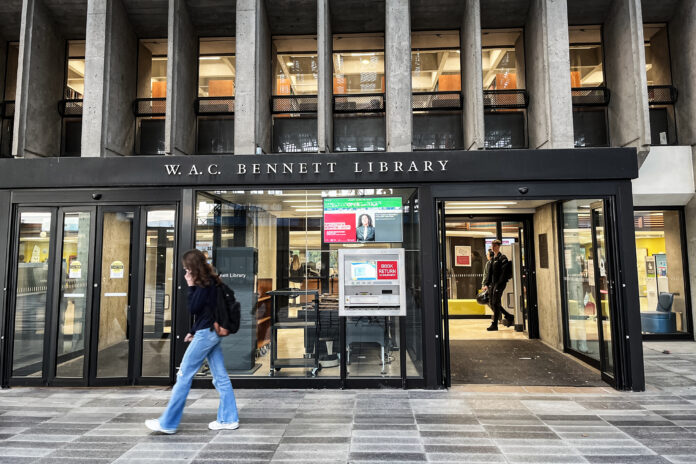
This is a photo of the outside of the Bennett Library at SFU Burnaby Campus. There are students walking past the doors.
PHOTO: Roshi Chadha / The Peak

By: Olivia Sherman, News Writer

Before the Undergraduate Solidarity Society (USS) was founded in June at the beginning of the Teaching Support Staff Union (TSSU) strike to get undergraduate students involved with strike action. Over the course of the strike, USS members joined TSSU on picket lines, helped inform students of TSSU’s goals, and supported their job action. However, since the strike ended in October, the USS is now organizing undergraduates for a tuition refund. The Peak interviewed two USS members, Artin Safaei and Ida, to discuss the USS’ goals. 

Ida described USS organizing as “a way to reclaim ownership over the school.” She said the university follows a “transactional model” where undergraduate students are merely customers in a business, rather than active members of a community. “This model is not how a university is supposed to function.” 

“This organization started as a strike solidarity movement among undergrads, but we quickly realized there is a lack of a base or core [ . . . ] and we see that energy going to waste,” Safaei said. Ida noted, “The culture at SFU of student organizing has been declining,” citing SFU’s former reputation as a radical, protest-oriented university since the school’s foundation in the mid-1960s. 

According to the statement SFU provided The Peak, the SFU administration considers labour strikes and job action to be uncontrollable events and refunds will not be offered because the university is not responsible for it. 

However, the USS argues that SFU is responsible for the prolonged strike action due to their unwillingness to meaningfully bargain over months. “The measures taken by the administration were not measures that considered the effect and impact the strike had because of the catastrophic management of the administration,” Safaei said. “We don’t want to be paying tuition for a term we didn’t really have.”

In response, the USS started a petition for a tuition refund, which the administration has “completely ignored.” Safaei elaborated, “That’s one of the main reasons we’re asking for a tuition refund.” The USS believes “this strike in particular was mismanaged in a way that the university had a lot to do with the suffering and the frustration that was felt.” 

Ida said most of the signatures for the petition occurred within a two-week period. At the time of writing, the petition has reached 2,722 signatures, which she said is 8% of SFU’s undergraduate body. “The petition tells us the student body is ready for a tuition refund. The student body is ready for accountability from the school.”

USS members are also discussing hikes in tuition costs, which have been raised over the past two years by 2% for domestic students and 4% for international students every year. “Our school has a budget surplus every year, a surplus that is growing, but we are forced to pay the maximum amount of tuition dues every year and it’s rising. Inflation is not considered, which is a huge problem,” Safaei said. 

“When we crunch the numbers, we see a picture that is rapidly emerging that this [tuition] hike that SFU has chosen is not something that they have had to do,” Ida said, herself an economics student. “It’s a deliberate choice to create profit and to continue this model of the university as a profit-making institution.” 

After the strike ended, the SFU Senate Committee passed a motion to install a “Pass/Credit/No Credit” system. The new system will allow students to opt in after they’ve reviewed their final grades. Grades equivalent to a C- or higher will receive a “pass,” grades equivalent to a D will receive a “credit,” and failing grades will receive a “no credit.” This grading system does not impact GPA. 

“This is not a bad thing,” Safaei said, noting its significance to students who need those credits to graduate. “But academic security is one thing, and then financial security is another.” 

He also noted the deadline to drop a class has been extended, but even that has its problems. “If I’m dropping a course but paying full for that course, that again was taken from me, why aren’t we talking about that? [ . . . ] This is an injustice that no ‘credit or no credit’ system can fix.” 

While the TSSU strike is officially over, Safaei said he noticed a sense of “momentum building” over the course of the strike. “Now that we can see TSSU fighting for their rights, maybe we should be fighting as well [ . . . ] Our main goal, as the USS, right now, is to get what is rightfully ours. To get our tuition refunds back. And to start a real, constructive dialogue about tuition raises.” 

The USS is currently organizing a rally on campus in mid-November to raise awareness for undergraduate students’ rights, the tuition refund, and yearly tuition hikes.

Independent Jewish Voices group calls on minister of energy to support ceasefire in Gaza

0

This is a photo of the outside of the minister of energy and natural resources office. His name, Jonathan Wilkinson, is written on the outside of the building
PHOTO: Amirul Anirban / The Peak

By: Eden Chipperfield, News Writer

Content warning: mentions of war, ethnic cleansing, and genocide. 

The Israeli army and the Israeli Defense Forces (IDF), have instigated a multitude of attacks in Gaza, where over 9,000 people have died. This comes in response to events on October 7, where the Islamist militant group Hamas launched an attack on Israel. This attack has drawn attention to the long, horrendous history of oppression and ethnic cleansing the state of Palestine has endured for decades. 

Canada has provided $50 million to those in Gaza for humanitarian assistance. However, many believe that this act is not enough to address the devastation that Palestinians and the people of Gaza are facing. Many consider it hypocritical for Canada to sell military weapons to Israel while also donating humanitarian assistance to those affected by Israel’s attacks in Gaza. 

On October 27, a Vancouver community of Jewish individuals and allies held a powerful demonstration outside the office of minister of energy and natural resources, Jonathan Wilkinson, to pressure the Liberal government to call for a ceasefire in Gaza.  

To understand more about the call to action, The Peak spoke to Nick Gottlieb, an Independent Jewish Voices (IJV) member and an organizer of the protest. 

“We are in the early stages of what is shaping up to be one of the greatest crimes against humanity ever committed. More than 800 experts and numerous international agencies have warned that this is a genocide,” expressed Gottlieb. “Israeli government officials have called Palestinians ‘human animals’ and openly expressed their intent to remove Palestinians from Gaza, killing as many as necessary along the way. As Jews, we feel a particular responsibility to stop this genocide because it’s being enacted in our name by a state that claims to, but does not, represent us.”

Gottlieb clarified why IJV has been focused on getting the attention of Wilkinson, due to his government influence as a cabinet minister. “23 other Liberal MPs have already called for a ceasefire; we are pressuring those who hold more power to join the call and force prime minister Trudeau to call for an immediate ceasefire, an end to the siege, and blockade of Gaza, and an end to the occupation of Palestinian territories,” said Gottlieb. 

However, Gottlieb noted there are other significant reasons why Wilkinson is being pressured to speak, primarily due to his involvement in the conflict: “His ethics disclosures indicate that his spouse owns shares in Lockheed Martin, an arms, defense, and technology company that continues to supply the Israeli military with missiles. Lockheed Martin’s stock price rose nearly 10% on October 7, the day this violence started, and has continued climbing since. It is beyond shameful that our leaders are directly profiting from supporting genocide.” According to CNN, Lockheed Martin, and other “shares of military contractors, [saw their stock prices] spike as both institutional and retail investors bought in” to the conflict. “Lockheed Martin executives highlighted the Israel and Ukraine conflicts as potential drivers for increased revenue in the coming years.”

Another reason for raising awareness regarding Wilkinson is his role as energy and natural resources minister. Gottlieb mentioned oil and gas resources are sourced in Israel, and as a minister, he should address how Israel is continuously “issuing new licenses for oil and gas development as the war goes on.”

Various individuals have voiced significant concerns about the Canadian government’s stance on Israel. Gottlieb and other members of the IJV have expressed their sincere disappointment in Canada’s outlook. “We will not mince words: this is a genocide,” said Gottlieb, “we demand that Canada break from the US, demand an immediate ceasefire and end to the blockade of Gaza, and work towards long-term solutions to ending the violence — solutions which must, at their core, include an end to the occupation of Palestinian land.

“More than a million people have been displaced. Water and fuel supplies have been cut off for weeks, and hospitals run out of fuel to run their generators and treat patients. The Israelis bombed a refugee camp twice in the last few days. Why is there a refugee camp there, you might ask? Palestinians have been refugees in their land since the Nakba in 1948 when settlers expelled 700,000 of them to establish the Israeli state.”

The Nakba was the “mass displacement and dispossession of Palestinians during the 1948 Arab-Israeli war.” The conflict between Palestine and Israel began in the 1930s when European powers directed Jewish people around the world to settle in the area after WWII. European powers were attempting to establish a “Jewish state in Palestine” because Zionist organization leaders were claiming they had “historical connections” to the land. However, according to the United Nations, Indigenous Palestinians “had inhabited the land for virtually the two preceding millennia [and] felt this design to be a violation of their natural and inalienable rights.” The effects of Nakba are still present today; Israel’s Zionist government has engaged in “a series of successive wars,” so it can expand its territory “to occupy all of Palestine.” The Palestinian people were left with Gaza and the West Bank.   

Gottlieb noted that the IJV came together to support Palestinians during a time of severe polarization between Jewish and Muslim communities. “Advocates fighting for Palestinian rights — and frankly, for their humanity — are often accused of anti-semitism. As Jews, we want to say firmly that opposing the Israeli regime’s genocidal acts of terror is not anti-semitism,” said Gottlieb. He said he believes “if we want to fight anti-semitism, we need to stop allowing the Israeli regime to equate itself with Judaism.” 

This week at SFU

0
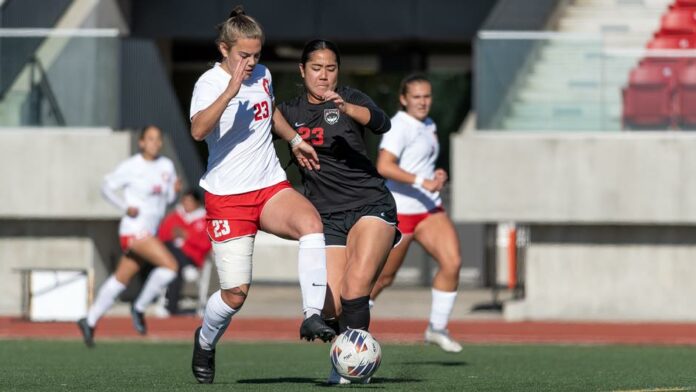
photo of an SFU soccer player fighting to keep possession of the ball against an opponent.
PHOTO: Wilson Wong / SFU Athletics

By: Isabella Urbani, Sports Editor

Home Games 

Saturday, November 11: men’s soccer vs. Northwest Nazarene (Idaho) at Terry Fox Field at 1:00 p.m.

  • The second time in nine days these teams are facing each other.

Away Games 

Thursday, November 9: men’s soccer vs. Montana State Billings at 6:00 p.m. 

  • Previous game against Montana State was rescheduled due to fog, and then subsequently cancelled. 

Thursday, November 9: volleyball vs. Saint Martin’s at 7:00 p.m. 

  • Swept Saint Martin’s three sets to none earlier this season. 

Thursday, November 9–Saturday, November 11: women’s soccer at the GNAC championships. 

  • Knocked out by No. 1 seed Western Washington, 3–0, in the opening game of last year’s championship. 

Friday, November 10: women’s basketball vs. San Francisco State at 2:00 p.m.

  •  Last played San Francisco two years ago to a 8368 loss. 

Friday, November 10Saturday, November 11: men’s basketball at the West Region Crossover in California.

  • Opponents include Cal Poly Humboldt on Friday at 7:30 p.m., and California State, Dominguez Hills on Saturday at 5:30 p.m. 

Friday, November 10: hockey vs. Logan Lake Miners at 7:00 p.m. 

  • Beat Logan Lake 8–5 earlier this season at home. 

Saturday, November 11: women’s basketball vs. California State Monterey Bay at 2:00 p.m. 

  • Last played California State 12 years ago to a 68–63 victory. 

Saturday, November 11: volleyball vs. Western Oregon at 7:00 p.m. 

  • Swept Western Oregon three sets to none earlier this season. 

Sunday, November 12: wrestling vs. Pacific University at the Mike Clock Open.

Canadian soccer legend Christine Sinclair announces retirement from international play

0
photo of a soccer field during the game from the stands.
PHOTO: Vienna Reyes / Unsplash

By: Kaja Antic, Sports Writer

After 23 years with the Canadian national team, Christine Sinclair has announced her retirement from international play at the end of 2023. Following a cryptic video posted to her Instagram featuring a pair of cleats hanging on the crossbar of a soccer net, Sinclair published a letter of advice to her younger self through The Globe and Mail one day later. This comes after Canada’s early exit in the group stage of the 2023 FIFA Women’s World Cup this past summer, despite entering the tournament as reigning Olympic champions. 

At 40 years old, Sinclair has played in six FIFA Women’s World Cups from 2003 until 2023 and has participated in four Olympic soccer tournaments from 2008 until 2021. She got her start in international play at the 2000 Algarve Cup when she was just 16 years old. Sinclair is leaving international competition as the world’s all-time leader in goals amongst any player with 190 goals.

During her illustrious career, Sinclair has scored in five of the six World Cup tournaments she has appeared in, achieving this record alongside two other football legends, Brazil’s Marta Vieira da Silva and Portugal’s Cristiano Ronaldo. Sinclair has appeared in over 300 games for the Canadian national team and has captained the team since 2006.

While serving as captain, Sinclair led the Canadian team to bronze medals at both the 2012 London Summer Olympics and the 2016 Rio Summer Olympics, as well as the team’s first gold medal at the 2020 Tokyo Summer Olympics.

Sinclair has also been one of the leaders in the Canadian women’s team fight for equal pay and treatment. She captained the team in protest during the 2023 SheBelieves Cup and advocated for the team’s ongoing pay disputes with Canada Soccer ahead of the 2023 Women’s World Cup.

Along with playing for Canada since the age of 16, Sinclair spent her college career playing for the University of Portland, a few hours and a border away from her hometown of Burnaby, BC. She finished her college playing career in 2006, setting an NCAA Division I record of 39 goals during the season, and winning the Honda-Broderick Cup — an award for the best college woman athlete of the year.

Following her college career, Sinclair played for the Vancouver Whitecaps FC women’s team from 2006 until 2008, participating in the now-defunct American semi-professional women’s league. Once the Women’s Professional Soccer (WPS) league was established in 2008, Sinclair was drafted by FC Gold Pride, winning the WPS championship in 2010, though the team was subsequently disbanded after they could not meet league financial requirements. Sinclair then signed with the Western New York Flash, winning the 2011 WPS championship and being named MVP of the tournament. 

The WPS folded in 2012 with the rise of the National Women’s Soccer League (NWSL) coming soon after in 2013. Sinclair joined the Portland Thorns during the inaugural NWSL season in 2013 and has remained as team captain ever since. She has captained the Thorns to three NWSL Championship wins in 2013, 2017, and 2022. At the end of her open letter announcing her retirement from international play, Sinclair added “P.S. – Portland, how about one more year?” to her Instagram.

Christine Sinclair will finish her remarkable international career on December 5, 2023, at her hometown stadium of BC Place. 

Music Monday: Asian women in indie

0
Image courtesy of The Peak.

By: Tian Davidson, SFU Student

As someone who doesn’t stick to one genre when it comes to music, something I’ve noticed is in the indie scene, Asian women don’t typically get the spotlight, despite the fact that there are so many talented musicians innovating within these genres. This is why I put this list together: to encourage you to diversify your playlists. I encourage you to give these songs a listen. Listening to new artists is like trying new food; you never know, maybe this list has your new favourite of the year.

“MIMI” by youra
Courtesy of Genie Music Corporation, Stone Music Entertainment
Starting off the list with a chill and mellow song, “MIMI” by youra is a perfect tune for walking in the cold autumn weather. The solemn lyrics are hard to interpret at first, but slowly paint a picture of a painful romance. The music video also has some symbolic visuals and unique CGI, which illustrate the story of a codependent relationship. youra AKA Kim You-Ra is an K-Indie singer-songwriter based in South Korea. Her music consists of a mix of hip-hop, R&B, and soul. 

“LAVENDER NIGHTZ” by Cartel Madras, Tyris White
Courtesy of Royal Mountain Records
Need an empowering rap anthem? Cartel Madras has got you covered. “LAVENDER NIGHTZ” is a fast-paced, lo-fi rap song with lyrics about empowering yourself and not caring about what others think. Born in Chennai, India, before emigrating to Alberta later in their childhood, Cartel Madras is a sister rap duo with most of their music consisting of rap and electronica. 

“Cherries Jubiles” by YUKIKA
Courtesy of ESTIMATE, LLC.
Maybe rap and slow tempo songs aren’t your thing. “Cherries Jubiles” by Yukika will cheer you up and get you in a dancing mood. It’s a retro style city pop song, a genre that captures the vibes of neon lights, sparkling city skylines, and driving down the streets in a Nissan GT-R. Yukika AKA Yukika Teramoto is a Japanese singer-songwriter based in South Korea and queen of city pop to her fans. Interestingly, she only has one song that’s fully in Japanese, as most of her songs are in Korean.

“Buckingham” by WEDNESDAY CAMPANELLA
Courtesy of WM Japan
This one is one of my favourite songs, because of its witty wordplay and fast-paced instrumentals. The song is an ode to Kyūden, a special district in Tokyo, which is also a homophone in Japanese for “palace.” She also sings about many palaces around the world (Buckingham, San Cristobal, and Dolmabahce). WEDNESDAY CAMPANELLA is known for their ear-tingling diction and pop music earworms, like the songs “Kongo Rikishi statues,” “Edison,” and “Little Red Riding Hood.” 

Mexican Gothic reimagines colonial horror stories

0
Cover of Mexican gothic
PHOTO: Courtesy of Random House Worlds

By: Saije Rusimovici, Staff Writer

Content warning: brief mention of eugenics and colonialism.

Mexican Gothic by Silvia Moreno-Garcia will leave you unsettled, frightened, and absolutely horrified. Just thinking about it sends a chill down my spine. Halloween may be over, but this horrifying gothic mystery will definitely be the scariest thing I’ve read this year.

The novel is set in 1950s Mexico, and begins by depicting the lavish lifestyle of debutante Noemí Taboada in Mexico City. After returning from a night out one evening, her distraught father presents her with a frantic and incomprehensible letter from her newly-wedded cousin, Catalina. Determined to figure out what’s wrong with her cousin, Noemí sets off to High Place, a property owned by Catalina’s English husband, Virgil Doyle, where the rest of his family also resides. 

It isn’t long before Noemí starts to realize there are strange things happening at High Place. Harsh rules, servants that refuse to speak, and mouldy books are just a few peculiarities in the poorly-maintained but grand manor. Catalina is bedridden and delirious, supposedly having succumbed to a terrible illness according to the family doctor. But with the help of the youngest Doyle, Francis, Noemí soon discovers it isn’t tuberculosis that’s making Catalina sick at all, and hatches a plan to escape. 

Fans of the Brontë sisters will appreciate the mysteriousness of the story’s setting: a creepy English manor pasted into the mountainous regions of the Mexican countryside. Those who were captivated by Jordan Peele’s Get Out will be both equally terrified and revolted by the metaphorical hints at the horrifying beliefs rooted in eugenics and colonialism. Taking a genre that’s traditionally been used to reinforce ideas of the “other,” Mexican Gothic flips this around, exploring how colonialism and eugenics play a role in objectifying Mexican women. 

Reading this book was uncomfortable. Although a work of fiction, the uncanny similarities with real-world ideologies is what makes it truly horrifying. There were numerous occasions where I had to set it down and take a break, thinking things to myself like who would do this? and I can’t believe this is happening, terrified I’d start seeing things emerge from the shadows in the middle of the night. While the book was sprinkled with elements of fantasy and the supernatural, the ties to biology and botany added additional allure.

Noemí’s voice was strong and passionate. By the end of the book, I felt as though I knew her as a friend. The way she navigated the brutalities of High Place demonstrated her bravery and power as a woman. I appreciated the imagery Morena-Garcia created through Noemí’s eyes, something that often gets lost to dialogue and the characters inner thoughts when a book is written in first person. 

Upon finishing the book, I was left satisfied yet unnerved. Moreno-Garcia gives readers the closure they need, but this doesn’t distract from the horrifying plot leading up to the conclusion. I would recommend this book to readers who enjoy a blend of mystery, historical fiction, and horror, but it’s definitely a book that you might have to hide in your closet after reading (yeah, it’s that scary). 

Silvia Moreno-Garcia was born in Mexico and lives in Vancouver. She is the author of several other novels including bestseller The Daughter of Doctor Moreau. Her latest novel, Silver Nitrate, blends Mexican horror movies and occultism. Learn more about her work at https://silviamoreno-garcia.com/.

We need more BIPOC women in publishing

0
A Black woman reading a book
PHOTO: Tima Miroshnichenko / Pexels

By: Saije Rusimovici, Staff Writer

Books written by Black, Indigenous, and other people of colour (BIPOC) offer important stories, perspectives, and voices that reflect the diverse experiences of people of colour. Not only is it important for readers to have books they identify with, but it’s essential for those outside these communities to read beyond the colonial perspectives depicted in mainstream novels. This should begin with BIPOC women being featured in the classroom at early ages, but the larger issue is a sheer lack of representation in the publishing industry. While movements like Black Lives Matter have propped up more Black authors, publishers need to work towards platforming BIPOC voices regardless of the news cycle. The stories BIPOC women have to share are so much more than just what’s in the headlines. 

Almost every book we read in Canadian elementary schools consists of a cast of white heroes and heroines. Books like Hatchet and The Outsiders offer narratives composed of stories from the perspective of white men. Looking back at my childhood, this is more than a little unsettling as my school’s population was predominantly composed of people of colour. Many of my classmates didn’t speak English as their first language, as they had newly arrived in Canada. The stories in our curriculum lacked the cultural diversity needed to represent the multiculturalism in our school. 

The books we read should reflect the diversity we see around us every day. A big part of connecting to literature is being able to relate to the characters in the books you are reading. However, when predominately white publishers decide white is the default “relatable” story — what does that tell us about their efforts to connect with people of colour? Our learning is shaped by the stories we are exposed to. There needs to be representation and access to diverse books because people of colour deserve to see themselves in the stories they read.

Despite the impression that many BIPOC authors are climbing the bestseller charts, research from a sample of published books demonstrates that a stunning 95% of published authors are still white. The bestselling BIPOC authors we tend to see featured at bookstores are written by celebrities, politicians, and athletes of colour, giving the illusion that there are more BIPOC authors being published than there actually are. In reality, only 22 out of 220 authors on the fiction bestseller list were people of colour in 2020. The less famous, mid-list authors are “overwhelmingly white.” This sends a message about what kind of status is needed to make it as a BIPOC writer. 

Those who work in publishing directly influence the representation we see in books. According to a survey from 2019, 85% of people “who acquire and edit books” are white. Literary agent and former editor Marie Dutton Brown said there is “fluctuation in publishers’ support for Black writers to the news cycle, which periodically directs the nation’s attention to acts of brutality against Black people.” Because of this, Dutton Brown also notes that “many white editors are not exposed to Black life beyond the headlines.” 

It can be exceedingly difficult for BIPOC women to get their books published and pursue careers in the publishing industry. Women of colour who work in publishing have described it as a “very white, very privileged industry.” Despite over half of the people working in publishing being women, only 7% of these women are Asian, 6% are Latinx, and 5% are Black. Because few women of colour are in the publishing industry, fighting for inclusivity can be exhausting when they are so overwhelmingly underrepresented. A Career in Books by Kate Gavino is an exceptional example that illustrates what it’s like to be a BIPOC woman in publishing.

The internal dynamics of major publishing houses must be changed to uplift and showcase content written by women of colour. A big part of this is having mentors for women of colour coming in at entry-level positions that have similar backgrounds and experiences. It is extremely important that publishers “hire, promote, and listen to people who they have historically sidelined” to ensure that BIPOC stories are celebrated and shared on a regular basis, not just when they’re relevant to the news cycle.

Exploring the shift from whale oil to palm oil and its impacts on orangutans

0
This is a photo of two orangutans. One baby orangutan is sitting close to its supposed parent.
PHOTO: Dan Dennis / Unsplash

By: Andreea Barbu, SFU Student

On October 23, Akamine Jun, a professor at the Graduate School of Social Sciences, Hitotsubashi University in Tokyo, presented findings from his research at a lecture in the SFU David Lam Centre. His research interests focus on maritime Asian studies and ethnography of food. Professor Jun’s presentation aimed to show how the end of whaling for whale oil in the 1960s indirectly resulted in the death of orangutans. 

Jun began by recalling a visit he took to the Singapore Zoo many years ago, which had over 40 orangutans at that time. Singapore is located between Indonesia and Malaysia, countries in which palm oil plantations are rapidly expanding. The large expansion of palm oil plantations caused Jun to be interested in the history of edible oil, and to examine the shift from heavy whale oil consumption to the current use of palm oil. 

In the early to mid-20th century, Japan was heavily involved in the commercial whaling of both coastal and Antarctic whales. These factory ships would then go to London or Amsterdam to sell the oil. According to Jun, “World production of edible fats and oils around 1930s is estimated at approximately 21 million tons.” Jun explained whale oil was important in the European market. In the 1930s, countries such as the UK and Germany especially needed whale oil for the production of margarine. During this time there were no restrictions as to how many whales could be hunted. Antarctic whaling for producing oil prospered before World War II. Around 1946-1949, Japan suffered from a severe food shortage, and it was this shortage that contributed to a shift from whaling for oil, to whaling for meat. Notably, this was still done with few restrictions. 

However, the establishment of the International Whaling Commission (IWC) in 1946 changed this. One of its first steps included the adoption of the Blue Whale Unit (BWU), a management tool that was based on the amount of oil that could be produced by one blue whale. The IWC agreed on a maximum of 16,000 BWU for the whaling season. Quotas for each whale species were introduced in 1972, where most whale species were banned with few exceptions. 

Jun presented a graph from 2016, showing that palm oil was the most consumed oil at this time, standing at 35%. He compared this to a 1955 graph, where whale oil accounted for 2.7% of consumption. This figure presents a profound transformation when viewed in the context of today’s oil consumption, where the inclusion of whale oil is non-existent in these graphs. 

Jun attributes the stark contrast to expanding palm oil plantations in West Africa and Southeast Asia. Because palm oil needs to be collected all at once to be considered profitable, Jun pointed out that a plantation that is “20,000 hectares is very common and it is just one company’s plot. Normally similar plantations lay side by side.” This exploitation of the land inevitably results in the loss of habitats for the orangutans, rendering them a critically endangered species. 

Steps to protect species have been taken, such as Sabah, a Malaysian state, proposing that 30% of the state’s biodiverse forests would be protected by the state government. However, Jun notes that the right side of the bank can continue to be developed. While development occurs and displaces wildlife, Sabah has committed to providing a safe alternative to house these animals. Namely, the world-renowned orangutan conservation facility, the Sepilok Orangutan Rehabilitation Centre, dedicated to protecting orangutans. 

The two main orangutan species, Bornean and Sumatran, are both in sharp decline. According to the World Wildlife Foundation, “A century ago there were probably more than 230,000 orangutans in total, but the Bornean orangutan is now estimated at about 104,700” and the Sumatran population has become critically endangered at 7,500.

Jun said, “It was vegetable oil that replaced whale oil in the 1960s, even though the amount of whale oil at that time was already small, but still 2.7% in the 50s. As long as one needs edible oils such as margarine or bar soap, exploitation of the earth is inevitable.” Palm oil is used most commonly for food, soaps, and cosmetics. 

To conclude, Jun asked, “How can we increase food production [ . . . ] while we conserve biodiversity? [ . . . ] It is not a simple question we could easily judge with a good or bad. Many issues lie in the gray zone between black and white.”