Home Blog Page 147

Opinions in Dialogue: The commodification of Lunar New Year

0
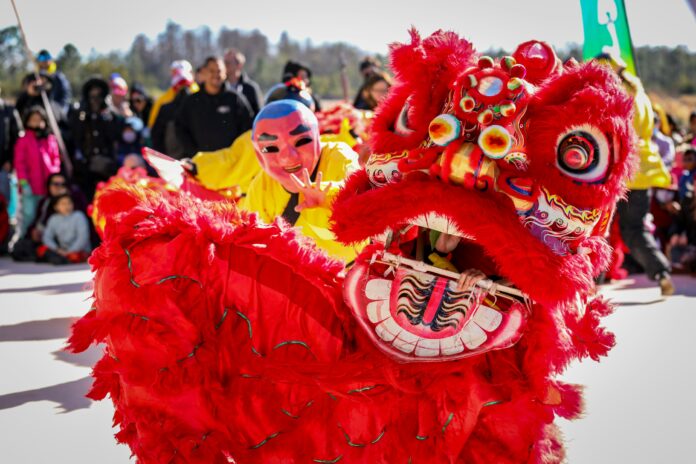
Photo of a dancing lion
PHOTO: Mick Haupt / Unsplash

By: Izzy Cheung, Staff Writer and Kelly Chia, Editor-in-Chief

Content warning: mentions of racism. 

With all the Christmas hype leaving our local malls, storefronts are now being swamped with limited-edition Lunar New Year promotions. Anything from red-and-gold advertisement schemes to special collections based on the upcoming Year of the Dragon are prevalent in big-name chain stores, restaurants, and more. However, we should also consider what exactly these products do. Are they truly helpful to our cultures and communities, or are they just another way for companies to make profit?

Izzy: These promotions have positives, of course — they provide visibility to different cultures and foster more inclusive environments. Integrating celebrations like Lunar New Year and Diwali into our festivities brings awareness and makes society more diverse. This element of visibility can help individuals who may be looking to reconnect with their culture. Having these collections in stores can make one feel seen or included while growing up in predominantly western cultures. 

Kelly: Visibility can feel good, but cheap diversity can also disguise corporate greed. This has been so prevalent with the queer community and larger corporations that it’s been dubbed “pinkwashing.” Like any campaign set to target cultural groups, we have to consider what these companies are actually doing for our communities. I roll my eyes at Lululemon’s new Lunar New Year collection. After their founder’s comments about naming the brand Lululemon to make fun of Japanese people, and his icky views on diversity? No thanks. These large industrial companies only see us as a financial asset, and don’t care for our holidays — what have they done to invest in Lunar New Year that we can’t already manage on our own to celebrate?

Izzy: Let’s face it, every holiday has been commodified at this point, regardless of cultural or community relevance. Not everyone who celebrates Christmas is Christian, which isn’t a bad thing. A study done by the Chartered Professional Accountants of Canada revealed that Canadian consumers were expected to spend an average of $645 on gifts in 2023 compared to the $589 that was tallied from 2022. This copious amount of spending during the Christmas season can also extend into Lunar New Year. 

Like other holidays, Lunar New Year is a celebration of culture. While the prospect of gift-giving isn’t as prevalent during Lunar New Year, money is still exchanged. Families gather to exchange red envelopes, which are typically given by elders to younger members of the family. In other words, if you’re a kid, you’re getting a lot of money for new toys. Even those in their mid-to-late twenties, depending on specific circumstances, are bound to get a good chunk of red envelopes filled with small dollar bills. What better way to spend that than on a limited-edition Year of the Dragon makeup set? I’m not saying it’s necessarily bad to buy these things — in fact, I’m a sucker for holiday promotions. If we didn’t have “Year of the Dragon” or “Year of the Tiger” limited merchandise, I wonder whether the Chinese zodiac would gain as much visibility. 

Kelly: As you say, it’s inevitable that holidays become commodified under capitalism, but I think that it also gives us reason to be more discerning about where we spend our money and time. While it’s nice to see our holidays celebrated at a larger scale than we were used to growing up —  especially after such a large rise in anti-Asian hate crimes over the last few years — it’s also a reminder for us to be skeptical about a company’s intentions. Our interest in them can stop at the window storefront, because, frankly, their interest in serving our communities are as deep as our pockets.

Sure, I can’t help that my heart swells when I see round, red paper lanterns and balloons around this time of the year. I want Lunar New Year joy to be shared with everyone, and seeing more about the holiday in children’s books and storefronts makes me feel like there’s more interest in getting to celebrate our diasporic holidays. 

These days, I spend Lunar New Year, like you, eating dim sum with my family. I delight in walking around Aberdeen centre, seeing all of the children in their qipaos, as we watch the Lunar New Year celebration. Bigger companies that don’t understand the heart of our holiday don’t deserve our money — it’s not about printing a new zodiac design onto luxury items, it’s about spending time with the people you love. 

Izzy: Families gather to appreciate each others’ presence while eating traditional dishes such as har gow. It’s a holiday that, at its core, can be executed with a shared space and a favourite dish. In other words, it doesn’t need the extra flair that comes with the themed collections put on by big-name retail chains.  

It’s true that having a brand sell limited-edition holiday collections acts as a way of generating profit. Special collections are labelled that way for only one reason: because they’re unique, different, and their stock is limited. The more scarce a product is, the more likely you’ll want to get it. Of course, because of spikes in spending during Christmas, January and February end up being slower shopping months. But they can be fun to indulge in and bring a new addition to the fun of celebrating Lunar New Year.    

Kelly: Admittedly, whenever the games I play release a new Lunar New Year skin, I love looking at them. But then, sometimes I feel uncertain about how they’ve portrayed a character too sexually in my cultural clothing, and East Asian women don’t need more help being hypersexualized. Corporations that don’t do their research on nuances like this are so common that even writing this feels a bit too pedestrian to complain about. Of course, that can be said about every business and every holiday, but companies with torrid histories and relationships with their marginalized communities shouldn’t get to just call these promotions a diversity win. 

Ultimately, I don’t want my holiday to be dialed down to a promotional sale either, especially when there are better places to spend our money: toward people who look at my community with care and love. Donna Seto, for example, created a lovely set of Chinatown storefronts. Her paintings show the beautiful buildings and restaurants that made Chinatown feel like home. These are the artists and businesses I’d love for people to pay more attention to, with rich histories behind each craft. If you’re making purchases to learn more about Lunar New Year, or because you care about the holiday, be more conscientious of who that money goes to!

Izzy: It can be heartwarming to see culturally-diverse holidays being represented within windows of storefronts, even if their purpose is to continue bringing money in for themselves. We can improve visibility by supporting local businesses and artists who celebrate Lunar New Year and epitomize the meaning of culture. Original, handmade products can help imbue the holidays with feelings of love and community that a mass-produced product wouldn’t be able to encapsulate — most of the time these products aren’t made with the same amount of care. If you’re going to purchase Lunar New Year themed collections, consider buying from predominantly East and Southeast Asian artists and businesses instead of a big-name brand.


Council Chats: BASS requests designated common space in the SUB

0
This is an illustration of a graphic that reads “Council Chats.” The image also has two text boxes to symbolise messages being sent.
ILLUSTRATION: Andrea Choi / The Peak

By: Eden Chipperfield, News Writer

The Peak attended the bi-weekly Simon Fraser Student Society (SFSS) Council meeting via Zoom on January 31. The agenda for the meeting included discussions about a Business Administration Student Society (BASS) common room space in the Student Union Building (SUB) and the renewal of Simon Fraser University eSports Association’s (SFUEA) gamers’ lounge equipment. 

BASS advocates for a permanent home in the SUB

The Council received an amendment to the agenda item, “BASS Common Room Space in the SUB.” The new amendment discussed finding a space among the standard rooms available in the SUB to host meetings for various affiliated clubs and events. BASS umbrellas over 14 undergraduate clubs, including Ascent SFU, Finance Student Association, Young Women in Business SFU, and Enactus SFU. According to BASS councillor Meha Sidhu, the association represents over 4,200+ students and 300 student leaders. 

The BASS councillor presented a detailed proposal regarding how the club needs a suitable space to host events and hold meetings for the society as well as the other 14 clubs. BASS could not secure a room in 2019 when offices were being assigned because a BASS councillor needed to be on campus to make the request. The goal for a new room is “to promote accessibility and community in our spaces in a space big enough for more than two people,” said Sidhu.

Vice-president of events and student affairs Ayooluwa Adigun asked how operations for BASS had run previously with such a limited space. Sidhu responded, “We use a very small tutorial space once a week [ . . . ] I’ve personally been in it and it’s not large enough to host more than two people at a time.” During the presentation, Sidhu remarked that the space BASS currently occupies in West Mall Centre (WMC) is threatened to be taken away yearly. “We are fighting with our faculty reps to keep this space,” said Sidhu. 

Moreover, an overarching goal for BASS is to reach a broader audience for events to encourage undergraduates to get involved in the Beedie program community.

Indigenous studies student union councillor Evan Accettola brought up that the Council previously turned down TEDxSFU for a similar request, and suggested the SFSS advocate for BASS to keep their original room in WMC if unable to secure a room in the SUB. 

Vice-president internal Ashley Flett responded to Accesttola’s question by recognizing, “Faculty student unions who have space in the SUB are taking away from bookable spaces for students.” However, “we are prioritizing the kinds of groups we give [the room] to and faculty student unions have the priority.” Other student unions, such as the Science Undergraduate Society (SUS) and the Society of Arts and Social Sciences (SASS), have offices within the SUB, and a BASS addition would be comparable, added Flett. Discussions regarding the motion were postponed and will continue at the following Council meeting, where BASS can provide more details on room statistics for a space in the SUB. 

SFUEA Gamers’ Lounge Equipment Renewal Motion

The SFU eSports Association (SFUEA) also delivered a presentation to the Council regarding the equipment currently leased to SFUEA from Memory Express. The agreement for rented equipment was enacted on February 1, 2023, and will end on February 1, 2024. “Losing equipment such as the PlayStation and computers will negatively impact the student community,” the motion stated. The motion continued that after researching the costs from several vendors, the most “fiscally responsible procurement option” was an arrangement with the SFSS to procure equipment from multiple vendors. According to an SFUEA survey, respondents wished for more functional peripherals, including keyboards, mice equipment, and higher quality noise-cancelling headphones. 

SFUEA recommended purchasing the computers and peripheral equipment outright. They suggested buying new PCs and equipment from an unnamed vendor, or having further discussions with the SFSS Space Oversight Committee on upgrading and improving the gaming lounge. The Council then held an in-camera meeting to discuss private details that could not be disclosed to the public due to the legality of renting equipment from external companies. Following the in-camera meeting, the Council unanimously decided the motion should be carried.  

Educators combat gender-based violence in North Vancouver high schools

0
This is a photo of the North Vancouver shoreline.
PHOTO: Paul Van Buekenhout / Adobe Stock

By: Olivia Sherman, News Writer

Editor’s Note: This article was updated on March 14, 2024, to correctly note Adeyonu and Simsek are WAGE funded employees of the North Shore Women’s Centre. 

Content Warning: Mentions of gender-based violence and sexual assault. 

Flip the Script is a curriculum from experts and advocates to teach high school girls about sexual assault and gender-based violence. The North Shore Women’s Centre (NSWC) in North Vancouver runs a program with this curriculum in local high schools. The North Shore Women’s Centre is a hub for inclusion, care, and expertise in women’s health and well-being. 

The Peak spoke with two NSWC researchers and project coordinators, Oreofeoluwa Adeyonu and Yasmin Vejs Simsek. Adeyonu and Simsek are both graduate alumni of SFU and WAGE funded employees with NSWC. The WAGE grant is a federal fund from the government of Canada for reputable organizations that encourage women’s equality, independence, and freedom from abuse and violence. 

Simsek and Adeyonu explained the process of the twelve-hour long curriculum. “We go in being very honest” about gender-based violence, Adeyonu said. Flip the Script focuses on “acquaintance-based sexual assaults,” which is when the perpetrator is someone previously close to the survivor, such as a neighbor or coworker. Simsek explained how the most common safety advice for young girls is to “carry bear spray, or hold your keys in your hand or talk on the phone when you’re walking late at night.” However, these strategies don’t account for how the majority of sexual assaults are committed by acquaintances such as friends, family, and other trusted individuals. “Sexual assault is about power and control, it’s not necessarily about the sex, it’s not about what age you are,” Adeyonu added. 

Educators like Adeyonu and Simsek go into local high schools with the main tenets of Flip the Script, which are to “Assess, Acknowledge, and Act,” as well as how to recognize and maintain healthy relationships and sexuality. The first course, “Assess,” teaches girls to assess the level of danger they are in. Flip the Script’s second course, “Acknowledge,” focuses on acquaintance-based assaults. This course offers space to recognize and process the mental toll of realizing when a trusted acquaintance has betrayed your trust.

The third course, “Act,” lets participants roleplay scenarios, including basic self-defense strategies, both physical and verbal. The last lesson teaches students about healthy relationships and sexuality. “If you don’t know how to talk about what you do want, how do you know how to talk about what you don’t want?” asked Simsek. 

“One of the biggest things we tell them is that we’re just reinforcing their own strengths and capabilities, so it’s what they already know,” Adeyonu said. “All survival is successful resistance.

“In an ideal world, I don’t want to be teaching teenagers how to defend themselves, how to acknowledge when they’re in potentially risky situations. I shouldn’t have to do that. They shouldn’t have to give me twelve hours of their week for me to teach them that this is what the world is,” Adeyonu said. “However, we are not in an ideal world.”

Safe Dates is a similar program to Flip the Script, but is more gender neutral than Flip the Script’s focus on violence against women and AFAB people. Safe Dates has been used to teach high school boys about consent, abuse, and healthy relationships. 

Flip the Script requires educators to be trained and well-versed on the topic of gender-based violence in order to teach students, meaning educators like Simsek and Adeyonu must go to high schools to teach the curriculum. Unlike Flip the Script, Safe Dates doesn’t require trained educators because the program can be carried out by high school teachers through the Safe Dates manual.

This raises a few problems, Adeyonu explained. First, due to the high cost of the Safe Date manual, the NSWC only has three books in circulation to loan to high school educators. Second, teachers often do not have the time to carry out the course. “One of the big things is that teachers, educators, and admin in schools are already overworked,” she continued. “They don’t have much time to then be taking time out to do Safe Dates while we’re doing Flip the Script.

“I think it’s important that we educate everyone,” Simsek said, but noted the difficulties with a limited budget, time, and access. Flip the Script educators have had issues contacting high schools in order to teach students. Simsek continued, “We are offering the program for free, the WAGE grant pays us to offer it for free [ . . . ] when things are free, people forget about them and won’t take it as seriously.”

“The only way sexual assault stops is if there are no perpetrators. And as long as there exists perpetrators, there continues to exist a reason for us to teach girls,” Adeyonu said. 

VIU professor receives grant to research health gaps relating to pelvic pain

0
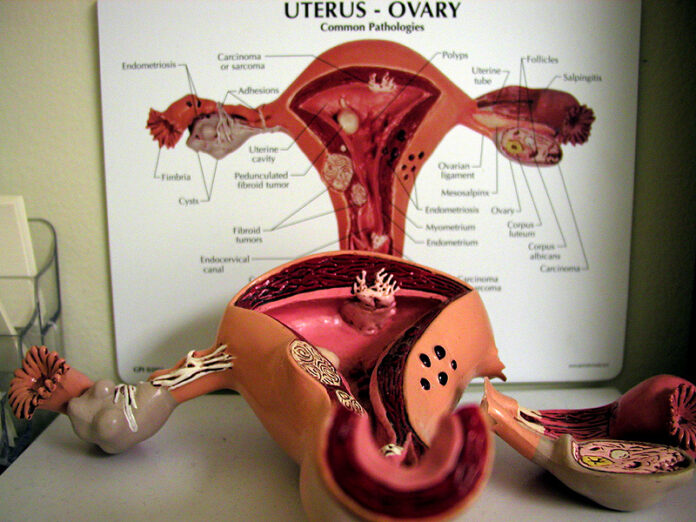
This is a photo of a plastic biology model of a uterus. The model is sitting on a table with medical diagrams behind it.
PHOTO: sharyn morrow / Flickr

By: Eden Chipperfield, News Writer

In 2021, the Journal of Obstetrics and Gynaecology Canada reported that endometriosis affects around 1 million people in Canada. Endometriosis is a chronic disease that affects individuals with a uterus and causes extreme pain, including during menstruation, when being sexually active, and when using the washroom. Diseases like endometriosis and pelvic inflammatory disease have historically been overlooked by the healthcare industry, which often dismisses concerns from those who have uterine pain.        

For Dr. Whitney Wood from Vancouver Island University, the days of overlooking pelvic pain are coming to a close. Wood and her research team are centring their focus on the historical dimensions of women’s health that have led to present-day gaps within healthcare systems. The team will focus on examining pelvic conditions like endometriosis and urinary tract infections from the 1960s to the 2000s.

“When clinicians and health systems focus exclusively on pregnancy and childbirth, we run the risk of overlooking many health issues that aren’t specifically tied to reproduction,” said Wood. “When these health issues — including a range of conditions tied to often chronic, feminized, and invisible pain experiences — are not a priority, gaps in care arise.”

According to Wood, “Medical practitioners and society have a long history of overlooking these pain experiences.” Harvard Health Publishing reported those who suffer from pelvic discomfort and endometriosis are often dismissed by the healthcare industry, and even told, “Don’t dwell on the pain, and don’t try to fix it.” Longstanding gender bias in the healthcare industry leads to pointing the finger at other health suspects before considering the pain those with uteruses experience. Patients have reported the pain they experience is brushed off as a “bad period” by doctors, and they leave with even more questions. 

According to the McKinsey Health Institute, cisgender women “will spend an average of nine years in poor health,” which impacts their ability to “be present and positive at home, at work, [and in the] community.” Gaps in healthcare also include transgender patients who are often not provided with proper care. This is primarily due to discrimination, barriers in health systems, and a lack of understanding and knowledge from healthcare providers. 

The research team is carving out information from past decades to project voices from the past using Rise Up!, an archive of digitized feminist activism. The archive details feminist movements and discussions up until the 1970s. “We are adopting a range of historical methodologies, including a close reading of medical journals, feminist periodicals, and popular magazines and newspapers published between 1970 and 2000, complemented by oral history interviews with care providers, activists, and those who have lived experience of pelvic pain,” said Wood. The Canadian Institutes of Health Research supports the project through a grant of $577,575 extending into 2028. “This funding will support on-the-ground historical research, the digitization of new historical sources, and patient-engagement activities to ensure that the histories we record reflect the priorities of folks with lived experience of pelvic pain,” shared Wood. 

Ms. Valentine Presents: SFU Hookup Locations

0
Anthropomorphized sweetheart. It’s light pink and has “BE MINE” written on it in red.
ILLUSTRATION: Sandra Cao / The Peak

By: Izzy Cheung, staff writer

Hello, all you SFU lovebirds! I, Ms. Valentine, have wisdom to bestow on all couples, from  those who met in class last week to the high school sweethearts (congrats on making it this far). Think of me as the older sister you never had. I’m here to make sure that your Valentine’s Day with your boo is perfect. Since February 14 lands on a Wednesday this year, I know that many of y’all will be on campus in classes, but that doesn’t mean you can’t have a fun and funky-fresh V-Day celebration! I’ve compiled a list of the best places for you and your lover to get a little spicy — so without further ado, here are some more of SFU’s top hookup spots. 

On the stairs leading to the bus loop under West Mall Centre 

Y’all know this spot is the best place to relieve stress after a crammed bus ride. Imagine this: you’re on a busy 8:00 a.m. bus, holding onto the same pole as a member of the preferred gender. The bus skids to a stop. You go flying into your pole-sharer’s arms. As you look up at them to apologize, your eyes lock. The chemistry is un-de-niable. You’ve been breathing each other’s (and the rest of the bus’s) air for the past 15 minutes. When you both get off (the bus, of course), the feeling is like going to the West Mall Tim Hortons only to see that there’s no line. Yay!

Images Theatre 

This one caters to two types of couples, so buckle up if either of these suits you. Option one: there’s no one in there except the two of you; the lights are dim, and the projector is displaying the old PowerPoint slides of a PSYC 100 lecture (charming!). Option two: the lecture hall is full because there’s an actual lecture occurring as you and your beau get down and dirty. You’ve heard of shacking up at the movies; now y’all can try shacking up in a lecture. Crossing this off your bucket list is in, and being considerate of your classmates who definitely do not want to see or hear that is out. Yay! 

On top of one of the campus pianos 

Let’s be real y’all; everyone wants to be serenaded by their partner at some point. As Duke Orsino says in Shakespeare’s Twelfth Night, “if music be the food of love, play on.” What better way to show your love than to make love and music on top of one of the campus’s pianos? Here are some of the songs I’d recommend you play while enjoying the piano with your love: “Fruit Salad” by the Wiggles, “You’ve Got a Friend in Me” by Randy Newman (get it?), and the Canadian National Anthem. Yay! 

The Peak’s office 

Worry not, friends, you can still hunker down someplace quiet to simply bask in your partner’s presence. Past the bookstore and deep in the tunnels of Maggie Benston Centre is the perfect place to take your partner — The Peak’s office! Here, you’ll find a surplus of ancient computers (vintage!) as well as a couple of comfy couches to do whatever you’d like on them (just keep the staff out of it, please). Yay! 

X’s and plenty of o’s,

Miss Valentine

The great wall of SFU under siege

0
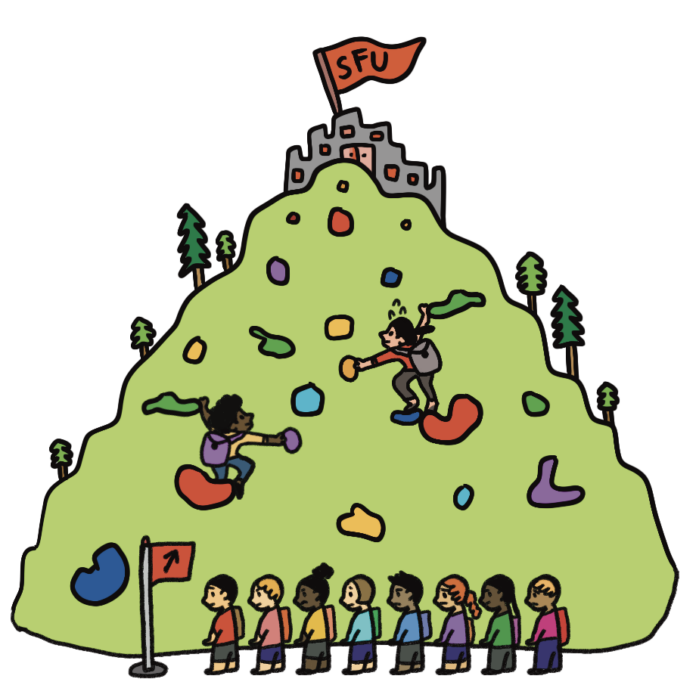
Burnaby Mountain as a climbing wall. There's a long line of students waiting to climb it.
ILLUSTRATION: Andrea Choi / The Peak

By: Sude Guvendik, Staff Writer

Dear SFU climbers, 

Hold onto your harnesses because there’s some wild news — the SFU Climbing Wall, that vertical haven of chalky holds and triumphant climbs, has been closed since mid-December. And get this: nobody seems to know why. It’s like the campus just ghosted our favourite climbing spot.

Whispers in the hallways suggest that President Joy Johnson might be grappling with an unexpected condition known as “climbingphobia.” Perhaps, in her eyes, the climbing wall is a relic of the past, challenging the sleek and high-tech future she envisions for SFU. Why climb manually when you can glide smoothly in a gondola, right? After all, the public engagement has been going great . . . 

Imagine a showdown on Burnaby Mountain, not with swords, but with carabiners clicking (don’t spend too much time pondering the logistics of this). It’s the gondola versus the rock climbers, a real-life Game of Thrones. Who’s gonna reach the top first? With the gondola project representing the crown jewel of technological marvels, costing millions and spanning years of planning, Joy Johnson views it as the symbol of SFU’s march into the future. However, lurking in the shadows like the Night’s Watch, the climbing wall poses a seemingly obsolete but rebellious threat, challenging the status quo with each ascent.

SFU is calling for progress, championing technology and modern solutions. Joy Johnson, with a regal air, seems to proclaim, “Let the gondola ascend the throne, this is how we are engaging the world.” The gondola has had at least a decade head start, but this is still a tight race! 

The stage is set, the mountains are watching, and the fate of SFU’s peak hangs in the balance. Winter may be coming, but who will conquer the mountain first — the gondola, a beacon of so-called progress, or the antiquarian rock climbers of olde? Whether it’s a masterplan or a colossal mix-up, one thing’s for sure — the SFU climbing wall closure is a cliffhanger we didn’t see coming.

Need to Know, Need to Go: Local performances

0
an illustrated calender that says "Need to Know, Need to Go"
ILLUSTRATION: Courtesy of The Peak

By: Petra Chase, Arts & Culture Editor

Into the Woods
When: February 1–18, 2:00 p.m. and 7:30 p.m. 
Where: Studio 58, 100 W 49 Ave, Vancouver

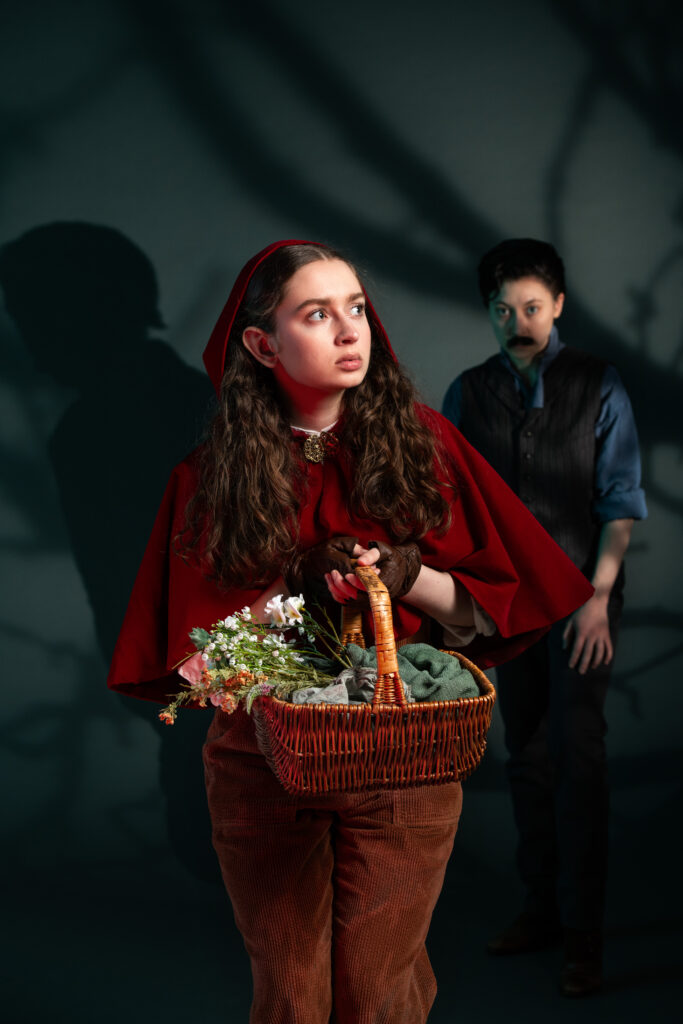
Presented by Langara College’s competitive theatre training program, Studio 58, Into the Woods is a fairytale crossover musical that features characters from childhood classics journeying through a mystical forest. From Little Red Riding Hood to Cinderella, award-winning director Barbara Tomasic said these “terrific characters” provide an “opportunity to delve into these fairytales to examine how they are relevant in today’s world.” The team of renowned creatives and cast of local up-and-coming talent is excited to perform in their newly-renovated theatre. Find content advisories and buy $10 tickets at their website, studio58.ca.

An actor from Into the Woods dressed as Little Red Riding hood holds a basket full of flowers and looks into the distance while a person in the shadows behind her looks at her. The shadows are of barbed wire.
PHOTO: Emily Cooper, Studio 58

Sunrise Betties
When: February 21–March 10
Where: Russian Hall, 600 Campbell Ave, Vancouver

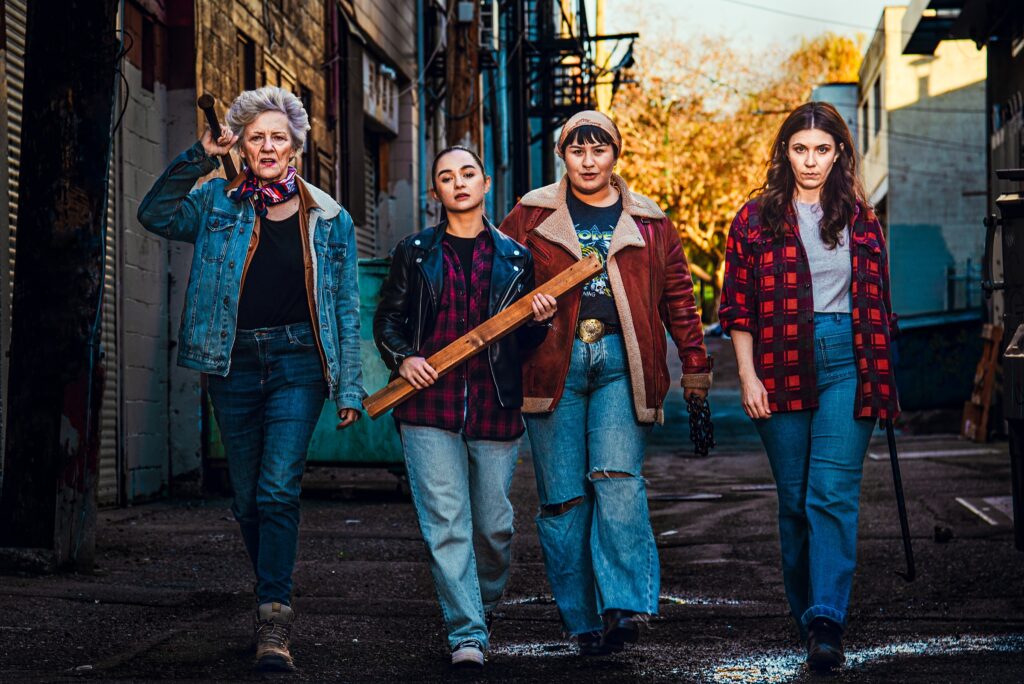
Set in 1974 in East Vancouver, Sunrise Betties is an immersive play based on a historical account of street-gang fueled crime, drug crisis, and police corruption in the area. Created and performed by the dynamic theatre company ITSAZOO, the play brings this real history to light through the lens of a fictional all-women street gang. Co-artistic producer Sebastien Archibald said the play holds “a mirror up to Vancouver and [says] ‘this is your history; this is how it used to be; this is how we got here.’” This gritty, action-packed experience is brought to life by a talented cast and crew dedicated to “historic and tonal accuracy.” Tickets range from $20–30.

PHOTO: Chelsey Stuyt, ITSAZOO

Matriarch’s Uprising Festival
When: February 19–25, various times and on-demand online
Where: The Dance Centre, 677 Davie St, Vancouver

Matriarch’s Uprising celebrates Indigenous womanhood featuring dancers, from local to international, to “connect across different nations and Indigenous worldviews through dance.” The 6th annual festival also welcomes everyone to educational workshops, like the hoop dance workshop, and circle conversations held for free over Zoom, where panellists lead discussions, like “the way our dances can help to heal our personal and collective spirit.” Catch SFU alumni Starr Muranko and Jeanette Kotowich of the troupe, Raven Spirit Dance on Thursday, February 22. They’ll perform Confluence, in which their bodies form a “somatic tapestry that speaks to the resilience of Indigenous women.” You can also watch five dance videos, a collection called Noojimo’idizo ↛ She Cures Herself, for free on their website, which will be available on-demand.

PHOTO: Courtesy of Matriarch’s Uprising Festival

Hotel Mira makes Vancouver proud

0
Charlie Kerr, Cole George, Mike Noble, and Clark Grieve (Hotel Mira)
PHOTO: Lindsey Blane

By: Hailey Miller, Staff Writer

Vancouver alternative rock band Hotel Mira’s sold-out concert at the Commodore Ballroom was a show-stopper. The band was fuelled with energy that’s only felt from a hometown crowd, and their gratitude was emphasized after each number. I spoke to frontman Charlie Kerr ahead of the band’s headliner at the Commodore on January 19. On a Zoom call from a hotel room in preparation for tour, he spoke highly of his bandmates and the opportunities they’ve been given. It’s evident the band is eager to get on the road in support of their latest album, I Am Not Myself

Hotel Mira formed in 2010 as JPNSGRLS, and in 2016 they changed their name and shifted to the current lineup of Kerr on lead vocals, Cole George on drums, Mike Noble on bass, and Clark Grieve on guitar and keyboards. When asked how the band has evolved, Kerr explained there’s a vast distinction between the two bands, with Hotel Mira housing more of a synth pop-rock genre as opposed to the previous raw rock sound. Along with the name change, he felt obligated to separate the two lineups, while still honouring the history that was made with the original band members. 

As for the current lineup, Kerr stated he enjoys the collaborative process of writing and performing with his bandmates (who he considers his best friends) in a way he’s never experienced. 

“The evolution has been one of just continuing to explore music and explore storytelling,” the friendly frontman said, stressing how priorities have changed due to a more career-oriented musicianship with his bandmates. It’s clear none of them take any of it for granted, which was evident as he marveled at the thought of the shows on their headlining tour selling out in advance. “It’s a testament to being persistent.” 

When asked how it feels for the band to be playing their hometown headliner, Kerr stated, “it’s surreal.” With a candid laugh he explained he never thought this level of success would happen, as a musician who “busked on an acoustic guitar outside the Commodore.” He thought that would be the closest he’d ever get to playing it, but little did he know, that was just the beginning. 

Reminiscing what they’ve learned from supporting acts such as Dear Rouge, Billy Talent, and The Beaches, Kerr said dream scenarios became a reality, especially these artists being fans of Hotel Mira, too. Speaking highly of these artists, he attributed their support to giving the band more confidence to continue on their path. It’s evident what they learned in the early days as an opening act will be passed down in wisdom to the supporting acts of their own headlining tour. 

Kerr has been surprised by how much fans have “connected to [the] songs” on the new record, which grapples with identity and vulnerability. He describesd it as an “autobiography and tragi-comic character portraits” which reflect “a profound loss of self.” “Eventually” focuses on breaking free from social constructs. He said the reception they’ve received has surpassed their expectations, as he recalls being the 9th most-played band on alt-rock radio in Canada last year.  

On the night of the show, fans were screaming every back-to-back hit long past midnight as the dance floor bounced along with the crowd. Classics like “The Eyes On You” and “Speaking Off the Record” stood the test of time, while the band gave their all to newer hits like  the whimsically electrifying “Fever Pitch” and upbeat synth-filled “Dancing With the Moonlight.”  Kerr says “Vampire” is a personal favourite of his to play live, which was evident as the raw energy in the Commodore radiated through the walls, leaving fans buzzing and wanting more.

“To be more well-received in the city where I grew up, it’s beautiful” he explained, noting that, he “almost doesn’t trust” it’s finally happening. To go from a place in his career where he felt he was “tanking” and no one cared, to being recognized on-stage for the hard work that’s been done is something he acknowledged with great emotion. 

In my conversation with Kerr, it was evident that he and his bandmates are here for the long haul, and they’ve remained level-headed throughout the process. As seasoned musicians, they’re grateful to be where they are, and their careers are about to blow up as they continue their artistic evolution and exploration.

All menstrual products are valid

0
Illustration of various menstrual products, such as tampons, pads, and cups
ILLUSTRATION: Aliya Nourlan / The Peak

By: Hailey Miller, Staff Writer

There’s no wrong product to use when it comes to menstruation. Some people prefer pads, tampons, menstrual cups, leakproof underwear, or a combination of all of the above. Some people choose the more environmentally friendly route by using reusable products, while others prefer disposable hygiene products for convenience or accessibility reasons. All of these choices are valid.

The stigma that surrounds period products and menstruation is still problematic today. Some cultures see tampons as “dirty” and believe their use is an indicator of non-virginity. This is based on ideas around having menstrual blood outside the body, and ensuring the hymen — a “thin piece of tissue” sometimes present in the vagina — is preserved. In reality, a preserved hymen is not a true indicator of virginity, as explained by Planned Parenthood. In contrast, others see tampons as the better choice and claim pads are inferior or seen as an “adult diaper.” Neither of these outlooks help people access period products. 

Debunking the myth of “the best menstrual product” is long overdue. Some of us dabble in using many kinds of menstrual supplies, and this can change depending on our cycle or preference at the time. 

Some individuals are more sensitive to certain ingredients in menstrual products, which can include fragrances, dyes, and other toxins. People can also opt for toxin-free, organic cotton, or reusable options. Some say the cost of reusable products pays for itself over time. However, the upfront cost needed for these products may be a barrier for unhoused people, who don’t always have access to a space to change, carry, or clean these products. In many places where access to supplies is limited, people often use cloth pads made from fabric, or plant materials as their own period product. Product choice isn’t a determinant of one’s health. It’s relevant to comfort level, as some are more comfortable using certain products over others — like pads over tampons.

The availability of supplies isn’t the only deciding factor for period products, either — accessibility is also a huge component. Some disabled people have difficulty using one product over the other, especially if they have dexterity, muscular, or coordination issues. Others have medical conditions that prevent them from using certain products such as tampons.

Everyone should have the liberty to choose what’s right for them, but this is not always possible. Choosing a menstrual product can be difficult when it comes to options and availability. In some cultures, menstruation is still taboo, which can result in a lack of access to menstrual products and resources, as well as individuals being excluded from daily activities. Period poverty and affordability are significant factors that impact personal decisions based on product choice. Some don’t have the luxury of picking whichever product they desire based on cost and availability, which makes menstruation and hygiene more difficult and can result in people missing work and school. We must work to fight the stigma against menstrual products and menstruation itself. 

Whether you prefer one product over another, menstruation is different for everyone. Advocating for access to options is key to menstrual rights.

This week at SFU

0
women’s basketball team celebrating in a team huddle
PHOTO: Wilson Wong / SFU Athletics

By: Isabella Urbani, Sports Editor

Home Games 

Thursday, February 8: men’s basketball vs. Montana State Billings at West Gym at 7:00 p.m.

  • Lost earlier in the season 7361 against Montana State

Friday, February 9: conference hockey team vs. UVIC at Bill Copeland Sports Centre at 7:00 p.m. 

  • Lost 92 to UVIC last time they played 

Saturday, February 10: men’s basketball vs. Seattle Pacific at West Gym at 7:00 p.m. 

  • Lost earlier in the season 8363 against Seattle Pacific 

Saturday, February 10: conference hockey team vs. Vancouver Island University Mariners at Bill Copeland Sports Centre at 7:00 p.m. 

  • Lost 53 to Vancouver Island last time they played 

Away Games 

Thursday, February 8: women’s basketball vs. Central Washington at 5:15 p.m. 

  • The Wisotzki sisters, junior Sophia and senior Jessica, scored 52 of SFU’s 83 points in the team’s January 27 win against Seattle. 
  • 01 against Central Washington this season 

Friday, February 9Saturday, February 10: track and field at the University of Washington Husky Classic 

  • First of two competitions this month hosted by the University of Washington

Friday February 9Saturday, February 10: track and field at Boston University’s David Hemery Valentine Invitational at 6:00 a.m. 

  • Last invitational before the conference championships on Monday, February 19Tuesday February 20 

Saturday, February 10: women’s basketball vs. Northwest Nazarene (Idaho) at 4:15 p.m. 

  • Lost by one point (6160) to Northwest Nazarene last month