Home Blog Page 139

SFYou: Miranda Meents

0
Green leafed plant photo
PHOTO: Pawel Czerwinski / Unsplash

By: Hailey Miller, Staff Writer

Professor Miranda Meents may have gotten her PhD in the field of Botany from the University of British Columbia, but her career has led her into studying and implementing evidence-based teaching strategies at SFU. A biological sciences professor, Meents not only employs well-studied teaching strategies, but has also taken a decolonial approach to her plant biology class. We spoke with Meents to learn more about her approach in helping students form a personal connection and appreciation to the plant life around them.

Meents approaches her teaching style by thinking of it as an adaptive, constantly evolving method, pointing to “different ways of knowing, and relationships with organisms” such as with fungi and algae. “The sort of scientific, or western lens, is only one way of looking at them. We can learn a lot from them, but we can miss out on a lot by just using that lens specifically,” Meents says.

In biology, for example, taxonomies mostly use Latin-derived names, and Indigenous knowledge has been erased, which further marginalizes Indigenous Peoples from research. She stated she “critique[s the] perspective and also [. . .] incorporate[s] other ways of knowing, in particular, showcasing Indigenous knowledge.” In implementing such perspectives in her work and for her students, Meents is able to “embrace the uncertainty” and the overall idea of not being an expert, as she herself is continually learning new ways to approach researching and teaching from various perspectives. 

This has cultivated Meents’ passion about finding ways to decolonize her classroom. “My goal for my students that take my classes is to help them develop stronger, more meaningful relationships with the plants in their lives,” Meents explained. “That, itself, is a more decolonial approach. The colonial perspective is seeing the world around us as resources that have purposes and uses that are more recreational or industrial.” By helping her students connect personally with plants and organisms, Meents further builds connection to the lands and water.

“The lands around us, the waters around us — we are interconnected with the rest of the world.”

Meents is sure to point out she is “no expert,” but her research from Indigenous scholars make her courses more decolonial by fostering students’ respect and connection with the world. “A lot of students really appreciate that,” Meents said gratefully. “They’re valuing it, and I’m valuing it, too!” 

Discussing her experience in academia and in teaching, Meents admitted it’s taken time “to feel comfortable starting to approach [the] work in [her] teaching,” as she doesn’t want to “do more harm by doing things the wrong way.”

To avoid potential harm and address issues responsibly, when Meents brings awareness of matters related to plant biology, she makes sure to amplify Indigenous voices rather than speaking for them. “I’m not a mouthpiece. I’m not speaking for Indigenous Peoples and communities, [but] wherever I can, I’m pulling those voices in videos that Indigenous people have prepared, or writing where they’re presenting their own knowledge.” 

She explained the importance of focusing on local communities for growing her knowledge, consulting Indigenous communities and peers, like “the Greater Vancouver area, Vancouver Island, other places in BC, Canada, and the Pacific Northwest.” By receiving guidance from others in her field of study at SFU, along with knowledge from Indigenous Peoples, Meents says the advice and feedback” she gets is invaluable.

It’s also important for Meents to check in with her students to see how they’re finding the material and whether or not they have other resources or suggestions for how to improve. 

Meents values a more collaborative approach with her students that fosters conversation. “I’m not dictating things to them,” she explained. “I’m learning from them at the same time they are learning from me, they are part of the process as well. I’m continually growing and changing how we’re doing things, and incorporating more into different courses. It’s a journey, not an endpoint, so everything is still in flux.” 

Meents’ work, research, and teaching methods emphasize the importance of fostering a community among her students, creating a suport network essential to a “non-traditional, non-hierarchical [. . .] atmosphere in the classroom.” This is beneficial to everyone involved. An open approach allows for room to grow and keeps the conversation going in regards to decolonization in plant biology. 

It’s evident Meents is passionate about research and teaching, as she continues to make an impact on her students, and the biological sciences field as a whole by challenging colonial narratives in everyday living.

GSWSSU clothing swap paves way for charity events

0
This is a close up photo on a clothing rack in a store.
PHOTO: Artificial Photography / Unsplash

By: Eden Chipperfield, News Writer

Content warning: mentions of domestic abuse.

The gender, sexuality, and women’s studies student union (GSWSSU) president Julia Mosi knew they wanted to try something new for GSWSSU events this semester. GSWSSU executive Lindsay Dober proposed a clothing swap and Mosi said the pieces immediately fell into place for an event that aligned with the focuses of the GSWS department. 

“The event was mainly inspired by our chance to participate in the Faculty of Arts and Social Science’s Arts Week,” explained Mosi during an interview with The Peak. “The clothing swap idea was created specifically in response to our involvement in FASS Arts Week, as we wanted to create an event that we would be able to run in a hallway, that would draw attention to our union, but that would also be fun and engaging for students.”

The GSWSSU Style Swap for a Cause happened in the week of February 12 on the Lhuḵw’lhuḵw’áyten (Burnaby Mountain) campus with the instructions: “Bring one gently used item and take home one fab find!” Mosi reported they created “the “bring two items, take one” rule to ensure they “were receiving more items than people were taking.” 

The remainder of the items were donated to My Sister’s Closet, an organization that encourages green/eco fashion with zero waste to provide people of all genders and ages with access to clothing. My Sister’s Closet works with Battered Women’s Support Services, which provides items and clothing to those in need. “We felt as though it was a perfect organization to donate to, as it gives to those in need, both by allowing individuals with a chance to buy higher quality second-hand clothing at an affordable price, as well as giving directly to those in need,” said Mosi. 

The opportunity to work with a women’s group aligns with the GSWSSU’s desire to support people who have faced violence and domestic abuse. “We hoped as a union that we could play a small role in bettering the situations and opportunities available to those women, as well as raise awareness for the organization and their good work as a whole,” said Mosi. 

Mosi has been president of the GSWSSU for a year. They initially joined as an executive member in Fall 2021, and have experienced many challenges with event planning due to COVID-19. Mosi expressed how heartwarming it was to see people donate large amounts of clothing and engage with the student population. “The overall success of the event made me proud of my team for putting it together and of all the amazing students who chose to engage with our initiative,” they expressed.

The swap was organized with different racks to separate the types of clothing from trousers to tops, as well as an area for accessories, shoes, and other smaller items.

The clothing swap was a first for the GSWSSU, but Mosi noted it was certainly not the last. As for the moment, a date for another clothing swap has not been announced.

In the meantime, the GSWSSU will be holding a crafting event to recognize International Women’s Day on March 8 in the Academic Quadrangle, where students can participate in “collage-making, friendship bracelet making, card-making, and other fun activities.” At this event, their goal is to “celebrate the women in their lives.” Food and drink will be available to all participants. 

For more information on upcoming GSWSSU events, visit their Instagram @gswssu_sfu.

Alberta’s new youth transition policies spark outrage

0
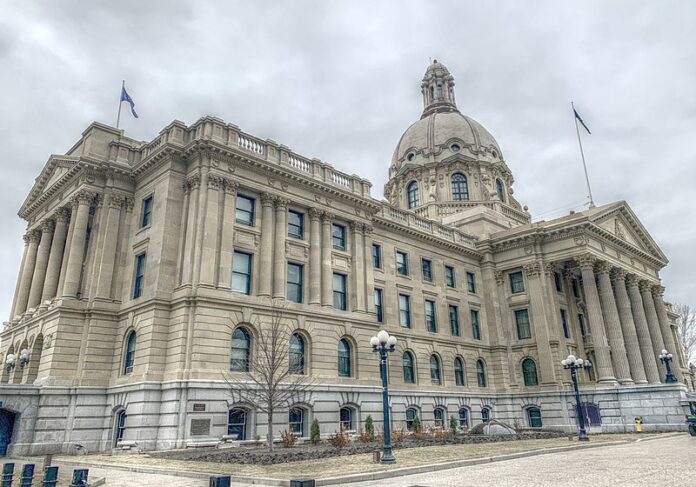
This is a photo of the exterior of Alberta’s parliament building
PHOTO: Wikimedia Commons

By: Eden Chipperfield, News Writer

Content warning: mentions of transphobia and suicide.

February 1 became a significant day for Albertan families with trans and gender diverse children. Premier of Alberta Danielle Smith announced new policies that will “restrict healthcare options,” forbid students to change preferred names, and restrict gender identity expression at schools without parents’ or guardians’ consent. 

The health restrictions for trans and non-binary youth will ban top and bottom surgeries for those under 17 and limit hormone therapy and puberty blockers for those under 15. In addition to banning name and pronoun changes at school, other restrictions include not allowing trans women to compete in “women’s sports leagues” across the province. Moreover, parents will be given the option to have their children “opt out” of class discussions in school about 2SLGBTQIA+ people, gender expression, and sexuality. These topics will now require parents and guardians to be notified. 

Following the press release at the beginning of February, outrage has spread rapidly across the country, from doctors, activist groups, and members and allies of the 2SLGBTQIA+ community. Over 40 groups within Alberta, including Calgary Pride, Queer Youth Guardians, and the See Change Collective, have signed a statement regarding the policy changes. “As citizens of Alberta, we condemn the recent proposals by Premier Danielle Smith seeking to limit transgender healthcare and participation in society,” wrote Queer Citizens United on X following the press conference. 

Dr. Hannah Clark is an assistant professor of psychology at Brandeis University in Massachusetts. She has a PhD in interdisciplinary studies from the University of British Columbia with a dissertation on healthcare for trans youth. Clark was a featured speaker at the Trans Care BC Clinic Speaker Series in 2021. 

“These policies are incredibly damaging to trans and gender diverse youth,” said Clark. “Although the narrative around these policies is that they will protect children from risks to their futures, what we know from an overwhelming body of research is that restricting gender-affirming care for trans and gender diverse youth poses a much, much greater threat to their well being than allowing youth to receive the care they need.”

A common misconception regarding healthcare for trans people is that puberty blockers and hormone therapy will cause “irreversible damage.” However, Clark rejected this notion, saying, “Puberty blockers work by delaying the onset of puberty so that trans and gender diverse youth have more time to make decisions about when and how to start other gender-affirming therapies (like hormone therapy and/or top or bottom surgery).” Clark noted that since the majority of youth go through puberty before age 16, the ban on puberty blockers is the government making “irreversible decisions for trans and gender diverse youth and their families.”

Regarding the concern about name and pronoun changes in school, Clark believes needing parental permission for these identities “will force kids back in the closet.” Clark expressed concern that youth being forcibly outed to family members who may reject their identity “causes significant psychological distress,” creating a rise in houselessness, suicide, and depression. “The teenage years are a critical developmental stage when we learn who we are by ‘trying on’ different identities and finding what feels right. This is true for all of us regardless of where we fall on the gender spectrum,” said Clark. 

The new policies are to be enacted in fall 2024, but there is a wall of support ready to fight back against the decisions. 

Bennet Jenson, Egale Canada’s legal director, stated, “The organization will be ready to fight the Alberta policies in court once they are official.” Jenson further explained that blocking youth from changing their name and pronouns “violates students’ rights to be free from cruel and unusual treatment from the state and their right to equality.” In an interview with CBC News, Jenson declared Alberta’s policies as “the most blatant regression of legal protections for 2SLGBTQIA+ people in our country’s history.”

Another policy listed in the legislation is that teenagers between 16–17 who would like to begin gender-affirming transitions, including hormone therapy, must be “deemed mature enough” by a psychologist, physician, and parent. Clark raised concern with this because these “policies are incredibly stigmatizing and perpetuate the dangerous, transphobic narrative that being transgender or gender diverse is pathological.”

Corrine Mason and Leah Hamilton, in an article for The Tyee, wrote: “These policies are clearly meant to satisfy Smith’s electoral base, but her government is now going to have to go head-to-head with the experts — and the evidence — in future legal battles.” 

Your reactions to these daily student scenarios will determine which major you should be in

0
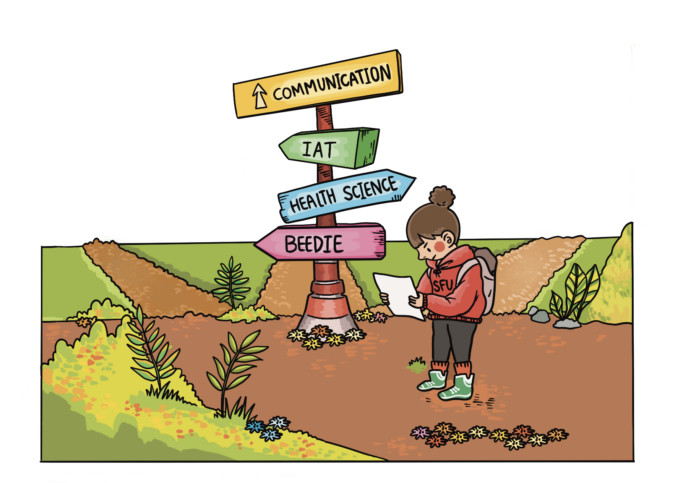
Someone standing at a fork in the road. Ahead of them there are multiple paths that represent different SFU majors.
ILLUSTRATION: Andrea Choi / The Peak

By: Izzy Cheung, staff writer

Let’s start the day off properly! What time are you waking up at for a full day of classes? 

  1. Three hours before my first class. I like to get a morning run and a healthy breakfast in before getting started on the bulk of my day, and giving myself three hours leaves me with plenty of time to get to class. 
  2. One hour before my class. I need to make sure that I make it onto campus with enough time to grab my drink of choice. 
  3. Anywhere from an hour to 30 minutes before my class starts. Depends on a few things, like what kind of outfit I feel like wearing, whether I make my drink at home or buy one on campus, or if I want to head up a little early to get caught up on some reading.  
  4. Lol. 

What are you eating for breakfast this morning? 

  1. I’ll probably have a slice of avocado toast and a smoothie. I do meal prep, so everything’s in the fridge and ready for me to eat whenever I need it. 
  2. Usually something from the West Mall Tim’s
  3. Some sort of pastry from Renaissance or Blenz.  
  4. Maybe a granola bar? Idk, we’ll see what’s sitting at the bottom of my bag today.

Problem: you show up to your lecture only to find that there’s no one there! A last-minute Canvas announcement says that your prof cancelled class today — what are you doing now? 

  1. I’ll make the best possible use of my time. Since I’m already on campus, I’ll go find a quiet spot and get some work done. 
  2. This wouldn’t happen to me — I’m always checking my email to see if I scored that summer internship I applied to
  3. I might try to get caught up on some reading. If I’m caught up, I might take a bit of a walk and take some photos of whatever looks aesthetic.   
  4. That corner over there with the plant looks like a great place to take a nap. 

Your friend texts you and asks if you want to join their group study session later that day. How are you responding to them? 

  1. I’d love to! After a few hours of studying, we could probably all grab dinner or drinks after 🙂
  2. Sure, can I bring a few friends? 
  3. Of course! Where did you want to meet?  
  4. I’m not answering — we’re all already crying at the thought that we have to memorize three chapters of the textbook for tomorrow’s lecture. 

You’re sitting in class when someone asks if they can sit beside you. What do you say back to them? 

  1. Absolutely! 
  2. Of course. What’s your name? What major are you? Which other courses are you taking this semester? Let’s add each other on LinkedIn
  3. Sure! Is that ACOTAR? I love that series.  
  4. Inaudible grunt

Results: 

If you got mostly A’s . . . 

You are not a student at all. You can’t be. Truthfully, I can’t comprehend anyone being able to have this kind of energy while studying full-time. The time management, social battery, and willpower to get up when you don’t have to . . . no student has a healthy combination of all three. Hence, you can’t possibly be a student (and if you are, MAJOR PROPS. Honestly. I want what you’re having.) 

If you got mostly B’s . . . 

You most definitely belong in Beedie, SIAT, or the School of Communication, and I know that all of y’all were expecting this answer. I baited you with that LinkedIn answer and you guys took it so easily. No one else in any other major would be using LinkedIn on the same level that you are. But enough about that — what are you still doing here? The time for summer internships is coming up, you’ve got some networking to do! 

If you got mostly C’s . . . 

You should be an FASS kid. More specifically, you should be an English, humanities, or fine arts major. Your commitment to showing up and serving is second to none. You carry those massive books around with you to show off the fact that you’re reading it even though you have the digital copy on your laptop. That’s okay, because that’s who you are — sip that oat milk latte and enjoy taking aesthetic outfit photos among the cherry blossoms (once they start to bloom, of course).

If you got mostly D’s . . . 

With the way you run yourself into the wall with your habits, you should definitely be in Sciences. You live off of Red Bulls and twelve-hour study sessions on campus. When you do get the chance to sleep, it’s either for twenty minutes, or twenty hours. Honestly . . . I get it. 

A Look into Black History: Hogan’s Alley in Downtown Vancouver

0
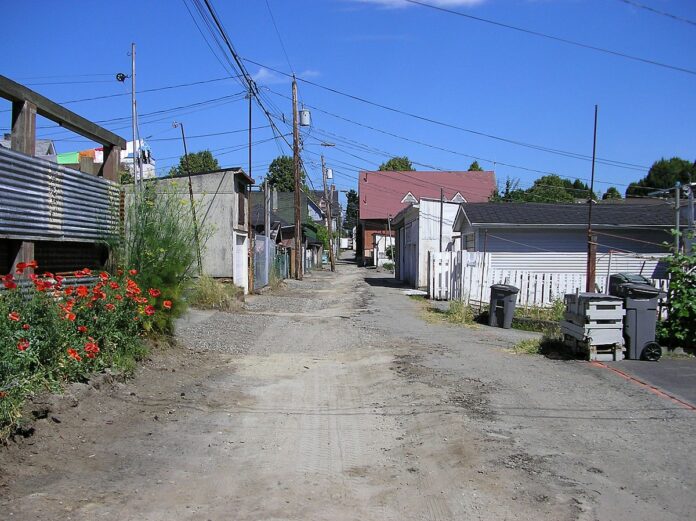
PHOTO: Mike W. / WikiCommons

By: Hannah Fraser, SFU Student

Last semester I took ENGL 211, a truly eye-opening class of gripping literature and lectures with a focus on enslavement in America. During one lecture, my professor briefly mentioned the history behind Hogan’s Alley in Downtown Vancouver. Immediately drawn to its history, I soon found through my own research that I passed by the site of Hogan’s Alley countless times in the past but had no idea such a valued cultural hub for Black people once existed there. 

Black immigrants from California settled in BC during the mid-1800s, establishing in and around Strathcona by the early 1900s. They were soon joined in Vancouver by Black people from Alberta affected by housing discrimination. Hogan’s Alley was the vibrant cultural hub of the area, a place where Black Vancouverites could cultivate connections with each other through music, food, and the similarity of their backgrounds. Notably, this neighbourhood was home to Nora Hendrix, Jimi Hendrix’s grandmother, a cook at Vie’s Chicken and Steak House and a co-founder of the African Methodist Episcopal Fountain Chapel. However, due to strong racial prejudice, Vancouver newspapers portrayed Hogan’s Alley as a centre of crime and mischief. As a result of these discriminatory works, the neighbourhood began to fall apart in the 1960s — homes and businesses were destroyed, and the Georgia Viaduct was built right through Hogan’s Alley. 

Unsurprisingly, the demolition of Black spaces was not a unique phenomenon in Vancouver. While Hogan’s Alley was being wiped off the map, US President Dwight Eisenhower deliberately constructed interstate highways through African-American neighbourhoods in the US as well. Though highway builders problematically argued the land was cheapest in these Black neighbourhoods, freeways were paved through them due to political power and discrimination. In the late ‘60s, white neighbourhoods successfully opposed highway constructions, while Black and Latin American communities didn’t have the power to. 

In 2017, the City of Vancouver proposed the Northeast False Creek Plan — a plan to demolish the Georgia Viaducts, redevelop the area with more housing, and reestablish Hogan’s Alley as a cultural centre. The plan claimed the proposed housing was structured around the recreation of Hogan’s Alley, where many restaurants and businesses would reopen. The architect claimed to have developed his architectural concept in hopes of creating a “sense of place necessary for its identity as a cultural precinct.” Hogan’s Alley Society, a non-profit organization “daylighting the presence of Black history in Vancouver and throughout British Columbia,” expressed their joy that Hogan’s Alley may once again become the cultural hub it once was. The City claimed it was working with Hogan’s Alley Society for the cultural hub aspects of the plan. 

All this was too good to be true, of course. Due to the COVID-19 pandemic plummeting revenue, part of the costs for the Northeast False Creek Plan were unable to be met. An estimated $400–500 million could still be needed in costs. With the uncertainty of the plan in 2024, the City has since recognized that further work is needed for the long-term success of the project in combating anti-Black racism.

More news about the Northeast False Creek Plan has been shared recently, but there is little focus on the actual cultural hub part of the plan. Unlike originally proposed, Hogan’s Alley does not appear to be the centre of the plan any longer, as this news report only details the construction of new homes and the removal of viaducts. While it seems the plan has not been fully neglected, we cannot be certain it will play out as originally promised. 

So, I guess, I, like many others, couldn’t have known Hogan’s Alley existed — I was never taught about it before my class last semester, as our education system and government do not emphasize its importance enough. Unfortunately, the legacy of Hogan’s Alley is rather minuscule in popular culture, which is reflected in the government’s lacklustre creation of a Hogan’s Alley stamp issued by Canada Post. Creating a stamp rather than offering proper education about Black History clearly reflects the government’s desire to conceal the history of oppression against Black people in Vancouver.

Obscuring the past by landscaping the Blackness out of a nation is a clear threat to the Black diaspora and does not help eliminate prejudices. Thus, rebuilding Hogan’s Alley to reemerge as a cultural centre is imperative. There are a multitude of benefits to its reconstruction, some of which may go rather unnoticed. This cultural centre could create a sense of cultural continuity through the proposed food planting projects and provide Black children with positive role models to grow up with.

A very violent and insidious way to erase someone’s history is to merely not talk about it.

In the coming years, I hope that when I walk to the intersection of Main Street and East Georgia, I can more clearly recognize the site that was once home to many Black people in Vancouver. I hope that the initiatives to properly revitalize the area quickly become a reality, and that the history and cultures of Black Vancouverites are not only respected, but actively celebrated.

BDS as a moral duty

0
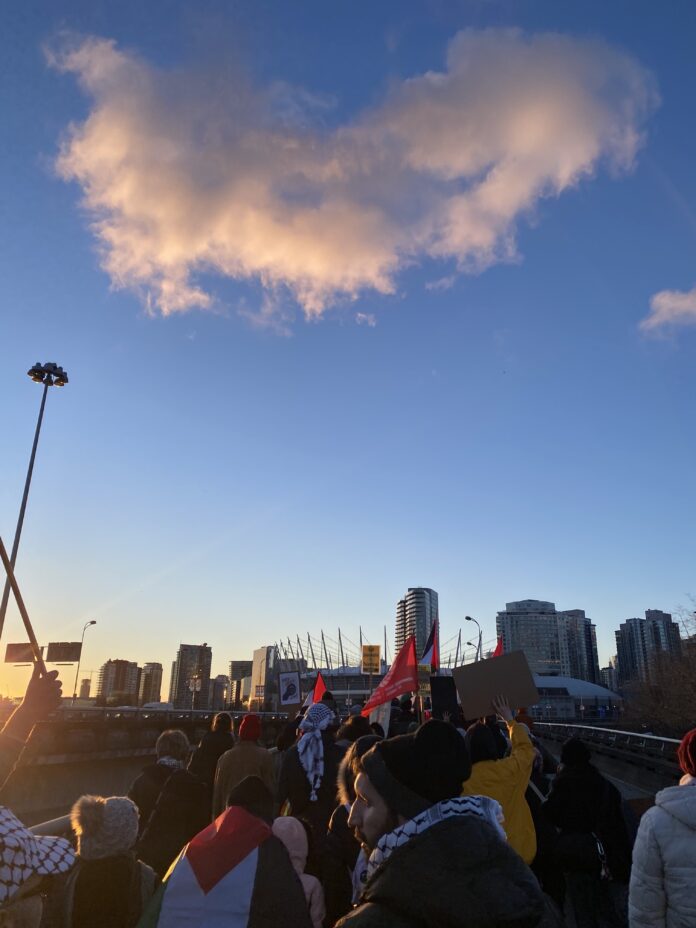
PHOTO: Gudrun Wa-Gunnarsson / The Peak

By: Sude Guvendik, Peak Associate

The Boycott, Divestment, and Sanctions (BDS) movement stands as a beacon of hope in the face of the prolonged and deeply rooted injustices suffered by the Palestinian people. In July 2005, a coalition of Palestinian groups proposed a strategy to end the intensifying occupation of Palestinian land. Led by the Palestinian BDS National Committee, the BDS movement is a global coalition advocating for boycotts, divestment, and sanctions against Israel. Drawing inspiration from successful historical movements such as the South African anti-apartheid movement, BDS strategically targets companies and institutions complicit in Israel’s actions against the Palestinian people.

The Israeli occupation, dating back and beyond the unrecognized 1967 East Jerusalem territories occupation, maintains absolute segregation between Jewish settlers and Palestinians — a clear violation of international law. The absence of an actual, functional citizenship for Palestinians living in Israel, coupled with restricting certain rights and services like mobility, employment, and education, further perpetuates the injustices Palestinians living in occupied land face.

BDS is not only a strategy, but a form of foreign policy and diplomacy that starts from below — from the ordinary people. Boycotting involves withdrawing support for companies and institutions that are complicit, directly or indirectly, in the violation of Palestinian human rights. Divestment is the call to withdraw investments in the State of Israel and Israeli international companies that sustain apartheid. Sanctions is the call to pressure local and national governments to end Israeli apartheid, from military trade, to trade agreements, and sanctions in international forums. As BDS gains strength, it has the potential to compel governments to implement sanctions at an official level, similar to the approach taken against apartheid in South Africa. 

The grotesque situation in Gaza demands intervention, as two decades of diplomatic efforts have proven ineffective. The United States’ significant financial support to Israel, in the form of a $14.5 billion military aid package and continual assistance in their economy, requires grassroots interventions. A very similar story happened in South Africa, where racial segregation policies and political and economic discrimination governed the lives of non-white people. Years of internal and external resistance, as well as international pressure and sanctions — to which UK Prime Minister Margaret Thatcher and US President Ronald Reagan opposed but were overruled by their governments — eventually repealed the legal basis for apartheid. BDS has modeled its policies, actions, and proposed interventions in the anti-apartheid movement

The moral imperative of BDS lies in its historical effectiveness as a nonviolent tool, from bus boycotts to fossil fuel divestment. Targeted boycotts involve focusing on a limited number of carefully selected companies and products that directly contribute to Israel’s crimes. Notable successes include Mcdonalds, Starbucks, G4S, Veolia, Orange, Ben & Jerry’s, and Pillsbury, which have been strategically targeted to send a forceful message to other complicit entities. Organized consumers can boycott companies involved in illegal settlements or distributing weapons to Israel, trade unions can push for divestment, and municipal governments can apply ethical criteria for selecting contractors. BDS encourages collective action to challenge organizations that fund or are indirectly complicit in war crimes.

It’s crucial to recognize BDS as a strategy that welcomes Jewish Israelis opposing their country’s violations of international law. Just as some white South Africans supported anti-apartheid campaigns, approximately 500 Israelis, including artists and scholars, endorsed BDS during Operation Cast Lead under the banner of “boycott from within.”

Over the past two decades, Israel has aggressively targeted BDS through legal measures. In the United States, numerous anti-BDS bills have been introduced and enacted, impacting university funding, contracts, and public blacklists. Germany, too, revokes awards and funding for any form of BDS support.

BDS aims to target Israel’s dependence on trade with Europe and North America, altering its economy and global perception. Companies like Google, Amazon, Airbnb, Booking.com, Expedia, Disney, and Teva Pharmaceutical Industries are identified as targets for pressure campaigns, meaning boycott “when reasonable alternatives exist.” The BDS movement supports various forms of pressure, including boycotts, lobbying, peaceful disruptions, and social media campaigns.

For BDS to succeed, it requires sustained and mainstream support comparable to the anti-apartheid campaign. The current atrocities in Gaza strengthen the case for BDS, with grassroots boycotts already affecting companies like Starbucks and Puma. Although the movement has grown, reaching a critical moment similar to South Africa’s remains a challenge. As momentum builds, it is essential to distinguish legitimate activism from antisemitism and to acknowledge BDS as a serious, nonviolent movement with established principles. Take a moment to reflect on your actions and their ultimate goal; criticizing the actions of Israel as a governmental entity is not anti-semitic, but the harassment and attack on Jewish people is. 

BDS represents a moral imperative in challenging Israel’s policies, drawing parallels with the successful anti-apartheid movement. As global support for BDS intensifies, it could usher in a transformative moment, economically compelling peace for the land of Palestine

World Chase Tag

0
photo of two women tag competitors in action, one running away and the other going past an obstacle to chase her.
PHOTO: Courtesy of Ultimate Tag AU’s Instagram

By: Kaja Antic, Sports Writer

Picture this: you’re in your room at some chain hotel near Pearson International Airport, waiting for your flight home from Toronto. You turn on the sports channel, watching the Vancouver Canucks lose 5–2 to the Boston Bruins. Then, as the third period winds down, the program moves to a new sport you had never seen before.

World Chase Tag (WCT) — a televised competitive parkour tag tournament. You’re amused and confused at the same time as the fast-moving athletes cross what is essentially a playground skeleton, turning elementary school games into competitive adult athletics.

This was my experience when I first watched WCT, the event staying ingrained in my mind even after the sports channel had shifted to a Dallas Stars–Philadelphia Flyers rerun. At first, I couldn’t believe this was real, but as the program went on, I understood the basics of how the event seemed so competitive compared to the preconceived notion I had of tag.

WCT is the first and only competitive tag league in the world, and operates national, continental, and international competitions. There are multiple teams in four separate continental divisions — Europe, Middle-East & Africa, Asia-Pacific, and the Americas. WCT consists of an open league — with no strict gender requirements — and a separate women’s league. 

The tournaments are held in a structure called the “Quad” — a 12×12 metre square featuring various obstacles for climbing and parkour — where each “Chase-Off” takes place. 

The Chase-Off is the usual format for main WCT competitions. Each match is a best-of-16 format between two teams, both consisting of up to six athletes. In each 20-second chase, there is a chaser and an evader. If the evader lasts 20 seconds without being caught, their team earns a point and that athlete stays as the evader for the next chase. If the chaser tags the evader within 20 seconds, neither team gains a point, and the chaser takes over as the evader for the next round.

Tags must be made with the hand only, and if either athlete steps outside the Quad’s boundaries, they immediately lose that chase, resulting in either a successful tag or evasion for the opposing side. There is also a 25-second break between chases for athletes to rest and move into position for the next contest.

If a Chase-Off ends in a draw, the two teams move onto sudden death. The sudden death format is similar to the original Chase-Off, but it only consists of two 20-second chases, and doesn’t include the 25-second rest period. Whichever team has the longest evasion time in those 20 seconds wins the match. If both teams have an equal evasion time, this sudden death process is repeated.

WCT is growing rapidly in popularity, boasting over one million subscribers on their YouTube channel, with over 300 million video views. The sport has earned many exclusive televised distribution contracts such as NBC in the US, and has even collaborated with popular American content creator MrBeast. This is also a paid professional venture, as athletes earn $1,000–$5,000 a month, depending on their skill level. 

There have been various re-creations trying to capitalize on Chase Tag’s popularity, such as the American reality TV show Ultimate Tag, which featured a similar competition, yet lacked the professionalism and true athleticism of WCT. This show was short-lived, only airing ten episodes in 2020, with the majority of reviews being negative. Many of these reviews even mentioned that FOX, the show’s creators, had ripped off WCT while adding unappealing WWE-esque theatrics into the mix.

The next WCT event is the WCT 6 World Championship, being held in Évry, France from April 26–28. If you’re interested in a high-stakes, quick-moving, surprisingly entertaining sport, I highly suggest you check out WCT competitions. Their aforementioned YouTube channel has hundreds of videos showing various competitions, which is a great introduction to this rapidly growing spectacle.

SFU partners with Canadian Blood Services for 1,000 stem cell swabs campaign

0
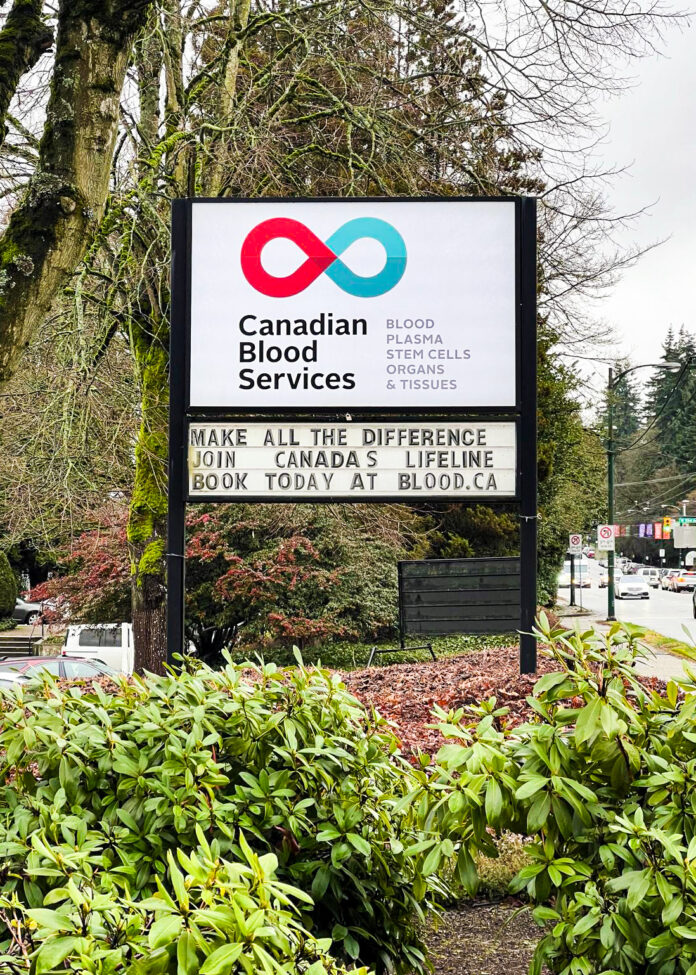
This is a photo of the Canadian Blood Services Sign at their location on Oak Street Vancouver. The sign includes the company’s logo, and the message, “Make All the Difference, Join Canada’s Lifeline, Book today at Blood.ca.”
PHOTO: Puneet Aulakh / The Peak

By: Eden Chipperfield, News Writer

SFU students were invited to an opportunity to change lives on February 8. Canadian Blood Services set up shop in the Student Union Building and outside the Mackenzie Cafe, encouraging individuals to register for stem cell donations. 

Stem cell transplants aid in blood restoration for those who have undergone chemotherapy treatments due to prolonged illness, including blood disorders, autoimmune diseases, cancer, and over 80 other conditions. A stem cell transplant increases blood cell turnover to help the body create more white blood cells, red blood cells, and platelets. These cells clot the blood to prevent bleeding within the body. 

Canadian Blood Services came to SFU with two goals: to recruit more students aged 17–35 and encourage those with ethnically diverse or mixed-race backgrounds to register. 

“People who need a stem cell transplant are more likely to find a match in a donor with a similar ancestral or ethnic background,” Canadian Blood Services community development manager Anika McDonald said in an interview with The Peak. Currently, Canadian Blood Services only has a third of registrants who are Black, Indigenous, and People of Colour (BIPOC). “Having a stem cell registry that is as diverse as Canada can help ensure that people who need a stem cell transplant can find a suitable match,” explained McDonald. 

Canadian Blood Services has been recruiting at universities and other academic institutions such as the University of British Columbia throughout February to encourage young people to register for stem cell donations. The SFU Blood, Organ, and Stem Cell Club assisted with the event held at SFU. Their campaign had a goal to reach over 1,000 student swabs. 

Students who register to participate in stem cell donation will have the inside of their cheek swabbed to collect a sample that will be examined and tested by Canadian Blood Services. Once a match has been found, students will be contacted to find a time to proceed with the donation. Canadian Blood Services notes that it may be weeks, months, or years for an eventual match to register, but the act of registering is already a positive start to saving someone’s life. 

Health barriers for BIPOC occur frequently in Canada. Systemic barriers are present in healthcare environments due to racial bias, lack of information, and misdiagnosis. Canadian Blood Services is determined to address these obstacles by organizing stem cell registration events to encourage students of different backgrounds to sign up. 

“Contrary to common misconceptions, most stem cell donations do not involve surgery; instead, the method for collecting your stem cells will most likely involve a process similar to donating blood,” said McDonald. Blood is collected through a needle from an arm and filtered through a machine that selects stem cells from the blood. A second needle in another arm will return the remaining blood to your body. 

Students interested in registering are encouraged to visit www.blood.ca/swabatschool to register for a stem cell donation. The SFU Blood, Organ, and Stem Cell Club also seeks volunteers and do not require prior experience. Training will be offered on-site. 

A Not-So Glamorous Day-in-the-Life of an SFU Student

0

BREAKING NEWS: SFU introduces geese therapy to make up for students quitting from SFSS

0
An illustration of a baby goose, wearing a SFU shirt
ILLUSTRATION: Alyssa Umbal / The Peak

By: Kelly Chia, Editor-in-Chief

A stunning new report brings a quack of a time to the student body at SFU. Hundreds of geese were seen flapping onto the tall Burnaby campus, an unusual sight for the student population. It’s also election time, and everyone is trying to figure out which representative does what. It’s no secret here at the university of Mr. Simon Fraser that SFSS elections bring a mixture of confusion, dread, and even hope. Yes, we hope this year’s administration might: 1. listen and follow the agenda they set out for the year, and 2. stay for their entire term. The bar is on the floor, folks! If they don’t casually decide they’re not a political body again, we’re probably okay, right?

Well, SFU has a different strategy in mind. To boost morale and confidence in our student body government, the university has sent whole flocks of geese to chase students around! We reached out to a representative to find out more about this unique strategy. First, we asked why SFU thought this would make students not quit from the SFSS. “We’re in a nice little area where any time a student is angry at student services, they can be mad at the SFSS, not us. We always make sure to remind them!” Vague Ans Wers, the SFU representative, told us.  

“We imagine that this makes things a bit spicy for the SFSS sometimes, and they get sad, so . . . Geese!” They raised their hands up triumphantly. “The geese will encourage athleticism by making students actively flee from them. It’s important to fight back against that new-fangled semester depression.” We didn’t have the heart to correct this to seasonal depression. “We really think this will give SFSS and the SFU body the opportunity to get engaged with one another, interact, and honk it out.” Wers then told us that any further inquiries could be answered by looking at the SFSS website. How helpful! 

Reportedly, SFU is considering offering geese admission to the university so they can be present and ready to offer their services when students inevitably discover another “problem” at the campus they can’t redirect. “What do you mean we need to focus our efforts on ‘freezing’ tuition costs? Climate change, baby!”

As campaign posters decorate this campus, just remember the wild concept that your vote and voice affects what the SFSS does. Otherwise, we fear that SFU will not stop at waterfowl to solve their systemic issues!