Home Blog Page 102

Brighter Side: Print newspapers

0
A stack of The Peak newspapers
PHOTO: Abbey Perley / The Peak

By: Petra Chase, Editor-in-Chief

As classes begin and SFU fills up with students again, we’re back to printing this fall! While The Peak has been producing digital newspapers this summer, I’m looking forward to seeing our covers on stands. What better way to showcase the talented work of our illustration and photography contributors than on display across campuses?

Courses usually come along with additional screen time. Giving your eyes even the slightest break from those pixelated boxes that have taken over every inch of our lives can work wonders. You could catch up on the latest news between classes, complete a crossword side-quest while at Renaissance Coffee, or read the humour section on transit instead of scrolling through reels — good old ink on paper not only feels less straining on the eye, but also your brain. We all know how fatiguing the excessive illumination of screens can be, especially paired with the constant mental noise of pop-up notifications and messages. Sometimes, it’s nice to just turn it off and read a print article.

Over the summer, I loved grabbing the latest copies of Exclaim! and The Georgia Straight from my local coffee shop. I already spend most of my day looking at my laptop for work, so it’s nice to start the day differently. The colourful pictures and illustrations also double as collaging material, which is another fun screenless activity. From blackout poetry to origami — there’s so much inspiration you can find with newspapers that you can take home and hold in your hands.

What Grinds Our Gears: Convocations during classes

0
A group of people wearing graduation caps
PHOTO: Joshua Hoehne / Unsplash

By: Olivia Visser, Opinions Editor

I am not looking forward to this fall. My one and only reason for this is that I despise class-hour convocations. Dramatic, I know. I understand that scheduling is tricky, and there will always be at least one class running at any given time on weekdays. But hear me out: I’m still going to complain.

The bagpipe serenades and ear-piercing speaker feedback are honestly not my biggest gripes when it comes to convocations. It’s the random attendees wandering around every campus floor while I’m trying to find a quiet spot. Or, the crowds of people blocking my way as I rush to make it to my morning class. These things both suck, but nothing tops the photo ops I just know I’m in the background of and will never get to see. I promise your photo will look better if I’m not in it. 

Anyway, here’s to our 2024 grads. I’m not blaming you of course, but rather the school design that forces me to traverse a ceremony of hundreds to get to classes at least once a semester. 

Keep your cats indoors!

0
An outdoor cat
PHOTO: Jack Blueberry / Unsplash

By: Olivia Visser, Opinions Editor

Like most people, I always appreciate coming across a friendly neighbourhood feline. I love cats as much as any other cat person, but there’s no denying that outdoor cats wreak havoc on local ecosystems no matter how friendly they are. Letting your furry friend outdoors is not just cruel — it’s damaging to local wildlife. 

It makes sense that someone would want to let their cat roam around outdoors. If you’ve ever owned a cat, you’ve likely seen it stare out your windows longingly or even cry at the front door. You may have heard people say it’s more cruel to keep their pet indoors when it wants to be outside, but I promise that isn’t the case. An outdoor cat’s lifespan is two to five years due to exposure to wildlife, vehicles, and diseases. They’re also unfortunately at risk of animal cruelty from strangers. Compare that number to the 13–17 years that indoor cats live and ask yourself if it’s really worth it.  

Even if you’re unconcerned about the health of your cat, it’s worth considering the impact felines have on local ecosystems. Cats kill around 40–140 million birds per year in Canada. They’ve also led to the extinction of 34 global bird species. Nature reported that in the US, cats kill up to 22.3 billion mammals per year. Many of these deaths are from stray or feral cats, which means domesticated cats that went missing. Stray and feral cats are also sometimes euthanized if they come to a shelter without a known owner. Remember that cats did not evolve to live along roads and highways — traffic accidents are a major cause of death for outdoor cats, and they’re almost entirely preventable if you keep your cat inside.

The cats we’re familiar with nowadays originate from ancient Egypt, and lived off an entirely different food system than in North America. Your outdoor cat is quite literally an invasive species. No matter how much it cries or claws at the front door, remember that it’s in their best interest to keep them indoors. And despite what you may think, it’s very possible to transition an outdoor cat to indoors. The BC SPCA has a guide for making this transition, which also includes building instructions for a “catio.”

Your pet deserves to live a happy life, but it must actually be alive to enjoy its time on earth. As temperatures begin to drop and we enter the winter season, think about how you can give your furry companion the best chance at longevity. 

La Suprema: a town forgotten

0
A thin girl with brown skin and short hair stands with her fists raised in a defensive position.
ILLUSTRATION: Aliya Nourlan / The Peak

By: Yasmin Hassan, Staff Writer

As an SFU student, I’m always looking for exciting events to attend near campus. So, on September 5, I found myself at the Djavad Mowafaghian Cinema for the 7:00 p.m. screening of La Suprema at the kick off of the 22nd Vancouver Latin American Film Festival! The festival, which goes on for 11 days, aims to ignite “dialogue among cultures, and supports and celebrates the art of contemporary Latin American, Latin Canadian, and Indigenous filmmaking.” With films from Argentina and Costa Rica to Uruguay and many more, this festival has plenty to offer.

As I walked up to the entrance of the theater, the director of the film, Felipe Holguín Caro greeted guests and chatted with folks. I was awestruck — what an honour it is to see the art and the artist in one space! He’s an established writer and director from Colombia, with short fictional films, documentaries, and music videos to his name. La Suprema is a project Holguín has been crafting since 2010. Only in 2020 did he and his team receive the funding for the film when a new category dedicated to regional stories opened up in Colombia’s funding program. 

The show started off with staff welcoming everyone to the beginning of the festival and introducing some key figures attending in the audience, like government representatives from various Latin American countries. Right off the bat, I could already feel the love and anticipation buzzing in the theater. 

It’s 2001 in La Suprema, with no electricity in this rural Colombian town. It’s based on the town of San Basilio de Palenque, which seemed to be forgotten by the rest of Colombia until boxer Kid Pamela became a world champion. La Suprema plays off of this idea of a town fading into obscurity, and later gaining recognition from an individual’s success. 

The story follows Laureana, who aspires to be a boxer like her uncle (whom we never see). She finds out through the newspaper he’s set to box for the world championship in Venezuela. Once news spreads through town — which isn’t too hard when it’s so small — everyone becomes invigorated with the goal to watch their hometown boxer compete. There’s just one problem: just how do they plan on doing that? Because taking pricey bus rides for the entire village won’t work, Laureana thinks to watch the match on a television. While everyone doubts her idea, eventually the entire town puts in the effort to get electricity and a television to watch what seems to be the battle of all battles. 

The film deals with questioning poverty and classism, as well as expressing pride in one’s culture. Views from the town pan to the city of Cartagena, showing the stark divide in lifestyle and culture. It’s mentioned many times that characters who grew up in La Suprema and move to other locations become better off, never visiting again and leaving behind their home. While other characters may talk down to La Suprema due to its size and wealth, Laureana is never afraid to represent her hometown — even when she’s placed in jail. Holguín addresses all of these elements while weaving in the beauty of life in La Suprema, like the innocence of children playing, the tranquility of chores done by the river, closeness between residents, and the excitement of bus rides to the big city. This film does a wonderful job of merging so many storylines into one shared event. 

Despite the premise of the story being quite simple, its beauty, richness, and attention to detail is something that shines through in every scene. The cinematography is stunning, with shots that made me truly appreciate the vibrancy of the region’s environment, from natural groves to scenes at the house. And the music? Don’t even get me started! Stunning vocals from Pabla Flores were woven perfectly into each and every scene. During the final song, which is about the town, she sings a lyric that particularly stuck out to me: “En mi casa de bareque, la paz siempre prevalece, el sol de mango sonriente” (In my mud house, peace always prevails, the shining mango sun). If that doesn’t entice you, I don’t know what will!

SFU student creates hoodie for people with anxiety

0
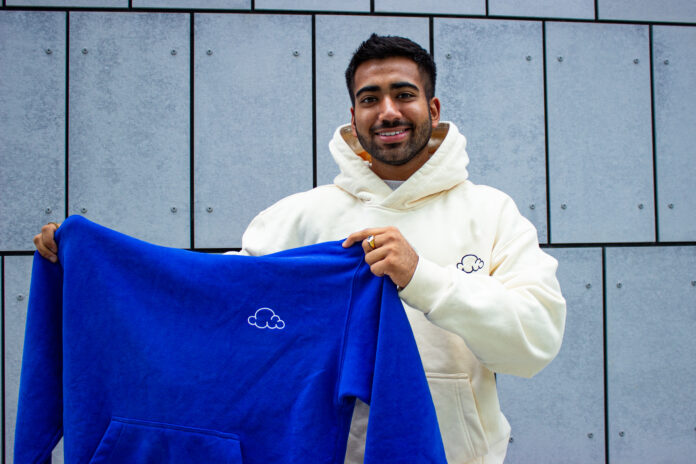
This is a photo of Vansh Sobti wearing a cream-coloured anxiety hoodie and holding up a navy-coloured one to the left
PHOTO: Gudrun Wait-Gunnarsson / The Peak

By: Sofia Chassomeris, News Writer

SFU Beedie student Vansh Sobti has designed an “anxiety hoodie” for his clothing brand Cloud Nine Clothing. Sobti’s clothing line was created to provide “ultimate comfort and relaxation” for students with their mental health in mind. The hoodie features a “discrete stress ball” in the cuffs of its sleeves and is made with a heavy fabric to help soothe the wearer.

In an interview with The Peak, Sobti explained how he came up with the idea for his hoodie in 2021, when he set out to buy something similar for himself. “I was trying to find different fidget tools or different ways of fidgeting without drawing attention,” he said. He found himself fidgeting at school, but could not find a product that suited his needs. 

“That’s when I saw a gap in the market,” he continued. “If I want something that’s discreet, that won’t catch people’s eyes, there’s probably more people like that that would benefit from this.”

Sobti began experimenting with prototypes and eventually landed on the current design: sleeves with hidden and strategically-placed stress balls in the cuffs. A new, patent-pending design, the anxiety hoodie offers an alternative to traditional fidget tools. He emphasized in his product pitch that discretion is part of Cloud Nine’s mission to promote better mental health and make people feel more comfortable in public.

He also said the hoodies would aid undergraduates with anxiety and ADHD. 

Aside from the sewn-in stress balls, the anxiety hoodies are also “slightly heavy-weight.” Sobti compares the material’s effect to a weighted blanket, saying the weight of the hoodie “helps trigger the autonomic nervous system into ‘rest mode.’” The autonomic nervous system is responsible for the body’s unconscious functions including the “rest-and-digest” processes which physically calm the body. A recent review of the hoodie shared that, “It’s so soft and cozy, and the weight feels great; its not smothering at all, just comforting.”

Sobti shared that after the hoodie’s launch in 2023, there were a couple of months without any orders, but he persevered. Since then, Sobti has gained over 150,000 followers across Instagram and TikTok and received over 2000 orders. He also expressed his interest in making his hoodies available in therapy studios and collaborating with universities like SFU to make the anxiety hoodies official school merchandise.

“If no-one else sees the potential, but you do, just keep going,” he said. “[Don’t] let outside criticism stop you from what you know you can do.” Sobti added, “If you see a vision, just execute it.”

Red Leafs gear up for September season

0
A girl with a red baseball cap, black pants, and a black long sleeve swings a driver.
PHOTO: Courtesy of Shawn Toner / SFU Athletics

By: Kaja Antic, Sports Writer

As the academic year begins, so does the season for many Red Leafs teams. Here we look at all the teams that begin their competitive seasons this September.

Cross Country

The Red Leafs cross country team began their season on September 14 at the Green River Gator Invitational in Lakewood, Washington. Last season, both the men’s and women’s teams earned a first place ranking at their first races, at the 2023 Pacific Lutheran University Invitational in Tacoma, Washington.

Golf

Krysta Schaus will take the helm as interim head coach for the men’s and women’s golf teams this season, as former head coach Matthew Steinbach departs the team after eight seasons to pursue his masters in sports psychology in Scotland. Schaus joined the team as an assistant coach in October 2023, and was previously an assistant coach for Gardner-Webb University. She also competed in NCAA Division II golf at Erskine College, winning four individual tournaments. 

Both teams are coming off successful seasons, with the men’s team earning second place, and the women’s team earning first, at the Great Northwest Athletic Conference (GNAC) Championships. 202324 senior Michael Crisologo won his final GNAC tournament as well as GNAC Athlete of the Year honours in men’s golf. SFU’s Meera Minhas, who is now entering her junior season, took the Athlete of the Year title for women’s golf.

The future looks bright for the Red Leafs golf teams, with Denby Carswell and Dana Smith taking Freshman of the Year awards for men’s and women’s golf, respectively. The men’s team begins their season on September 23 at SFU’s True North Classic in Burnaby, while the women’s team starts on September 20 at the Saint Martin’s University Grisham Memorial Shootout in DuPont, Washington.

Men’s soccer

The men’s soccer team is looking to replicate the success they reached in 2023 — where they topped the GNAC standings — though with a roster that looks much different than the previous season. New freshmen on the roster are Luca Aiello, Dominic Di Paola, Kundalini Dominique, Justin George, Daniel Hobson, Mario Lefevre, Alexandre Marcoux, and Christopher Nicolaisen. Former Trinity Western University Spartans sophomore Brandon and senior Tristan Torresan also join the Red Leafs. Sophomore Lionel Kabangu from Iowa Western Community College, senior Jacob McCall from Douglas College, and Canada West second team All-Star sophomore Kian Proctor from the University of the Fraser Valley were also acquired by SFU. The team has begun their season, but has yet to face any GNAC competition. 

Women’s soccer

The 2023 season saw the Red Leafs win their first ever GNAC Women’s Soccer Championship title, with the team looking forward to repeating the same form. Carlo Basso has been named permanent head coach ahead of the 2024 season after leading the Red Leafs to the title as an interim head coach. The team has added two freshmen, Dariella Lopez and Isabella Santoianni, and two transfers, junior Elyse Beaudry from Radford University and sophomore Sofia Faremo from the University of the Fraser Valley. At the time of writing, the team is undefeated. They will take on their first GNAC opponent, Western Washington, at home on September 26.  

Swimming

The swim team starts their 2024–25 campaign at Biola University in La Mirada, California on September 27. The 2023–24 was their inaugural season in the Rocky Mountain Athletic Conference (RMAC), where the women’s team placed third and the men’s team placed fourth in the conference championship. During the overall NCAA Division II championships, the women’s team placed eighth while the men’s team placed 23rd. Heading into the 2024–25 season, the team has added Daniel Pinto as an assistant coach. Pinto has prior competing experience in Venezuela, along with sixteen years of coaching experience across Venezuela, Chile, and at the North York Aquatic Club in Toronto. Pinto will assist head coach Demone Tissira as the Red Leafs look to reach higher conference and divisional results. 

Volleyball

The 2023 season saw the Red Leafs post a winning record, yet miss out on the NCAA Division II West Regional Championships, placing fourth in GNAC standings. The team started the 2024 season on a good note, going 3–1 at the San Diego invitational, with their only loss being a 3–2 set result against Point Loma Nazarene University. The Red Leafs also added three new freshmen to their roster in the offseason; outside hitter Katarina Damnjanovic, and middle blockers Elianna Gerbrandt and Logan Remington.

The fall of BC United has British Columbians everywhere whispering, “Wait, which party is that again?”

0
Illustration of an abandoned storefront. The name of the store is the BC United logo but it’s peeling off revealing the BC Liberals logo poking out from underneath. There’s a sign on the door that says “Permanently out of business, please go to BC Conservatives.”
ILLUSTRATION: Angela Shen / The Peak

By: C Icart, Humour Editor

BC election day is coming! Sure, our provincial election campaign news doesn’t have assassination attempts, coconut tree x brat remixes, and unexpected drag throwback pics, but that doesn’t mean it’s not exciting. For example, BC United has dropped out of the race. Isn’t that wild? Oh, you don’t know what BC United is . . . The only Canadian politicians you know are named Justin Trudeau, Pierre P-something, and Stephen Harper . . .

I’m sure you’re just not giving yourself enough credit! You know local politicians. Like Ken Sim, our mayor! Oh, you didn’t know Vancouver had a mayor . . . You thought we didn’t need one because of the monarchy or whatever. Well, we do have one! He, like, shotguns beers and builds office gyms and stuff.  

Anyways, back to BC United, they’re a provincial party running in the upcoming elections (oops sorry, they were a provincial party running in the upcoming election). Oh, you thought there were only two parties: Liberals and Conservatives . . .  I’ll leave the link to an article explaining the four parties’ (oops, three) platforms right here.

Basically, you’re not even that far off! BC United = BC Liberals (no affiliation with the Liberal Party of Canada because Canadian politics wouldn’t be fun if they weren’t atrociously confusing). Remember when Mr. Musk rebranded Twitter to X, and no one called it X, and actually people were making fun of the rebrand and also just flat out not using Twitter anymore? Well, it’s kind of like that. BC United candidates started defecting to the Conservatives.

And the tea gets hotter. One night, the BC United leader, Kevin Falcon (Big Bird for those in the know), had a terrible nightmare! He dreamt that an evil force was out to get him and his loved ones. That evil force was none other than the BC NDP! So, he decided to withdraw from the race and endorse the Conservatives who are led by John Rustad (Sir Rusty to his closest friends). This is so wild because two years ago, Big Bird kicked Sir Rusty out of BC United because he’s a climate change denier! Oh how the turntables . . . 

So, now that you know all the drama are you going to register to vote? We’re in the final stretch and the Conservatives are neck and neck with the NDP (the Greens are around too). Everyone’s begging for your vote (I heard you’re into that). What are you more afraid of, the colour orange or contributing to making our planet uninhabitable? Oh, you’re an international student and you can’t vote? Sorry for wasting your time . . . Still spill all the juicy details to people who are eligible to vote. Thanks bestie!

Most Googled questions: SFU edition

0
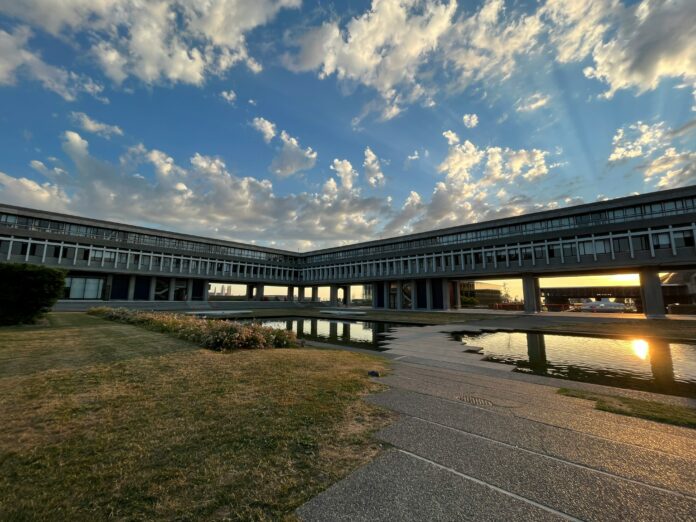
Photo of the Academic Quadrangle at SFU
PHOTO: Ujjwal Arora / Unsplash

By: Hailey Miller, Staff Writer

We all love a good, ol’ fashioned game of the most searched questions on the web. Tap into all things SFU and prepare yourself for your next university trivia night. Here are SFU’s Most Googled Questions to curb your curiosity, according to very accurate and highly credible searches on the World Wide Web

What is Simon Fraser University known for?

Well, Google’s top answer is that we use “research and innovation with impact,” according to the university’s website. We’re also first “in Canada for entrepreneurial spirit,” and second in the world, overall. According to a Google result from Maclean’s magazine, our computer science program is top notch.

What is Simon Fraser University ranked in Canada?

Do we even rank? Oh, wait, yeah, we do. SFU comes in hot at number one for the most comprehensive university in Canada. What does “comprehensive” mean, you ask? Honestly, we’re aren’t sure either, it’s a bit of a mystery wrapped around a veil of vagueness. But hey! Still number one, vagueness and all. We’re also ranked 11th overall, according to Maclean’s if that means anything to you. We’re also Canada’s top university for global innovation.

What does Simon Fraser University specialize in?

Right off the bat, Google only says, “arts and sciences, education, and business administration,” which isn’t necessarily wrong, but they’re excluding a lot of other programs because we’ve got so much more to offer than that. Don’t forget the contemporary arts (including music and sound, dance, film, theatre and performance, production and design, and visual arts), the social sciences, communication, interactive arts, a plethora of sciences, a vast languages department, and about every other topic for a major and minor under the sun. Take your pick from various programs and degrees, bachelors or masters, and even post-graduate diplomas and certificates. You name it, we’ve got it. Except nursing, and social work, and architecture and . . . the list goes on.

What is Simon Fraser University’s acceptance rate?

As if any student around campus would even know this, so good thing there’s trusty old Google to give you a reliable answer. Good luck getting in! The acceptance rate is about 59%, according to Leverage Edu — which isn’t too shabby.

How good is Simon Fraser University?

Good for what? Social life? Not at all — more on that later. Good at instilling dread and fear on its students with its overimposing brutalist architecture? Probably the best in the world. Academics? Well . . . that depends who you ask. Some students say it’s great, some say it’s not so great, and others are in the middle with a mediocre response. Google says it’s great regarding the aforementioned ranks, but overall, the verdict says it’s a boring university, though the academic standards are good, so at least the majority of us are getting by just fine.

How much is tuition at Simon Fraser University?

The first tuition answer to pop up is about $3,500 CAD for domestic students per semester, and over $15,000 CAD for international students per semester. Too expensive, if you ask me. Of course, that cost varies depending on course and student fees, how many credits you’re taking each semester, what level courses you’re enrolled in (100, 200, 300, or 400 levels for undergrads, and 500–800 for graduate courses and programs). 

Where is Simon Fraser University located?

The simple answer is three campuses altogether including Burnaby, Surrey, and Harbour Centre in Vancouver. If you’re looking for a more complex, sophisticated answer, that would be three plus a handful of satellite campuses all in Vancouver, which include the Goldcorp Centre for the Arts at SFU Woodward’s, 611 Alexander Street Visual Arts Studio, Segal Graduate School of Business, 312 Main, Morris J. Wosk Centre for Dialogue, and VentureLabs.

When was Simon Fraser University founded?

Come on, you’re an SFU student, you should know this! But if you didn’t know, time for a history lesson! If you really must take to Google for this one, the answer is 1965 (but the sophisticated scholar in me didn’t need the web for that one). If my math is correct, that means the university will be celebrating its 60th anniversary next year (and so will The Peak!). Wow, all those math courses that I never took really paid off.

What’s the social life like at SFU?

Um, seriously lacking, if you ask me . . . and Google says the same. It pales in comparison to UBC (I’m sorry to say), and even though the website hypes up hundreds of clubs, every student review and thread online agrees that SFU’s social life is seriously lacking. Personally, I think we’re somewhere in between. Coming from a previous post-secondary school with absolutely zero social life and party scene whatsoever, I think SFU is doing a better job, even if it may seem mediocre to most.

Why is Simon Fraser University in the NCAA?

Your guess is as good as mine. Despite SFU’s decision to axe the football program and the fact that facilities like the Aquatic Centre and Climbing Wall have been closed due to renovations since 2023 — we’re still the only university in Canada to be included in the National Collegiate Athletic Association. But with the precedent of many sports teams being cut, or facing the threat of being cut, alongside the lack of funding, this status might not last long. Despite this search, there’s really no solid answer as to why SFU is part of the NCAA, so I guess Google has failed us on that one. That’s a first.

Is Simon Fraser University public or private?

Please, we’re public. No Google search needed, but I promise you the web says the same. I’m smarter than Google, OK? As if the blatantly obvious “public research university” that’s plastered across the top of the screen upon the first result of a quick Google search doesn’t do it justice for you, every single other link as you scroll down the Google page says exactly the same.

Give help instead of offering it

0
Illustration of three people handing out takeout boxes at a table that reads free food.
ILLUSTRATION: Cliff Ebora / The Peak

By: Tam Nguyen, Staff Writer

Living in a capitalistic society where your value is based solely on how independent or productive you are makes reaching out for help harder than ever. Instead of burning ourselves to the ground and then struggling to reach out for help, we as a society should proactively look out for each other. 

The principles of capitalism focus on individualism with the belief that we are “self-interested” and “inherently competitive.” This is a harmful mindset, as it conditions us to feel embarrassed and inadequate whenever we struggle. However, we can be more attentive. The next time you are hanging out with your loved ones, offer to help — even small gestures such as driving them home, getting food, or helping with chores go a long way. One study found that when you help out a friend, your stress level reduces. When we improve other people’s lives, our own lives improve too. 

Looking out for others should not be limited to the people you know, either. As we interact with strangers in daily life, it’s also important to keep a positive and pay-it-forward attitude. Our circle of support should involve our peers as much as professionals. The only way we can transform toward this collective mindset is by building communitiese through acts of kindness. 

I have been a first-hand witness in spaces where people focus on fostering relationships and care. Many activists also practice security culture, with their motto being “we keep us safe.” People from all backgrounds look out for each other, and while no one should feel ashamed to admit that we are struggling, help is always appreciated.

Poilievre is anything but “for the people”

0
Canadian Parliament building in Ottawa
PHOTO: Paul VanDerWerf / Flickr

By: Yildiz Subuk, Staff Writer

Pierre Poilievre is a version of Trump for individuals who are not quite comfortable with revealing their bigoted beliefs. He’s built his campaign on rigorous attacks on current Prime Minister Justin Trudeau. The Conservative leader presents himself as being “for the people,” but his support for problematic movements leads me to question how authentic his campaign to liberate Canadians truly is. While Trudeau has had his share of criticism, Poilievre has made his entire campaign about attacking the Liberals without any clear plans for addressing issues in Canada.

Poilievre announced he will run for prime minister in 2022 — after endorsing the Freedom Convoy,an anti-vaccination and far-right political movement (and the same space where many far-right people flew nazi flags and indulged in racist sentiment). As a candidate who understands the power of media, he frequently produces ads and other content of himself engaging with voters. He presents himself as an everyday Canadian, often showing up to social events in a T-shirt, positioning himself as a humble, hardworking Canadian. 

However, Poilievre is anything but that. He is a populist leader — someone who appeals to working class individuals by placing the blame for their disadvantages on a real or imagined elitist group — in this case, the Liberal Party. While inequality does exist for the working class, populists often scapegoat marginalized groups and offer solutions that, ironically, further reinforce inequality. This type of leader’s “charismatic” personality can have a wide appeal among the majority of low-information voters (people who are not as informed about political discourse). Populist leaders can belong to any political ideology, but are often right-wing. 

Poilievre has managed to grab the attention of many by tapping into a real anxiety: the housing crisis. But while this anxiety is valid, his solution boils down to not voting for Trudeau. In his video Housing Hell, he blames the current prime minister for causing the housing crisis, while failing to address any nuances about the issue. The video intends to instill anger by infuriating the viewer with stats about how housing has gotten worse, but only provides a vague explanation of why the issue exists in the first place. Housing insecurity disproportionately impacts low income and marginalized folks. Voting for a leader who doesn’t value social programs will not solve these issues. 

While the Conservative candidate may be an expert at stirring the pot, he lacks sincerity. He’s gone on record saying that he stands with Israel, while legitimizing the genocide against Palestinians — he tweeted “Israel has a right to defend itself.” In 2008, he made statements about how compensation for residential school survivors doesn’t provide any “value.” While he later apologized for those comments, he also gave a speech at the Frontier Centre for Public Policy, a research group that has downplayed the effects residential schools had on Indigenous children. Comments like these should make you wonder whether Poilievre truly understands the “average” working class folks he tries to appeal to. 

Currently, the Conservative Party have nearly a 20% lead over the party under them. While Poilievre has won a lot of support since the start of his campaign, and while his approach may seem enticing to some, it is important to note that his actions do not reflect the reality he preaches. He’s claimed that he will make Canada “the freest nation on earth,” but when diving deeper into his comments about marginalized groups, it is important to question who exactly he will make the country “free” for.