


By: Kitty Cheung, Staff Writer
#1: Outside of Maggie Benston Centre (MBC) Food Court
- Available seating and table space – 3.5/5 notebooks
- Access to gendered washrooms – 4/5 notebooks
- Access to gender-inclusive washrooms – 4/5 notebooks
- Traffic and construction noise – 4/5 notebooks
- Comfort – 4.5/5 notebooks
The stone picnic tables found just outside of the MBC Food Court are ideal for any kind of studying, whether you’re staring at a laptop or textbook. The picnic tables overlook a small grassy hill, dotted with slim trees that contribute to a shady and comfortable space to learn while enjoying some fresh air.
* Gender-neutral / wheelchair-accessible washrooms are available on all floors of MBC.
#2: Djavad Mowafaghian Courtyard
- Available seating and table space — 2/5 notebooks
- Access to gendered washrooms — 4/5 notebooks
- Access to gender-inclusive washrooms – 4/5 notebooks
- Traffic and construction noise — 5/5 notebooks
- Comfort — 4.5/5 notebooks
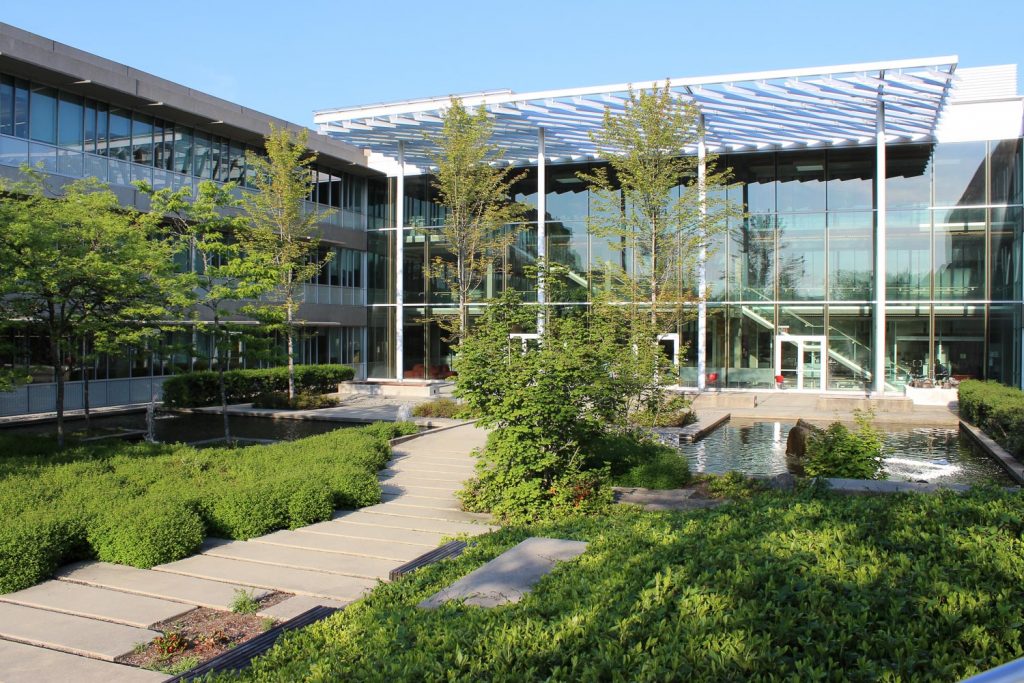
Located in the centre of Saywell Hall, this courtyard features beautiful urban landscaping, complete with fountains and sculptures. While there are no tables within this courtyard, this space does have stone block seating, a park bench, and a grass field, making it a relaxing place to complete a reading.
* Gender-neutral / wheelchair-accessible washrooms are available inside Saywell Hall.
#3: Pond between Robert C. Brown Hall (RCB) and the Academic Quadrangle (AQ)
- Available seating and table space — 3.5/5 notebooks
- Access to gendered washrooms — 4/5 notebooks
- Access to gender-inclusive washrooms – 4/5 notebooks
- Traffic and construction noise — 2.5/5 notebooks
- Comfort — 3.5/5 notebooks
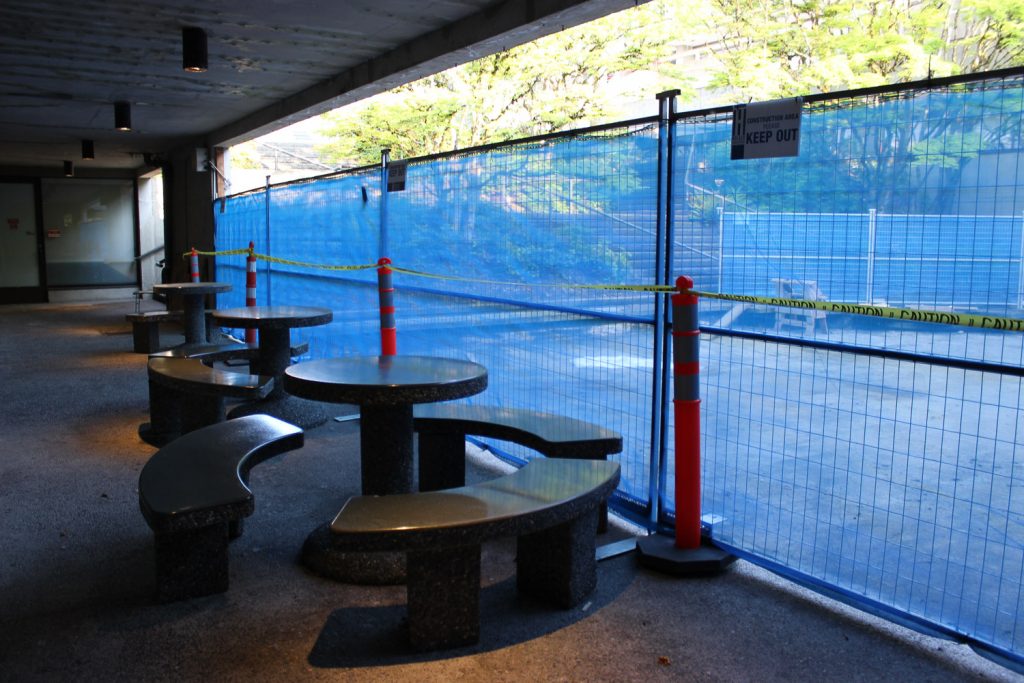
Normally one of the most calming places to study, the beauty of this space has thoroughly been ruined by construction. The pond has been drained and construction fencing invades the area, making this a tragically ruined study spot, though hopefully it’ll be restored after construction. If the ruined beauty doesn’t bother you though, the picnic tables are still available, albeit a bit dusty.
* Gender-neutral / wheelchair-accessible washrooms are available inside RCB, as well as various high traffic AQ locations — some washrooms lack automatic doors.
#4: Embark Learning Garden
- Available seating and table space — 2/5 notebooks
- Access to gendered washrooms — 3.5/5 notebooks
- Access to gender-inclusive washrooms – 1.5/5 notebooks
- Traffic and construction noise — 5/5 notebooks
- Comfort — 3.5/5 notebooks
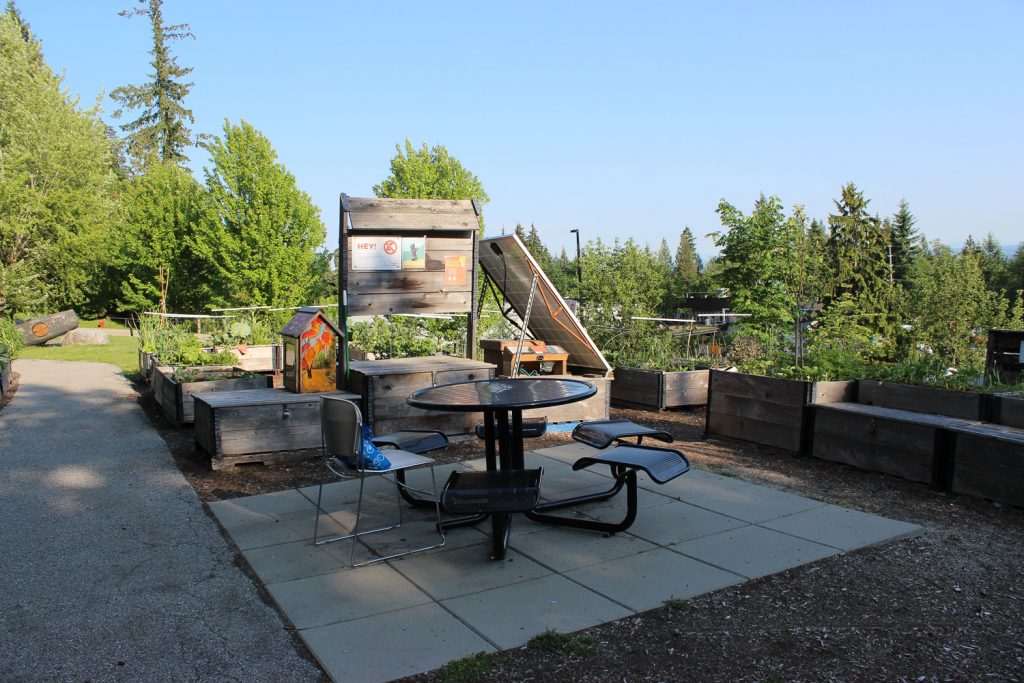
Located outside of Technology and Science Complex 1 (TASC 1), the Embark Learning Garden is a quiet and relatively secluded place to spend time. Aside from a single picnic table and some benches, there’s not much seating. Still, if you’re already studying outside and want to go the extra mile with connecting to Mama Nature, check out this garden on campus.
* Gender-neutral / wheelchair-accessible washrooms are available inside TASC 1. However, the nearest gender-neutral washroom that I’m aware of is located in the Applied Sciences Building (ASB).


