Home Blog Page 588

Poor shooting night holds the Clan back against Western Oregon University

0
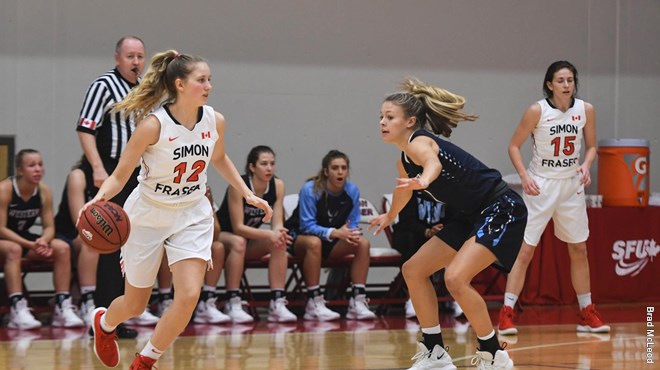
Freshmen Emma Kramer was the bright spot on an otherwise poor offensive night for the Clan. (Photo courtesy of SFU Athletics)

On Thursday night, the SFU women’s basketball team hosted Western Oregon University at the West Gym on Burnaby campus. For a game in which the Clan could not buy a bucket, the score was probably more favourable to SFU than it should have been. Western Oregon managed to come away with the victory, on a night where the home team did not do themselves many favours.

While the Clan didn’t shoot well throughout the game, the first quarter was where their struggles were most apparent. SFU managed just seven points in the opening frame, with an Emma Kramer three-pointer being the team’s only basket for nearly eight minutes, and they found themselves down 16–7 after one quarter of play.

SFU didn’t lose a quarter after the first, but still couldn’t overcome the deficit. They got their shooting stroke back in the second quarter, going for 20 points in the frame. Sophie and Georgia Swant traded buckets at the beginning of the quarter, a pretty cool moment, while back-to-back threes from Kramer was another highlight. Going into the half, the Clan were down 34–27, with 20 minutes to make up the deficit.

The contrast in styles of play could not have been more apparent when looking at the box score. The Wolves shot 14–21 in the half, while attempting zero three-pointers. The Clan, on the other hand, shot 11–30 from the field in the half, while attempting half of their shots from behind the arc.

SFU struggled with scoring again in the third quarter, only getting 13 points in the frame, the same as their opponent. While they managed to get the deficit down to two points, they went into the final quarter still down by seven.

While the game ended by a score of 69–65, the fourth quarter really wasn’t that close. The Wolves went up by as much as 15 points with only three points left, and were still up by 10 points with only 10 seconds left. An and-one from Jessica Jones and three free throws from Sophie Swant cut the lead down to four points, but it was too little too late.

“We played without the effort we need to have success,” said head coach Bruce Langford to The Peak in an email interview post game. “We need to execute our offense better and we need some shooters to hit their shots.”

Peak player of the game: Emma Kramer

The freshman was really the only player that had their shot going for the Clan, scoring a team high 13 points on 5-6 shooting from the field. She also knocked down three triples and came away with two steals in the game.

What’s next:

The Clan will hope for a quick turnaround as the host Concordia University on Saturday night at 7 p.m. Concordia have a 1–4 record in the GNAC so far this season. There’s also a $250 halfcourt shot on the table for a lucky fan.

Spotlight: SFU Anime Club

0

Political Corner: China is imposing a neo-colonialist rule in Africa

0
Photo by Madoka Ikegami/Pool/Reuters

Written by Sakina Nazarali, SFU Student

China recently announced that they will be investing $147 million into a copper mining project in the Democratic Republic of Congo (DRC). In Africa, Chinese investments such as this are not uncommon; between the year 2000 and 2015, China provided $95.5 billion in loans across the continent, and in 2018, it pledged $60 billion in loans to Africa.

With the hefty funds, investments, and aid that China is pumping into Africa, the question arises: is China a hero or a monster? Unfortunately, it might be the latter.

Although Xi Jinping, general secretary of the Communist Party of China, has stated that their investment is not intended to have “any political conditions attached,” and that “China does not interfere in Africa’s internal affairs and does not impose its own will on Africa,” much of what’s been built with these loans is being used by Chinese corporations to harvest Africa’s natural resources, similar to what European colonialists did. Like the colonialists, the embezzlement is carried out without much regards to Africa’s welfare, particularly with these companies’ use of child labour and permanent damage to the environment.

In reality, China is submerging African countries into debts they could never repay. China could then develop powerful footholds in politics, finances, real estate and national policies within the African continent. China will then be able reap benefits that go beyond monetary value. Surely, a neo-colonialism that Africa unknowingly welcomed.

If African countries keep letting China infiltrate their countries at this rate, we will see an Africa that is highly dependent on China, an Africa with undercut sovereignty, and an Africa that has halted its own long-term and self-sustained growth. With these loans, I definitely worry that African nations will be left with an impossible and dangerous debt akin to Pakistan and Malaysia.

The Winter Break Warning

0
Hannah Zaitlin

The Winter Break Warning

~ A Tale of the Transitional Period ~

Waking up in the afternoon,
Then going back to sleep—
Drinking every drink
And eating what you please.

Choosing what you’d like to read
And growing lost in every page;
You’ve lost contact with the outer world
And champagne is your only pain.

After Christmas, and before New Year’s Eve,
Things go very strange.
You don’t know if it’s day or night,
And you have no clue about the date.

Suddenly, you hear it—
Its rumbling draws near.
You tell yourself, “I’m still on break,”
But joy soon becomes fear.

8:30 a.m. classes,
And pancake breakfasts revert to cereal.
Soon the only sleep you’ll get
Are in two-hour tutorials.

You’ll have midterms, exams, and term papers.
Your tears will fall like a faucet.
You’ll soon face the horror of every scholar
When forced into group projects.

The texts on your syllabus
Will be the only books you read,
And a grey campus on a mountain
Will be the only thing you see.

So enjoy the days of joy and peace.
Embrace your freedom one last time.
For soon you’ll remember what it means
To smile while crying inside.

Written by: Youeal Abera

Resolving through university

0
Reslus

First-years:

  • I will plan out my whole degree this year and stick to it, so I can finish in four years.
  • I will maintain a CGPA of 3.5 or higher by keeping up with lecture material and studying for exams two weeks in advance.
  • I will stay away from coffee to prevent a caffeine addiction. Instead, I will rely on having a consistent sleeping schedule to ensure my biological clock stays in sync, ensuring I have enough energy for the day.
  • I will maintain a healthy balance in my life by working out three times a week, hanging out with friends once a week, eating three different vegetables for each meal, and sleeping nine hours each night.

Second-years:

  • I will play an active role in two clubs that I’m interested in to enhance my resume and make more friends!
  • I will manage my time better by restricting myself to watching Netflix only on weekends and plan out the steps to finish a big assignment ahead of time.
  • I will rely only on coffee and tea as my sources of caffeine.
  • I will stop stress-eating carbs and drinking pop so I can lose the 15 pounds I gained in my freshman year.

Third-years:

  • I will turn in all my assignments on time even if it means drinking five cans of Red Bull to stay up all night binge-watching Netflix while frantically trying to finish my work.
  • I will pretend to be interested in what my professors research so I can obtain references for grad school and volunteer in their labs.   
  • I will take one GPA-booster course each semester so I can increase my 2.0 GPA and get an earlier enrolment date to take classes I actually need for graduation.

Fourth-years:

  • I will finish my degree in the next two years by taking more than three classes a semester.
  • I will narrow down my list of things I don’t want to do in life and pick the one which I hate the least as a career option.  
  • I will limit my meltdowns to two a day on regular school days and four a day during exam season.  
  • I will not break down every single time I ask my instructor for an extension on an assignment they assigned at the beginning of the semester.  

Fifth-years:

  • I will figure out which grad schools and programs I want to apply for because I cannot decide a career option and no employers are interested in hiring me.
  • I will sleep at least four hours a day so I can stop having hallucinations about bloodthirsty assignments. Must preserve sanity.
  • I will start a club which will quickly become inactive, just so I can have more than two things to list on my resume.  
  • I will avoid socializing at all costs by running away when someone I know approaches me.

Sixth-years:

  • I won’t keep a resolution cause I haven’t met any of my goals the past five years since resolutions are a waste of time. I will watch Netflix instead.

Looking back and forward at SFU’s 2018

0
Photo Illustration by Gene Cole/The Peak

Written by: Gene Cole, Opinions Editor

As we look back at the huge list of ridiculous things that happened at SFU in 2018, their contexts and future implications are worth keeping in mind.

Jas Randhawa is elected . . . and impeached

(Photo by Azat Bayandin / Peak Archives)

The leadership of the SFSS this past semester has been my go-to story to tell friends and family at dinner for weeks. It’s undoubtedly been one of the most eventful and engaging bits of student news this year. Everything, from the leaked audio that first appeared publicly on the SFU Dank Memes Gang Facebook page to the smoke bomb at the Annual General Meeting, feels nothing short of fiction.

Despite its surreality, I think the gravity of the situation is finally starting to sink in. The students of SFU had a student government leader that was accused of mishandling his job, and then lost his job to the tune of thunderous applause. This entire journey through the Fall has made for entertaining headlines, but they aren’t just silly things that happened in the background of our classes. They had real impacts on the trust we have in student government.

When the next SFSS elections begin, I’m hoping a lot of students have a greater understanding of just how important and real these elections are, because student government is more than just a series of memes.


Concerns raised around SFU’s health and safety policies

(Photo by Chris Ho / Peak Archives)

I don’t doubt that there’s still a lot of discussion going on within the school, security, and emergency services; there’s still a lot of real concerns about how we’re taken care of on the mountain, and I don’t think anybody is taking the fact that there was an assault and a death on the Burnaby campus in the same semester lightly. That said, I can’t help but feel that these headlines aren’t going to stay in the public consciousness for long despite being covered by CBC, because the crises that inspired them were mostly random occurrences.

I would definitely like to see more changes to how the school responds and provides support, but I can easily foresee our systems staying unchanged as we all forget what happened — at least until another crisis comes along to remind us how unsafe we are on an isolated campus like Burnaby Mountain.


Student groups and vendors criticize the SFSS for denying them space in the upcoming Student Union Building (SUB)

(Photo by Israrul Haque / Peak Archives)

Groups have been expressing concern and frustration for over a year, but the conflict between student groups and the SFSS certainly peaked in 2018. The eternally under-construction SUB has been an expensive eyesore at best, and a looming threat for groups without another place to go at worst.

It’s been nothing short of a battle for some of these groups — the Simon Fraser Public Interest Research Group, the First Nations Student Association, Students of Caribbean and African Ancestry, and campus radio station CJSF all expressed concerns at various discussions, such as the September 19 board of director meetings. The lack of certainty and security for these groups has been heartbreaking to see for all their efforts.

I want to have faith that the SUB will be finished and these groups will have their space. But until it’s here and these groups can rest easy, students are going to be in limbo.


SFU increases tuition, ensuing protests

(Photo by Srijani Datta / Peak Archives)

It’s slightly concerning that possibly the most serious and widely-affecting event of 2018 might go unnoticed by the majority of students. Between tuition, textbooks, school supplies, and just the cost of living, students spend enough that a 2% rise in tuition (or 4% for international students) adds up. More and more students face greater difficulty in pursuing an education as the costs rise.

We’ve already seen students arguing against and protesting this hike through SFU Tuition Freeze Now!, and one hopes that student groups like this continue growing and fighting to make SFU as financially accessible as possible. At the very least, their work is bound to raise student awareness of just how steep — and steepening — the costs of post-secondary are. If nothing ends up changing, though, I can easily imagine most students continuing to be passive and treating the cost of tuition as a meme of being a student.

The Peak’s most popular content of 2018

0
Chris Ho / The Peak

By: Geron Malbas and Gabrielle McLaren

Editor’s note: In print, the top content for Humour and Arts had been misattributed to the wrong creators. The web version that follows is correct, and we apologize for the mistake.  

Here at The Peak, we try to write content that you care about, and we like to think that we do a good job. Below you’ll find a list of The Peak’s most viewed article or video for each of our sections throughout 2018, according to Facebook analytics:

Arts

Piece: Q&A with SFU stand-up comedian Sam Gorick

Writer: Natasha Tar

People reached: 7,400

This cute, easy-to-read interview with Sam Gorick was a unique piece, close to home. You might recognize Gorick from the West Mall Starbucks or one of your communication classes, but he’s also a hobbyist stand-up comic, who describes his style of comedy as “poor.” (With that winning endorsement, go check him out! Seriously: do it.)

The fact that a piece about a student artist was our most-read arts piece of 2018 speaks to an SFU community that is often reported as MIA. Our multimedia team is also aboard the “We Love Sam Gorick” bandwagon and previously made a Student Spotlight video you can check out.

Sports

Piece: SFU Rugby thrives despite not being recognized as a varsity team

Writer: Andrew Ringer

People reached: 1,249

Though our sports section understandably focuses on the Clan’s activities, last year it expanded to better cover many other student groups and clubs on SFU’s sports scene. SFU Rugby is one of the university’s oldest clubs and boasts a long, impressive history of achievements to match. However, it’s always growing and open to new members and fresh talent go ahead and read the piece to hear from players and coaches alike and to find out more about the club.

News

Piece: SFU announces plans for new pub
Writer: Amneet Mann

People reached: 22,636

In late October, SFU announced that the space left by the Highland Pub (may it rest in peace) had been reclaimed by the Joseph Richard Group (JRG), a company that runs restaurants in Alberta and B.C. And lo and behold, a new pub is set to open in the near future: The Study Public House.

When The Study does open, it will feature a brand-new design, a new menu, expanded seating, and will be bookable for student groups. Interest in this piece is perhaps unsurprising, given how badly the student body took the news of the Highland’s closure.

Features

Piece: Bringing dad jokes to the board: an SFYou with Samer Rihani
Writer: Gabrielle McLaren

People reached: 2,213

Within a week after the SFSS’s annual general meeting, vice-president student services and acting president Samer Rihani found time to stop by The Peak office, tell a bunch of (objectively bad⧸glorious) dad jokes, and talk about the rebuilding process on the society’s horizon following Jas Randhawa’s impeachment. In the midst of the impeachment buzz and with all the questions it left, it’s no surprise that this piece performed well.

Opinions:

Piece: What Grinds our Gears: Icebreaker activities in lectures and tutorials
Writer: Tiffany Chang

People reached: 2,304

This bite-sized opinions piece packed high approval ratings. In few words, Tiffany Chang captured the most universal university experience: the cringe and hatred that swirls inside while sitting in a circle and waiting for your turn to tell everyone your name, year, major, and something “fun” about you.  

Humour:   Procrastination 105

Created by Melissa Campos and Aaron Richardson. Featuring Gene Cole, Courtney Miller, and Geron Malbas

People reached: 2,601

A fine piece of satire, this video served as the grand announcement of a new, mandatory class at SFU that will teach university students how to procrastinate. The fact that actual-professors Nikhil Jayadevan and Drs Mark Blair, Holly Andersen, Michael Everton, and Rochelle Tucker are involved is the cherry on the cake. I was supposed to take this class this semester, but missed the deadline to enroll… guess I’ll just do it later.

Multimedia: How Did Simon Fraser University Get Its Name?

Presented by Sina Khalili, Edited by Melissa Campos

People reached: 17, 771

Summer is usually a slower time on campus, which apparently gave everyone more time to click on this video. Here, our multimedia team recapped where exactly our university got its name from through archival research, chatted with some students about it, and dug into the controversy that surrounds this name (fast-forward to 1:28 if you want the tea). It’s a short, two-minute video that you should watch if you haven’t seen it yet.

Most viewed content overall

Piece: SFU announces plans for new pub
Writer: Amneet Mann

People reached: 22,636

The image of the broke, hungry, and borderline-alcoholic university student shines through with this one: the most interesting piece this semester was news of a new pub. The good news about this news: it gives us something to look forward to in 2019.

Children’s shows can and should deal with serious themes

0
Photo courtesy of NBC News

Written by Komal Adeel, SFU Student

Reflecting back on the Saturday morning cartoons that filled our childhood, a lot of moments that stand out are those when kids’ shows got real. Sesame Street has always been a prime example of a show that uses its platform to discuss tough topics like HIV, incarceration, and military parents.

Last month, Sesame Street continued this trend with Lily, who was first introduced in 2011 to represent a food-insecure family. More recently though, she discussed how her family lost their home.

A lot of the initial response online was disappointingly pedantic, as swarms of people pointed out how Oscar the Grouch has been living in a trash can for decades. However, Lily is part of a bigger campaign by Sesame Workshop to provide support to homeless families, and in the process destigmatize childhood homelessness through the show, something much more real than Oscar or a lot of sillier children’s characters.

Serious topics and themes aren’t new to children’s television, but it’s great and important that we still see them in 2018. Lily is no exception.

I grew up watching Arthur, another show that is well-known for depicting a lot of sensitive issues head-on. One episode showed the school lunch lady being diagnosed with cancer and losing all her hair. Another depicted Arthur’s grandpa developing Alzheimer’s and showed how Arthur and his sister came to terms with the changes in his behaviour.

While these were serious issues, the show introduced me (and many others) to these complex ideas that we wouldn’t have learned or thought about unless they hit us directly, and provide us with greater emotional intelligence to handle intense moments with them. As a result, not dancing around it created a stronger learning experience.

Not every message in Arthur was as explicit as these ones though; one episode being more implicit, titled April 9, was about a fire that destroyed the school that was intended to reference the September 11th terrorist attacks. The characters in the show had a variety of similar experiences, from fearing for their parents safety to flashbacks of the fire.

While it didn’t address the attacks directly, it showed viewers that their feelings were valid, encouraged them to talk to people about how they felt, and ended with a hopeful message to keep moving forward. Even without using 9/11 by name, they managed to help understand the complex reactions that children may have seen.

This indirect approach can be just as effective, still dealing with serious and complex issues while not being too abstract or unclear. In an interview with NPR a few years ago, psychologist Jennifer Powell-Lunder used an episode of Glee as an example; one that involved directly involved presentation and discussion of a school shooting, considering it “not a good show for kids who’ve been through such a trauma to be viewing”, and expressing concern that it could “retraumatize” them.

Nonetheless, Powell-Lunder still considers the episode to be an effective way to present it, as it gives an opportunity to first start understanding it through a safer, fictional lens. When we speak in fully hushed tones about certain topics, we imply that there is something inappropriate or wrong about talking to them about it. This is not the message we want to be sending children; we want them to feel comfortable having open conversations, and able to learn or ask questions.

Back to Sesame Street and homelessness — the show is also going beyond just mentioning it. Alongside their programming, they have a huge variety of online resources for kids, families, and caregivers to learn about serious issues affecting their communities. With this, they aim just as well to empower homeless children themselves a group that totals 40,000 youth per year in Canada, and deserves to have their issues presented in programming intended for children of all sorts of situations and backgrounds.

Parents often struggle to discuss difficult topics with their kids, and children’s television is definitely a great tool to get those conversations started. We don’t need to hide children from the world, but we do need to help legitimize it, and help others properly understand it. There’s nothing wrong with TV helping accomplish that goal.

Year in Review

0

Written by: Henry Tran, Coordinating News Editor

SFU diplomas to now list undergraduate students and alumni’s major

Previously, when SFU undergraduate students convocated, their degree parchments only listed the credential (bachelor, masters, etc.) and their graduating faculty. However, on November 6, 2017, the SFU Senate announced that starting in June 2018, all SFU undergraduate students’ diplomas will include their majors.

     Many undergraduate students had felt that their old degree parchment was “purely decorative” as their employers requested additional documents from them specifying their major, according to a previous article written by The Peak. In a later hearing in January 2018, it was clarified that the new parchments would include major(s), minor(s), co-ops, distinctions, and degree-integral concentrations.

     Initially, this amendment was not applicable to undergraduate students whom have already graduated prior to June 2018. However, at the January hearing, the SFU Senate decided that this new policy will also be applied to SFU undergraduate students who have graduated prior to the implementation of this new policy.

Certain independent student groups denied space in the new Student Union Building (SUB)

In September 2017, the campus radio station CJSF and the Simon Fraser Public Interest Research Group (SFPIRG) spoke to The Peak about the possibility that they would need to relocate away from Burnaby campus. With the nearing completion of the Student Union Building (SUB), the SFSS intended to return the Rotunda space to SFU, including the spaces being rented by SFPIRG and CJSF. As a result, both independent student societies were at risk of losing their space on campus.

     In November 2017, the SFSS put out a call for student organizations and unions to express interest in acquiring space in the new building. In early December 2017, CJSF, SFPIRG, and Embark Sustainability Society alleged to The Peak that they were denied space in the new SUB.

     Hangue Kim, the 2017–18 SFSS president, said that the decision was made due to interest from numerous student clubs and unions for space in the SUB. Kim emphasized that “space was never promised to [CJSF and SFPIRG] and no agreements were signed [ . . . ],” in a previous article written by The Peak.

     In late January 2018, CJSF shared with The Peak that they might be offered space in the Forum Chambers, located in Maggie Benston Centre (MBC), by the SFSS as a compromise. Embark Sustainability Society was no longer interested in pursuing space in the SUB following the previous decision made by the SFSS. SFPIRG was also given the option to relocate to MBC; however, due to the conditions stipulated by SFPIRG at the time, the SFSS revoked this offer, according to a previous Peak article.

     Following months of discussion between SFPIRG and the SFSS, in April 2018, SFPIRG signed a new lease with the student society that would allow them to continue their occupancy in the Rotunda until December 14, 2018. SFPIRG alleged that they signed the agreement with the SFSS under duress, according to a previous Peak article.

     Initially, the SFSS offered SFPIRG a lease extension offer on April 5, with a deadline for acceptance on April 20. The student society also asked SFPRIG to pay a $10,000 security deposit fee to extend its sublease. However, SFPIRG drafted a letter to the SFSS explaining why they could not make the payment.

     Upon reviewing this letter, the SFSS decided to revoke the security deposit fee on April 19, but on the condition that SFPIRG accept the terms of the new contract within 24 hours, in line with the originally-given April 20 deadline. After complying, SFPIRG received an email from the SFSS stating that after the December 14 date, they will have to leave the Rotunda.

Jas Randhawa, then the 2018–19 SFSS president, stated that SFPIRG was “more interested in taking an adversarial stance than they are in working with us to find a solution” in a previous Peak news story. “SFPIRG has consistently rejected our offers and placed unreasonable conditions on accepting them.”

     SFPIRG emphasized that they would not move out by December 14 because they believe that their services are integral to the student community.

     In addition, SFU Students of African and Caribbean Ancestry (SOCA) criticized the SFSS for alleged “institutionalized racism.” Like CJSF and SFPIRG, SOCA  did not receive space in the SUB. According to SOCA, the SFSS were not punctual in their scheduled meetings with the student group and failed to communicate clearly in their negotiations.

     However, current acting president of the SFSS, Samer Rihani, said that “the SFSS board of directors was willing to continue talks with SOCA about extending their sublease in the rotunda beyond December 14, 2018 [as a compromise],” in a previous Peak article.

SFSS presidency ends in impeachment

In March 2018, Jas Randhawa was elected as SFSS president. However, in August, The Peak received an email from Randhawa stating that “he was under pressure from his [co-workers] to resign from his position.” Randhawa also provided a recording of a private meeting between Randhawa and five SFSS vice-presidents.

     In this leaked recording, various SFSS directors were allegedly unsatisfied with Randhawa’s performance as a leader. Randhawa was accused of failing to present information factually and transparently to the board, adhere to the student society’s code of conduct and bylaws, or accept constructive feedback. He was also accused of physically assaulting a faculty representative and mishandling sexual misconduct allegations made against someone within the board office.

     On August 14, the SFSS Board of Directors unanimously agreed to add the motion to impeach Randhawa onto the agenda of its upcoming annual general meeting (AGM).

     “I was provided an offer to resign and publicly state that it was for personal or family issues [instead of going through the process of impeachment] . . . I believe I would not be upholding to being president of the student body at SFU by giving into threats and frivolous accusations [sic],” stated Randhawa, according to a previous article by The Peak.

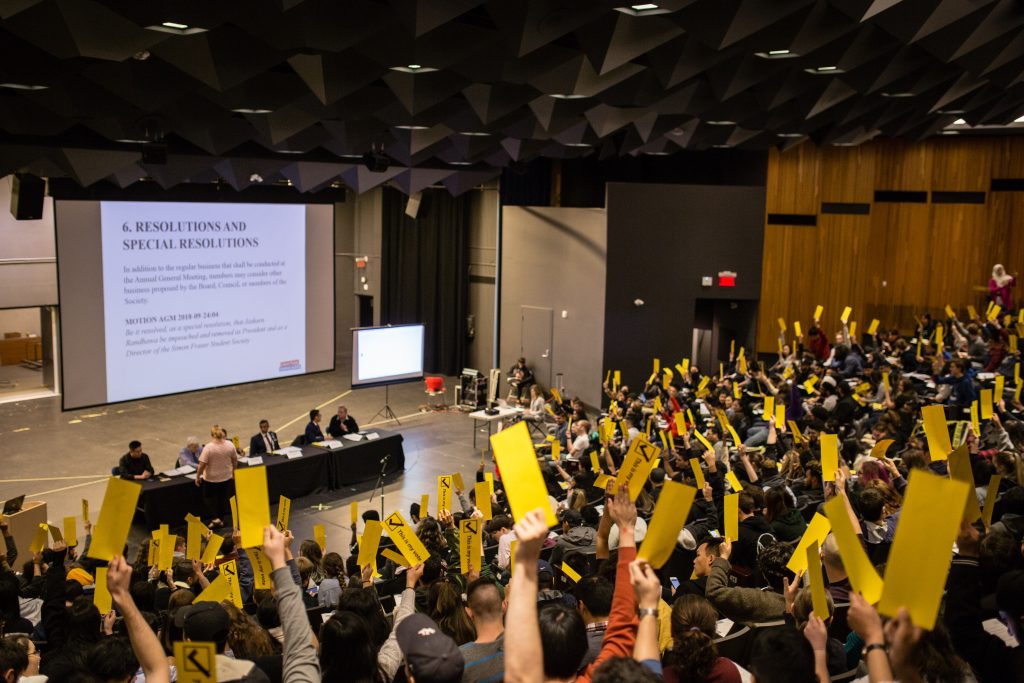
     On September 25, the student society’s AGM took place at the Leslie and Gordon Diamond Family Auditorium. Prior to the meeting, a smoke bomb was set off on the premises. Campus security and firefighters were called to clear the scene, delaying the meeting by three hours.

     After the smoke was cleared out, the student society presented its yearly report to its membership as well as casting votes on the special resolution to impeach Randhawa. Two-thirds of the membership voted to remove Randhawa as president.

2018 Fall Kickoff concert is cancelled . . . a replacement barbeque is held instead at UBC

The SFSS wanted to book the Convocation Mall on September 21, 2018, to hold the Fall 2018 Kickoff concert. However, the university had already leased a place adjacent to Convocation Mall where an independent Meeting, Events, and Conference Services (MECS) event was taking place, according to a previous Peak article. MECS and SFU’s Safety and Risk Services deemed that it was not possible to host the two events simultaneously.

     The university offered the SFSS alternative dates to book the event, but the SFSS board of directors believed that these dates would lead to lower student turnout, making the event a large enough net deficit for the society’s budget that they would be unable to hold other student-life events throughout the year. Therefore, the student society decided to cancel the 2018 Fall Kickoff concert.

     Nancy Johnston, vice-provost students and international stated that in order to avoid encountering the same situation in the future, the SFSS should start meeting with the university’s “event planning folks [in April] and not June or early July.”

     Following the cancellation of the Fall Kickoff concert, the SFSS shared with its membership that the student society would partner with the Alma Mater Society (AMS) of UBC to host AMS’s Welcome Back BBQ. The student society expressed that this “partnership was the best alternative for our members given the circumstances.”

SFU’s safety, security, and mental health policies and protocols questioned following incidents on campus

On October 3, 2018, a violent event broke out in a classroom in the Robert C. Brown Hall. Ashley Lee, who was one of the students at the scene, stated that there was an upset student from another class entering her classroom. This upset student began to throw chairs and tables at Lee’s classmates, injuring a student.

     In a public Facebook post that Lee created, she shared: “I have since discovered that there aren’t locks on any of the classroom doors at SFU (at least none that I have seen) [sic].” According to a previous article written by The Peak, many of the doors at SFU cannot be locked or unlocked without a key.

     After the incident, according to Lee’s Facebook post, a security officer and a psychologist from SFU Health and Counselling visited the class and told the class that “the situation wasn’t that bad and [the students] were all overreacting.”

     Tim Rahilly, SFU vice-provost and associate vice-president, students and international, said in an interview with The Peak that based on the students’ feedback and social media posts, the university reached out to the affected students individually to provide support.

     On October 12, 2018, the university released a public statement addressing the incident. Lee said that: “I’m glad [SFU is] finally reaching out but it’s upsetting it took this long and required a bit of a fight [. . .],” according to a previous Peak article.  

     Two weeks after the campus violence incident, a medical emergency took place at Burnaby campus. The student was in his late 50s, and upon noticing his discomfort, Campus Public Safety was called.

     Rahilly confirmed in an interview with The Peak that despite the medical treatment provided, the student passed away at the scene on October 17, 2018.

     In light of the event, Rahilly sent out an email to SFU students on behalf of the university, advising students to contact Campus Public Safety first prior to calling 911 in cases of emergencies. Students, however, expressed their concerns regarding this policy. Some students have posted on the r/simonfraser subreddit, alleging that campus security is slow to respond, and that they are not properly trained in dealing with medical emergencies.  

     Rahilly explained that because Campus Public Safety personnel knows the layout of SFU better than external emergency services, it is faster if SFU students contact Campus Public Safety first so they can direct the emergency services personnel to the exact location. Rahilly also noted that the institution did not have a policy in place for a medical emergency during an exam. “This is to my knowledge the first time that this has happened in an exam at SFU,” he shared.

     Following this incident, SFU held an internal debrief of the situation in terms of the university’s practices and responses. In addition, in light of both this event and the violent incident in October, the institution is putting together a larger review regarding campus safety and security.

A new pub is coming to SFU Burnaby

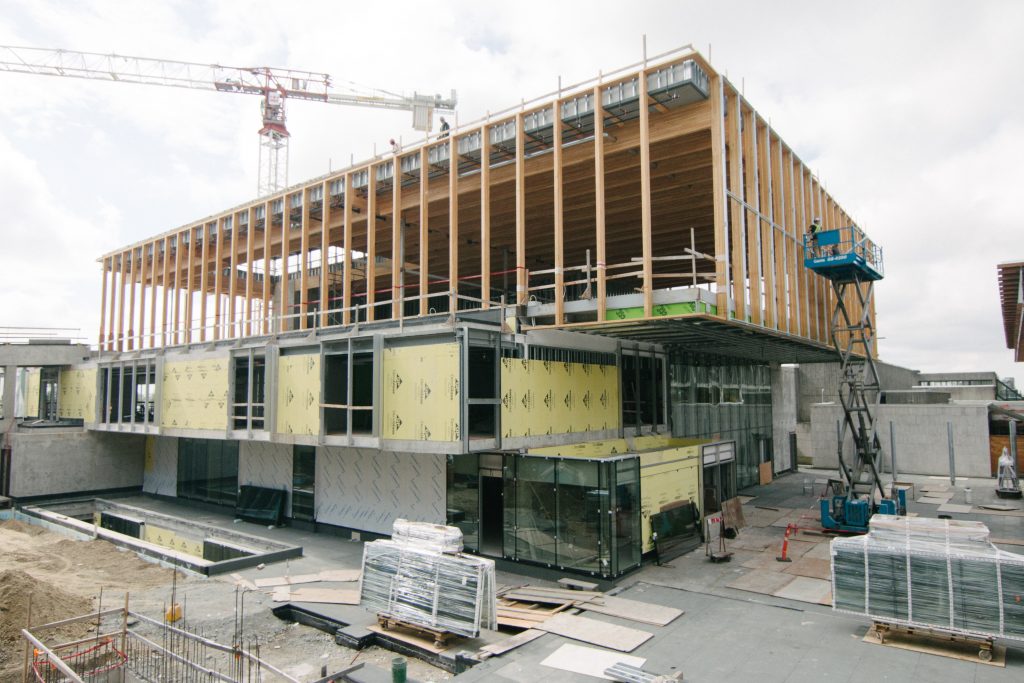
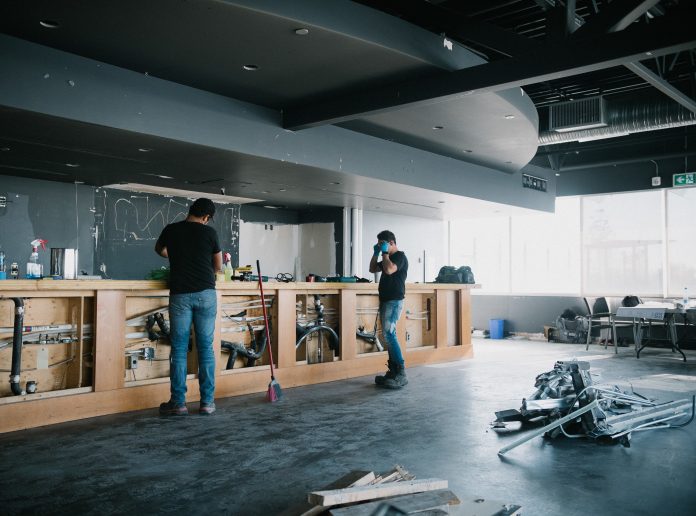
The Study Public House is the new pub that will take over the Highland Pub’s old space in the Maggie Benston Centre. It was originally scheduled to open in late 2018; however, this was delayed as the space is still undergoing extensive renovations.

     The new pub is managed by Joseph Richard Group (JRG), a hospitality organization that operates in both B.C. and Alberta. JRG will also be providing SFU with another catering service option, called Blank Canvas Catering, under MECS, according to a previous Peak article. Currently, Sodexo is the only catering service available at SFU under MECS.

     According to Mark McLaughlin, chief commercial services officer at SFU, the new pub will have a bar as well as an arcade space for its clients, including vintage pinball machines, ping-pong tables, and shuffleboard games.

     The new pub will be able to accomodate 330 individuals indoor and 82 on the patio — a much higher capacity than what Highland Pub previously had. Once the SUB opens, the capacity of the patio is expected to increase even more because there will be a new fire exit added to it. There will also be a designated area on the patio where smoking is permitted, with the exclusion of cannabis smoking.

     The pub is tentatively scheduled to open Monday – Sunday from 11 a.m. to 1 a.m., but this is dependent on how much business the pub gets, according to a previous article written by The Peak. Entry to the pub will be restricted to students who are at least 19 years old due to its liquor license. Student organizations will also be able to book pub nights in The Study Public House.

SFSS introduces new services to membership

Starting January 2, 2019, Fraser International College (FIC) students will have access to services such as Out on Campus, the Women’s Centre, food bank services, free legal clinics, and other SFSS-provided services. This is based on the new partnership between the SFSS and FIC that was agreed on back in April 2018.

     The exact cost of the services for FIC students is still being determined, but a small amount of their tuition fees will be used towards the services provided by the SFSS, according to a previous Peak article.

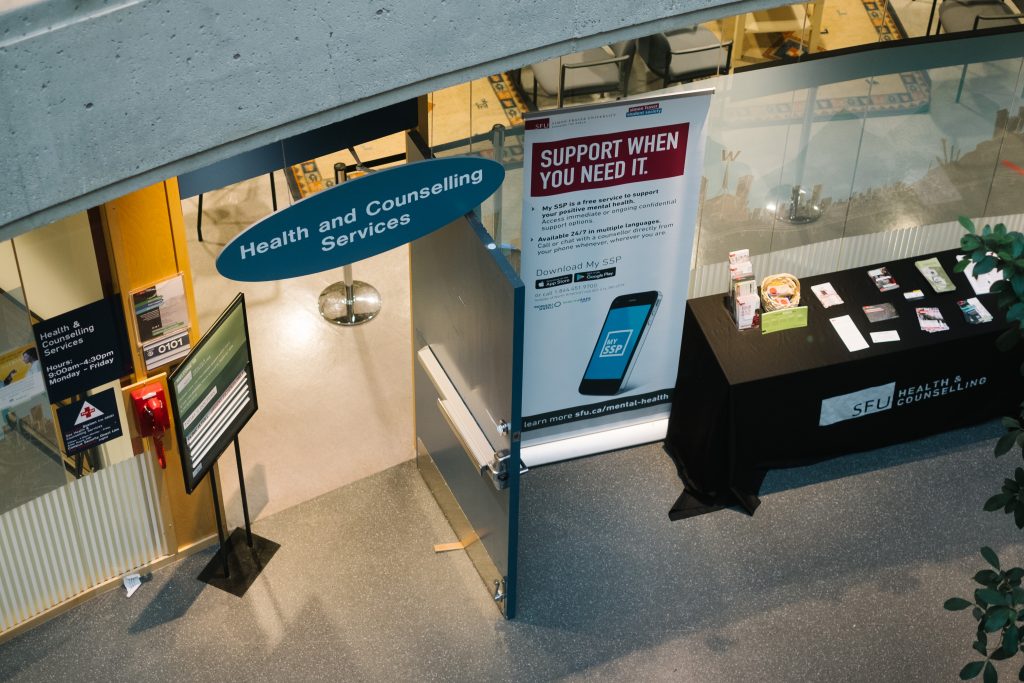
     On August 1, 2018, another new service was introduced to SFU students. SFU and the SFSS launched a multi-platform mental health and support service, titled keep.meSAFE Student Support Program (SSP). This is a two-year pilot project between the university and the student society to provide additional support and service for students regarding mental health.

     SSP is offered online and is integrated with the Health and Counselling Services of SFU.

SFU grad student develops crop imagery tool to help farmers monitor their harvest

0

Written by: Sugandha Agarwal, News Team Member 

This article was updated on 01/16/19 to reflect the change that Thind teamed up with professor Beg after the company was established.

In 2016, Gurman Thind, an engineering graduate student from SFU  established the company Beriqo Inc, later teaming up with SFU professor Faisal Beg. The company is set to launch a new crop imagery tool, an imagery management system (IMS) that uses satellite imagery to visualize agricultural crops, in spring 2019.

     “The IMS is a satellite imagery database and projection system which provides 24/7 access to fresh and archived images with timestamps,” Thind explained in an interview with The Peak. “Farmers can analyse and compare crop health using fresh and archived images for a growing season.”

     According to an SFU press release, the software collects “weather data from thousands of land-based stations in the U.S., Canada and Brazil”, at the same time, sifting through thousands of satellite images to create a repository. The resultant visual data along with growing degree days (GDD) data (a measure of how much heat is available for growing crops) can then be viewed on a single GPS-embedded platform.

     Compatible with a multitude of devices such as mobile phones, Thind further explained to The Peak that “farmers can create an account and access all built-in application on a single SaaS (Software as a Service) platform. The platform has a secure authentication process and e-commerce system.”

     The new IMS platform will allow farmers access to a “decision analytic toolbox, assisting them to disperse chemicals effectively to the right field areas — reducing excessive fertilization and greenhouse gas,” according to a media release by the university. Up-to-date data from the IMS will also help farmers save water by scheduling irrigation.

     Thind said that growing up on a farm in India, he had always wanted to combine his engineering background with farming. After moving to Canada to finish his bachelor’s degree, Thind started to think of ways to achieve this goal. He began by interviewing farmers across the Canadian prairies, and he discovered that there was a need for sustainable farming practices.

     “Carbon emission [is] high and agriculture results in 13 percent of global emission. Our technology will help farmers in reducing the use of excessive fertilizer input which results nitrous oxide emission,” says Thind. He also explained how the data from the IMS can help farmers with scheduling irrigation, and therefore save water.

     Referring to the challenges Beriqo Inc. faced in the early stages of developing the IMS, Thind says that “the important part was understanding how users will interact with the system, and this resulted in well-defined goals”. Nevertheless, he acknowledges that new innovations always come with a degree of risk, and he is excited about Beriqo’s projects for next year, both of which have to do with the use of artificial intelligence in agricultural technology.  

     With files from SFU News.