Home Blog Page 587

Advocacy groups contest Canada’s new impaired driving laws

1
Image courtesy of Trevor Hagan/ via Winnipeg Free Press

Canada’s new and stricter impaired driving laws have been in effect since December 18 and have since received opposition for unfairly targeting visible minorities.

The bill raises maximum penalties for impaired driving offences, disallows drivers from being at or over the prohibited alcohol level within two hours of driving, and gives police full discretion to administer breathalyzers without reasonable suspicion that the driver is intoxicated.

The Canadian Civil Liberties Association has expressed their concerns with this law to the House of Commons. A post on their website explains that they “voiced particular concern about the impact that random breath testing will have on individuals who come from minority communities.” Along with the CCLA, other formal complaints have been filed by the BC Civil Liberties Association and the Union of BC Indian Chiefs.

June Francis, director of the Institute for Diaspora Research & Engagement at SFU, said in a phone interview with The Peak that “the reason there is a problem with this law is primarily [that] the law gives much more discretion and leeway for the police to demand mandatory breathalyzers from people. In other words, it gives the police discretionary power.”

This is problematic, Francis says, because of the significant and growing evidence that the Canadian police have exercised their leeway “to the detriment of certain visible minority groups.”

Police data between 2008 and 2017 show that Black people and Indigenous people are overrepresented in Vancouver police checks. Francis believes that the new law could amplify this disproportion.

Francis explained that not only are Black people and Indigenous people stopped more often, but police are more likely to escalate these encounters.

“We are already suspected [ . . . ] we tend to be dealt with harsher, we tend to not be able to defend ourselves in any way, so that means that we’re vulnerable to more violations of our rights,” said Francis.

She added that it is not just about the inconvenience of being stopped by the police, but the fact that certain visible minorities are subjected to abuse and are more likely to be hurt.

According to OurWindsor, spokesperson for the RCMP Sgt. Maria Damian announced that the RCMP follow a “bias-free policing policy,” which involves the “‘equitable treatment of all persons’ regardless of race, religion, gender or ethnic background.”

Global News reported Organized Crime Reduction Minister Bill Blair’s take on the issue, summarizing his view that “if a police stop were motivated by bias, it would be unlawful and contrary to the charter, and therefore a breath test would be inadmissible in court.”

After The Peak asked Francis for her opinion on this, Francis noted that “we don’t have the tools to extort that notion of non-partiality [ . . . ] that is a [disingenuous] argument to make because we cannot prove bias easily.”

Justice Minister Jody Wilson-Raybould said to the Globe and Mail that “the intent is to save lives, and this is an incredibly justifiable purpose,” and noted to Global News that the law is consistent with the Charter of Rights and Freedoms.

While Francis acknowledges that “we all collectively understand the need to think about safety on the road,” she believes that the notion of reasonable suspicion must exist, because “when you start to give police carte blanche, you are [ . . . ] opening it up to abuse.

“This problem is not just a problem of the racialized communities. This is a problem for all Canadians to defend us.”

  With files from Global News, The Star Vancouver, the Canadian Civil Liberties Association, CTV News, Our Windsor, and The Globe and Mail.

The search for a new SFSS Executive Director begins

0

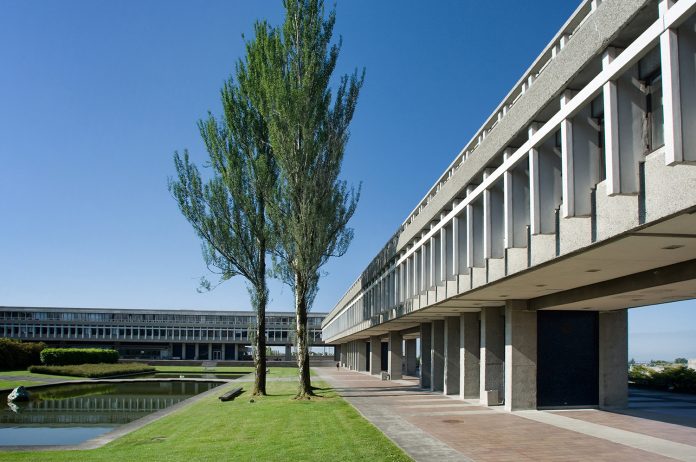
On January 8, the Simon Fraser Student Society (SFSS) held a consultation with students on what the required qualifications should be for the new SFSS executive director (ED).

Present at the meeting was Tony Kirschner, partner of Leaders International Executive Search Firm. Kirschner explained that the hiring board and SFSS board members were not present at the consultation to allow students to speak freely and “without a filter,” and that all the feedback given would be anonymously relayed to the hiring board.

When asked what characteristics the new ED should have, Giovanni Hosang, president of the SFU Students of Caribbean and African Ancestry (SOCA) said they should be honest, transparent, easy to contact, and should be someone “who is not condescending.”

Graduate student Teresa Dettling expressed the importance of taking an anti-racist approach, as opposed to the multicultural framework that the board currently operates under.

“[SFU is] a campus that’s starting to embrace more anti-racism versus multiculturalism [ . . . ] if an individual doesn’t even know what the difference is and doesn’t know what the critiques of multiculturalism are, then they’re going to come to the job with a deficit.”

Elisha Cooper, member of SOCA, said, “the previous person had character flaws that made it really difficult for him to do his jobs effectively . . . we need somebody who is open and sees the importance of engaging marginalized groups on campus.”

Sheldon Bond, a First Nations student noted that currently “there seems to be a general lack of accountability” in the SFSS, which needs to be addressed by the new ED.

“One of the big problems now is that, to be honest, the student society has been getting much more corporate than the university,” Hosang said, adding that he hopes for someone who comes from a student union environment, rather than a corporate background.

To this, Kirschner explained that they are only searching within two different pools of candidates: those coming from a background of student union leadership and others with a non-profit background.

“. . . we need somebody who is open and sees the importance of engaging marginalized groups on campus.” – Elisha Cooper, member of SOCA

SOCA member Flourish Adeogun described her ideal ED as “open-minded and [ . . . ] willing to take in new ideas and to really hear what we as students have to say.”

Adeogun said that the new ED needs to acknowledge the past issues with the SFSS before trying to move forward. “We still feel like we’re not being heard and that the issues that we had in the past are not being addressed,” she said, noting that it is important to not have someone who comes in with a fixed plan of how to solve the problem, but rather an “open agenda.”

Kirschner responded that they believe the candidates who are not willing to fix the current situation will filter themselves out during the hiring process. He said that they are specifically looking for a person who “loves messes.”

Kirschner announced that they will hold an event where the top few ED candidates will deliver a presentation about how they intend to do their job, following which students will have the opportunity to ask questions and give feedback. Various students brought up the fact that this should not be scheduled during a time when many classes take place.

Dettling’s ideal vision of SFU involves “different student groups all working together [ . . . ] a lot can be done for all students at SFU if everyone is working together [ . . . ] if one group is silencing and trying to be dominant, it’s not going to work.”

Similarly, Hosang hopes that the new ED will “consult early and consult often.”

Senate Report

0
(Photo from Peak archives)

Senate temporarily discontinues certificate in liberal arts

Simon Fraser University senators unanimously voted to suspend admission to the certificate in liberal arts program, starting summer 2019.

The certificate in liberal arts program is currently offered by the Faculty of Arts and Social Sciences (FASS) and students from any faculty can get this designation upon successful completion of 10 courses (30 units) from a specific list of defined courses.

According to a senate report, the certificate began to be offered in 1993, with as many as 332 students graduating with it in 2005, but from 2008 and onwards, there has been a steady decline in its enrolment rates.

“This is one of the few certificate programs that has really significant [enrolment] . . . The documentation says that there has been a great drop, but even with the drop level, it’s still quite a higher uptake than many of the other certificates,” commented senator Daniel Leznoff.

Catherine Murray, associate dean undergraduate academic programs and enrolment management of FASS, said that FASS is halting the program because the faculty wants to conduct an in-depth review of how the certificate needs to be adjusted to better accommodate the student demand.

“We’re planning to revive this [certificate] and the discussions to do so . . . will be underway in February,” said Murray.

Senate approves new high school admission requirements for fall 2020

Starting in fall 2020, high school students will be able to use the course Life Sciences 11 (formerly Biology 11) to meet the science 11 requirement for numerous faculties at SFU. This includes Arts and Social Sciences, Beedie, Education, Health Sciences, Communication, Arts and Technology, and the BA and BEnv programs in Environment.

However, for the Faculties of Science, Applied Sciences, and the BSc in Environment, the only required course(s) will be physics 11, chemistry 11, or the combination of both, depending on the particular program that the students apply to, according to Rummana Khan Hemani, registrar of SFU.

Khan Hemani noted that these decisions were made at the faculty level. The faculties determined which courses they deemed as the most relevant prerequisites for their programs, she explained.

According to the senate report, there are a great number of new courses that high school students can now use to apply to SFU, many of which were not counted for previous academic years. Leznoff asked: “There’s a huge number of new courses that didn’t exist before . . . Have they been vetted?”

Khan Hemani explained that all of these new courses have been assessed by the appropriate department, school, or faculty, depending on the course, and in some cases, the courses have just changed in name. Khan Hemani also noted that despite the inclusion of these new courses, there are still a lot of courses that are not used for admission.

Senator Colin Percival also commented that when a new curriculum is developed, the grading tends to be far more diverse compared to courses that have been offered throughout the entire province for many years.

“I’m wondering if the university has any idea on how to deal with the [ . . . ] much greater grading differences we see between schools than we might see in the past?” said Percival.

Khan Hemani said that it will take the university some time, approximately two to three years, to determine how to deal with the potential grading differences that might exist between high schools. The university will be looking for any potential trends, differences in terms of grading across schools, and how students perform when they enrol at SFU, she explained. However, Khan Hemani noted that it is still too early in the process to be able to answer this definitively.

SFU women’s basketball rebounds against Concordia University

0
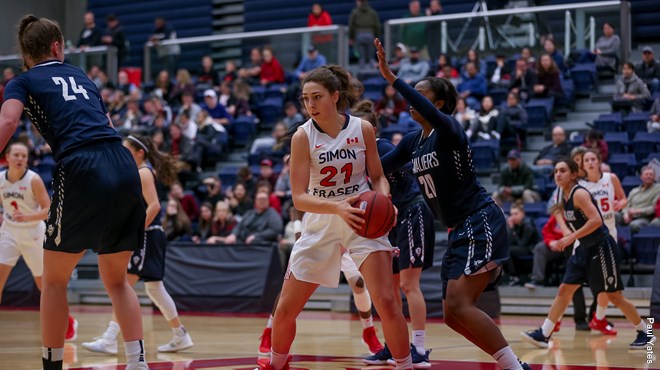
Sophie Swant led the Clan with 14 points. (Photo courtesy of SFU Athletics)

On Saturday, the SFU women’s basketball team looked to bounce back from a tough loss against Western Oregon University, hosting Concordia University at the West Gym. While the Clan still struggled shooting from the field, a great defensive effort and a strong second half made the difference.

SFU continued last game’s shooting slump into the first half of this one, shooting 10–29 from the field and 1–9 from behind the arc. Despite this, the team was able to keep the game close. By the end of the first quarter, the Clan were down 16–14.

Their struggles continued into the second quarter, and they found themselves down five heading into the break. Concordia’s Olivia Vezaldenos stood out in the first half, playing all 20 minutes and leading all scorers with 14 points.

The Clan started to heat up in the third quarter, going on an 11–0 run near the end of the third quarter. Behind this, the Clan would go into the fourth up 48–44.

The Clan maintained their lead in the fourth quarter, behind excellent free-throw shooting down the stretch. Taylor Drynan and Sophie Swant combined to go 8–8 from the line in the last few minutes of play, closing out a well earned victory for SFU.

Slowing down Vezaldenos was key to the Clan’s second-half success, as they forced her to shoot 2–11 from the field (both makes coming from three). Concordia only shot 32.1% as a team in the second half, while also being forced into 12 turnovers by SFU’s smothering defence.

SFU are still struggling from the field as a team, shooting only 35.7% (20–56) from the field in this one. The story is the opposite from the free-throw line, however, as the team shot an excellent 84.6% (22–26) in the game. If the threes start falling as they should, this team has the potential to cause a lot of problems in the GNAC.

With the win, the Clan are now 3–3 in the GNAC this season, and 7–6 overall.

Peak player of the game: Sophie Swant

For the Clan, Sophie Swant led the way with 14 points, most of which came from the free throw line, where she went 10–10. She also led the team with eight rebounds and three steals. Her defensive intensity was a key factor in the team’s success.

What’s next:

SFU will play their next two games on the road against Saint Martin’s University (1–5) and Seattle Pacific University (3–3) on Thursday, January 17 and Saturday, January 19.

Political Corner: Brazilian president Bolsonaro is an active, frustrating example of authoritarianism

0
Photo by Ricardo Moraes / Reuters

Written by Kelly Grounds, Peak Associate

On January 1, Jair Bolsonaro took office as Brazil’s 38th president, capturing global attention with his hard-right stance, Brazil-first attitude, and infamy for being stabbed at a September campaign rally.

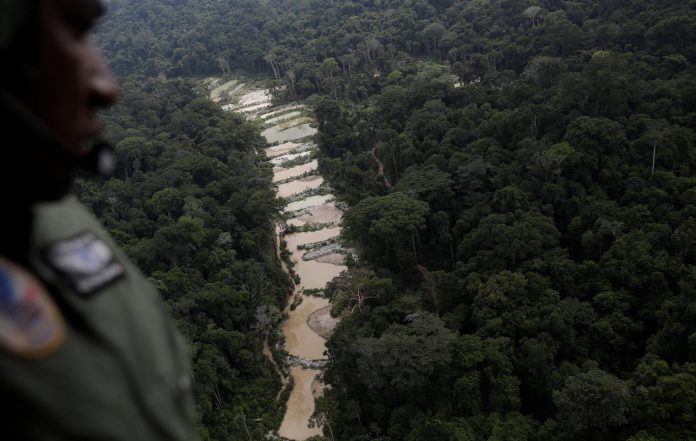
Since taking office, Bolsonaro has begun working towards his campaign promises. First, Bolsonaro has already pulled Brazil out of hosting out the 2019 United Nations climate change summit. This could potentially be the first act to diminish Brazil’s efforts to decrease their impact on climate change, made all the more worrisome by recent years’ increase in deforestation of the Amazon rainforest. This, coupled with the disdain Bolsonaro holds for political activism, has led many ecological activists to feel unsure about their ability to change things.

Bolsonaro also won on a platform that focused on anti-corruption in the Worker’s Party, but he’s felt far from it in the government he’s maintaining. Already, 300 civil servants are expected to lose their jobs based on their opposing political ideologies. This is following several military figures and sympathizers taking positions of power since October, reminding Brazilians of their military dictatorship during the mid-20th century.

Despite being in office for less than a month, Bolsonaro has already made a lot of troubling marks on Brazil and the world. From what the world can tell, it looks like Brazil is the latest country to join this hostile right-wing political trend.


SFU stadium is finally on its way

2
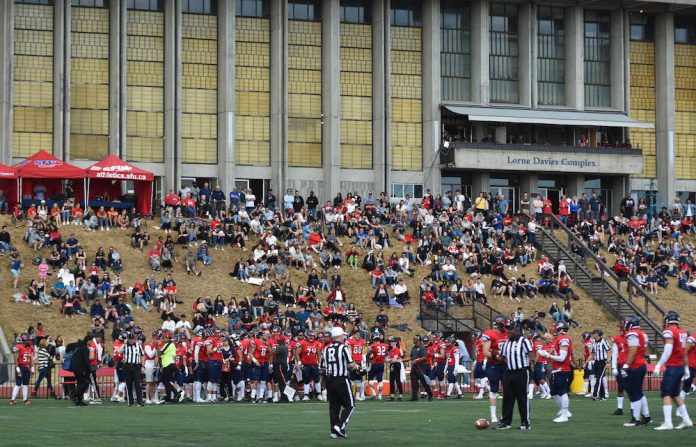
The proposed stadium will turn the grass berm into 1,820 seats, with two thirds of the seats being covered. (Photo courtesy of SFU Athletics)

On December 12, roughly one month ago, Howard Tsumura from Varsity Letters reported that the SFU stadium project was finally given a green light. It’s a project that has been discussed for a long time now, and one that will definitely enhance the athletic experience for both SFU athletes and SFU athletics fans. Here is what we know about the project, a timeline for its preliminary steps, and when we can tentatively expect it to be completed.

Early 1990s — Stadium idea to host football games at SFU first reaches stage of artist renderings.

April 2017 — SFU unveils stadium plans

More than a year and a half ago, SFU announced the stadium project’s first phase. At the time, the project was expected to be completed by April 2020. A student levy from the SFSS between the years 2019–30 was presented as the main contribution towards the construction of the project, totalling $10 million. SFU also stated that the university would absorb any additional costs. The projected was presented as a student initiative, since students voted for the construction of the stadium and the student levy that would provide the funding.

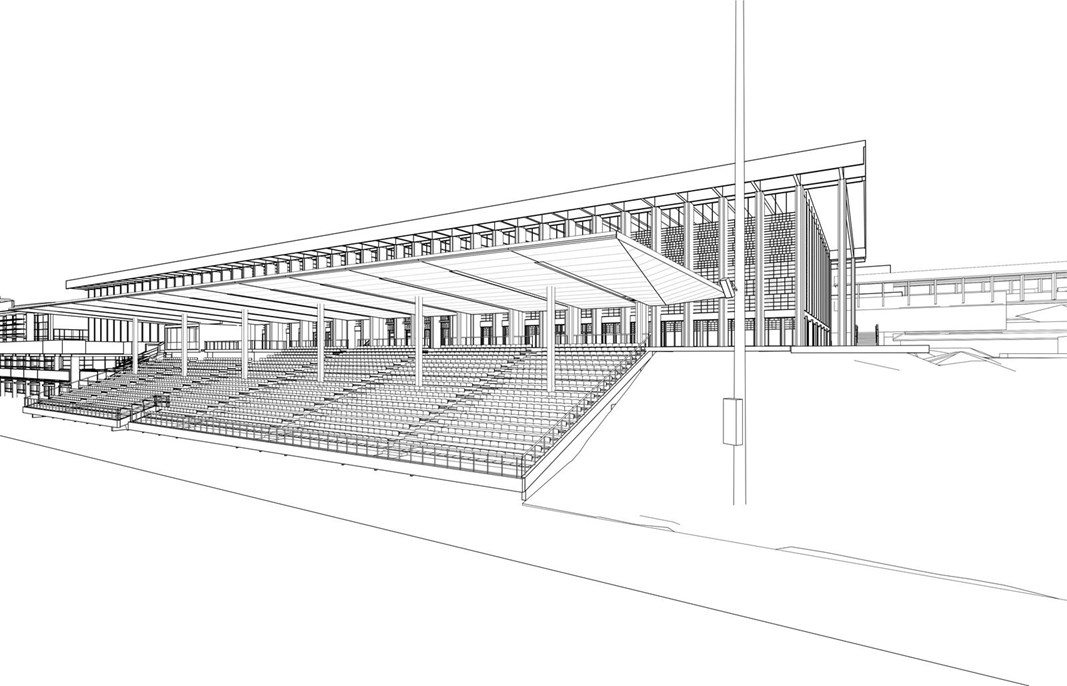
The proposed stadium unveiling from 2017. (Photo courtesy of SFU Athletics) 

December 2018 — Howard Tsumura reports that stadium project was given green light

January 2019 — Shovels are expected to break soil for stadium project

January 2019–Summer 2020 — SFU football, SFU men and women’s soccer, and SFU track and field will not be able to host events on Burnaby Mountain.

For SFU football and soccer, this means not being to play the 2019 season at our home campus. For SFU track and field, this means having home events away from Burnaby Mountain during the 2019 and 2020 seasons, since their seasons take place in the spring.   

Summer 2020 — Stadium project aiming to be completed by training camp for SFU sports teams  

What we know about the project so far:

Need for an improved venue

If you’ve attended an outdoor SFU athletics competition on Burnaby Mountain, you can understand the need for change. On rainy days, which make up most of the fall and therefore most of the SFU football and soccer seasons, fans are discouraged from attending the events.

With an SFU men’s soccer team that was ranked #1 in the nation for much of the 2019 season, an exciting SFU women’s soccer team, and a SFU football team that looks to be turning their fortunes around under Thomas Ford, this is unacceptable. While the SFU men’s soccer team were undefeated last season, there we games in which there were nearly as many people participating on the field as there were people watching due to a lack of cover for fans.

The proposed stadium plans should fix this issue and encourage fans to attend SFU sports events no matter what the weather is like. Even on days with good weather, having fans sitting on a grass hill hardly seems like a proper way to celebrate the only NCAA team in Canada. While the stadium isn’t the flashiest of designs, it will go a long way in legitimizing SFU as a NCAA team.

Construction

If you think there’s a lot of construction on campus already, there’s only going to be more. The project has been given an 18-month timeline, which it can hopefully abide by. SFU track and field is already guaranteed to be spending two seasons away from home, while the SFU football and SFU soccer teams will play at a different venue in 2019. As stated by Hanson, the temporary venues for these teams have yet to be decided.

If the construction of this stadium takes longer than expected, the SFU football and soccer teams may be forced to play a second season away from Burnaby Mountain. Given SFU men and women’s soccer’s recent successes, and the quick improvements from SFU football with their new head coach, this time away from Terry Fox Field may be discouraging for SFU athletes and fans. Let’s hope there isn’t another SFU Student Union Building situation here.  

Cost

Initial projections have the stadium costing roughly $15 million. As was stated back in 2017 by SFU Athletics and recently echoed by Theresa Hanson, senior director of Athletics & Recreation, to Tsumura, SFU students will be contributing $10 million towards this project.

Breaking down the math (assuming that the student contribution will come through the student levy discussed in 2017), the SFU student body will be contributing roughly $830,000 a year towards this project for 12 years. With roughly 30,000 students, this breaks down to less than $30 a year for each student. These are estimates, but they should give you an idea of what you are contributing towards this new stadium. The Peak reached out to Hanson about the student contribution towards the stadium, but did not get a response in time for publication.  

“The biggest part of this is that it has been a real collaborative effort with our students,” said Hanson to Tsumura, before adding, “They are contributing $10 million to this stadium and I am proud to say that they can see the value of what we are doing to enhance the entire student on-campus experience.”

SFU recently agreed on a five-year partnership with Nike, officially naming the company as SFU’s exclusive supplier for varsity and club sports uniforms and apparel, which could potentially contribute towards the cost of this project. SFU also has the ability to sell the naming rights to the proposed stadium.

Seating

The stadium is projected to provide seats to 1,820 people along the side of Terry Fox Field closest to the SFU gym. The grass berm that occupies this side of the field provides a very rough example of how the seating pattern might follow. About two thirds of these seats will be under cover in the middle section, while 300 seats will be uncovered on either side of this section.

“There is still the option to use portable seating at the end zones, and if we need more seats, then that is a great problem to have,” said Hanson to Tsumura. Given that there hasn’t been much in terms of seating surrounding the field already, this is unlikely to be a problem any time soon.

Celeste is part-puzzle labyrinth, part-masterpiece

0
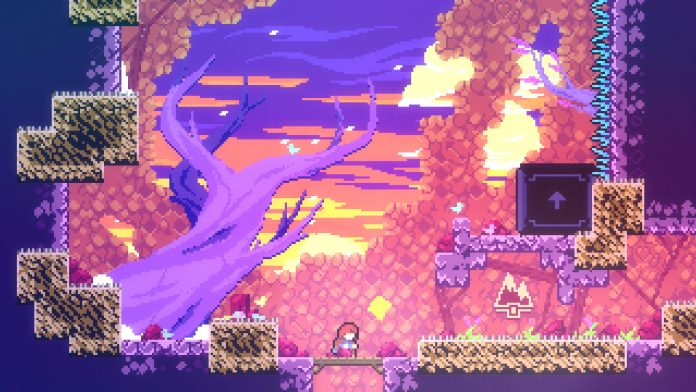
Image courtesy of Gamespot

By: Winona Young, Arts Editor

Mountain climbing has never been so adorable — and unbelievably challenging.

Made with a lot of love and effort from a small team of indie developers, Celeste is a video game that has captured the hearts (and frustrations) of many. Users play as a young woman, determined to climb Celeste Mountain, dodging dangerous heights, kooky characters, and more.

When users begin Celeste and press A to continue right, the game surprises you by not only having its maze of levels extend upward, downward, and all other directions, but it only allows gamers to continue forward in the game without falling to their death, otherwise, they need to restart entire levels all over again.

Despite this, the game’s creators understand that some gamers may have difficulty with such obstacles. Therefore, they enabled “Assist Options,” wherein gamers can adjust their level of stamina, their ability to jump, and most importantly, their invincibility (which, yes, literally means you can play without dying for however long you would want.) This just goes to show that Canadian developers Matt Thorson and Noel Berry not only made a good game, but made sure it would be a good game for everybody. (For any pro gamers out there, the menu even includes a speed running clock to be visible on screen while you play!)

In terms of game design and world building, Celeste impressively boasts uniquely complex levels and little quirks/obstacles to match. This makes it a perfect balance of a challenging game, but one that is well-designed rife with great storytelling.

  Celeste dives up into a magical world in the mountains, as the protagonist meets more characters, finds out more about herself and her anxiety, and the more about the mountain she’s climbing itself. While the dialogue may be sparse, when it does happen whether it’s between you and an antsy shopkeep or a selfie-loving hiker, the dialogue is lively, hilarious, and slowly reveals an even more intricately rich story.

As for the aesthetics of the game, Celeste is bright, brilliant, and unbearably charming with its classic eight-bit pixel style. Each level and stage are more inventive than the next, and the soundtrack to match.

Overall, Celeste stands as a powerhouse of a game amongst its indie competitors. And for anyone looking for a good game, no matter what your power level, Celeste is gonna take you on a hell of a hike.

Five Vancouver-based tattoo artists you need to know about

2
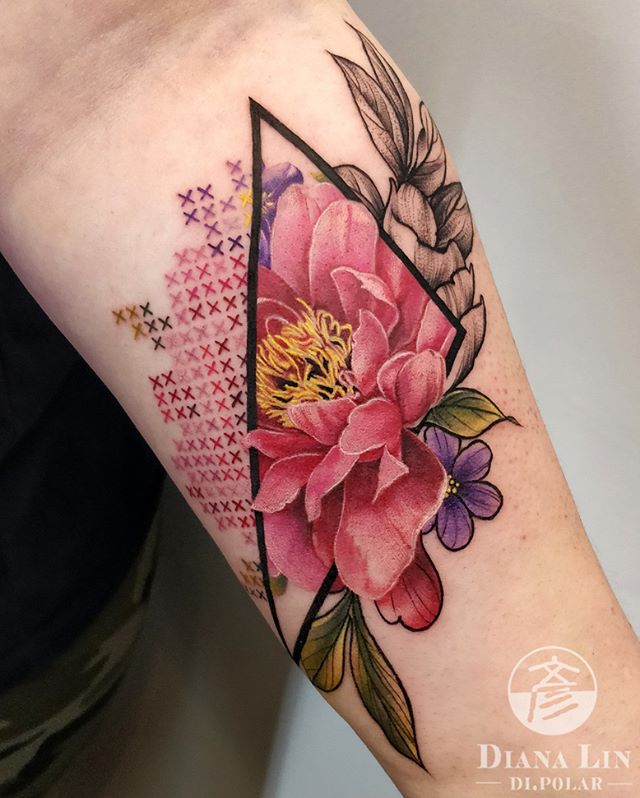
Image courtesy of Diana Lin via Instagram

By: Victoria Lopatka, Peak Associate

If you’re living in Vancouver and you want a tattoo, you’re in luck: there’s dozens of parlours and hundreds of artists you can pick from. Whether you’re getting your first tattoo or adding to a collection, any of these artists can help you adorn your skin with a new piece of art.

Below, I list five Vancouver-based artists that I think deserve recognition – specializing in florals, animals, realistic renditions of people, minimalist and abstract designs, and more – as well as all the details you need to book an appointment.

  • Diana Lin (@di.polar)
    1. Works at: Liquid Amber Tattoo Parlour
    2. Speciality: realistic florals
    3. Status: Open to booking

Diana Lin’s realistic floral pieces will leave you breathless; her works look like you could pluck them right off the skin. Her Instagram is full of lush succulents, colourful roses, and breathtaking bouquets. She also enjoys doing animals, insects, food, and dark designs.

Diana’s been tattooing for about one year and eight months (though her art looks like she’s been tattooing for much longer) and can currently be found in Gastown. Lin’s hourly rate is $160 per hour, so the total cost of a tattoo will depend on its size and detail.

To get in touch with Diana, email Liquid Amber Tattoo Parlour — I know I’ll be doing so.

  • Genevieve Caron (@cockadoodle.doo)
    1. Located at: Imperial St. & Kingsway
    2. Speciality: colourful pieces
    3. Status: Open to booking

If you want something neon and bright, Genevieve is the artist for you. Her Instagram is full of animals and women in beautiful aqua, green, pink, orange, and yellow hues. I’ve never seen bats look so adorable. If you look closely at some of the designs, though, you’ll notice she puts a spin on some classic images, like mixing a chick-a-dee with a gryphon, or . . . is that a vagina on a pineapple?

Caron has been tattooing for several months now. Customers can get in contact with her to find out her pricing and set up an appointment at [email protected].

  • Steve Dunford (@stevedunford)           
    1. Works at: Tradewinds Tattoo Co.
    2. Speciality: hyperrealism
    3. Status: Open to booking

Have you ever seen pictures online of horrible “realistic” renditions of photographs of kids, celebrities, and family pets? Those people obviously didn’t go to Steve. His pieces, which range from celebrities to fictional characters to animals, are all perfectly shaded, proportionate, and extremely detailed. You don’t need to read the caption to know the famous faces Steve is tattooing on clients; he’s just that good at what he does.

Steve is the co-owner of TradeWinds Tattoo Co, and can be contacted at [email protected]. His hourly rate is $160 per hour, and many of the detailed works featured on his Instagram take upwards of three hours.

Be sure to ask him about his adorable pug, Louis, when you sit down for some fresh ink with him.

  • Mackenzie Evanjeline (@indigo_evolution)
    1. Works at: The Northern Tattoo
    2. Speciality: fine and delicate lines
    3. Status: Closed to booking

Miniature and delicate tattoos have been all over social media lately, and some of your favourite ones have probably been done by Mackenzie, otherwise known as @indigo_evolution on Instagram. Her over 8,000 followers follow her page to see her fine-line tattoos of florals, insects, animals, landscapes, and occasionally, a really pretty selfie.

As with many artists, don’t DM her with inquiries. Instead, questions about pricing and booking inquiries can be directed to Mackenzie through the The Northern Tattoo website. Pro tip: bring her a vegan treat when you go to get inked!

  • Yi Stropky (@chinatown_stropky)
    1. Works at: in Vancouver for December–February
    2. Speciality: quirky and minimalist ink
    3. Status: Closed to booking

@chinatown_stropky has over 131,000 Instagram followers and for good reason: their style is unlike any other artist on this list. Their tattoos are minimalist and abstract, often a few simple lines, using mostly black ink, but incorporating accents of red occasionally. Some of their tattoos cheekily toe the line of sexuality: a bra hanging off someone’s foot, a delicate red line that looks like two people kissing each other, a bikini bottom, and more.

To get in touch with Yi, email [email protected].

After the SFSS Executive Director consultation, there’s room for hope

0
Photo courtesy of SFU

Written by: Gene Cole, Opinions Editor

On January 8, the SFSS held an open consultation for students regarding the hiring of the new Executive Director (ED), a newer variant of the old CEO role. For those who don’t know about this particular odd role, it’s essentially a non-student staff member who guides and oversees the SFSS’s actions.

This consultation was led by the Leaders International Executive Search, a search firm which the the SFSS has hired to seek applicants for the position. The firm answered questions about their process and asked for feedback on what students wanted from the position. To make it an open space for students to speak their mind, no SFSS representatives were present.

This experience felt surprisingly positive. Members of several different student groups — including Students of Caribbean and African Ancestry (SOCA), CJSF, and Simon Fraser Public Interest Research Group  — attended to give their feedback, and the vibe in the room was a lot more hopeful than it usually is when voicing comments about the SFSS. From my experience in the meeting, and in talking to some of the students who attended, I think we as students can start to hope students have more influence on the SFSS as a whole.

This isn’t to say that the SFSS’s problems are “fixed” after this meeting — far from it — but rather that the new ED may be a point where our relationship with the SFSS could improve.

More accountability with the staff and the board

One of the things echoed by a number of students was that we wanted someone who could take responsibility for the SFSS’s mistakes. Sheldon Bond, a First Nations student who attended the meeting and spoke with the Peak afterward, described the ED’s pressures succinctly; “even though it’s not [their] fault the way things are, it’s still going to be [their] problem.”

Tony Kirschner, a partner at Leaders International Executive Search who was leading the consultation, echoed this sentiment when students brought it up at the consultation, saying they were indeed searching for someone who likes to clean up “messes.” This gave some reassurance that the school and SFSS are fully aware of their situation, and of how much an ED can change how students feel about the SFSS. This meeting did not feel run by a students-second agenda.

An ED who can handle this is something that students have a right to, particularly just before the next SFSS elections. In speaking with The Peak after the consultation, SOCA president Giovanni HoSang described the position as “well-suited to have a structural change,” further stating that the vacant position is “an opportunity to have somebody who is very much aligned with the values of the students at large.”

Greater communication with students, particularly marginalized groups

One of the key issues attendees mentioned was how many student groups were unfairly treated by many student groups when working with the SFSS, particularly those that represent Black and Indigenous students. HoSang mentioned it in his discussion with The Peak as well, stating “we have to make sure the board is listening and fighting on behalf of marginalized groups on campus.” During the meeting, the search firm went as far as to ask where they could see instances of institutional racism towards the student groups.

While this consultation was not intended to focus on these groups, they were predominantly the ones who showed up to demand an ED who supports and actively requests the concerns of student groups. Rachel Gorelick, a production assistant at CJSF who spoke to The Peak after attending the meeting, put it quite aptly. “[ . . . ] So many students on this campus are completely unaware of how these groups and individuals are actually pushing and advocating for students to have the best possible time and best possible life on campus.”

This consultation was a rare kind of SFSS-related meeting we could use a lot more of. The search firm asked follow-up questions, asked about what times the student body might be able to hold similar meetings, and politely requested where they could learn more about the problems students have experienced thus far — all things that shouldn’t feel so rare.

As HoSang put it, “I think was an opportunity to share things for the first time.” With a new ED, it certainly doesn’t have to be the last.

An ability for students to help influence change

There are certainly still concerns about how much this student feedback will impact the decision. The search firm leading the consultation is searching for applicants, but neither they nor the students are the ones who ultimately choose who gets hired. Bond addressed this concern while talking with The Peak, stating how “they get to choose whether to listen to our feedback or not.” Gorelick addressed a similar sentiment, stating how “obviously there’s so much more that could be done.”

Nonetheless, this consultation was a positive experience that I feel we deserve more of. The students are evidently willing to provide their concerns in great detail, and were pleased to do so. While the SFSS was not in attendance, they’ll hopefully learn how this meeting made students feel, and how more meetings like this would be a step in the right direction.

In an email interview with acting president and vice-president of student services Samer Rihani, he described how the SFSS is “looking for an ED who is able to work closely with all student groups around campus, while also bringing lots of experience from past projects/positions to ensure the needs of the student body are not only well represented, but also in capable hands.” This consultation makes me feel more confident that our voices could be heard further.

The things we got to experience in this consultation perhaps weren’t that dramatic. But compared to what’s been experienced over the past year alone, it’s felt like a huge milestone. People came out of this meeting feeling genuinely positive, and it’s a refreshing change from most students’ experiences with the SFSS.

Staying In: Special Edition (Extra Credits and The Get Down)

0
Image courtesy of Extra Credits

By: Nathaniel Tok and Winona Young

Extra Credits

Best for: Gamers, History buffs, Poli-sci majors

Learning history should be fun, and you can make sure of that with the YouTube Channel Extra Credits. The channel releases a wide range of weekly educational video series from economics in MNO (Mobile Network Operator) gaming universes to how action points work in election cycles. However, the real highlight of this channel is the amazing history videos they put out.

The topics are diverse, with topics like famous entities with unexpected surprises. For example, watchers can find out how Otto van Bismarck’s laziness in university did not stop him from being Europe’s premier statesman and many more. I personally enjoyed learning how one medieval Majapahit prime minister laid the foundations for Indonesia, the fourth most populated country today.

The writers explain situations with meaningful humour, whether through inventing catchy phrases, creating silly artwork, or merely pointing out hilarious historical moments. The masterful writing means that if you do not know the history before watching the video series, each episode can feel like an actual show, leaving you on the edge of your seat eagerly anticipating what is to come. So tune in when you want to relax and still feel like you’re doing something productive – after all, it’s free! – NT

Extra Credits is available free on YouTube.

The Get Down

Best for: Hip-hop fans, Baz Luhrmann fanboys, Amateur Soundcloud rappers

The history of hip-hop may not be long, but God is it dramatic, gritty, glamorous, and full of badass rhymes. I’m talking about of course of the part historical fiction, part drama show that is The Get Down on Netflix. Focusing on a young Afro-Latinx Ezekiel, nicknamed “Books,” as he traverses the jungle that is the Bronx in the seventies. After having a chance meeting with an aspiring DJ named Shaolin, both discover the world of hip-hop as it sprouts from the concrete of New York City.

What’s so absolutely wonderful about The Get Down is not only its star-studded cast (Nas, Baz Luhrmann, Jaden Smith, Shameik Moore, Giancarlo Esposito to name a few), but the rich history it provides of how hip-hop came to be and the landscape of New York City in the 70s. We grow with the characters and dive deep into the boroughs of DJs all across the city.

The show, sadly, was criminally underrated and deprived of a third season. The Get Down stands out as a Netflix Original that had the makings of a truly wonderful show — hip-hop, well-rounded and diverse characters, a good-as-hell soundtrack, and rich history as a backdrop for the underdog duo. – WY

The Get Down is available on Netflix.