Home Blog Page 444

SFSS election debate held in freezing outdoors to keep cold-hearted students refrigerated

0

Written by Zach Siddiqui, Humour Editor

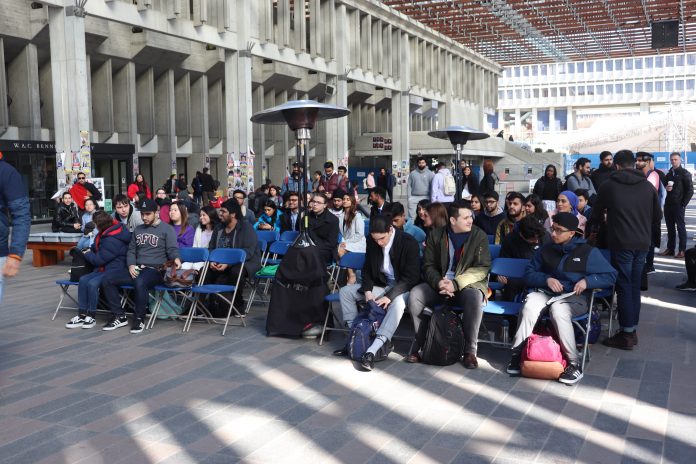
Tens of students gathered in Convocation Mall on Wednesday afternoon to shiver in the cold as candidates raced to capture our attention in the annual SFSS Board of Directors’ election debates. But while our bodies suffered, our hearts and souls thrived — all as per event parameters. According to the Independent Electoral Commissioner (IEC), the chief consideration in choosing the debate venue was whether candidates and attendees alike would be subjected to enough wind chill to refrigerate their cold hearts.

The average SFU student’s ideal temperature is about 5 C, says recent research cited by the IEC. Higher than that, and colour, joy, and life starts to return to their features and persona. This tends to end in overstimulation both for the warmed student and for students around them who witness the change.

SEE MORE: First-years deprived of icebreakers after climate change melts all remaining ice

The attempt to refrigerate students was about half-successful. While spectators did rude things like clump around the few heat sources in the area and eat all the baby potatoes provided by catering, they also expressed warmth at times. Many students clapped and cheered at multiple points in the debate — in spite of potential onsets of hypothermia.

“Maybe students are now freezing to death out in the cold while surrounded by enormous, empty, well-insulated buildings,” said an SFSS staff representative. “But the refrigerative effect is worth it. Trust me: so worth it.” 

The Peak could not confirm allegations from a few discontented students in the crowd that the 2019–20 SFSS Board of Directors were “still rotten after being left out too long during last year’s debate.”

The IEC chief, whose name nobody really knows despite the election period starting ages ago, told The Peak in an email interview that the outdoor debates were one of many changes they were bringing to the position. They cited the “refreshing” and “preservative” qualities of cold.

SEE MORE: “SFSS hires this year’s IEC chief, a loaf of banana chocolate chip bread

On Thursday, Peak humour editor Zach Siddiqui submitted a motion to The Peak Publications Society’s Board of Directors to provide all Peak senior editors with Snuggies as essential personnel equipment for surviving “inhumane joking conditions.”

Monday Music: n(ex)t

0
"Monday Music" in giant yellow block letters with a red background
Monday Music: your weekly themed playlist. Image courtesy of The Peak.

by Prabhdeep Dhaliwal, Peak Associate

It’s time to move on from your ex and onto your next. So if you need some help with this, these songs will hype you up and have you moving on. Each one describes a different stage of moving on, so regardless of where you’re at, this playlist will guide and remind you that you can get through this. 


“I Forgot That You Existed” by Taylor Swift 

Taylor Swift’s “I Forgot That You Existed” represents the stage of realizing that moving on is alright, cathartic, and even peaceful. Taylor Swift comes to the epiphany that her ex has done her wrong and it made her very upset, or in her words she was “in [her] feelings more than Drake.” Moving on and forgetting about him seemed like mission impossible. Until it just happened one day. She was so consumed by him, until she wasn’t anymore. Now, she sees how peaceful it is without him, is indifferent about him, and knows better. And if that doesn’t convince you to forget about your ex, I don’t know what will. 


“Don’t Start Now” by Dua Lipa 

The process of putting time into yourself, learning your worth, and getting yourself back out into the word is the main focus for “Don’t Start Now” by Dua Lipa. This explicit diss track is where Dua Lipa shows her ex that she’s not effected by him anymore — his words don’t mean a thing, and she’s not bothered by him leaving. She sassily says, “walk away, you know how.” This song is about how heartbreak won’t break you as a person. Dua Lipa has put her energy back into herself and she has moved on and become stronger. Just as she tells her ex to stop doing all the things for her now, when he’s already had his chance, you should too. Let this song be an example of how you can pull a “full 180” and be doing better without your ex. 


“Look At Her Now” by Selena Gomez

The emotional but fierce banger “Look At Her Now” by Selena Gomez brings attention to dealing with your feelings from a break up and letting yourself heal. It’s a more nostalgic look at a relationship, detailing the beginning, the problems, and the end to the relationship. What this brings, however, is  the beginning of self-love! Selena reflects on the mistakes of her ex and her own mistakes. She accepts that she is only human and flips being imperfect into an empowering trait by stating that it “made her more of a woman.” She puts emphasis on letting yourself feel all the feelings, and that it’s OK if it takes time to build yourself up and move on. Retrospectively, she realizes that she dodged a bullet. She picks herself up off the ground and is now on the up side as she declares, “[l]ook at her now!” If Selena Gomez is hopeful and “knows she’ll find love” (when she’s ready), you can be too! 

A recap of the SFSS 2020 election debate

0
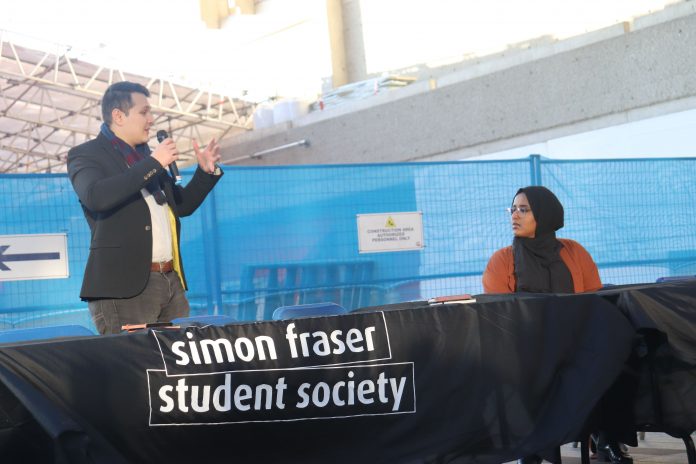
Miguel Resendiz and Osob Mohamed at the 2020 SFSS Election Debate

By: Michelle Gomez, Assistant News Editor and Harvin Bhathal, News Writer

19/03/2020: This story was corrected from an older version. In a previous version, Daria Elrick’s name was incorrectly spelled as “Daria Eirick.”


The Simon Fraser Student Society (SFSS) hosted their annual election debate on March 11 at Burnaby campus in the Convocation Mall. Moderated by the Independent Electoral Commissioner (IEC) Alicen Lange, the debate allowed candidates for each position to present their platform and answer questions from students. 

Here is our rundown of the debate’s highlights. 

Applied Sciences Representative

Both applied sciences candidates were present at the debate. 

Kia Mirsalehi highlighted his extensive experience, including previously holding the applied sciences representative position. He noted that he has lots of experience planning large-scale events, and has unique experience working with all four of his faculty’s Departmental Student Unions (DSUs). 

Harry Preet Singh stated that his main goal is to be able to target students that have been neglected in the applied sciences faculty. 

“I want to make people believe that you don’t need experience to participate in anything new,” said Singh. 

While asking his question to Mirsalehi, Singh stated that “your term as a FAS representative was not productive.”

Arts and Social Sciences Representative

Inderpreet Gakhal and Sude Guvendik were both at the debate. A statement was read by the IEC for Simran Jir. 

Gakhal emphasized her focus on ensuring “that the voices of all students are recognized by implementing positive transformations.” 

Guvendik told Gakhal: “I wish I knew what you were standing for because I couldn’t see your platform on the SFSS page,” to which Gakhal responded that her priorities included increasing student engagement and effectively communicating with clubs and DSUs. 

Guvendik noted that she would ensure to be involved with SASS and the faculty DSUs. “Going to every single meeting [ . . . ] and being really transparent is really important. Just showing up, representing the people that you are standing for.” 

Simran Jir’s statement noted that she was unable to attend due to a class conflict in Surrey. It stated that “my main goals are to focus on mental health awareness, increase student engagement, and advocating for more study spaces.” 

Business Representative

Mehtaab Gill and Sanaa Cassum were present at the debate. Abhishek Parmar and Pariya Zabihi were not present, and a statement was not read for either of them. 

In her opening statements, Cassum noted that her priorities included improving student life and mental health initiatives. She asserted that the main way in which the department can improve is by offering more career, skill-building, and academic resources. 

Gill stated: “What I bring to this role is a good understanding of the operations of the SFSS as well as Beedie clubs and BASS.” According to Gill, he plans to focus on being an active presence and fixing disconnects between the SFSS and business clubs. 

Communication, Art, & Technology Representative

Both Aman Ahmed and Haider Masood were present at the debate. 

Ahmed said that his main goal is to provide students with career resources including networking events and skill building workshops. 

“Instead of waiting for the change, I’ve decided to become the change,” Ahmed stated. 

Masood explained that his platform includes improving communication between the FCAT students unions and the SFSS, making the SFSS more accessible, and pushing for a two-year tuition freeze for both domestic and international students. He also noted that he has the endorsement of Fiona Li, the current FCAT Representative. 

Masood asked Ahmed: “You outline in your platform to become the voice of students, yet you go on to plagiarize word for word from last year’s candidate: act as a liaison between the SFSS and faculty of education, when you are actually running for the faculty of communication, art & technology [ . . . ] what are your thoughts on dishonesty and plagiarism as a communication student?” 

Ahmed responded that “As a communication student I can tell you plagiarism is very bad, I do not endorse it at all, dare I say, I do not condone people who plagiarize.” 

Education Representative

Neither of the education representative candidates were at the debate, so a statement was read on each of their behalf. 

Tagwa Ali’s statement noted: “I believe there should be more services in place to support students applying to PDP. I know from experience that the application process is very stressful, and if elected I plan to organize more information nights and resources to help educate students.” 

Emerly Liu’s statement explained that she was unable to attend the debate due to class conflict. 

Her message told students: “I welcome any questions that you may have about my qualifications or platform points.”

Environment Representative 

Anuki Karunajeewa is the only environment representative candidate. She was present at the debate. 

Karunajeewa stated, “I’m running because I want to increase awareness about climate justice, create better communication within my faculty, and advocate for marginalized students and communities.” 

Health Sciences Representative 

Daria Elrick was the only health sciences candidate present at the debate. She highlighted her extensive experience, including being the president of SFU’s medical fraternity Phi Delta Epsilon, which she said has allowed her to work closely with the SFSS. 

A statement was read for Roopan Garcha, and explained that she had a midterm exam at the time. It stated that her main goals include: “to enhance student experience, promote health and well-being, advocate for student affordability, and provide reassuring support to all students.” 

Nafoni Modi was not present, and a statement was not read on their behalf. 

“I did show up today, compared to the other candidates who are running. I think that says a lot,” said Eirick in her closing statement. 

Science Representative

Three of the four science representative candidates were present at the debate. 

WeiChun Kua explained that he is heavily involved in both climate and social justice on campus. He plans to focus on student safety, Indigenous sovereignty, and opposing the TMX pipeline. 

Boris Perdija explained that his involvement with the science undergraduate society has led him to run for his position, stating that he aims “to be a liaison between the student body and the SFSS.” He also highlighted the need for a student advocacy office. 

Avi Vashisht said that she plans to increase engagement within the science faculty. 

Pooria Arab was not present at the debate and a statement was not read on their behalf. 

At-Large Representative

Six candidates were present for the position of at-large representative. 

Harleen Seehra noted her three main priorities include transparency, mental health initiatives, and campus safety. 

Faiz Bandeali stated that he would like to work on increasing student safety on campus. 

Arnaz Lalani said she wanted to focus on increasing scholarships and bursaries, increasing transparency between the SFSS and clubs, and ensuring adequate space for clubs in the Student Union Building. 

Geetanjli Sharma explained that her three main goals are combatting sexual harassment and discrimination on campus, sustainability on campus, and creating a sense of community to counter SFU’s commuter school reputation. 

Balqees Jama stated: “I will continue pushing our student society to prioritize advocacy over convenience.” She plans to focus on advocacy and empowering students, as well as catering to diversity. 

Phum Luckkid stated that he was running to help fix problems that many SFSS clubs face, including grants being denied, grants having too early deadlines, and room bookings being denied. 

A statement was read for Harman Shergill, noting that he could not attend the debate due to a family emergency. His main goals included advocating for mental health initiatives, increasing communication between the SFSS and clubs, and raising awareness on sexual violence issues. 

VP External Relations 

A statement was read on behalf of Simran Uppal, stating that she could not attend due to a midterm exam. Her goals included advocating for international student tuition regulation and the Burnaby mountain tank farm safety plan. 

Samad Raza was present at the debate. He noted that his main goal was to relieve students of financial pressure and promote affordability initiatives. 

“I believe education is a basic human right and it should be free for everybody,” said Raza. 

VP Finance

Corbett Gildersleve was the only vice-president finance candidate present at the debate. 

“I am running because I think that the SFSS has been on the wrong path for a very long time,” Gildersleve said. He also noted that he had served as applied sciences Rrpresentative in 2015. 

Gildersleve stated in response to an audience question that he would continue to push for an audit on the 2019 Fall Kickoff concert. 

Joben Bassi’s statement said he could not attend due to a family emergency. “I stand for affordable education, increasing resources for clubs, and increasing student engagement,” it read. 

Sahil Nathani’s statement noted that “during my time at SFU, I have come to realize the lack of good financial management in the SFSS.” The statement also noted that Nathani has experience in accounting and finance.

A statement was not read on behalf of Lara Radwan.

VP Student Life 

All candidates for vice-president student life were present.

Rachel Dee discussed her experience as an administrative assistant at the SFSS, noting her familiarity with clubs and student unions, and their internal processes and procedures.

When asked about the deficit from the 2019 Fall Kickoff, Dee said, “If I did Fall Kickoff again, I would increase transparency and involve more student consultation.”

Jonathan Peral Gort’s main priority is “to create a strong sense of community for all students here.” Gort wants to create an environment that would “help the school be more involved [ . . . ]  and build connections with other students around the school.” 

Current Arts and Social Sciences Representative Jennifer Chou, referring to herself as “Meme Queen,” said she is running for better accessibility at events, as well as more events for mental health. 

VP Student Services

Both candidates for vice-president student services were present at the debate. 

Prince Cheema noted that he has been an active member of the SFU community over the past four years. Matthew Provost highlighted his involvement with the First Nations Students Association (FNSA) for three years as well as various clubs and DSUs.

Cheema asked Provost what his ideal insurance model was for the health and dental plan. Provost responded by noting that it is important to talk with students and ensure that students are aware of the benefits and the plan. 

“Thank you for not answering the question at all,” Cheema responded. 

Provost asked Cheema what advocacy work he had been involved with on campus, to which Cheema responded that he has been involved with the chemistry student society, the molecular biology and biochemistry student society, and the Punjabi Student Association. 

“I feel like it’s more important to look at the diversity of groups on campus [ . . . ] it’s really important that we take into account the various needs of our student body since they are diverse,” rebutted Provost. 

VP University Relations

Gabe Liosis and Rubab Singh were present at the debate. A statement was read on behalf of Julian Loutsik (current Faculty of Environment Representative) who could not attend due to a class conflict. For more information on his platform, he stated, “please don’t hesitate to direct message me or email me.”

As Chair of the SFSS Council, Liosis noted that he has seen “first-hand how important it is to elect students who will take bold action to stand up for students rights.” He noted that his advocacy for the Rotunda groups through proposing a referendum question played a large role in the Board’s decision to grant them space. 

Rubab Singh referenced her experience working on campus, including with residence, the library, and SFU recreation. Singh noted that due to these experiences, she had an in-depth understanding of university procedures. 

Both candidates expressed their support for Tuition Freeze Now. 

President 

Osob Mohamed and Miguel Resendiz were both present at the debate. Christina Loutsik was not present and a statement was not read on her behalf. 

Mohamed (the current Faculty of Health Sciences Representative) emphasized her goal to lobby the university to invest in open educational resources, support the tuition freeze movement, and reform governance practices for more accountability. 

Resendiz is the current President of the Association of Latin American Students. Resendiz’s priorities include student safety on campus, making education accessible, and providing effective leadership for the Board. He cited various safety issues on campus, including poor winter conditions as well as the school’s emergency response time. 

Mohamed pointed out that Resendiz’s platform was not up online until that afternoon, even though the campaign period started a week ago. To this Resendiz responded, “I did not upload my platform until today because I like to be well-informed and I like to understand what I am talking about.”

Mohamed noted that his platform and answers did not have any concrete action items. “I’m a little bit worried because we want to be proactive rather than reactive [ . . . ] the SFSS is not a game, it is serious business.” 

In Resendiz’s question to Mohamed, he stated that the current Board is clearly divided, and has led to “very inefficient decision making.” He asked Mohamed how she would accommodate the different values of the other Board members.

Mohamed responded “I will respect other people’s values. But if their values are based in racism, homophobia, anti-Indigenous sentiments, and other horrible things that I can’t stand for, I will not stand by it.” 

Resendiz rebutted that a president’s job is to listen to every Board member first and make a decision based on consultation. He noted that the president’s agenda should not matter. 

In their final statements, Mohamed said “Now is the time to fight for affordable education and space for equity seeking groups, better governance practices, and more.” 

Resendiz stated “hopefully we can make this university a much more engaged place.” 

 

SFPIRG and WUSC requesting increased student levies in upcoming referendum

1
SFPIRG has been located on SFU Burnaby campus since 1981. (Chris Ho / The Peak)

By: Paige Riding, News Writer and Gurpreet Kambo, News Editor

As part of the Simon Fraser Student Society’s 2020 election and referendum, the Simon Fraser Public Interest Research Group (SFPIRG) and the SFU chapter of World University Services of Canada (WUSC) are posing a referendum question to SFU students for an increase in their student fees. The Peak reached out to representatives of each organization to understand how the increases will impact students and what both SFPIRG and WUSC will do with their funding in the future.

SFPIRG Member Levy Increase

According to their website, SFPIRG is a “student-funded and student-directed resource centre dedicated to social and environmental justice.” The proposed increase from $3 to $5.50 is for students taking more than 3 credits and from $1.50 to $2.75 for students taking 3 credits or less. 

In an emailed interview with The Peak, SFPIRG Director of Communications Craig Pavelich spoke about the proposed increase. According to Pavelich, inflation and increased costs has had a significant effect on SFPIRG’s ability to provide services to its members, as the value of SFPIRG’s student levy has dropped by 45% since 1994 (when SFPIRG last had a fee increase). 

“In order to maintain and restore our current resources and programming for students, and to expand and grow to meet student demand, SFPIRG needs an increase to the current member levy,” he said. 

When asked about the distribution of potential funds following the referendum, Pavelich emphasized the need for compensating members of its Board of Directors and the need for a new student employee to join SFPIRG to maintain and expand their services and initiatives.

According to Pavelich, a new employee would particularly be helpful with one of SFPIRG’s longest running initiatives, Letters For The Inside (LFTI). This initiative allows persons in prison to request research initiatives from SFU students. He also explained that, by hiring a student worker to assist with research for LFTI, “Not only would this create another employment opportunity for a current SFU student, it would provide greater support for the LFTI program and its volunteers [ . . . ]” 

Beyond work opportunities, Pavelich noted that working for reconciliation is another crucial aspect in their suggested budget. Funds would be set aside specifically for projects that address Indigenous issues.

Pavelich said that the approval of the levy would allow SFPIRG “to create a process through which Indigenous students and communities could apply for funding to support their organizing efforts. This is one small piece of the greater work toward Reconciliation with Indigenous nations.”

When asked for any further comments, he explained that “SFPIRG is here to support ALL SFU students. Every single student resides in a social location where they are impacted in some way by larger systems.”

“The work of SFPIRG is in the interest of everyone, and everyone has a role to play in the work toward a more just, sustainable world. There is strength in numbers, which is why student power is so strong — and why organizations like SFPIRG are so vital to the student experience. We believe students know the value of these organizations.”

WUSC Fee Increase

WUSC is an organization that allows students “who have had their education interrupted by conflict and persecution continue their studies in post-secondary institutions across Canada,” as stated on their website. SFU has been sponsoring student refugees since 1981. WUSC’s SFU chapter currently has a student levy of $2.50 for full-time students and $1.25 for part-time students, which they are proposing to increase to $5 and $2.50 respectively. 

The Peak spoke with WUSC SFU’s Local Committee, who collectively organize the SFU chapter, about the proposed increase. The Committee stated that SFU students should support the increase. 

“It is a definite way of having a say in altering the trajectories of life for individuals and their generations to come, and this is a very beautiful thing.” 

For merely $2.50 or $5 per semester, SFU students will literally change the lives of some potential future classmates, they said.

They also added that the fee will cover the cost of tuition fees, books, and the cost of living for sponsored refugee students. 

“The fee has not been increased since 2012. Since then the living and housing costs have been exponentially increasing and the inflation rate has increased almost eight fold over the past decade in BC,” stated the Local Committee. 

Should the fee increase not pass, there may be dire consequences for WUSC SFU and for students who may be expecting funding in the near future, according to the Committee. 

“The program is at the intersection that we do not have enough funding to cover the needs for coming terms starting summer 2020. If the referendum [is] not successful, the program cannot be maintained as is.” 

The Local Committee added that they would have to decrease the number of students supported if students do not vote to pass the referendum question. 

Voting on these referendum questions will be available through SFU Mail. It will be open March 17–19.

SFU releases Senate and Board of Governors results

0
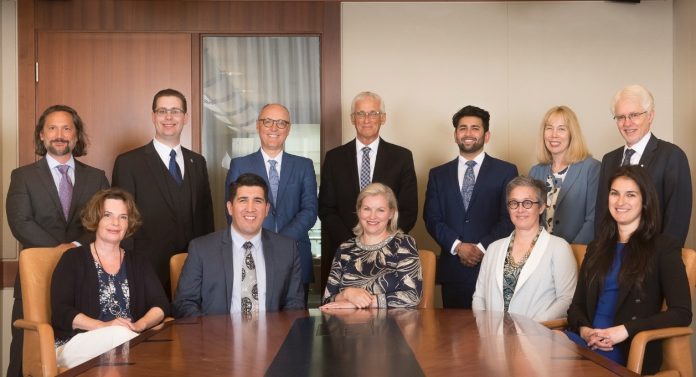
SFU's current Board of Governors

By: Paige Riding, News Writer

After a delay in results for the 2020 Board of Governors and Senate elections, the results were finally posted on the morning of March 13 on SFU’s website. According to Electoral Officer Steven Noel, results were delayed due to electoral complaints that were under consideration.

For the Board of Governors (BOG), one undergraduate and one graduate student will fill positions for the new term. Corbett Gildersleve and Alexandra Gunn will represent the undergraduate and graduate student bodies on the BOG, respectively. 

The Senate Graduate Studies Committee (SGSC) welcomes graduate students Daniel Lam (Arts and Social Sciences) and Kris Nordgren (Education) for the new term.

Notably, all five members of the group of students that informally called themselves SFU Progressives won their seats on both bodies. Members included Gildersleve, Gabe Liosis, Nafoni Modi, Osob Mohamed, and Samad Raza. 

Gildersleve spoke to The Peak about the election results.

“I’m really happy for all the support I’ve received, online, personally, all the people that endorsed me and voted for me — I’m just really grateful. I promise I’ll work very hard on the Board of Governors starting in June.”

Gildersleve also indicated that he hoped that SFU would publicly release the vote counts and electoral complaints. 

“The complaints against me ended up being completely baseless because there was no evidence. But I don’t know if SFU will ever do that. I’m more for transparency.”

Senate members from June 1, 2020 to May 31, 2021 were elected as follows:

NAME FACULTY
Bryan Daniel (UG) Applied Sciences
Harry Preet Singh (UG) Applied Sciences
Corbett Gildersleve (UG) Arts and Social Sciences
Daniel Lam (G) Arts and Social Sciences 
Gabe Liosis (UG) Arts and Social Sciences
Candy Nguyen (UG) Arts and Social Sciences
Sarah Lord Ferguson (G) Business
Abhi Parmar (UG) Business
Tanishvir Singh (UG) Business
Samad Raza (UG) Communication, Art and Technology 
Alan Wong (UG) Communication, Art and Technology
Alexandra Gunn (G) Education
Susan Luu (UG) Education
Nafoni Modi (UG) Health Sciences
Osob Mohamed (UG) Health Sciences
Allan Lam (UG) Science

There were no nominees from the Faculty of Environment. 


Coming up at SFU: March 15–22

0
SFU's FCAT Undergrad Conference takes place on Friday March 20

By: Paige Riding, News Writer

Movie Mondays @ SFSS Out on Campus presents: The Handmaiden

March 16 | 4:30 p.m.7:30 p.m. | TC 314N, Burnaby | Free | Registration Required  

Out on Campus is hosting a screening of the South Korean psychological thriller, The Handmaiden. Directed by Park Chan-wook, the movie follows the handmaiden of a Japanese heiress whose intentions are to con the woman who hired her. The event page warns of explicit sexual content, blood, and jump scares. Space is limited. Registration is available through the event’s website.

SFU First Nations Studies presents: Whose land are you on?

March 17 | 1 p.m4 p.m. | Saywell Hall Atrium | SFU Burnaby | Free

SFU students are invited to join the conversation about the “histories and experiences of Indigenous peoples” at SFU, which is built on Musqueam (xʷməθkʷəy̓əm), Squamish (Sḵwx̱wú7mesh Úxwumixw), and Tsleil-Waututh (səl̓ilw̓ətaʔɬ) ancestral and traditional lands. Assistant First Nations Studies professor Dr. June Scudeler is co-organizing this free event with Visual Arts professor Sabine Bitter and students Matthew Provost and Kim John.

Attendees may participate in silk-screening t-shirts. Shirts can be purchased through donation or guests can bring their own. Soup and bannock will also be offered.

Climate Literacy 101: On a Path to Climate Success

March 17 | 4:30 p.m.6:30 p.m. | Fraser-Thompson Room, Diamond Alumni Centre, Burnaby | Free | Registration required

If you are an SFU student, faculty member, or staff member interested in climate science and ways you can assist in battling climate change, this free seminar will provide some tools to do so. Following refreshments, Elder Syexwaliya will open the evening with a welcome to the land. Dr. Kirsten Zickfeld and Dr. Mark Jaccard will then discuss the status of the climate, offering ways for attendees to contribute to activism against climate change. Registration is available online for the seminar.

Co-op 101 Information Session

March 19 | 12:30 p.m.–1:20 p.m. | AQ 3005, Burnaby | Free | Registration required

If you are an SFU student interested in finding out more about co-operative education, head to the AQ for a free information session about gaining work experience before graduating. The event’s website notes:“The most successful graduates are generally those who have work experience in their field. SFU Co-op provides you with a year or more of paid, resume-boosting work experience that makes employers more likely to hire you.” 

Registration is available on the event’s website.

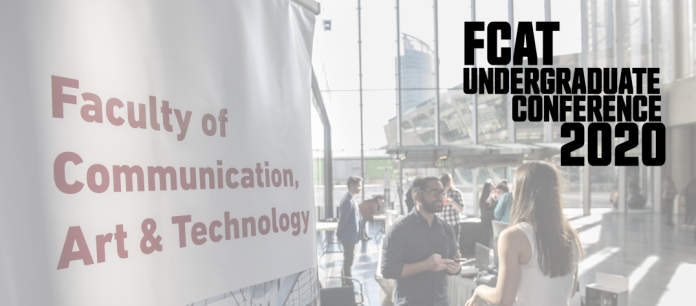
Faculty of Communication, Art & Technology presents: FCAT Undergraduate Conference 2020

March 20 | 3:30 p.m.7:30 p.m. | Goldcorp Centre for the Arts | SFU Harbour Centre | Free | Registration required

SFU’s Faculty of Communication, Art & Technology welcomes SFU students, faculty, and staff to attend the FCAT Undergraduate Conference. The event’s website describes the event as “a celebration and exploration of student produced work from each of the schools and programs within FCAT, including showcase performances, papers, installations, and displays.”

Registration is required and available on the event’s website.


Universities can’t just leave half their students without job-ready skills

3
It’s time we change the way a university education is structured. Illustration: Alex Vanderput/The Peak

By: Madeleine Chan, Staff Writer

We’ve all heard it: “What can you do with a [x] degree?” Whenever I hear these words, I spiral into a void of existential future crisis right before my extended family’s ignorant eyes. As someone nearing the end of their communication degree I’m really feeling that “how can I get a job when all I know are the basics of famous theorists” vibe. This shouldn’t be an ongoing feeling any student should have. Our education should be better preparing us for our professional futures with practical, skill-based learning integrated into our chosen programs.

The majority of students’ intent at university is to gain the skills and knowledge to find a way to sustain themselves financially after graduation. However, the growth of the mobile workforce, gig-based work, and rising costs associated with living have changed the traditional idea of what a career is, and what it means for recent graduates. People are no longer vying for a single, life-long career that could previously be obtained through a non-specialized bachelor’s degree. A degree may not even be enough to get you a job anymore as companies like Apple and Google are hiring based on skill.

Because of this work shift, other post-secondary education paths like trade schools provide a tempting alternative for students anxious over their future financial stability. To avoid becoming obsolete, universities — particularly programs in the liberal arts and social sciences — have to change to match the needs of students graduating into a different work environment from previous generations. 

Imagine programs like gender studies and women’s studies teaching students how to practically write for social change, rather than for academia. Communication courses actually showing students how to create professional documents and media. Political science courses engaging with local politics and teaching public speaking. And picture having mandatory work experience semesters or classes at no extra cost that allow students to work and build practical skills, make professional connections, and dip their toes into their potential future.

While programs like contemporary arts, engineering, business, and STEM already offer a more career-oriented approach to learning, this isn’t the case for all departments. Universities shouldn’t be leaving some students at a career disadvantage just because they happen to have different intellectual skills or interests. 

University is great for building skills like critical thinking, writing, and a disciplined work ethic, regardless of program. However, the types of skills that are usually learned are incredibly niche, and only really applicable in an academic setting. The problem is that academia is not a viable career choice for most graduates. This means that most of the fundamental skills learned at university are either not immediately applicable, or are simply wasted — along with a considerable amount of money.

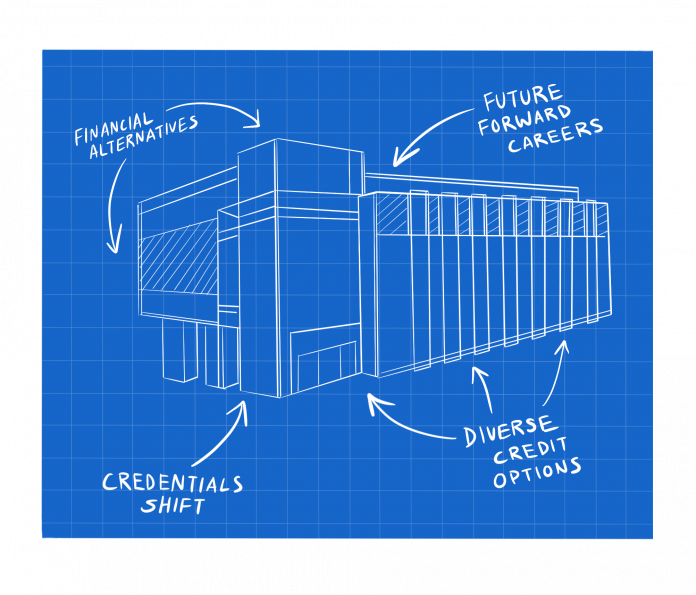
There are some ways in which SFU is already testing more career oriented learning, in a very limited scope. Offerings like Career and Volunteer Services, the new FASS Forward “microcredit” courses, and, most importantly, the co-op program allow students an opportunity to combine their studies with work. However, these resources are positioned within the university system as more of an “extra” thing that students can do rather than a built-in step in their degree. Furthermore, these additions to a degree program often cost more time and money than many students are able to afford. What if, instead of having students scramble for “easy” yet ultimately pointless Breadth credits, the university made some form of career training mandatory? 

Overall, the goal of a degree program should lead to employment, not a piece of paper. A re-evaluation of university curriculum needs to implement post-grad skills training in all programs so that new graduates aren’t stuck in an endless loop of “What can I do with a [x] degree?”

The students, the tattoos, and the stories behind them

0
Chris Ho / The Peak
Chris Ho / The Peak

by Molly Lorette, Meera Eragoda, Juztin Bello, Paige Riding, Kim Regala, Kelly Chia

Molly Lorette, SFU Student

Chris Ho / The Peak
Chris Ho / The Peak

My mom is pretty fluent in French, and has been integrating little phrases here and there since I was little. Every night after putting me to bed she would close the door and we would say “Bonne nuit, dors bien, fais de beaux rêves, à demain.” (Good night, sleep well, have sweet dreams, see you tomorrow). 

We’ve also always shared a fondness of lavender oil as a sleeping aid, and used to harvest it from a bush we had in the front yard of my childhood home. To me, this tattoo not only serves as a reminder of my mother and my childhood, but as a reminder to persevere through to the next day.


Meera Eragoda, Staff Writer

This is Happy Noodle Boy. It’s absolutely ridiculous, but I love it. Happy Noodle Boy hails from the Johnny the Homicidal Maniac comics by Jhonen Vasquez, which were some of my favourites in high school. This tattoo is basically an appreciation of my strange and dark taste, and I like to think it symbolizes my disavowal of mainstream normative culture. 

Happy Noodle Boy is a very minor character in these comics, but I love him because he’s ridiculous and is often on the soapbox you see in this tattoo yelling angry gibberish like “RAMEN.” Which is #deep. I initially got this because it’s so nonsensical that it made me happy, but the longer I have it, the more I realize that I’m basically becoming Happy Noodle Boy. 

He’s happiest when he’s allowed to yell about things that he’s passionate about, and I really identify with that. Although, I hopefully am not spewing gibberish, but who knows? Maybe that’s still to come. Just kidding. I’m with it, I promise. Moo.


Juztin Bello, Copy Editor

Chris Ho / The Peak
Chris Ho / The Peak

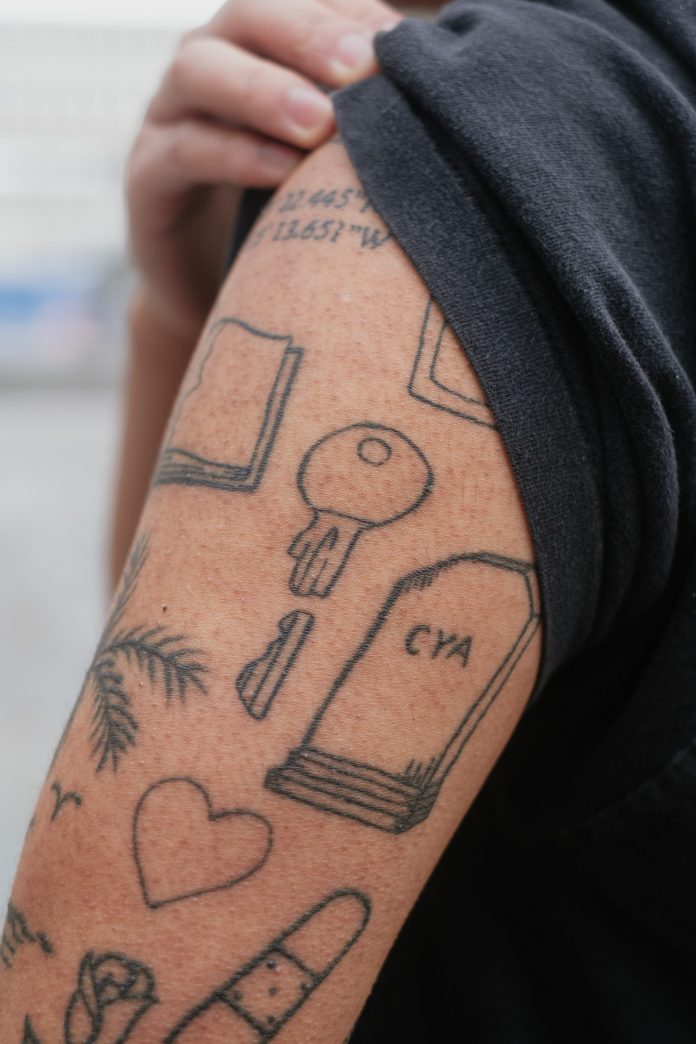
Last summer I went to Hawaii with three friends. One night, after already having a few drinks, we bought a bottle of wine and sat on the beach — the waves of the shore crashed while we drank, laughed, and talked under the stars. Amidst our drunken, wholesome escapade, we realized we needed something to uncork the bottle. Thinking swiftly (while inebriated), I pulled out my house keys. My friend, thinking equally as swiftly (and equally as inebriated), took my key and stabbed it into the cork. What followed?

The key got stuck. In a rush, thinking we could somehow make this work, my other friend took my shoe and pushed the key further — the thought was that pushing it in further would make it easier to pull out. And then what happened, you ask? 

The key bent. Panicked, the friend who first stabbed the key stood up and ran to the corner store to buy a wine bottle opener. Meanwhile, my friend who used my shoe decided to try wiggling the bent key out. Guess what happened next: 

 Yup, the key snapped in half. Suffice to say, there was no easy way to explain how my house key broke to my mom when I got home. This broken key tattoo is to commemorate this chaotic, but hilariously joyful, memory. 


Paige Riding, News Writer

Chris Ho / The Peak
Chris Ho / The Peak

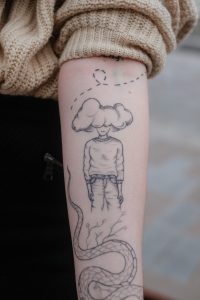
The idiom “they have their head in the clouds” has a sort of negative connotation. Considered as out of touch with reality, a person with their head in the clouds is thought to be a dreamer —  maybe lazy, maybe irrational. I wanted to reinvent the notion of having my head in the clouds every time I look down at my arm.

I’m reminded that taking time away from the harshness of reality is okay, and even healthy. I’m not talking hypnotic drug use here — I mean embracing my creativity and imagination, embracing this side of myself and enjoying life beyond its suffocating 9-to-5. By pausing, calming my mind, and taking time for myself, I can turn around to be a better version of myself for others, but most importantly, for me.


Kim Regala, Staff Writer

Chris Ho / The Peak
Chris Ho / The Peak

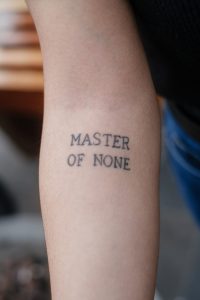
I’m sorry to disappoint my fellow Aziz Ansari fans, but no, this is not a reference to that Netflix TV show with the same name. You may have heard the phrase “A jack of all trades is a master of none,” which refers to someone who dabbles in many skills but fails to be an expert in any of those trades. As someone who has consistently lacked focus to only practice one interest or skill to master, I naturally resonated with this quote. 

Along with its derogatory connotations of only being mediocre in all things, I internalized the idea of being a master of none, and took it as my greatest weakness. However, it wasn’t until I discovered the latter part of the quote “though oftentimes better than a master of one,” when I began to see these words in a new light. I learned that my tendency to learn about many things, rather than specialize in only one thing, wasn’t something to be ashamed of. Instead, it only goes to show that I can be passionate about many things. Now, I’m proud to call myself a master of none, and I’ve got it tattooed on my arm as a permanent reminder.


Kelly Chia, Features Editor

Courtesy of Instagram

My first and most meaningful tattoo is on my left thigh. I had the idea to get Neo Queen Serenity  — the future version of Sailor Moon from Sailor Moon — on my body. I am not sure where the specific idea to get her as a tarot card came from, but I decided that it would embody her grace the best, and so I chose the Empress card to capture her. 

The Empress usually represents nurturement, guidance, and fertility. While I do not want any children, I thought this would capture the character as she has been a guiding influence in my life for a long time. The character, Usagi Tsukino, AKA Sailor Moon, has always treated others — including her enemies — with beautiful empathy. Rather than defeat, her goals have always veered towards salvation. 

Out of context, that sounds like real hippie shit, but you’d best believe that young Kelly was touched by her kindness and still is. She was an important figure in my formative years, and I’m happy this tattoo reflects that. I don’t often get to see my tattoo when I am out and about since it’s on my thigh, but having this beauty on it makes me beam with joy.

The SFSS shouldn’t have held a Board meeting during the Student Walkout

0
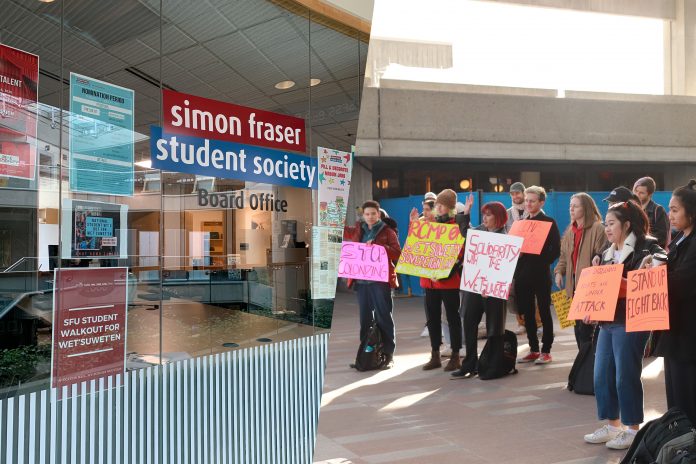
Some Board members did ultimately participate in the Walkout. Photos: Chris Ho and Gurpreet Kambo / The Peak

By: Gabrielle McLaren, Editor-in-Chief

Elegant red posters with white text appeared on campus bulletin boards and on Renaissance coffee tables late last week: SFU students would be among the many across Canada to walk out in support of the Wet’suwet’en nation. It was a powerful event, as I’m sure everyone who stopped by Convocation Mall or saw footage on social media could sense. Love, time, energy, thoughtfulness, and respect were put into organizing and bringing it to life. So why exactly did the SFSS Board of Directors schedule a meeting at the same time?  

The fact that schools across Canada  — including SFU — were taking part in this decentralized action shouldn’t have been a surprise. The SFU Student Walkout Facebook page first announced their intentions on February 28, and the SFSS’s branded megaphone and “In Solidarity” sign were on loan at the event. Current Board members and election candidates were present at both the rally and the temporary blockade on Gaglardi Way. Students may have even heard the Board’s president speak and lead attendees in song. 

Additionally, the SFSS as an organization published a statement of solidarity with the Wet’suwet’en back in February, and was one of eight BC student societies to send letters to BC’s Premier and the Prime Minister on the day of the Walkout. Supporting the event should have been part of the activist mandate the society created for itself, especially since speakers described the event, time and time again, as one in support of Indigenous sovereignty and human rights. It seems incongruous that if the Board needed to hold meetings two weeks in a row that the timing would coincide with a peaceful demonstration it should have supported. 

I understand that Society business has to get done at some point. Urgent business drops out of the sky at any given time and life happens. With election season just starting this week and a resolution to the SUB space conflict on the horizon, the Board is busy. I commend individual SFSS members and staff for their work, and appreciate the importance of whatever business they had to carry during that meeting. 

Plus, if Wednesday afternoons are the Board’s regular meeting times it stands that any additional meetings outside of the regular schedule should happen during the same time. It may have been inconvenient, difficult, or impossible to find another time to hold a surplus meeting that week, but concerns about meeting attendance shouldn’t have stopped the Board. There are always Board members absent from Board meetings — looking at the minutes on January 22, three Board members were absent while one called into the meeting, as did someone else on February 5 when three Board members sent their regrets. I’m sure they all had good reasons; the point is that concerns about attendance shouldn’t have prevented an inconvenient rescheduling at the cost of solidarity. 

Most importantly, nothing about what students did and stood for on Wednesday was about convenience. As the event’s media advisory noted, it was about solidarity and the unmet basic demands of Wet’suwet’en hereditary chiefs. The advisory further notes that “Our academic institutions are complicit in this violent violation of Wet’suwet’en sovereignty. Many institutions have declined to make a statement . . .” 

Even if it was only through timing, what statement did the SFSS make by asking students to choose how to get involved on their campus? 


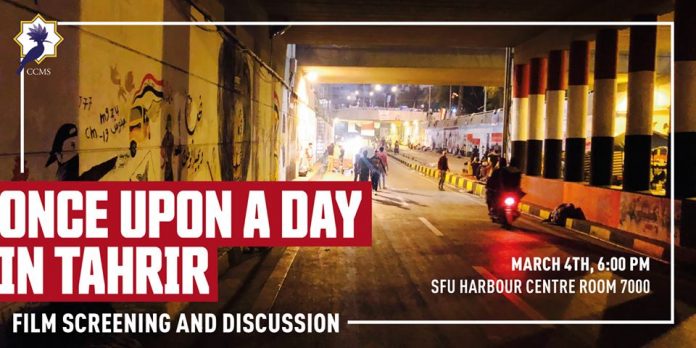
Rough cut screening of Dima Yassine’s Once Upon a Day in Tahir held at SFU

0
Courtesy of Facebook

by Ben McGuinness, Peak Associate

Iraqi writer, filmmaker, and researcher Dima Yassine shared a rough cut of her short documentary Once Upon a Day in Tahir to a crowd at SFU Harbour Centre. The screening was hosted by professor Adel Iskandar (School of Communication) and followed by an open discussion.

Before the film, she shared photos of her childhood in Mosul. She hadn’t been home to Iraq in decades, but she decided to book a flight home for September 2019. Just then, a revolution had broken out.

She began to tear up, and paused. She explained that the Iraqi people were standing up against “everything that had tried to break them” after experiencing “bloodbath after bloodbath” of civil wars and governments that were not made for the people.

“It gave me hope. It revived my belonging, which I had lost for 27 years.”

In the end, she never made it to Mosul. She was so enthralled by the protests in Baghdad that her trip was spent there, amongst diverse people occupying the streets and defying authority.

The film is a brief glimpse into these hectic scenes. In the film, she talks and laughs nervously with a group of acquaintances in a quiet side street — all kinds of chaotic noise echoing from the distance. The limited text in the film explains that 700 people were killed during the protests, many by having tear gas cans aimed at their heads by police.

The next scene shows the group making their way to a bustling tunnel full of people. They are trying to set a ladder up against the side, but are interrupted by emergency vehicles, marches of protesters, and a man being dropped off by police. He is gasping for air, having breathed in tear gas.

Referring to the chaos, Yassine says: “What do we do? Inhale and exhale . . . but then we breathe in tear gas.”

Eventually they get the ladder up and her friend begins his mission to spray paint an image to the side of the tunnel. It starts as a man leaping forward — what looks like a goalie. Then the final touch is added, and the eerie image is revealed: It’s a goalie blocking a can of tear gas.

Yassine had spent her trip in Baghdad, much of it filming the events around her. “I [went] to find a grave, to reconcile with my past, but I found life.” After her trip, she needed to share what she had seen somehow because she was “longing to talk about Iraq” and felt disconnected from the tranquility of Vancouver — though she saw a similar struggle in the Wet’suwet’en protests.

Professor Iskandar asked her why she chose to focus on such a brief part of her trip for the film, where her friend sprays graffiti. Yassine explained that the revolution created an “explosion of art” where people felt able to express themselves. She described the streets after the government attempted to impose a curfew as a carnival, comparing it to Khatsahlano Fest.

During the discussion, Yassine had much to say about the Iraqi people, things that our media doesn’t cover: she talked about the ways they have been subjected to the whims of ISIS and other heavy-handed militias, including the failed US intervention; she talked about their resilience without proper government services, like healthcare and education; she talked about how Iraqi women, portrayed in the West as victims, have been the backbone and fortitude of families during these chaotic times — including as vanguards of this revolution.

As Yassine captivated us for over an hour with the stories she had to share, I wondered why more of them weren’t included in the decidedly sparse film. Her account of the Iraqi people’s struggle and strength could easily create a feature-length documentary — although that would be no small undertaking.

I do hope that Once Upon a Day in Tahir will evolve to capture her full story. In any case, it served as a platform to share her perspective of the revolution and an ode to Iraq. In a region where our media mostly covers death and suffering, we should also be recognizing the life and warmth of people.