Home Blog Page 388

Land acknowledgements should reflect actionable commitment by settlers

0
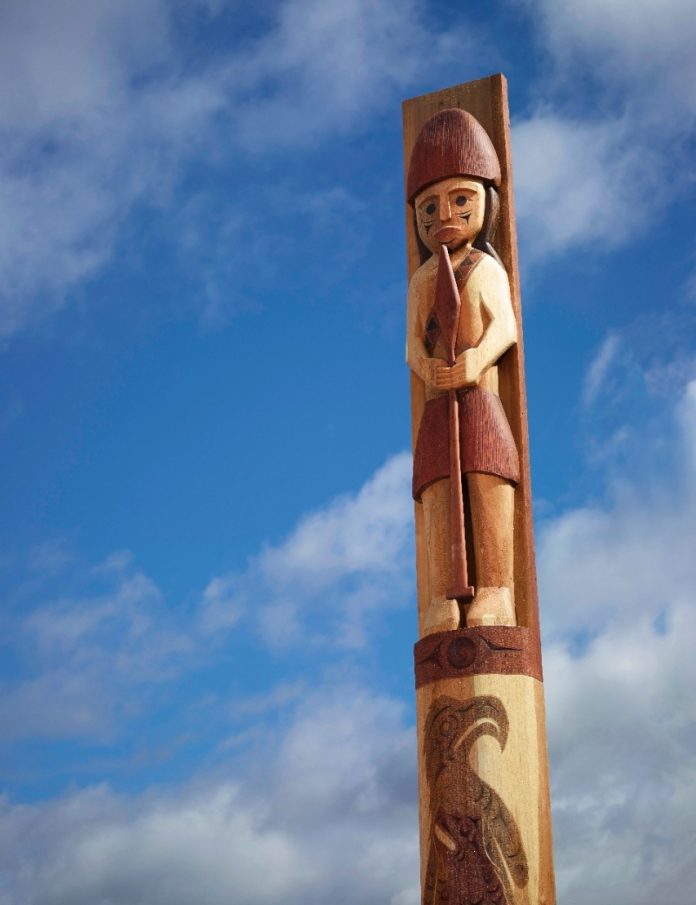
Efforts by colonial institutions should go beyond superficial statements. Photo Courtesy of SFU News

by Serena Bains, Staff Writer

Land acknowledgements have become more commonly recited in recent years, with many meetings, classes, and emails including whose unceded lands we are currently situated on. In most cases, however, land acknowledgements only serve as a script for settlers to recite and to check off the box titled “Performative and Inconsequential Act of Reconciliation.” 

As a settler, prior to hearing my first land acknowledgement in lecture, I was ignorant to which nations’ lands I was on and what this meant. Now, I know that I reside on the unceded Coast Salish lands of the Katzie, Tsawwassen, Kwikwetlem, Stó:lō, W̱sáneć, Kwantlen, and Stz’uminus nations, but I still have a minimal understanding of what this means. While I fully acknowledge that this is part of my responsibility as a settler and ally, this is also a reflection of how empty of a gesture land acknowledgements have become.

Hayden King spoke to the idea of how these acknowledgements can be so hollow. King is an Anishinaabe scholar who wrote a land acknowledgement for Ryerson University in 2012, which he has now come to regret. He stated that “territorial acknowledgment is by and [ . . . ] for non-Native people” and “it effectively [ . . . ] offers them an alibi for doing the hard work of learning about their neighbours.” He also expressed his concern that land acknowledgements are becoming so customary in institutions like universities that settlers are essentially giving themselves permission to reside on unceded land.

So, what makes an effective land acknowledgement? First of all, settlers cannot rely on the labour of Indigenous peoples to provide land acknowledgements at their behest. This too provides an excuse for settlers to ignore the history of the nations they live on. The basis of any land acknowledgement should be for one to recognize their place in the continuation of colonialism, to whom these lands belong, their history, and how they can actively support reconciliation efforts and Indigenous peoples.

It is also important to recognize that while land acknowledgements are a good place to start with reconciliation efforts, they are not the end of them. Colonialism is the status quo, therefore, all settlers play a part in this continuous event even without active participation. Reconciliation is a process that happens simultaneously to colonialism and also requires a consistent and active effort to participate in. Therefore, reciting a land acknowledgement and ending one’s work after standardized words like “unceded meaning these lands were not given up in any way” is not reconciliation. 

It is critical to reflect on what reconciliation truly means in a personal context. In the past, I have considered reconciliation to be the same performative action I’m advising against now. This doesn’t make me irredeemable, but I do recognize that I have and continue to play a role in colonialism. Through true and continued reconciliation, such as further education, supporting Indigenous communities by platforming their voices, donating to and volunteering for Indigenous organizations, and advocating for Indigenous spaces and rights, I can lessen my participation in colonialism and increase my reconciliation efforts. 

The meaning behind a land acknowledgement should be a statement of one’s commitment to reconciliation and the recognition of one’s place in the continuation of colonialism. It should be the starting point for a lifelong education and continued action to support Indigenous peoples. The Truth and Reconciliation Commission consists of 94 calls to action, where many Indigenous people call for reconciliation efforts to go beyond this number. Land acknowledgements are only a precursor to these efforts and a primer in what it means to participate in true reconciliation.

“I understand these are trying times,” says the professor making the times trying

0
PHOTO: NordWood Theme / Unsplash

By: Kyla Dowling, Peak Associate

Subject Line: Paper now due Tuesday

From: [email protected]

To: AHH 101 (All Sections)

Date: November 5, 3:33 a.m.

Students, 

Many of you have asked for an extension on the 14-page organometallic chemistry paper due on Monday at 11:59 p.m., citing “the state of the world” as the reason. I hear you. I see you. Now, it is due on Tuesday at 12:01 a.m.. Remember, if you need anything, feel free to drop by my office hours. I’m sure some of you may have actually read my syllabus, but to remind the lazy ones, those are from 1:32 a.m. to 2:13 a.m. every full moon. Again, I am here for you.

Take care, 

Professor Professorson

——————————————————————————————————

Subject Line: Quiz Deadline

From: [email protected]

To: AHH 101 (All Sections)

Date: November 6, 6:06 p.m.

Students, 

To test your knowledge of last week’s 126-page reading on the emerging field of quantum biology — despite the fact that this is a first year chemistry class and half of you are FASS students in search of your B-Sci credit — I have just uploaded a quiz to Canvas. The quiz is 30 questions long and worth 7% of your final grade. I do want to note: I know these are difficult times and I empathize with all of you, which is why your time limit for the quiz is now 10 minutes and 32 seconds instead of 10. 

Warm regards,

Professor Professorson

——————————————————————————————————

Subject Line: Cat Update

From: [email protected]

To: AHH 101 (All Sections)

Date: November 7, 4:20 a.m.

Students, 

Many of you have been asking about my cat, who was meowing during last Sunday’s mandatory 10 p.m. lecture. To brighten your spirits in these trying times, I have attached a photo of Meowssolini. If you look in the bottom left of the photo, you’ll find that his litterbox is in fact lined with your “Epidemiology in Shakespeare” research papers that I never actually graded. This is a reminder that even in the darkest times, the work you submit is never useless. By the way, for the next paper you submit, please print it on newsprint paper rather than printing paper. Meowssolini prefers it

All my love, 

Professor Professorson

——————————————————————————————————

Subject Line: Reminder About Bar Examination 

From: [email protected]

To: AHH 101 (All Sections)

Date: November 7, 12:21 p.m.

Students, 

Just checking in on everyone at this crucial point in the semester. I hope everyone is staying safe and healthy, as well as feeling well-prepared for next week’s bar examination. Remember that this exam is two days long, starting precisely at midnight Wednesday. Bathroom breaks will be penalized. I understand some of you have emailed your TAs with complaints saying that you have “other classes” or “a job” or “bodily functions to take care of”, but an important part of being a productive online student is time management. This is your responsibility. 

Stay safe, 

Professor Professorson

Board Shorts — October 30, 2020

0
Image: Irene Lo

Written by: Karissa Ketter, News Writer 

An update on the SUB closure 

Recent CDC updates on the rising COVID-19 cases in British Columbia have prompted a reaction from the SFSS regarding the Student Union Building (SUB). They passed a motion that the SUB should stay closed to all but essential personnel and Simon Fraser Student Society (SFSS) Board of Directors members. They will review the situation every few months. 

VP Finance Corbett Gildersleve exclaimed that “as much as [he’d] love it for students to see the building, it’s not a good idea right now.” The building has been closed and SFSS President Osob Mohamed noted that now that they have a safety plan, they “don’t have any justifiable reason to phase out” of it. She concluded that it is “a difficult decision to make, but I think the right one.”

The Ban the Bottle Initiative presentation

Three of SFU’s Ban the Bottle (BTB) members presented and discussed their plans to end commercialized bottled water selling at the SUB “and seek endorsements of SFU’s commitments in this area.” BTB is an SFU club that works “to advance sustainability and promote water security and environmental justice,” according to its President. 

They aim to encourage a bring your own bottle culture at SFU. Their priority is to ensure water accessibility all across the SFU campus. Part of this includes their water fountains that “provide extremely high quality water,” according to their presentation. They noted their efforts to “increase the accessibility of water refill stations across campus.” 

They began their presentation with the importance of eradicating plastic bottles. Their Vice President noted that “the plastic containers that bottled water is sold in [is] hugely problematic for ocean health and environmental pollution.” They explained that 91% of plastic produced isn’t recycled. Encouraging students to recycle their plastic bottles or providing them with recycled-plastic bottles, “isn’t much of a solution,” according to BTB. They noted that instead, it’s more effective to remove plastic consumption altogether. 

Bottled water can have quite “far-reaching social impacts,” according to BTB. They noted that British Columbia allows commercial water bottlers to continue exploiting water from communities during droughts and boil water advisories. 

This is true for the Six Nations of the Grand River Indigenous community in Ontario, where commercial companies are extracting water from their water resources while the community remains on a boiled water advisory. They noted that this disproportionately affects Indigenous communities and people of colour. 

VP Student Services Matthew Provost noted that there are “633 First Nations communities and the majority of them, including [his] reserve, are under bottled water advisories.” He explained that bringing more awareness to Indigenous communities struggling with water security while commercial companies are unaffected is an important part of the campaign because communities of Black, Indigenous, and people of colour are the most affected. 

Gildersleve questioned the continuation of this initiative into other soft drinks like pop, which also uses single-use plastics. BTB noted that SFU has plans to end the sale of all bottled drinks from vending machines by the end of March 2021. The details of this goal are still being considered, although BTB noted the success of banning plastic water bottles may affect their further plans. 

BTB was appreciative that the SUB’s goals of phasing out plastic bottles is aligned with SFU’s sustainability goals. BTB noted that the next step is to generate support from SFU and having the SFSS endorse the decision to phase out plastic bottles from the SUB on December 31, 2020. The SFSS decided to continue the conversation and vote on a motion at the next meeting to endorse the decision. 

BESU common room to be converted into lab space 

Environment Faculty Representative Anuki Karunajeewa brought a discussion to the Board Meeting that the Bachelor of Environment Student Union (BESU)’s common room is going to be changed into a lab space — and did not consult its students. This is planning to take place on December 1, 2020. Mohamed noted that the abrupt decision to revoke the space makes it seem as though the university is trying to push the relocation with as little student pushback as possible. 

Karunajeewa noted that the BESU and the Environmental Science Student Union are meeting on Tuesday, November 3, 2020 to discuss the possibility of petitions or campaigns in resistance. According to Karunajeewa, this highly utilized space is important to students. Mohamed noted that while there’s little they can do to force SFU’s hand, “with enough push back” the university might consider changing their plans.

Mohamed voiced that the Board is in support of the student unions and they need to “let the university know that this is super inappropriate [to snatch] up common space that has been used by students.” 

BESU president Nathan Zemp also attended the meeting to note that they are aiming to circulate a petition and “gather [ . . . ] voices to send a message.” According to Zemp, they will consider refusing to participate in future events within the Faculty of Environment if SFU won’t honour a fair negotiation for the future of the room.

The only things that could save 2020 at this point

0
PHOTO: Jude Beck / Unsplash

By: Paige Riding, Humour Editor

With but a few weeks left in this godforsaken year, not much could be done to leave off on a relatively high note. With no vaccination in the near future, at this point, these are the only wild shots we can hope for. 

  1. A One Direction comeback

Harry Styles is taking over the world as a solo artist (I still cry nightly to “Two Ghosts” leave me alone), but I think the girls and gays can agree that a One Direction comeback may just save this year. Honestly, I’d give or take Liam in this, but the moment I see Niall and Louis lip-syncing horribly in their multi-million dollar music videos, my 14-year-old third eye will open and life may not look so bleak. 

Imagine the power they would have. Spotify would crash. New York billboards would shine with their faces above as the city’s inhabitants continue rotting away below. It would be a dystopian sight to see, but one with bangers like “No Control”, so it wouldn’t be too bad.

2. Betty White announcing her immortality

This one may be a stretch, but nothing short of a miracle will save this year. If Betty White dies, Boomers will lose their goddamn minds. They destroyed the housing market when Betty was in her acting prime, imagine what would happen if . . . I’m not even gonna manifest that. 

I’m by no means saying Betty White is the Messiah or anything, I just know that she’s a national treasure who’s been around longer than the hotdog-shaped water stain on my dorm room ceiling (a long time) so she has her fans. Her sticking around might just inspire people to wear masks in order to continue living at the same time as her. It’s Betty White’s world, we’re just ruining it.

3. Waluigi claiming his Smash Bros. throne

Smash players have been crying out for Waluigi to join as a playable character in the crossover Nintendo game for decades. As of now, Waluigi will remain as ugly Mario and Luigi skins and will occasionally appear as an assist trophy.

Super Smash Bros: Ultimate creator Masashiro Sakurai jokingly responded to the public’s demands with, “Just because you try hard doesn’t mean you’ll make it into the battle.” The day this character is announced (I’m still holding out for the six new characters coming out before December 2021), the world will reset. Dolphins may just reappear in the Italian canals. 2020 will be saved by one (1) purple mustache man.

4. When I finally figure out how to do logarithms

The only quiz I’ve ever failed was my Pre-Calculus 12 logarithms quiz. It haunts me to this day. Maybe it had to do with my professor sounding the same as Kermit the Frog and getting fired a few semesters after I graduated for calling a kid a slur (yikes), but I didn’t have the best time with high school math. Hence I am here, writing for you all instead. I think when someone shows me how these things work, it may just be a cultural reset. Maybe. Or it could be like my dad “teaching” me math at the kitchen table where my tears fucked up the fractions and I couldn’t read them. Who knows.

Top Ten names to give your party you’re too scared to call a party during quarantine

0
Very calm, very cool. Nothing wrong here. Illustration: Siloam Yeung / The Peak

By: Juztin Bello, Copy Editor

  1. A ~casual~ get ᶜᴼⱽᴵᴰ together 

The world is a stressful time right now and the idea of being scrutinized for partying frankly has me all wound up. I think what everyone in the world needs right now is something a little . . . ~casual~. Like a nice ~casual~ get together. We could do fun ~casual~ things, like ~casually~ spilling hot (but ~casual~) gossip about the things we’ve done in our houses the last seven months. Or perhaps a nice ~casual~ game of beer pong to get the energy up (but not too up, because ~casual~) and really have people feel together. But the one thing we’re for sure going to do is ~casually~ get COVID together. Fun, right? 

2. “Studying”

Admit it, this is an excuse we’ve all used in the past. Pulling the ol’ “yeah, I’m going to study” and then ending up blackout drunk at 3 a.m. in a field an hour and a half out of town. So why not use it in this context? Just say you’re going over to your friend Brian’s for a little socially distanced, masked-up outdoor study sesh. I mean, you’re already lying about the studying part, might as well really compromise your parents’ trust in you and lie again. Maybe along the way, you can study up on not being a piece of shit kid when your parents catch you putting them at risk. 

3. A Zoom call (but, like, in real life)

Bro, just imagine this: you know how like, people’ve been doing those Zoom calls? And like, you get a bunch of people together, and you hangout and talk? But like, you do it through your screens and shit? On Zoom? What if we like, did that . . . but in real life? Like, what if we just vibed and did the shit we do on Zoom . . . but in person? It would be, like, instead of just watching each other drink alone, we’d be drinking alone, except, together. Pretty sick, right? Why hasn’t anyone thought of this yet? 

4. The Mask-erade Ball

Hear-ye! Hear-ye! You are cordially invited to this year’s charity Mask-erade Ball! Patrons of said event shall be dressed to the nines for an evening of sharing appetizers, cocktails, and grandiose music. Saturday, November 14, 2020 at 8 p.m., my living room. All proceeds will go to the host to pay for their medical bills following the event. Please come dressed for the occasion. Oh, and masks are encouraged, not enforced. 

5. A celebrity party

You might be wondering: wait, the word party is in this one, won’t that give the party away? My dear reader, you must pay attention to the word that comes before it: celebrity. If you haven’t noticed, celebrities everywhere are still out there partying the night away, indoors and not six-feet apart — just for the sake of PR. So why not just throw a little shindig together and advertise it as a celebrity-only event? If anyone tries to give you flack, throw your made-up privilege in their face and they’ll have no choice but to back down. Just remember to apologize on a Notes app a few days after and then presume your irresponsible partying ways. What are they gonna do, cancel you?

6. Prayer Circle 

Come, all ye faithful, gather ‘round for a Prayer Circle. This innocent-appearing soiree is the perfect cover for your absolute rager. Who would suspect anything from the devout? People who pray? Lying? Of course not! And plus, it’s called a Prayer Circle; no one will be questioning what you’re on your knees for if you get caught. Whether it’s giving the closeted Catholic jock a sloppy toppy or praying away this pandemic, no one will really know but you . . . and closeted Catholic jock Jacob, I suppose.  

7. “What? These 35 people are totally in my bubble. We’re following the rules”

Still want to party but not creative enough to come up with a clever disguise? Just plead ignorance! Who needs to be smart during these times when you can be clever? Someone berates you for having people over? Just say that they’re all your roommates! People call you out for ignoring Dr. Bonnie Henry? Claim you don’t know who that is! COVID-19? Never heard of her! This guise should be easy for you, since acting like an idiot isn’t really acting for some. 

8. A high school reunion 

Is it your 10th annual? 1.37th annual? Who cares! Whether you’re somehow still surrounded by your high school friends or merely stalking social media to see which ones developed poor political opinions after high school, posing a party as a high school reunion will be sure to take attention away from your carelessness. Much like a regular high school reunion, you’re free to lie your way towards getting people to remember you — you can lie about the dozens of men pining over photos of you that definitely aren’t your hotter friend, David. Just remember to tell David not to show up, because unlike the basketball player who’d hook up with you in secret and flirts with you incessantly at the reunion, your cover will be blown. 

9. Playing the Bubble Bowl

Everyone is preaching about “staying in your bubbles” and other bubble-esque things. Why not pull inspo from the most iconic bubble there is: the Bubble Bowl, featured in the episode “Band Geeks” from Spongebob Squarepants? In the episode, Squidward gets a bunch of clueless aquatic critters together to play the Bubble Bowl to impress his rival, and they somehow succeed. Why not follow suit? Get your 25 stupidest friends together to play the Bubble Bowl and flex on your rival — in other words, party in your one-bedroom apartment while you send petty Snaps to the person who ghosted you a few months ago. When they see how successful you are, you’ll have one “Sweet Victory.” 

10. Whatever the fuck anyone who was on Granville St. on Halloween wants to call what they were doing 

Y’all see that bullshit where hundreds of people were just perusing Granville St. with no consequence? What the fuck was that? You’re telling me you twinks in your harnesses and animal ears, you frat boys not even in costume going out just to prowl on women, and you social media slaves following in Kylie Jenner’s footsteps likely exposed yourself and others because you’re too dependent on social media validity? If you were downtown on Halloween in one of these crowds and you’re reading this, please tell me what you’d like to call what you were doing on Halloween. As a comedy writer, I’m at a loss on what to call this besides stupidity. Frankly, I’m surprised you’re reading this at all since I’m not positive any of you know how to read.

All social gatherings and indoor group activities banned in BC

1
Courtesy of The Province of British Columbia

Written by: Marco Ovies, Editor-in-Chief 

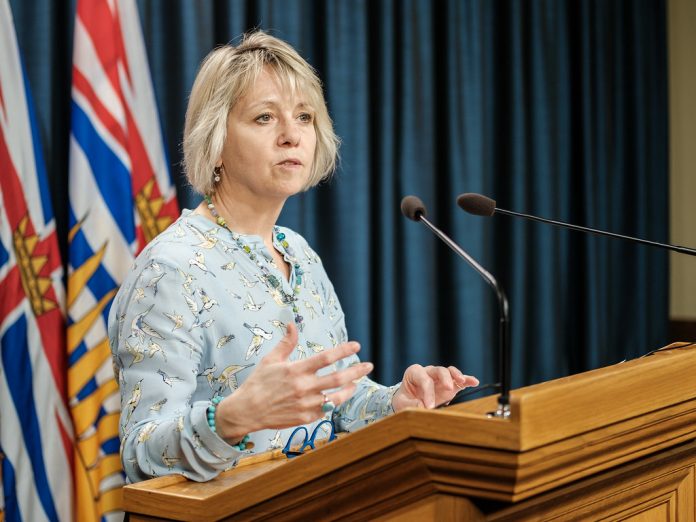
In response to the rising number of COVID-19 cases, provincial health officer Dr. Bonnie Henry announced new restrictions for the next two weeks. The orders will be put into effect starting Saturday, November 7 at 10 p.m. and are as follows:

  • Ban on gatherings with anyone other than immediate household, regardless of size or physical distancing
  • Ban on incoming or outgoing travel for sport 
  • Ban on indoor group activities such as yoga, spin classes, and group fitness classes (individual fitness activities remain unchanged)
  • Ban on funerals or weddings with those outside of your household
  • The suspension of all indoor sports that cannot maintain safe social distancing procedures
  • All businesses will be required to participate in active, in-person screening for COVID-19
  • Party busses and limos are shut down

“Provincial health orders are always a last resort, but right now these additional measures are needed,” Dr. Henry said. Minister of Health Adrian Dix added that, “We need to take urgent and focused action now to significantly bring down the rate of transmission across our two Metro Vancouver health authorities.”

There are currently no restrictions regarding schools, which Dr. Henry clarified that the province was focused on keeping open. 

“Schools are one of the things we want to protect because we know how important it is for teachers, for students, [and] for families to have schools operating,” Dr. Henry said.

There is also a strong recommendation to freeze “non-essential” travel out of the Vancouver Coastal and Fraser Health Regions.

“The focus is on reducing transmission in our communities. What we have not seen is a lot of transmission events in schools. Schools are not amplifying this virus, they are merely reflecting what’s going on in the community.”

These new orders come after rising cases within BC with a recorded total of 589 new and confirmed COVID-19 cases on Friday, November 6 and 567 on Saturday, November 7. 

At the time of writing, BC has reported a total of 18,714 with 3,741 active cases and 7,887 people who are under public health monitoring.

SFU proposes tuition increases for next two years

5
Photo courtesy of Simon Fraser University.

Written by: Michelle Young, News Editor

On November 6 2020, Vice-President, Academic & Provost pro tem Jonathan Driver and Vice-President, Finance & Administration Martin Pochurko announced in an email statement that “SFU’s Board of Governors approved a 2% increase for domestic undergraduate tuition and a 4% increase for international undergraduate tuition for the current academic year, and [ . . . ] propose similar increases for the next two years.” 

The email stated: “Right now, we expect a decrease in income, resulting in $26M less income than anticipated. At the same time, our expenses have not decreased — the shift to largely virtual course delivery required significant investment in order to support students and faculty — and we are continuing to feel the pressures of inflation, as we do every year.”

Further, the email also acknowledged that COVID-19 brought financial uncertainty and stress to the SFU community. It added that SFU “offered 3 million dollars in emergency support to students who lost income opportunities, or needed financial assistance to find secure housing or fund cancelled travel costs” and stated that SFU will continue to support students with bursaries. 

In response, The Simon Fraser Student Society (SFSS) sent out an email statement to students, condemning the university. It noted that “[Pochurko] and Driver point to supports such as bursaries and emergency aid as justification for allowing tuition increases to happen. This is not an equitable solution, as bursaries have a GPA limit that imply that financial aid is deserved by students whose grades are good enough. 

“The $3M in emergency aid has run out – meanwhile the COVID-19 pandemic does not seem to be resolving anytime soon, which has left students in ongoing financial distress. Students are facing crushing debt, a decimated job market, and being forced into precarious employment which may significantly increase their risks of contracting COVID-19.” 

The SFSS also noted that while students voted to condemn SFU’s decision to increase tuition at the 2020 Annual General Meeting, they have chosen to continue increasing tuition.  

Driver and Pochurko concluded, “As we continue to move through the budgeting process, we want to share our rationale and have a conversation with the community about our priorities.” They stated that they “will be holding two virtual information sessions.” One is scheduled to take place for students on November 23, and an open session for students, faculty, and staff, is planned to take place on November 30. 

The ableist obstacles I faced filing for withdrawals

0
Photo courtesy of SFU Re-Use for Good Project.

Written by Anonymous

Content warning: Ableism, mentions of transphobia, and negligence from authoritative figures.

My first two semesters at SFU were pretty rocky. Going into my third, I was looking for a fresh start — but the SFU administration seems to have put a series of roadblocks in front of anyone getting through rough times.

I had a series of medical emergencies in my first two semesters, and SFU, with its rampant ableism, did not know how to work with me to create an open and accepting school environment. I took Ns (an incomplete course grade) for three out of four courses last fall, and Ns for all three courses this spring.

I found myself starting my second SFU term on academic probation and financial aid warning, and was notified at the end of the semester that I was required to completely withdraw from the university. I was not informed of my options at this time, and I feared that when I left residence for the summer, I would never be coming back. 

However, because I had already chatted with advisors after my academic issues a semester earlier, I was aware of some things I hadn’t been told at that time. As a result, I applied for and was granted a complete withdrawal under extenuating circumstances (WE) for the Spring 2020 semester, filed under medical grounds. While I was lucky enough to have had advisors supporting me along the way, this process was not without its obstacles.

The first time I planned to see an academic advisor, I was on academic probation and wanted urgent help; I was informed by phone about 15 minutes before the appointment, already waiting outside the office, that my advisor was not there and that I would need to book a whole new appointment. Begrudgingly, I did. 

When I first saw an academic advisor, they could not answer all of my questions, but suggested I file a WE for the Fall 2019 semester. The next advisor I saw said that it would likely be rejected because I had passed one of my four courses, which I found discouraging, so I opted to wait. 

Fortunately, the limited information I had been given came in handy. I knew that after I failed the Spring 2020 semester due to my poor health,  I had one more opportunity to save myself from being kicked out of university and sent back to an abusive household: I could file for a WE.

After writing a detailed letter, carefully sticking to the guidelines, I had to contact health professionals that could verify my situation. Rather than just accepting my disabilities, SFU needed detailed forms from a doctor and a counsellor, and I hoped they wouldn’t need more information from my hospital or psychiatrist. 

In order to write an effective personal letter for my WEs, I needed to go into specific detail about what my medical grounds were, which were later expanded into compassionate grounds as well in the process, rather than just letting a medical professional share enough to explain my academic changes. I divulged very personal information that I’d never normally share with strangers and that should not be necessary to explain my needs. I wished I could have just said that I am disabled and had experienced a series of emergencies that interfered with work, but I was advised to list off specific symptoms and dates that violated my normal standards of sharing. It felt incredibly violating to relive my experiences on paper for the sake of some academic compassion.

But, finally, it was done. Weeks later, I had received my WEs and the scare of being booted out of university was over — for the time being. As I came back for the Fall 2020 semester, I found that the obstacles I had previously faced were just the beginning. 

Additionally, SFU did not inform me as I filed my WE for Spring 2020 that it could and would impact my financial aid opportunities. In fact, they did not notify me until weeks before the Fall 2020 semester that they may or may not give me student loans for this year due to my WEs. 

After weeks of waiting for the answer I was promised, I followed up and learned that I would be denied my student loans this semester. But thanks to the extra information provided, I knew that I could appeal for Financial Aid Probation, which when granted, would give me one more semester of financial aid as I pulled my grades together after last year’s health problems. 

I also learned that I could still file for a retroactive WE at any point before convocation, which if accepted, would take me off of academic probation and potentially reinstate my financial aid opportunities. 

I immediately appealed for both of these, in hopes that one way or another I’d be able to stay at SFU for this semester. My second WE required the same amount of intrusive paperwork, backing up my pre-existing conditions already on file and going into detail about conditions I’d previously left out of my first WE, for the sake of appeasing a judgement that didn’t want to see the same reasons used twice for WEs. Again, I felt violated.

The paperwork for my appeal for financial aid probation asked for similar invasive information: less about my financial situation and more about my health reasons for the grades I’d gotten and how I was getting back on track. I submitted 16 pages of scanned personal documents to prove that I actually do live with debilitating conditions that affect all parts of my life, and to prove my meetings with a handful of professionals. 

While all of my WEs and probation were accepted, the drawn out process of each part was invasive and violating, making it an arduous process to complete. 

With its ableist hurdles, SFU knows that my life depends on their decisions. If I do not receive support because I am disabled, I will no longer be able to stay for this semester, and potentially drop out of university altogether.

With its bureaucratic red tape, SFU knows its negligence could leave me scrambling to pack up from residence, possibly dropping my courses for the semester I am already enrolled in, forced to leave Canada (losing adequate healthcare), and returning to my only other living option: an abusive and transphobic home.

As I reflect on the hurdles that SFU administration continues to ask me to jump over simply because of my personal situation, I consider how many other students have been in similar situations. 

Whether grade changes are a matter of medical circumstances, home life changes, employment changes, or any other grounds, I sincerely hope that the SFU administration learns to accept that students are as human as they are, and that we cannot always have perfect grades. While I hope that in time, SFU policies change to be more mindful of students’ often deeply personal circumstances, I wonder how many other people like me will be denied answers or find themselves lost in piles of paperwork just for the opportunity for higher education 

Unfortunately, I know I am not the first, and I know I will not be the last. 

Why white poppies are a good addition to your Remembrance Day

0
The white poppy symbolizes recognition for the detrimental effects war has on people and the environment. Photo Courtesy of The Canadian Encyclopedia

by Meera Eragoda, Arts & Culture Editor

If you pay even the slightest bit of attention to Remembrance Day every year, you will have noticed the red poppies that seemingly everybody wears. Lesser known, however, is the movement to wear white poppies in addition to red ones — a movement that I recently learned about and wish I had known about much sooner because it is more inclusive of all victims of war. 

Created in the United Kingdom in 1933 by the Women’s Cooperative Guild, white poppies were made to be a symbol of the anti-war movement in Britain. They have spread globally and now serve as a symbol not only to honour those who fought in the war, but also all the civilians who have died in wars worldwide. The Canadian white poppy movement was started in Vancouver in 2008 by Vancouver Peace Poppies, who now distribute the poppies all over Canada.

PHOTO: Meera Eragoda / The Peak

Cofounder of the Canadian movement Teresa Gagné states on their website that she believes veterans deserve to be recognized and supported, but is also hesitant to wear a red poppy “because of the undercurrent of promotion and recruitment for current and future wars.” She states that “the white poppy attracts questions, and gives me a chance to explain the nuances of my support.”

As an immigrant to this country, this idea of nuance really resonated with me as I never felt like I could connect to the red poppy movement. I wasn’t from a family whose relatives had fought on behalf of Canada and I always felt like an imposter putting on a red poppy. However, coming from a country that experienced a civil war, a white poppy that honours all victims of war is something that does make sense to me and allows me to better connect with Canada’s history of war.

So why isn’t the white poppy, which includes more people than the red one, used more often in Canada? The biggest reason seems to be that the Royal Canadian Legion opposes it. They refuse to carry white poppies and have previously stated that they see it as an insult. To them, it takes away from the soldiers who’ve fought and/or died in the war, despite the white poppy movement making it clear that people don’t have to choose and can wear the white poppy alongside the red. Since the red poppy movement actively raises money for veterans, it’s still incredibly important to support them. But for me, wearing a white poppy in addition to the red one means I can honour my own past and recognize that we shouldn’t be advocating for wars happening anywhere.

There are countless wars fought around the world, and as of 2018 only 11 countries worldwide were not involved in some sort of conflict. Imagine the number of civilians and soldiers who end up dying in these wars. Why is it so terrible to honour and acknowledge the trauma of all those who have experienced war? The white poppy movement understands that civilians have been involved in war against their will, and should be given more support. Wearing a white poppy does not mean you’re disrespecting veterans, it is just more inclusive of everyone else.

In addition to honouring anyone who dies in war, the white poppy movement also seeks to acknowledge and mourn the environmental impacts of it. The damages of war are severe: the chemicals used can poison water and the environment, rebuilding after war can lead to deforestation, not to mention the amount of resources like oil that are used to fuel war. At a time when potentially catastrophic climate change is getting worse, a recognition of all the ways we are hurting the environment is vital for preserving our future.

If you have an extra dollar to spare and want to express that war is not the solution and does unnecessary damage to soldiers, civilians, and the environment alike, white poppies are available at locations such as Spartacus Books, the People’s Co-op Bookstore, and the white poppy website.

BC NDP set to win a historic majority

0
PHOTO: BC NDP / Flickr

Written by: Mahdi Dialden, News Writer 

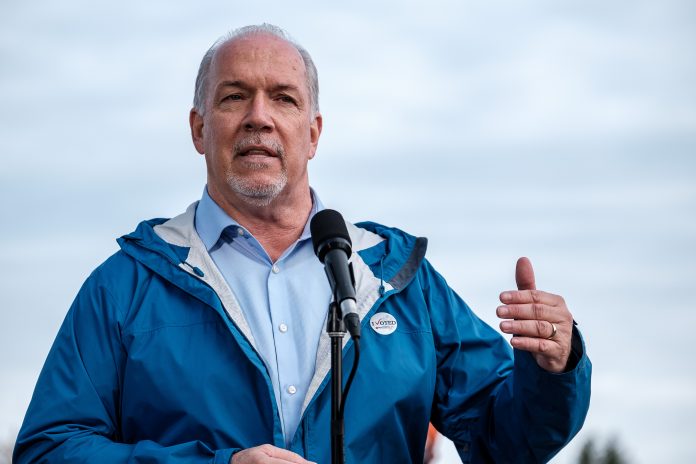
The BC New Democratic Party (NDP) is set to win a record amount of seats in the provincial legislature. With votes not fully counted, absentee ballots are set to be counted on November 6, with November 16 being the target date for the results to be released. 

The BC legislature has 87 seats that represent ridings around the province. The BC NDP currently has 55 seats, either leading or declared, with the BC Liberals trailing with 29 seats, and the Green Party with 3. 

According to CBC News, the NDP “completed 79 per cent of its promises from the 2017 campaign, from raising welfare and disability rates to putting in speculation and vacancy taxes.” Here their major promises for the 2020 election: 

Affordability promises 

If elected, families with an annual household income under $125,000 would get a one-time $1,000 COVID-19 recovery benefit. The NDP website states that “the BC Liberals’ answer is to provide tax cuts but those are proven to help people at the top while making everyone else pay for them through cuts to public services. And those public services are needed now more than ever.” This benefit is aimed to give immediate financial relief to families who are struggling during the pandemic. 

Another promise from Horgan is to freeze rent until the end of next year, followed by a permanent maximum on rent increases set at the rate of inflation. He has also mentioned a $400 renters’ rebate for households earning less than $80,000 per year. 

NDP promises ICBC profits generated during the pandemic will be returned to drivers as a rebate.

Educational promises

Horgan promised to expand student access to up to $4,000 per year to help pay the cost of tuition, textbooks, and supplies, based on financial need.

The re-elected BC NDP government aims to launch BC’s second medical school at the Surrey SFU campus to train more doctors.

The NDP also pledged to integrate childcare into the provincial public school system and build a new elementary school in Vancouver’s Olympic Village.

Healthcare promises

If elected, the COVID-19 vaccine — once available and approved — would be free to everyone.

A 10-year plan would be launched under the NDP to improve cancer care, including in rural communities that would also see more money spent on new equipment, screening, diagnosis, and treatment services. Part of this plan includes building cancer centres in Nanaimo and Kamloops.

Horgan has also pledged to complete a new Surrey hospital in Cloverdale, along with 10 new urgent and primary care centres by the end of the year. 

Transportation promises

We want to make it easier and more affordable for families to move about,” the NDP intends to make public transportation a more realistic option by promising to make transit free for children under the age of 12. This is an extension of the previous pledge for $10-a-day childcare. 

Horgan pledged an NDP government will complete a SkyTrain connection to Langley and to expand Highway 1 between Abbotsford and Surrey by 2026. 

Environmental promises

John Horgan promised to ensure BC reaches net-zero carbon emissions by 2050 and pledged to phase out and ban single-use plastics in the province. 

John Horgan’s NDP called the snap election amidst a pandemic in hopes of taking advantage of the parties’ popularity, to upgrade on the minority government from the previous 2017 election. The calling of the election faced criticism for forcing an election with the current circumstances revolving around COVID-19. 

The results of the election are subject to change and are awaiting the results of the absentee ballot count to be released on November 16, 2020.