Home Blog Page 387

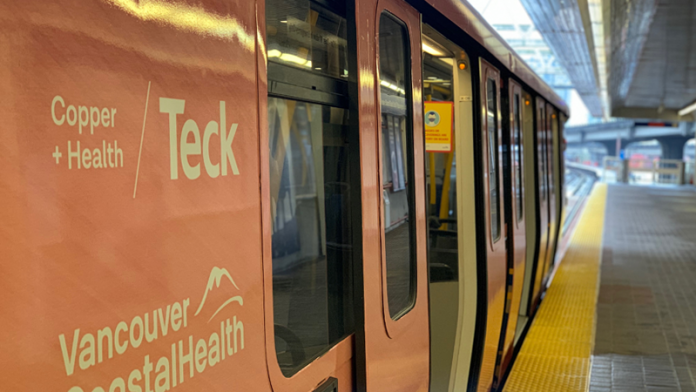
TransLink announces pilot copper-based initiative to combat COVID-19

1
Photo Courtesy of Teck Resources

Written by: Michelle Young, News Editor 

On November 10, TransLink announced a new pilot-program that aims to slow the spread of COVID-19. The initiative will use copper-based materials — which contain antimicrobial properties and are self-disinfecting — on high-touch areas of transit to “to help reduce the risk of transmission of pathogenic organisms.” 

Medical microbiologist Dr. Marthe Charles explained, “Copper has multiple ways of killing microorganisms, so one of the ways is by being toxic on contact, so that means that the microorganisms are not able to survive at the surface of the copper.

“We want to see if these products are durable and if they will retain their ability to kill germs over time while on public transportation. If this study was to be successful, self-disinfecting surfaces containing copper would become a valuable addition to cleaning hands and cleaning surfaces.” 

The pilot will take place on “two [SkyTrains], operating on the Expo-Millennium line and two charlie buses,” according to TransLink CEO Kevin Desmond.  

In regards to cost and whether fare prices were going to rise, Desmond stated, “I don’t want to say cost isn’t an issue, but the reality is [that] this is an example of testing out new technologies and innovations.” He explained that if the project yields good results, he hopes that “we figure out a way to implement something that could have lasting benefits even beyond the coronavirus.”

The initial components of the project are being funded by Teck Resources. CEO of the company Don Lindsay, stated that “the cost is approximately $90,000 and the key is to get the results from the pilot and to then we step back and decide what’s the next step and who would fund that.”

“It’s a pilot. We’re gonna see and we’re gonna learn [ . . . ] if it really is an effective approach to improving public health, and then if it can be expandable to the various different features of our broad and complicated transit system,” Desmond said. 

Five places to get vintage clothing without invading the commercialized thrifting market

0
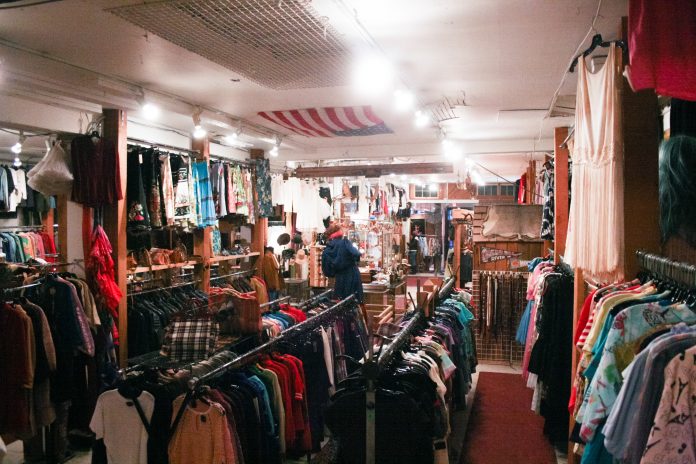
Many shops on this list announce deals on their social media, so I’d recommend following all of them. PHOTO: Gudrun Wai-Gunnarsson / The Peak

By: Juztin Bello, Copy Editor

As a fashion trend that has taken off in the past year, the hunt for vintage clothing to replicate looks of the 80s and 90s has people flocking to thrift stores all over, with one of the most popular destinations being Value Village. But while many want to hop on the vintage trend, some take issue with consumers clogging the secondhand market, resulting in the increased price range of thrifted clothing and an overhaul of middle-class consumers claiming goods intended for lower-income individuals. For people looking to put that retro flare into their wardrobes without contributing to the gentrification of thrift stores, here are five stores in the Metro Vancouver area to satisfy your vintage needs.

READ MORE: “Why we should be moving towards mindful thrifting

What’sGood? Vintage Apparel

Location: 815 12th St, New Westminster, BC
Hours: Thursday–Sunday 12 p.m.–6 p.m.
Instagram: @whatsgood_vintage

Perhaps my most visited on this list, WhatsGood? Is a small shop in New Westminster that boasts a small but ever-circulating collection of vintage clothing. Their collection of vintage hats, pullovers, brand-name pants (such as Levi’s and Carhartt), and their collection of handmade face masks help them stick out on this list. While only open four days a week, they compensate by doing daily restocks to ensure new products come in and out as quickly as possible. Because they’re open on fewer days, I’d suggest following them on Instagram since they allow online shopping through their page (with both shipping and pick-up) and update followers with their best and newest drops. 

Fun little anecdote: last time I went (donning a mask, of course) the two owners had gotten married the weekend before, and it was heartening to hear about their intimate ceremony during these socially distant times. 

Mintage Thrift

Location: 22780 Dewdney Trunk Rd, Maple Ridge, BC
Hours: Sunday 11 a.m.–5 p.m., Monday–Saturday 11 a.m.–6 p.m.
Instagram: @mintagethrift

Although there are three Mintage locations (Broadway, Commercial Drive, and Maple Ridge), the one I tend to find the most success with is the Maple Ridge location. Whether it’s because the store itself is the largest or because it’s further away and therefore less crowded is unclear, but ultimately their enormous collection of vintage t-shirts is what pulls me in. They also have a vast selection of vinyl records for as cheap as $5 for any of you vinyl record collectors. What’s more, I’ve found Mintage Thrift to be on the cheaper side compared to some of the other stores I’ve frequented —  plus, their custom tote bag is really cute, so I’d suggest picking up one of those while you’re there. 

F as in Frank Vintage Clothing

Location: 2425 Main St, Vancouver, BC
Hours: Sunday–Thursday 11 a.m.–7 p.m., Friday–Saturday 11 a.m.–8 p.m.
Instagram: @fasinfrankvancouver

F as in Frank? How about F as in fire, because the vintage clothing this store has to offer is absolute heat. Found along Main Street, this store features everything from Sailor Moon bags, to old school racing tees, to an abundance of Polo Ralph Lauren. For shoppers with a go-big-or-go-home approach to hunting vintage clothing and like a gamble, their website advertises wholesale options for buying in bundles, such as wholesale vintage t-shirt mystery boxes (up to $500 USD) and sports t-shirt bundles ($180 USD). If you’re like me and can’t commit to shopping like that, no sweat. Just take a trip down Main Street, grab some food at any of the great restaurants along the strip, and then pop right into F as in Frank — make a day of it. 

The Archive Apparel

Location: 10202 152 St #116, Surrey, BC
Hours: Tuesday–Sunday 12 p.m.–6 p.m.
Instagram: @thearchivebc 

Although this is one I’ve checked out less consistently than the rest, The Archive does not fail to grab my attention with the drips they share on their Instagram. Probably my favourite shopping spot in Surrey, this store, while small, delivers some of the freshest jackets and jerseys on the market. One notable aspect of The Archive is that they feature more footwear than I usually see at vintage clothing stores, with some really clean Jordans and (on a few occasions) Yeezys (which aren’t vintage, but look pretty sweet). They also advertise plenty of sales out of the blue, so keeping up with them on Instagram is a must. If you ask me whether to give this place a chance, the large Nike sign on the wall says it all: just do it. 

Stoxx Vintage Shop Vancouver

Location: Kingsgate Mall, 370 E Broadway Unit 118, Vancouver, BC
Hours: Monday–Wednesday/Saturday 9:30 a.m.–7 p.m., Thursday–Friday 9:30 a.m.–9 p.m., Sunday 11 a.m.–6 p.m.
Instagram: @stoxxvintage 

Found in Kingsgate Mall, Stoxx Vintage is a family owned and operated vintage clothing store that greets shoppers with a vast collection of cowboy boots, vintage brand-name apparel, and metal decor. With good music always bumping and a friendly family dynamic, a trip to Stoxx is guaranteed to be successful, regardless of how much vintage clothing you’re able to find. This past October, Stoxx Vintage did a giveaway worth $100 towards their store every week, so following their social media is beneficial for keeping up-to-date with these sort of opportunities.

SFU announces new restrictions following updated BC health orders

0
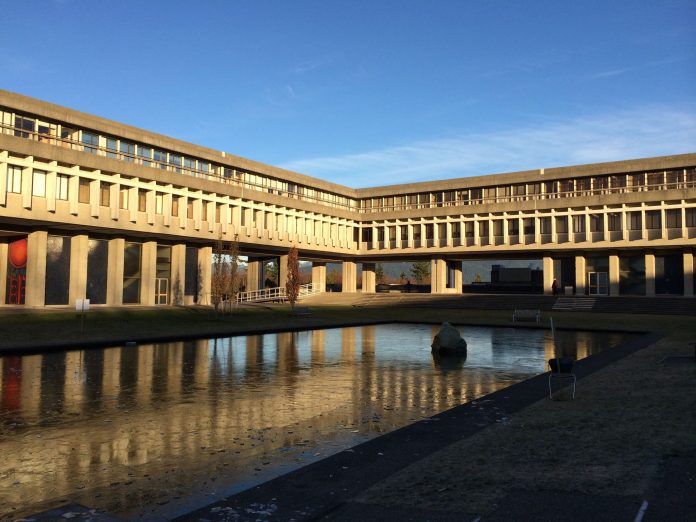
Photo Courtesy of Simon Fraser University via Facebook

Written by: Michelle Young, News Editor

With the new health orders announced for BC on November 7, SFU has followed regulations by updating their campus guidelines. Vice-President, Academic and Provost pro tem Jonathan Driver stated in an email that moving forward “staff, faculty, and students attending campus are required to conduct a self-assessment every day before they come to campus.” The email provided a link to the BC self-assessment tool, and stated that those who have possible symptoms are not to come to campus. 

Driver also stated that visitors are only permitted if they’re aiding “a core service” and must have “an invitation approved by a manager.” In-person courses will continue following protocols specific to each class. While study spaces remain open only for individual use, “common areas, including lunch rooms, are closed until further notice.” 

The email maintained that those on campus are expected to wear non-medical masks “in all indoor common areas” — which includes, entrances, hallways, staircases, washrooms, study spaces, dining areas, libraries, and “other high-traffic common areas where physical distancing cannot be maintained.”

Furthermore, “no in-person meetings, events or programs, except some essential academic meetings with approval, can proceed in-person during this time.” Driver also asked supervisors to have their staff work remotely, unless it is “related to [an] essential in-person service.”

The W.A.C. Bennett Library and Student Information Desk will “remain open with screening measures, physical distancing, and mask use in place.”

SFU Athletics & Recreation will consult with public health for guidance on updating their services. Find updated protocols on the SFU Athletics & Recreation website.

Driver concluded, “We thank everyone for doing their part to protect each other. If you become aware of safety protocols not being followed, you can report it anonymously.”

Dr. Atiya Mahmood studies accessibility in the Lower Mainland

0

Written by: Mahdi Dialden, News Writer

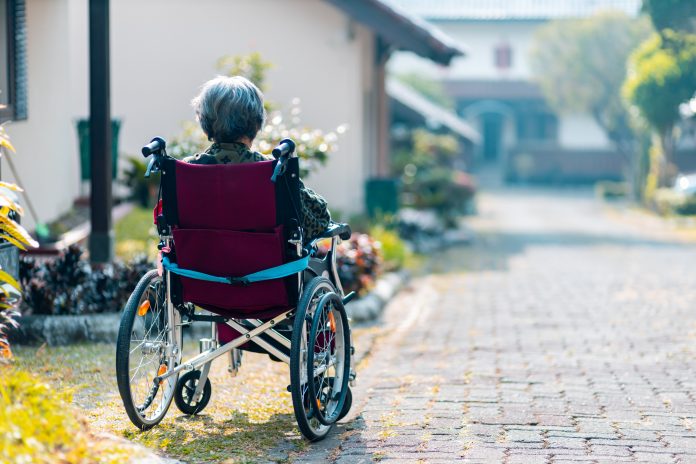
SFU gerontology researcher Dr. Atiya Mahmood and her team have been working on knowledge mobilization, a project that seeks to educate and address the needs of people with mobility disabilities in the Lower Mainland. 

The project has been split into two phases, the deMAND project (Enabling Mobility and Participation Among Those with Disabilities) and the MAP initiative (Mobility, Access, and Participation). 

The deMAND project partnered with North Vancouver, New Westminster, and Vancouver to audit the environment, and study whether mobility devices like wheelchairs and walkers were accessible. Surveys and multiple forms of observational strategies were used to compile a dataset of the accessibility in the cities.

The MAP project, which is set for the future, will focus on three aspects relevant to those with mobility disabilities. Firstly, looking at transportation —  whether it be TransLink or Uber — and if it’s accessible or not. Second, it will look at navigation and pedestrian environment accessibility, and access to neighbourhoods, sidewalks, parks, and shopping centres were studied to determine safety for those with mobility disabilities. The last focal point will explore how visuals influence social inclusivity. Mahmood explained, “Are there options for socialization there? Another thing that we don’t often think about, is it visually pleasing for people to be in those spaces? Is it inclusive? Do they feel they belong or they don’t?” 

The overall project included a user-led audit on the walkability and wheelability of the three cities. Auditors were asked to present their findings in two different ways — objectively, through a checklist that asks about the physical features of the area and subjectively, asking about the perception of the user to their surroundings. Five sections in the community were assessed: functionality, safety, appearance and maintenance, land use and supportive features, and social aspects.

Functionality focused on sidewalks and streets. For example, obstruction on the sidewalks and streets, both temporary and permanent (garbage bins, parked vehicles, trees, fire hydrants, etc.), that created “a break in the path, often needing excessive re-routing,” were recorded in all cities 50% of the time. 

The safety domain looked at traffic, weather, topography, and personal safety. This included items such as street and lighting conditions, drivers’ courtesy and cyclists, perceived personal safety, and the presence of negative elements. 

The findings showed that “the presence of public open spaces and well-maintained greenery, presence of street furniture and street lights all received average ratings of approximately 50%.” In terms of land use and supportive features certain areas in cities had, “a very limited number of [accessible] amenities and services”

In every single section, subjective input was higher reflecting the needs, preferences, and perspective of participants along with the objective features. “Subjective data complement objective findings by providing a more in-depth understanding of an individual’s interaction with their neighbourhood and the surrounding built environment.”

Mahmood explained that the ultimate goal is to use the findings to inform policy at different levels, ranging from provincial and federal levels. “Our team, the larger team, was affecting national policy that was going on for accessibility for persons with a disability,” Mahmood said. 

Finally, the educational aspect of the project aimed to inform the public on mobility issues and push for better accessibility. It entailed events hosted for the community, presenting the data in the form of an informational video, along with a photo exhibit and board game. The video’s intended purpose was to present in a captivating way, Mahmood explained, a “video speaks much more than showing a lot of bars, some charts, numbers, you know, it’s much more realistic to people.”

For more information on mobility issues, explore SFU’s Knowledge Mobilization Hub.

Mainstream veganism needs to focus on equity over moral outrage

1
Not everyone can afford to shop “pure” and “clean.” PHOTO: Anne Preble / Unsplash

by Meera Eragoda, Arts & Culture Editor

I grew up with a vegetarian mother and ate a mainly vegetarian diet until I was about 17. I’m originally from Sri Lanka, and a lot of our food is conducive to vegetarian and vegan diets. Today, I still eat largely vegetarian because the commercial meat industry remains incredibly exploitative towards animals and the environment. If people are able, they should cut down on their consumption of commercially produced meat.

From what I’ve just said, you might believe that I’m a supporter of veganism or vegetarianism, but I’m not. Or rather, I don’t support the mainstream vegan movement.

Mainstream veganism is rife with purity politics, and the presence of racism, classism, and elitism within it. Of course, there are vegans whose veganism is anti-oppressive; there are people of colour who have enjoyed largely plant-based diets for thousands of years before the popularization of it by mainstream vegans. Their voices are largely drowned out by mainstream vegans who do not understand or acknowledge their own privilege.

Mainstream veganism constructs an idea of health as “purity.” While I agree that the commercial meat industry is detrimental, what seems to be motivating mainstream veganism is this idea of purity politics — the idea of putting only “clean” foods in your body. But this requires deeming certain foods “unclean,” implying that the people who eat them are somehow sullied. Mainstream veganism perpetuates the idea that only vegetables and plant-based food are “pure” or “clean” and all meat or meat products are “dirty.” Additionally, it seems to disavow certain types of vegetables if they’re not organic, making it a very elitist stance on food. 

This idea of “purity” intersects with issues of class privilege. Foods that are labelled vegan or organic are actually more expensive, making them unaffordable and inaccessible to many both in and out of food deserts. I cannot recall going into a grocery store and finding organic veggies that are cheaper than non-organic ones. In addition, places that are designed to appeal to vegans, vegetarians, and supporters of “clean” eating, such as Whole Foods and farmers markets, are themselves expensive and, in the case of the latter, designed for people who have time off on weekends to visit them. Often the rebuttal to this is to avoid pre-made vegan foods and instead buy the individual products, which doesn’t factor in that not everyone has the time to prepare a nutrition filled meal without meat. Cooking meat is often faster and cheaper than sourcing together and preparing non-GMO goods for a vegan meal.

Next, there’s the racism present in mainstream veganism. It ignores the cultural ties people have to meat. To use one example, there are Indigenous communities in Canada that still consume meat sustainably and are also active in conservation. Not to mention that often communities of colour are the ones who rely on cheaply produced meat to survive. A veganism that dismisses other ways of being without understanding that colonialism is responsible for animal exploitation and environmental damage is an incomplete veganism.

Mainstream veganism can also be unwelcoming towards vegans of colour and fat vegans. The image of a vegan that is constantly sold to us is a white, able-bodied, thin one. This exclusion is on top of the fact that vegan food can be incredibly appropriative when it sources and profits from other cultures.

Ultimately, the root cause of all this exploitation is capitalism and colonialism. Even if consuming a vegan diet isn’t as damaging as supporting the meat industry, consuming anything under capitalism is. Just look at avocados with their huge water consumption, tendency for deforestation, and drug cartels infringing on the market. Our consumption of coffee also damages land, and the cashews we enjoy are picked by Indian women who get burns on their hands from the toxins. Where in mainstream veganism is the fight to change the working conditions of (largely racialized) people? There are also no efforts to ensure that Indigenous conservation is supported, that migrant workers are protected, or that food sovereignty is achieved.

The mainstream vegan movement should be advocating for all of these causes and for people to cut down on commercially produced meat wherever they can. Greater involvement in this fight would help the movement concentrate on accessibility instead of gate-keeping and moral purity.

Kickstart Disability’s event speakers talk candidly about how disability and ableism affect their art

0
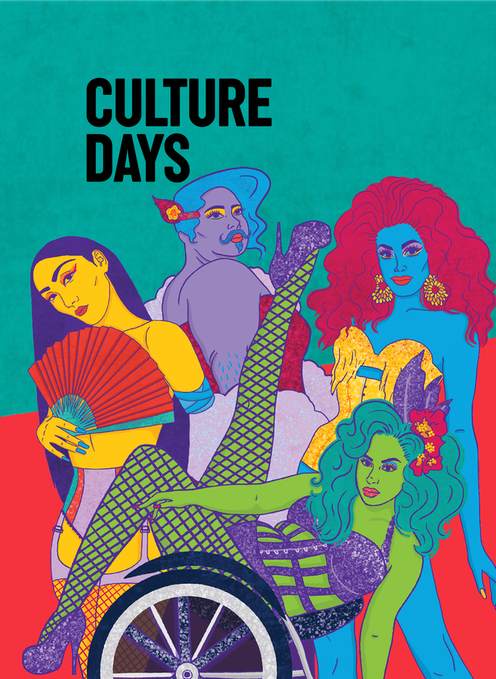
Topics of discussion included how to redefine disability to recognize value in it. Courtesy of BC Culture Days

By: Serena Bains, Staff Writer

Editor’s note: The language used in this piece is at the writer’s discretion as a member of the disabled community but perspectives on identity-first or person-first language vary within the disability community.

10 x 5: Art & Disability was an event that took place on October 24 to platform the art and voices of disabled artists, and allow them to describe how their disabilities inform their artwork. The event, presented by BC Culture Days and Kickstart Disability Arts & Culture, consisted of 10 artists doing five-minute presentations on their relationship with art. Following this, there was a question and answer session, during which participants could gain further insights into the artists’ perceptions of their disabilities and how these intersect with their artwork.

Whenever I attend an event held by the disabled community, I feel at home, as I know the community present can empathize with experiencing the same constant ableism that I have experienced. As someone who gave up artwork long ago due to joint pain and a lack of motivation, the event was a refreshing and nuanced expression of loss, passion, and pain. The artists spoke about how the reality of resiliency from a disabled perspective is enduring pain to simply participate in a creative process.

August Bramhoff, who became disabled as a result of an accident in 2013, expressed the loss experienced while reflecting on learning how to write their name again: “Just having the thought of possibly losing something that I valued more than anything, [ . . . ] my ability to create and make art. That shook me to my core.” Healing and regaining their ability to make and create art became Bramhoff’s main priorities. Bramhoff continues their work on these priorities constantly, as a photographer who works with film — digital work aggravates their disability. Bramhoff has a series of self-study pinhole photography that will be in an upcoming show in the Ranger Station Gallery in November.

Artist Taryn Goodwin works with the mediums of dialogue and interviews to reframe the body as knowledge. She presented and read one of her pieces which consisted of an interview she had with herself. The purpose of the interview piece was to encourage people to go at their own pace in pursuing reflection, wellness, and power. After reciting the interview, Goodwin asked participants to reflect and interview themselves about how to non-judgmentally listen to their body and how to integrate wellness within their artwork — especially when pursuing their passion can cause more pain.

Goodwin inquired of us, “What ways can we build slow, full, activism in producing personal power and agency, against the capitalist, ableist, classist, [and] racist forms of oppression? And how can we redefine disability? Not as a limitation, but as a skill set to be shared, exchanged, and valued?”

Troy Lindstrom is a line work illustrator whose upcoming exhibit in December at the Two Rivers Gallery consists of portraits of people who have had a positive impact on his life. While Lindstrom expressed his love for art, illustrations, and the creative process, he also reflected on the anger and resentment living with a disability can create within a person. Many of his illustrations express these emotions through pieces entitled #NotAMonster, #NotInvisible, and #NotBetterOffDead. The latter represents the extent of society’s ableism, where it is a common belief that the better alternative to not having a disability is not existing at all. 

Lindstrom spoke to why I imagine all of the artists and participants were present at the event, saying, “If we want to be seen, we must stand and show society who we are. It is a decision that every person with a disability must make for themselves because it comes with risks.” If we don’t show society who disabled people are and gain further representation, nothing will change for us.

Overall, the event was a reflection of the barriers disabled people have to endure in every aspect of our lives. While the resilience of every artist is noteworthy, the discussion avoided the ableism of inspiration porn where people “overcame” their disabilities. The conversations of ableism, capitalism, racism, and all forms of oppression from the viewpoint of disability justice is a necessary dialogue that will continue through these artists and their resulting artwork.

No, The Social Dilemma, we won’t be deleting our social media accounts

0
Social media can be as much of a friend as it is an enemy. PHOTO: Afif Kusuma / Unsplash

by Emma Jean, Staff Writer

A couple of weeks ago, I settled into watching The Social Dilemma in the name of a family movie night. From what I had heard, the full-length Netflix documentary-drama sounded like the least enjoyable part of an introductory communication class, and as I watched it, my suspicions were confirmed. When I asked my dad weeks later what he remembered from the film, he replied: “Phones are bad.” He paused, and then said: “Well, I guess phones are OK in moderation.” The latter would be the more logical conclusion, but that certainly wasn’t the narrative the filmmakers overwhelmingly chose. 

One former tech executive after another sat across from a camera and expelled warnings about the manipulative nature of social media while dramatic scenes played in between. It certainly made good points about the techniques that algorithms use to keep your attention, but it drew a sensationalist conclusion that the people who use social media are helpless against its seduction. In reality, users that are armed with a knowledge of how these platforms operate can often dodge these tactics and reap all the good that they can offer. 

Many of the (over)dramatized moments of the film focus on the manipulative functions of social media, forcibly radicalizing a doe-eyed teenage boy through strategic push notifications. This reminded me of the presentations I sat through in high school attempting to scare impressionable teens into seeing the dark underbelly of social media lurking just below the surface of their cell phones. It’s not so much that they’re completely wrong — it’s ignorant to say that a sinister and manipulative side of social media isn’t weaponized in order for platforms to make money. Anyone who’s lost 20 minutes of their day from just opening TikTok can tell you that. However, it’s also ignorant to assume that there can’t be measures taken against it, and that the profit-hungry intentions of the product always outweigh the good it can provide. 

Some of the most valuable and fulfilling communities I’m a part of have been discovered and maintained through social media. It’s helped me find hobbies, music, career aspirations, mental health support, political resources, queer groups, even a path back to something adjacent to spirituality. All of these have made my life dramatically richer, and most of which I likely wouldn’t have found without it. In so, so many ways, it’s made me feel less alone. I’ll take that with the side of digital caution any day. 

A major ‘sobering’ moment from the film is the idea that when people consume a free service, their potential patronage is what is being sold to advertisers. While it does feel shocking to imagine some part of ourselves being sold as a digital entity, what that really means is that companies make money from showing us ads.

This just manifests in the way the personalization of ads has become more common and how social media companies are engineering ways to keep viewers online long enough to be exposed to them. If impulses around ads are managed and there is awareness of corporate tactics, social media doesn’t need to be a bad place. Simply turning off browser personalization cookies make it so personalized ads aren’t even shown at all. 

Social media doesn’t need to be the boogeyman that the filmmakers made it out to be. They’re not wrong about the manipulative nature of social media, but don’t let that take away from the benefits. To be conscious of media consumption, take on strategies to limit exposure and not get sucked into ads or an algorithm. If social media is giving community and goodness to your life, it’s perfectly smart and okay to keep it in it regularly. Don’t fall for the panicking narrative that The Social Dilemma lays out.

Monday Music: Songs for morally ambiguous villains

0
"Monday Music" in giant yellow block letters with a red background
Monday Music: your weekly themed playlist. Image courtesy of The Peak.

By: Molly Lorette, Peak Associate

There’s rarely anything more intriguing than a well-written and morally complex villain. Of course, a cool motive rarely justifies the atrocities committed by a villain, but it does make the story much more exciting. Not to mention, villains always have the coolest movie music moments! Here are just a few of my favourite bangers that I think are best suited to those sympathetic villains we all know and love.

Heaven Knows” — The Pretty Reckless

Courtesy of Goin Down Inc.

This is definitely the kind of song I would totally commit arson to (for legal reasons, this is definitely a joke). I would picture this villain as someone who has been driven to their actions by the unfortunate circumstances created around them, just understandable enough to be somewhat sympathetic. More than likely, they would be the kind of character motivated by revenge. Over time, they have been so blinded by anger and resentment that they won’t allow anyone (not even a hero) to stop them in their quest — all the while accompanied by post-grunge rock guitar riffs and themes of religious guilt.

Uprising” — Muse

Courtesy of Warner Music UK Limited

This is the kind of song I would imagine being used for a character who is the leader of some kind of anarchist movement dead set on overthrowing the government. So many different options have been exhausted, that they have come to believe that a complete blank slate is the only option for peace. Such a character would perfectly suit the overall mood of this rock anthem, which calls fellow anarchists to arms against corruption. Not to mention, Muse is no stranger to awesome music moments in movies (see: the vampire baseball scene in Twilight).

I Will Never Die” — Delta Rae

Courtesy of Sire Records

I’ve always had a somewhat soft spot for villainized women in horror and I feel as though I would be somewhat remiss if I didn’t include them. This folk rock song is for the kind of villain that I imagine as either immortal or raised from the grave in some capacity. Though it may not be particularly badass in the classic sense, its slow drumbeats and eerie lyrics are perfect for a villain sharing the same dramatic flair as the Sanderson Sisters from Hocus Pocus, with the kind of motivating resentment that can only be strengthened from a supernaturally long lifetime.

“Toxic” — The Surfrajettes 

Courtesy of Hi-Tide Recordings

No villainous movie moment could ever be complete without an awe-inspiring fight scene, and there’s no better background song than the 60s surfer rock cover of Britney Spears’ iconic song “Toxic.” To me, there is something very badass about subverting the familiar into the unfamiliar. I can’t help but imagine how awesome it would be to watch a villain and a hero face off against one another in a fight to a death, all the while accompanied by an upbeat beach-y guitar ditty.

Need to Know, Need to Go November 9 to 15

0
Illustration of a blue calendar, with "Need to Know, Need to Go" written on top
Arts & Culture events to catch around the city. Image courtesy of Brianna Quan

By: Charlene Aviles, Peak Associate

South African Film Festival | November 1–12 | Cost: $10 | Online

The South African Film Festival will offer 15 documentaries and short films for online streaming, the proceeds of which will go to Education without Borders’ (EwB) programs in South Africa and Canada. Immerse yourself in the world of South African culture, history, and politics. Participants have a maximum of 24 hours to access their rented film. The films discuss various topics such as the rights of the San and Khoi Indigenous peoples, apartheid, Nelson Mandela’s activism, ballet, adoption, and poaching. 

Eastside Culture Crawl | November 2–9, 12–15, 19–22 | Free | In-person at various venues and online

The 24th annual Eastside Culture Crawl is a visual arts, design, and crafts festival featuring 247 artists. The festival events include a silent auction, “artists’ demonstrations, workshops, [a] Talking Art series, and [the] Moving Art virtual exhibit.” At the Talking Art series, gain insight from the panel of artists who discuss their struggles adapting to a pandemic. All participants must wear face masks and follow social distancing guidelines. Because no drop-in studio visits are permitted, book an appointment before visiting the studio. Virtual studio tours are available via live stream.

Lumière Vancouver | November 5–30 | Free | English Bay and Jim Deva Plaza

The 7th annual Lumière Vancouver, “an annual event inspired by light, art, and creative expression,” showcases light installations in English Bay and Jim Deva Plaza. After sunset, participants can enjoy the view of the grizzly bear and prism light installations. The event organizers recommend that participants wear face masks, sanitize their hands, and adhere to social distancing guidelines. 

Canadian Online Jazz Festival | November 8–5 | Free | Online

Through a collaboration with jazz artists throughout Canada, several jazz festivals from several Canadian cities will feature performances from various music genres such as R&B, jazz, and soul. Please note that the 2020 Jazz Sudbury Festival and TD Vancouver International Jazz Festival are postponed.

Seth Klein discusses his newest novel, A Good War, at SFU Vancouver Lunch ‘n’ Learn event

0

Written by: Karissa Ketter, News Writer

Vancouver-based public policy researcher and writer Seth Klein was featured at the October 27 event hosted by SFU Vancouver via Zoom. Klein’s book, A Good War: Mobilizing Canada for the Climate Emergency, argues that the climate crisis we are facing today parallels Canada’s fight in World War II. Klein stated that the similarities are “not just in economic terms, but in a host of areas.” The connections to WWII reminds us that this isn’t the first time “we have mobilized in common cause across society to confront an existential threat.” 

In his discussion, Klein noted that his book aims to address how public opinion is “rallied to support mobilization during the war [and] how could it be galvanized again.” He also addresses “the role of government, the news media, [and] arts and culture [in gaining] social solidarity secured across class, race, and gender.” 

Klein examines the economic implications of eradicating the need for fossil fuels. This coincides with the need for public policy and social security for fossil fuel workers. Components of this could include “a real childcare program, free post-secondary education, and elder care, and all of these things that would change the balance of what we think we need to pay for on our own and what we pay for together,” according to Klein. 

The opening discussion offered an introduction to the first chapter of his novel: a 14-step battle plan for climate mobilization. Klein argued that  some of the most important steps are to adopt an emergency mindset, rally the public, and ensure the economic infrastructure to support the fight. In the fight for climate change, Klein’s primary focus is shifting our legal policies.

Klein noted that he believes “inequality is toxic to social solidarity and mass mobilization.” Indigenous peoples “played an important role in the second World War,” as Klein remarked. “As our mainstream politics dithers and dodges on climate change and coherent action, over and over and over again, it is the assertion of Indigenous rights and title that keeps buying us time” as Indigenous peoples have fought for the slowing of fossil fuel consumption and conservation efforts. 

A workshop moderated by SFU Professor of urban studies Meg Holden led a discussion period, following Klein’s introduction to his book. In addition to public policies regarding fossil fuel workers, Klein also discussed the importance of youth-led activism. 

Klein stated that “Vancouver has one of the most ambitious climate emergency plans in North America.” Their recent climate change motions have all been passed unanimously, which is unusual for Vancouver’s city council. Klein noted that the reason for this was the high school students who would skip school to rally outside while the votes were taking place, filled the galleries, and spoke in front of the council. According to Klein, it was their movement that “made it politically impossible to vote no.”

Klein argued that “our leaders [are] reluctant to recognize what would be necessary” in the fight against climate change. Klein noted his disappointment in the message that Trudeau’s government is sending — explaining that they passed “a climate emergency motion in the house of commons one day, and then proceed with reapproving the TMX pipeline expansion the very next day.” This is “a dynamic that [he calls] the new climate denialism.” 

With his book, Klein invites “all of us [to] reflect on who we want to be, as we act together to confront this crisis.” 

For more information on Seth Klein’s A Good War, visit his website, which outlines organizations and movements for activists, volunteers, and financial supporters. For more information on upcoming Lunch ‘n’ Learn Discussions, see SFU’s Event Calendar