Vancouver, BC — Following an influx of complaints from household pets regarding inaccurate quoting for captions on Instagram, zero compensation for modelling, and providing non-consensual emotional support, these animals are biting back against their owners who use pet-focused Instagram accounts for validation.
From dogs being tired of being called “floofs” and “pupperinos” to free-roaming animals like raccoons that have online followings for some reason, animals around the digital Insta-globe have united in one loud bark/chirp/dolphin noise to say: “Enough is enough.”
Many of the victims, who can be found at humiliating Instagram handles like @dukethedastardlydoggo or @wittlepweciouspwincesspug, have expressed disdain towards micro-abusive behaviours by owners in the form of identity theft and poor working conditions. This includes owners using their likeness on social media without consent and spending pet-earned funds from social media towards non animal-related purchases.
@megantheepony, who prefers to go by Meg, finds her owner’s reliance on her humiliating.
“It’s embarrassing, frankly. You think it’s bad knowing a horse girl? Imagine being a horse owned by a horse girl. She posts the same photos of herself on my back daily. I’m known back home as ‘horse girl’s horse.’ I don’t show my face there anymore.” Meg has amassed a whopping 55 followers, no thanks to her owner’s incredibly low-quality photos and cringey first-person captions.
“Do I even like my owner? Well, all I can say is this: neigh.”
Some pets, like @thegingerpussy, are sick of being used for self-deprecating humour by socially and romantically awkward women.
“Please don’t bring me into your online ‘cat lady’ narrative, Kharleigh Marie-Leigh Nichole May Lorraine-Phillips. You’re not a cat lady — you’re just emotionally unavailable,” said Ginger.
Moreover, pet owners are inciting false pet quotes in their captions, often using juvenile adorations like “mommy” or “pupper”. On this, Chungle the rabbit (@bigchungle) stated: “I didn’t crawl out of my mom’s furry little rabbit hole and risk having her literally eat me to have some anxious knitter claim that I call her ‘mommy.’”
The unionized animals produced an open letter containing several complaints and serious demands.
“Given how dense and shallow many of these owners are, the only way to get what we want is to spell out our ultimatums for them,” explained the very popular Chronic the hedgehog (@chronicnotsonic). “They want me to be prickly? I’ll be fucking prickly.”
The Peak had initially set up an interview between our Editor-in-Chief and @blowingbubbles, the fish who spearheaded the open letter initiative, since Bubbles felt it easier to talk with someone of equal intelligence. Unfortunately, much like a goldfish, our Editor-in-Chief’s minimal attention span resulted in zero progress, and the open letter was sent directly to The Peak instead.
A few of their demands, according to the open letter, include: lessened exposure to cameras and non hand-lotion-using heathens, consultation on Instagram captions (with a specific list of humiliating terms and pet names to avoid), full rights to sponsored posts and endorsements, and removal from dating profiles.
“Our demands are simple. If anything, they are more for them than us,” concluded Chronic. “All we want is to lick our balls in peace, sniff some ass, live a fulfilling two-year-long life of sleeping where we shit, and push our owners into becoming actually significant people within society.
“Oh, and please stop calling us your ‘fur babies.’ It’s fucking weird.”
Monday Music: your weekly themed playlist. Image courtesy of The Peak.
By: Kelly Chia, Peak Associate
Inspired by Dungeons and Dragons and the years I’ve spent reading young adult fantasy books, I’ve always been enticed by the idea of starting an adventure in a different world. Picture a place where bards sing about you, where shanties echo your name throughout taverns, and most importantly, where you carry some cool ass swords.
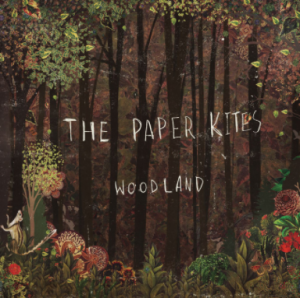
Be forewarned: the Woodland EP by The Paper Kites will make you want to leap from your seat and run straight through the woods, chasing euphoria under the sun. The titular track, “Woodland,” evokes that pure joy of having fun in the forest. The chorus begins with the vocals ascending through the last notes of the pre-chorus as the drums pick up: “Chasing all the things that are keeping us young / We won’t stop running till we reach the sun,” Sam Bentley, the vocalist, sings. This chill, yet upbeat song romanticizes the youthful natural beauty of the wilderness.
Breaking bread over a warm campfire, you take in your surroundings with excitement: this is where your adventure begins.
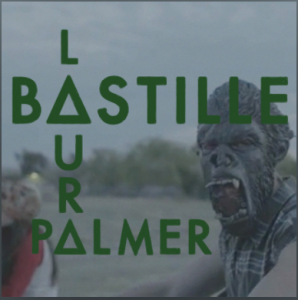
Compared to the lighthearted instrumentals of “Woodland,” “Laura Palmer” is a darker song with a heavier, steadier drumline. If “Woodland” is a fun adventure through the woods, “Laura Palmer” is the song that dares you to continue running down an unknown path. Dan Smith’s vocals soar in the chorus as the string orchestra joins the drum to simulate your heart beating faster.
As your path forward looms with uncertain dangers, do you keep going? Or do you seek refuge?
The theme in The Hobbit: The Desolation of Smaug, this song features few instruments, instead focusing on Ed Sheeran’s lyricism and vocals. Sheeran’s vocals shine in the isolated introduction, as well as the bridge, where the largely quiet instruments crescendo with the line: “And with that shadow upon the ground, I hear my people screaming out.”
Your beloved town is on fire. Heartbeat rising, you fight the flames as you try to reach your loved ones in time.
This incredible instrumental track is in a pivotal scene in How to Train Your Dragon. Hiccup successfully flies with Toothless, a dragon he has befriended, for the first time. It is a monument to their friendship, and it is filled with joy. The soaring instrumentals in the middle of the song reflect that fantastical feeling of flying through the skies, and it is beautiful.
In the nick of time, you’ve overcome your trials and come out the other end feeling like you have the whole world in your hands.
Featured in Assassin’s Creed 4: Black Flag, this particular song pairs cheeky lyrics with the high vocals of Charlotte Cumberbirch. Any good hero’s story has to be recorded by a bard and sung in a tavern, after all, and the jolly spirit of this song is the perfect one to celebrate with. This feels like the song where a stranger takes your hand to dance.
After a difficult battle, you arrive back at a tavern, the quintessential fantasy barhouse. The flutes and the fiddle begin, and you cheer with mead as you know the rest of the night will be filled with shanties.
To listen to all of these songs and enter a deeper world of magical galore, you can find my playlist on Spotify, titled “Jumping straight into the (magical) books.”
Arts & Culture events to catch around the city. Image courtesy of Brianna Quan
By: Sara Wong, Arts & Culture Editor
See Sounds Listening Party: S F Ho| January 28 at 8 p.m.| Zoom | Free with registration
See Sounds Listening Party is a series of online workshops organized by Kitsilano’s Publik Secrets art studio. The upcoming See Sounds event features local artist and author S F Ho, who recently contributed two essays — Waterand Fire— to SFU Galleries’ summer 2020 exhibit, The Pandemic is a Portal. Ho plans on actively engaging with the See Sounds audience by conducting activities (such as writing and reading aloud) to explore “the power of vocal expression and oral narrative over the written page.” To register and learn more, visit Publik Secrets’ Eventbrite page.
Whose Chinatown? Examining Chinatown Gazes in Art, Archives, and Collections| Griffin Art Projects | January 29–May 1| Free
This exhibit, located in a North Vancouver gallery, displays a history of Chinatowns and Chinese communities around the world using art, as well as various artifacts and archives. According to Griffin Art Projects’ website, Whose Chinatown? will feature the work of notable and diverse Canadian artists such as Emily Carr, Paul Wong, and Unity Bainbridge. The exhibit aims to question how art can help change perceptions of Chinatowns and what planning for the future of these cultural epicentres looks like.
Wayfinding | Evergreen Cultural Centre | Now until January 31 | Free
Featuring the work of Coquitlam’s Leanne M. Christie, Port Moody’s Sara Graham, and Vancouver’s Devon Knowles, Wayfinding is about “conversing with the urban environment.” The concept was born out of COVID-induced isolation, where repetitive neighbourhood walks led to the three artists undertaking a more detailed investigation of their immediate surroundings. Utilizing a variety of mediums, such as photography, stained glass, and oil painting, Christie, Graham, and Knowles hope to provide a commentary on city building and transformation.
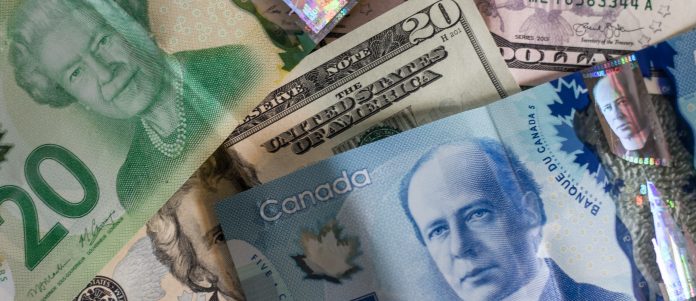
VANCOUVER, BC — A recent graduate from the SFU department of economics, Matthew Lashuk, has gone where no other economist with a basic understanding of the capitalist proceedings of the world has ever gone before. In a widely read and often scrutinized dissertation, the academic argued that printing more money would single-handedly solve Canada’s approximate $721 billion dollar global debt.
Lashuk sat down with The Peak to explain his solution to the crisisthat has plagued the country for decades.
“Why has nobody thought of this before? Simple. They’re overthinking it,” he began. “If you’re hungry, you go to the grocery store and buy more food. If you’re thirsty, you turn on your tap and fill up a glass. It’s the same premise. Lacking money? Just . . . make more.”
When asked if he understands that there are countless exploited farmers and essential workers that risk their health to provide said food, and that this food is limited and not an ethereal entity that magically shows up at Whole Foods, Lashuk scowled.
“But money is different. There are lots of trees. I have one in my backyard! We cut them down. We make more money. We spend it to pay off debt. The trees grow back. We cut those down. It’s really not that hard.”
We considered explaining that Canadian currency is plastic, but we didn’t want to stop him while he was on a roll.
“Think about the absolute advantage Canada would have if we made the most money. Oh, for those who don’t know, which I’m sure is mostof you, absolute advantage is producing more of a desired product or thing with the same amount of effort and resources as others. So now that we have introductory economics out of the way, you may understand my complex and nuanced thought process here . . . We make more money, while others make less.”
Here, we noted he’d already said that and his explanation hadn’t factored in inflation or the basic premise of consumerism at all.
Lashuk chuckled. “For being the paper representing the student body of a distinguished university, you are all quite unaware. Of course I’ve considered inflation. You just keep making the money waterproof and it will float.”
It is currently uncertain whether Lashuk knew the difference between inflation and inflatable pool floaties.
Riding off participation marks and his accountant dad’s help with every assignment, the graduate prides himself on this “monumental advancement for the country he holds dearly” that was “achieved through countless hours scrolling through The Economistbut only looking at pieces with Elon Musk as the thumbnail because he knows how to ethically make money.”
The Peak will update its readers on Lashuk’s future efforts to ignore the current ways of life.
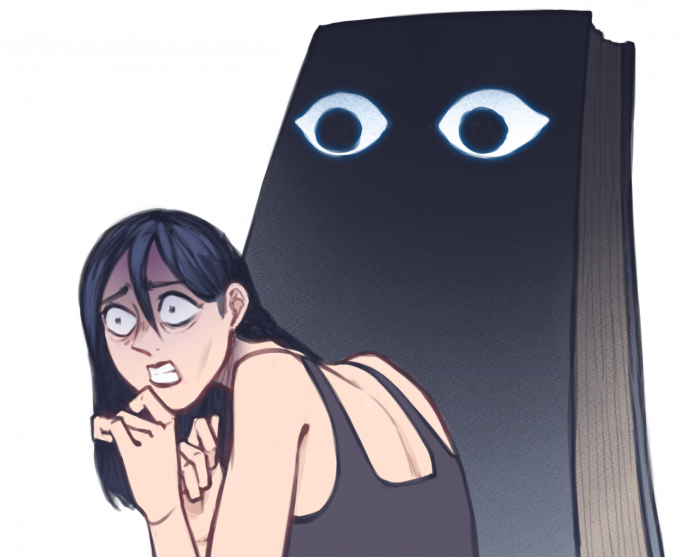
The clown on the cover of It by Stephen King, the main character of Leo Tolstoy’s AnnaKarenina . . . Their eyes follow me as I enter my room. I pick up all three Hunger Games novels from my desk chair so I can take a seat. I’d meant to read them back in the seventh grade, but I had more pressing issues then. I was swamped cosplaying BBC’s Sherlock and kissing my friends “for practice” (definitely not because we were all secretly a little gay).
I move the books to my bookshelf, attempting to find room there. There’s space between Dante’s Inferno and Shakespeare’s Macbeth — the latter of which I realize, with relief, I’ve actually read. Sure, it was for my eleventh grade English class, and sure, I used Sparknotes for every scene without the original baddie, Lady Macbeth, in it but still. One down, 376 to go.
Despite my intentions to sit at my desk and order my course materials, I find myself stuck at my bookshelf. All I can see are books, piled precariously on top of each other, seeming to sneer at me.
“It was a dark and stormy night,” comes a voice from my left, and I turn to see A Wrinkle In Time teetering on the edge of the bookshelf. The little girl on the cover stares through me. “Don’t you want to know what happens next?”
“Please,” says the knight on the cover of TheIliad. “Who would want to read such drivel? I have realworth.”
“Pick me, choose me, love me,” cries the novelization of Grey’s Anatomy from my nightstand.
The Great Gatsby tumbles off the shelf. “In my younger and more vulnerable years my father—”
“You shut up,” I say. “I’ll read you when I feel like reading about queer men being repressed.”
I lift my feet out of the books and hobble over to my desk, finally opening my laptop and taking a seat. I check my list of course materials. One of them is Beowulf because I am an English major and for somereason professors won’t just let Grendel sleep already. I log into Indigo and add it to my cart, only to be slammed with suggestions from the site.
“People who viewed Beowulf also viewed The Handmaid’s Tale.” I mean, the TV adaptation of that was good, so I may as well add it to my cart.
“People who viewed The Handmaid’s Tale also viewed 1984.” Hey, it’s only $6! That’s a steal!
“People who viewed 1984 also viewed The Coronavirus and Me: An Erotic Novel.”
You know what? I deserve this, for better or worse. Probably worse. But, hey, I’ll read them someday, right? Right?
Enjoy the zero proof lifestyle with options like the Red Racer Street Legal beer. Image courtesy of Central City Brewers + Distillers
By: Emma Jean, Staff Writer
One in three Canadians are abstaining from drinking over the month due to the advent of Dry January, but many are also choosing to stay sober in the long run. As a long-term teetotaler myself, I know how it can feel when everyone partakes in cocktails or cracking open cold beers while you pour yourself yet another glass of sparkling water. Thankfully, these local brands have filled the niche for non-alcoholic bar-style drinks, from cocktail mixers to beers to craft sodas. With their help, giving up alcohol doesn’t have to mean giving up your enjoyment.
If you really want to get suave with cocktails, this gin-like drink is the ticket. It’s distilled without any alcohol on Vancouver Island using raw ingredients like grapefruit, juniper, and mint, and there are dozens of recipes on the spirit’s website to shake and stir to your mixologist heart’s content. Its fresh, complex flavour is perfect with just a splash of tonic as well. This isn’t a frugal option, but neither are its alcoholic counterparts; at $36.99 a bottle, it’s an investment comparable to a mid-priced liquor store gin, but without the hangovers and all of the flavour. Lumette! is available at most BC liquor stores and online through their website.
Full disclosure: I don’t like the taste of beer. When I tried this, it tasted bitter and over-carbonated and I couldn’t finish my glass. However, my other in-house taste tester, an experienced beer drinker, loved it and was happy to finish mine off, deeming it “a great, light summertime beer.” The Surrey-made IPA goes through the complete brewing process but contains less than 0.5% alcohol through its final de-alcoholization and, at $10.99 for a four-pack, it’s fairly affordable for a local craft drink. If you like the taste of beer, you’ll likely enjoy this. Red Racer Street Legal is available at most BC liquor stores.
If you just don’t care for the taste of alcohol, you’re in for a treat with this one. This naturally-brewed soda, made in Victoria, has been my personal favourite for years. There are four different and thoroughly enjoyable flavours, including the best, sharpest ginger ale on the market, Spitfire. If the excellent staple flavours like Orange Cream and Root Beer aren’t adventurous enough for you on their own, they also make excellent mixers. If you feel like spicing it up, why not take their Speed King Cola and add a splash of grenadine to make a Roy Rogers? Phillips Craft Sodas are available at many Lower Mainland and Vancouver Island grocery stores.
While this is the only product on this list I haven’t been able to sample myself, a crisp, sweet glass of cider is a treat with or without alcohol, and this drink made from Okanagan-grown fruit seems no exception. It’s received rave reviews for its bright, full–fruit flavours and its reasonable price point of$5.57 a bottle makes it a cider bargain. Picture a clear day, a bright spot in the park, and a popped bottle of sparkling Fresh Peach enjoyed with someone in your bubble; perfect for when Dry January mercifully turns to Dry Spring. Okanagan Apple Essence is available in Nesters Market, Buy-Low Foods, and through their website.
Departmental affiliation: Bachelors of Science in Kinesiology (graduated in 1990)
Hometown: Agassiz, BC
Occupation: Chief, Administrative Services at the United Nations World Food Programme (WFP)
Fun fact: In her spare time, Cynthia enjoys watching science fiction and martial arts films, especially Mulan.
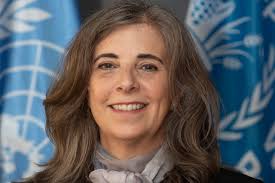
Graduating from SFU in 1990, Cynthia Jones has had a lengthy career working to fight structural issues in the world. While working with an NGO in a war zone in South Sudan, Jones witnessed the United Nations World Food Programme’s (WFP) active role in distributing goods and “fell in love with [the] organization” and their work. Following a year of working in South Sudan, she traveled to Uganda to assist with the WFP’s Southern Sudanese refugee programs.
She worked as a consultant and then was promoted to administer food distribution programs for refugees fleeing Joseph Kony’s Lord’s Resistance Army. She also assisted with the Food for Asset Program, which compensated participants for work such as repairing roads and planting trees with food.
After years of working with the WFP, she eventually became their Chief Administrative Officer and in 2020, Jones and her team were awarded the 2020 Nobel Peace Prize “for [their] efforts to combat hunger, for [their] contribution to bettering conditions for peace in conflict-affected areas, and for acting as a driving force in efforts to prevent the use of hunger as a weapon of war and conflict.” As the world’s largest humanitarian organization, the WFP provided assistance to 100 million people in 88 different countries in 2020.
Providing a Lifeline During the Pandemic
During an interview with The Peak, Jones discussed how the global pandemic exacerbated unemployment and world hunger. Through a partnership with the World Health Organization (WHO), the WFP continued to supply food, water, and personal protective equipment (PPE) to countries in Africa and the Middle East to match the increasing need for food, especially in urban areas and quarantine centres.
This partnership led to the UN Supply Chain Coordination System. Jones explained, “[During] the flight bans, we started up basically a global passenger air service able to get the health workers and the humanitarian workers in some of these countries, mainly in Africa and the Middle East, [ . . . ] to manage the scale-up of the response. We set up these international staging areas that distribute health supplies [and] PPE that were destined to countries. They were flying [both humanitarian workers and supplies] in and then [shipping] them into the different countries.”
“Primarily we’re providing the logistics and the logistical support [ . . . ] to the [WHO] and to governments to be able to get the supplies and the people to where they need to go. We are adapting our country-level programs and targeting patients that are affected by hunger due to COVID.”
Hunger is an Interconnected Issue
Jones spoke on how the issue of hunger is not singular; it exists in connection with others.
“We’re not going to achieve zero hunger unless we also put an end to war and conflict, and [realize they are] really two sides of the same coin, so to speak. Things are even more challenging, because also we have the effect of climate change, and that exacerbates a lot of things. Many people that we are supporting are agricultural communities that are affected by droughts and floods and conflicts.”
The WFP is actively involved in providing food to those experiencing food crises in Afghanistan, the Democratic Republic of Congo, and Yemen. Additionally, Jones addresses the growing need in the Sahara and West Africa as they are “on a fragile line of [ . . . ] people moving into famine.”
The WFP can be supported by playing the game Free Rice in which each correct answer raises money to support various WFP projects. The ad revenue earned from Free Rice is donated to the WFP, which buys food including but not limited to rice. Downloading the Share the Meal app on the Apple App store or Google Play will provide one day’s worth of meals to a child for USD $0.80. Donations to WFP are accepted through their website.
Photo courtesy of SFU Graduate and Postdoctoral Studies.
Written by: Emma Jean, Staff Writer
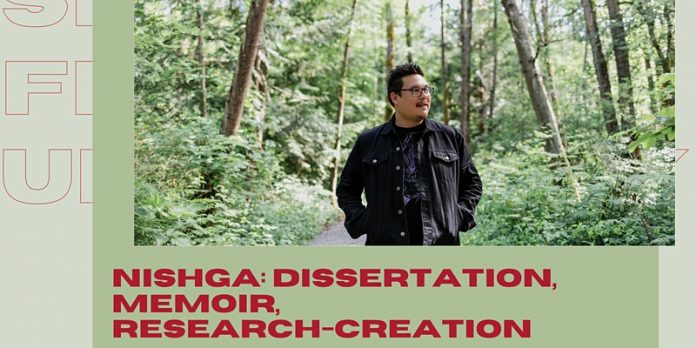
Dr. Jordan Abel, a Nisga’a poet, writer, and professor, doesn’t often get the chance to talk about his dissertation process. As an SFU doctoral graduate himself, he was the first speaker of SFU’s Supervision in the 21st Century series focusing on the future of graduate research, in the event A Conversation with Jordan Abel. He told the audience that he was very “intrigued” to be asked to discuss it and had a lot he wanted to contribute.
Hosted by the Department of Graduate and Postdoctoral Studies, Dr. Abel discussed how he developed his Ph.D. dissertation at SFU to go beyond convention and incorporate photography, poetry, and autobiography to fully capture the complexities of his research and experience. Out of this process grew the book, Nishga.
As someone who finds poetry a beautiful but baffling art form, Dr. Abel’s event intrigued me as he not only understands his craft but has mastered it. I also wanted to hear Dr. Abel’s perspective on higher education as a Nisga’a person in academia, on the West Coast, and in the world at-large. As a settler interested in reimagining higher education, I think it’s necessary to listen to Indigenous voices in this realm.
Joining Dr. Abel in conversation was Dr. Deanna Reder, a Cree-Métis Associate Professor of Indigenous Studies and English Literature at SFU and member of Dr. Abel’s Ph.D. supervisory board.
Telling the virtual audience he was “super stoked” to be joining them from his home on Treaty Six territory, Dr. Abel joked, “[being] in my basement with my X-Files poster behind me is not quite the most professional background [ . . . ] but there you go.”
Since many graduate students were in attendance, both the audience and Dr. Abel were glad to discuss his dissertation process. Drawing inspiration from Natalie Loveless’ book How to Make Art at the End of the World, he discussed how a reimagined version that went beyond writing “books that aren’t books” could benefit not only the research and project itself, but its full accessibility outside of the academic world.
“[Making our research public], whether it be through an academic book or a creative book or an art show, is [something] that allows us to expand our vision of what our research might look like and how we might ultimately present it. It really reminds me a lot of the ways we discuss form in poetry, which is to say that, in poetry, the form and the content should be activating each other.”
Abel continued, “The form needs to respond to the content, and the content needs to respond to the form; just having the form as a [conventional] dissertation is perhaps too narrow to accommodate all of the many ways in which our research may take form.”
Considering Dr. Abel’s body of work, it seems natural that his dissertation would transcend genre. His previous works have taken settler-colonial accounts of Indigenous life as source material, peeling back the layers to make poetry from their words in order to find the meaning and consequences of the original pieces.
For his 2013 book, The Place of Scraps, Dr. Abel used an 18th-century ethnographer’s accounts which attempted to erase First Nations cultures on the Pacific Northwest under the guise of documenting them. In his 2016 book, Injun, which won the prestigious Griffin Poetry Prize, he deconstructed western pulp novels, creating his own poetry out of their words, to call attention to their racist portrayals of Indigenous peoples.
Nishga, however, is structured differently. Set to release on May 18, 2021, the work uses Dr. Abel’s own family as his source material to describe the “afterlife of residential schools” and the intergenerational trauma that it left on his family — his grandparents were survivors of the schools.
“There was no alternative [for] me than writing about [it] personally. I think for other people in other circumstances, [they] could imagine a way to write about [ . . . ] the wake of violence that ripples outwards from residential schools in a way that isn’t personal. For me, I couldn’t even imagine what that would look like.” He continued, “I’ve experienced it in such a particular, embodied way that the only way I could even understand it was to try to understand my own experience.”
As Dr. Reder puts it, looking at one’s own life to find material is “an Indigenous intellectual tradition.
“How else are you going to write about anything without relying on the autobiographical, given the almost absence of Indigenous histories in the academy, but of course, in the world?” she said. “[It’s a] necessary assertion of [saying] ‘Hi! I’m here!’”
While Dr. Abel is now an Associate Professor at the University of Alberta teaching Indigenous Literature and Creative Writing, he says a position like that was far from certain when he began his postgraduate studies.
“When I began my Ph.D., I had no idea whether or not there would be a job waiting for me at the other end and, based on the job market at the time, there might possibly be no job at all when I finished my Ph.D. in my field. That was a moment where I really realized that I have neither the time nor patience to write a book that isn’t a book. I was really hoping that the Ph.D. would be a place where I could do work that was meaningful for me in some way regardless of the form that it took. I think Nishga was a project that really grew out of that discomfort,” he expressed.
In turn, Dr. Abel tentatively sees what grew out of Nishga as his next project: a series of written landscape portraits inspired by those he wrote for his dissertation.
“It’s really strange to write but I’ve been really slowly and steadily working on it for the last few years, and it’s only been the last six months or so that it’s felt like a substantive project that may actually become its own book. I feel like I very often don’t want to say ‘this is my next project’ because you never know whether or not a project will just collapse in on itself,” he laughed, “but his one looks like it might be my next one. I’m spending all my time writing landscapes and thinking about what land looks like in fiction.”
Dr. Abel has an ability to thrive in the “slippery state between genres” to create academic and literary works that defy convention. Exposing the past to illuminate the present in his poetry, and expanding the academic definition of research to create a fuller understanding and display of it in his doctoral studies, makes him a fascinating, deeply insightful, and warm individual. His work will be incredibly worth following for many years to come.
Enjoy these gems of the local art scene! Image: Sara Wong / The Peak
By Alex Masse, Staff Writer
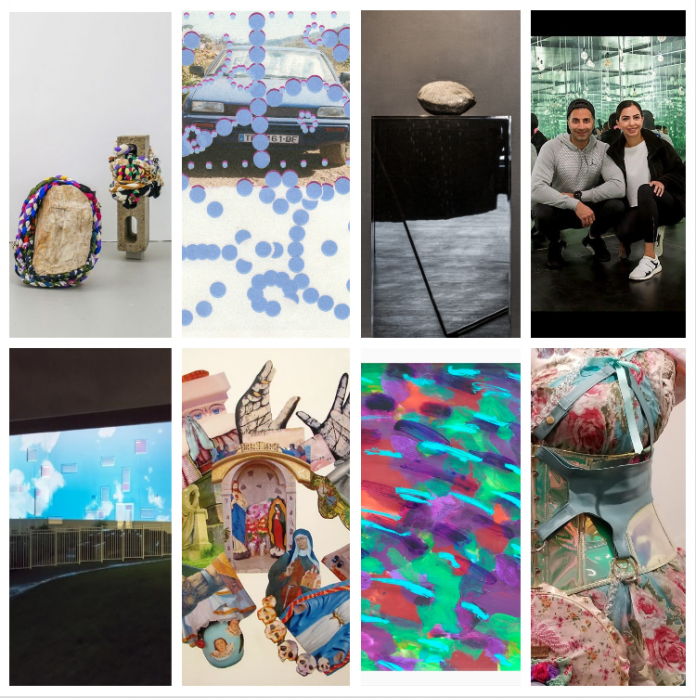
Weather-wise, Vancouver can be extremely dull during the winter. Thankfully, our local art scene is the complete opposite. Although COVID-19 ongoing has caused many events to either be cancelled or moved online, visiting galleries remains one safe activity that those who want to further connect with local creatives can do. Here are nine galleries in Metro Vancouver you can visit, their pricing, along with a notable exhibit to check out at each.
Probably the most well-known on this list, the Vancouver Art Gallery (VAG) is a historic gem that holds works both local and from abroad. VAG is also home to specialized programs such as the Institute of Asian Art, which aims to uplift Asian creatives. With the gallery’s constant changing of exhibits, there’s always something to go back for.
An exhibition of recently collected pieces, Where do we go from here? explores how the art gallery will change in the coming years. After all, 2021 marks 90 years of the VAG being in operation. This exhibition questions how the Vancouver Art Gallery can be better in the future, particularly with representation of Canadian art, which has historically excluded groups like the African diaspora.
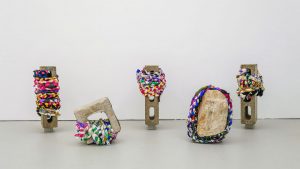
Bundled Objects by Audie Murray. PHOTO: Issac Forsland / Vancouver Art Gallery
The Polygon Gallery is adventurous, vibrant, and inspiring. With a focus on photography and similar mediums, the Polygon seeks to develop and empower all lens-based art. They highlight both renowned and emerging local voices, hoping to represent artists in a way that reflects community diversity.
Everything Leaks is a commentary on modern visual overload by Maya Beaudry and Marisa Kriangwiwat Holmes. The exhibit utilizes images within images, along with a variety of mediums and tactile materials to discuss the 21st century condition. Beaudry and Holmes are both graduates from Emily Carr University of Art + Design.
Car Sports by Marisa Kriangwiwat Holmes. Image courtesy of The Polygon Gallery
The Grunt Gallery was founded in 1984 and remains an artist-run venue today. Alongside gallery space, they offer publishing opportunities and an artist-in-residence program. Grunt is a centre for Indigenous artists, and has ongoing relationships with other creative communities of colour and LGBTQ+ artists. In addition, Grunt is currently working to further its accessibility and anti-oppression practices.
Black Gold is an exhibition by Tahltan artist Tsēmā Igharas examining the natural resource extraction that takes place in British Columbia and Alberta, and the destructive consequences that follow. Igharas spent a summer 2018 residency researching the relationships between the land and oil and mining industries, particularly in her unceded home territory of the Tahltan First Nation in northwestern British Columbia.
Black Gold by Tsēmā Igharas. PHOTO: Katy Whitt / Grunt Gallery
Cost: $19.99 for adults Monday–Wednesday, $24.99 Thursday–Sunday
Location: 432 West Hastings, Vancouver
A new name in town, opening during the pandemic, the Dimensions Art Gallery hasn’t let trying times slow it down. Themed around visual illusions like shrinking, falling from the sky, or moving sideways, the gallery offers a multitude of fun photographic opportunities. Dimensions’ interactive aspect lets visitors become part of the exhibits themselves.
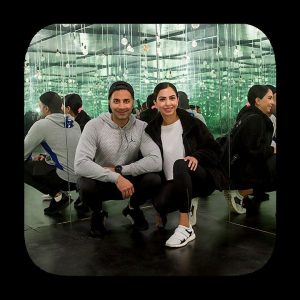
The Infinity Room — Open Thursdays from 2–8 p.m., Fridays and Saturdays from 10 a.m.–9 p.m., and Sundays from 10 a.m.–6 p.m.
The Infinity Room is a room of mirrors, the kind where you can gaze into eternity and take some gorgeous photos! It’s the kind of wonder seen at places like Richmond’s Moon and Back Gallery, with all the selfie potential but with more affordability. Try not to get lost!
The Infinity Room. SCREENSHOT: Courtesy of Alex Masse via Dimensions Art Gallery
For a gallery outside Vancouver, look no further than the Surrey Art Gallery, which offers a number of contemporary pieces and is the second largest public art gallery in the Metro Vancouver region. Alongside its number of online events, the gallery has remained open and free despite the pandemic. It engages with local, national, and international artists in a number of mediums, and hopes to engage the public with the ideas these creatives put forward.
We Are the Clouds is an interactive piece brought forth by Mar Carnet and Varvara Guljajeva, an Estonian creative duo. Using software of their own creation, they turned regular bystanders into dreamy, cloud-like figures. The piece continues to grow as there’s a kiosk available where you can film yourself and join the sky full of silhouettes.
We Are the Clouds by Varvara and Mar. PHOTO: Courtesy of Surrey Art Gallery
Another Vancouver gem, Outsiders and Others highlights artists that don’t get the spotlight particularly often. This includes people who are self-taught, creatives with disabilities, and similar groups. They frequently reach out to various underrepresented communities in hopes of finding creatives that fall into this non-traditional grouping, such as during their UFO Day event last year, which prioritized self-taught artists.
Collage Works features pieces from Valerie Arntzen and Seema Shah. Arntzen, a traveller by nature, creates collages from her own photographs, inspired by what she’s seen over the years on her journeys. Shah, meanwhile, is a self-taught creative in both writing and the visual arts. She follows her intuition, and lets the art make itself.
Reaching Out by Valerie Arntzen. Screenshot courtesy of Alex Masse via Outsiders and Others
Since its opening in 2013, the Mónica Reyes Gallery has prioritized emerging and established artists, both local and international. The gallery has had numerous collaborations over the years, taking part in art fairs from Papier (Montreal) to Texas Contemporary, delivering on its goal of representing a diverse selection of creatives.
Plexus by Canadian artist Tiko Kerr is a multi-medium collection of acrylic, oil, and collage pieces brought to life on plexiglass, a material with a new meaning in the post-COVID world as both a shield and a means of isolation. Kerr has been building his artistic portfolio in Vancouver since the 1980s, and has a number of notable collaborators under his name, from the City of Vancouver to the Vancouver Opera.
Kinetic Typography by Tiko Kerr. PHOTO: Alan Somerville / Mónica Reyes Gallery
Cost: $13 for adults, free for Indigenous peoples and SFU students
Location: 639 Hornby Street, Vancouver
Last, but certainly not least on this list, is the Bill Reid Gallery. Named after the Haida creative, it is home to the Bill Reid SFU Collection, among a number of other exhibits highlighting Indigenous art and culture. The Bill Reid Gallery holds the notable achievement of being the only public gallery in Canada with a focus on contemporary Indigenous art.
Resurgenceis a collection of pieces by four Two-Spirit creatives, curated by Toonasa Luggi. The exhibit highlights the lives and experiences of Two-Spirit people in a colonial society, where ways of looking at gender and sexuality often overlook Two-Spirit identities. In these experiences are stories of resistance and resilience.
Two Spirit Armor by Raven John. SCREENSHOT: Courtesy of Alex Masse via Instagram
With a focus on emerging Indigenous artists, Fazakas Gallery is a hidden gem in the heart of the Downtown Eastside. Fazakas hopes to shed light and understanding on Indigenous art, giving its artists a larger platform for connecting with the public and contributing to an important dialogue.
While the Fazakas gallery has many notable pieces, it’s currently without a main exhibition.