Home Blog Page 375

SFU researchers study patient needs for COVID-19 vaccine distribution software

0
PHOTO: RF._.studio / Pexels

By: Emma Jean, Staff Writer 

A group of researchers at Simon Fraser University are working to identify the most effective roll-out of the COVID-19 vaccine. Led by Full Professor Dr. Diana Gromala and Professor Associate Director Dr. Chris Shaw, the team from the School of Interactive Arts and Technology are interviewing individuals to develop software that will allow them to efficiently time and track their COVID-19 vaccinations.

The SFU researchers are one component of a larger collaboration with researchers, businesses, and health organizations, called Project ABC, whose goal is the “authorization, booking, and coordination of widespread serological testing and immunization.” It is funded by Digital Technological Supercluster, an initiative by the Government of Canada.

Their research consists of analysing interview responses from individuals in British Columbia and identifying their “invisible” needs. For instance, a main factor in their research is identifying the complexities of a person’s living situation, like any caregivers or family, that would complicate factors of effective vaccination. The software developed by their partners in Project ABC integrates these needs and the complexity of the factors in each patient’s health into an interface.

“If there are a million vaccines to be given out, there’s a million people. If you treat them all as individuals, you leave out something very important — which is families with social structures where, if one person is sick, the whole family comes in with them,” said Dr. Shaw in an interview with The Peak. “It’s not just a bunch of individuals individually booking vaccination meetings; it’s all these other complexities,” he added. The researchers are developing the system with an aim to account for these complexities when determining the order of vaccinations.

Dr. Gromala describes their work as part of a branch of computer science called Human-Computer Interaction, which focuses on designing technology to create the most ease for its users with a “prime consideration [to] really put users, or people, at the centre of that.” The intersection of Human-Computer Interaction and public health was key to their previous work with their research on chronic pain, as well as Dr. Shaw’s work on arthritis. This aids their work on COVID-19, as Dr. Gromala has experienced first-hand “how [chronic conditions] can affect a person’s ability to use technology in ways that range from the subtle to the profound.”

Once the software is developed, both Dr. Gromala and Dr. Shaw hope it will be used to improve existing healthcare infrastructure to better accommodate people with chronic conditions. “The software that we’re developing with our partners, after COVID-19, will be really useful in our ability to help people get to their healthcare needs when they’re not in the home.” Dr Gromala added, “I think the most important thing is our ability to track people’s health over time because our healthcare system hasn’t been historically designed for dealing with chronic conditions.” 

Dr. Gromala noted that they believe the current Canadian healthcare system tends to treat the episodes of illnesses rather than the underlying cause of them, and explained that this will especially affect COVID-19 patients experiencing long-term effects of the virus.

Once the software is developed, the researchers aim for its use by local health authorities as a pilot program in its hospitals and in the Downtown Eastside.

Attacking the wrong people takes away from crucial dialogues

0
Social media discourse can focus on the wrong things. PHOTO: Icons8 Team / Unsplash

by Kim Regala, Peak Associate

I recently came across a Tweet from singer-songwriter Shamir that read: “A white boy from Utah who calls himself Ritt Momney getting successful off a cover of a Black woman’s song sounds like violence to ME.” It was a direct attack at up-and-coming indie artist Jack Rutter, who goes by the stage name Ritt Momney. In late April of this year, he released a cover of Corinne Bailey Rae’s 2006 hit single “Put Your Records On.” Since then, the track has risen in popularity and has not only gained him more fans, but also a record deal.

It seems that Shamir’s Tweet is pointing at how white people have continuously profited from the works of Black people. Whether it’s appropriating Black culture through fashion trends, or claiming particular music genres as inherently white, the profitization and exploitation of Black culture is widely apparent. While Shamir’s words are based in truth, his efforts shouldn’t be directed at singling out an artist. By doing this, it takes away from efforts that could instead be placed on more productive conversations surrounding these issues.

I should emphasize that Shamir’s pursuit to open up this topic is not only important, but necessary. History is rife with the whitewashing of Black music in the music industry. One prime example is Elvis Presley’s tune “Hound Dog.” Most people who recognize this song will credit it to the “King of Rock and Roll” himself, without realizing that it belongs to Black female blues singer Willie Mae “Big Mama” Thornton. “Hound Dog” was a deliberate attempt from the music industry to strip away the success of Black musicians. While talented Black artists were writing record-breaking hits in the background, white musicians were given all the fame and credit for being in the spotlight. Not to mention the fact that the “King of Rock and Roll” is a title credited to a white artist, despite the rock genre being rooted in Black culture

Today, the music industry is just as silencing to Black musicians. Although music written and produced by Black artists is heard more often, white people are still largely in control behind the scenes through management of artists and ownership of record labels. We need to be having larger conversations about these structures of power that inhibit true representations of Black music and artists in the industry.

We have seen through the expansion of the Black Lives Matter movement how impactful online spaces can be in bringing people together, educating one another, and holding others accountable. However, while accountability is one crucial step, social media users can often project hostility in the wrong direction. This tends to lead to meaningless and joke-filled social media chatter rather than productive conversation.

I recognise Shamir’s concerns around the idea that the success of a white male artist appears to be coming from the original work of a Black female artist. However, this is not the conversation that has come out of his comments. There is more attention being placed on criticizing an artist, as opposed to conversing in productive dialogues on what this is revealing about the music industry. Many of the Tweet’s replies are aimed at critiquing the cover itself, with little having to do with why placing a white artist’s cover of a Black artist’s song in the spotlight may be problematic.

Focusing on the wrong people can only overshadow and detract from these conversations. Instead of using our platforms to simply criticize artists, we should instead be amplifying the real and ongoing issues for Black musicians. Let’s dive into the role of white supremacy within the music industry that has, for example, removed genres such as jazz and rock from their inherently Black roots. And let’s make sure to have a conversation about how to support Black artists so that they aren’t at the whim of a whitewashed industry.

Council Meeting: December 16, 2020

1
Image: Irene Lo

Written by: Jaymee Salisi, News Writer 

SFSS discusses the arrest of SFU alumnus

On December 16, 2020 the SFSS Council gathered over Zoom to vote on two motions regarding the arrest of a Black SFU alumnus. SFU security stated that the alumnus did not comply with COVID-19 guidelines and they asked him to leave. After refusal, security called the Burnaby RCMP. After several minutes of the officer allegedly engaging in verbal de-escalation techniques, a physical altercation ensued between the alumnus and officer, leading to the alumnus being pepper sprayed, tasered, and arrested. The SFSS expressed their belief that this situation involved racial profiling, citing that “this is not an isolated incident, and racial profiling incidents like this one have occurred many times before on our campuses.” 

Motion 1 proposed that council members, in support of the SFSS’ anti-racism efforts, “sign onto and support a letter by Black SFU staff and allies to condemn the violent arrest of the Black SFU alumnus and call for an apology [of the] escalation that led to this violent arrest.” Motion 1 passed with 34 votes in favour, 3 opposed, and 1 abstained. Council members agreed that SFU should be a safe space for its community. They expressed their support for BIPOC students and the SFSS’ statement stating that “security did not engage in proper de-escalation techniques, according to witnesses.”

Motion 2 condemned the Board for excluding Council from drafting their statement and argued that the SFSS’s statement contained “factual errors and omissions.” This motion called for strong policy changes and responses. It suggested that the SFSS should retract or amend the statement. Motion 2 failed with 23 votes opposing and 5 votes in favour. During this point of voting, several council members had left as the meeting had gone overtime.

Motion 2 was met with controversy as it opposed Motion 1. Most members felt that the information presented was accurate based on video evidence and that the SFSS was justified in creating the statement. 

SFSS President Osob Mohamed, opposed Motion 2 and assured attendees that all information in the SFSS’ statement had been backed up with video evidence and communication with Director of Campus Public Safety, Andrea Ringrose. Mohamed claimed that “there were no factual errors in [the SFSS’s] statement” and that omissions were made only in instances when the SFSS “did not feel comfortable speaking on anything that [they] did not have facts on.” 

Student Union Representative of Political Science, Helen Pahou, expressed understanding for the motion but “[could not] agree that there was misinformation in that statement” due to video evidence of the alumnus being mistreated by campus security.

In favour of the motion, Student Union Representative of Philosophy, Tony Yu assured participants that “nobody wants to say that racism isn’t a problem or that the intention of [the motion was] intent on saying that racism [ . . . ] and threats against BIPOC people aren’t an issue.” Yu explained that the motion aims to “keep a sort of accuracy in [their] accounts of what was going on.”

At the meeting, Joshua Fang shared that he was at West Centre Mall for a portion of the incident and was shocked reading the SFSS statement as it was different from what he saw that night. Fang expressed that although he did not agree with Motion 2, and did not wish to advocate for unnecessary force, he believed that “some sort of increased accountability would be beneficial.”

The council meeting had been extended multiple times, lasting three hours. Scheduled discussion regarding tuition increases, the P/F petition, and the DSU online learning survey were postponed to the next meeting. The next council meeting is to be determined for the Spring 2021 semester.

The full meeting can be found on the SFSS’ YouTube channel.

What Grinds Our Gears: My butter chicken should have chicken

0
Why do meat dishes only come with a couple pieces of meat? PHOTO: Charles Deluvio / Unsplash

by Meera Eragoda, Copy Editor

Here’s the thing with Indian food: It’s delicious and I love it. It’s also pretty expensive (at least in Vancouver). If I’m going to pay $16 for a plate of butter chicken, I would love it if there were more than three pieces of meat. 

That’s not even an exaggeration. Ok, maybe a little one, but there legitimately aren’t more than five chunks per dish. Over the last few years, the number of actual pieces of meat has been going down but the prices have only been going up. Somehow, Indian restaurants think that substituting meat for sauce makes up for the price.

So now I’m drowning in more sauce than I know what to do with. It completely throws off the ratio of meat to naan, making my meal much more disappointing than it should be. 

Vegetarians out there may think this doesn’t affect them, but no one’s safe! They’ve also gotten to the paneer.

Higher prices for less substance — I knew capitalism was bad but did it have to get to my Indian food?

Port Moody’s Grit Studio is a celebration of local craftsmanship

0
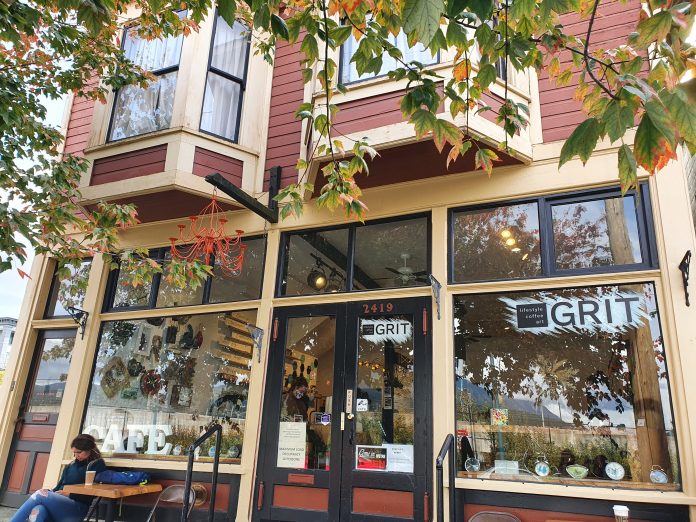
Exterior of Grit Studio. PHOTO: Sara Wong / The Peak

By: Sara Wong, Arts & Culture Editor

There are no shortage of cafés around Metro Vancouver (and as a foodie with a growing obsession for coffee, I’ve been to many), but none match the eclectic, community-forward atmosphere that can be found at Port Moody’s Grit Studio. Located in a heritage building on Clarke Street, Grit Studio (Grit) describes themselves simply as “a space where lifestyle, art & design converge.” 

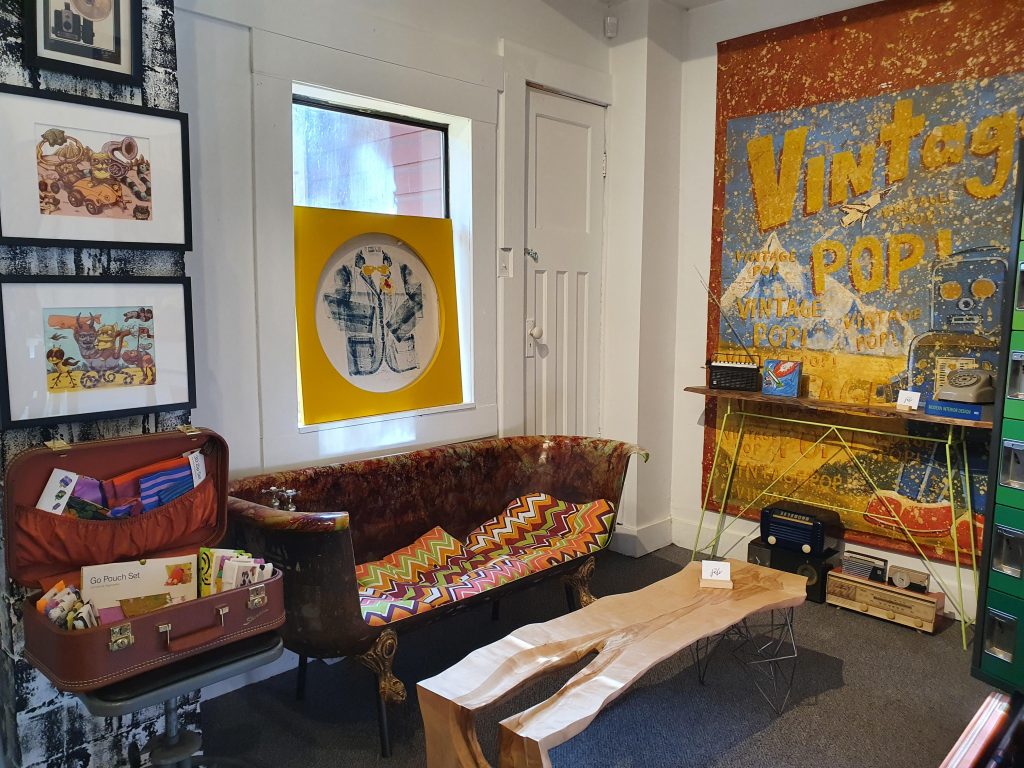
Inside Grit Studio. PHOTO: Sara Wong / The Peak

Walking into Grit is a sensory explosion. The first thing my eyes landed on during my first visit was an array of antique household objects hanging from the wall above a seating nook near the front window. As I got closer, I noticed that some of the pieces were actually collages of smaller objects like wooden alphabet blocks and lightbulbs. “Art within art” became a recurrent theme the more I explored the place and talked to the staff. For instance, most of the furniture was custom-made by Grit co-owner, Cezar Salaveria, out of upcycled materials (one remarkable example being a standalone tub!). Scattered throughout the café was a huge variety of local artisan products, such as coconut jam from Bukobaba Essentials, magazines by One of Us Collective, and plants from Kermodi Living Art.

Unique furnishings. PHOTO: Sara Wong / The Peak

Another thing I loved about the setup at Grit was that there was space. Pre-COVID, it was typical to enter a coffee shop and see customers at clusters of small, tightly-packed tables; and if every table was occupied, the people looked like one giant blob. The complete opposite can be found at Grit Studio. The layout offers a cozy, intimate feel at a number of uniquely designed seating areas, two of which are hidden away in separate rooms from the main part of the café. There’s also room to spread out at the large, live edge table. Original components of the heritage building, like the narrow-plank hardwood floors and panelling on the walls, add to the homey ambiance. 

One of the seating nooks. PHOTO: Sara Wong / The Peak

As for the coffee selection, it’s superb. For starters, they serve Stumptown Coffee, an internationally recognized brand with a reverent army of fans (picture JJ Bean followers on steroids). Grit offers all the usual specialty coffee options, but my recommendation would be the lesser-known Spanish latte. I had it during my first visit (which was several months ago), and as I reminisce on the experience, the one word that comes to mind is “heavenly.” 

When it comes to food, Grit uses the business’ need for sweets as another opportunity to support other local establishments. So far, I’ve only tried a couple: the salted caramel dacquoise from Earthling Foods (delicious) and the black sesame croissant from Elmo Baking Co. (decent, but not something I would order again). There are also a few small, savoury items (e.g. avocado toast), and these are made in-house. The food is definitely not the star attraction, but it’s worthwhile if you intend to spend a day here studying or catching up with friends post-pandemic.

To sum everything up, Grit Studio is one of a kind. I hope you all get the chance to discover this Tri-Cities hidden gem for yourselves because the minute you step inside, you’ll get the sense that the space has been waiting to welcome you. It’s like being inside a warm embrace, and I think we’ll all be craving that feeling when the pandemic ends. 

Telling students to take care of themselves ignores root issues

1
We can’t simply “relax” when we’re plagued by larger stressors. ILLUSTRATION: Siloam Yeung / The Peak

by Alex Masse, Staff Writer

A common grievance of being a student is putting up with all kinds of unsympathetic advice. It’s heard everywhere from our professors, our parents, and even our institution’s president. It’s easy to wish students well and suggest they take care of themselves, as if calling on a series of magical words will make them perk up and focus. But they don’t work, even on a good day. They’re especially meaningless when they’re followed up by deadlines, Zoom calls, and other academic stressors. School can’t exactly just stop happening, but without a tangible effort to make these times easier, the sentiment feels rather hollow. 

Outside of being relegated to Canvas now, everything is still business as usual. I probably won’t graduate on time because the hardships of distance education mean I have to take fewer courses per semester. On top of that, my entrance scholarship only applies if I take a certain number of courses at once. To my knowledge, SFU hasn’t changed the terms of that agreement despite this being an entirely different university experience. I’m too busy to partake in the self-care people preach about — but hey, at least I got an email telling me to spend time in nature and take a break from my phone.

Students aren’t at fault for not having time to relax or go for walks. Many of these things are privileges. Alongside their studies, some students work in essential positions that they risk their lives to fill. Some care for vulnerable family members and can’t afford to take much-needed breaks. Is it really a surprise that some students are just disappearing from online school outright, ghosting Zoom calls and discussion boards alike without explanation?

I understand we’ve had over nine months to adjust to the situation, but we are still living through a literal pandemic. It’s hard to adjust when SFU isn’t making things much easier. Mentally, I can’t afford much, and few people can. We don’t have control over what stressors we take on, and many of them can’t be simply put out of mind by self-care, which feels more like a luxury than a solution these days anyway. Sometimes, all you can manage is getting out of bed. Sometimes, that has to be enough. 

These hollow well-wishes are lackluster and unrelatable in the best of times, and these are not the best of times. If students can find the time to go for walks and cut down on screen time, that’s definitely something to take advantage of. But for many people, that’s a privilege. If universities could acknowledge this privilege, maybe they would be more lenient with, for example, reinstating compassionate grading schemes, redefining what it means to be a full-time student, and even giving students more days off — like they’re petitioning for over at Purdue University. Until then, I’ll be using what little time and energy I have to keep my head above the water.

Five TikToks with actual substance

0
Image credit: @iXimus / Pixabay

By: Meera Eragoda, Copy Editor

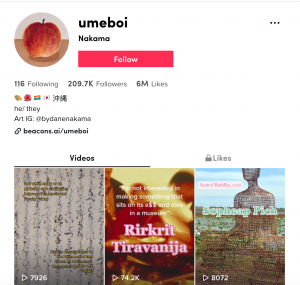
@umeboi

Screenshot courtesy of Sara Wong via TikTok

One of my favourite accounts on TikTok is Dane Nakama’s. They’re an artist based in Hawaii and the video which got me hooked is one about renowned artists (namely Picasso, Dali, and Gauguin) being horrendous misogynists. 

Nakama profiles various historic and contemporary artists and pieces, giving short, accessible art history lessons on each topic. I love that Nakama’s approach to art history is non-judgemental and that they are not afraid to be critical of the art world — such as when they are examining whether some art should be priced as high as it is.

It’s clear they understand that, at first glance, some art may seem confusing or too simple, such as contemporary art or the work of Jackson Pollock, respectively. But they also realize that art needs to be viewed through a certain lens to be understood and are trying to give us the tools to be able to do just that.

Other art history accounts: @caseylanderkin, @_theiconoclass, @arthistoryminutes

@daejahtalkstv

Screenshot courtesy of Sara Wong via TikTok

Even though it feels like I’ve been trying to watch everything that’s on Netflix and Crave, I’m definitely not film-literate enough to understand everything I’m consuming. That’s where Daejah Woolery comes in. She has taught me so much about various TV tropes, genres, and different cinematic techniques. 

Woolery occasionally takes requests on movies, which she then deconstructs. She’s examined topics such as whether Enola Holmes can be considered a feminist film and what prestige TV is. 

If you, too, want to go deeper on the shows and movies you’ve been consuming during the pandemic, Woolery’s account is the place to go. She also ends many TikToks saying, “You’re more than your last mistake,” which is always nice to hear after eating too many sugary holiday treats in one sitting.

Other accounts examining TV/movies: @momoiscariot, @human_espresso, @tayyy.jpeg, @bobacommie

@geodesaurus

Screenshot courtesy of Sara Wong via TikTok

“Umm yes, hello” is how Geo Rutherford begins each video before hitting you with hard facts about lakes, oceans, and other bodies of water. Although it’s hard to pigeonhole them because they’ve also talked about fungus, dinosaurs, and road salt.

I’ve learned about dead zones in water where life can’t survive (many because of our use of fertilizer), the mystery zone in Lake Michigan which seems a lot like the Bermuda Triangle, braided rivers (these look seriously cool), and that there’s a lava lake in Antarctica (how? why?).

This may truly be the most unique account I’ve come across on TikTok.

Other science-y accounts: @science_is_real, @chuckdarwin

@imperfectidealist

Screenshot courtesy of Sara Wong via TikTok

Last semester, The Peak ran a couple of pieces about thrifting and whether it was a genuinely sustainable practice. This TikTok dives deeper into the topic. The creator, Lily Fang, talks a lot about thrift stores, fast fashion, and sustainability and it’s worth a watch. 

Fang also gives tips on conscious consumption and often stresses that while there may not be ethical consumption under capitalism, some options are more ethical than others. That being said, while she does advocate for being as ethical as possible, she doesn’t preach perfection or shame people for not always being able to buy sustainably.

@mediumnoah @failedviner @jakethelinguist 

Screenshot courtesy of Sara Wong via TikTok

Everything I’ve learned on linguistics TikTok has confirmed that the English language is truly bizarre. It’s also taught me that language is always evolving which means there’s no reason to get hung up on vocabulary changes. All these creators have accounts that talk about the random little quirks of language and they’re all fascinating to watch. I’ve learned about the phenomenon of self-censorship on TikTok and now know that “Buffalo buffalo Buffalo buffalo buffalo buffalo Buffalo buffalo” is a grammatically correct sentence.

Bonus accounts: 

@crutches_and_spice (disability activism/education)

@medievallauren (medieval history) 

@harrisonhow (basics of drawing) 

@alexisnikole (foraging) 

@songpsych (music theory) 

@lemonl1ght3r (architecture)

“The Sounds of The Fox Cabaret” supports independent music and more

0
Fox Cabaret’s doors may be closed, but the camaraderie can still be experienced online. PHOTO: Michael Mann / The Georgia Straight

By: Emma Jean, Staff Writer

With artists unable to perform for large audiences, the gathering spaces that house them have been largely left empty in the face of COVID-19. The Fox Cabaret (the Fox), Main Street’s independent club and home to many Vancouver musicians, comedians, and artists, is no exception. Forced to close their doors in March of 2020, The Fox has been effectively sitting empty ever since, with no avenue for gathering safely. 

After a tough year, the Fox is back in digital format, through an online fundraising special called The Sounds Of The Fox Cabaret. Darlene Rigo, managing partner and director of the Fox, addressed viewers at the beginning of the video. “I can’t tell you how hard the shutdown has been on me and my coworkers.” She continued, “The prospect of paying rent and other costs in a very expensive city [ . . . ] has really taken a toll on all of us, and we really miss the Fox.” The pre-taped feature, put together by a group that Rigo referred to as “people who really care about the survival of the Fox,” is available by donation on YouTube, and showcases local talent for whom the Fox has been and continues to be home.

One of those talents is the exceptional Tonye Aganaba, who opened the feature, and showed that staff members and audiences aren’t the only ones who revere and miss the venue. “I’m going to play a couple of songs, and each and every one of them reminds me of the Fox Cabaret,” Aganaba said, in a heartfelt introduction to their gorgeous, stripped-down performance. Continuing to reminisce about their experiences performing at the Fox, for audiences both small and large, Aganaba added, “This space is hallowed to me. It has so many special memories embedded in it.” 

What followed Aganaba was a gorgeous and wide-ranging blend of genres and styles as one artist after another took the stage to safely perform on the Fox’s empty stage. The raw vocals and smooth synths of Blonde Diamond were a polished and commanding presence, even with no audience to command. Other musical highlights included punk-rockers Loose Fang, the slick, dreamy pop stylings of Jenny Banai and the tight, danceable, and down-right fun R&B collaboration of Teon Gibbs and IAMTHELIVING

The night also hosted non-musical artists, like improv group The Sunday Service, who performed a short digital set from their homes and reminisced about the venue. “I miss all the staff and all the people at the Fox, and I also miss hoping to get the one parking space behind the Fox if no one’s there,” joked member Mark Chavez

Shanda Leer, who often performed drag at the Fox and hosted  their many themed dance nights, also made an appearance in the online special. Leer name-checked his favourite door people and promised that he, as well as his disco nights that have become “the number one dancing destination theme for the city,” will be back at The Fox as soon as possible. 

It feels cliché to describe the COVID-19 pandemic as a tough time, but it never stops being true, especially for live music venues and performers. It’s safe to say some digital fun with a purpose is much needed. If you want to support an independent venue and discover some amazing local talent, The Sounds Of The Fox Cabaret is a great way to do just that.

The Sounds Of The Fox Cabaret is available now on YouTube, and donations to The Fox Cabaret can be made by e-transfer to [email protected].

Connection between students and SFU admin needs to improve

0
If students aren’t consulted, who is the school serving? PHOTO: Annie Bhuiyan / The Peak

by Devana Petrovic, Staff Writer

It seems like SFU follows a blueprint for addressing student concerns. Most of the time this consists of broken communication through emails, administrative statements, and social media posts. Occasionally, students even get to ask questions at Senate meetings or voice concerns at town halls. However, more often than not, it feels like students are left to their own devices and need to vocalize their concerns through letters, petitions, or social media campaigns. This lack of connection needs to change and it starts with working harder to include students in decision-making processes.  

SFU’s lack of Indigenous inclusivity regarding reconciliation efforts, such as with the upcoming First Peoples’ Gathering House project, shows exactly how little the administration truly acknowledges its student voices. Other than two First Nations Student Association (FNSA) members and a guest, Indigenous students were not permitted to attend this past November’s Aboriginal Steering Committee (ASC) meeting. It is significantly counterintuitive that a project intended for student use is being discussed without student input. This general lack of Indigenous consultation is a recurring issue with the administration. How can the SFU administration promote inclusion with students when the very voices that need to be heard are blocked from speaking? 

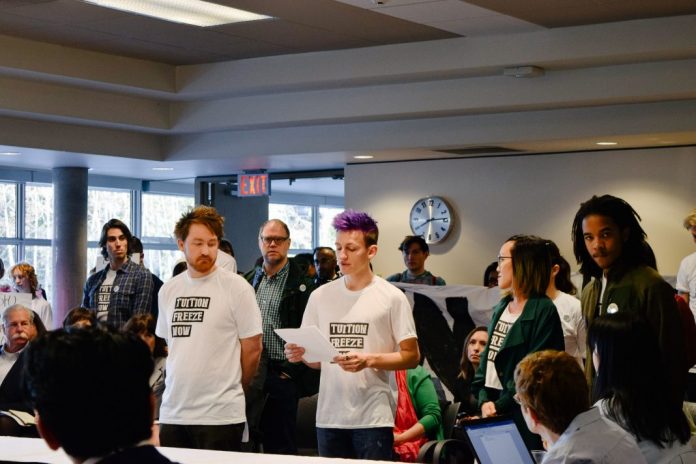
It’s also important to mention that SFU’s tuition hikes have been a major concern for students, but these concerns have yet again been poorly addressed or dismissed. As a result, student-led initiatives like Tuition Freeze Now and the C19 Coalition have emerged to advocate for concerns that the administration seems to neglect.

Because of the administration’s failure to properly communicate with students, the burden falls on students themselves — the ones who pay thousands of dollars in tuition fees and have to shoulder uncompassionate administrative decisions. Student tuition money fuels the administrative staff’s paychecks, so better communication and inclusion feels like the absolute bare minimum. Especially considering that all decisions the administration makes directly impact students. 

Taking into account these facts, there’s no question that the connection between SFU’s administration and students is poor and needs to improve. While I understand that remote learning can make implementing virtual communication tricky, there has been plenty of time for improvement in addressing student concerns with two online semesters having passed. Additionally, discrepancies in digital communication would not be so inefficient if SFU had implemented the proper infrastructure in the first place.

As a student impacted by this disconnect, I can see that there are many things that should change. One of them includes staying away from performative statements (like SFU-wide emails) that do very little to genuinely alleviate student concerns. There should also be increased inclusion of student voices before final decisions by admin are made. Student concerns could be avoided altogether if SFU could take on a more equitable approach and view students as equals rather than thoughtless funders. 

Including students in conversations regarding administrative decisions through methods such as referendums, online polls, or more open meetings is a step in the right direction. After all, where is SFU’s community without its student voices?

Monday Music: Songs to help you accept that 2021 will also suck

0
"Monday Music" in giant yellow block letters with a red background
Monday Music: your weekly themed playlist. Image courtesy of The Peak.

By: Marco Ovies, Editor-in-Chief

I’m concerned that people are assuming that 2021 is going to be better than 2020. Don’t get me wrong, I definitely think that there is hope on the horizon. But time is arbitrary and COVID-19 doesn’t understand that it’s a new year. So when you slowly come to the realization that entering the new year really doesn’t mean anything, here are some songs to help you cope with that reality. 

“Tourist Trap” by Lowertown

Image courtesy of Dirty Hit

If this isn’t the perfect song to describe how all of 2020 went (and how 2021 will probably continue), then I don’t know what is. “Tourist Trap” by Lowertown is a song about getting trapped in a repetitive routine, waking up everyday, and just going through the motions. Eating breakfast, logging into your Zoom lectures, staring at the black squares of your classmates refusing to turn on their webcams during breakout rooms, studying, and then going back to bed. All things we have to look forward to in the new year. Yay . . .

“Floating Out” by Big Sierra

Image courtesy of Seafoam Sound Co.

“Staring blank at the wall” is how I envision most of my 2021 going. This super mellow track is the perfect thing to listen to while doing that. As the title suggests, “Floating Out” has an ethereal feeling which makes me feel like I’m actually floating. It’s a great song for laying in bed and staring at the ceiling, trying to ward off the cabin fever. 

“gf haircut” by dad sports

Image courtesy of Grand Jury Music

This pandemic has forced many of us, myself included, to grow our hair out a bit longer than usual. dad sports is singing about the exact same phenomenon. They wrote the track after reminiscing about haircuts their exes had given them, and “gf haircut” was born. Similar to “Floating Out,” this track also has mellow tones with dreamy vocals and laid-back guitar, but the mix of synths gives this one a bit more of an upbeat feeling. Despite my overall pessimistic mood, this track still feels like an essential to my pessimistic 2021 expectations playlist. 

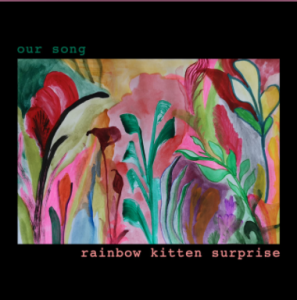
“Our Song” by Rainbow Kitten Surprise

Image courtesy of Elektra Records

I think it’s important to remember that even though 2020 has been maybe one of the worst years in our lifetime, many of us have grown a tremendous amount. I think Rainbow Kitten Surprise sums it up best in this song. “This aint our song, these ain’t our old selves.” So even if 2021 is going to be almost exactly the same as 2020 was, we are going into it stronger, more knowledgeable, and hopefully as our best selves. Was that cheesy? Oh well, happy New Year!