Home Blog Page 355

The “Leave Meeting” button: The red forbidden fruit

0
PHOTO: Maksym Zakharyak / Unsplash

By: Nathan Tok / Peak Associate

English 404W class. Week 2.

When I first hath heard of Topics in Medieval Literature, I was told tales of its lethality, and its lethargy, of its length without end. My superiors uttered to me dreaded tales of the horror, something to be whispered in some dark far-off RBC castle. Those doyens did urge me to flee. Fool that I was, I threw caution to the wind and had dared to take the class during the online epoch. 

Perhaps . . . perhaps, this was a recompense for my sins.

I fancy thoughts of a Zoomless screen to peruse chain mail in peace (and not the sort about SFU’s academic integrity). Surely none would detect my absence. I am nameless in an army of named rectangles. In the darkness of a camera-less screen, there is no fellow greater or lesser than the other. My thoughts dwell on that red doorknob near the bottom right. 

“Hark,” my roommate beckons to me. “I have procured some rich and delectable pizza.”

I wave him away. “Dear fellow,” I call back, “I am in the midst of some great learning undertaking. Nourishment will have to await.”

He shakes his head in sadness and leaves. “Churl,” I think to myself. “What sort of fool stays in this room forsaking such Neapolitan delicacies?” Again I tempt myself with thoughts of taking my leave.

“Dear students,” the droning on continues, “let us break down these concepts in some breakout rooms.” The man pauses as if expecting some reaction from his poor jest. There are none.

I am transported into another black void. Others soon join me. We discuss how the great world events of our time are affecting those in another faraway land. Unemployment and depression. Inequity and inequality.

“LEAVE!” The crimson oblong calls to me. I stare at it with great curiosity. “Leave and never return,” it whispers again.

“I cannot. I made a pledge to myself, temptress. I shall strive for academic excellence and maintain my presence in class this period.”

“To what end? How will this help you adhere to your fate? Do you truly feel like a scholar here? You are merely kept on to fulfill a regulatory length of time to meet scholastic requirements.”

“No, you are wrong!” I say. “It is for the community of the learned. Intellectual interaction. That is the purpose of this Zoom assembly.”

“Simpleton! Surely you cannot believe that you can truly gain wisdom from merely watching a video? Alas! Next they will tell us to go on YouTube.”

“Yes!” I cry. “And so much the better. For learning can now take place anywhere and at your choice of time.”

“Then why not leave? Bear notice of my wisdom and all the knowledge of the world will be at your fingertips. Do not confine yourself to this foul make-believe room. ”

“Your powers are nothing here Knave! One cannot break a promise to thy ownself without losing a piece of the soul.” But I look on in wonder. Had I just been outwitted by a mere box? Was I really spending my precious youth foolishly? I am still pondering such deep inquiries as I see a new box appear on screen. 

“Meeting has been ended by the host.”

And the pizza is still warm.

Top Ten things that can be substituted for a personality

0
Very calm, very cool. Nothing wrong here. Illustration: Siloam Yeung / The Peak

By: Kyla Dowling, Staff Writer

  1. Liking an obscure musician that other people definitely haven’t heard of 

We all know this person, and honestly? We all are this person to some extent. I wouldn’t blame you for making Mitski the centerpiece of your personality . . . if you didn’t act like anyone who only knows her music from TikTok deserves to be guillotined. Anyways, we all know that the real cool people are the ones who listen to heavy metal songs about She-Ra characters. 

2. Owning a hat shaped like Squirtle

Is this a callout for the kid in half my classes in high school who exclusively wore black jeans, a black shirt, and an enormous Squirtle hat? Yes. Sorry, Joseph. Not all hats can be a personality trait, but all Pokémon merch can be. Just ask The Peak’s humour editor — all I know about her is that she has a Charmander tattoo. 

3. Possessing moldavite 

If you’re on the witchy side of TikTok, you’ll know that moldavite is supposed to get rid of every shred of negative energy in your life. While I refuse to discount the effects of moldavite, I do acknowledge it can definitely become one’s entire persona. You fail a class? Moldavite. Your fish dies? Moldavite. You get fired? Moldavite. It’s definitely because this crystal is taking out the things in your life that no longer serve you, not because you were profiting off of TikTok.

4. Holding gatherings during a pandemic 

Didn’t you hear? Bonnie Henry said that 10 people are allowed to gather outside from a distance now! That definitely means that the house party I threw to celebrate my hedgehog’s birthday is totally okay. I mean yeah, there were 25 people there, and yeah, I hooked up with Chad who hooked up with Monica who hooked up with Kelsey, so we weren’t exactly at a distance, but we’re in a bubble so it’s fine! It’s party time betches [champagne emoji] [laughing emoji] [devil smiling emoji]*

*A dramatic reenactment of my elementary school best friend’s Instagram story from March 16, 2021.

5. Having seen Hamilton live 

Whether it was Broadway, West End, or a really questionable all-white adaptation that the local private school put on, people who have seen Hamilton live will not let it go. I mean, what does it matter that you met Lin-Manuel Miranda (which I did) and asked him a question at the stage door (which I did) after seeing the show with the original cast (which I did)? People who brag about that are so terrible.

6. Having stickers on your laptop

Given that we might have a full return to in-person classes, it only makes sense that I remind you that the stickers on your laptop absolutely count as a personality. No matter whether you have a sticker reading “gaslight, gatekeep, girlboss” or one that says “don’t talk to me until I have my coffee,” your laptop is the new ‘introduce yourself’ discussion board. I would say to be prepared for your classmates making snap judgments of you based on your corgi and performative activism stickers, but they’ll be too worried about whether or not their Michael Scott sticker gives off the right impression. 

7. Calling animals by names like “doggos” 

For you, raccoons are trash pandas. Dogs are doggos or puppers, or, god forbid, flufferinos. If you have a pet, you call it  your “fur baby” and probably have an Instagram account with 15 whole followers. Fur baby? You have a fucking pet frog. And please leave the embarrassing quirky words for the millenials. They’re already defending Eminem, so there’s no going back for them.

8. Being in a pyramid scheme

Heeeeey girly! How’ve you been since we got into that huge argument in the fifth grade about which Monster High doll I am? (FYI, I’m totally Lagoona.) I was just thinking about you and was wondering if you were interested in an amazing business opportunity. All you have to do is promote and sell our 100% natural raspberry mango-flavoured bleach! I would love for you to join our #bossbabenation!*

*ripped from my Instagram DMs

9. Working for The Peak 

I added a Snorlax emoji to our Slack emoji list the other day and it brought me immense joy. My roommate told me that I was saying things like “Monday Music” and “Opinions in Dialogue” in my sleep. Please send help. 

10. Iced coffee

Oh my god. You really read the title of this one and went “Finally, one I can relate to!” even though you know caffeine makes you anxious. Anyways, go eat something that isn’t a $1 iced coffee, goob. That eye twitch looks funky on Zoom.

What Grinds Our Gears: People staying silent as I get misgendered

0
It’s not that hard to correct people on their mistakes. Photo courtesy of Wikimedia Commons

by Meera Eragoda, Copy Editor

I am non-binary and I use they/them/theirs pronouns which most people are on board with. Of course, I am very femme-presenting so being misgendered constantly has been a reality that I’ve needed to adjust to. Because of this, I’ve also had to get used to correcting people constantly. And honestly, it gets exhausting.

I didn’t realize how much work it was until I was on a Zoom call where someone new misgendered me and a friend corrected them right away. It was nice not having to negotiate with myself about whether I wanted to feel self-conscious about speaking out, or whether it was just better to accept it and be misgendered. That was the first time I realized that all the work to correct people shouldn’t be on me, especially when those around me consider themselves allies.

So please, show up for the people in your lives that don’t use the pronouns they were assigned at birth. Correct people who misuse pronouns because you know the person being misgendered may likely be going through the same process of negotiation and internal turmoil that I have, and still do.

I realize that some people may not want more attention drawn to them with these corrections, so it’s important to have a conversation about what they feel comfortable with first — but at least let them know that you’re thinking about this. As for myself, I seriously appreciate not having the onus just on me.

Opinions in Dialogue: Why are pronouns so important?

0
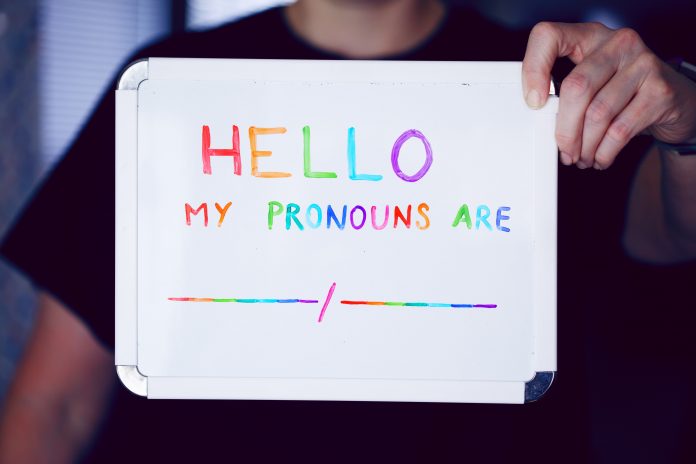
Pronouns other than she/her and he/him exist. PHOTO: Sharon Mccutcheon / Unsplash

by Madeleine Chan, Jacob Mattie, and introduction by Dev Petrovic

Incorporating the introduction of personal pronouns on day-to-day occasions has become increasingly normalized. The sharing of pronouns is evident in group introductions, social media bios, and Zoom usernames — the variations and platforms are endless. But why is this so important and how do pronouns change with language and dialect? Students Madeleine Chan and Jacob Mattie discuss.

Jacob: Establishing a strong sense of identity is something that, if not universal among all humans, has certainly been a challenge for me. A part of this is due to expectations on my behaviour, from both myself and those around me. As the past few years have brought a greater awareness of the ways in which we define our identities, the role of pronouns has also become increasingly prominent. However, I can’t help but feel that the focus on pronouns is a misrepresentation of the difficulties in defining oneself. As we fixate on proper usage of pronouns, we might be struggling to fit our identities into a language that isn’t equipped to properly handle them.

Madeleine: Pronoun politics, along with general identity politics, are definitely not simple. Even with growing acknowledgement of the use of personal pronouns other than she/her and he/him, it still isn’t such a widely known and accepted concept. However, I think that this growing use does allow for productive conversations around gender and identity that otherwise may not have been had. Personal pronouns, though just words we use to refer to one another, are still inevitably gendered. In allowing for people to choose how they want to be referred to, and in respecting those decisions, we create more acceptance for all expressions of self.

Jacob: I agree that the growing recognition of pronouns can help bring about discussion on gender and identity. Awareness of how broad, personal, and intricate the topic is — while possibly overwhelming at first — can be incredibly validating. If you don’t feel like you fit a certain standard, you don’t have to!

Personal expression is a crucial ingredient to overall well-being, but I still can’t quite shake one concern about pronouns and gender identity. If a person does not identify with the traits commonly associated with their assigned gender, it is well within their right to use a pronoun set and identify with a gender that fits them best. But taking ownership of these new labels may imply to others that the change in pronouns is necessary to be able to express themselves adequately. This could potentially reinforce harmful stereotypes around gender and further polarize perceived gender expectations.

Madeleine: The emphasis on the idea that a specific gender presentation equals specific pronouns can introduce a potential for further harm because it limits thinking around gender as binary and is rigid. However, gender and pronouns shouldn’t be perceived as the same thing — and they aren’t. Someone can use she/her pronouns while presenting and identifying as male, or someone could use they/them pronouns and present as hyper feminine. In fact, many people do. I, for example, respond to both she/her and they/them pronouns but definitely don’t identify as being “half-female” and “half-gender non-confirming.” While this nuance in identity may not be respected, acknowledged, and understood by all at first glance, it shouldn’t be discounted.

Jacob: The gender binary (the idea that people are only inherently male and female, and must act accordingly) is insidious. While there has been much more advocacy and support for the proper use of pronouns, there is a lack of education about what they really represent. Many resources provided to the general populace focus more on the proper usage of pronouns, rather than why they are important to those who use them. However, instead of imposing pronoun conventions as rules for people to follow, their normalization can more likely come about from a sense of empathy and understanding towards those affected. After all, neutral pronouns like “they” and “them” have been used to refer to people for much longer than this issue has been at the forefront of public awareness. This is hardly a new grammatical concept. The real work to be done is in recognizing the importance of pronoun usage, rather than how to use them.

Madeleine: Something that helps in recognising the importance of non-normative pronoun usage is including them when introducing yourself, in social media bios, in email signatures, and any method of digital or otherwise identification. This not only normalizes the idea that not everyone’s pronouns align with how they are perceived, but also does not ostracise gender non-conforming folks in their declarations of personal pronouns. 

It is interesting how we put so much importance on pronouns, though. In the grand scheme of creating space for all expressions of identity, they really shouldn’t matter. Despite this, it is such a prevalent thing in many languages, and not just English. French, German, and Russian among others all have gendered pronouns, they even go as far as to have gendered words for items as simple as a faucet. Many other languages, however, are essentially genderless and don’t have gendered pronouns or nouns, such as Estonian, Finnish, and the many varieties of Chinese. I guess with English, because gendered pronouns are such a foundational part of the language, we cannot simply write them off as unimportant when they do have such a large impact on how we live and interact.

Jacob: I’ll add Indonesian to the list of non-gendered languages. I don’t have as much experience with the language as I’d like, but dia seems to be a generic term for talking about someone else, regardless of their identity or gender. English strikes me as odd in comparison to French or German though, as we don’t associate objects with genders. We use neutral pronouns for anything inanimate but use gendered language for anything that we humanize — be that ourselves, our peers, pets, or objects of affection. 

Of course, our language has grown from millenia of evolution, and to remove something so foundational as pronouns is a dramatic proposal. But as we shift away from the default of binary gender identities, we need a wealth of pronouns to fill the spaces in between. I’m excited to see the new ways in which people will define themselves but as the quantity of pronouns increases, so too does the likelihood of being mislabeled. The implication here is that we will need to be more deliberate when referring to other people. When talking about someone who might not be able to represent themselves, it is especially important that we be careful with the words we use to describe them — slowing down to use their appropriate pronouns might be a great way to do this.

Madeleine: It ultimately boils down to respecting people and their identities. Pronouns and pronoun use are definitely not simple things, and I don’t think they ever will be. However, we can get more used to the fact that they aren’t static, both for individual people and in concept. Identity is a fluid, wonderful thing that can’t, and shouldn’t, be tamed by getting too entrenched with pronoun use, but enhanced by the possibilities with it.

Need to Know, Need to Go: March 22–28

0
Illustration of a blue calendar, with "Need to Know, Need to Go" written on top
Arts & Culture events to catch around the city. Image courtesy of Brianna Quan

By: Charlene Aviles, Peak Associate

Art by Surrey Secondary School Students | Surrey Art Gallery | February 6–April 30 | FREE with registration

Featuring the artwork of over 50 Surrey secondary school students, this Surrey Art Gallery exhibition covers different themes, such as the pandemic and Missing and Murdered Indigenous Women and Girls. Attendees can book their visit by emailing [email protected] or by calling 604-501-5566, extension 1.

The Real Mandrake the Magician | Museum of Surrey | February 17–May 16 | FREE with registration

The Museum of Surrey’s latest exhibit honours the life and legacy of Leon Giglio, also known as local legend, “Mandrake the Magician.” The exhibit features his props, posters, comic books, and costumes. Visitors can book their one-hour visit by calling 604-592-6956 or by emailing [email protected].  

Return of the Trickster Book Launch | Zoom | March 22 from 6–7 p.m. | FREE with registration

The Jack and Doris Shadbolt Fellowship and various SFU departments will be hosting the Return of the Trickster Book Launch. Eden Robinson’s final installment of her Trickster trilogy follows the journey of Jared, a teenager who survived a fight with his vengeful aunt Georgina. Participants can register via Eventbrite.

Artist Salon Webinar with Sandeep Johal | Zoom and Facebook Live | March 27 from 1–2:30 p.m. | FREE with registration

In the second session of the Richmond Art Gallery’s Artist Salon webinar series, local visual artist and muralist Sandeep Johal will discuss her journey as an artist in residence, offer advice to other aspiring artists, and answer audience questions. The live stream will include live transcription. Seats can be reserved by registering on Eventbrite.

On Memory, Mythmaking, and Community Resilience | Online | March 27 from 1–3 p.m. | FREE with registration

As part of the Powell Street Festival Society’s Paueru Gai Dialogue series, this session will reflect on Japanese culture, internment camps, and resilience. The host, John Endo Greenaway, will interview panellists Sherri Kajiwara, Bryce Kanbara, and Michael Prior, all of whom are artists. After the panel, participants will discuss their opinions with others in breakout rooms and submit their questions to the panellists. Tickets are available through Eventbrite.

3 caffeinated treats to help you power through finals

0
Take your coffee obsession to the next level. Photo courtesy of iStock

By: Sara Wong, Arts & Culture Editor

  1. Lam Beverages’ instant Vietnamese coffee
Image courtesy of @pistachiopicks via Instagram

If you think instant coffee is bad, this product will completely change your mind. For those unfamiliar with Vietnamese coffee, it’s a lot stronger than your average cup of joe. Usually, the drink requires a special filter and is sweetened with condensed milk, which makes the process time-consuming. However, with Lam Beverages’ instant Vietnamese coffee, all you need to add is hot water. The end result is still the same: coffee that’s bold, sweet, and smooth. I’ve tried both their traditional and premium mixes. Taste-wise, there’s barely a difference between them (the premium is slightly sweeter); caffeine-wise, the premium mix boasts double the amount. With both mixes served in 12 oz bags and only a few dollars difference in price, you really can’t go wrong here. Lam Beverages’ instant Vietnamese coffee is only available through their website

2. Bon Mano Bon’s mocha chocolate coffee beans

Image courtesy of Bon Mano Bon

Before I started drinking actual coffee, these chocolate-covered coffee beans were my morning boost. There are only four ingredients here: dark chocolate, dehydrated coffee beans, hazelnut oil, and vanilla. The chocolate that’s used is of really high quality — you can tell by how glossy the exterior is and how the flavour builds if you let it melt on your tongue. In contrast to the richness of the chocolate, you have the coffee bean bringing in a bitter note and crunchy texture. Combined, you have a bite-sized treat that’s balanced and super addictive. Bon Mano Bon is currently taking orders through their website. You can opt for delivery or pickup at a select few locations.

3. Earnest Ice Cream’s espresso flake ice cream

Image courtesy of @earnesticecream via Instagram

Espresso flake is my favourite ice cream flavour and no one makes it better than Earnest. In my opinion, they make the best ice cream in Metro Vancouver. No matter what flavour I’ve gotten (and by now I’ve tried almost all of them), the quality of the ice cream has been light, cool, and creamy. What I love about Earnest’s espresso flake in particular is that they don’t shy away from making the coffee flavour intense. The chocolate shards are perfect too; the thinness of these pieces enhance the ice cream without distracting from it. Earnest Ice Cream’s four locations all remain open for business, where you can order scoops or pints. They also take online orders for curbside pickup at their Frances St. location.

Monday Music: Tunes for when you don’t feel like leaving the house

0
"Monday Music" in giant yellow block letters with a red background
Monday Music: your weekly themed playlist. Image courtesy of The Peak.

By: Dev Petrovic, Staff Writer

Everyone has those days where leaving the house is just not the mood. Whether you’ve decided to stay home to get stuff done or decided you’d rather not experience the realities of our current state of the world, it’s okay. You’re not alone in wanting to stay indoors more, but if you fear you’re turning into a couch potato, this selection of songs will help you feel at ease for rejecting the outdoors. There’s seriously no shame in being home-bound, and on the plus side, staying home right now is the safest thing you can do. 

“Every Time the Sun Comes Up” by Sharon Van Etten 

Image courtesy of Jagjaguwar

This song is so catchy, you’ll be humming it to yourself while you wash that stack of dishes you’ve been avoiding for two days . . .  or is that just me? Anyway, Sharon Van Etten nails the reminiscent melancholic feeling of a past love that still hurts. While the lyrics are definitely on a gloomier note, the melody itself does not come across as sad. She sings “I washed your dishes / But I shit in your bathroom” — a humorous take on the dynamics of looking back on a long-gone relationship. Also, a reminder that I should really do those dishes. 

“Lose My Mind” by The Wild Reeds

Image courtesy of Dualtone Music Group, Inc.

Hopefully, no one is actually losing their mind while staying at home all day. If anything, adding this song to your playlist is a good alternative. This song tells the story of having “that person” who is able to give you perspective and unconditional support during the highs and lows. The song itself is also a combination of high and low rhythms, with harmonies from band members Mackenzie Howe and Sharon Silva. The intro on its own is enough to make you want to do absolutely nothing except sing along. Definitely a goodie for those stay-at-home vibes. 

“Fade Into You” by Mazzy Star

Image courtesy of Capitol Records Inc.

 This is one of my all-time favourites. It is not only perfect as a background song but also as a chill “I don’t want to be productive” kind of listening hour. The lyrics are beautifully written and the song as a whole is brilliantly produced. Listening to “Fade Into You” is a sinking, soul-wrapping feeling that you can’t escape because of just how ethereal it is. It is truly hypnotic but in the absolute best way possible. Lyrics like “You live your life, you go in shadows / You’ll come apart and you’ll go black” are why Mazzy Star is worth a listen. 

“Don’t Delete the Kisses” by Wolf Alice 

Image courtesy of RCA Records

You probably won’t be able to stay sitting with this hit from Wolf Alice as it grabs your attention from the very beginning. The song’s thrilling energy feels like it is straight from a coming-of-age film. While fittingly so, it is actually about the excitement and vulnerability of falling in love. The steady and upbeat rhythm make it the ideal tune for an at-home dance party and what’s a day at home without dancing around at least a little bit?

Your weekly SFU Horoscopes: March 22–28

0
An illustration of a girl with long flowing hair. Astrological signs and stars shine around her.
ILLUSTRATION: Marissa Ouyang / The Peak

By: Charlotte Gravert / Peak Associate

Happy Equinox, everyone! You are formally invited to the annual spring fever infection party! Mild to severe symptoms are expected and may include . . .

ARIES: Are you feeling hot, Aries? Is your burning fire of passion totally ignited? No, not the sexy kind, but the one where you plan to take over the world and start a guerilla revolution. Bring some Tums along with your vendetta. We all know what fire season does to your acid reflux. 

TAURUS: Even the steadiest of the signs can’t escape the changes brought on by spring. Don’t worry about suddenly losing interest in your usual comfort Netflix series. Have you considered branching out away from nature documentaries to something like Finders Keepers? It’ll put you a leg above your spring worries, trust me.

GEMINI: Have your roommates or parents complained yet about how often you air out your room? Is indoor claustrophobia causing a spike in your hydro bill? You can’t have it all, Gemini. Pick fresh air and a sweater or your crippety croppety top, but keep the damn window shut. Sincerely, your mother.

CANCER: Isn’t it a bit early for hayfever, Cancer? You expected the puffy eyes from crying jokes, didn’t you? Well, actually, another symptom from hayfever is pain in the temples, but not even the stars can tell if it’s from hayfever or these bitches trying you.

LEO: Occupied counting each fresh freckle on your face? You can recount the exact number on your face from counting yesterday, but the real question is, can you remember what SPF sunscreen you put on today? None? That’s what I thought.

VIRGO: Mesmerized by the golden hour glistening through your window? The various shapes of yellow and orange and . . . dust?! Sorry, the aesthetically pleasing golden hour photos will have to wait until after your booty call with one Mr. Clean.

LIBRA: Spring to you is simply a whole season full of new beginnings. Now, your “For You” Spotify playlist now has a bunch of obscure songs you keep replaying hoping they’ll stick with you. Unfortunately, Libra, few new interests ever do.

SCORPIO: Cuffing season is over, Scorpio. Time to admire the new vaccine, the flowers and the trees, and the birds and the bees. Just remember how sensitive you are — to pollen, of course.

SAGITTARIUS: Spring fever connoisseur Mark Twain was a Sagitarrius. He just gets your all-consuming restlessness: “when you’ve got it, you want — oh, you don’t quite know what it is you do want, but it just fairly makes your heart ache, you want it so!”

CAPRICORN: Bah, humbug. Spring fever is just a euphemism for the urge to reproduce. Do you feel irritated and wish you could fast-forward to your summer job? Exposure therapy might be the only option here. We suggest joining Virgo and their booty call post-vaccine.

AQUARIUS: Lost in between daydreaming and vivid fantasies, the line between reality and imagination never runs as thin as it does for you during spring. Hit the break on shifting in and out of your cottagecore fantasy. You still need to meet the term’s deadlines no matter how hot your fairy girlfriend is.

PISCES: The sudden change to sunshine and butterflies is throwing you for a loop. It’s alright if you resist the existential crises. Just enjoy the daffodils blooming and get off Pinterest and your “Summer 2021” board. We’ll probably all be too anxious to go out and do things still. Sorry.

Teaching Support Staff Union continues to advocate for research assistants

1
Photo courtesy of Abbas Nakhlband via Facebook. Photo taken before COVID-19 pandemic.

Written by: Jaymee Salisi, News Writer

In 2019, SFU signed a Memorandum of Agreement of Voluntary Recognition with the Teaching Support Staff Union (TSSU) to grant the university’s research assistants (RAs) equal rights and benefits as other SFU employees. Since then, SFU has violated every term of their agreement, according to the TSSU. 

The agreement requires SFU to recognize RAs as employees and provides the TSSU with a monthly list of working RAs three days before each monthly meeting. 

This would allow RAs to receive their benefits since lists give the TSSU an opportunity to survey their needs prior to the bargaining process. SFU agreed to begin negotiating terms of employment by May 1, 2020. However, it continues to be delayed. 

According to vice-president, research, international pro tem Dugan O’Neil, when SFU signed the agreement in 2019, “RAs were not employees of SFU [ . . . ] Since that time, a number of complications have arisen in the process of identifying and transitioning RAs to become SFU employees.” 

He said there are barriers to this process because collective bargaining with union groups is regulated by the BC Public Sector Employees Council, the BC Labour Code, and SFU policy. 

“The current terms and conditions of RAs cannot be changed until the collective bargaining process is concluded and the eligible employees have voted to accept the TSSU as their [u]nion and accept the negotiated agreement,” O’Neil said. 

Their contact “agrees to recognize the [TSSU] voluntarily as the bargaining agent” for RAs and states the university must “determine in a timely way” who is considered to be employed by SFU. 

The TSSU has given SFU multiple legal notices and filed for arbitration in May 2020 against the university — this would bring a third party to resolve the dispute. As a result, RAs have been unable to access the same benefits as other employees at SFU.

“RAs are excluded from extended benefits plans that cover prescriptions, dental, paid sick leave and much more,” said TSSU chief stewards Katie Gravestock and Seamus Bright Grayer in an email interview with The Peak

They explained RAs have to pay $75 out of pocket every month for the International Student Health Fee, while unionized teaching assistants receive benefits which include university coverage for the fee.

Gravestock and Grayer said, “Both of us have regularly missed pay for our respective RAships [sic].” This is an occurrence that newly unionized members experience, they said. Instead of a standard pay process, supervisors must arrange pay manually.

“We’ve seen paystubs that show as little as $1 per hour — way below minimum wage — and others that pay more reasonable wages,” Gravestock and Grayer said.

On the TSSU’s Research Is Work campaign website, an anonymous RA submitted a statement about irregular payments and unfair treatment at work: “I was told that if I ever reported an incident again, I’d be banned from working in that large laboratory space which would end any possibility of finishing my PhD.” 

In addition to legally notifying SFU of their agreement violations, the TSSU has reportedly brought attention to these issues during monthly meetings with the administration and publicly petitioned against RA treatment.

“Getting a union and first collective agreement is our first step [towards gaining rights for RAs]” Gravestock and Grayer said. The TSSU aims to provide RAs with a safe work environment and clearly outlined rights and benefits. To work towards this, they are currently “building alliances with workers across the country to drive this change.”

“SFU and TSSU are preparing for collective bargaining to start very soon,” O’Neil said.

Further information about the campaign can be found on the Research is Work website.

Research assistants need healthcare and SFU’s labour practices need reform

0
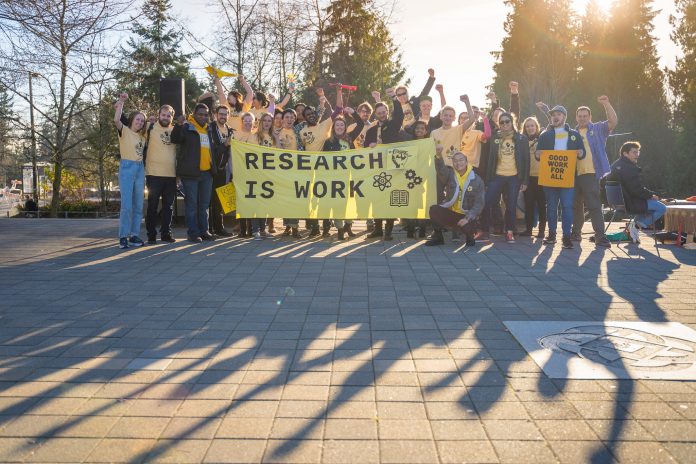
A large crowd gathered to celebrate the research assistants unionizing in 2019. PHOTO: Gudrun Wai-Gunnarson / The Peak

by Emma Jean, Staff Writer

Over the past month, the Teaching Support Staff Union (TSSU) has been circulating a petition that demands research assistants (RAs) — who fall under the TSSU —  be granted the benefits they were promised by SFU nearly two years ago. These benefits include broad healthcare coverage, recognition for all RAs as employees, and the reimbursement of the International Student Health Fee. Beyond signing the petition, it’s good for everyone –– at SFU and beyond –– to set a precedent where research workers at SFU are protected and properly compensated.

In November 2019, when research assistants joined the TSSU, they expected to have reached some kind of bargaining process with SFU by the following year to receive proper support for themselves. Since then, however, the bargaining process has been indefinitely delayed by SFU. As a result, many RAs don’t have the employer benefits, including healthcare coverage, that every other employee at SFU gets. RAs who work for principal investigators or the leaders of high-level research do receive dental and healthcare coverage. However, this exception still leaves most RAs uncovered and unprotected.

The lack of protections is extra risky when workers are left underpaid and uncovered in the middle of a pandemic. This also doesn’t take into account RAs who receive scholarship money from SFU. They aren’t considered employees as a result, despite their labour being equal to non-scholarship RAs, and are unable to unionize and receive benefits. RAs already receive below minimum wage in pay, a labour practice that is barely legal as it is, and hardly a living wage despite RAs working a reported 50–60 hours a week. SFU’s labour practices shouldn’t allow for this in the first place, and once RA’s receive proper benefits and recognition, it’s crucial they change their pay policy so it won’t be allowed in the future.

With so many gaps in coverage and eligibility, SFU’s RAs deserve better in so many ways. RAs are an integral part of making some of SFU’s most valuable work happen. Even if they weren’t, they still deserve to make a living wage and have their needs covered like any other worker. Making sure that RAs get the same coverage and relative pay as any other employee at SFU would also pave the way for other unrecognized workers at SFU to get the same union benefits as their colleagues doing the same job.

If these demands are met, this would not only mean that all RAs at SFU would receive what they deserve, but that a new precedent for RA protections would be set in Canada. The poor pay and treatment of RAs is awful at SFU, but it’s hardly unique compared to other academic institutions. When research workers across Canada and beyond need leverage to organize for better conditions, they can point to the RAs at SFU to demonstrate that fair compensation and benefits are attainable, necessary, and a feature of Canadian universities. It’s time for well-paid, well-covered, fully-unionized research workers to become a feature of healthy Canadian universities, and for schools without it to feel pressured to keep up.

To turn SFU into a workplace that truly values and justly treats its workers, they need to do more than just meet the TSSU’s demands for RAs. They need to change the way that their pay policy, bargaining commitments, employment status process, and overall worker relations operate. Accomplishing this would make sure that all workers at SFU aren’t treated in the harmful and negligent way RAs are being treated now.  

For students, helping RAs can start with signing the TSSU’s petition available on their website and social media. Additionally, a greater awareness of SFU’s labour practices can be gained from their Human Resources page.