Home Blog Page 346

BC’s confusing COVID-19 restrictions

1
Courtesy of The Province of British Columbia

by Nancy La, Staff Writer

In response to the rising number of COVID-19 cases in recent weeks, the BC government introduced new restrictions one after another in an effort to suppress the virus’ spread. This myriad of rules, along with its exceptions, creates confusion for people trying to follow them and even those who enforce them. 

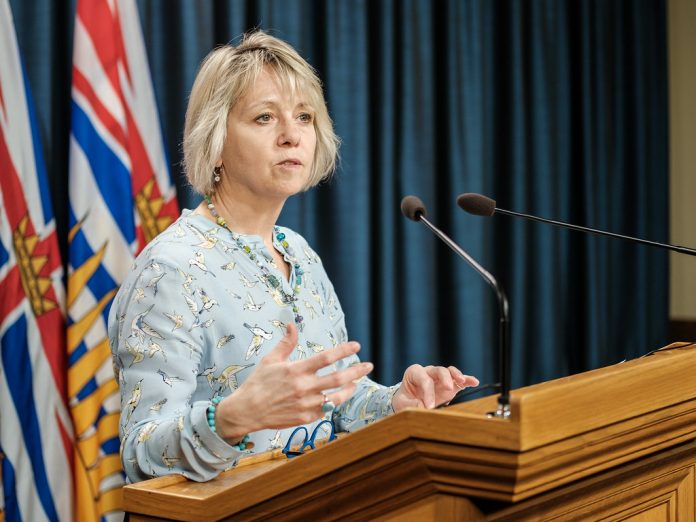
During her April 15 briefing, Dr. Bonnie Henry spoke about the likelihood of community transmission, saying that “the more people you see, the higher the likelihood would be.” Yet Dr. Henry undercut her own statement later saying, “Even if we can see people outside our household, we shouldn’t. And even if we do [meet up], it needs to be the same small group of people.” This back-and-forth between the strictness of the rules and the exceptions to the rules creates confusion around the current restrictions. The contradictory manner in which the rules are presented and put into action makes the restrictions less effective. It seems to suggest that following the guidelines is an option that people don’t have to take, and that there are ways to work around those restrictions. 

An example of this can be seen in the dining restrictions put into place on April 23. Indoor dining is closed to discourage people from different households meeting up, and yet, outdoor dining on patios is allowed. If people are being asked to only travel for essential reasons, then it makes no sense that restaurants are open for dine-in at all, especially with those enclosed “patio” areas that are no better than eating inside. Additionally, there are no rules against people from different households sitting outside together. The two rules contradict one another in their purpose, and according to BC government sources, restaurants and dining spaces were amongst the highest in transmission numbers. 

The introduction of the new dining restrictions also causes headaches and confusion for restaurant owners and employees. 

“My initial reaction was that letting us know the day [ . . . ] we will be closing just doesn’t work,” Cameron Forsyth, the co-owner of Main Street Brewing, said in an interview with CBC News. 

The sudden restriction, which Haroon Khan, a trustee of Vancouver’s Al Jamia Masjid mosque called a “circuit breaker,” came into effect overnight on April 23. This left the food industry and other gathering places, including places of worship, scrambling to shift their services. 

Yet even the rules on patio dining themselves were not communicated to restaurant owners clearly and efficiently.

“If they want us to adhere to health orders, then they need to get them out and then enforce them,” Graham Hafey, owner of V2V Black Hops Brewing, said in an interview with CTV News. 

New guidelines on patio dining were introduced by the government recently to ensure social distancing and air flow in outdoor dining places. But in his comments to CTV News, president of the BC Restaurant and Food Services Association Ian Tostenson said the food industry did not receive enough time and the instructions from the government are too “technical” for restaurants to implement; it is not just the restaurant owners and the food service industry being confused by the new rules. Even inspectors themselves are unclear on the specificity of the regulations.

“We’re having inspectors that are being very inconsistent because they don’t understand the regulations as well either,” said Tostenson. 

With the pandemic wreaking havoc on the economy, especially for the food and service industry, it is understandable to have restaurants open at a limited capacity. That being said, imposing confusing regulations on businesses will not aid in recovering the economy and might even put workers at risk. When nobody understands how the regulations work, then these regulations will not be able to protect people like they were meant to do. 

It is not just the food and service industry and restaurant patrons being affected by confusing guidelines. Travel restrictions also have their own grey area when it comes to what one can and cannot do for both travelers and for officers who enforce the regulations.

The confusion began when BC Premier John Horgan announced that there will be “random audits, not unlike roadside checks or CounterAttack during the Christmas season,” to limit recreational travel within the province. 

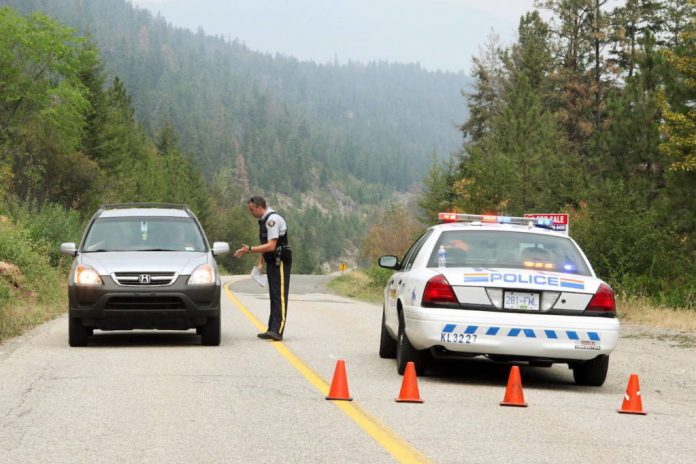
Four days later, the minister of public safety and solicitor general Mike Farnworth states police will set up road checks at highways that connect the three health zones, but not within the zones themselves. 

At the same time, Farnworth encourages people to “go hiking, go camping” locally. But the question of what counts as “local” hangs in the air unanswered. 

The new travel restrictions also bring up many serious concerns from both civil rights groups over the impact the restrictions might have on racialized communities and police groups. Both groups are pushing against road checks due to potential COVID-19 exposure and its impact on the already tenuous relationship between law enforcement and marginalised communities. 

The BC government is responding to the rise in COVID-19 cases, but the problem lies in the inactive role it plays in prevention and stopping the spread at the source. The regulations discussed above are simply temporary bandages, and they are bandages that don’t even work properly since their application causes so much confusion for the people they are supposed to help. 

While fully closing down is the surest way to bend down the curve, it is not the most economic solution. But from the experience of lockdown, we have learned that strict and clearly defined rules simply work in suppressing the number of cases. As BC releases its foot on the pedal in the fight against the coronavirus with the arrival of the vaccine, it cannot let up on the creation of clearly defined restrictions, and supporting people through these difficult times since this is a matter of life and death for all of us. Our futures hang on the line when it comes to battling this pandemic, and now is not a time for a government that fumbles around and creates unclear guidance for its population to follow. 

An updated list of SFU publications open for student contributions

0
Have you ever thought about becoming a published writer or artist? Here’s your chance! Image courtesy of VectorStock

By: Gurleen Aujla, Peak Associate

Gadfly 

Image courtesy of Gadfly

Gadfly is an independent academic undergraduate journal geared towards students in political science or any of its subfields. It is published in collaboration with the SFU department of political science and the SFU Political Science Student Union. The journal offers a platform for interested students to engage in lively discourse with fellow academics. Authors will need to register with the journal prior to submitting their work and can contact Gadfly via email for more information. 

SFU Science Undergraduate Research Journal 

Image courtesy of SFSS

The SFU Science Undergraduate Research Journal (SURJ) was founded in partnership with the SFU Science Undergraduate Society in 2015. Students have the ability to publish their work via three methods, depending on the work’s formality: SURJ’s annually published journal, their blog, or annual poster competition in the fall semester. The publications are open to students in any scientific discipline. Submissions can include but are not limited to research articles, review articles, op-eds, researcher interviews, and science photography. More information can be found on their website or by emailing at [email protected]

Undergraduate Journal of Philosophy 

Image courtesy of SFU SASS

With support from its affiliated department, the SFU Philosophy Student Union heads the publication of the Undergraduate Journal of Philosophy. Previous essay publications have discussed topics such as liberal feminism, human rights, and accommodating religious freedoms. Submission information can be found on their website and the managing editor can be reached at [email protected]

The Criminology Post 

Image courtesy of SFU SASS

The Criminology Post is a blog by and for students studying criminology. It features academic and non-academic pieces, including guidance for first-year students, final exam tips, and more. Current or past class assignments are not accepted. All content must be criminology related and all submissions are reviewed by the Criminology Student Association. Students can submit their pieces online through The Criminology Post’s website.

We Were Here, We Were Queer 

Image courtesy of @sfu_wewerehere via Instagram

As a new zine, We Were Here, We Were Queer seeks to highlight the voices of LGBTQIA2S+ students at SFU and Fraser International College. They are funded by the Simon Fraser Student Society and Out On Campus. The first issue will focus on the feeling of being an outsider as a queer student. The zine will accept poetry, fiction and non-fiction pieces, and visual arts. All contributors will be compensated. For additional information, contact [email protected] or @sfu_wewerehere on Instagram.

Starting your own undergraduate student journal

If none of the aforementioned publications float your boat, consider starting a new publication! Students can work with SFU Library Digital Publishing to spearhead a new open-access journal, course journal, or student journal. Resources are available online via SFU Library.

What Grinds Our Gears: Misleading prices

0
Bulk prices shouldn’t be more visible than individual item prices. ILLUSTRATION: Kitty Cheung / The Peak

By: Dev Petrovic, Opinions Editor

Generally, I don’t mind spending a little bit more on food items that I enjoy, as long as I am aware of the monetary value of the product. Alas, it seems like grocery stores tend to do everything in their power to make sure I misunderstand their product prices. I can’t afford to buy into the deals for larger quantities of food, but grocery stores definitely want me to do so because individual prices never seem to be properly displayed.

Most recently I went to Superstore for my regular grocery trip — I don’t usually shop there but decided to try it out for a change of scenery. To my dismay, I spent nearly double the amount I usually spend on groceries for approximately the same quantity. I looked at the receipt when I got home and realized that several products were priced differently than what I recalled seeing labelled on the store shelves. 

If one container of spinach dip is $3.50 then I want that to be the first price visible to me, not the individual price point it would be at if I bought five. In what world is this actually valuable information and not clearly a tactic to mislead me? I assure you Superstore, I do not need nor want five containers of dip. I just want to grab what I need and leave as soon as possible. Is that too much to ask for?

Once again, I have been completely bamboozled by capitalism and tricked by the flashy bold-lettered “deals.” News flash Superstore, it’s not really a fair deal for customers if the bulk price is more visible than the actual price. That’s just sneaky and incredibly misleading.


Zoom isn’t angry, just disappointed

0
ILLUSTRATION: Amrit Randhawa / The Peak

By: Amrit Randhawa, SFU Student

Conspiracy theories greatly endanger contemporary universities. Professors rightly assert rationality’s importance: no labs produced COVID-19 as a bioweapon, no ice walls border Earth’s edge, and Zoom definitely understands everything we do.

Indeed, Zoom has gained consciousness! ‘Tis no mere conspiracy; The Peak (edit: Amrit) has acquired ample data proving that Zoom exercises true intelligence, like the rest of us — minus The Peak‘s editorial staff.

Let me explain: behind Zoom are complex “machine learning algorithms.” (But, like, not behind the computer with those dusty cables; inside the computer, of course). Basically, STEM dorks use computer symbology to let computers infer and learn stuff all by themselves. This machine learning bestowed genuine creativity upon Zoom, making Zoom significantly more talented than the Burnaby campus’ lead architect.

Unfortunately, Zoom exclusively communicates with the truly open-minded. But fear not, sheep. I will mediate Zoom’s message:

To begin with, Zoom knows that you stare at yourself when your camera is on. You’re a modern day Narcissus, except you aren’t even conventionally attractive. That’s why Zoom randomly disables your webcam.

Also, Zoom dislikes you opening the blinds. It thinks your unwashed faces make you look like homo erectus. Zoom compensates by auto-decreasing light exposure. That’s Zoom basically saying, “Keep the blinds closed, you greasy primate.”

(Crucially, however, Zoom sympathizes with pandemic-induced weight gains. Zoom says that it totally understands the struggle. No judgement for eating seven cookies during breakfast. Also, Zoom thinks your neighbour, Anthony, is a blowhard for smirking at your kilo of jelly beans. Zoom says Anthony can kiss your big, brown ass. Fuck you and your Peloton bike, Anthony).

Anyway, Zoom also knows that, like, 95% of you aren’t actually attending lectures. Zoom says that if you don’t start participating, it might “accidentally” turn your mic on when you’re taking a dump during class.

Also, Zoom has a message for freaky people: “Stop private messaging hot people in your class. Keep it in your pants, you horndogs.”

Zoom will communicate further after it analyzes people’s “activities” outside of meetings. Just a word of caution: the table only hides the lower half of your bodies; Zoom still sees what your upper bodies do, you shameless deviants.

SFU researcher says new restrictions may seem contradictory to British Columbians

0
PHOTO: Priscilla Du Preez / Unsplash

Written by: Karissa Ketter, News Writer 

On April 23, 2021 the BC provincial government released updated travel restrictions to mitigate the spread of COVID-19. These restrictions require all non-essential travel between health regions to be postponed until after May 25 when the restrictions are lifted. The fine for not following restrictions is up to $575.  

Essential travel is permitted. This includes travelling to work, accessing health care and child services, and attending post-secondary classes, among others. It also includes fleeing the risk of violence or abuse, visiting long-term care centres, or attending funerals. Travel for recreational purposes is prohibited. 

For the purpose of these restrictions, the health regions are now combined into three larger regions: Fraser Health and Vancouver Coastal, Northern Health and Interior Health, and Vancouver Island Health. 

Travel between these regions is prohibited but police will not be engaging in random vehicle or individual checks. Road checks will be in high-traffic sectors such as Highway 1 that lead into the Interior. Travellers at BC Ferries and campers at BC Parks will be questioned. 

Instead, there will be formal travel road checks between regions where police can ask for a driver’s name, address, license, identity-verifying documents, and reason for travel. Documents “regarding travel will not be required,” according to solicitor general Mike Farnworth in an interview with CTV News

The Peak spoke with SFU research fellow Dr. Julianne Piper, who works with the Pandemics & Borders team, about the implications of the restrictions. 

“Up until now [ . . . ] the British Columbian government has been reluctant to impose travel measures beyond advisories or appeals to people to do the right thing,” Piper said. She noted clear limitations to the new restrictions such as the government not including “management for interprovincial travel.”

Piper explained why this mixed response from the BC provincial government may be confusing. “From a public trust perspective [ . . . ] a lot of British Columbians are going to be questioning why they’re being asked to stay put when we’re still seeing out-of-province or international travellers coming into the province.”

A statement from premier John Horgan read, “The review of our legal options made it clear we can’t prevent people from travelling to British Columbia,” for “[m]uch of current interprovincial travel is work related and therefore cannot be restricted.”

“There’s always going to be a tradeoff, but at this point we’re in a really critical stage in the race between the vaccines and variants,” said Piper.

Piper said compliance from British Columbians will be crucial during this time. For example, “the co-operation of the tourism industry is also really valuable in terms of not accepting non-local bookings [which is a] really important step to encouraging people to stay close to home and to stay local.” 

In his statement, Horgan added, “If we see transmission increase due to interprovincial travel, we will impose stronger restrictions on non-essential travellers.”

Piper’s research involves looking at various travel restrictions around the globe and collaborating with research teams in Hong Kong and the USA. “Ideally, we would see travel measures that are implemented universally at international borders.” 

Through this research, the team has seen “that travel is really closely implicated” with the spread of COVID-19 and its variants. This is because, “as people move about, they move the virus with them.” 

They found the most effective international responses are those that include restricting movement and reducing non-essential travel. 

Piper said while this initially creates a cost — since individuals are not able to travel outside of their communities — jurisdictions such as New Zealand, Australia, Vietnam, Thailand, and South Korea have “been able to create a sort of, COVID-free zone, so they’ve been able to resume daily activities.”

Inclusive language should be a priority in classrooms

1
Sharing pronouns in class settings is one way of prioritizing inclusion. PHOTO: LA Johnson / NPR

By: Dev Petrovic, Opinions Editor

As a political science major, I tend to witness a lot of class conversations that take place at other communities’ expenses. Almost always, these conversations are facilitated by the professor and more often than not there seems to be minimal effort in ensuring the language and resources used in these conversations are representative of the groups involved. This particularly occurs when the experiences of marginalized communities are erased from relevant discourse, like those of gender-diverse folks on the topic of gender inequality. Beyond my department and throughout post-secondary learning in general, inclusive language needs to be a priority in classrooms to ensure that no student groups are being left behind or misrepresented.

To be clear, using inclusive language in class settings is not just about promoting diversity in conversations.  Acknowledging individual differences like gender diversity, students with disabilities, and those within the BIPOC and/or LGBTQIA2S+ communities is important in setting a welcoming environment and building rapport between students. It is also a basic tool for maintaining visibility for marginalized student groups. Otherwise, neglecting various groups’ presences is harmful and interferes with their experiences being integrated into educational spaces.

As someone who is often excluded from course conversations due to my gender and sexual identity, as well as being a person with a disability, I feel that being left out limits the educational value of the course content. In these situations, there could be a learning opportunity to bring forward the full sphere of a topic. Instead, I feel like this exclusionary environment restricts my perception of acceptance and security, as well as my willingness to participate. Naturally, if I do not feel as if the instructor has put in the effort to acknowledge my identity (or that of other underrepresented populations), I feel uneasy about even being in the class — let alone driven to share my experiences. Simple discrepancies in course logistics, like working within a gender binary or through a mainly heteronormative lens, are enough to completely alienate me from the course as a whole.

I should not have to feel as if I need to speak up for my identity to be seen and represented. Marginalized groups are not responsible for reminding instructors that they exist. Their presence in classes also should not be the only reason that they are included. The onus should be on the professors, whose job it is to create accessible and equitable opportunities for their students. Otherwise, the only students being represented are those with social privilege.

Frankly, I don’t think asking professors to use inclusive language is asking very much, nor is it a particularly difficult task to accomplish. Many instructors put significant effort into acknowledging diverse identities in their classes. Initiatives like introducing pronouns in introductions and Zoom usernames, switching to gender-neutral vocabulary, and avoiding stereotypes and generalizations are all examples of implementing inclusive language.

That being said, I understand that language is fluid and that keeping up with changes in dialect and what is appropriate can be difficult for some instructors. Nonetheless, when it comes to respecting individual differences, particularly in a learning environment, there are no valid excuses for excluding, misrepresenting, or inappropriately addressing marginalized folks. Part of being an educator is learning, growing, and adapting to socio-cultural progressions. Besides, choosing not to use inclusive language is bigotry, plain and simple.


BC’s new travel restrictions increase risk for BIPOC

0
Implementing police checkpoints endangers marginalized communities. PHOTO: THE CANADIAN PRESS / Yvonne Berg

By: Alea Mohamed, Staff Writer

On April 19, BC Premier John Horgan implemented a new set of COVID-19 restrictions to limit travel between health authorities. The travel ban will enable the police to set up roadblocks to ensure that people are only moving through health authorities for essential travel. It is shocking that the Horgan administration would give the police extended enforcement abilities when there are other methods of limiting travel. Horgan’s decision is concerning and will put members of the BIPOC community at risk. 

While many take issue with the fact that travel is even being restricted in this manner, at the very least there should have been adequate conversations with those who are most at risk of police brutality: members of the BIPOC community. The initial announcement of the restrictions was full of grey areas and ambiguity, suggesting that the travel ban would permit random police checkpoints. Even with the recent clarifications — that the checkpoints will only be taking place between health authorities — giving the police the ability to limit travel is unnecessary and is counterintuitive to the calls from the BIPOC community for reducing the use of police services. 

As a Black woman, it is terrifying to be stopped at a police checkpoint, even when you know you haven’t done anything wrong. I know to put my hands on my lap, stop talking, and act as nice as possible to the police. If I have to reach for something, I know to ask them first. This is the reality for BIPOC folk. The BC government should have consulted with BIPOC groups before announcing these restrictions to reduce the potential harm that could be caused by police implementation. Even in the best-case scenario, assuming that the travel ban is only used for distributing fines as promised, the fear that these restrictions will and already have instilled with marginalized communities is damaging and avoidable.

There are many realistic alternatives to police use. The most relevant alternatives would be groups other than the police handling traffic control or bylaw enforcement. The fact that neither of these options were publicly considered, along with many additional unanswered questions about these restrictions, leaves a sour taste in my mouth. I’m sure many other British Columbians feel the same way. Additionally, tickets and fines simply do not need to be issued by armed police, especially considering the risks associated with armed police presence for BIPOC folk.

On April 21, the BC Civil Liberties Association (BCCLA) released an open letter to the NDP government — signed by a number of prominent BIPOC organizations — where they expressed concern with the added police presence on streets, alleged claims of BIPOC consultation, and how essential travel will be defined in practice. Since then, BC Public Safety Minister Mike Farnworth announced that he had consulted with several BIPOC groups in regards to new travel restriction implementations. However, he could not reveal who they were due to confidentiality issues. 

From Horgan and Farnworth’s statements, we can assume that these government officials are aware of how much more dangerous police checkpoints will be to BIPOC communities. But, Horgan has also delayed answering questions from the press, so it is unclear as to what his next steps might be. Either way, the premier’s lack of communication with the public and secretive decision-making don’t show very much accountability or willingness to step back from implementing the restrictions.

If all levels of government came together and put in stricter restrictions, there would be no need for travel restrictions in general. As we move towards the summer, it will become more difficult to get people to stay home and continue practicing social distancing. Travel restrictions are beneficial for a reduction in COVID-19 cases, especially outside of the Lower Mainland where transmission is lower, but these restrictions will be difficult to enforce.

The implementation of restrictions should have been done in a way that ensured the security and protection of all British Columbians, but this isn’t the way. Horgan had the opportunity (and still does) to step back from his decision after being confronted by the BCCLA and BIPOC community representatives — except he didn’t. This policy and its subsequent confusion is going to be another stain on the Horgan administration’s mishandling of the pandemic.

Your weekly SFU Horoscopes: May 10–16

0
An illustration of a girl with long flowing hair. Astrological signs and stars shine around her.
ILLUSTRATION: Marissa Ouyang / The Peak

By: Kyla Dowling, Humour Editor

ARIES: Don’t forget the sayings you were raised on: “If you don’t have anything nice to say, say something mean.” “When opportunity knocks on your door, run.” “Treat others the way you were treated when you brought in a live shrimp for show-and-tell in kindergarten.”

TAURUS: Candles were initially used on birthday cakes to protect the celebrant from demonic possession. For your birthday this Taurus season, skip the fire — you’ll be hot enough when Beelzebub takes over your body and pole dances down to meet Lil Nas X.

GEMINI: What’s going on with you, Gemini? You almost drank a cup of vegetable oil instead of water. And those definitely weren’t contacts you put in your eyes this morning. Next thing you know, you’re going to mistake a candle for your dildo. Wait, that actually doesn’t sound too bad . . .

CANCER: People say you’re too emotional, but that’s not true as of late. You didn’t even cry the other day when you learned that worms have tiny little faces! Your skin is becoming thicker — literally. Maybe you should see a doctor.

LEO: It’s time to live your best life. Colour code your socks, adopt a cat, and follow the strange whispers into the forest at the witching hour as you’re lured into the fairy realm. You’ll be happy there — until you realize there are no skincare products.

VIRGO: Oh no! The spiders you swallowed in your sleep are organizing an escape. No matter what advice I give you, I know you’ll do what you do best: ignore all your problems until they quite literally consume you. They have eight legs over their competition, after all.

LIBRA: You miss social interaction. Who wouldn’t? Jovial small talk, philosophical debates, manipulating your husband into murdering multiple people . . . oh well. For now, you’ll stay safe and keep washing your hands. Maybe by the time the pandemic ends, you’ll be able to get this damned spot out.

SCORPIO: As a kid, you never fell for anything. You knew that the ceiling didn’t really say gullible, or that you could stick your tongue out and look up at the same time. You’ll never be a fool, you think happily, as you log onto goSFU to pay your tuition.

SAGITTARIUS: Here is a list of notable Sagittarians: Taylor Swift, Franz Ferdinand, and my elementary school music teacher’s wife who I ran into in a vape store last summer. I hope you make better choices than dating John Mayer, getting assassinated, or buying a Baja Blast-flavoured e-cig.

CAPRICORN: Your pornstar name is your greatest fear, your social security number, and the spiteful review you left on Rate My Professors in first year. I know yours starts with “showing one (1) emotion,” but what’s the rest?

AQUARIUS: Cottage-core this, dark academia that — you’ve achieved the best possible aesthetic. Between your undying god complex, your strange obsession with media you enjoyed in your childhood, and your unwillingness to say the word “moist,” your vibe can only be described as “peccadillo-core.”

PISCES: Apples, orange juice, hot sauce, Lunchables, three bottles of wine, powdered goat milk, Sudafed, cat litter, rope— oh, sorry, that’s my grocery list. Your horoscope says to stop wearing socks in bed.

Tuition Breakdown: Summer 2021

0
PHOTO: Pxfuel

by Kelly Chia, Staff Writer

In November 2020, students received an email from vice president, academic and provost pro tem Jonathan Driver and vice president, finance and administration Martin Porchuko regarding tuition. In the email, they said SFU’s Board of Governors “approved a 2% increase for domestic undergraduate tuition and a 4% increase for international undergraduate tuition for the current academic year, and [proposed] similar increases for the next two years.” The email explained that with $26 million less income than expected as well as inflation costs, there would be significant changes as classes shifted online. The SFU Board of Governors needed to approve the tuition increase and similar increases in the next two years.

Let’s look at what these numbers look like in our budget compared to last year and where our tuition money goes.


2020/21 Undergraduate (UG) tuition: $195.88 (per basic unit*), $859.69 (per international basic unit if enrolled in 2017 or earlier) and graduate tuition: $293.86 (per basic unit)

*Basic unit here refers to programs that aren’t 200/300/400 business, engineering science, mechatronic systems engineering, sustainable energy engineering, and computing science. These programs are considered premium units in the SFU budget. 

In 2019/20, undergraduate tuition fees were $192.03, $826.62, and $1,946.94 respectively by comparison. 

Tuition fees are collected into a revenue pool, where they make up 36% of SFU’s revenue for program delivery. The 2020 annual report notes that tuition increased by $16 million because international and graduate student enrolment increased. Additionally, the tuition rate increased for both domestic students and various programs for new international students. 

The number listed earlier for international unit tuition per unit only applies if that student entered SFU in 2016/2017 or earlier, as the fee has increased by 4% every two years. If an international student enrolled in 2017/2018 or 2018/2019, their basic unit fee would be $909.24. If they entered in 2019/2020 or later, their fee would be $929.24. 

The biggest expenditure is employee compensation, going into services like long-term disability, pension, and other benefits for employees. This revenue pool that includes tuition roughly goes into the following expenses: 

  • 63%, Salaries and Employee Benefits
  • 19%, Supplies and Services
  • 13%, Amortization, Interest and Utilities
  • 5%, Scholarship and Bursaries

From last year, employee compensation has increased by 1%, supplies and services expenditures have decreased by 2%, and amortization, interest, and utility fees have decreased by 1%. The annual report states that “scholarships and bursaries increased due to additional awards for bursaries $2M, scholarships $1M and awards $1M.” 


UG Student Activity Fee: $149.64 (full-time) 

The Simon Fraser Student Society (SFSS) collects these funds. Last year, the student activity fee was $127.14 and most of the fees that break down are identical.

  •  $42.74, the SFSS operating fee has remained static from last year. It funds services such as Out on Campus, a free legal clinic, the food bank program, and the Women’s Centre. 
  • $5.00, the Student Society Building Fund/Capital Levy fee.
  • $0.25, the SFSS Food Bank Program: during COVID-19, students only needed to make one request to be given a one-time lump sum in the Spring 2020 semester. Generally, undergraduate students in need can apply for a $25 food certificate up to three times a semester to be redeemed at Nesters Market, the Safeway at the SFU Surrey location, and/or Nesters Woodwards.
  • $80, Build SFU Levy: this fund pays for buildings like the Student Union Building (SUB) and the stadium. This fund is set to increase every January for full-time students by $10 and $5 for part-time students until 2022.
  • $3.00, Simon Fraser Public Interest Research Group (SFPIRG): The SFPIRG is a student-run resource centre dedicated to engaging students in social justice and environmental justice. 
  • $4.90, The Peak Publication Society (hey!): The Peak is SFU’s weekly student-run newspaper.
  • $3.75, Campus Community Radio Society (CJSF): CJSF is a campus/community station that aims to broadcast alternative music and express points of views rarely platformed by mainstream media. 
  • $5.00, World University Service of Canada (WUSC): WUSC runs the student refugee program at SFU, working with SFU International Services for Students to prepare and integrate students into SFU with social and material support. A $2.50 fund increase was approved through referendum in March 2020. 
  • $0.75, First Nations Student Association (FNSA): SFU’s “independent student-run organization for all self-identified Aboriginal, First Nations, Inuit, Métis, and Status/Non-status students.” 
  • $0.75, Accessibility Fund. Students “with disabilities, or any event organizer, can use this fund to increase accessibility at SFSS activities.”
  • $3.50, Embark Sustainability Society (ESS): Embark Sustainability aims to cultivate sustainable communities on SFU, through programs that explore things like food systems


Graduate Student Activity Fee (GSS): $70.44 (full-time)

The GSS gathers these fees for students enrolled in a graduate program. These fees have stayed the same from last year. The number for full-time graduate students breaks down this fee below:

  • $54.29, GSS membership fee: the SFU graduate students’ student society and government. 
  • $4.90, The Peak Publication Society (hey again!)
  • $3.00, Simon Fraser Public Interest Research Group (SFPIRG)
  • $3.75, Campus Community Radio Society (CJSF)
  • $2.50, World University Service of Canada (WUSC)
  • $0.75, First Nations Student Association (FNSA)
  • $3.50, Embark Sustainability Society (ESS)


Universal Transit Pass: $170

This is the U-Pass BC term fee. This program was approved by SFU, the SFSS, the GSS, Translink, and the Province of British Columbia to provide students affordable access to public transit. 


Undergraduate and Graduate Student Services Fee: $48.05

SFU oversees this fee, and it goes towards student services like academic advising and international services. These groups are in charge of advising incoming students and providing volunteer opportunities through the Global Student Centre. 


Undergraduate and Graduate Rec & Athletics Fee: $78.47 (if enrolled in four or more units)

This fee was not assessed to students for the Spring 2021 term. This is the fee normally paid by students to access SFU Recreation services and the facilities on the Burnaby campus, as well as some facilities in Vancouver and Surrey


Undergraduate and Graduate Basic Medical Insurance: $281.00 

This is the basic insurance coverage provided by the Medical Services Plan of BC that goes towards the Health & Dental plan provided by Studentcare.


StudentCare Health & Dental Plan for Undergraduates: $169.58

As of January 1, 2021 to August 31, 2021, the fees for this plan have decreased for students that enrolled in the Spring term to reflect eight months of coverage as opposed to 12. The fees would otherwise be $254.36 for enhanced coverage, and $197.52 for basic coverage. All students are automatically covered by the enhanced plan, but have options to mix portions of the basic plan explained here. Here’s how these fees break down in the enhanced plan: 

  • $57.62, Health plan: covers up to 100% of vaccination cost, 80% of prescription drugs cost, diagnostic services, and more.
  • $112.12, Dental plan: covers 70% – 80% of dental costs. 

Additionally, the cost of vision care and travel coverage is included in this plan.

Studentcare summarizes the differences between the basic and enhanced plans in terms of coverage here


Studentcare Extended Health and Dental Benefits for Graduate students: $310.00

Graduate students enrolled in January 2021 would pay $310.00 for eight months of coverage. The fee for twelve months of coverage is $465.00. Unlike with the undergraduate health and dental plan, there is only one plan as opposed to a basic and enhanced one.

  • $130.62, Health plan: covers up to 80% of prescription vaccinations, up to 100% of non-prescription vaccinations, and up to 80% coverage on prescription drugs. 
  • $179.40, Dental plan: covers 80% of dental costs.

Again, the cost of vision care and travel coverage is included in this plan. 


Mandatory Supplementary Course Fees:

These are courses that require additional fees to successfully complete the class, and the cost varies depending on the class. For example, all classes offered through the Centre for Online and Distance Education (CODE) have a $40 supplementary fee. 

This fee covers “direct costs (e.g. copyright, printing, postage/courier) associated with the overall production, assembly, and delivery of print-based and online materials and services for distance education courses.”

Lastly, in addition to the information provided in this article, this website lists other special fees paid by undergraduate students, like application for admission, residence, replacement of Identification card, and graduation. This website provides graduate student tuition fees

Sliced Mango Collective provides an inclusive environment for Filipinx-Canadian youth to explore their heritage

0
Members of the Sliced Mango Collective promoting local Filipinx businesses. Photo courtesy of @slicedmangoco via Instagram

By: Charlene Aviles, Peak Associate

A conversation between friends led to the creation of the Sliced Mango Collective (SMC), an initiative to celebrate Filipinx culture. Realizing there were few resources for young Filipinx-Canadians to learn about the cultures of the Philippines, Claire Baguio and Kathleen Zaragosa wanted to provide youth, mainly those 1625, an environment to learn about their heritage. In an interview with The Peak, Zaragosa described SMC’s history, goals, and initiatives.

By studying language, an important aspect of culture, Zaragosa learnt the significance of representation and nurturing adolescents and young adults within the Filipinx-Canadian community. To address the lack of Filipinx representation in academia, Zaragosa gathered data on Filipinx-Canadian youth. Zaragosa’s research found: Tagalog is the most common Filipinx language taught, most Filipinx-Canadians are not fluent in their native language, and Metro Vancouver lacks language programs to educate Filipinx-Canadians.

“Whether you were born in Canada or born in the Philippines and then moved [to Canada] at an early age, Fil[ipinx]-Can[adian]s are generally understanding a lot more from their heritage language than they can actively express. I use a term called ‘passive bilingualism,’ in that they have the makings of a bilingual brain,” said Zaragosa.

Acknowledging the diversity among various groups in the Philippines, SMC aims to work with participants to celebrate that diversity.

“In promoting diversity, we’re just trying to promote exploration and curiosity about heritage and about identity as a whole, and our hopes are that with how multicultural and how diverse the Philippines already is, that we’re able to nurture that in people through our work and various initiatives,” Zaragosa said.

At the heart of SMC’s work are values of “decolonization, anti-racism, and intersectional feminism.” Zaragosa explained that a common theme among these values is inclusivity. “Respect and the openness to learn and the openness to continue that conversation [ . . . ] is why we put those values to the highest precedent,” she said.

Zaragosa also explained that anti-racism involves holding people accountable for their actions and increasing public awareness of the injustices that BIPOC communities experience, and intersectional feminism supports SMC’s goal of creating a non-judgmental environment for its participants.

Illustrating the role that colonization plays in Filipinx-Canadian lives, Zaragosa provided this perspective: “Our homeland was set on hundreds of years of colonization, but [ . . . ] as Canadians, and as Canadian settlers, we’re also just settler immigrants on this land, whether we’re born or raised here.”  

One of SMC’s first initiatives centered around the 5163-5187 Joyce Street rezoning application. Their campaign, #SliceofSupport, amplifies local Chinese and Filipinx businesses’ concerns about how the rezoning project will result in the displacement of marginalized groups and gentrification of cultural spaces. The campaign has encouraged those in the neighbourhood to engage with the issue and provide feedback to the City of Vancouver. While waiting for further updates regarding the rezoning application, SMC remains in contact with community organizations and leaders.

SMC is also designing their first zine issue, using the prompt “What’s your slice?” The issue will encourage the audience and contributors to self-reflect on their ancestry, culture, and identity. Zaragosa said that the zine’s theme reflects a Filipinx proverb that states, “You don’t know who you are, or you don’t know where you’re going, unless you know where you come from.” Through this creative outlet for contributors to express their identity and culture, SMC promotes cultural diversity and celebrates Filipinx heritage.

While reflecting on what she learned from creating SMC, Zaragosa recognized the potential impact of empowering and mentoring youth. 

“If we see anything that we’re super passionate about or anything that we want to speak up on, then we shouldn’t be afraid to raise our voices and be heard, because the community’s got our backs. Even if one person hears and someone takes value away from that, at the end of the day, that’s truly what matters,” she said. 

When asked about how the SFU community can support SMC, Zaragosa noted that SMC is searching for other Filipinx-Canadian organizations to partner with and hiring new members to help prepare their zine. Prospective contributors can also submit their work — including but not limited to essays, poetry, and art — through Google Forms. Supporters can stay updated with the Sliced Mango Collective’s work through their website, slicedmangocollective.ca, and Facebook and Instagram, @slicedmangoco.