Home Blog Page 265

Monday Music: Songs to listen to when you realize you’re in a toxic relationship with your university

0
"Monday Music" in giant yellow block letters with a red background
Monday Music: your weekly themed playlist. Image courtesy of The Peak.

By: Marco Ovies, Features Editor

SFU refuses to let me leave with a degree and it’s starting to feel a little obsessive. Despite trying to do everything right, my degree keeps getting extended one semester at a time. I get it, I’m a wonderful student but I just want to graduate. Yet SFU has me in their money-hungry hands. I’m stuck paying another $2,000 every four months and I feel like I get nothing in return. So whenever I feel especially taken advantage of by this institution, I listen to these songs.

Come Around” by Peter McPoland

Image: Courtesy of Columbia Records

Maybe one day my professors will come around and actually let me graduate. But until that time comes, I listen to the unique vocals of Peter McPoland. While the song sounds generally happy, the lyrics are a bit less inspirational when listened to carefully. The song starts with hopeful guitar, synths, and the words, “Hey, are you ready to go?” Yes Peter, I am ready to go. Please pick me up so I can leave this school.

Grade A” by spill tab

Image courtesy of Spill Tab

Just the title of this song reminds me of the grades I used to get back in high school. Now, this is a distant fantasy. As long as I’m getting a C in my class, I am extremely pleased. I relate even more when singer Claire Chicha says, “I’ll never be your grade A” as her first line. However, I don’t think SFU cares that I will never be their grade A student, as long as they get my money.

Something to Believe In” by Young the Giant
Image courtesy of Fueled by Ramen LLC

This song especially reminds me of the good old days when Zoom lectures were still a thing. Despite needing something to believe in, there’s one line in particular that really hits home. “Is there a reason why I’m still awake?” is what I think to myself everytime my professor forgot to turn on his mic for the first 10 minutes of lecture. You would think the class spamming the Zoom chat would have helped, but he conveniently ignored us every time.

Lost Track” by HAIM

Image courtesy of Haim Productions Inc.

This song starts with a melody reminiscent of a child’s music box. I like to think of this as a representation of the childhood I have lost since I started at SFU. Gradually, more is added to the track. I would compare that to me gaining my degree . . . if I had a degree. Lead singer Este Haim sings “I’ll never get back what I lost track of,” which is what I say when I look back at all the credits I took that didn’t give me any life skills.

Losing Touch” by Laterdays

Image courtesy of laterdays

This whole song encapsulates how I have felt as my years have progressed at SFU. “Feels like we’re losing touch, we’re talking just not enough” reminds me of my academic advisor, who takes weeks to respond to my email with a one sentence answer. Otherwise, this is a very calm and relaxing track that, when I don’t listen to the lyrics too hard, relieves some of the five years of stress I’ve built up.

At the End of the Day” by Wallows

Image courtesy of Atlantic Recording Corporation

At the end of the day, I just want to graduate (have I mentioned that yet?). This song is softer than the others in this list — perfect for accepting defeat and slumping into bed. Singer Braeden Lemasters tells listeners, “If you wanted I would never call you, never think about it, never let you go,” which is what SFU seems to think I have said anytime I apply to graduate.

The Rundown

0
Jessica Jones snapped mid-air releasing the ball.
SFU alumni have statement race to qualify for the Indoor Championships. Paul Yates Photography

By: Isabella Urbani, Sports Editor 

Senior sendoff: SFU honours seven seniors with a 78–76 men’s basketball win against Western Washington. Senior Wilfried Balata had an exceptional night, recording 18 points and nine rebounds. 

Date: February 26 

Going out in style (sunglasses emoji): the women’s basketball team took a 69–67 win over Western Washington in overtime. One of the team’s three seniors, Jessica Jones, dropped 25 points on the night — her second most of the season! 

Date: February 26 

Series sweep (broom emoji): the softball team defeats Central Washington in both games of the doubleheader by a score of 15–7 and 9–8. 

Date: February 26 

End of the road: the men’s wrestling team finishes the year by placing eighth at the NCAA Super Region 6 Championship. Unfortunately, none of SFU’s wrestlers were able to qualify for the national championship by placing in the top three in their respective events. Thank you seniors!

Date: February 26 

Tough defeat: the softball team loses to Saint Martin’s by a score of 12–10 after tying the game in the seventh inning. 

Date: February 27 

Alumni check: former SFU runner and current volunteer coach Cameron Proceviat sets a Canadian record for the fastest indoor mile. Fellow alumni Lindsey Butterworth picks up a personal best on the track. Both qualify for the World Athletics Indoor Championships in Serbia from March 18–20! 

Date: February 27

Repping the (leaf emoji): golfer Ryan Hodgins and basketball player Jessica Jones earn Great Northwest Athletic Conference Players of the Week. 

Date: March 1 

Leading the pack: golfer Shirin Anjarwalla finishes highest among the SFU women’s team in the latest meet, moving up 17 places after day one to finish 32nd overall.

Date: March 1 

The family that flies together, sticks together

0
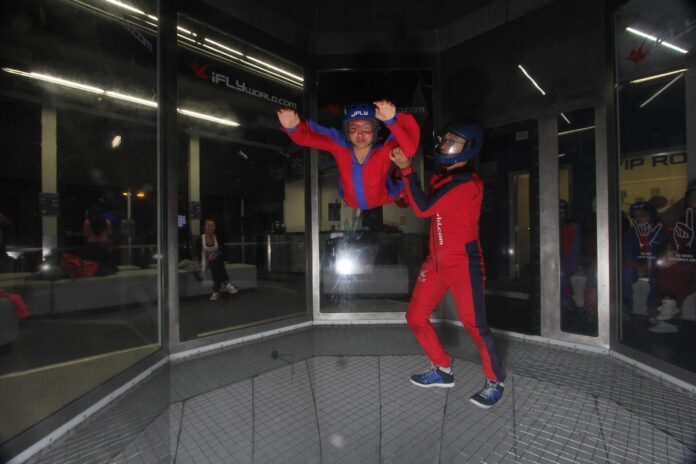
Charlene flying in an indoor wind tunnel with an instructor holding on to her.
Memories are forged when you push yourself out of your comfort zone. Charlene Aviles / The Peak

By: Charlene Aviles, Staff Writer 

Every few years, my mom’s side of the family travels to the US or Canada for a family vacation. In 2015, we settled on northern California. I ended up arriving a few days later than everyone else, and was determined to make the most out of it. 

As we approached our last night, my adventurous cousin Erica suggested we go indoor skydiving to end our trip with a bang. 

Soon after we arrived, I started to realize what I actually signed up for. I’d seen the photos on the website but seeing the wind tunnel in-person made it even more nerve-wracking. I was amazed by the flight instructors who quickly flipped and soared effortlessly through the air.

Indoor skydiving mimics the feeling of free falling (like when skydiving) in an indoor setting for a longer period of time — hence the name. But the activity is much more than an adrenaline rush. In 2014, indoor skydiving was recognized as a sanctioned event by the World Air Sports Federation. Later this April, they will host their fourth World Cup in Belgium. Competitors can compete in one of two categories: indoor formation skydiving (a four team timed routine) and artistic (solo or group music styled routines). 

Among all the excitement, I failed to realize just how suffocating the non-stop high-speed winds coming from the fans felt — leaving little time to breathe in and out. Feeling out of my element, I froze, and my muscles stiffened. My flight instructor Nathan signalled for me to slow down and take a few deep breaths, giving me time to focus on my family. Through the glass, I could see my cousins on the bench waiting for their turn. My aunt was filming me from the waiting area on the other side.

In that moment, I reminded myself we decided we’d do this together as a family, and I didn’t want to be the one to back out when it got too challenging. With my extended family living in different countries, opportunities like these were rare to come by. Determined to stick to my end of the commitment, I pushed through and hoped for the best.

Composing myself, I followed Nathan’s advice and tried to calm myself down by focusing on my technique. I soon was able to float around without hitting the wall while Nathan helped steer me around the tunnel.

In the second round, I felt more confident and actually started to enjoy it. After getting more experience in the tunnel, I had finally gotten my breathing under wraps. I still struggled with steering myself around the wind tunnel but was able to balance myself better this round, keeping myself in the air for longer. 

Looking back, I honestly couldn’t think of a better way to spend my last night in California. Extreme sports are definitely outside of my comfort zone and regular routine, but with encouragement from my family, I had a reason to persevere.

My experience made me realize how important it is to take any opportunity you have to make new memories with your loved ones. You never know when you’ll get another chance. Due to the international travel restrictions, I’ve cancelled my travel plans twice. But at least I have these memories to cherish until we meet again.  


Justina Di Stasio talks career since graduation and revamping Olympic dream

0
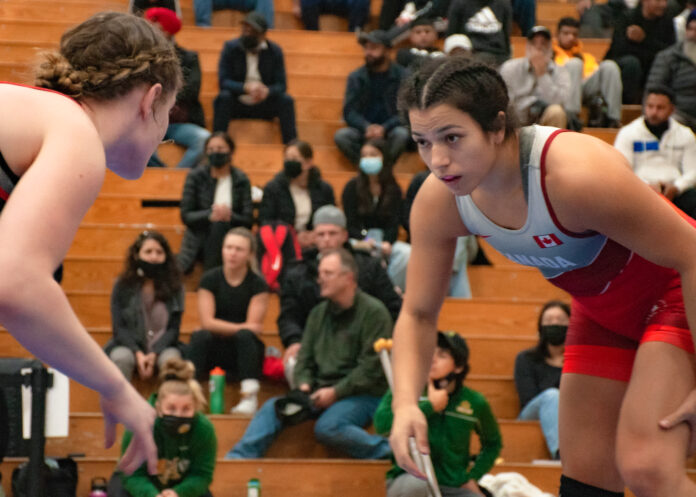
Justina Di Stasio wrestling in front of an audience
On top of it all, Di Stasio also works as a substitute teacher in her hometown of Coquitlam. Sara Brinkac / The Peak

By: Kelly Chia, Staff Writer 

In October 2018, Justina Di Stasio brought Canada a gold medal in the women’s 72 kg category at the World Wrestling Championships. That stunning victory underscores her passionate wrestling career. 

Today, Di Stasio is still a wrestling phenomenon. She is a member on Canada’s national team and assistant coach of the SFU women’s wrestling team, all on top of being a substitute teacher.

The Peak had an opportunity to speak with Di Stasio about her career and what it means to be both a woman and a Cree athlete. She raved about the opportunity to pay it forward, referencing her job at SFU. “Giving back to the sport and the girls, I wish that could be a full time job eventually. It’s the best.”

Di Stasio started competing internationally at the 2011 Junior World Championships. Since then, she has gone on to win gold in the Pan American Wrestling Championships and the Dave Schultz Memorial in 2015. 

But her proudest achievement as an athlete isn’t any of these impressive titles.

“I’d say coming back after COVID-19,” Di Stasio admitted. “I had my whole other life ready to go, teaching, and moving on from wrestling.” 

COVID-19 and not making the Olympic team for the second time also magnified the feeling. “I had two surgeries and went back to finish school, and I saw a lot of what life could be outside of wrestling, and it was really nice,” she said. 

But after missing the nervous excitement before a match, Di Stasio recommitted to her Olympic goal.

Since making her return, Di Stasio has been focusing on a new tactic: getting on the offensive early and placing pressure on the opposition. “Score the first takedown, so if something happens, you already have points on the board.”

On her childhood and growing up half-Cree, half-Italian, Di Stasio said her parents made sure she never felt different and praised her school’s wrestling team for being inclusive. As a result, she was surprised when people started asking for her perspective as an Indigenous wrestler. 

“I started getting pretty good at wrestling, and the questions started popping up,” she recalled. For her, being Indigenous, a woman, and a wrestler are all a cumulative part of her identity, so it was strange to have them separated.

Di Stasio explained she would often hear, “You’re so good for a girl, and like, you’re so good for an Indigenous athlete.” She added, “It should be, ‘You’re so good,’ period.” 

These sentiments put pressure on her to represent other Indigenous athletes. “I have to be perfect before I can speak on being Indigenous,” she said. “I feel a lot of responsibility to represent [my heritage] well.” 

The same applies for coaching, Di Stasio added, “Being a female coach in a strongly predominant male profession, there is a constant responsibility to do your job well because there’s a chance for other women or Indigenous women [ . . . ] to come after you, and you want to pave a very clear, good path for them to follow in.”

Overall, Di Stasio takes pride in her culture, but hopes younger Indigenous athletes won’t be put in a similar position. “I hope that it changes for younger athletes, both female and Indigenous athletes, [to know] that you don’t need to be perfect for your voice to matter.” 

After having 11 national qualifiers in their last match, the SFU women’s wrestling team look to wrap up their season at the NCAA championships on March 4 and 5. At the same time, Di Stasio is training for world team trials in Canadian Nationals, which take place at the end of May. 


Don’t be afraid of counselling

0
A message is painted on the side of a brick building. It reads “How are you, really?”
Medical checkups are considered a part of a healthy life, and counselling should be too. PHOTO: Finn / Unsplash

By: Charlene Aviles, Staff Writer

Mental health hasn’t been getting any better over these past few years. COVID-19, climate disasters, and war have been sources of stress and anxiety, and that’s to say nothing of the responsibilities of being a student. Fortunately, counsellors are specifically trained to help us process whatever issues are troubling our minds. Though there may still be a stigma related to mental health challenges, taking care of your health should be celebrated, be it mental or otherwise. 

A counselling session might be a great stress reliever, because you can discuss any topics freely. This could be helpful in finding guidance in work, relationships, identity issues, or in letting out any bottled up emotions that you’re struggling to express. Being proactive with mental health is crucial. For example, one study found repressing emotions doesn’t lead to them disappearing; they actually might worsen. Similarly, relationships, jobs, and identity are all strengthened by communication. Learning how to discuss issues clearly and directly can help build a stronger support network with those around you.

If there’s one lesson I’ve learned, it’s that counselling can be beneficial for relieving a wide range of emotions, like grief, worry, and fear. Going to counselling can be the first step in relieving stress. 

There’s no one-size-fits-all format for counselling sessions. There are different types, ranging from individual sessions to group therapy. What’s important is that you’re patient with yourself when it comes to finding a counsellor. While some people may prefer individual counselling sessions, it’s possible another format might be better for your needs. For example, SFU Health & Counselling has health peers, students who can movitate students towards a healthier lifestyle, without the formal guidance of a counsellor.

Often, people believe counselling is a last resort, which is really not the case. Sometimes when we’re stressed, a balanced lifestyle is at the bottom of our to-do list. However, when we feel overwhelmed, we might need counselling the most. Instead, think of it as an investment in your health. Counselling, like other forms of self-care, isn’t a one-time event or a reward after a busy day. It’s an ongoing commitment to focus on yourself.

If you’ve never attended a counselling session before, I recognize it can be daunting. It takes a lot of patience and courage to disclose personal information, and it may feel vulnerable at times. As a psychology major, I recognize that mental health conditions may be long-term or chronic. I’m not suggesting one counselling session will fix all of your problems, but it might give you some new perspectives and a much needed break to reflect on your situation. Whether you’re concerned about your mental health or not, going to counselling is a proactive approach to taking care of yourself.

To learn more about SFU Health & Counselling, visit their website, or check out the Studentcare Psychology Network.

This week at SFU

0
Photo of a golfer swinging at the ball
Swimming and track wrap up their season while softball kickstarts a four game series at home. Billi Derleth / Hawai'i Hilo

By: Isabella Urbani, Sports Editor 

Home Games

Saturday, March 12: women’s softball vs Western Oregon at Beedie Field (12:00 p.m.)

  • Game one of doubleheader 

Saturday, March 12: women’s softball vs Western Oregon at Beedie Field (2:00 p.m.) 

  • Game two of doubleheader 

Sunday, March 13: women’s softball vs Western Oregon at Beedie Field (12:00 p.m.) 

  • Game one of doubleheader 

Sunday, March 13: women’s softball vs Western Oregon at Beedie Field (2:00 p.m.) 


Away Games

Monday, March 7: men’s golf at the Poppy Ridge Invitational in California (all day) 

  • Day one of two 
  • Finished 13th overall last meet 

Tuesday, March 8: men’s golf at the Poppy Ridge Invitational in California (all day) 

  • Day two of two 

Wednesday, March 9: swimming NCAA Championships in North Carolina 

  • Day one of four 
  • Last event of the season

Thursday, March 10: swimming NCAA Championships in North Carolina 

  • Day two of four 

Friday, March 11: swimming NCAA Championships in North Carolina 

  • Day three of four

Friday, March 11: track and field NCAA Division II Indoor Championships in Kansas

  • Day one of two 
  • Last indoor track event of the season 

Saturday, March 12: swimming NCAA Championships in North Carolina 

  • Day four of four 

Saturday, March 12: track and field NCAA Division II Indoor Championships in Kansas

  • Day two of two


Upcoming local production bad eggs explores women’s agency across mythologies

0
Actress Sarah Roa, dressed like a 1960s housewife, stands on stage in front of a kitchen table looking down at her hands. Pink and yellow flowers sprout up in the foreground.
bad eggs starring Sarah Roa as Persephone. PHOTO: @unladylike_co via Instagram

By:  Luke Faulks, Staff Writer

Following a staged reading in 2019, SFU alum and playwright Jessica Hood is bringing her first full-length play, bad eggs, to your screens as an online film-theatre hybrid.

The play tells the story of partners Persephone and Hades, who, after unsuccessfully trying to have a baby, visit a fertility doctor. The doctor, Eve, is also Persephone’s mother. After a panic attack, Persephone sets out to discover who she really is, beyond a wife and mother. 

Initially intended to be a live theatre piece, the pandemic turned bad eggs into a virtual mixed media project. It’s still set on a stage, but uses different camera angles and animation to enhance the project’s reality. 

Pedro Chamale, the project’s director and Hood’s husband, added the film-theatre hybrid offers an opportunity to challenge elements of both formats. 

Chamale was originally brought aboard to play Hades, but was excited to take on the role of director. “I just see the magical realism, the surrealness, it’s just right up my wheelhouse,” he said. 

That magic is enhanced in a film-theatre hybrid format, which Hood said gave them a chance to use rotoscope animation, a style where effects are traced into the project, frame by frame. In bad eggs, this animation is used to accentuate the panic attacks Persephone has, when “reality starts to crumble around her.” 

In Greek mythology, Hades abducts Persephone. According to Chamale, the play explores what this could mean for the characters in a contemporary setting. “It’s a different kind of abduction,” Hood adds, explaining it serves as a pretext for a difficult relationship in the show.

Hood chose to bring together elements of Greek and Christian mythologies to highlight a recurring theme. “I have always been inspired by women in myth, and how there’s so little written about them; or when there is stuff written about them, it’s mostly what happens to them, but not what they do in their own story,” said Hood. “I wanted to see what would happen if they had more agency, if they got to choose their stories.”

The moral ambiguity of the characters informs the project’s larger themes. “I can see anyone watching really connecting with any of these characters, and also hating them all at the same time,” said Chamale. “They’re flawed, and that is just the way we are.

“I want them to see that they can be their own hero,” said Hood. “There is a hope for change in the play.” 

The project is the result of years of work from Hood and Chamale. It hasn’t been easy to get their feet in the door.

“It’s definitely difficult out there,” said Hood. “Keep trying, keep going, but also find your collaborators. Find the people you want to work with, because they’re going to be the ones that will support you, and uplift you, and help you along your journey.”

Chamale said artists should be bold in their professional lives. “Don’t wait to think you’re good enough to apply for things, especially to fellow artists of colour or racialized artists, because we often think we’re not good enough for longer periods, and I wish I had felt like I was good enough sooner,” he said. “Take chances, apply for things, make your work, that’s how you’ll grow.”

You can see bad eggs online between March 16 and 27 for free or by donation to the artists. Tickets are available via Eventbrite.

Learning about the wonders of the stars at Starry Nights

0
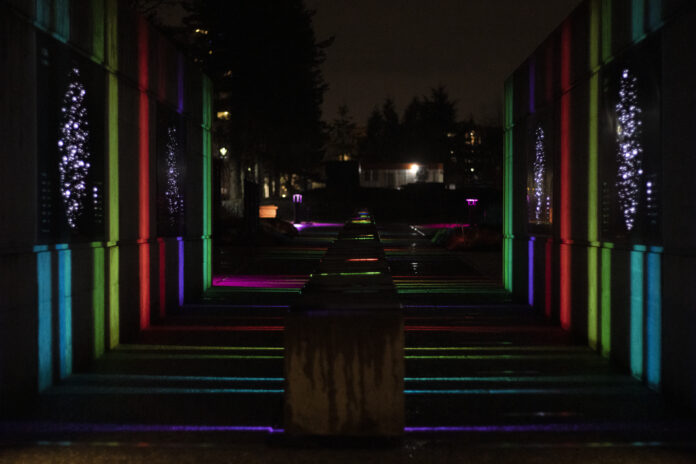
The star charts at the Trottier Observatory illuminated at night by multicoloured lights
Catching the night with a bunch of star enthusiasts. PHOTO: Krystal Chan / The Peak

By: Kelly Chia, Staff Writer

On a clear evening in February, the Trottier Observatory held its first in-person Starry Nights event in 2022. As the sun dipped and the night sky revealed the winter constellations, it was clear the break from events open to the public did nothing to discourage the long line of people who had come to admire the stars. 

I had never been to a Starry Night event before and knew very little about stars. But Starry Nights are evening parties meant for every kind of star enthusiast, even those who did not yet know they were star enthusiasts. That was reflected in tonight’s crowd as amateur astronomers and curious people alike gathered in front of the observatory to take a closer look at our neighbouring celestial bodies. 

For the last two years, the events have largely been live-streamed on YouTube, often alongside the Royal Astronomical Society of Canada (RASC) as observatory volunteers taught attendees about the stars they were looking at. RASC is a society aiming to help the general public learn more about astronomy and Starry Nights is one of their outreach events.

COVID-19 procedures meant people needed to be masked, vaccinated, and only one person could be in the observatory at a time. Luckily, I was first in line, so I got a very early evening look at Castor. Castor is a star in the Gemini constellation and was one of the brightest stars in the sky that night. The volunteer helping people inside the observatory kindly encouraged me to return to the line 30 minutes later to look at a different object.

Outside, the line extended around the Terry Fox statue. There, a RASC volunteer was talking to everyone about the stars we could see in the Northern Hemisphere. She pointed at Orion’s foot, where the brightest star in the sky, Sirius, shone. Marking each constellation outside with everyone felt special. The line was long, but the kids waiting were transfixed by Hayley’s words. I felt like I was a part of this lovely moment where people were rediscovering and falling in love with the sky.

Ivana Kovacevik, a physics student and a volunteer at the Trottier Observatory approached me to help answer some questions about the observatory. 

Firstly, Kovacevik explained the objects shown every Starry Night depended on what was prominent in the sky at the time. “We like to go with a planet or a bright star to get interest peaking, and as hours go by, we usually see two to three objects,” she said.

That night, Kovacevik said we were hoping to see the Andromeda galaxy. For faraway objects like the Andromeda galaxy, the scope needed to remain in the Northern hemisphere.

Standing in the viewing plaza, we started talking about the history of the observatory.

The observatory, which is only eight years old, is named after Dr. Howard Trottier, a former physics professor at SFU and his brother Lorne Trottier. But what surprised me was the dispute on how the building was designed.

“Howard wanted the dome to be round, like a normal observatory,” Kovacevik explained. This did not fit SFU’s vision. The architects envisioned a boxier observatory where the roof would open up, like a screen. “They came to the agreement that if they were to somehow make it as boxy as possible around the dome itself, then that’s okay.” The observatory is, indeed, surrounded by classically boxed-in concrete. 

Kovacevik then pointed out some of the easter eggs of the observatory. She pointed at the multicoloured pillars in the plaza. “That’s to represent spectroscopy,” she said. As light passes through different gasses, the reactions correspond to certain elements and that’s visualized by the colours on these pillars. 

“We have the spectrographs of the most important and abundant elements needed to create life,” Kovacevik explained. While I had noticed these beautiful lights at night before, I did not realize they were chosen specifically to represent something so meaningful. I felt more appreciative of the design that went into the observatory. 

Having RASC members and the Trottier Observatory volunteers meant it was very easy to get any question I had answered.

Kovacevik said many volunteers, including herself, found this opportunity through PHYS 190, Introduction to Astronomy. 

“Being in this group allowed me to learn not only background information on what we’re looking at but also technicalities like how a reflective telescope works or what programs we use.” 

The telescope the RASC volunteers had brought gave a closer look at a familiar friend: the moon. “We have the advantage of looking at very faraway objects that you can’t see on a normal telescope, but they have the advantage of seeing something like the moon in its entirety.” 

The telescope was set to look at the moon’s terminator, which is where the shadow of the moon marks the line between night and day. It’s funny — I had seen so many pictures of the moon’s craters, but having my glasses poke the viewing lens of the telescope and seeing the scope of the moon and all its dimples made me feel soft. This nearby celestial object we see every day looked different that night, especially after I’d seen a kid proudly declare he’d be an astronaut after running from the telescope.

Starry Nights are all about igniting moments like these: discovering a love for science and the night sky we share. The volunteers were truly passionate amateur astronomers. Although I wasn’t able to see the Andromeda galaxy that night, their knowledge and interest make me want to come and gaze dreamily at the sky soon!

Pending clear weather, Starry Nights will be held every Friday night from 7–10 p.m. Students can get involved with the program by contacting them at [email protected]

Trottier Observatory also has a free telescope loyalty program. If you are an avid fan of these star parties, you may be able to claim a telescope in the future. The website advises you to contact [email protected] for more information.

SFU, Canada’s most “engaged” university

0
a person proposes to another while an onlooker gasps
Proposal video goes viral, sparks rumours. PHOTO: Karla Salazar / The Peak

By: Maya Beninteso, Peak Associate

According to recent rumblings, it appears that SFU’s Burnaby campus has been plagued by public engagements since 8:45 a.m. last Wednesday. This rumour was accompanied by a video that went viral across various social media platforms, featuring an on-campus proposal. The Peak decided to investigate the phenomenon further. Are the engagements a coincidence — perhaps lingering Valentine’s Day proclamations of love — or is there more behind this viral proposal?

The Peak attempted a thorough investigation but an annual student census asking students for their relationship status was suspiciously sealed. However, an anonymous source provided the results of the census to The Peak, demonstrating a whopping 96.9% of students are engaged — thereby making SFU literally Canada’s most “engaged” university. 

This suspiciously guarded statistic suggests worrying implications. Has SFU been misleading the entire academic world over a mere technicality? After all, SFU is known for boasting its status as an institution that has a high level of community engagement — but never specified exactly how.  

When asking to receive concrete statistics and development plans for student engagement, The Peak was met with closed doors. SFU’s marketing team refused to return any calls or emails which prompted The Peak to go directly to their offices. The Peak was met with immediate glares, quickly hidden bridal magazines, and the sound of paper shredding in a back room that required “a warrant for entry.” Subsequently, president Joy Johnson and other faculty have gone on a two week leave citing (perhaps in spiteful humour) the attendance of a close friend’s destination wedding. 

Some staff at The Peak went undercover to gain an insider’s perspective. In a matter of mere minutes, our staff witnessed several out-of-tune serenades, including never-before heard original songs (that should have remained never-before heard). One student commented that serenades and proposals are “normal at this point,” adding that “at least I can cry without drawing attention to myself.”  

While it remains uncertain if these statistics are mere coincidence or lead to a much deeper conspiracy, the overwhelming lack of warmth from SFU does not bode well.

Top Ten ways to get an extension

0
An analog wall clock
Time — and it's on your side. PHOTO: Ocean Ng / Unsplash

By: Sara Brinkac, Humour Editor

  • My dog ate my homework

A timeless classic for an excuse that works every time. Some may say that in the digital age, your dog eating your homework is impossible. I say with enough eye contact and persistent confidence, your professor has no choice but to give in.


  • You’re sick

It’s not like you’re lying if you truly are just a totally sick, super rad person. Your professor doesn’t have to know you weren’t physically ill; they just have to give you that sweet sweet extra two days.


  • Power outage

Power outages have always been a random blessing from the gods for students in need of extensions everywhere. But unfortunately they are so random and disparate it’s hard to count on them as a timely excuse. This is exactly why you have to take matters into your own hands, climb that power pole with a hammer and just go to town.


  • Bribery

I’ve never met a professor that’s not an absolute sucker for an apple.* Teachers just keep leaning into stereotypes, they can’t help themselves.


*Honey Crisp: 1 Day, Pink Lady: 2 Days, Red Delicious: –1 Day (C’mon man, you’re better than that).


  • Cry

Just cry at them.


  • Lost internet connection
    A totally reasonable excuse especially in online learning scenarios. This one will be a bit harder to explain to your professor if you don’t have the internet to email them but I’ve found showing up at their house at 3:00 a.m. never seems to fail in getting what I want.


(Please don’t actually do this. Just use your data.)


  • Be honest

You could be upfront with your professor, letting them know that you have a heavy course load, personal stressors, or a whole host of legitimate excuses they would be sympathetic to. But that’s boring.


  • Punch them square in the knee

This is an absolute power play because it both confuses and intimidates your professor. Be warned though: physical violence — much like Tom Cruise’s 1983 hit movie — is risky business. So you’ve really got to ask yourself just how much that EDUC 100 mark means to you (the answer should be “a lot.”)


  • Home Depot

No headline ever said this article was about getting an extension on your paper and there’s tons of great options for extension cords at Home Depot. You’re welcome.


  • Is it OK if I have a day to submit this one? My computer charger stopped working and my laptop’s about to die 🙁