Home Blog Page 242

Cryptid Spotlight: The disappearing tutorial room on SFU Snap

0
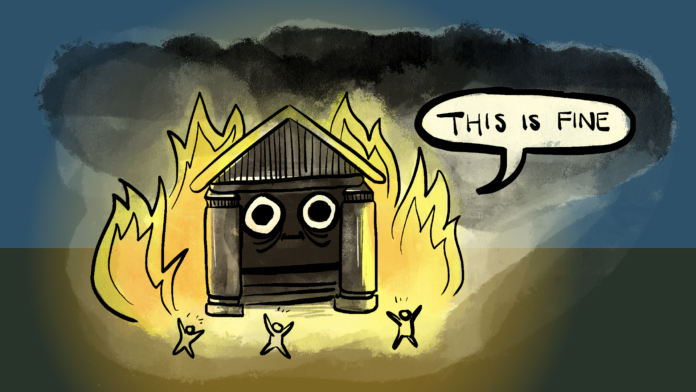
Illustration of a tutorial room disappearing on the SFU Snap app.
Where did the room come from, where did it go? ILLUSTRATION: Raissa Sourabh / The Peak

By: Kelly Chia, Humour Editor

Students,

On this sunny October afternoon, we bring you a nightmare every undergrad student can surely relate to. Today’s story comes from Bend n. Snap, a student just like you, lost in the seemingly endless corners of the Burnaby building. They made the morbid mistake of trusting . . . SFU Snap. Just shudder-inducing. We’ll let Snap tell you the story.

Snap was searching for a quiet room to study on the sixth floor of the AQ, a site of increasingly frequent paranormal activity. This labyrinth has confused many innocent students on their valiant quests to find their tutorial room, only to be met with corner after corner of Faculty and Arts and Social Sciences departmental offices. An extremely relatable problem, if we do say so ourselves. On this particular day, as they found themselves near a suspiciously clean bathroom, they decided to open up SFU Snap. That’s when they saw it: AQ 69420. How curious!

Snap says this is when “engagement killed the McFogg,” our adorable way of saying curiosity killed the . . . Well, no need to get morbid. Once Snap saw that room, they were caught by how novel the room number was. “I mean, imagine! 69420! So funny!” We laughed politely when Snap recited this to us, as we encourage you to do. With no thought as to how there could be a five digit room number in Academic Quadrangle, Snap continued on their daunting quest to find a story to tell.

Drawn like Sleeping Beauty to that spinning wheel, Snap pursued the loading screen of SFU Snap for clues to this elusive room. Unfortunately, reception was especially suspenseful, only loading the next corner of the map when Snap had reached it. Before they knew it, Snap found they had rounded this fire escape one, no, three times? How many times have they passed the Humanities offices now? 

Snap shook their weary head. Perhaps this was the universe’s way of telling them they could not have a hearty little chortle while studying. They started to turn toward the couches that everyone sits on, but stopped. Suddenly the halls looked different. According to Snap, where there once were maps of the floor posted on the elevator doors, there were now regal framed portraits of raccoons with snapback hats. The sublime silence of the sixth floor was replaced with faint airhorn sounds dooting at Snap. They were surrounded by cans of Mountain Dew and Doritos. It was unmistakable: this was the embodiment of 69420 itself.

Snap swore they could hear whispers. “‘Your paper is actually fine,’” Snap remembers one kind voice fondly. But as a whole, they felt afraid and confused. “For all the paranormal activity that was happening around me, it was actually quite encouraging.”

Snap looked down at SFU Snap, and was shocked to see a goofy little smiley face on the map. “Haha, get fogged!” a corny voice blared from the app. Snap checked to see if this was a new engaging function of MySSP, but the app just smiled back at them. Reportedly, after flicking the face a few times, it sighed and the illusion faded. The snack food disappeared before him like an angelic, caffeinated farewell. The app was back as it always was: mildly functional. Only one thing caught Snap’s eyes as they decided to leave the school after their ordeal. A new regal portrait had been added of them, rendered as a raccoon in a snapback.

“I’m not sure what led me to being chosen for this special moment,” Snap confessed, fiddling with their snapback. “All I know is if there is even a chance that SFU Snap has something interesting to show you, you must be cautious, lest you lay your eyes onto something most students could not comprehend.”  

What was the purpose of this ghost haunting the app? To show students a jolly time when they needed it most? To render them as fancy raccoons? We’re not sure. But we continue to investigate these cryptids on campus to learn more about their ways. Until next time, we drink a Mountain Dew in Snap’s courageous honour.
Getting into the Halloween spirit with Kelsey Fisher

0
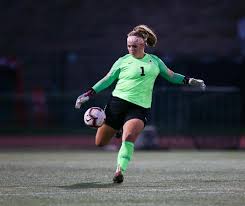
photo of Kelsey Fisher kicking a ball mid-game.
A candy a day keeps the goalscorers away! PHOTO: SFU Athletics

By: Simran Sarai, Sports Writer

Happy Halloween! The Peak asked junior goalkeeper Kelsey Fisher of the SFU women’s soccer team about her Halloween favorites — from candy preference to notable memories.

Horror movies or Disney halloween movies?

“Definitely Disney Halloween movies. Love the classic Nightmare Before Christmas.

Chocolate bars or candy?

Candy, but Reese peanut butter cups have a place in my heart.

What was your favourite costume growing up?

Probably the classic vampire look.”

Would you rather play dressed as a ghost or with a jack-o-lantern on your head?

Definitely a ghost, you could get some good action shots.”

What’s your favourite Halloween movie?

Rocky Horror Picture Show, cult classic and top tier.”

What’s your favourite Halloween activity?

“Pumpkin patch for sure.”

Which of your teammates is most likely to star in a horror movie?

“I could see either Emily [Smith,] she has the facial expressions, or Kate [Cartier] would probably be the lone survivor.”

Do you have a soccer memory you associate with Halloween? 

“In U17, my whole team dressed up for a Halloween practice and it was hilarious watching everyone try to play in costumes.”

Two SFU football games rescheduled back to Burnaby Mountain

0
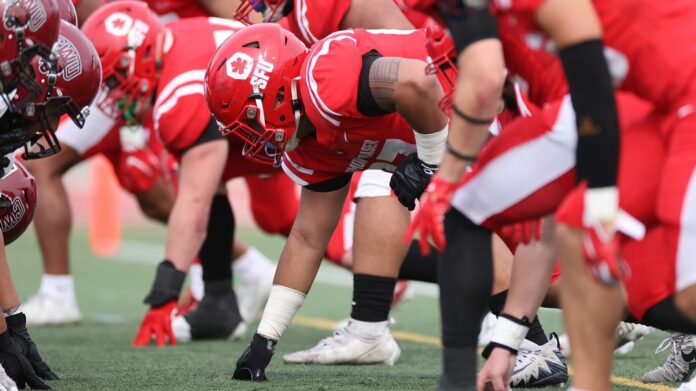
up close shot of players setting up on the line of scrimmage.
Posters spotted on SFU campus criticizing Lone Star Conference and “antivaxx hypocrites.” PHOTO: SFU Athletics

By: Simran Sarai, Sports Writer

It’s been a season full of schedule changes for the SFU football team. In August, four of their initially scheduled home games were moved to Blaine, Washington, due to COVID-19 border restrictions that prevented non-vaccinated players from travelling into Canada. On October 13, over a week after COVID-19 travel restrictions were lifted in Canada, SFU football athletes, coaches, and fans received news that two of their games would be moved back to Burnaby Mountain.

COVID-19 first began impacting international travel between Canada and the US on March 20, 2020, when non-essential travel was restricted to contain the spread of the pandemic. Non-essential travel across the Canada-US border resumed on August 9, 2021, after the Canadian government allowed fully-vaccinated Americans to cross into Canada. Prior to the removal of COVID-19 border restrictions, travellers were required to use ArriveCAN to provide proof of vaccination.

In an interview with The Peak, Theresa Hanson, Senior Director, Athletics and Recreation spoke about how the decision to move games back to Terry Fox Field was made. While the COVID-19 border restrictions were rescinded on October 1, the process to move some of SFU’s games back to Burnaby took “about a couple of weeks, [and] various contractual obligations, coordination, and collaboration with all parties was necessary.” Parties included the Lone Star Conference, and the other teams besides SFU that make up the division. 

When asked how the process of communicating the various schedule changes had gone with players and coaches, Hanson answered, “Everyone was thrilled to be able to bring these games back to SFU Stadium, and enable our student-athletes to compete in front of our fans and SFU community,” including “seniors and captains who have endured so much during the global pandemic,” and will be “recognized on senior’s night here at home.”

According to Hanson, each team in the Lone Star Conference is obligated to follow their region’s COVID-19 mandates. Because testing is no longer required in BC, no testing measurements will be used at SFU’s home games. Instead, SFU is asking student athletes who “are unwell to stay home and away from others until they [feel] well.” It’s unclear whether or not additional measurements will be put into place for fans. 

In spite of the homecoming, the schedule changes stemming from accommodating unvaccinated Lone Star teams has led to at least one person expressing their anger towards Commissioner Jay Poerner. This was evidenced by posters seen in SFU’s West Parkade Saturday evening.

SFU sophomore offensive lineman, Maliq Washington, shared his thoughts on the vaccination status of Lone Star Conference athletes impacting the 2022 season schedule. “The teams or players that did not want to [vaccinate] are sending us a message of disrespect, which is not taken lightly. But that sort of message just makes us hungrier to compete each game,” said Washington. He also felt the communication from administration to the team about schedule changes “could [have been] more fluent,” especially regarding “changes that impact how [they] play football.” The Peak reached out to two more athletes but did not receive a response by the publication deadline. 

Head coach Mike Rigell knows there is no place like home after being on the road for the last four games. “We are very excited and happy the home games are back on campus. Burnaby Mountain is a special place to play games at,” he said. 

SFU will now be back at home to play West Texas A&M on November 12, in addition to their Shrum Bowl matchup against the University of British Columbia on December 2. They lost their first rescheduled home game against Western New Mexico on Oct 22. 

Yes, I’m defending Just Stop Oil

0
illustration of a crowd of climate change protesters
Arguing about the “right” way of doing climate activism when you don’t do any is strange behaviour. ILLUSTRATION: Joyce Song / The Peak

By: C Icart, Staff Writer

The writing is on the wall, or should I say, the soup is on the painting: the climate crisis is here. 

In this attention-driven economy, news about Just Stop Oil activists throwing soup on Van Gogh’s “Sunflowers” at London’s National Gallery has come and gone on our timelines. But it did happen, and for a brief moment, some people were upset. However, the painting is fine and let’s be real: how many of you cared about it before? 

What started as an investigation into the origins of the activism group that generated all this buzz led me into a cloudy mess of half-truths. As I emerge from the weeds, I have to be honest: maybe Just Stop Oil aren’t the bad guys?

Quickly after the incident, rumours broke that Just Stop Oil is funded by an oil and gas (O&G) tycoon. Suddenly, the few folks that supported Just Stop Oil’s methods were now also against them. But I did some digging, and that seems to be only a little bit true. 

Just Stop Oil is primarily funded by the Climate Emergency Fund (CEF), founded by Aileen Getty. Getty is an oil heiress, meaning she inherited part of her wealth from her family’s oil company. This was enough information for many to speculate that Big Oil funds Just Stop Oil to make climate activists look bad. 

However, a quick Google search reveals that Getty has been vocal about and donating to various social justice issues for decades. Although she is not personally involved in the oil industry, she’s incredibly transparent about where her money comes from. So, is Just Stop Oil funded by oil? Not really. It’s partly funded by a woman who inherited money from her grandfather, who made a lot of money from oil. 

If they’re not hired actors, who is Just Stop Oil, and what have they inadvertently taught us about misinformation? According to their webpage, they’re “a coalition of groups working together to ensure that the government commits to ending all new licenses and consents for the exploration, development, and production of fossil fuels in the UK.” While this is their most popular demonstration, the group has been practicing non-violent civil resistance for months, causing their members to be arrested more than a thousand times. 

Why were people so quick to believe this TikTok conspiracy? Is there any truth to it? Do O&G executives fund other climate action groups? O&G regularly participates in greenwashing, which is definitely a practice we need to continue to critique. But I will also call out how quickly folks were to discredit civil disobedience in this situation. Why are we so intent on finding out what is “wrong” with climate activists? 

Arguably, there are other ways to do climate activism than throwing soup and blocking racetracks. But, if people throwing soup and engaging in other forms of civil disobedience is enough to turn you off from climate activism entirely, I’m sorry to inform you that you didn’t stand for climate justice in the first place. 

Getting lost in Tiktok conspiracies and discourse is still less of a contribution to climate justice than throwing soup. So if you really care, and trust me, you should (here are some scary facts if you need an extra nudge), look up initiatives in your community. Support grassroots activists who have been doing the grunt work for a long time now. That goes a lot further than being holier than thou about the “right” and “wrong” ways to protest against the destruction of the only planet we’ve got. 

Horror should be scary, not discriminatory

0
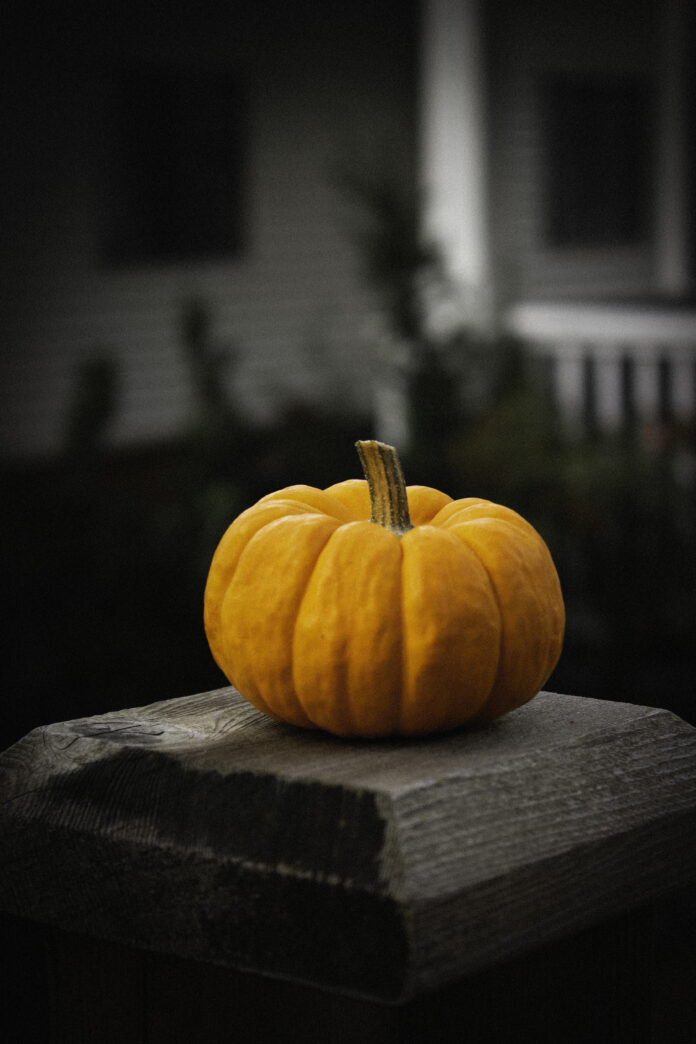
close up view of a pumpkin on a fence
There are many horror films with good representation. PHOTO: Gudrun Wai-Gunnarsson / The Peak

By: Olivia Visser, Opinions Editor

Content warning: mentions of violence, anti-Black racism, and ableism 

People like horror for different reasons. Some enjoy the genre’s focus on dark topics and pressing social issues, while others watch for creative villains that push expectations. Whatever your reasoning is for enjoying horror, discriminatory media representation is something creators and viewers must take seriously. Disturbing racist tropes and ableist villain designs are age-old problems with the genre. Artists have already proven that horror doesn’t need bigoted tropes to be creepy. It’s time we uplift ethical creators instead of supporting those who cause harm and division. 

Black representation in many modern horror movies is often seen with flat characters that are killed off early. The Shining is a particularly famous instance of this: Dick Hallorann, the head chef at the Overlook Hotel, is first to go. Likewise, in Scream 2, Omar Epps is killed before the title even rolls. There are countless examples of this tired trope being played out in horror films. Not only does it suggest writers didn’t want to put effort into creating diverse and realistic characters — it’s also just blatantly racist. While Hollywood frequently uses Black characters to drive empty plot-lines, Black horror has existed for over eighty years.

One of the most significant shifts in modern horror is the popularization of Black horror. The first Black horror movie, meaning a “Black-made” horror movie, came out in 1940. Son of Ingagi followed a Black woman who was a scientist caring for an ape-like creature. It was described by writer Robin R. Means Coleman as being unique, since it was the first movie representation of Black women in STEM and it realistically showcased “the Black middle class.” Horror Noire: A History of Black Horror, adapts Coleman’s book into a documentary exploring the genre’s development as a means of resistance and expression. Coleman describes early racist depictions of Black men as being predatory towards white women. This narrative was common in early horror movies, and was bolstered by president Woodrow Wilson’s public support for the KKK.

Since the genre took off, Black horror has been an effective medium for reclaiming representation and challenging racist tropes. Jordan Peele’s 2017 film Get Out is renowned for popularizing Black horror. The movie highlights the anxiety and discrimination experienced by Black people in white-centric societies. Get Out is one of the most popular Black horror films, but it’s only one of many. Other noteworthy films include Black Box, Us, and Bones. Get Out’s massive success may be a hopeful sign that horror is shifting in a positive direction, but we’ve still got a long way to go. 

Horror is also frequently criticized for its reliance on ableist stereotypes. Those who still remember the M. Night Shyamalan movie, Split, might understand where I’m coming from when I say it’s a terrible “representation” of dissociative identity disorder (DID). The film follows a man with DID who kidnaps and torments three girls. The villain frequently changes his outfits while undergoing dramatic personality shifts that become progressively more violent as the film goes on. There’s no association between DID and crime, other than the fact that people with DID are more likely to be victims of abuse. That doesn’t stop producers from continually suggesting we should be afraid of neurodivergent people. Split is simply one of many movies that poorly relies on mental illness to drive its plot. Shutter Island did the same with its representation of schizophrenia, as did Psycho with psychosis. Beyond being unoriginal, these films contribute to the negative social stigma that people with mental illness already experience

Accurately representing disability is crucial in media. The film Don’t Breathe did a disservice to disabled people by depicting a blind man defending himself from a robbery as terrifying. The man, played by a seeing actor, is arguably a victim. His blindness is used as a “plot device,” and the film controversially ends with his likely death. A Quiet Place is one example of a horror film that doesn’t use disability as a trope for its villains. Instead, the monsters are entirely inhuman, explaining their advantage of ultra-sensitive hearing. One of the main characters, Regan, is deaf and she’s played by deaf actress Millicent Simmonds. Many praised the movie for its positive representation of disability. Having a disabled lead in a horror film is a step forward for media representation, despite criticism that A Quiet Place still relies somewhat on disability as a plot device. Others found it troubling that there were subtitles for American Sign Language (ASL) scenes, but not for speaking portions. As is often the case in film, disability representation frequently falls short in one way or another.

Historically and presently, creators in the horror genre have gotten away with twisting the concept of fear to fit prejudicial social standards. Boycotting problematic movies lets filmmakers know where viewers stand on important issues. It’s past time we reapproach our favourite horror movies, and focus on supporting creators that put effort into making original and diverse films.

The United Nations has some trouble putting out fires on their Security Council

0
A fireign affair! ILLUSTRATION: Angela Shen / The Peak

By: Clarence Ndabahwerize, Staff Writer

NEW YORK —The Dag Hammarskjöld Library at the United Nations burnt to the ground after it caught fire. Extraordinarily, no one was hurt, but the loss was immense. While observers thought some kind of jurisdictional issue had prevented firefighters from getting to the scene, it turned out some diplomats had decided to negotiate with the fire. As it turns out, the fiery element was sentient after consuming much of the knowledge held within the confines of the library, finding it full of “moral loopholes.” Security council resolutions were heard loudly being chanted from the building, to the bemusement of evacuating bureaucrats.

Unfortunately, the spotlight wasn’t on the tragic loss of knowledge, but on how diplomats and firefighters alike were stunned into inaction by the fire. Everyone seemed concerned with the fire’s violence from afar, but made no attempts of stopping it in its path, even though this fire was literally in the United Nations’ jurisdiction.

“Why did someone think a sentient fire could be negotiated with?” asked one reporter on the scene. Another questioned why despite many of the organization’s failings with handling similar fires especially at the beginning of this year, they would continue to have jurisdiction in the face of extraordinary peril. According to an unnamed official who could not go on record, the fire had found a way to veto everything the diplomats threw at it. UN diplomats waltzed with the fire while it violated international humanitarian law. By the time all hope was lost, the measly fire extinguisher they tried on it had no chance and they had the audacity to be shocked!

In an exclusive interview with a major news network, the fire was bullish about its prospects given its appointed and incredibly uncontested position on the Security Council. “With my permanent seat, I can be sure that I’ll leave my scorch . . . um, mark on the world.” 

“To be honest, by the time I’m done, I expect to be the most tremendous fire of all time. I mean, nothing can stop me,” proclaimed the fire, while winking at the out-of-frame Secretary General. Spokespersons had no comments as to why the fire was still on the council given its destructive ambitions. Instead, they moved to release statements on social media declaring the UN’s condemnation while the fire quite literally burnt on. Onlookers watched in horror. “Can’t they do something?” The UN quipped that it was making calls for peace.

Intelligence agencies are reportedly watching the fire with great interest, and homeowners’ associations are making moves to keep it out of their neighbourhoods for obvious reasons. Since this fire seems to have a keen eye for high profile fire hazards, security has been beefed up at all liquor factories, and government agencies, because you know . . . paperwork. Theres no metaphor at all!

Monday Music: Halloween tunes to get you in the ‘treating mood

0
ILLUSTRATION: Raissa Sourabh / The Peak

By: Olivia Visser, Opinions Editor

Let’s be honest — Christmas steals all the attention when it comes to holiday music, but why!? It’s time to give Halloween some love. Whether partying or cramming for midterms, this spooky list will make you wish you were heading door to door in your favourite costume. 

“Lust for a Vampyr” by I Monster
Photo credit: Twins of Evil

I Monster is an electronic duo that creates unique music with gothic motifs. “Lust for a Vampyr” comes from the perspective of someone falling for a vampire, struggling with “getting older” while their lover “stays young.” It’s quite a different sound from this group’s other albums, with a moody vocal lead and catchy guitars. 

“My Body is a Cage” by Arcade Fire
Photo credit: Sony Music CG

While not quite a Halloween song, this one still deserves a mention. One of Arcade Fire’s older hits, this is a haunting song about feeling trapped in your own body. With emotive vocals and eerie pipe organs, I could see this one playing in the background of some dramatic horror flick. 

“No One Lives Forever” by Oingo Boingo
Photo credit: Geffen

This song has some serious retro vibes that are characteristic of all our favourite ‘80s Halloween tunes. It features a sharp new wave rock beat with low spoken vocals, funky brass lines, and playful lyrics. You can’t have a Halloween playlist without at least one ‘80s song! 

“Heads Will Roll” by Yeah Yeah Yeahs
Photo credit: Interscope

Yeah, yeah, yeah — given the title I know it’s kind of predictable, but you can’t seriously think I would ignore this one, could you? “Heads Will Roll” is an unbelievably catchy bop that just screams Halloween. “Off with your head, dance till you’re dead,” will echo through every Halloween party at some point throughout the night. 

“Shallow Then Halo” by Cocteau Twins
Photo credit: 4AD

Another ‘80s band — Cocteau Twins produces a lot of spooky, ambient, new wave music. This song is no exception, with a spectral vocal lead that contrasts against the raunchy baseline. If you’re looking for some ghostly music to enjoy this fall, look no further than Cocteau Twins.

Food For Thought: ghormeh sabzi

0
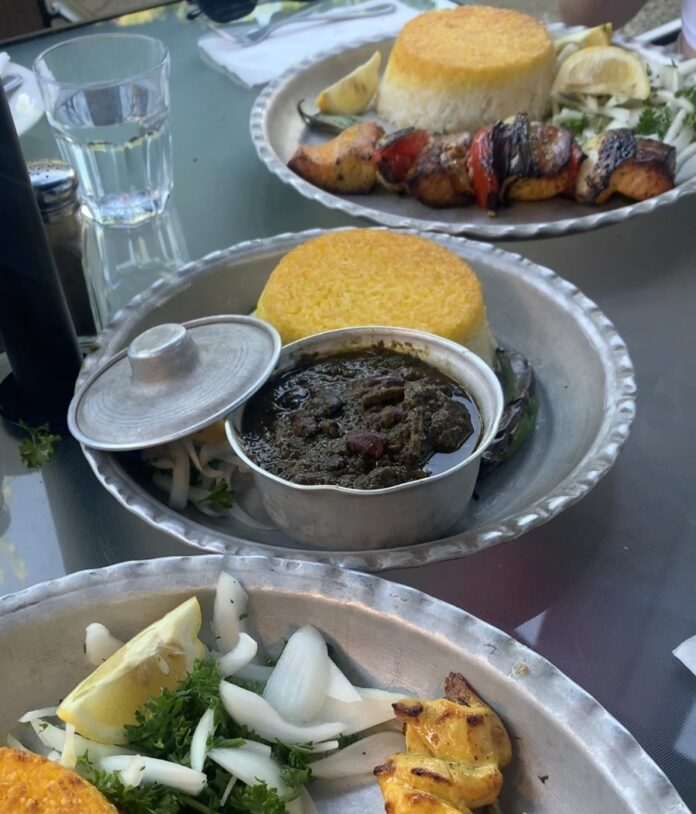
Ghormeh sabzi on a silver plate served with saffron rice with a side of lemons and onion.
“It has this incredible savoury, herbaceous flavour, and smells like rich herbs and dried lime. Paired with fluffy, aromatic saffron rice, it’s simply the most delicious dish I have ever eaten.” PHOTO: Hannah Kazemi, Staff Writer

By: Hannah Kazemi, Staff Writer

I come from a Persian and Italian background, but my upbringing was more focused on the Italian side. No matter what percentage Italian you are, this usually seems to be the case. Italian culture revolves entirely around food and famiglia, which means family meals are held sacred. When I was a teenager I became increasingly curious about my Persian heritage, especially the food. I had tasted Persian food occasionally at rare family gatherings, but that was the extent of my experience. Because of this, I didn’t feel “Persian enough,” whatever that means.

For my 16th birthday, I asked my dad to take me to a Persian restaurant instead of giving me a gift. We went to Cazba, what was soon to become one of my favourite restaurants ever. I crave their food. We ordered a bunch of appetizers and mains — something I don’t often do, but I wanted to try as many new things as possible. The dish I’ve dreamt of the most since then is ghormeh sabzi.

Ghormeh sabzi is a traditional stew made with tons of herbs and kidney beans, and chunks of the most tender, delicious cubes of beef or lamb. When cooked right, the meat falls apart as soon as it touches the spoon. I haven’t dared try to replicate it at home in fear of ruining my love for it forever.

At a restaurant like Cazba, they serve ghormeh sabzi with a massive plate of saffron rice. Eating ghormeh sabzi feels like a warm hug. I never thought I’d say this, but it makes me love kidney beans (in the right context). It has this incredible savoury, herbaceous flavour, and smells like rich herbs and dried lime. Paired with fluffy, aromatic saffron rice, it’s simply the most delicious dish I have ever eaten. 

I was actually a bit afraid to try it for the first time at the restaurant with my dad; while it smells amazing, its appearance leaves much to be desired. It’s green with hints of red and brown from the kidney beans and meat, which doesn’t appeal to someone trying a new food for the first time. But don’t be fooled — once you try it, you’ll be hooked. It definitely piqued my interest in Persian food and encouraged me to try new dishes.

If you find yourself at Cazba or another Persian restaurant someday (hopefully soon!), here’s what my dad and I typically order:

Persian food isn’t typically what people go for when they’re craving take-out, but it’s quickly become my favourite cuisine. I feel more connected to my culture now, having tried (and loved) much of its cuisine.

BC needs better backcountry education

0
wide angle photo of North Shore mountains
We must have important discussions about logistics before attending group hikes. PHOTO: Manmeet Sagri / The Peak

By: Olivia Visser, Opinions Editor

Outdoor recreation is steadily growing in popularity. Due to business closures and social distancing restrictions during COVID-19, BC’s regional parks saw a 61% increase in use in 2020. More people enjoying outdoor spaces is arguably a positive change, so long as everyone does their part to protect themselves, their travel partners, and the land they walk on. This isn’t always the case, and sometimes miscommunication ends in conflict or danger.

Group hiking continues to be the first choice among many outdoor enthusiasts. Hiking clubs, like the few at SFU and the many casual groups on Facebook, are home to thousands of members. While these groups are an excellent opportunity for new hikers, care must be taken from all sides to ensure everyone knows their capabilities and feels prepared. 

Last week, a BC woman joined a hike in Mt. Baker-Snoqualmie National Forest organized through a local Facebook group. She told CityNews that group members left her behind while she struggled to keep up, and she ended up continuing by herself. The woman said she left feeling as though the group was “very elitist” while admitting she wasn’t an avid hiker and should have done more research on the trail beforehand. 

The article covering the situation was updated shortly after publication to include the trip organizer’s response. Apparently, the organizer said they “waited for everyone to catch up” at the endpoint and “took multiple breaks.” They said the woman was told she could stop at any point and they would catch up with her on the way down, but she insisted on continuing the ascent alone after they had finished. 

Whether due to true elitism or poor communication, group conflict is surprisingly common. Hiking deep into the backcountry with strangers is not something to be taken lightly. Every group should have a thorough discussion of each person’s comfort and abilities beforehand, and what to do should anyone find themselves unable to continue. Hikers who overstate their comfort levels must understand the danger this may put on the entire team. Likewise, those who don’t properly assess members’ experience levels are creating unnecessary risk. Search and rescue (SAR) incidents in the backcountry are a daily occurrence in BC. 2021 saw nearly 2,000 rescues conducted across the province.

These scenarios highlight a need for better backcountry education in BC. Seeing as SAR teams are breaking rescue records each year, there seems to be a disconnect between people’s knowledge about safe outdoor recreation and their desire to explore the backcountry. BC AdventureSmart, an organization started by the BC SAR Association, made a recent Facebook post about group dynamics. They highlighted the need for pre-trip discussions about topics such as “what ifs,” expectations, and gear familiarity. They also suggested hiring a guide or joining an established hiking club if you’re unsure about your ability to navigate a specific trail. 

We shouldn’t prioritize completing trails at the expense of our companions’ well-being. We also shouldn’t rush into dangerous situations that may be beyond our experience levels. Everyone starts somewhere, and many local organizations, such as BC AdventureSmart and BC Mountaineering Club, aim to support those new to hiking, climbing, and winter sports. Guide companies like Vancouver Mountain Guides and Mountain Skills Academy also offer professional training for those wanting to expand their skill sets.