Home Blog Page 241

What Grinds Our Gears: Bitcoin Instagram scammers

0
illustration of an instagram account that says “not a bitcoin scam”
IT’S STILL NOT REAL MONEY. ILLUSTRATION: Alyssa Umbal / The Peak

By: Tracey Ho, SFU student

I’ve been hacked on Instagram. After nine years of using the account to showcase art, post photos of some exhibition or cool scenery, and of course, show off neat photos of myself — my account’s been turned into a platform for Internet bros’ latest go-to scam. 

That’s right; my beloved Instagram account has been turned into a Bitcoin scam account. This March, I got a message on the ‘gram that tricked me into giving over my account information. Within moments, I lost all access to my account of nine years. 

I was forced to see my account advertise fishy Bitcoin schemes. The poster showed off their (alleged) earnings and a shiny, expensive car. How nice. All my followers have to put up with this crap. The followers who had, for nine years, trusted me to share my art with them were now being subjected to Bitcoin advertisements. 

That night I searched YouTube for answers; not just about getting my account back, but about what Bitcoin is. I left with more questions than answers. Is it real money? Is it the official incel currency? Can I punch a Bitcoin? I’m convinced nobody knows. And no, you don’t know either. 

I lost sleep over this. I took a break from social media entirely, writing how I felt about social media in my journal. I then deleted other personal accounts to protect myself from future phishing scams. All for some Bitcoin jerks that, as it turns out, are massive contributors to climate change

I wish I could have my Instagram account back, partly to access my art, and partly to reduce the number of absurd Bitcoin scam accounts by one. We as a society need to stop respecting this crypto-scam disguised as the currency of the future. It’s not revolutionary; it’s a scam, plain and simple.

A love letter to Prozac

0
A photo of a person looking longingly upwards. A thought bubble beside them shows Prozac.
Prozac is my twin flame. ILLUSTRATION: Angela Shen / The Peak

By: C Icart, Staff Writer

Prozac and I are high school sweethearts. I met them as I was rebounding from Zoloft that relationship was so toxic. We’ve been on-again-off-again ever since, but I actually think we’re soulmates. I’m not myself without them! They make me so happy, or at least, less unhappy. And sometimes what you need is stability instead of passion you know? We were set up by my family doctor. She didn’t even know if we’d be right for each other, but I took the gamble. And we’re still together after all these years!

What’s our secret? The element of surprise, honey! Prozac never lets it get boring. They constantly surprise me with new side effects. I still remember the first time they made me start sweating profusely out of nowhere. The outdoor lunch in a t-shirt in the middle of February that followed was soooooo romantic. 

Prozac also helps me grow as a person you know? And that’s so important. Like when they started preventing me from orgasming, I learned that it’s not about the destination, it’s about the journey! They are so considerate. Sometimes they keep me up alllllllll night. You know? Cuz of the insomnia . . . (get your head out of the gutter, I’m being vulnerable here!). 

Prozac pushes me. Every time they give me a new side effect, it’s like unlocking a new level of difficulty in our relationship. Cuz if we can get through all of this together, we can literally move mountains together you know? It like . . . strengthens our bond. 

Omg, and sometimes they still make me so nervous . . . But that’s how you know my feelings are real. WebMD calls it nausea, I call it butterflies in my stomach. Prozac truly makes me swoon. 

And they’re sooooo fun. With them, one glass of wine feels like three. Like I’m literally on the ground laughing you know? Oh my god.

I can’t wait to see where this goes. Like they’re definitely my forever love you know? Like they love me so much,  they can get so jealous you know? Like if I don’t talk to them everyday, like, the withdrawals are so intense. But I’d never leave, I’m so loyal like that, you know? It’s not always perfect, but love is all about compromise!

Stop shaming women for liking sports

0
photo of a woman sticking her hand up to the camera.
Why do women get slut shamed for liking sports? PHOTO: Andrea Piacquadio / Pexels

By: Isabella Urbani, Sports Editor

I was called a cougar this past weekend by a group of men at a hockey rink. Yes, a group of fully-grown men who clearly lack any semblance of human decency or respect for women. Let me paint the scene. My 16-year-old brother had just finished his game. Coincidentally, one of my friends happened to be officiating the game. So with a couple minutes remaining, I left my spot upstairs to go down to ice level. While I was patiently waiting for players to leave the ice, a U18 goalie next to me was taping his stick for the next ice session. When he walked away, as any person would, I moved over into his spot. However, I hadn’t noticed that he had left his scissors and tape behind. I moved over as soon as I noticed him trying to reach across me to collect his stuff. That wasn’t the problem. 

The problem was the group of men who took it upon themselves to call out to the boy once he moved back into his spot and I returned to mine. “Watch out! You’re just a young boy,” they said. I turned to give them a dirty look right away. Really? They were going to insinuate that I was trying to pick him up? Dude, go touch some grass. I scoffed, and turned back around, making sure to leave as much room as possible between me and the player. 

I’ve taken jokes like this all my life being a woman at the hockey rink. Armed with a little makeup and the most comfortable croc brand wedges you can wear, and I suddenly become public enemy number one. But my story is just one example of many. Former National Hockey League (NHL) player, Paul Bissonnette on national television had the audacity to say that women only watch hockey for the attractive hockey players. First, tell that to three-year-old me who started attending Vancouver Canucks games. Second, not so kindly, shut up! Even if a person was watching for that reason, it’s none of your business! And lastly, did it occur to you that some women don’t like men? 

It’s no coincidence women are the subject of interrogative questions like these. I can’t tell you how many times I’ve engaged in a conversation with a man about hockey, and as soon as they find out what team I like, they proceed to ask me about the entire history of the team. Jokes on you, I can recite all the Stanley Cup winners back to 1940, but should I have to? Are you employed by the NHL to survey fans? I would never ask any fan that question, because it’s ridiculous to assume someone needs that level of knowledge to consider themselves a fan in the first place. At the end of the day, it all boils down to gatekeeping. For whatever reason, a lot of men think women can’t like sports. They can’t be experts, and they sure as hell can’t understand the game. Last week, I had a man try to explain to me how to operate the score clock for a hockey game. I had to explain to him that I’ve been scorekeeping games for the last seven years, and the information he just told me was entirely wrong. 

One of the best aspects of being a sports fan is the community of people you’re a part of. You may vary completely in age, race, occupation, gender — it doesn’t matter. You experience the same highs when your team wins and the same lows when your team loses. Part of the fun of following a club is getting to do it with other people: knowing that if you needed to rant about a particular player or game, you’d have someone to call. The last thing anyone wants is to be quizzed about their sports knowledge, because if you spend any time, effort, or money to watch or support a team, you’re a fan in my books.

Potlatches live on in Keeping the Song Alive

0
Black and white photo of Mungo Martin gazing down at a totem pole.
Mungo Martin Restoring Totem Poles, 1949. PHOTO: UBC Archives Photograph Collection

By: Petra Chase, Arts & Culture Editor

Potlatch, which comes from the Nootka word meaning “gift,” is a traditional Indigenous ceremony during which tribes give away or destroy possessions to promote generosity, wealth, and prestige. For the Kwakwaka’wakw people, singing, dancing, and drumming in the Big House are all important parts of the celebration. 

Located at the Bill Reid Gallery of Northwest Coast Art, Keeping the Song Alive is a collaborative exhibition with Jewish Museum & Archives BC. It was ignited by 75-year-old Potlach recordings. Traditional artifacts from previous generations will be on display alongside contemporary artists who were inspired by the recordings. The exhibit, which premieres on November 2, also documents the crucial partnership between ethnomusicologist Dr. Ida Halpern and Kwakwaka’wakw Chiefs Billy Assu and Mungo Martin in preserving Potlatch traditions.

Jewish Museum & Archives BC approached Cheryl ‘Ka’kaso’las Wadhams to collaborate as the guest curator of the exhibit. As an Indigenous person from the Kwakwaka’wakw nation, Wadhams brings her lived experience to the team. Interviews in three Kwakwaka’wakw communities in Vancouver Island, including Wadhams’ home, were key in putting the exhibit together.

 “We’ve been really digging in and pulling all of the important things that we got out of those interviews that we did with community members and pulling out just those connections that had where Ida was concerned and the work and the recordings and how it kind of has a ripple effect [ . . . ] to today.”

The team also visited the Royal BC Museum in Victoria, to access the recordings and artifacts from Halpern’s life, where they’re available to the public under the protection of UNESCO as part of Dr. Halpern’s many Indigenous culture preservation partnerships. 

“As a Jewish immigrant fleeing the Holocaust, Dr. Ida Halpern understood the impact of cultural erasure,” Wadhams shared. “Assu and Martin trusted her as an ally to preserve and record songs fundamental to the Kwakwaka’wakw culture that would have been lost forever due to the Potlatch Ban. Decades later, they couldn’t have imagined how enduring and profound their collaboration would be.”

Wadhams spoke on the importance of this exhibit for Kwakwaka’wakw people. “Those recordings are still being looked at and listened to. And hopefully we’ll bring more exposure to that so they can continue.” 

Wadhams also shared what she learned through their research; historically, Potlatches were a way to honor loved ones who passed away. The Chiefs and their families would plan their memorial Potlatches a year in advance, and invite people to attend by travelling village to village on a boat.

Indigenous cultural suppression at the hand of white colonizers has had a devastating impact on Indigenous communities, and so much of Indigenous culture has been lost. Keeping the Song Alive is truly a testament to the importance of cultural preservation for future generations and the profound impact of partnerships between cultures. It’s also a celebration of the spiritual power of Kwakwaka’wakw traditional music, dance, and tradition. You can’t miss it!

Masks are recommended in the gallery. Find out more on their accessibility page.

Keeping the Song Alive will be open to the public Wednesday to Sunday, 10:00 a.m.– 5:00 p.m. until March 19, 2023. Attend their opening celebration on November 5 from 1:00 p.m.–4:00 p.m. Tickets are available on their website.

Food for Thought: My mother’s porridge heals

0
A green bowl of porridge being served by hands with red nail polish
ILLUSTRATION: Raissa Sourabh / The Peak

By: Nercya Kalino, Staff Writer

Whether rice, oat, or flour based, porridge is the dish that carries the comfort of childhood in many cultures. It’s a basic food in my culture that most Malawians grow up eating. Now that I’m in my mid-twenties, a lot of my food cravings are childhood meals, especially my mother’s porridge recipe. The tenderness and care that I associated with porridge since a young age makes eating it now remind me of my mother’s love. 

My mother mostly made flour porridge. Sometimes she would add groundnut powder into the mix with dry milk. Other times she would use rice and add liquid milk with cocoa, honey, and peanut butter. No matter the ingredients, her porridge was always curative to my soul. Whenever I was sick from body aches and headaches, she would sit next to me and slowly feed me, with patience and love. If I was full, she would urge me for one last spoon and before I knew it, I had finished eating the whole bowl. 

As I grew into my teenage years, I moved away from home for boarding highschool. This is when I started to loathe breakfast, because the porridge served in school was bland and cooked to feed, not to heal. I hated the idea of having to wait in line for a scoop of a piping-hot mix of flour and water because in my eyes, there was nothing about it that was appealing. I didn’t like that I had to bring my own condiments to improve the taste of the porridge. Everything about this interaction made me miss home. During that time away from home, I tried my best to not get sick, because if I ever got sick, my mother was too far away.

Porridge to me is my mother’s pure love for me. She would always surprise me with my favourite meals and always seemed to know when a bowl of her porridge would brighten my day. 

Now that I’m in Canada, the weather here is different, so porridge is best cooked in the fall. The cold and snow outside will leave me feeling homesick, but when I replicate what my mother used to make for me, I feel the warmth of her heart. Sometimes, as I eat, I cry, but after the last spoonful, I feel closer to her caring and protective nature. 

It’s time to stop treating climate change like a future problem

0
illustration of Vancouver skyline covered in wildfire smoke
Increased extreme climate events are already occurring. ILLUSTRATION: Alyssa Umbal / The Peak

By: Olivia Visser, Opinions Editor

Over the decades, popular media outlets reporting on climate change have appealed to readers by pleading with them to consider future generations. The idea that current generations may not suffer, but future ones will, is one we’ve seen plenty of times in the media. This notion isn’t entirely untrue — people should care about the Earth’s future. However, framing climate change as a long-term problem allows individuals and corporations to get comfortable with complacency. Climate change is currently destroying the planet. Predictions about the Earth’s future are important, but the most convincing evidence that we need to act now is our collection of current climate crises.

Last year, Western North America experienced an extreme heat wave. Lytton, BC broke records with 46 C weather, before being almost entirely destroyed by a wildfire. This past June, the United Kingdom suffered a series of severe heat waves. England reported 2,803 “excess deaths” among those 65 and older due to the heat waves. India and Pakistan also had their “hottest March since record-keeping began 122 years ago,” according to a report cited by the World Economic Forum. Everyone’s been feeling it: the Earth is changing. The Earth is changing, and people are literally dying. 

Not only are humans dying, but animal populations are dwindling as a result of climate change. During record-breaking droughts this year, salmon in BC experienced difficulty spawning from low water levels. The salmon spawned at nearly half their predicted rate of 9.8 million fish. William Housty, conservation manager for the Heiltsuk First Nation, says the full effects of such a loss won’t be known until 2026. Declining animal populations are significant because they affect many Indigenous peoples who rely on “traditional sources of sustenance.” 

Joseph Koostachin, who lives in the Cree community of Peawanuck, told Human Rights Watch he noticed a considerable decline in food sources over the years. With “fewer caribou and geese migrating to the area,” community members must rely on expensive imported food that costs about 30% more than food in Toronto. Koostachin said his family can’t afford healthy food like vegetables as a result. Animal loss is closely linked with human-driven climate change. In fact, the World Wildlife Fund (WWF) reported that two-thirds of the Earth’s wildlife has disappeared within the last 50 years. This has devastating effects for the ecosystem and for humans, many of whom rely on sustainable sources of meat for food. 

The Earth and its inhabitants are suffering, and it’s not slowing down anytime soon. Climate change has been a present-day problem since the moment temperatures began rising from an uptick in emissions. It’s time we move beyond the narrative that frames climate change as a generational crisis, and recognize that people are in current danger. Organized climate activism is needed now more than ever. If you’ve been waiting for the time to act, the Earth isn’t getting any younger. 

Council receives presentation on Iranian solidarity

0
This photo is of the SFU stadium at the Burnaby Campus. The stadium is empty but it is a sunny day.
PHOTO: Krystal Chan / The Peak

By: Pranjali J Mann, News Writer

Editor’s Note: The article was updated on November 3, 2022 to reflect the correct full names and titles of Peter Hance and Ayooluwa Adigun.

Open letter calls for increased support with Iranian community Narges Abedzadeh

Sarah Smith from the SFU Iranian Club gave a presentation to The Simon Fraser Student Society (SFSS) Council asking for solidarity with the Iranian community. She discussed an open letter addressed to SFU and University of British Columbia, regarding the issue of ongoing protests in Iran. This letter was formulated in collaboration with SFU Iranian club, students and faculty at SFU, and the UBC Persian Club.

After the death of 22-year-old Mahsa Amini while in police custody, protests broke out in parts of Iran. They demanded an end of oppression against women in the Republic. Many cities across the globe including Vancouver, Paris, and Sweden have shown support by hosting demonstrations. 

The United Nations Human Rights Office of the High Commissioner also condemned the ongoing violence towards women in Iran, often leading to deaths. The experts noted that the decades of struggle against the “compulsory hijab rules and the violations of their fundamental human rights,” need to be heard now.  

Smith noted many protestors are currently being “arrested and tortured in the prisons.” On this, she presented to the Council the letter which was based on demands and requests from the “community, whether they are Persian or Afghan, and other middle-Eastern.” 

According to her, the letter consists of three key parts: helpful resources for students, information on the office for student support, and “academic community support.” She highlighted the need of having “funding and spaces for public gatherings to have conversations and dialogues on the current women’s liberation movement.”

Further, in collaboration with the SFU psychology center, Smith hoped to continue the mental health awareness and support events. She said, “We really appreciate their efforts. But we really wish to continue all of this because it’s an ongoing process and it’s not enough to just have a few sessions. I believe this is something that needs to continue for over a year or so.”

She also proposed appointing a specific “trauma therapist” to assist Iranian students, and increasing research avenues “by and for Iranian communities” at SFU. These propositions, along with increased teaching about the culture and language, were made in consultation with Iranian faculty and students. She called for greater flexibility in admission requirements, such as the International English Level Testing System (IELTS) score, application fees, and deadlines for new incoming students. 

The complete petition and open letter can be found on their Facebook page

SFSS discusses apologizing for harmful statements regarding reconciliation

A motion was introduced in response to a conversation that occurred at the last Council meeting on September 28. According to First Nations, Métis & Inuit Students Association councillor Peter Hance, it included “anti-Indigenous and colonial rhetoric” during a conversation about the SFSS’ financial contributions to the Indian Residential School Survivors Society (IRSSS). He noted the comments from the SFSS showed Council members’ “lack of empathy, respect, and understanding regarding truth and reconciliation.” 

Hance cited the chat from the last meeting. Pointing to policy IP-7 and SFSS’s goals to uphold Indigenous values and concerns, he noted the behaviours of Council should reflect the wishes of the student body.

He believes the Council engaged in “the defamation of the IRSSS.” In this light, he hopes the chair would intervene whenever such harmful conversations happen in the future and issue an apology for the matter at hand. He added, “It felt very disrespectful, how we were treated in that meeting and how Indigenous students were treated.” During the conversation, he explained, councillors called for more information on the organizations and their work in future, when making a decision to endorse them or give a donation. 

SFSS president Helen Sophia Pahou, said the IRSSS “is a legitimate organization,” and Council was poorly informed beforehand. She added, “CIBC donated $50,000 to the IRSSS as well. As councillors, it’s our duty to inform ourselves about this.”

VP external and community affairs Eshana Baran said, “We should be held accountable to what was said. Also, making sure in the future that it never happens again.” 

Science undergraduate society councillor, Ayooluwa Adigun, said, “Council should not be made to apologize [ . . . ] All the councillors here did was rightfully voice their worries.” 

Pahou added, “We are deflecting from accountability and if there’s something that all of us councillors have taken from last week, it’s that Council can do better.”

Citing the lack of clarity on the proposed donation to IRSSS, Council voted for the amended motions to open future avenues for members to have informed decisions. 

Pahou noted she felt the SFSS has “let down the Indigenous community.” Pahou said the Council still needed to do more than this motion, and choose to not vote in favour. 

The amended motion to hold informative sessions and workshops for councillors on Indigenous reconciliation did not pass. Thus, the apology was striked from the motion, and an avenue to have information workshops was carried over to be addressed at the next Council meeting.


Health and counselling offers seminar on climate change anxiety

0
Photo of a path on Burnaby Mountain. The path is surrounded by forest and healthy trees.
Levels of climate change anxiety have increased as the effects of global warming become stronger. PHOTO: Amirul Anirban / The Peak

By: Pranjali J Mann, News Writer

SFU’s Health and Counselling and registered clinical psychologist Dr. Shona Adams hosted a seminar on “Climate Change Anxiety and Grief.” Hosted in a hybrid model, the seminar focused on strategies to cope with anxiety related to climate change. The seminar was held in addition to a newly launched Canvas course covering climate anxiety. 

A 2022 study by UBC PhD student and co-founder of Mental Health and Climate Change Alliance, Andreea Bratu, and SFU health sciences assistant professor Kiffer Card found a rising trend of climate change related anxiety in the province. This was especially because the 2021 heat dome hit close to home and more people became aware of the lack of environmental stability. The two-hour event explored the meaning of climate change anxiety, immediate coping strategies for it, resilience building, and support resources available. 

Adams specified the meaning of climate change anxiety as “fearing the impact of climate change like temperature flooding, wildfires, and heat domes.” She drew attention to the slight difference of this term with eco-anxiety. “Eco-anxiety is a slightly broader topic, which is the impact of environmental damage and ecological disaster due to human actions.” 

She found anger, fear, hopelessness, and a sense of being overwhelmed as some of the emotions relating to these types of anxiety. She indicated these emotions surface when “there’s something wrong with the situation that you are in.” She added that “understand[ing] our emotions will help us know how best to respond to them.” 

She unpacked climate grief as a feeling of loss due to “acute or past physical loss” from calamities like heat waves or floods. This would also involve feelings of “disruption of personal and cultural identities related to the physical environment,” or anxiety from anticipating a future environmental catastrophe.

She introduced the concept of the window of tolerance in her presentation. She explained the “window” as a safety net or boundary, wherein we actively work. Below this window, “we have no arousal levels at all. We would stay in bed, we would not function, we would not do anything.” Above this window, emotional arousals to act are too high which causes a person to completely “shutdown and [be] overwhelmed.” For her, paying attention to “healing with nature,” and “adapting to changes and practicing gratitude” alongside taking realistic climate action was important. 

The purpose of anger and frustration — the fight and flight response — builds up and is there to get us to take action or do something.”

Support resources for climate change anxiety and grief can be found on SFU’s website.

Associate criminology professor wins 2022 Sterling Prize

0
This is a photo of the outside of the Academic Quandrangle at SFU Burnaby Campus. There are students sitting below on the grass. It is a sunny warm day.
The Sterling Prize aims to bring awareness to topics that are considered controversial. PHOTO: Allyson Klassen / The Peak

By: Clarence Ndabahwerize, Staff Writer

Associate professor of criminology, Alexandra Lysova, recently received the Sterling Prize in Support of Controversy, honouring years of research on men who are victims of domestic violence. The prize is committed to recognizing work that provokes and contributes to the understanding of controversy. The spirit of such work should present new ways of looking at the world and challenging complacency.

Lysova opened this year’s Sterling Lecture by acknowledging former SFU president Andrew Petter’s statement on freedom of speech in universities. “Universities operate on the principle that freedom of speech is a core component of intellectual inquiry and is central to the pursuit of knowledge,” he said in 2010. 

“There is controversy that is beneficial and can promote an attitude of inquiry and the critical spirit, which is so necessary for critical thinking,” Lysova said. This was after she noted how she often experiences the use of personal attacks to discredit her research, rather than the attacks against the research itself.

“I realise that it’s not easy to talk about controversy [ . . . ] because while it encourages interest and increases likelihood of discussion, it simultaneously increases discomfort, which decreases the likelihood of discussion.” 

She quoted Nobel Prize Laureate Alexandr Solzehnistyn: “No longer does violence always unnecessarily lunge straight for the throat, more often it demands of its subject only that they pledge allegiance to lies and participate in falsehood.” She noted academic controversy is inevitable, especially in the field of criminology.

Lysova, talking about intimate partner violence (IPV), referred to it as a “very serious social, public health, and crime related issue in many countries in the world, including Canada.” She noted IPV is defined simply as, “a behaviour perpetrated with intention to hurt an intimate partner physically or sexually.” 

“If we add more forms of abuse which [and] psychological aggression, coercive and controlling behaviour, legal and administrative abuse, that will be a broader definition for intimate partner violence,” she added. She explained legal and administrative abuse is a more recent form of abuse being discovered in the field. It involves the “use, or threat of use, of administrative systems like courts, law enforcement, and child protective services against a partner in an abusive manner.”

Explaining the controversies, as well as myths and realities surrounding men’s victimization, she talked about how the prevalent framework in the field of IPV was conceptualised in the ‘60s and ‘70s. She said during this time, researchers studying IPV framed domestic violence as being synonymous with violence against women. Lysova added that the advocacy work was important to address the issue of violence against women, but influenced perceptions of who can be a victim. 

“When [aggression from women] was discussed, it was in the context of battered women; women who are abused, killed, or perpetrate violence as a response to violence” — which is distinctive to those who are abusive. 

Comics

0
ILLUSTRATION: Sara Brinkac / The Peak

By: Angela Shen


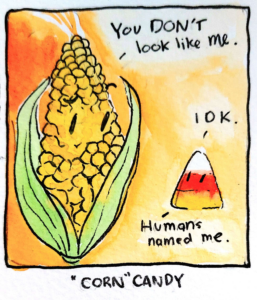
A watercolour illustration of a corncob staring at a piece of corn candy. The corncob says, “You don’t look like me.” The corn candy responds, “IDK. Humans named me.” The comic title is, “Corn” Candy.
ILLUSTRATION: Angela Shen / The Peak
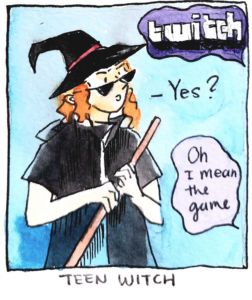
A watercolour illustration of a femme-presenting person dressed as a witch responding to a speech bubble asking them, “Twitch?” They respond, “Yes?” The speech bubble responds back, “Oh, I mean the game.” The comic title is “Teen Witch.”
ILLUSTRATION: Angela Shen / The Peak