Home Blog Page 226

Fitness for first-timers

0
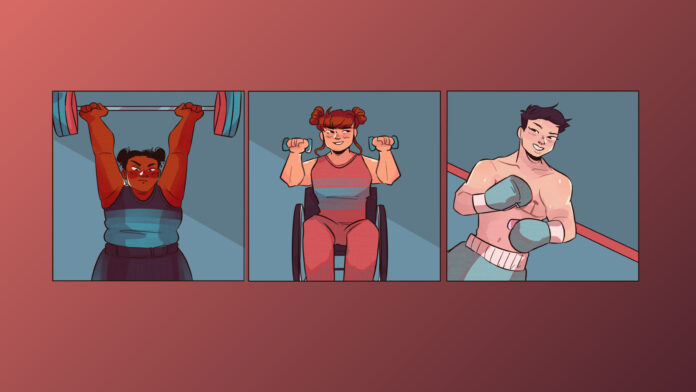
Illustration of a diverse group of people of different abilities working out.
ILLUSTRATION: Jiamin Bai / The Peak

By: Natalie Cooke, News Writer 

New year, new you! As you step into the gym this January, you’ll see many people at different points of their fitness journey: from old-timers, to people on day one, and those starting fresh on a newly inspired journey. Regardless of where you fit along this spectrum, it’s important to recognize that a healthy lifestyle looks different for everyone depending on their goals. Understanding fitness with a “one size fits all” approach can make an already challenging experience that much more intimidating. 

While fitness doesn’t shy away from acknowledging the challenges that can come along with starting a new workout routine, sayings such as “go hard or go home” or “no pain, no gain” falsely attribute success to the amount of discomfort a person experiences. But how will I know if I’m making progress? It’s true that you might feel an ache while working out and for days afterwards. But that’s most likely a micro-tear and is your body’s way of allowing the new muscle to build itself up. Not feeling this sensation is completely normal, and doesn’t mean you’re not making improvements. 

Professional baseball player Yogi Berra famously said that baseball is 90% mental, and the same can be said about fitness. People often get hung up on the numbers they see on a scale because they believe this is a quantitative measurement of how far they’ve come. While this may be an important measure for people who need to be in a certain weight class for competitions or training, numbers can be deceiving. Muscle is denser than fat. It’s not uncommon for your weight to increase while feeling and looking better. 

So how exactly do you start a fitness journey? Kris Robertson, SFU head coach of strength & conditioning, and Tanner Care, SFU assistant coach of strength & conditioning, provided the best ways to avoid pitfalls, stay motivated, and consume enough protein. Coach Robertson said step one is finding a gym buddy. “A lot of [first-timers] don’t know what they’re doing. People end up getting hurt, and end up in this cycle where you’re hurt, you don’t go to the gym, you try to get back to the gym, and get hurt again.” 

“Find someone who knows what they’re doing whether that’s a friend, personal trainer, or coach — that’s going to help you get to where you need to be.”

Now that you’re learning how to navigate the fitness world, how can you stay motivated? Coach Care emphasized the importance of discipline when changes aren’t immediate. It can take upwards of eight weeks for changes in strength to become apparent. While this can be discouraging, it’s important to stick with it, and see working out as a marathon and not a race. This means staying consistent. Nothing will change overnight. It’s important to keep yourself in a routine; creating a program for a set period of time will allow you to get into the practice of incorporating exercise into your daily life. After all, fitness should still be fun! 

Another key aspect of motivation is addressing the reason why you’re working on your well-being. Coach Robertson said keeping track of your progress helps hold yourself accountable. He compares journaling to writing “a contract with yourself.” 

“Don’t be embarrassed, and don’t be afraid of what your ‘why’ is. At the end of the day, it’s only between you and yourself.”

Eating habits are just as important as consistency. Coach Care explained the need for a high protein intake to facilitate muscle growth, as well as healthy carbohydrates to have enough energy for your workouts. Everyone requires different amounts of protein depending on their fitness level, age, and body composition goals. However, 0.8–1.5 grams of protein per kilogram of body weight is suggested. Coach Robertson recommended to “sandwich” your workouts before and after with food. Three meals a day and snacks with a balance of macronutrients carbohydrates, protein, and fat — is the way to go.

Many people use the improvement of their appearance as a motivator, and while that might get you through the gym doors, it’s important to understand the lasting effects of a healthy lifestyle. Coach Care described how diabetes, heart disease, and mental health troubles have drastically increased. With all the health issues that exist, you need to “control what you can control” of your eating, sleeping, and training habits. 30-minutes is the benchmark for daily physical activity. That’s 30-minutes of movement, whether that be from washing your car or dancing to music. For individuals with low mobility, arm circles and body raises are best. Resistance bands can be used for an extra challenge. 

While setting goals can motivate a person, fitness is life-long. It doesn’t have to be done strictly for physical results. Aerobic exercises such as running, swimming, walking, dancing, among others have been shown to reduce anxiety and depression. That being said, a healthy lifestyle does not guarantee fewer health issues. 

So what have we learned? Fitness is what you make of it and is unique to every individual person. Some might start their fitness journey by choice. Some may have more serious health implications. No matter how big or small the change you seek is, you’re still going out of your way to better yourself. Talk about power. 

Monday Music: Uplifting Afropop

0
“Monday Music” in orange block text on a yellow rectangular background with rounded corners and an orange border.
Monday Music: your weekly themed playlist. Image courtesy of The Peak.

By: Balqees Jama, SFU Student

Listening to Afropop makes me wish I fully understood Pidgin so I could get even more lost in its euphonic bliss. Afrobeats is an umbrella genre of contemporary pop and music from Nigeria, Ghana, and their diaspora. Afrobeats is not to be confused with “Afrobeat” (without the “s”), which is a genre created by Fela Kuti and Tony Allen in the 1970s. Some modern Afrobeats artists distinguish their music as Afropop or Afrofusion, which is a lively blend of complex musical elements and influences. Here’s some of the best Afropop songs released in 2022 to soothe and empower you through winter. 

Listen to the full playlist on The Peak’s Spotify profile.

“Cast (Gen Z Anthem)” by Ayra Starr 
Photo courtesy of Mavin Records

“Cast (Gen Z Anthem)” is an expression of freedom and a promise by Starr to live her life authentically at her own pace. With a distinct vocal style, she tells off people who don’t approve of her newfound freedom and tells them to judge if they want. Starr sends a wake up call to herself and others by dismantling the weight of society’s senseless expectations, while seizing opportunities and blessings with no shame.

“KU LO SA  (A Colors Show Performance)” by Oxlade
Photo courtesy of Epic

“KU LO SA” is a play on the word “closer.” The premise of the song is simple: Oxlade sings his heart out for a girl he loves. The magic of “KU LO SA” lies in the artistry Oxlade infuses into his production. The sounds are tactfully and intricately layered, giving me goosebumps every time I listen. His live performance on A Colors Show showcases Oxlade’s voice control, including his effortless usage of riffs, runs, and falsettos. This winter, let “KU LO SA” be the warm, harmonious hug you didn’t know you needed.

“Good Times” by Aṣa feat. The Cavemen
Photo courtesy of Platoon

“Good Times” is a sweet ode to friendships. In this gentle concoction of Highlife melody and instrumentals, Aṣa feat. The Cavemenfuse African genres with rock, jazz, hip-hop, and pop music. They share appreciation for their sincere connections and yearn to be with their dear friends. They describe cherished qualities of friends that you may not even find in your own biological family, including integrity and loyalty. This song always makes me think of close friends that I miss and long to be with.

We need to talk about parents who exploit their kids for clicks

0
PHOTO: Gudrun Wai-Gunnarsson / The Peak

By: C Icart, Staff Writer

Another day, another TikTok prank trend.

Prank videos do great online, with countless people joining in on the trend for laughs and likes. But how do we know when we’ve gone too far? 

Case in point, there’s so much content of parents pranking their children online. Last summer, a few adults nonsensically asked kids to put on special fighting shoes just to see how they’d react. Then, there are  more obvious extremes like the channel DaddyOFive. The channel featured “pranks”  consisting mostly of parents screaming at their children for supposedly getting into small accidents around the house — essentially abusing their kids  to the point where Child Protective Services had to get involved. Beyond the world of online pranks, there are many reasons why we should think twice about uploading content of children online. 

Generally, social media requires users, regardless of their country of origin, to be over 13 to create an account because of the Children’s Online Privacy Protection Act. The Act “prohibits American companies from collecting personal information from children under 13 without parental consent, or [from collecting] more personal information than they need to operate a service aimed at children under 13.” But as we know, children younger than 13 regularly create accounts anyways and parents regularly post content featuring their children online. 

Family vlogging is popular, but some of the content is exploitative. In general, pranking children needs to be done with consideration. Even without extreme cases like DaddyOFive, regularly upsetting children for views is standard on many family channels across social media platforms. While it may be funny for those who understand the prank, the kids may remember it as a scary or upsetting moment that undermines their trust in their parents. 

Is supporting family vloggers always negative? Well, it’s hard to tell. Monetizing this content puts parents in a situation where their children work for them, blurring the line between leisure and labour. But it technically exists in a grey area where children are not protected by child labour laws, like child performers working in more traditional industries. For example, Myka and James Stauffer’s channel exploded when they began sharing their adoption journey. But will Huxley, the autistic child who was ultimately “rehomed,” ever receive any compensation both for generating money for the family and for having to live with vulnerable moments like having a meltdown online? 

What about the kidfluencers? They advertise to children, and while this content usually includes disclosure, the kids watching don’t understand that.

And what about casually posting content about your children online? Just because your intentions for posting the content are innocent, does not mean that like-minded people are the ones viewing it. Some parents made the horrifying discovery that some of the videos they posted ended up on pedophile websites or that the primary demographic watching their young children was older men. There’s an endless stream of terrible possibilities associated with pushing your kids into social media. 

While a lot of this content can be cute and heartwarming, it’s important to remember that the children in these videos are at risk of identity theft, stalking, “cyberbullying, predators, or privacy violations.” However, unlike adult social media users, they don’t even know it. Children do not understand the implications of having content of themselves online and cannot consent to it. Digital footprints are forever, and some things do not need to be posted online for everyone to see. Imagine your mom pulling out your embarrassing childhood photos when your crush comes over, except it’s anyone being able to access them online just by knowing your name. 

Next time your young cousin does something cute, consider sharing the clip with your family instead of posting. They might thank you someday.

Preventative care is the critical next step for the Canadian medical system

0
ILLUSTRATION: Alyssa Umbal / The Peak

By: Saije Rusimovici, Staff Writer

The Canadian healthcare system is struggling. Hospital overcrowding has been a huge issue, creating difficult working conditions for nurses and hospital staff. Physicians are having trouble seeing patients, and Canadian healthcare has been critiqued as “reactive.” 

Preventative care — which includes encouraging vaccination, providing early education on health and nutrition, and offering resources to vulnerable older adults — is one way to take the load off this crisis. 

Preventative care doesn’t just stop at vaccination and healthy living. The independent Canadian Task Force on Preventative Health Care offers an AZ list breaking down strategies for care. These measures are aimed at combating the onset of a range of illnesses, from depression to cancer. 

Preventative care doesn’t just apply to illness prevention though — it also includes proper management of long-term conditions. This can reduce the risk of serious complications or disease progression.

Types of preventative care can vary from medical intervention to educational services. Regular doctor visits, blood pressure tests, cancer screenings, and vaccines all are types of preventative care according to the American Human Health Services. However, preventative care isn’t a cure-all. According to a 2022 study, relying solely on an in-hospital preventative care model, while continuing to care for chronic and acute illnesses, risks overwhelming doctors. So, we need to extend preventative care beyond routine medical tests; it needs to become a personal habit.

To make preventative healthcare a regular personal practice for Canadians, we need better education on maintaining physical and mental wellness. Fraser Health provides a comprehensive list of resources for teachers and administrators that focus on physical health, nutrition, exercise, substance use, sexual health, and mental health and wellness. These are essential practices that should be incorporated into school curriculum at every level. This type of education would not only give students the opportunity to learn more about health and wellness, but work towards creating healthy habits to prevent future medical issues.

Now, while preventative healthcare is necessary, it is important to note that not all health issues can be prevented. Some people are born with disabilities, while others acquire disabilities later in life. 

Moving forward, it is essential that Canadian medical system reforms include better access to resources, equipment, and support for those living with disabilities. They also face barriers accessing preventative care due to accessibility issues. For this reason, it is also critical to work towards making sure preventative care measures are taken more seriously to address the needs of disabled people who require access.

Embracing preventative care in hospitals and education must be done in concert with other medical reforms. There’s no question that keeping Canadians out of the hospital through better living will help ease the load on the healthcare system. But it’s a long-term solution. Our medical personnel need to be given the tools to succeed in the here and now. That means building additional capacity in our hospitals, providing staff with the resources they need to care for the sick, and, yes, paying them more. 

Preventative care must become an essential component of the Canadian medical system as a cost-effective way to improve life expectancy and keep more people out of hospitals. Beginning at the elementary school level, education on preventative health strategies should be brought to schools across Canada and integrated into the curriculum. This isn’t just about reforming the Canadian medical system, but a plan that must be embraced at the individual, social, and governmental levels.

SFU professor challenging health inequities for communities affected by HIV

0
This is a photo of the Academic Quadrangle at the SFU Burnaby campus. Outside of the building, its a sunny day and there are students sitting on benches.
PHOTO: Allyson Klassen / The Peak

By: Natalie Cooke, News Writer

SFU’s health science associate professor, Angela Kaida, is leading a global research program that investigates health inequities experienced by women and youth affected by HIV. In regards to treatment access, Kaida found “HIV and the clinical features of the virus often play a smaller role in influencing sexual and reproductive health compared with other social determinants of health, including the impacts of socio-structural environments and political decision making.” 

Kaida has a personal understanding of the effects of HIV. She was born in Kenya, and saw the impacts HIV had on her family members across East Africa. Kaida explained to the Canadian Association for HIV Research, “In my family, I saw some of the ways in which HIV-related stigma played out — fear of accessing care, and of disclosing one’s status.” Kaida explained she was “really confused that an infectious agent could yield this sort of shame within a very loving and tight family.” As well, she noted that if people have shame about having HIV, they will not test, which will prevent their ability to receive treatment. 

Kaida will join the Institute of Gender and Health at Canadian Institutes of Health Research as their scientific director. Kaida said, “I am deeply honoured to help shape the Canadian health research [by] embracing a sex and gender-based analysis+  approach inclusive of racial identity and experience, gender diversity, sexual orientation, and other intersecting identities.” 

Joy Johnson, SFU president, told SFU News, “Dr. Kaida’s work at SFU has made an incredible impact on our students and community, and I am excited for her to continue advancing gender and health research in this new role.”

Kaida has previously conducted research analyzing data of people who are living or affected by HIV in Canada, the United States, Uganda, and South Africa. 

Her current contributions to global health research include: HIV prevention, sexual health, sexual health for those living with HIV, and safer contraceptive methods. Kaida told the Canadian Association for Global Health she is committed to the “greater and meaningful involvement of women living with HIV/AIDS.” According to SFU News, she has worked with the Peer Research Associates “who are women living with HIV with research training.” 

For more information on Kaida’s work, visit the Government of Canada’s website.

SFU releases “best” college admission essay to help incoming students

0
PHOTO: pxhere

By: Isabella Urbani, Sports Editor

To prospective SFU students: Please use this essay submission as a reference of a successful applicant. The prompt was “Why is SFU the best fit for you?” Please note especially our excellent legacy of being the best university in North America. 

Merriam Webster defines “best” as “offering or producing the greatest advantage.” It would be an understatement to say that I was born to go to SFU. Since the dawn of time, it was written in the stars for me to attend this esteemed institution, and it is my obligation to make that dream a reality. There isn’t another university out there that comes close to rivaling SFU in my mind. As for what it is about SFU that sets itself apart from the rest. Well, that’s a terrific question, and one that I’m more than eager to answer. First, SFU is “engaging the world.” No, not only the students, not the province nor the country, but the entire sphere with a mass of 5.972 x 1024 kg. Unparalleled. Exceptional. Beyond comparison. 

Any way you slice the pie, SFU is the ooey gooey center, the premium helping that human beings set one’s heart on. It’s no coincidence that the hardened exterior of pies — crusts — is the ground on which the fresh fruit lay nestled under that academic pastry dough. SFU is the crust. For the next four years of my life, the next 1,460 days, my unharnessed nectar will rise under the protection and safewatching within the palpable material of this establishment. 

I will be watched like a hawk by the finest maestros along the way until I’m equipped to be of service to the world. It is a fantasy. And almost a reality. So now that we have established that SFU takes it upon themselves to go above and beyond to prepare their graduates to be able to properly set out and change the world, we need to address the perks unique to SFU students. 

As referenced in my last sentence, not only does SFU make it their mission to cater to the 7.9 billion individuals calling this planet home, they still manage to keep their students at the forefront of their mind. What a daunting task president Joy Johnson has been bestowed with, and one she does a cut above the rest. How? Just take a quick look at SFU’s pristine track record. No flaws I can think of. BCIT and UBC? Who even knows if you’ll have a career going to those no-name universities. They don’t even have a deadly pipeline being built right next to them. Coming up on nearly 57 years of 100% complete perfection, and I haven’t even mentioned the perks yet. The campus speaks for itself. With a view like that, sitting on top of a mountain, SFU clearly didn’t spare any expense to give its students — the next generation —  a chance to detox at any second. I would be remiss not to include the fact that SFU was improved to have its own gondola. Life-changing.

In conclusion, although there are many fishes in the sea, or should I say univer-SEA-ties, SFU is the only place I want to spend the next chapter of my life. The care for their students is first-class. I will leave you with this quote, on brand with the paragraph’s ocean theme, “Be the change you wish to see in the world.” SFU is living proof of that statement with the way they carry themselves, and I would want nothing more than to be a small sliver of that sentiment.

Freshman swimmer Marcus Mak brings childhood passion to NCAA stage

0
Photo of Marcus Mak in the pool during competition.
PHOTO: Garrett James / SFU Athletics

By: Simran Sarai, Sports Writer

For Marcus Mak, swimming is second nature. But this year offers a unique challenge for the freshman from Victoria, BC: adjusting to life in the National Collegiate Athletic Association (NCAA). Mak looked back at his natural gravitation to swimming, path to SFU, and how he rewinds outside of the pool in an interview with The Peak. 

“Everything started with swim lessons,” said Mak about his journey to becoming an NCAA athlete. “I was fortunate enough [that] swimming was not a financial burden for my parents.”

Since joining his local swim club at 10-years-old, Mak has been no stranger to hard work, practicing six–eight times a week. He credited his sister — who is now a swim coach — to getting him into the sport. Mak’s younger brother, in grade 11, also swims competitively. 

Like most student-athletes, Mak was drawn to SFU as Canada’s sole NCAA school. “I think the combination of staying in Canada and swimming in the NCAA led me to pick SFU to continue my swimming career,” he shared.

As a freshman, Mak has jumped into the deep end of his studies — juggling a full, 12-credit course load while competing in a lengthy NCAA season that runs from October–March. He has complimented his academic pursuits with standout results in his first season as a Red Leaf. His latest accomplishment includes a win in the 200m backstroke at the Husky Invitational in December. In November, Mak also qualified for the NCAA Division II Swimming & Diving Championships in the 200m individual medley during the Winter Collegiate Invitational. He previously competed at the 2022 Fédération Internationale de Natation Swimming World Cup in the 50m and 100m freestyle, the 100m and 200m backstroke, and the 200m individual medley races.

While taking to the pool comes naturally for Mak, adjusting to “the pace of classes” as a university student has been an “eye-opening” experience. Although competing requires student-athletes to be attentive with their class schedules, life on the road “travelling, training, and competing with teammates away from SFU” has been a unique and rewarding experience for Mak. When he’s not in the pool or the classroom, he likes to “spend downtime just relaxing, preferably with friends whether that’s in person or online.” 

Accepting the highs and lows of the university student experience usually involves a steep learning curve for most first-year students, athletics aside. But Mak takes it all in stride: “I just try to enjoy what I’m doing in the moment.”

Make a splash on SFU’s rowing team

0
Photo of members of the SFU rowing club posing on the shore.
PHOTO: SFU Rowing website

By: Saije Rusimovici, Staff Writer

SFU sports clubs are organized and entirely student-led, motivated by a common interest in participating in athletic activity. Not only is joining a sports club beneficial for both your mental and physical health, but it also reduces stress levels, expands your social circle, and provides a sense of value and belonging to participants. 

Rowing brings a competitive edge to SFU as one of Canada’s top university rowing programs. Members of the rowing club have gone on to compete at both the national and provincial levels. If you’re interested in challenging yourself physically and learning something new, this is the team for you.

Not sure where to start? Current member of the SFU rowing team Mercedes Turner breaks down rowing, her experiences, and how to join the team. 

Turner described rowing as “a strength-endurance sport that consists of repetitive movements over short or long periods of time.” The sport involves using an oar to propel a specific type of racing boat in a team of one, two, four, or eight people. Rowers sit facing the opposite direction of the boat’s course.

“Rowing to me is a sport that accentuates the beauty of being synced with your teammates and pushing yourself past your limits,” Turner said. “It’s a sport that is so mentally challenging [ . . . ] whether you’re focusing on your power, form, breathing, or making sure you’re in time with the person in front of you.”

There is no need for previous experience to join the team, just an enthusiastic attitude, willingness, and commitment to learn! Newcomers are, however, required to attend a tryout session to assess their fitness level. The tryout consists of a timed run and ERG testing — a device that measures your strength ability —  in order to learn a bit more about your upside and capabilities. Nervous? Turner said the “amazing” coaches and team members are present to support and guide you throughout the process.  

Practices are held at Burnaby Lake, with indoor training and meetings held at the SFU Fitness Centre depending on the time of year. “The beauty about rowing as a sport is that you can be training at all times of the year; therefore, our club runs all year round,” said Turner. Meaning the team can practice early in the morning and on however many days they choose. Right now, practices happen four days a week from 6:00 a.m.–8:00 a.m. 

Since the rowing team is considered a club and not a varsity sport, most of their support from SFU goes towards operational fees. Any equipment or travel expense has to come out of pocket. You can support the rowing team by bringing your recyclables to any Return-It express station and providing the number “8888687121,” or by open donations through their website. 

“Every penny counts,” said Turner. “We don’t get much funding from SFU, and if the team wants to go out and race, it can get really costly.” Money also goes towards hosting “awesome events for people in the community.” 

You can find more information about SFU Rowing by checking out their Instagram and website for information on tryouts and upcoming events.

Meet Angela Sterritt: SFU Library’s 2023 non-fiction writer in residence

0
Closeup headshot of Angela Sterritt in front of blurred-out trees and buildings in the background.
PHOTO: Maggie McPherson

By: Anna Kazi, SFU Student

SFU recently welcomed Angela Sterritt, writer and “award-winning investigative journalist” as their 2023 writer in residence. Sterritt is part of the Gitanmaax community of the Gitxsan Nation and Bell Island Newfoundland. With over a decade of experience covering powerful stories, Sterritt is releasing her first book, Unbroken, this May. It is “part memoir and part investigative into the missing and murdered Indigenous women.”

Sterritt began writing about her experiences while completing her William Southam Journalism Fellowship at the University of Toronto. “When you’re writing about your trauma, you have to be ready, and only you know when you’re ready, and I wasn’t ready at that point [ . . . ] It took me seven years to write this book because it was traumatic for me to write about my experiences.”

For Sterritt, writing this book is about inspiring Indigenous youth and building a stronger relationship between Indigenous and non-Indigenous communities. Sterritt wants “to inspire, especially young Indigenous girls, in particular the Gitxsan Nation girls, that they can do anything they want,” said Sterritt. She plans on writing a book that teaches journalists to be “trauma-informed when working with Indigenous communities. 

“There are many Indigenous ways of viewing the truth, and there are many sides of the truth. And that’s something that Indigenous people haven’t been afforded, as our truth has been oppressed. [ . . . ] My purpose in life has always been to utilise the truth and to use the power of storytelling to help Indigenous people heal.” 

Sterritt also spoke on maintaining a healthy work-life balance while working full-time as a host and journalist: “I want people to recognize that it’s okay to take sick days, it’s okay to move slowly. It’s okay to tell your boss ‘this is a super traumatic story, so I’m going to take a week to do it,’” she said. “For people of colour and Indigenous people, we are often treated as resources to extract and mine.”

Another key takeaway from Sterritt’s experience was realizing that sharing a story as an Indigenous person is not easy. “I was told by my journalism community that I couldn’t have friends, I couldn’t talk to my elders when things were hard at work. I wasn’t allowed to talk to anybody. Journalism as an Indigenous person is very different because you’re told you’re biased,” said Sterritt.

What helped Sterritt face barriers and continue her journalism and writing journey was support from her mentors, elders, and publisher, Greystone Books.

As Sterritt begins her residency, she shared how valued and honoured she feels being part of SFU. “People were excited to bring my ideas to the table. I felt like people were also willing to have a conversation that’s not just based on somebody extracting from an Indigenous person, but somebody coming to the table with the same skills, the same knowledge, and willing to have a reciprocal exchange of ideas based on mutual respect, ” she said. “The residency that I am going to do at SFU is going to be groundbreaking.”

You can pre-order Sherritt’s book, Unbroken, via Amazon.

We don’t need a day to commemorate Sir John A. Macdonald

0
PHOTO: Saforrest/ Wikimedia Commons

By: C Icart, Staff Writer

Content warning: Mentions of racism, colonialism, and violence against Indigenous peoples

“The executions of the Indians . . . ought to convince the Red Man that the White Man governs,” — Sir John A. Macdonald

A Chinaman gives us his labour and gets his money, but that money does not fructify in Canada; he does not invest it here, but takes it with him and returns to China . . . he has no British instincts or British feelings or aspirations, and therefore ought not to have a vote.” — Sir John A. Macdonald

January 11 was Sir John A. Macdonald day. He was “the first Prime Minister of Canada and one of the architects of the Confederation.” He is an important figure that played a key role in some of the worst parts of Canadian history. So, why is there a day to commemorate him? Or statues that glorify him?

People have been defacing his statues for decades, and many are calling for them to be removed. This has been done in municipalities like Charlottetown, Kingston, Regina, and Victoria. In other cases, a different strategy has been adopted to deal with historical sites related to Sir John A. Macdonald. In Kingston, the Bellevue House where he lived with his family is currently looking to include Indigenous art to the attraction as a way to incorporate different perspectives on his “complex legacy.”

He’s not the only one though. The passing of Queen Elizabeth II has caused many Canadians to rethink their ties to the monarchy. In fact, over half of the population “would support severing our ties with a monarchy.” In Quebec, 79% of people are in support. The sentiment is so strong that the provincehas passed a law making an oath of allegiance to the monarch optional for members of the legislature.”

In Kitchener, Ontario, a statue of Queen Victoria has a plaque in front of it acknowledging the colonial harm that the statue is continuing to cause in 2021. This has not stopped activists from vandalizing it with red paint multiple times in 2022. Amy Smoke, co-founder of Land Back Camp has said, “We’re idolizing these colonial figures that built this country off of the backs and blood of Indigenous people and Black folks as well.” They are calling for the statue to be removed and for the park it is in (Victoria Park) to also be renamed. 

In Edmonton, many are rethinking the fact that so many things are named after Frank Oliver, Alberta’s first member of parliament, guilty of “pushing First Nations like Papaschase off their lands, and lobbying to keep African Americans out of Canada.” In 2021, a statue of Egerton Ryerson — “an architect of Canada’s residential school system” — was covered in red paint, beheaded, and put into a lake. Since, the university that it was once displayed on has been renamed as well. 

What is even more absurd is that in some cases, the statues, schools, and other signage commemorating these figures are relatively recent. Last year, people marched in protest of the Sir John A. Macdonald Parkway and called for it to be renamed. Up until 2012, that parkway was named the Ottawa River Parkway. The National Capital Commission announced that changing the signs cost $60,000

At the same time, “54% of Canadians believe the removal of statues of colonial figures is an attack on Canadian history.” It’s not. Refusing to commemorate colonial figures is not the same as forgetting. The same way that commemorating them is not the same as learning about their legacy. 

Even this year, the Government of Canada encourages Canadians to celebrate Sir John A. Macdonald and claims that “teachers and youth leaders often use this day as an opportunity to teach young people about our first Prime Minister and the founding of our country.” This implies that even today at a time of so-called truth and reconciliation, students are being taught to think positively about Sir John A. Macdonald’s legacy. This is not surprising because public schools have played a huge role in teaching students to support settler colonialism. We must decolonize education.

Anishinaabe artist Scott Benesiinaabandan argues that colonial monuments have a harmful impact as they normalize colonial violence. To combat this, he created monumentalisms, an art installation that includes “3D-printed sculptures, digital prints, and a virtual-reality installation using more than 600 photographs of three monument sites” to represent the reality that is either hidden or imposed by these monuments. 

Commemorating these figures through monuments and official days is often an act of rewriting who they were. When the government calls for us to celebrate Sir John A. Macdonald — Which part are they referring to? When he “created the Indian Act and Indian Residential Schools”? When he “had Métis leader Louis Riel executed for treason despite objections from French Canadians”?

Those who are opposed to these renaming projects often claim that those in favour are “politically correct historical revisionists.” But as Brenda Macdougall  Chair of Métis Research at the University of Ottawa so eloquently puts it, “Canada is one long renaming project. Every location in this country had an Indigenous name in an Indigenous language, and colonial authorities, deeming those names irrelevant, renamed them in their own language and [ . . . . ]  bastardized the original names in a manner that obliterated the Indigenous perspectives and sense of place.” Renaming streets and schools and taking down statues does not erase anyone’s colonial legacy. If it did, we’d be doing it faster. 

Decolonization in so-called Canada is not just about adding days like the National Day for Truth and Reconciliation. We cannot unpack and oppose colonialism on one day and celebrate colonizers on other days. That doesn’t make any sense and it calls into question how sincere the Canadian government is when it comes to reconciliation. 

Despite what is written on the official calendars, January 11 was not Sir John A. Macdonald Day. It was just another Wednesday where the government failed to make any progress on the “​​94 calls to action outlined by the Truth and Reconciliation Commission,” putting the country on pace to only meet all of them in 2065. Maybe they could speed it up if they spent less time commemorating colonial figures.