Home Blog Page 188

Day in the life of a Burnaby Mountain bear

0
Stuffed animal of a sleeping bear in front of a laptop
PHOTO: Nastya Dulhiier / Unsplash

By: Hana Hoffman, Peak Associate

Hey, SFU bears! Welcome back to my blog! I was extra ecstatic about writing this week because we’ve had a beary interesting couple of days, from playing pranks on raccoons to going on a campus-wide scavenger hunt. Even better, I got to interview one of our fellow bears, Barny Benson, about how chaotic the parking lots have been getting due to all kinds of human gatherings going on. Sigh, it’s that time of year again. I’ll go over the full story later, so keep reading!

Soooo, the scavenger hunt event last Wednesday was pretty wild. And fun. And tiring. We were divided into groups of three, and our mission was to find all the hidden bear-ries. I thought my team was doing a good job until one of us got stung by a bee and had to sit down, while the other team got snoozy and started napping before we were done. Despite having useless teammates, participating in this activity was totally worth it since I met new bear citizens at the awards ceremony. They made an excellent decision moving here to Burnaby Mountain. I mean, what’s better than watching buses slide down the road in the winter and playing hard-to-get with campus security? Life never gets boring up here.

Next, I have to talk about how hilarious it was when we were playing pranks on our raccoon neighbours. The looks on their faces were PRICELESS when they saw their new sneakers had gone missing. While they went off to find more goodies, we snuck into their bush, took their sneakers, then put them back later on while they ran off to look for the robber. We were just teaching them a lesson because they shouldn’t be leaving those things out of their sight! Especially if they haven’t installed security cameras around their homes.

Finally, let’s go over the annoying human gatherings we’ve had to bear with during the past few days. Most of you are probably aware there are certain times of the year when hundreds of humans cover themselves in dark blue blankets, put a square on top of their heads, then walk in a double-file line to the ceremony stage. You can’t really see the actual event unless you hide in the bush and look through binoculars. Still, our main concern is how noisy and gassy the entire mountain gets from all these groups of people driving around and sprawling out to take pictures. I don’t see why they should be allowed to invade our home on the mountain when we never enter their designated areas, which are the buildings. How are we supposed to cross the road safely when cars are coming up and down nonstop? How are we supposed to get three high-quality naps a day and a full ten hours of sleep every night if we keep getting interrupted by people talking into the microphone for hours? It’s just so chaotic!

Fortunately, I got to speak to our special guest, Barny Benson, who shared some of his wise tips on coping during a time of human mayhem. First, express your frustration by knocking down a tree with your bear hands. And when you do this, try to aim for one of the main roads so the tree can block any cars trying to reach SFU. Second, meet up with your friends and do bear-aoke together to drown out out the annoying voices coming from the humans’ ceremony, or whatever they call that seasonal gathering. Lastly, jinx the weather and make it rain or hail on everybody just to piss them off and discourage them from having more ceremonies on this mountain in the future.

Well, that’s it for my eventful week. Have you found other coping mechanisms for dodging human annoyance? Have you done anything interesting this past week? Or anything em-bear-rassing? Comment below! Thank you all for reading my blog this week, and stay tuned for next time! Peace, I’m out.


Climate Convergence concerned about TMX’s impact on BC ecosystems

0
This is a photo of a TMX pipeline construction site. The pipeline is sitting in a trench. There are trees and mountains behind the pipeline.
PHOTO: Adam Jones / Flickr

By: Olivia Sherman, News Writer

Being here in Vancouver, you are constantly confronted with tremendous beauty, the tremendous natural environment that we are really fortunate to live in,” said Alison Bodine, an organizer with Metro Vancouver’s Climate Convergence. “But then when you scratch the surface, you look a little deeper, you can see so clearly the impact of resource extraction projects on this area.” 

Climate Convergence is a volunteer-led, grassroots organization fighting the new pipeline expansions in British Columbia and Alberta. “We’ve had victories when it comes to the pipeline and kind of putting pressure on the government” to recognize the impact of the pipeline project, Bodine explained in an interview with The Peak. “And then we’ve had defeats, with the Liberal government buying it, the Trudeau government buying it.” 

According to Global News, the government bought the TMX pipeline for around $5 billion in 2018, but the actual cost to complete construction of the pipeline has exponentially increased, reaching over $30 billion as of May 2023. “The Trudeau government buying the pipeline, using taxpayer money to acquire this project that private industry had said was not feasible [ . . . ] and the federal government stepped in and said, ‘we’ll buy a pipeline and then we’ll use the profits to plant trees,’” Bodine continued. 

Bodine noted how last year’s floods and the ongoing wildfires have impacted the Trans Mountain Pipeline (TMX) construction. She found it ironic climate change is “preventing the construction going forward of a pipeline that’s going to bring about more climate change.” 

Activist groups have been speaking out about the government’s “continued doubling down [ . . . ] to drive this project through.” Climate Convergence has been active in fighting against the pipeline and other causes of climate change, such as deforestation and pollution. “No matter the ups and downs, whether we have a march of 20,000 people in the streets or a gathering of a dozen people on a bridge. We have to keep up this consistent voice,” Bodine said. “We need to stay in the streets.”

Climate Convergence holds online webinars with global climate activists, local banner drops, and mass postering projects. One of their strategies is intersection action. “We gathered at a busy intersection with large banners and signs and marched around the intersection in line with the walking symbol,” said Bodine. With this strategy, they can avoid disrupting traffic and focus on rasing awareness instead.

Bodine noted they have had a mixed response from the public for these demonstrations. “Of course, there are some people that honk their horns and tell us to get a job or whatever,” Bodine said. However, she noted the general response has been “overwhelmingly [ . . . ] positive. 

“I think we have a very real chance to stop this pipeline,” said Bodine. 

While the government claims the pipeline will promote future job opportunities, Bodine isn’t so optimistic: “Everything they’re talking about are really short-term gains and benefits. And there are very real studies that have been done that show the negative impacts to the economy, especially here in British Columbia, where the economy depends so much on tourism

“So imagine if all of the southern resident orca whales are becoming extinct because of a seven-times increase in tanker traffic brought on by the Trans Mountain Pipeline expansion. Then where are the tourism dollars related to people coming to see those orcas?” 

Canada adopted the UN Declaration on the Rights of Indigenous People into law in 2016. Bodine noted this means the government of Canada isn’t supposed to “allow resource extraction projects that have not received free, prior, and informed consent by Indigenous peoples to take place on their land.

“That is really coercion, in my opinion, and it is completely based on the fact that the government of Canada has neglected its responsibilities when it comes to relations with Indigenous peoples. 

“We know the problem [ . . . ] Canada is a wealthy country. Canada could be immediately investing in alternative energies coming off of oil and gas and helping the rest of the world do the same,” Bodine continued. 

The best way to make an impact, Bodine argued, is simply staying informed and “getting involved.” Personal actions are admirable and valuable, but real change lies in collective action: “Taking action against the TMX expansion, standing up for Indigenous rights, really organizing collectively. We need a movement. We need a mass movement in the streets in defense of our planet.” 

For more information on how to get involved, check out Climate Convergence’s website. 

New SFU survey finds lectures do “absolutely nothing”

0
A man in a gray suit blazer sitting in front of a typewriter touching a red book
PHOTO: Ron Lach / Pexels

By: Isabella Urbani, Staff Writer

Burnaby, BC, June 12 — This just in: a new SFU survey revealed 99% of students find lectures pointless. The survey, which was sent last week from the email address “[email protected],” asked students to evaluate the benefit of lectures on a five-point Likert scale. 

A subsequent email was sent to Beedie students to explain that a Likert scale is NOT a test, and they DIDN’T need to get together to compare answers. They begrudgingly agreed on the condition their lawyers could inspect the survey prior to their participation. K?

In just a mere day, all students, staff, and faculty — although students were the only ones contacted  — had responded to the survey. All but one individual agreed lectures were a “waste* of time.” 

*A more explicit term was used in the survey. 

The Peak was able to get in touch with the sole lecture fan and made a shocking discovery in the process. 

“I hit the wrong button,” the fourth-year student shared. “I usually just click on the first option for every survey SFU sends. I’ll do pretty much anything for a chance to bag some free merch. Well not anything, but you get the point. Lectures suck.” 

Students don’t like to attend lectures, and teachers surely don’t want to give them, but how does the only person who has the power to do anything about them feel? 

“I’m not surprised,” said president Joy Johnson about the survey’s results. “But let’s remember that it’s not just SFU. We’re probably the best of the worst. UBC? I’d like to see what their lectures look like.” 

“Johnson said that?” asked one UBC student. “Yeah, maybe we’d have time to answer a survey if we actually had time to focus on anything but class material in lectures. Try Douglas.” 

The Peak did in fact try Douglas College. 

“No . . . no . . . no, there’s only one person per lecture,” said a Douglas student whose full response to the question was pushing the length of a Communication tutorial. 

Our SFU senses tell us Douglas College was just happy that someone actually cared to ask them something. The Peak will never make that same mistake again. 

While the uselessness of lectures is unanimous at SFU, no two people The Peak interviewed agreed on the identity of the “mastermind” — their words, not ours — behind the survey. 

“It’s probably just a first-year who got completely rocked in exams and thinks this is their way of ‘revenge,’” said a student sitting in a kiddy pool in the middle of the AQ. “Totally amateur hour.” 

“A first-year? No way,” said a student in the middle of getting a parking ticket. “They still have too much respect for the school. You’re looking at the work of a checked-out fourth-year for sure.” 

“Come on now, students? No student is going to put in that level of effort for something everyone already knows,” said a 400-level Physics professor. “Off the record, if you want to find some answers, you gotta start at the top.” 

To the top, we scaled. 

“The school is still tracking down the IP address of the student who sent out the survey,” said the big cheese, Johnson. “Identity theft is an offensive charge. But I’ll admit, John Cena, that’s a new one.” 

“It’s not like I’m advising professors to make classes as unbearing as possible so students become so apathetic they don’t put up a fight when we increase tuition. Because that . . . that would be horrible, right?” 

Right. 

“Well, thanks once again for agreeing to a follow-up interview, Dr. Johnson. I’ll be on my way now,” we say.

“No problem, anytime. I can assure you SFU is working diligently on the matter, and we’ll be in touch. Have a good day now!” 

Finally. What’s a president got to do to get rid of these pesky students? Now where was I? 

‘Sup, my SFU compadres, 

New survey fresh off yet another of the school’s money grabs the printer. Do you think Johnson is making lectures bad so we become so numb we don’t put up a fight about shelling out more money each semester? 

And send. Slay. 

Okay, back to doing damage control. 

Must-read books by Indigenous authors

0
Book cover featuring an illustration of a person with brown skin and long brown hair showing from the neck-down wearing a white T-shirt with feathers printed on it.
PHOTO: Courtesy of Candlewick Press

By: Saije Rusimovici, Staff Writer

Book cover featuring an illustration of an Indigenous woman surrounded by amber flowers.
PHOTO: Courtesy of One World

Sabrina & Corina: Stories by Kali Fajardo-Anstine

This contemporary collection of stories is rated just over four stars on Goodreads, though in my opinion, it deserves five. Fajardo-Anstine crafts “a narrative of unrelenting feminine power” that places emphasis on womanhood and female connection as a way to overcome oppression, poverty and systemic injustice. Each story follows a different cast of Latina characters of Indigenous ancestry as they navigate “the universal experiences of abandonment, heritage, and an eternal sense of home.” Though their stories are different, each character embodies the relentless force of feminine power in the face of abuse, relationships, and the gentrification of Denver, Colorado, where several of the stories take place. 

Sabrina and Corina exposes the lasting implications of what Fajardo-Anstine refers to as neocolonialism, “a set of economic, cultural, and social principles that emerges from colonialism.” In “Tomi,” a woman who has just been released from prison returns to her childhood neighbourhood, and the gentrification reminds her of tornados “demolishing one block while casually leaving another intact.” The author highlights gentrification as a form of neocolonial violence “which continues to displace the lives and erase the experiences, cultures, and communities of contemporary Indigenous and Latinx neighbourhoods — in favour of creating profits for both corporations and local governments.” 

Each of Fajardo-Anstine’s unique stories are moving and thought-provoking. She reaches the reader with simple, conversational language. With every story, it seems as though she is unravelling intimate, personal secrets, which keep the reader engaged and critical of the colonial societies we continue to inhabit today.

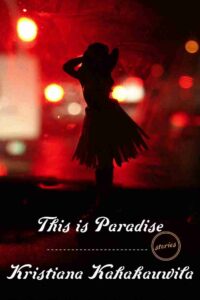
Book cover featuring a silhouette of a person wearing a hula skirt in front of a hazy, red colored background.
PHOTO: Courtesy of Hogarth

This Is Paradise: Stories by Kristiana Kahakauwila 

Hawaiʻi is often thought of as a luxury vacation spot — a place to enjoy beautiful beaches and warm weather. Often, the existence and needs of the island’s Indigenous people are overlooked. The stories in this book offer “an unforgettable portrait of life as it’s truly being lived”  in modern-day Hawaiʻi. In a collection of six short stories, Kahakauwila explores the tensions between Native Hawaiians and tourists, expressed through slice-of-life stories. There are many misconceptions about Native Hawaiians, and the author carefully and purposefully unravels them, drawing the reader in by taking them on a journey across the islands of Maui, Oahu, Kauaʻi and the Big Island.

Despite transporting readers to Hawaiʻi, the stories challenge the common perceptions of Hawaiʻi as a traveler’s “paradise” by recognizing the positionality of Native Hawaiian people on the island. Tourists often fail to recognize issues Native Hawaiian women face in particular, including laborious underpaid housekeeping work and unaffordable housing. This book “makes the point that lives in ‘paradise’ are just as complicated as anywhere else.” 

Book cover featuring an illustration of a person with brown skin and long brown hair showing from the neck-down wearing a white T-shirt with feathers printed on it.
PHOTO: Courtesy of Candlewick Press

Hearts Unbroken by Cynthia Leitich Smith 

Hearts Unbroken is a young adult romance crafted by New York Times bestselling author, Cynthia Leitich Smith, a member of the Muscogee Creek Nation. The novel exposes the isolating experience of being an Indigenous high school student in a predominately white, middle-class town in Kansas. Louise Wolfe is a senior who enjoys spending most of her time working for the school newspaper. When the school’s musical director takes an inclusive approach to casting The Wizard of Oz, the townspeople’s prejudice is exposed through hostile commentary and behaviour, and anonymous threats. While grappling with the tensions growing between students, parents, and teachers, Louise begins to develop feelings for Joey Kairouz, a photojournalist for the paper, and finds that navigating dating as an Indigenous person is complicated.

I picked this book because it’s comprehensive and approachable for readers, while tackling important issues like systemic racism, microaggressions, and discrimination — all factors which greatly impact Indigenous adolescents. When the townspeople expose their prejudice from something as trivial as a school play, the reader questions how perceptions of minority groups influence internalized responses to casting choices made in popular media. It brings us to reflect on our positionality as settlers and how we can be more conscious of colonialism’s influence on our perceptions of Indigenous peoples. 

The Chinese Canadian Museum receives $5.18 million from Government of Canada

0
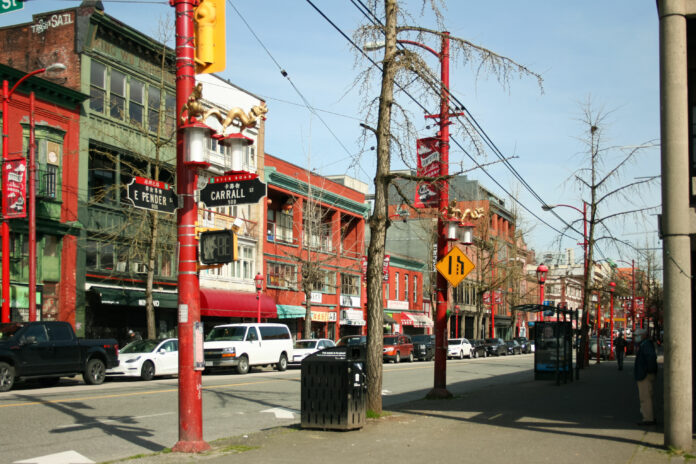
This is a photo of the streets of Chinatown in Vancouver.
PHOTO: Gudrun Wai-Gunnarsson / The Peak

By: Eden Chipperfield, News Writer

The Chinese Canadian Museum, located in Vancouver’s historic Chinatown in the Wing Sang building, has received $5,179,000 from the Government of Canada. The funding will support the museum’s space renewal at its permanent location. The Chinese Canadian Museum is the first of its kind in Canada. It hopes to provide a transformative experience that encourages all Canadians to learn about the history of Chinese Canadians, past and present, to educate them for the future. 

The Peak connected with Dr. Melissa Karmen Lee, CEO of the Chinese Canadian Museum, to learn more about the goals of the exhibits and what the foundation hopes to accomplish when opening its doors.

The museum’s first national exhibit will be “The Paper Trail to the 1923 Exclusion Act, curated by Catherine Clement, to commemorate this significant anniversary,” Dr. Lee explained. “The museum will also showcase an overview of Chinese Canadian migrations and a tribute to the Yip family through two interactive ‘Period Rooms,’ which immerse visitors into the 1920s and 1930s to provide a glimpse into the daily lives inside their Chinatown residence.” 

The museum is appropriately located in Vancouver’s Chinatown, a monumental and historic community established over 100 years ago with continuously growing attractions and activities. Dr. Lee noted the museum, in the historic Wing Sang building, is a “remarkable heritage site embodying Chinese experiences throughout the late 19th and 20th century.” 

The Wing Sang building is the oldest in Vancouver’s Chinatown, named after Yip Sang, a local businessman who helped create the Chinese Benevolent Association, the Chinese Board of Trade, a local Chinese hospital, and a Chinese school. 

The museum’s funds from the government of Canada will focus on a three-phase, multi-year project which includes revitalizing and upgrading more than 21,000 square feet of building space. “Annual operating support is critical to our museum’s sustainability, so having the support of this multi-year operating grant is very much appreciated,” Lee expressed. The upgraded Wing Sang building will have bright, contemporary interior spaces to enhance cultural learning and experiences for visitors. The museum will showcase varying exhibits, detailing stories and histories of Chinese identity from “diverse histories and stories of Chinese identity. They will consist of experiences from 1788 to today.”  

“At a time when anti-Asian racism has reverberated across North America and beyond, the museum’s work is a powerful reminder of the importance of educating and celebrating the contributions of diverse communities who help shape Canada’s history and identity,” said Dr. Lee. 

The Chinese Canadian Museum doors will open on July 1; for more information, visit www.chinesecanadianmuseum.ca

Horoscopes June 12–18

0
An illustration of a girl with long flowing hair. Astrological signs and stars shine around her.
ILLUSTRATION: Marissa Ouyang / The Peak

By: Alex Ileto, SFU Student

Cancer

Venus, the planet of love, is currently zooming toward Earth to orbit around you. That’s right, this week, invest time into your love life. Forgo Pokémon Go and download that dating app your friends have been pestering you about. Head to the SFU Surrey Engineering Building and pretend you’re lost — an engineer in the making will be happy to help. When all hope is lost, put on a UBC hoodie and scope the scene there. 

Leo

Time to assert your dominance in your friend group by becoming an alpha. Our pro tips include keeping a straight face when your friend shows you a silly (but funny) TikTok, finally making that LinkedIn page, and getting your finances together for your first home— okay, maybe not in this economy. A Minecraft house will do. 

Virgo

The planets are aligning and telling me you’re the best star sign and deserve the most. This week is your time to shine and be a little narcissistic. Treat yourself to some new drip. Post those photo dumps you’ve been withholding for months. You. Are. A. Star.

Libra

Happiness: declining. Urge to curl up in a ball and hide in the depths of RCB: increasing. However, things are looking up for you this week. Visit your local spirituality store and stock up on crystals because now is the perfect time to manifest. 

Scorpio

Eenie. Meenie. Miney. Oh no! You seem a little lost. Time to start investing more time into self-care. During your free time, crank up a Nicki Minaj 2010s era playlist and go on a nature walk. Find peace amongst the trees and yassification amongst the Roman Zolanski soundtrack. You’ll be slaying the day away in no time. 

Sagittarius

STOP READING THIS RIGHT NOW AND MAKE THAT IMPORTANT DECISION YOU’VE BEEN HOLDING OFF ON. 

Capricorn

Have you recently been bothered by friends who won’t stop giving you unprompted updates about Taylor Swift’s Eras Tour? Are you annoyed by notifications about changes in her setlist and new outfits? Well, don’t be! It’s time to give in and submit your life to being a Swiftie. So enter that lavender haze. Are you ready for it?

Aries

This is your week to CHILL OUT. The last few weeks have been brutal for you, so take it easy. Go to a pilates class in a fancy gym, go on a long drive to a place without much going on (I’m looking at you, Mission), learn how to make that Gigi Hadid pasta you’ve had saved on your TikTok since the pandemic started — the possibilities are endless. 

Taurus

Keep calm and carry on. SIKE. These are NOT words to live by this week. Unlike Aries, this is the time to be aggressive. Sharpen those horns and bulldoze through everything that’s been bothering you lately, whether that’s an assignment you’ve been procrastinating on or a Tinder chat that’s going nowhere. Do what you need to do!

Gemini

Time to switch things up and break out of your routine. Instead, adopt The Rock’s routine: waking up at 3:30 a.m., 50 minutes of cardio, a breakfast of steak, eggs, watermelon, and toast, and an intensive back workout followed by an ice-cold shower. Don’t be too tempted! Start today!

Aquarius

You got the whole squad laughing. No, actually! Now that Venus is aligned with Mars, your inner silly, goofy persona is emerging. Embrace this newfound humour by saying the first thing that comes to mind in any situation. Get rid of any filters you have and start blurting. Someone in the room will be doubled up laughing — I promise. 

Pisces

It’s time to finally do that spring cleaning session you’ve been putting off! This includes (but is not limited to) getting rid of the pile of pebbles you gathered at the beach as a “souvenir,” unfollowing everyone who you speed-walk by on campus to avoid making eye contact with, and composting those flowers from your ex that you tried to press in a YellowPages. Marie Kondo would be proud.

Mary Ancheta Quartet takes cinematic jazz to the Next Level

0
Album cover featuring a photo of Mary Ancheta behind a psychedelic background with a spiral with stripes, warm orange, blue, and purple. Ancheta is playing a keyboard and looking fiercely into the camera. She had long black hair, wearing a white headpiece and silky shirt.
PHOTO: Courtesy of Mary Ancheta Quartet

By: Petra Chase, Arts & Culture Editor

I was intrigued by the track titles on Mary Ancheta Quartet’s EP, Level Up, released on June 2; “Grease the Wheel” and “Gotta Get it” instil being in motion, which is exactly what the EP entails. It’s a mix of ‘70s jazz, electronic funk, and progressive tempos, ending with a gritty banger. Perfect for coasting through the day!

I interviewed quartet leader, Ancheta, ahead of her tour across the country, including an upcoming show for the Vancouver International Jazz Festival. Ancheta is a renowned Vancouver-based film scorer and keyboardist, and has composed for local artists like rapper Kimmortal and singer-songwriter iskwē. Now, she’s setting the tone of a new sound with the band’s debut.

Ancheta said the title describes “when you’re struggling with something, like a thought process or practicing something — that moment right before, when you’re just about to give up — and you push through the process. That’s when you level up.

“I think it’s definitely been me levelling up in that sense of being a studio musician and session musician to band leader.”

Ancheta’s background in scoring film and TV bleeds into the tracks, which could fit into the Mad Men soundtrack. The EP has a bustling, mid century modern atmosphere with retro video game bleeps, a hurried rhythm, and brassy swing.

“I feel like I’m always trying to pull from certain things,” she said. She listed ‘80s synths, Aphex Twin, ambient, and baroque composers as some of her eclectic sources of inspiration. With technical training in classical music, you can expect inventiveness from Anchetta. 

It’s also supercharged with emotion, reflecting feelings of  “determination, joyful noise, and freedom.” It’s energizing to cling to the album’s whimsical melody. When asked to name some of the multi-dimensional instrumentation, she noted the use of vibraphone, which creates sharp notes by hitting felt beaters onto a mallet. 

Grease the wheel” especially struck me with its industrial sound, and how it holds feelings of strength and consistency amidst the chaos. Ancheta explained the organ runs through a Leslie, which is a rotating speaker that reverberates through a “woofer and a high-frequency horn.” The analog and electronic fusion add to this track’s addictiveness.

Ending the album is “Impermanence,” a pulsating, noise-for-your-skull track which alternates between groovy saxophone, and clashing drum and heavy bass. “I tried to encapsulate the fragility of life and of how quickly things can change in a split second,” she wrote on her Instagram about the track. Written at the start of the COVID-19 pandemic, it “encompasses the joy of having time to yourself, and the isolation that one can feel with too much time by yourself.”

See Mary Ancheta Quartet live on June 29 at the Queen Elizabeth Theatre, where she is opening for BADBADNOTGOOD. Purchase tickets at coastaljazz.ca. Listen to Level Up on Spotify, Apple Music, or Bandcamp and follow Ancheta on Instagram at @Maryancheta.

Council in conversation with SOCA to provide funding for Black wellness retreat

0
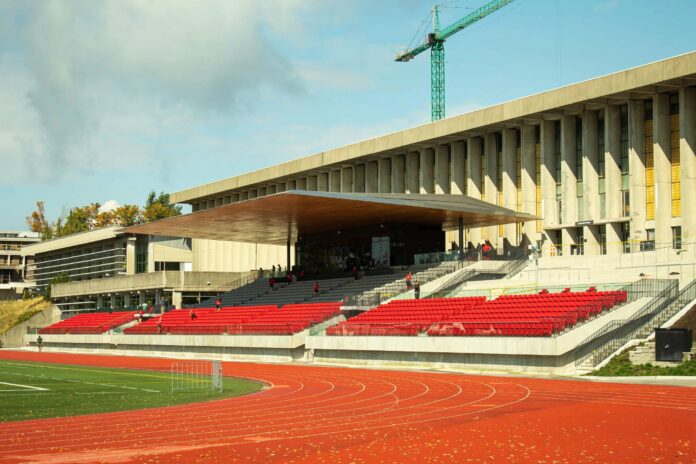
This photo is of the SFU stadium at the Burnaby Campus. The stadium is empty but it is a sunny day.
PHOTO: Krystal Chan / The Peak

By: Eden Chipperfield, News Writer

Editor’s Note: This article was updated on July 20, 2023, to correct that SOCA’s budget is not $100,000 but rather they receive $65,000 per year from the SFSS. 

The Peak acknowledges we did not reach out to Emilio Da Silva for comment on the struck motion to censure and impeach him.

On May 24, The Peak attended the Simon Fraser Student Society’s (SFSS) bi-weekly council meeting. The meeting discussed the proposed Students of Caribbean and African Ancestry (SOCA) retreat, SFU Surge’s StormHacks grant reimbursement, and the censure of history councillor, Emilio Da Silva. 

SOCA presented proposal for a wellness retreat

Yaye Seydi Balde, internal revenue officer of SOCA, presented to Council a proposal for a wellness retreat that focuses on Black healing, including mental, emotional, physical, and spiritual health. The initiative of the Black healing space was facilitated by Tiara Cash, a graduate student at SFU and formally SOCA’s graduate representative on their executive board during 2021/2022. 

Amina Hassan, SOCA’s representative for the SFSS council meetings, said the retreat would be held in Chilliwack for four days in July. Attendance plans include five SOCA executives and 28 SOCA member attendees. 

SOCA requested $10,000 for accommodation, roundtrip transportation, food, and facilitators. The application was met with concern regarding the amount of money requested. Vice president of university and academic affairs, Thomas Lueth, stated SOCA already receives a budget of $100,000 per year so having the SFSS contribute additional cost for the retreat was concerning. However, SOCA confirmed with The Peak they only receive $65,000 per year from the SFSS.

Hassan responded to Lueth by explaining the budget SOCA receives is for the whole year and is allocated towards events and initiatives; the retreat is separate. Hassan elaborated that hosting the retreat is meant to further increase engagement with Black students. The wellness retreat aims to encourage more interested parties to join the retreat, and SOCA, for the following year.

The discussion continued to go back and forth, leading president Liam Feng to propose postponing the matter to the next meeting. The Council voted unanimously to postpone the discussion. 

SFU Surge’s StormHacks grant reimbursement 

StormHacks is a beginner-friendly hackathon event hosted by SFU Surge, open to hackers worldwide. The previous hackathon event was held at SFU Burnaby from May 20–21. SFU Surge submitted a grant request to Council. However, due to issues occurring within the SFSS when the request was submitted, a vote never happened to approve the budget, meaning SFU Surge was forced to pay for the event using their funds.

Council voted to reimburse SFU Surge for the StormHacks event. President Feng referred to the situation around the reimbursement as a “special” scenario. “Normally the process of such a grant, especially ones of this magnitude, they would not go through processes like this but in this case we’re making a special scenario for this one.”

Censure and impeachment of history councillor Emilio Da Silva is striked 

The SFSS Council discussed the motion to censure, impeach, and remove history councillor Emilio Da Silva from the SFSS. Society of Arts and Social Sciences (SASS) representative Hilary Tsui proposed that the movement be struck.

Tsui felt it was better to “move into the new year with a fresh perspective, a fresh start. One that doesn’t carry a lot of the hurt and distrust and chaos that happened last year.” Vice president of events and student affairs, Ayooluwa Adigun, agreed with Tsui to strike the discussion. Council voted unanimously to strike the motion. 

Opinions in Dialogue: Is SFU Burnaby really that ugly?

0
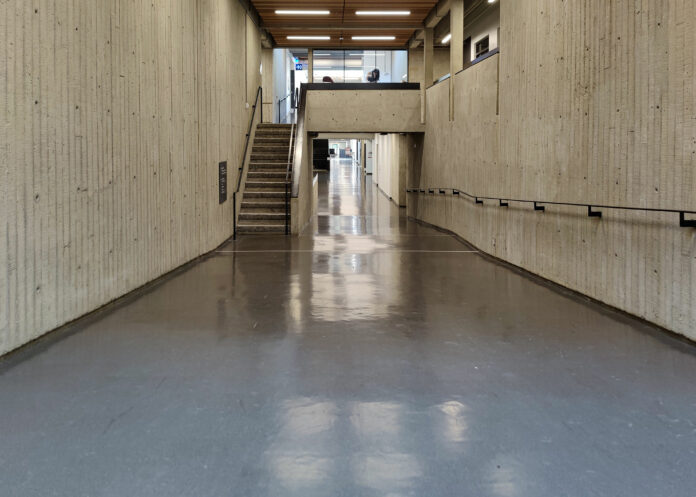
Concrete stairs and walls
Kriti Monga / The Peak

By: Izzy Cheung, Staff Writer and Michelle Young, Opinions Editor

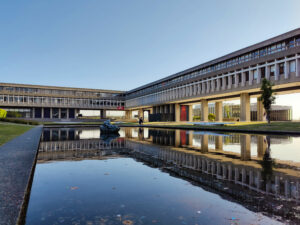
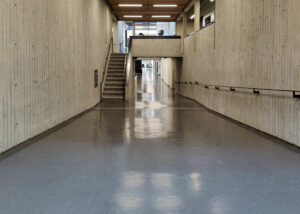
SFU has a reputation for looking like a grey concrete prison. Many students argue the aesthetics on campus are demoralizing. However, in recent years, more conversations have emerged around SFU’s beautiful views and wildlife. President Joy Johnson noted the “design for Burnaby campus shaped SFU’s educational philosophy by tearing down walls between faculties, removing silos, and creating common areas where disciplines merge and ideas flourish.” So, is SFU’s poor architectural reputation justified? 

Izzy: I can understand some things about the Burnaby campus are nice, like Burnaby Mountain sunsets. However, I’ve had most of my classes take place at Harbour Centre, and the location has made a huge difference. 

For starters, SFU Burnaby is so inconvenient. It’s literally on top of a mountain, meaning the only spots near the university are the things located on campus. Everything else requires a 10–15 minute transit or drive. Things are so much more convenient when I have my classes at Harbour Centre, especially since it’s located right in front of Waterfront Station. In terms of food, there are so many options to choose from at Harbour Centre, and if none of them are to your liking, all you need to do to find more options is walk a couple of blocks. Arriving at Waterfront brings you to Starbucks, Jugo Juice, Chronic Tacos, A&W, and Body Energy Club — and that’s just inside the station. If you’ve got time between classes, you can head up a little ways to Robson Street, or follow West Cordova street down to Gastown

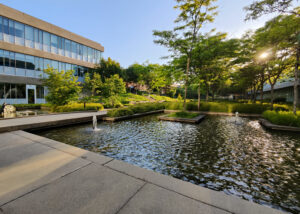
Michelle: I’m not going to argue that SFU Burnaby is super convenient, but a 10–15 minute transit ride or drive is preferable for me since walking a few blocks can trigger chronic pain. Sometimes even just walking to classes can be a lot, and that’s my least favourite aspect of the Burnaby campus. Burnaby Mountain isn’t particularly close to anything either, so I do get where you’re coming from. Harbour Centre has the best food, I’ll give it that. Once I accepted the fact I’ll be stuck on campus most of the time, though, I found it’s not as bad as people make it out to be. The Burnaby library is huge, and I’ve been able to find lots of books I wouldn’t have been able to read otherwise. The complaints about SFU’s architecture and aesthetics are overblown. I think the campus has lots of cute spots. The glass and wood accents in Saywell Hall allow light to peek in and the tables there are cozy. I also love walking across the koi pond and trying to sneak a glance at the fish. The greenery around SFU Burnaby is somewhat typical for BC, but it makes the campus feel nice and calm. 

Koi pond at SFU
Kriti Monga / The Peak

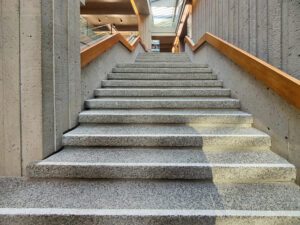
Izzy: I’ll agree with your points on some of SFU Burnaby’s architecture, particularly with Saywell Hall — that’s probably my favourite spot on campus aesthetically speaking. I do like sitting in that little courtyard area between Saywell and Blusson when it’s nice out. In terms of natural views, I’d wholeheartedly agree that SFU Burnaby is better than the other campuses. My main concern with the architecture part isn’t really the aesthetics, but more-so the actual construction of the campus itself. Why are there so many stairs?

Concrete stairs, looking omminus
Kriti Monga / The Peak

I’m coming from the standpoint of someone who dislikes stairs, so I can’t even begin to imagine how much of a pain this campus must be for those who aren’t able to use them. Looking at the map, the entire Academic Quadrangle has only two elevators. Granted, there are some in West Mall and Saywell, but in terms of accessibility, SFU’s designers didn’t quite think through the construction thoroughly. For myself, I don’t particularly enjoy huffing it up from the transit exchange between West Mall and the library, as most of the time, this results in me showing up to class soaking wet from the rain and gasping for breath. I guess the aspect of wide campuses could be applied to all big universities, but it’s still something to think about. In terms of accessibility and convenience, I feel like the multi-floor, corporate-styled building is the way to go — even if it’s not stylistically preferred. 

Kriti Monga / The Peak

Michelle: Oh, the Djavad Mowafaghian Courtyard is very pretty! SFU’s design has commonly been referred to as brutalist, which was a popular style in the ‘50s and ‘60s. However, Donald Luxton, an architect and historical writer, disagrees with this assessment as the design’s “use of concrete was finely detailed and not in line with brutalist trends of the mid-20th century.” I personally love the grey concrete aesthetics, since they feel very Tadao Ando-esque, whose structures are associated with minimalist architecture and empty space. His work is still considered to be modern and appealing today. 

Overall, though, I do think the Burnaby campus is a little too spread out. And there could have been some better choices made for accessibility. Perhaps the conversation around SFU looking like a prison and being “glum” has distracted from real on-campus problems. 

Concrete stairs and walls
Kriti Monga / The Peak

Maybe we shouldn’t be discussing whether or not we like the visuals of SFU, but rather, whether the structure is serving us well. One of the SFU architects, Geoffrey Massey, studied under the Bauhaus movement, where function is an important aspect of design, too. 

Izzy: Agree! Each campus has its positives and negatives, and those traits are defined as such depending on what each person thinks and experiences. Either way, if possible, everyone should try visiting the other campuses at least once so they can broaden their perspectives in terms of what they think works best for SFU’s architecture. 

STORYTIME: THE DAY I FOUND OUT ONE OF THE EMPLOYEES AT MACKENZIE CAFE WAS MY MOTHER

0
A woman recording herself with a smartphone while eating pizza
PHOTO: Ivan Samkov / Pexels

By: C Icart, Humour Editor

Insert over-the-top thumbnail here with me looking shocked. There is text in all caps that reads, “I FINALLY FOUND MY MOM” 

Hi everyone! Welcome back to my channel! I have the wildest story to share with you all today. I know y’all criticized me last time, saying I was being “dramatic” and “lying and exaggerating for views,” but it’s not my fault a lot of exciting stuff happens to me and not you! If you’re a boring hater, this video is definitely not for you. Everyone else, don’t forget to like, comment, and subscribe. Click the little bell so you’ll be notified every time I post a new video. Did you click it yet? I’ll wait. 

Okay, cool! Let’s get into it! Y’all are literally not even going to believe this like; it’s so wild. Like maybe take a seat and get comfortable. Yeah, like, sit on the floor because I swear this story will make you fall. off. your. chair. 

Oh wait, wait, I forgot to say all my social media is linked in the description. Don’t forget to follow me. And there are links to literally everything in the background of this video in the description as well. They’re affiliate links, so please help me get rich! Oh my god, is it bad that I said that out loud? Whatever . . . I’m so relatable and quirky!

Anyways, let me stop rambling and actually tell y’all about this burning hot tea! Speaking of tea, this video’s sponsored by Scam Wellness Tea. I only started drinking it this morning because that’s when I finalized my contract with the brand, but I already noticed so many positive changes. My skin is clearer, my gut is detoxed (whatever that means, I don’t know), and my hair is five inches longer!

The first 30 people to click the link in the description will get 5% off a one-year supply of Scam Wellness Tea. That means it’s only going to cost you $400! What a steal. So run, don’t walk, to the description and get your Scam Wellness Tea today. 

So back to the storyyy. Okay, so, like, as you know, I go to SFU . . . Oh my god, I know y’all are going to leave a bunch of comments below saying SFU looks like a prison, but like I literally don’t care. Also, more comments mean more engagement, which means higher odds of me getting onto Morphe’s PR list.  

Oh my god, y’all, I just realized I’m going to be late for class, so I have to stop filming, but part two will be uploaded soon! In the meantime, you can check out the other videos on my channel. Again, don’t forget to like, comment, and subscribe! Thank you so much for watching. Bye!

Insert annoying royalty-free music playing in the background of an outro linking other pointless STORYTIME videos