Home Blog Page 177

Why all SFU research assistants must act now to finally win a union

0
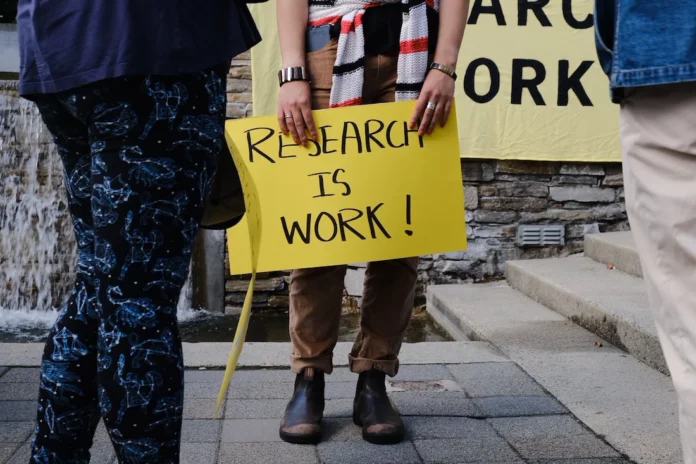
A sign reading "research is work"
PHOTO: Sherry Young

By: Kelvin Gawley, SFU Student 

Editor’s note: While this piece was published in The Peak’s Features section, it was edited by Opinions Editor Michelle Young. This is in place of Features Editor Daniel Salecdo Rubio, who is both a teaching and research assistant, to avoid conflict of interest.  

In 2019, research assistants at SFU made a bold declaration: “research is work!”

While that may not seem like such a controversial statement to anyone who has spent hours toiling over a lab bench, poring through archives, or analyzing reams of data — it’s a lesson SFU still refuses to learn four years after the union drive in 2019, where SFU signed to recognize Teaching Support Staff Union (TSSU) as the RAs’ bargaining agents.

As a member of the TSSU, I am writing to implore research assistants to help us all. Research assistants (RAs) just have around one week left for SFU to finally recognize the vital work we do. We have until August 11 to cement our rights as workers by signing union cards with the TSSU. 

It doesn’t matter if you’re a student or not, whether you spend an hour a week compiling literature reviews or 40 hours on an archeological dig, if you’re an aspiring professor, or eager to leave academia behind as soon as possible. If you’re being paid to do research at SFU this summer semester, you can make history by building a union that will fight for you and generations of RAs to come.

This final push is the culmination of RAs fighting together for our rights for years. Our modest demands — for health benefits, job security, and fair pay — have not changed since day one. But SFU still refuses to meet them. 

After we signed cards in 2019, the university said it would “voluntarily” recognize our union. SFU soon broke that promise when it tried to kick many RAs out of the TSSU, claiming they don’t count as workers. 

We refused to be divided, so we fought back.

Last year, we took our fight to arbitration, and won. The arbitrator said the university’s “approach was not in the spirit, intention, or words of the [recognition] agreement.” He said the administration’s “behaviour is not a credit to SFU as an institution or its organizational capability to act in a manner on which contracting parties can rely with confidence.”

Sadly, SFU has acted like a sore loser. They still refuse to recognize us as workers and negotiate a fair contract. But we’re not backing down, either. 

SFU broke its agreement to recognize us as union members. It has refused to engage in meaningful bargaining for four long years. And it has ignored the arbitration ruling.

All the while, RAs have continued to perform the vital work that makes SFU work every day. 

It’s time to put an end to the school’s endless delays and evasions so we can all concentrate on doing the research we love. To do that, we still need every RA who is able to sign a card by August 11 at the very latest, but the sooner the better.

If a large majority of us sign cards now, we can file for certification with the BC Labour Relations Board (LRB), which was cut out of the process when SFU “voluntarily recognized” our union in 2019. The LRB has the power to force SFU to finally recognize our union and negotiate a deal with all research assistants.

Over the last three months, TSSU organizers have spoken to more than a thousand fellow RAs on and off campus. Several hundred have already signed, but those who haven’t often tell us they are too busy to think about it.

The truth is, we’re all swamped — especially as the semester winds down — but if everyone who is planning to “get around to it eventually” keeps putting it off, we won’t reach the threshold we need to finally put this issue to bed.

This is our last chance to get over the line. You can sign a card online right now.

Many RAs who have told us they are hesitant to sign have cited common misconceptions about the reality of the campaign, and unions in general. When they get the facts, they often change their minds.

Here are some frequently asked questions:

SFU says it can’t afford to pay RAs more. Why bother asking?

SFU’s research funding has more than quintupled over the last 20 years. Between 2016 and 2021 it increased by nearly $62 million per year. Yet, SFU’s data shows pay for RAs has remained flat during that time. 

Where is all that money going?

Instead of paying researchers their fair share, SFU’s administration takes a large cut of every grant. SFU’s compensation report notes president Joy Johnson was paid more than $300,000 for the 2019–20 fiscal year. That jumped to $389,000 the next year. Last year, Johnson was paid nearly half a million dollars ($484,690).

In a single year, SFU’s five top executives took nearly $2 million from the university.

Will the union come between me and my research supervisor?

Studies have shown unionization doesn’t hurt the relationship between research assistants and supervisors. In fact, it has the opposite effect: “Union-represented graduate student employees report higher levels of personal and professional support, unionized graduate student employees fare better on pay, and unionized and nonunionized students report similar perceptions of academic freedom.”

Will my supervisor punish me if I sign?

If you are worried you will face consequences for standing up for yourself, that’s when having a union standing behind you can be the most powerful. Most importantly, signing a card is confidential, so your supervisor won’t know if you sign.

What is there to win?

RAs have been left without basic employment rights that all other TSSU members have, such as extended health and dental benefits, a month of paid sick leave, tuition deferment, payment of health fees for international students, and more. Unionization also means regular wage increases and having someone in your corner to advocate for you when you run into a problem at work. Having a union allows us to fight for these basic rights — and build on them for a better future!

To sign a card, visit https://www.researchiswork.tssu.ca/sign/ to sign online or for more information about how to sign in-person. 
Turn the bass down and crank up the transit etiquette

0
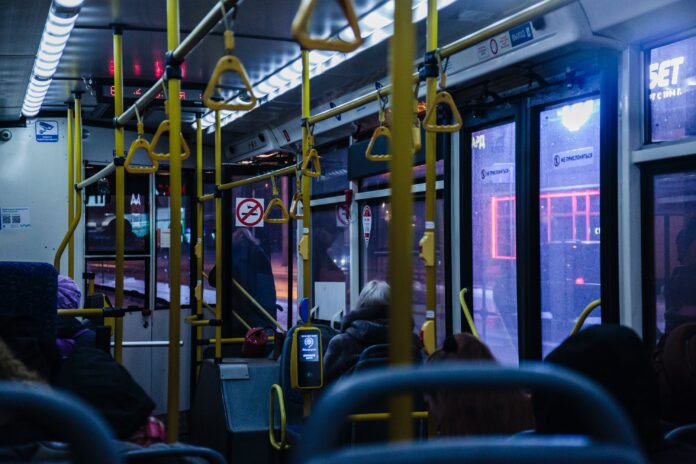
The inside of a bus
PHOTO: Aleksandr Popov / Unsplash

By: Eden Chipperfield, News Writer

It’s a quiet Tuesday morning at the SkyTrain station. The sun peeks over the mountains as commuters bundle up in their coats, bracing themselves for the day ahead. As the train pulls up and the doors open, people hurry inside, hoping to find a seat for their journey. Then, as the doors slide close, the loud beat of obnoxious music fills the train with headache-inducing rhythms that pound into the heads of all. The same goes for loud and personal conversations. Not only is this inconvenient, it can have negative effects on other passengers.  

I don’t mean to be rude, but regardless of the time of day, hearing Skrillex blasting on the train is neither fun nor wanted. The number of times I see either a BeatsPill or a Bose speaker taken out of a bag to play the worst music I’ve heard is incomprehensible. Everyone is affected, and no one is amused. Some riders may become overwhelmed from sensory overload because of the amount of over-stimulation occurring in a small, confined space. 

Deeply personal conversations can be triggering, and it’s probably better to relocate those conversations to parks or spaces which aren’t as confined, if private areas are not accessible to you.  

According to TransLink, priority seats are for the elderly, people with disabilities, pregnant people, and those with injuries. It’s only a seat for someone to sit in if the above categories apply — and it is not a seat for your purse or backpack. A backpack on a seat is the unspoken code on the transit of “I don’t want people sitting next to me,” however, if the bus is full, please remove the pack and kindly offer someone the seat beside you. It’s astounding how a packed bus can have multiple seats occupied by backpacks, laptop bags, or purses that force people to stand, causing an unpleasant trip. Being considerate is vital, and priority seating is for those who need it. You might sit in one of these seats, thinking, “I’ll just get up when I see someone who needs it.” However, it’s important to keep these seats open for those who have invisible disabilities, and may not be comfortable asking you to stand up. Anyone who doesn’t need priority seats shouldn’t take them, because you never truly know just by looking at someone whether they need it or not. 

I have many gripes about transit etiquette in Metro Vancouver. I know that most commuters are respectful people who consider those around them. However, it goes without saying that others must be reminded about how to act appropriately when transiting with other people. So please be polite to those around you, and don’t forget to thank the bus driver!

What Grinds Our Gears: The pineapple on pizza debate

0
A pineapple pizza
PHOTO: bckfwd / Unsplash

By: C Icart, Humour Editor

In the year of our Lord, 2023, I came across a Hinge profile that specified the user’s opinion on pineapple on pizza . . . Hawaiian pizza has been around since 1962, the pineapple on pizza debate has existed on the internet since at least 2009, and the memes peaked in 2016. SO GET YOUR EXPIRED MEME OFF YOUR HINGE PROFILE. Enough is enough! Your meme is so old, it’s going to give you meme poisoning. Your meme is so old, it knows how VHS works. Your meme is so old, that if you squint a little, you can see it in the background of some nativity paintings. 

You acting like your opinion about Hawaiian pizza is a personality trait makes me sick (it’s true, just this week, my doctor diagnosed me with a hateritis flare-up). I’m looking for a HUSBAND (gender-neutral), and you’re wasting my time talking about pineapples? I’m swiping left. 

The pineapple is a symbol of colonialism as it was often brought back by colonizers from the places they had gone to. It’s quite fitting, isn’t it? Considering you stole your sense of humour from mid-2010s Buzzfeed? Do you work for the pineapple industry? Are you contractually obligated to talk about pineapples wherever you go? What you put on your pizza is between you and Uncle Fatih. Leave me out of it. 

How to Obtain W Rizz as an SFU Student

0
Very calm, very cool. Nothing wrong here. Illustration: Siloam Yeung / The Peak

By: Alex Ileto, SFU Student

1. Reserve their favourite spot on the bus by sitting there literally all day.
If you’re also a slave to TransLink like me, there is a spot on every type of bus and SkyTrain that you have designated as the prime spot. It’s that seat you make a beeline to as soon as the doors open on the SkyTrain — you know the one. You’ll be the person who has the coolest views and the easiest time getting off the bus. What better way to be their object of envy?

2. Show them that washroom on campus you’ve been gatekeeping since 1st year. 
As someone who tends to spend long hours on campus, sometimes you just need to take a dump. It’s a totally normal feeling to have, but what I don’t think is totally normal is having a go-to place to discharge. To express vulnerability, tell them your secret spot and revel in the praise they give you after your thoughtful recommendation.

3. Tell them you’re taking them to the aquarium and bring them to the koi pond.
A fairly cheap alternative to the Vancouver Aquarium in Stanley Park, head over instead to the koi pond for a romantic outing. It’s a win-win situation. You can take out that special someone to enjoy the serene swimming of the remaining koi (the ones that haven’t been snatched by the birds, of course) and also make the most of your tuition.

4. Brave the asbestos on the 5th floor of the library to get a book they’ve been wanting. 
This is solely for anyone who would like to rizz me up. I’ve been wanting to read “Happy Hour” by Marlowe Granados for a while now, but lo and behold — out of all places, it’s chilling on the asbestos floor of the library which is completely off-limits. In short, I can’t get my hands on that book. So if anyone is willing to confront asbestos and snatch that book, please let me know.

5. Bring them to the on-campus gym and hit literally all of your personal records (PRs). 
This is for all the gym bros and girlies out there. Prove to them that you’re an absolute weapon and annihilate all of your past PRs in one go. It might be a good idea to also hire people to stare at you in awe during your lifts.

6. Hack into their goSFU and give them an earlier enrollment day.
Speaking from personal experience, enrollment day always sucks. I can never get into the classes I actually want, goSFU always decides to crash on me, and if I can get on a waitlist, I’m 24th in line. Do your crush a favour and use your hacking skills (or a comp sci kid) to give them an earlier enrollment day.  

7. Carry them up and down the 4th and 5th floors of Surrey campus. 
This goes out to all my Surrey campus regulars. For whatever reason, the escalators at Surrey campus end on the 3rd floor and students are left to hike up the stairs to access the 4th and 5th floors. Fear not, for the Rizzler is here to be your personal escalator to bring you to the top of Surrey campus. Maybe hitting all those PRs came in handy . . .

8. Grab them an iced capp from Tim Hortons just before the morning rush. 
Who doesn’t like a refreshing drinkity in the morning? The answer is . . . no one! So save your crush the hassle by grabbing an iced capp before the rush.

9. Make a study playlist for them to block out the noise of their inner demons. 
As finals season quickly approaches, help them brace themselves from the chaos and swirling of emotions by making a playlist to shut out their inner demons. May I suggest a song for mothers who slay (“Do Not Touch” by MISAMO), a song that makes you do the stank face (“Come On Let’s Go” by Tyler, the Creator), or a soft melody that can be played in a meadow filled with sheeps (“Old With You” by Grent Perez).

10. Pretend you’re a UBC student. 
If all else fails, don a UBC hoodie and take a stroll across campus. As a UBC student, it is implied that you are not only smarter, but harder, better, faster, and stronger than any SFU student could ever be. Not to mention, you have infinite W rizz. So take the temporary L and fake it ‘til you make it.

The dos and don’ts of attending concerts

0
An illustration of a crowd of people at a concert with rock hand signs in the air, with their mouths open like they’re singing loudly. They look like they’re having a good time.
ILLUSTRATION: Andrea Choi / The Peak

By: Hailey Miller, Peak Associate

With many tours hitting the road this summer, now’s the time to implement a refresher on concert etiquette. Concert connoisseurs and amateur attendees alike need to be well-versed in what’s respectful and expected.

Don’t: Arrive late and ignore the opener.

Nothing’s worse than someone who walks in when the set has already started and disrupts the entire aisle. They narrowly attempt to squeeze between the seats, unsuccessfully trying not to make contact with fellow attendees’ knees. Once you’re there, pay attention to the show! Opening acts deserve as much recognition, no matter how famous they are, because they work just as hard to showcase their talents and make a name for themselves. More often than not, you’ll stumble upon a new artist whose style expands your musical tastes.

Do: Prepare and follow proper protocols.

Just as performers must prepare for a show well in advance and keep their health in check, fans should, too. Venue-specific protocols include bringing an appropriate-sized bag and following venue safety regulations. While health-related protocols should still be in place, you can still do your part to reduce risk of illness, like masking up — no one wants to get sick, whether it be from flus, COVID-19, or any other contagious disease. The last thing audience members want to worry about is getting sick. If you’re unwell, you and your fellow audience members won’t be able to enjoy the show, so stay home! Don’t put a damper on someone’s evening by spreading your germs and passing your illness to someone else.

Don’t: Be glued to your phone or talk during the show.

Nothing’s more disrespectful than someone who talks the entire time, is too preoccupied with their phone, and is only there to be seen. If you’re at a show just to disrupt everyone around you (artists included), you’re better off staying at home and watching the recorded version instead. Concerts aren’t the place to have a side conversation, or to scroll through your phone and take footage of the entire show. This blocks the view for others. Alternative artist Mitski spoke out last year asking fans to put down their phones to “embrace the present moment” and “experience magic.” Don’t waste your time and money if you’re not a true fan who’s there for the full experience.

Do: Respect the people around you — performers included.

Whether it’s your first show, or you’re a well-seasoned concert-goer, be considerate toward everyone. Respect the security guards, venue hosts, artists on stage, and fellow attendees alike. Remember, performers are on stage to do their job, and believe it or not, the venue is a professional setting. Throwing things on stage, pushing others, or making inappropriate comments at performers and stage crew is unacceptable. A clip went viral recently of fans screaming objectifying remarks at indie artist Clairo like “you’re so hot,” while she was clearly uncomfortable, and singing about “being sexualized in the workplace.” It seems like concerts are one of the few settings where such boundaries are ignored, and this needs to change.

Don’t: Disrupt others or leave your seat unnecessarily 

There’s no greater way to ruin someone’s evening than by disturbing their night and obstructing their view. Constantly leaving your seat just to get a drink is a sign of disrespect towards performers and attendees alike. Don’t leave the show early or be so inebriated that you have to be removed from the venue. If you’re tall, don’t block those of us who are short, and don’t hold a humongous sign, either. Don’t invade peoples’ space by drunkenly dancing into them, spilling food and drinks.

Do: Enjoy yourself and applaud the artists.

Concerts allow us to forget about life’s demands and stressors for a few hours, and to take in every moment while we can. The more you enjoy yourself, the more the artists do, too. So, applaud every song, dance the night away, and sing every lyric so loud that you’ll awake with no voice the next morning. That’s how you know you’ve had a great time.

So, as they say after the encore, thank you and good night! 

Transphobia is way too accepted in BC

0
PHOTO: Karollyne Videira Hubert / Unsplash

By: Isabella Urbani, Staff Writer

Content warning: mentions of transphobia.

Institutions give too much power to transphobes. This society has shown it allows and tolerates transphobia. It protects transphobes more than it protects trans people. We need to do better in protecting trans folks because the heteronormative social constructs we live in put them in danger. 

Just last month during a track meet in Kelowna, a grandfather from the bleachers hollered “Hey! This is a girls’ event, why are boys throwing?!” to two nine-year-old girls. The man believed two of the contestants were either “boys or transgender” due to their pixie haircuts. When we make assumptions based on appearances, society begins to regulate how even cisgender bodies should look. This has real-world consequences that puts trans and gender non-conforming people in danger. 

Regardless of whether someone is cis or trans, if a person doesn’t meet these “conventional” standards, they’re vulnerable to transphobes who feel like their sense of security is being challenged. 

Transphobes have close-minded and dichotomous thinking. Anti-trans rhetoric has fueled the narrative that somehow, transgender people are a threat. Birds of a feather flock together. Transphobes find strength in other transphobes, and when they gather enough confidence, they attack. They lash out at people, challenge them in public, and might even use physical force. Just a month ago, an anti-2SLGBTQIA+ rally was held in Guildford, where multiple people were harassed, yelled at, and threatened. Incidents like this are why it’s so crucial that we shut down transphobes.

The man from Kelowna shouldn’t have felt comfortable sizing up these children in the first place, but our society has shown they tolerate this behaviour. He hurt the confidence of those children. A parent of one of the girls said their child was so bothered by what was said, they couldn’t focus on the race, and cried for the rest of the day. The other girl sprinted off the field after the encounter. Ironically, while this man was supposedly acting with the intent of protecting cisgender girls, he harmed them even more due to his ignorance and assumptions on gender presentation. I vividly remember being asked if I was a “boy” in elementary school because I had hair on my arms. To this day, I have to battle myself to wear short-sleeved shirts in the summer for something said to me years ago. 

What does this say about us as a society if people feel comfortable demanding to know or telling people what gender they should be. The fact that transphobes feel comfortable enough to say this, means we’re doing something wrong as a society. Transphobia is rising and it’s not just in the US — it’s here, right in our cities.

Our priorities are completely out of whack. Keep calling out transphobes. Don’t let them believe for a second there isn’t a place for trans people. Take time to reflect on your positionality and your beliefs. Does your opinion actually hold any validity or are you just regurgitating what people have told you? Be better. Do better, and don’t be the reason why a transgender person reroutes their daily life because you’ve shown them that you’re unsafe.

Fusion Festival returns to Holland Park

0
This is a photo of Holland Park. The park has stone courtyard, surrounded by grass and trees.
PHOTO: Wikimedia Commons

By: Saije Rusimovici, Staff Writer

The Surrey Fusion Festival is back in Holland Park this summer on July 22–23. This year’s theme is “Dance Around the World.” Fusion Festival not only provides an opportunity to try various culinary creations, but also celebrates the diversity of the community. The family-friendly event runs from 11:00 a.m.–10:00 p.m. on both days and includes a variety of activities for people of all ages. 

“The Surrey Fusion Festival serves as a vibrant showcase of the diversity within the Surrey community,” said Jenna Kuzemski, senior marketing and events specialist at the City of Surrey. “As a free festival that attracts over 90,000 attendees over two days, it brings together people from all walks of life, fostering a sense of unity and community pride.” 

Kuzemski highlights how Surrey Fusion Fest “promotes social cohesion, respect, and celebration of diversity” not only in Surrey, but the entire Lower Mainland. Some of Kuzemski’s favourite aspects of the event are tasting authentic dishes from all around the world, in addition to watching amazing performances throughout the festival. 

Both local and internationally recognized performers take one of nine stages. This includes JUNO award winner D.J. Shub, an Indigenous artist known for his electronic beats. He is just one of several Indigenous performers taking the stage. This lineup also includes Indigenous experimental duo PIQSIQ and Indigenous country singer Don Amero. Also performing are internationally renowned Punjabi artists Gurnam Bhullar and Ikky. Entertainment includes dance performances by V3, a traditional Vietnamese ensemble, Surrey International Folk Dancing Society, Grupo America, Higher Ground Dance Company, and many more. In total, there are over 50 different groups performing over the two days. 

One of the other highlights of Fusion Fest includes a selection of 50 food and beverage pavilions representing a different culture. Select pavilions will also be selling traditional art pieces. Pavilions include delicious food from across different countries including Cambodia, China, Fiji, Honduras, Jamaica, Mexico, Philippines, Ukraine, and more. Beer and wine from around the world will be offered at The Cantina and will be served from 12:30 p.m.9:00 p.m. on both days. 

The Indigenous Village offers the opportunity not only to try out Métis cuisine, but “to learn about Indigenous cultures through education, workshops, cultural sharing, and contemporary performances.” The Indigenous Market offers handmade artwork and crafts created by local Indigenous artisans. 

Other activities include amusement rides presented by Shooting Star Amusements, including favourites like the Zipper, the Spider, Zero Gravity, and many more. Several bouncy castles will be set up around the park for kids. Admission to the event is free, and ride tickets are available for purchase on-site. There will also be free face painting and kids’ crafts provided by the Downtown Surrey BIA

For more information about Fusion Festival, visit their website at surreyfusionfestival.ca.  

Course enrollment chaos is upon us

0
Illustration of three students sat with each other, looking nervously at their laptops.
ILLUSTRATION: Alyssa Umbal / The Peak

By: Hailey Miller, Peak Associate

Ah, the sweet smell of course enrollment stress is in the air. The time has come to battle the Hunger Games of registration, “and may the odds be ever in your favour.” Tension rises as you step up to the podium that is your goSFU account, anxiously awaiting the course calendar that appears before your screen. You nervously anticipate any changing results of offered classes and times that may differ from when you last checked the schedule. 

We’re all too familiar with the stress that is enrollment season. The step-by-step process plays on repeat in our minds as the soundtrack to our forthcoming semester preparation, hyped on putting another dent in our degrees and prepared for the chaos that’s hiding around the corner. At least, as prepared as one can be for one of the most stressful times known to every university student’s academic endeavours. It’s not like everything comes down to this exact moment as the outcome of your entire degree depends on the fate that’s led by an intricate course selection. No pressure at all. Seriously, why do you even bother stressing? 

The university sends out their subscription list of emails denoting that course registration is upon us. “Check your enrollment appointment now!” screams through our screens in bold, red letters. The email obnoxiously grants each of us an individualized registration date and time with a large serving of disappointment, and a hefty scoop of anxiety as the cherry on top. As soon as the first warning email is sent out indicating that the course calendar has been published, we jump to it like wild animals ready to catch their prey. 

We’ve been preparing for this moment all semester, every semester. We are well-seasoned course enrollment connoisseurs, equipped to pry class sections out of each other’s course carts before our mouse even has the chance to click “select.” We interrogate and examine the course calendar meticulously, brushing over every detail of prerequisites, corequisites, course sections, scheduled times, and campus locations with a fine tooth comb. 

We plan and prepare, arrange and organize, and hypothesize and theorize every crucial detail that amounts to our near future . . . as if any of it really matters. All our plans come crashing down when our time has come to login with our individualized enrollment  appointments. By then, it’s too late. How vexing of the university to throw a curveball and completely rearrange the course calendar at the absolute last second? 

Of course, it’s always the classes we need that are never offered. That prereq. You’ve been waiting an entire year to take it, and now, it’s vanished into thin air, alongside the corequisite you need with another class. It, by the way, conflicts with another course because the scheduled time has changed . . . again! No point stressing about your upper division credits when the lower division prerequisites won’t be offered until right before you’re ready to graduate. Not to mention the fact that some courses are only offered once a year. As if administration would ever consider running a popular course that’s in high demand more frequently, because obviously that’s too much to ask.

If you’re lucky enough that your classes miraculously lineup and don’t conflict on one campus, they sure as hell will conflict with another. Side note, since each campus is in a completely different city, it takes a literal eternity to transit between them, so if you were considering taking two courses on two different campuses on the same day, don’t.

All you can do is let the chaos unfold and await the registration results that are about to ensue. So, good luck, and may the best enrollment appointment win.

Fireworks aren’t worth the damage

0
Red fireworks in the sky
PHOTO: Mio Ito / Unsplash

By: Petra Chase, Arts & Culture Editor

I’ve never been one to get excited for fireworks. While a lit up sky can be a magical sight, I can’t get past the harm fireworks cause for wildlife and the environment. I can think of so many other beautiful things that don’t require shooting toxic contaminants into the atmosphere. Thriving landscapes, for instance, are taken for granted when we coat the sky in chemicals. Ironically, the customary display of fireworks on Canadian and American “independence” holidays enforces colonialism through the continued abuse of stolen land, because fireworks destroy the environment.

Stanley Park, home to diverse wildlife and plant life, has hosted Vancouver’s annual festival of lights every summer since 1990. For half an hour of “oohs” and “ahhs,” each firework display releases a host of chemicals along the shore, above our vulnerable land and aquatic ecosystems. These chemicals can be deadly when ingested by wildlife. When fireworks are shot into the sky, nitric oxide and sulphur dioxide mix with oxygen and water, resulting in acid rain, which transports the residue to other areas. The multitude of chemicals left by fireworks can also be easily absorbed by plants and can affect animal development. 

I’m able to enjoy the sight of fireworks from far away, however, being prone to sensory overload, up close the loud sounds puts me into fight, flight, or freeze mode. This means my body physically reacts as if it’s in danger. The sudden crackles and bright flashes may be distressing for anyone who experiences sensory processing issues, including epilepsy, and those who have post traumatic stress disorder from war or gun violence.

For animals, these loud busts in the sky also cause distress and disorientation. Wildlife in the area may abandon their young and “run into busy streets or fly into buildings,” which can be deadly. Pets and farm animals may also injure themselves in an attempt to escape the terrifying noise. A pet may even bite their owner. The terrifying environment causes animals to act out of character.

Fireworks also deteriorate air quality, and their particulate matter can cause lung and heart problems. Delhi recently implemented a ban on fireworks to reduce pollution, after festive Diwali celebrations resulted in a toxic haze over the city — the smokiness in the air considered “the most hazardous air pollutant, due to its ability to affect people’s lungs and heart, along with causing environmental damage.” Similarly, in 2022, Beijing introduced a ban on fireworks that led to a stark improvement in air quality. 

Fireworks have long been customary in many cultural celebrations around the world, an activity known to bring people together. However, it makes sense for tradition to change with time. 

Thankfully, BC law limits fireworks to special public functions, and issued a temporary ban on fireworks altogether as wildfires spread across the province. This is a step in the right direction. However, the fact that it took such extreme, urgent measures to only temporarily ban fireworks, despite all the other known long-lasting consequences, demonstrates irresponsibility. Looking ahead, activists have been calling for drone light shows to replace fireworks. This is a worthwhile consideration to eliminate the loud and hazardous aspects of the tradition — but I still think we should refrain from celebrating on colonial holidays.

105 Keefer’s housing project ignores Chinatown’s concerns

0
Photo of 105 Keefer St in Chinatown
PHOTO: Amirul Anirban / The Peak

By: Kelly Chia, Editor-in-Chief

Chinatown was one of the first places my family visited after we had immigrated to Canada. I remember taking in the scent of freshly baked pineapple buns, picking out dried plum candy with my mom at the herbal shops, and admiring the Pokémon cards in the game store at Centre A. My parents would buy some juicy barbeque pork while chattering with the supermarket clerk, who would be just as genial to me, like we were all old friends, not strangers who had just met that day. As we found our footing in this country, Chinatown provided a critical community that nourished me. It’s nourished many migrants like me since they were forced to self-segregate in this area since the 1800s. For so many of us, Chinatown represents and holds a rich history of protest. It uplifts a community that continues to be economically and racially oppressed. This last part is key: Beedie’s proposed apartment building on 105 Keefer Street blatantly threatens and bulldozes the wishes of an already vulnerable community. 

The city’s approval, after years of rejecting the proposal, is completely cowardly. Beedie’s proposed 9-storey condominium had previously been rejected because the Board felt the community hadn’t been consulted on how to make the site fit the cultural character of the area. These concerns have not been mitigated. While the seniors of Chinatown have continually asked for social housing, city planner Theresa O’Donnell said the Board has no power to require it. Further, she said they cannot require a “below-market rental” price, either. She added the Beedie development can make the space more “welcoming.” Adding more social housing, not luxury apartments, would help many low-income residents in this area. Non-profit societies and governments provide rent supplements to families. So I ask: welcoming? For who?

O’Donnell certainly can’t be talking about the senior residents of Chinatown, who wouldn’t be able to afford to live in this new building. Urban planner Louisa-May Khoo researched affordable housing in Chinatown — or rather, the lack thereof. Khoo writes that it’s especially important for housing development to consider and accommodate the rapidly aging population in Chinatown, because there are more people there who are lower-income and over 65, in comparison to the City of Vancouver. In the next 20 years, the number of seniors is set to double. According to a census report in 2021, there are about 7,200 seniors older than 55 living in the area, and about 40% of Chinese seniors in the area are over 65 years old. However, Khoo found only 23% of the affordable housing in the Chinatown, Strathcona, and Downtown Eastside areas are designed to accommodate them. Even worse, 4% provide culturally appropriate services for the Chinese seniors in the area. 

Beedie’s proposal solves none of these issues. It proposes instead to bring an unaffordable, 9-storey luxury condominium, claiming this will help revitalize the area, when it’s a blatant effort to push out the most vulnerable citizens of Chinatown. This building could not be more of a flagrant slap to the face to Chinatown residents, who have protested against the Beedie development for years. COVID-19 has deeply aggravated the financial insecurity of residents in the area, as businesses continue to recover from the impacts of aggressive anti-Asian vandalism. Of course, the development does not propose to provide low-income senior housing or cultural spaces, as the residents have been asking for since the proposal was first brought onto the table. Instead, residents are kicked out of foyers and plazas trying to find accessible places to exercise. 

Kung Ku Yang, who has been living in Chinatown for two decades, said his exercise group struggles to find space in an interview with The Tyee. Recently, they were kicked out of Chinatown Plaza due to “noise complaints.” However, the area proved ideal to seniors because it provided seating and air conditioning. “A manager came out to tell us that we couldn’t use the space. Our leader asked why not, because people come in here to hang out all the time. The manager called the police and told us to leave,” he told The Tyee. Other residents shared their concerns with the lack of social housing, especially since there are plenty of waitlists in Chinatown. “It’s an important location for Chinatown,” Yang said about the 105 Keefer development site. “Seniors and low-income people need more housing, and at least one or two floors of space to do activities,” he explained. Again, this situation boils down to the development being skin-deep in its claims to revitalize the area. 

Why wouldn’t the residents protest yet another effort to displace them, to sanitize and gentrify the streets with vapid fusion restaurants and postcard-pretty tourist sights?

Chinatown residents are rightfully still protesting, showing the power of their community. Why should this proposal go forward when there have still been little to no efforts on the government’s part to take care and provide affordable housing for the seniors that they’ve segregated? Why wouldn’t the residents protest yet another effort to displace them, to sanitize and gentrify the streets with vapid fusion restaurants and postcard-pretty tourist sights?

Did you know that so-called Vancouver’s Chinatown is the largest Chinatown in Canada? Some of our oldest buildings in this city were made into benevolent associations in the 1800s, to provide crucial communal support in a time where residents had to rally together for their rights. This is the true Chinatown that is “welcoming” — the one city planners should be fighting to protect. Chinatown isn’t a relic for wealthy folks to admire or take pit stops in the culture while luxury condominiums alienate our most vulnerable. This area contains the real residents who’ve taken care of each other, surviving every effort to push them out. They stand, yet again, against those who wish to erase the heart and soul of the beautiful, hard-earned communities that continue to be nurtured and guided by our elders. 

This project seems like yet another effort to displace seniors that have historically been economically segregated to this area. There are still people here that need to be prioritized, the ones who are responsible for creating the cultural heritage of Chinatown, that are being displaced. Vancouver needs to fight harder to protect this cultural heritage, to acknowledge the poverty and seniors, and prioritize them in new projects.

Any real potential that developments on this site has must start with community consultation. Groups like the Vancouver Tenants Union and Chinatown Today have already suggested the obvious: that this site be alternatively used to provide culturally appropriate and affordable senior housing. Our seniors deserve spaces to simply exercise, and to live their lives: this shouldn’t be a difficult consideration. Hours of speeches from Chinatown residents protesting 105 Keefer should tell us that the current proposal doesn’t accommodate them. Our elders deserve to have spaces for their activities that they can easily travel to, businesses that they’ve known for decades — not be outpriced by gaudy boutiques. We shape a new future with this community by actually consulting with and acknowledging their needs.

Why are we okay with projects targeting newcomers? Chinatown isn’t a museum, a relic of the past to admire from tourists. It contains the beating heart of a neighbourhood that has survived despite continual efforts to push them out.