Home Blog Page 142

UBC collaborates with Israeli university in archaeological field study

0
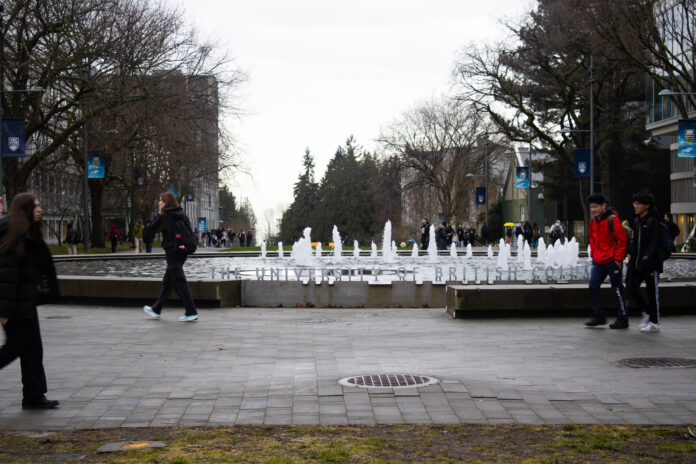
This is a photo of a large water fountain in the middle of a UBC courtyard. The fountain has the words “University of British Columbia” written around the outside. Students are walking around the courtyard.
PHOTO: Prerita Garg / The Peak

Editor’s Note: The Peak is in communication with UBC to include their statement in this article. A statement was not previously included due to a miscommunication between UBC and The Peak. Additionally, explicit attribution was added for Isber Sabrine’s comments in an Al Jazeera article.

By: Olivia Sherman, News Writer

The University of British Columbia (UBC) is leading an archaeological excavation in Israel during the summer of 2024, training students in field study methods and the history of the region. The program is in collaboration with the Hebrew University of Jerusalem (HUJI), which has received criticism for its treatment of Palestinian students, militarization of its campus, and retaliation against anti-zionist protests and sentiments. The summer program is led by Gregg Gardener, a UBC professor and alumni of HUJI. 

The Peak received a tip from an archaeology student enrolled at UBC, who discovered this program while browsing UBC’s field study courses. “I genuinely love going to school here,” the source said in an interview. They stated they are “disappointed but not surprised” with UBC’s involvement with HUJI.

“Given how much money and effort UBC has put into, at least on the surface, appearing to care about Indigenous rights and issues,” the student said it’s “egregious” how UBC is “failing to recognize the same systems of settler colonialism.” The student also noted how this “academic tourism” seems like “a really bad idea, that doesn’t seem safe for students, if nothing else. It’s an active warzone.” 

While Hamas, the militant organization that has governed the Gaza Strip since 2007, killed over 1,200 civilians and kidnapped another 240 — the Israeli government’s retaliation against the October 7 attacks have been condemned worldwide as a genocide against the Palestinian people. Over 25,000 civilians have been killed by the Israeli Defense Force (IDF), with many more wounded or missing. Survivors of the recent conflict, reaching 117 days at time of writing, are subject to starvation, infection, and brutality from members of the IDF. On December 29, South African lawyers launched a case in the International Court of Justice (ICJ) claiming the IDF is “genocidal in character” and that Israel’s actions breach the clauses of 1948’s Convention on the Prevention and Punishment of the Crime of Genocide. Several more countries have since defended South Africa’s claims in the ICJ, such as Bolivia, Colombia, Jordan, Malaysia, the Maldives, Namibia, Pakistan, and Turkey. The ICJ ruled that Israel’s actions could amount to genocide, and issued measures to prevent such from happening. The court ruling did not officially call for a ceasefire. 

One genocidal act being internationally reprimanded is the destruction and targeting of Palestinian cultural sites, the oldest of which dates back to 10,000 years ago. Nearly 200 sites deemed archaeologically, historically, and culturally significant have been destroyed since October 7. South Africa references these attacks in its lawsuit against Israel in the ICJ, stating “Israel has damaged and destroyed numerous centres of Palestinian learning and culture,” such as religious sites, museums, libraries, and other places of historical importance. The 1954 Hague Convention, which Israel agreed to, was meant to protect these sites in times of war.

“What is happening now is a war crime. It goes against the first Hague convention,” said Isber Sabrine in an interview with Al Jazeera. Sabrine is the president of Heritage for Peace, an international non-governmental organization that documents cultural heritage. “Israel is trying to erase the connection of the people with their land. It’s very clear and intentional. Gaza’s heritage is part of its people, its history. and their connection.”

This erasure took place far before October 7. Bilal Toprak, a faculty member of Duzce University in Turkey, has highlighted Israel’s intent to erase Palestinian heritage through an archaeological lens, using “archaeology as a weapon of colonization, denial, and erasure.” Efforts to erase Palestine’s history spans from British colonial rule to the 1948 Nakba, to current date. 

The anonymous student also emphasized the significance of the area, noting the many different intersections of cultures in the Bronze age, such as the Greeks, Mesopotamians, and Romans. “Palestine has some of the most interesting archaeological history in the world,” they said. “It’s the sites that aren’t being explored, it’s the sites that are being destroyed that we, as an institution, should be looking at.

“The Palestinian people have systematically had their culture and their heritage erased,” the source said, noting that the sites being destroyed could have told them more about the Palestinian culture other than being “occupied, terrorized, and brutalized.”

HUJI as an institution has also been accused of excessive militarization of the campus and academic environment and anti-Palestinian sentiments. A prominent Palestinian professor at HUJI, Nadera Shalhoub-Kevorkian, faced termination after she signed a petition campaigning for an immediate ceasefire in Gaza. The petition was published on October 26, and on October 28 the president of HUJI reprimanded her, stating in a public letter that “It is most appropriate that you consider leaving your job.”

UBC has also seen acts of anti-Palestinian sentiment on campus. Hillel BC is an organization for Jewish students across multiple campuses in BC, meant to promote religious, ethnic, and community belonging. However, stickers saying “I [heart] Hamas” were found across UBC’s campus. Hillel BC claimed in a social media statement that an “independent contractor” had put up these stickers, and said this contractor has since been fired. However, the stickers were originally falsely linked to UBC’s Social Justice Centre (SJC). Members of the SJC were subjected to bullying, harassment, and threats over these false accusations. SJC claims Hillel BC has not apologized for the incident. 

“It’s not just knowledge that’s lost, it’s these people’s ancestors and their ways of living. It’s just such a tragedy, and it really sucks that UBC’s actual archaeology program is partnering with a university that perpetrates this,” the anonymous student said. “Our learning [is] coming at the expense of people’s lives and culture.” 
 

Cancelling “The Runner” shows solidarity

0
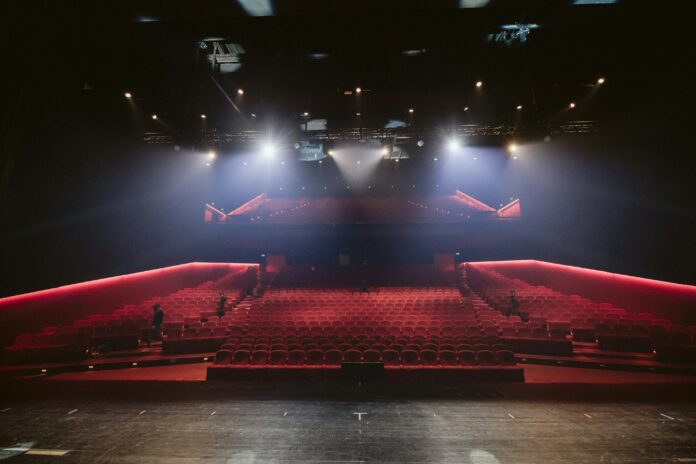
Photo of a theatre

By: Petra Chase, Arts & Culture Editor

Content warning: mentions of genocide.

On January 11, Vancouver’s landmark performing arts festival, PuSh, announced that The Runner, a play by the Montreal-based group Human Cargo, would be cut from their programming. The play tells the fictional story of an Israeli ZAKA (search and rescue) member who saves a Palestinian woman, creating contention in his community. While art that deconstructs prejudice is valuable, context is crucial. Platforming a story that depicts Israeli saviourism at a time when Israel is committing a genocide against Palestine can have dangerous repercussions, especially considering how western media misrepresents Israel’s war crimes as self-defense.

PuSh initially defended their inclusion of The Runner. The playwright and director Christopher Morris, stated the play confronts “fear and dehumanization” of Palestinians, and addresses the “need to see the humanity of others.” Fundamentally, though, coverage of such topics needs to be informed and guided by the communities who are systemically subjected to this dehumanization. UK-based Palestinian artist Basel Zaraa said he couldn’t agree to have The Runner show alongside his immersive exhibit, Dear Laila, at PuSh. Dedicated to his daughter, the exhibit reconstructs Zaraa’s childhood home in a refugee camp. His family story involves being exiled by Israel from Palestine in 1948. Zaraa’s lived experience as a Palestinian who cannot return to his homeland offers crucial insight into the experience of someone who’s the subject of The Runner’s moral debate.

As an organization who claims to commit to building “reciprocal relationships,” with Indigenous communities “on this territory and beyond,” PuSh should have consulted Palestinian perspectives earlier. The Indigenous communities of Palestine have lived in harmony with Jews, who also have ancestral ties to the land, long before Israel besieged Palestine. PuSh should have considered the example of Victoria’s Belfry Theatre, who had cancelled The Runner a week before, after a petition called it “a story of Israeli settlers in a dehumanizing exercise of whether Palestinian and Arab life is of value.” Whether someone’s life is worth saving shouldn’t be an ethical question. It shouldn’t have had to come to an ultimatum from Zaraa and further pressure from activists in order for them to finally make the call. However, PuSh still set a good example by listening to Palestinian voices and changing their minds, while being transparent with their community about it being a “difficult decision.”

Media representation is important because it influences how people see certain identities, and can perpetuate harmful stereotypes. Zaraa stated, “Palestinians appear in The Runner almost exclusively as perpetrators of violence. While the Israeli characters are vividly portrayed, the Palestinian characters don’t even have names, and barely speak.” Works that dehumanize Palestinians shouldn’t be viewed or platformed. Preventing this is crucial at a time when mainstream western media devalues their lives. 

Local activist Fatima Jaffer, who read through the script, provided insight into the perspective of the public rather than an artistic standpoint. Because a similar portrayal of Arabs and Muslims was used in post-911 rhetoric to spread Islamophobia and justify US wars in the Middle East, there needs to be a priority to “make sure Muslims, Arabs, and Palestinians are well represented” from the eyes of audiences who may have preconceived notions about Palestinians.

Furthermore, there is a misconception that cancelling The Runner was antisemitic. Antisemitism is prejudice and discrimination against Jewish people, and is unacceptable. However, antisemitism shouldn’t be conflated with anti-zionism, which means opposing the state of Israel’s illegal occupation. The Runner was not cancelled based on the Jewish identities of the characters or team. While Morris himself wrote The Runner to criticize Israel’s treatment of Palestinians, he also perpetuated negative representations of Palestinians. It is irresponsible to depict a story from the perspective of a ZAKA member, since ZAKA have systematically given false testimonies of the October 7 Hamas attacks to help justify Israel’s brutal retaliation. 

What stood out about PuSh’s announcement was it involved statements from both playwrights, Morris and Zaraa. According to fellow PuSh playwright Marcus Youssef, both artists are “extremely supportive of the PuSh leadership team,” which demonstrates a strong commitment to solidarity with artists.

The International Court of Justice case has announced that Israel take immediate and effective measures” to provide aid to the people in Gaza. It’s crucial that artistic platforms are being used to prop up narratives that promote a path to a peaceful and liberated future, by listening to Palestinian artists. Showing The Runner would cause more harm than good.

The SFSS is a political entity

0
Photo of SFSS office

By: Michelle Young, Opinions Editor

On January 3, the Simon Fraser Student Society (SFSS) held a Council meeting. At the meeting, an SFSS Councillor said, “We’re a student society, not a political entity.” A student society is inherently a political entity, and it always has been. 

Political entities can be understood as “systems of governing authorities.” The positions of the SFSS are elected by students and made up of a Council. The SFSS has a fair degree of power when it comes to policies that affect students. They implemented the pass/credit/no credit system that was used during the TSSU strike to help soften adverse effects on our GPA. They decide how student funding is distributed for student resources like our health and dental plans. That’s part of what political entities do. A student union is a political entity, and Councillors themselves are political entities by being in an elected position. Yes, their job is to “represent all students.” However, rather than being truly concerned with the representation of students, some members of the SFSS seem to be more interested in the idea of “neutrality.” 

The meeting notably covered the Issues Policy removal motion. Though it was rightfully met with condemnation — if passed, this would have effectively removed policies that supported reproductive rights, tuition affordability, disability justice, Palestinian liberation, anti-racism, and accessible and equitable events. The rationale for the removal of these policies would have been “to uphold the principles of political neutrality and ensure fair representation of all its members.” 

How does removing a policy that supports live captioning, open access to course materials, and access to “safe, publicly-funded health services” ensure the fair representation of all its members? It doesn’t. It only ensures that the people who need these things don’t get them. There is no neutrality because every political entity, who has the power to shape policy, has to decide their stance on a plethora of issues. No stance translates to no policy. We can already see this in multiple labour issues where there are few legal protections for gig work and the people in these professions are harmed. Lack of regulation is a pipeline for exploitation and discrimination.

The Issues Policies were made to explicitly “clarify the stance of the Society on social, political and economic issues relating to student life” and “serve as a resource and a guide to assist in the development of campaigns.” The SFSS should be thinking about equitable representation, and that doesn’t happen by taking away support of access to contraception, consultation with Indigenous students, and sign language interpretation for live events. 

SFU and the SFSS have a long history of radicalism: “SFU was one of the first Canadian institutions to have a Women’s Studies department” and a previous student activist even invited Martin Luther King Jr. to the university — and received a response. Neutrality only harms students who are frequently left behind: Black and Indigenous students who face racism at SFU, disabled students who cannot safely access the institution, and low-income students who face barriers to their education. It is important to have policies in place to protect and uplift these groups of people so they can have an equitable experience at SFU. Otherwise, these groups are left with little to protect their rights. If you cannot take a stance on anything, don’t enter politics. 

SFU graduates to engage in new field school on Sts’ailes territory

0
This is a photo of Sts’ailes Territory along the Chehalis River in BC.
PHOTO: Dru! / Flickr

By: Eden Chipperfield, News Writer

Graduate students from the faculty of environment will have the opportunity to live in the Sts’ailes community for four weeks as part of an upcoming field school experience. During the field school, graduates will have the chance to learn from the Sts’ailes People regarding knowledge about land stewardship, fisheries and forest management, eco-tourism, and more. 

The Sts’ailes band lives on the Harrison River in the Fraser Valley. Their traditional land “includes the entirety of Harrison Lake, Harrison River, Chehalis Lake, Chehalis River, the lower Lillooet River, the northeastern portion of Stave Lake, and the Fraser River between Hooknose and Queens Island.”

“We’ll be canoeing; we’ll be boating; we’ll be travelling around the territory. We’ll be doing a lot of the actual talking in the context of a ceremonial longhouse,” said Dr. Morgan Ritchie, manager of Heritage and Environment in the archaeology department, and adjunct professor at SFU, during an interview with The Peak.“That’s a nice way of grounding people in the territory and culture, some of the key kind of concepts are going to be Indigenous governance, health, and how health is connected to the land.”

A significant part of the field school is understanding education and teaching from an Indigenous perspective, particularly listening to the Sts’ailes community and those who took care of and governed the land far before the first settlers arrived. Students will hear perspectives from the Sts’ailes Nation and SFU professors who, throughout the time of the course, will be giving presentations within a ceremonial longhouse. 

The idea for the field school was initiated when Ritchie’s former supervisor, Dr. Dana Lepofsky, a distinguished professor of archaeology, brought their class to the Sts’ailes territory and began the initial dialogue between the Elders of the community and the Dean of Environment. From that conversation, a workshop was created to learn from Indigenous ways of learning. “There was this idea that it would be really valuable then to bring students out to kind of learn from the land,” said Ritchie. 

“Everything that people know about the land is [ . . . ] passed on from the ancestors who are now part of the land,” said Richie. “Anything you can know about the world around you, [your] beliefs and learnings, it should all come from the land and you should be attentive to that land.” Learning from the wisdom of the land, Indigenous Peoples understand the terrain, the changing ecology, and how to manage salmon sustainably, according to Ritchie. He explains that through the weeks in the summer, students will experience these teachings, visit ancient underground pit houses, and learn about the ecosystems that the Sts’ailes have shaped. 

The students participating in the experience will be staying in a recreation site managed by the Sts’ailes community. They will live close to the Sts’ailes River, and the distance from the study areas is a two-minute drive, explained Ritchie. 

On how the field school partnership contributes to Truth and Reconciliation, Ritchie said, “It has to be an ongoing kind of relationship. Still, I think reconciliation begins with greater awareness and understanding and appreciation mutually.” Ritchie felt it was important to have “young people, graduate students especially, that are going to go on to become biologists or land use planners or government employees or professors or teachers or anybody in society that has a bit of a voice,” to engage in this experience and create that deeper respect and awareness. “The fact that they’re interested in learning more and to put themselves in the position of the student to listen to community members share about what they know — I think that’s, in some ways, a humbling position to take.”

The evaluation of each student’s time will include weekly reflections, active participation, and a final project or paper that the student will select with the instructors and the Sts’ailes Nation.

STORYTIME: THE SPIDER IN MY BATHROOM HAS A FINSTA (part 2)

0
Youtube thumbnail with an influencer making an overexaggerated shocked face.
ILLUSTRATION: Alyssa Umbal / The Peak

By: C Icart, Humour Editor

Hi everyone! Welcome back to my channel! Can I get a little commotion in the comments for my new background? I wanted to make sure y’all could see my luxury purses. We’ve come a long way since I was filming these on my dingy bedroom floor. And I couldn’t have done this without all of you! My success is truly our success, even though my life has changed and yours has not. Can I get an amen (in the form of liking, commenting, and subscribing)?

Okay, so in honour of all the Sephora kids controversy, I will be doing my makeup as we jump back into what I personally think is the WILDEST storytime in the history of my channel. So grab your overpriced skincare and join me in pretending that my face looks like this now because of random shit I got in PR, and not because of all the filler and professional skincare treatments I get done.

Similarly, even though I only ever get my hair professionally done and I haven’t been spotted in public without extensions in years, today I will use my influencer status to convince you to buy — drumroll please — SOMETHING. SOMETHING is the solution to all your hair care problems. I’ve only used it once, and look! flips hair Irene would have nothing to say about these luscious long locks!  

Video switches to a clip of me on a different day. I look bored AF because I am. 

As much as I think I’d be serving Elle Woods realness in the courtroom, I’d rather not be involved in legal shenanigans. So, here’s my disclaimer: there is an ongoing lawsuit, and people have reported dealing with hair loss after using this brand.

Video switches back to the original setting, where I am definitely over-caffeinated. I had stopped by Panera for some lemonade beforehand. 

Use my code 40InchGate for 40% off the inflated price to feel like you got a deal! 

So anyways! Go watch my previous STORYTIME if you don’t know what this is about. I got a lot of comments of y’all agreeing with me about the burning down of my apartment, and I appreciate that! But I listened to my manager and did not sacrifice my living space to eliminate the spider that was terrorizing me. Instead, I did what I do best, I PUT THAT BITCH ON BLAST ON MY INSTAGRAM STORY. Cancelling is the new murder. Look that shit up, it’s in the criminal code. BTW this lipstick is soooo creamy. 

I already know everyone is going to be like girl what are you talking about you can’t cancel a spider. But I did! So, now what? I literally told the entire internet that that leggy bitch was monopolizing my bathroom. Because truthfully, if I wanted a shitty, inconsiderate roommate, I’d go back to undergraduate residence. Unrelated, but I think we should bring back 2016 levels of highlight to our cheekbones. Anyways . . .

Guess the fuck what. I know she saw that shit and I know she felt the shame. Because when I went back to my bathroom, SHE WAS GONE. You know what that means? Let me tell you what that means. It means— 

Video switches back to me looking bored. 

Okay, so, like, I had to stop filming because my mac and cheese got delivered and my therapist told me to always stop everything I’m doing for vegan mac and cheese. Like she didn’t say it in exactly those words but that’s the gist. Part three is coming soon I swear. 

Royalty-free outro music plays as I shove a huge spoonful of mac and cheese in my mouth.

SFU Alert: Transit strikes again

0
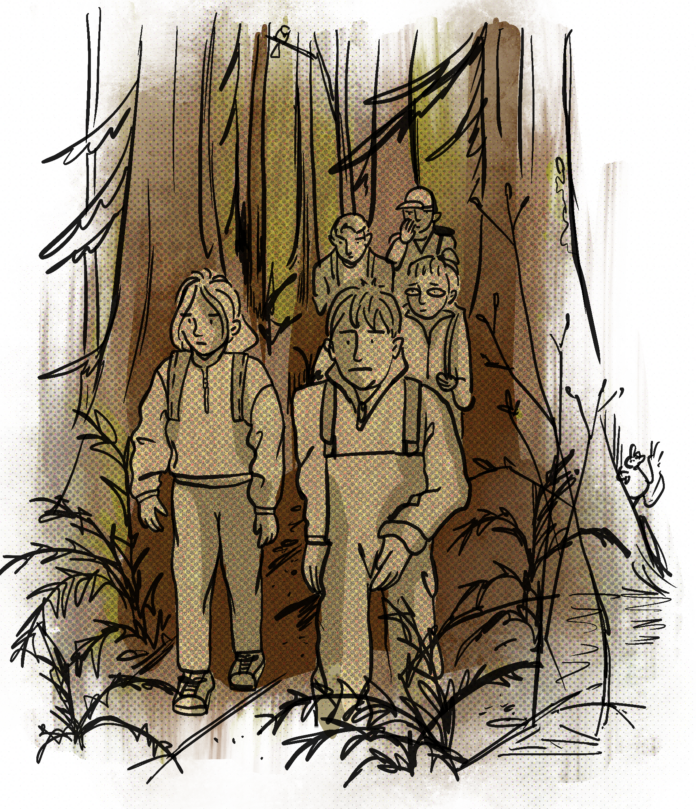
Large group of people hiking up Burnaby Mountain. They all look unhappy and tired.
ILLUSTRATION: Angela Shen / The Peak

By: Sonya Janeshewski, SFU Student

January 23, 2024, 8:20 a.m.: All students are required to join the hiking club in light of the transit strike

Students
If you are enrolled in at least one course for the Spring 2024 term, you are now legally required to join the SFU hiking club due to the transit strike. Given that students attending class at the Burnaby campus were already used to a lack of accessibility, no accommodations will be made. This fitness extracurricular aims to strengthen our students both mentally and physically and weaken them financially and geographically, as everyone who doesn’t live in residence will surely have dropped out by now. Those who remain will be rewarded for their efforts by receiving certain club perks (covered by fees added to regular tuition costs, but let’s not talk about that right now). These include those small SFU water bottles, club T-shirts that read “I Paid $1K For a U-Pass BC Card and All I Got Was This Lousy T-Shirt”, and complimentary custom hiking shoes for whichever figurehead we appoint as club leader. You know, the kind bougie enough that when you’re walking down the hiking trail, someone would stop and be like, “hey, cool shoes,” and you’d be like, “thanks, man,” and then you both sort of nod, at each other before awkwardly passing by. 

Instructors and Staff
Instructors are given a choice of how to proceed with classes, to either move lectures and tutorials online or remain in-person. However, we recognize this is quite a challenging time for all our students who rely on transit, and to that, we say we do not care. If there were a not-caring competition, we would be finessing it right now. Oh boo-hoo, there’s no bus available? No one can drive you to school? You don’t have a license because you were going to get one in high school but kept delaying it because you thought you’d just do it in college, only now you’re three years into your fifth SFU degree and don’t have time to schedule it between classes and work because you’re slowly going broke from taking five degrees and so you steal money from your job since they won’t notice anyway, so your situationship, Todd, kicks you out of the apartment because now you’re an insurance criminal? Well, that happens to everyone sometimes — literally not our problem. We don’t care how you get to class; we just charge you for it. 

As previously stated, instructors may choose to proceed with classes however they see fit. However, they are strongly advised not to inform their students of this decision until exactly 11 minutes and 56 seconds before class is scheduled to start. Not a minute more. If you don’t click send on that vaguely-worded email exactly 11 minutes and 56 seconds before class starts, you’re fired. I’m sorry, that sounded silly. We will actually fire you. Time is money, and we can’t just go around giving it away for stupid reasons like class attendance. 

Other Campuses: 

Surrey
The movie Cars said “life is a highway,” so remember that as you cross the many you will encounter to get to this campus. And while thinking of the movie Cars, try not to get hit by one.

Vancouver
The campus is near Waterfront station, so get some water down your front and just swim on over there.

My 2023 Wrapped was so wrong

0
Person with headphones looking at the different categories in the Spotify app on their phone.
PHOTO: Ivan Samkov / Pexels

By: Hailey Miller, Staff Writer

The end-of-year has come and gone, and we’re left longing for recaps and wrap-ups that were conveniently forgotten until we were graciously reminded of all that was put into the void of online data without a second thought. All those most-listened-to songs, shows watched, miles covered, and random orders made of things you forgot you purchased have nothing on the recap lack of accuracy. Are you even a tad bit surprised, or is this the 10th year in a row you’ve rolled your eyes? 

Do you really keep a running spreadsheet of how many times you listened to “Flowers” on repeat? Well, Spotify does! And so does YouTube, Apple Music, Amazon Music, and every other music streaming platform known to music fanatics worldwide. Let’s be real, us music lovers yearn for those recaps of forgotten playlists, top songs, and some random record having joined the mix that you never even listened to once. Shout out to the analytics department for messing with your taste in music. 

Although, I will admit they always get the top artists right — but that’s the easiest part! Spoiler alert, I could’ve already told you who my top artist would be on the first day of the year, never mind waiting for some random personalized year-end result to get to the point. Thank you, Spotify, for telling me my favourite artist has remained the same since the dawn of time. Really groundbreaking piece of information you’re giving me there. Still, I am victim to the outcome. I wait impatiently to see the stats that I already know exist, having stayed the same within the past 365 days when I last pretended to long for the previous year’s wrap-up. Anticipating the outcome is like an itch I can’t scratch — a moment to savour the satisfaction that solidifies what I already know, with the occasional added surprise of some song I’ve never heard before.

This isn’t my first song-streaming, playlist-partying, music-manifesting rodeo. I, for one, am a well-seasoned listener with a particular knack for vintage vinyl and CDs that were the Roman Empire of music before the music-streaming world came along and put a damper on the vibe. Go ahead, slap a nice, shiny bow on top of my wrap-up, but I already know the drill. Nothing irks me more than seeing a song I absolutely hate mistakenly placed on my recap list. Where’d you even get this defective data from, Spotify?

Look, we get it. Our phones are listening to us, TVs are watching us, and app wraps are spewing fake news. You signed-off on those app agreements without reading the conditions of coded encryptions embedded into every song, show, and purchase history as the recap gods have a heyday throwing in some stats that aren’t even remotely accurate. Their systems are curating your next party playlist and sad shower songs as we speak. Little do you know, you’re probably being charged for something you didn’t even sign up for but only realized once an unexpected recap popped up with an unnerving notification of a show you didn’t watch that charged an imaginary movie credit to your account. So, for the love of not giving a crap about some random recap, wrap it up already — like, really, go all out with a bow and an app deletion. My year-end playlist has nothing on my ever-changing daylists. Now that’s something that’ll never give a flying wrap!

Oma’s Bag by Michelle Wang heartens families grappling with dementia

0
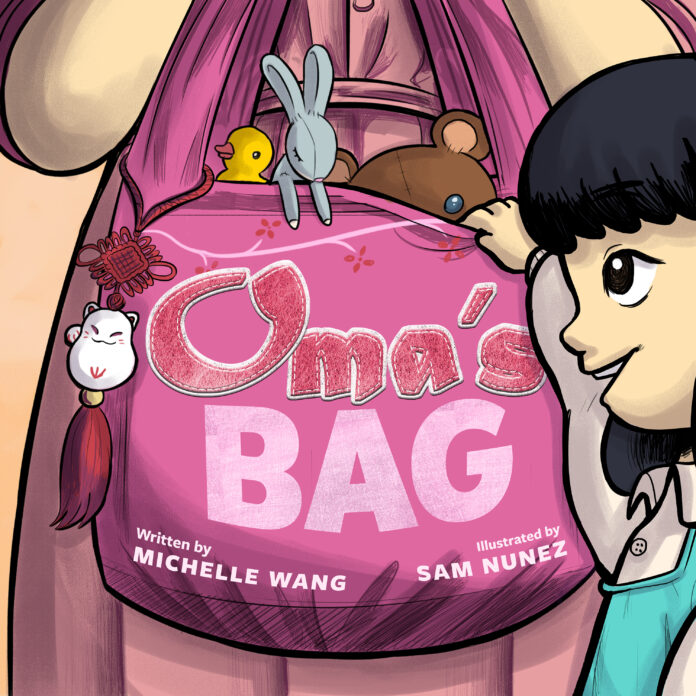
A book cover with an illustration of a child rummaging through a pink bag that holds stuffed animals.
PHOTO: Courtesy of Arsenal Pulp Press

By: Saije Rusimovici, Staff Writer

Content Warning: mentions of end-of-life illnesses.

Michelle Wang’s newest childrens’ book out in March, Oma’s Bag demonstrates that love and laughter can make a huge difference in coping with a loved one’s difficult diagnosis. This child-appropriate and approachable picture book follows a family coping with their grandmother’s dementia. Alzheimer’s and other dementia-related illnesses are difficult to cope with, and lost memories can make communication difficult and ultimately, cause grief.

The story follows five siblings (and their adorable dog) after their grandmother moves in with them. They are puzzled when things around the house start to go missing, until they find them all tucked away in Oma’s bag. Through the children’s eyes, we learn these objects have some sort of significance to their Oma. Instead of being afraid, the children use this as an opportunity to learn more about their Oma and spend more time with her doing the activities she loves.

Oma’s Bag was inspired by Wang’s mother-in-law who came to live with her family after being diagnosed with dementia. They noticed things were starting to go missing around the house, from eyeglasses to soap dispensers. When they discovered the items in Oma’s bag every night, she would share stories “which brought back so many beautiful memories” leading the family to “make wonderful new ones.”

“Even though it was difficult and heartbreaking, we were able to turn it into an experience full of love and laughter. It is this lightness and joy through our tears that I tried to get across in Oma’s Bag,” Wang told The Peak. 

Wang is an elementary school teacher from Toronto. “There isn’t a book I can walk past without picking up to read cover to cover, and I can’t help seeing a picture book story in every random event or moment I encounter,” Wang shared. Because of this, she was always encouraged by her mother to write a book of her own.

Having already released a series of children’s books, Wang felt she was in a unique position to tell her family’s story. Oma’s Bag is “a present” to her husband and children, turning a difficult experience into one “full of love and laughter.” The vibrant illustrations by Ontario-based artist Sam Nunez bring Wang’s story to life, reminding us that joy can be found even under difficult circumstances.

My great-grandmother was in her mid-80s when she was first diagnosed with Alzheimer’s disease. At the time, I was around eight years old. Even at a young age I recognized how difficult it was for my mom and grandmother, who became her primary caregivers. Wang told The Peak how her father-in-law felt his wife was “slipping away.” This is exactly how my family felt about great-grandma as we watched the disease change her. To connect with her, we would bring her some of her favourite foods, play Italian music, and do her hair. 

Oma’s Bag recognizes that despite the fact our loved ones change, they are still “completely with us in the present.” Wang emphasizes that everyday interactions make a big difference when connecting with our loved ones with dementia, helping to “keep old connections and even make new ones.” Wang writes, “I hope that families reading Oma’s Bag will be able to see themselves in these pages.”

The book also includes a collection of resources for talking about Alzheimer’s and dementia with children. You can pre-order the book online now, or get it in the spring at your local bookshop. I will definitely be purchasing the physical copy of this book to have on my shelf and share with my children one day!

Where the Light Meets My Shoulder centres Black curls in sunlight

0
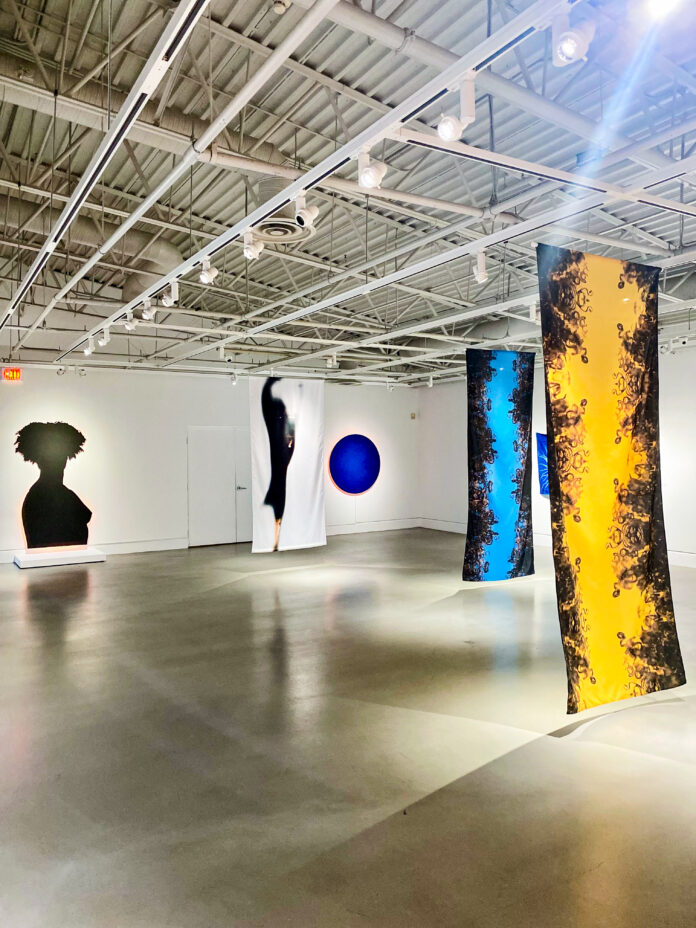
A gallery room with white walls, lots of empty space, and fluorescent lights. There are multiple large canvases of photographs featuring silhouettes of curly hair.
PHOTO: Pooja Singh / The Peak

By: Sofia Chassomeris, SFU Student

This week, I had the pleasure of viewing and experiencing the exhibit Where the Light Meets My Shoulder by local artist Rebecca Bair. The exhibit is available until February 11 at Evergreen Cultural Centre located next to Lafarge Lake-Douglas SkyTrain station, and admission is free! Bair is an accomplished interdisciplinary artist currently based in Vancouver, where she teaches at Emily Carr University. Making use of several different mediums, including “ephemeral materials like shea butter and sunlight,” the lens-based exhibit features symbolism of the sun, circles, shadows, and her hair.

I have a profound appreciation for Bair’s ability to captivate her audience’s attention, as I found myself drawn to the intricate lines of beautiful, curled hair centred in the exhibit. My favourite pieces were two cyanotypes — prints created using a process that involves exposing them to ultraviolet light and washing them in water to create a gorgeous deep blue colour. Opaque objects are arranged on top before exposure to UV light, leaving behind negative images that the light is unable to reach. Understanding the process of creating cyanotypes is important to Bair’s work as she emphasizes sunlight and shadows to depict her experience as a Black woman. Quoting Zora Neale Hurston, an American author and anthropologist, Bair resonates with Hurston’s depiction of the “voluptuous child of the sun” in her 1934 essay.

“I think of this often — referring to the Black body as the child of the Sun,” Bair wrote in response. “Rather than it being infantilizing, it opens doors to consider the ways in which the melanized body is possible because of the sun — that our heritage and connection is through its light. When I ‘collaborate’ with the sun, I am calling upon and collaborating with ancestors — those melanized before me.”

The two cyanotypes previously mentioned consist of imagery of the artist’s hair. The first features hair extensions that reach outward from a centrepoint, the circular shape created by the strands of hair reminiscent of the sun’s rays stretching across a blue sky. The second piece is a long braid of hair, coiled into another circle. This piece is reflective of Bair’s cultural symbolism of hair as a site of connection for family and community members, the braid representing the time and love put into its care. Both of these pieces are especially powerful when coupled with Bair’s assertion that Blackness is not simply darkness, and not at all an absence of light, but rather the absorption of it. We do not see the hair itself in these pieces, but an abstract representation of it, highlighting the equal importance of what is visible and what is not.

I highly recommend visiting the Evergreen Cultural Centre before the exhibit is over, as Bair’s work is both deeply touching and visually stunning.

I’m not a first-generation immigrant

0
Steamed dumplings on a steamer
PHOTO: Pooja Chaudhary / Unsplash

By: Izzy Cheung, staff writer

I’m not a first-generation immigrant. 

I was born and raised in Vancouver — this city is all I know. Both my parents grew up in Canada, learning English in school and Cantonese in households made tense with love. My grandparents only ever spoke Cantonese and Cantonese-muddled English, their pens scratching characters that don’t always resemble an “I,” a “love,” or a “you.” They were first-generation immigrants, the ones who fought more than just the rough waters of the Pacific Ocean to give their descendants better lives despite already being deep into their own. They were first-generation immigrants, but so is my dad, who moved to Vancouver with his parents at the age of ten. If that’s the case, then what am I?   

I’m not a first-generation immigrant. I wasn’t fast asleep when the keys jingled as my parents opened the front door for the first time since they’d left for work, the open-and-shut in a rapid motion that refused to disturb their child’s slumber. As a kid, while my mom was off crunching numbers in a cubicle, I stayed at my grandma’s place. There, my Paw-Paw would attempt to teach me basic words and phrases in Cantonese while feeding me homemade yu bing (fishcake). At the start, I obliged, paying no mind — food was food, and while it took me a while to consume it, I’d digest it all the same. As I grew slightly older and started to develop more of a mind of my own, I began to develop a distaste for some of the foods of my culture. I didn’t like the taste of fish, and even now, it’s still something that makes me gag. It’s just not something I can control. Because of that, grandma’s lovingly-made har gow (shrimp dumplings) lunches became egg and cheese sandwiches. Neither meal lacked love, but there was still a clear favouritism. It took me until recently to realize that these lessons weren’t meant to change me — they were an effort to preserve the culture while it was still alive. 

I’m not a first-generation immigrant. Understanding the words of those who came before me is like trying to solve a puzzle while blindfolded. It’s different: growing up being spoken to in a language, compared to speaking a language growing up. I have a Chinese name, but I’ve never actually been called that name by anyone other than my parents on the day I was born. It’s like that, in a way, trying to understand what you’re being told. You can try all you want, but recognizing cheong fun (rice noodle roll) as a dim sum dish is different from being able to order it the way your father does. Only eating sauceless rice and plain chow mein at dim sum is also different from the way your father enjoys this rich and bountiful culture. It turns you into what relatives may call a hoeng ziu (banana), a term known all-too-well by Asians who find more comfort in mac and cheese than lo mai gai (sticky rice chicken). Listening is different from understanding. 

I’m not a first-generation immigrant. It was shocking to my parents when I devoured xiaolongbao (soup dumplings) at dim sum one day. “You’re eating something other than chao fan (fried rice),” they remarked, equally as surprised as they were pleased. There were still staples of Chinese food that I enjoyed, of course, but they often didn’t extend out of that tiny bubble I created. They were specialty items that I didn’t eat often outside of Lunar New Year celebrations and the occasional family dim sum gathering. Like placing a drop of ink in a vat of water, it was a small change with an immediate impact. It’s indicative of a shift, the volta in the poem of my life. While the home of mine and my family’s culture becomes less and less of a home to me as time keeps me confined, there are still small actions I can take to push myself back across the Pacific Ocean towards where my family is from. Guilt is an elixir that poisons the user. 

I’m not a first-generation immigrant. I’ve always thought my parents were. Their lunches with friends were burgers and fries, while their dinners were made up of sticky rice and soup dumplings. As I watch them now, finding comfort in takeout dim sum dishes and sharing secrets in the mother tongue (one I can only ever hope to understand), it hits me — they weren’t first-generation immigrants either. The conditions of their upbringing, while different from mine, reflect my conflicts in reconnecting with my culture. Except, unlike myself, they’ve successfully integrated their lives in Canada with faded photographs of a country that none of us have truly ever known. Understanding comes with experience, which is something that can’t be manufactured by someone who hasn’t been there. As much as I try, it’s hard to truly grasp the culture that was once so prevalent within my bloodline. It’s a bittersweet feeling, having story after story published in newspapers in English when I know that it’s a different language that brought me to where I am today.