Home Blog Page 134

Paige Jung’s murals are community portraits

0
“Hate to Hope” a heartwarming mural of an elderly woman looking upon the younger generation, reaching for and catching stars — a symbol of hope. It invites eyes to a vivid mountainscape and clusters of local flowers meant to represent “growth, endurance, and peace,” that seem to sprout right from the wall. An opaque night sky contrasts with pastel landscapes and clothing.
PHOTO: Courtesy of Paige Jung

By: Saije Rusimovici, Staff Writer

Walking past Larry’s Market in Chinatown, your eyes will be drawn to the green-painted brick wall spotted with bright fruits and vegetables designed by illustrator and muralist Paige Jung. The Chinese Canadian artist’s murals can be found in the nooks of “so-called” Vancouver, attracting passersby with vibrant colours and thoughtful use of space. Jung’s murals inspire a feeling of connection and community, using geometric shapes and juxtaposed hues. Each mural tells a story of community bonds. The artist’s client list includes BC Housing, Daily Hive, Fairtrade Canada, and Anthropologie

Last year, Jung created a stunning mural outside the Britannica Ice Rink commissioned by BC’s Office of Human Rights Commissioner for the Vancouver Mural Festival. The mural, titled “Hate to Hope” (pictured), is a heartwarming depiction of an elderly woman looking upon the younger generation, reaching for and catching stars — a symbol of hope. It invites eyes to a vivid mountainscape and clusters of local flowers meant to represent “growth, endurance, and peace,” that seem to sprout right from the wall. An opaque night sky contrasts with pastel landscapes and clothing.

Jung was contracted to paint her first mural in Chinatown for the Vancouver Mural Festival in 2021. “I learned a lot of different techniques through other experienced muralists,” she told The Peak, describing the art of mural painting as “a learning journey.”

Resilient Chinatown” was painted for the Black Strathcona Resurgence Project “to reclaim visibility and reconcile erasure and systemic racism endured over time by Black people in Vancouver” as well as bring together shared stories and a sense of community between Black, Chinese, and Indigenous people in the Strathcona area. Against a light-pink backdrop, the piece features hanging lanterns, oranges, plum blossoms, and portraits of a wide age range of people of Asian descent as an ode to “their stories of perseverance, endurance, healing, and hope.” The portraits honour the resilience of the Asian community, and Jung’s aim was to make them feel “represented and seen.” The collection of soft colours is easy on the eyes and transports onlookers to a joyful springtime. 

This mural took Jung 14 days straight to paint and will always be her favourite. Not only was it the first mural she created, but she fondly recalled having “so much support from the community,” and bonding with the locals. 

Jung also has a collection of her works on her website, from tote bags, to stickers and greeting cards. I especially enjoyed the selection of art prints available for purchase. Artworks from the “Have a Seat” series are my personal favourites, nostalgic of summer, travel, and slow living. Each piece is crafted in Jung’s signature style with soft, inviting details that invoke the same sense of community, joy, and belonging as her murals. 

“Public art is such an important vehicle to help communities feel seen, heard, and represented,” said Jung. “It also has the power to bring awareness to important ideas, and amplify the stories of communities, who historically have been marginalized or not given space.”

You can follow the artist on Instagram (@paigejung_) or visit her website to learn more about the different murals she has created and shop her online collection. 

Poilievre’s bathroom debate comments dehumanize trans people

0
A gender neutral washroom
ILLUSTRATION: Alyssa Umbal / The Peak

By: Olivia Visser, Copy Editor

Content warning: mentions of transphobia, sexual assault, violence, and death. 

Conservative Party of Canada (CPC) leader and electoral candidate Pierre Poilievre has resonated with reactionary right-wing voters since he first gained popularity in the public eye. A great deal of his campaign has been spent making ill-spirited remarks about Prime Minister Justin Trudeau, Indigenous communities, and 2SLGBTQIA+ people. Most recently, he’s been under fire for making transphobic statements about children and athletes. 

On February 21, Poilievre told reporters that “female spaces should be exclusively for females, not for biological males.” His choice of language is no coincidence. Referring to trans people as their assigned gender is not just stigmatizing — it erases the identities and experiences people have fought hard to bring acceptance to. Of course, his message is even more troubling than his language. 

Trans people have been the subject of multiple moral panics for decades now, with the bathroom debate being at the forefront of discussions. The idea that trans folks are somehow more likely to commit crimes in a bathroom than cis people is not just unfounded — it’s actually the opposite of what is true. Trans people are far more likely to be victims of violent crime than perpetrators. One study found that 36% of “trans and non-binary students” with “restricted bathroom or locker room access reported being sexually assaulted” in a 12-month period. The bathroom debate falsely labels trans people as sexual deviants, causing extensive harm to already stigmatized communities. Proponents may claim they aren’t transphobic, yet worry about cis men “pretending” to be trans to infiltrate women’s spaces. This has been disproven so many times that the argument is negligible. Moreover, why should trans people take the blame for cisgender sexual predators? These offenders should face consequences, but they have nothing to do with your average trans person, nor are they significant in number. 

The bathroom debate largely revolves around ideas of “protecting” school-aged children, but it is precisely this demographic that bathroom bans end up harming. This February, Nex Benedict, a trans teen in Oklahoma, was violently attacked in a girls’ bathroom. The next day, he collapsed at home and died later on in the hospital. Police are currently saying Nex’s injuries were unrelated to the cause of death, which is yet to be determined. However, the correlation is hard to ignore. Regardless of the cause, this event is undoubtedly related to Oklahoma’s bathroom ban, which denies trans people the right to use the bathroom they identify with. Nex was bullied extensively for being trans, and forcing him to use the girls’ bathroom was beyond dangerous and unjustifiable. He deserved better. Protecting children includes trans children, and we are failing them by even considering bathroom bans. 

Poilievre either doesn’t recognize or willfully ignores that restricting trans people from their preferred bathroom leads to violence — not the other way around. The debate doesn’t just include gendered bathrooms, either. Some parents have expressed concern over an increasing number of gender neutral bathrooms across schools in Canada. Gendered bathrooms are generally outdated, lack privacy, and can exclude non-binary folks. Alternatively, Simon Fraser University has gender neutral bathrooms on the bottom floor of the Student Union Building. The space has multiple large single stalls with doors that extend down to the floor, and thick walls that reach the ceiling with no gaps. The privacy is better than what’s found in most public restrooms, and is certainly nothing to complain about.

An electoral candidate is the last person you’d want to see pushing baseless, fear-mongering rhetoric. Yet, it’s unfortunately and unsurprisingly on-par with Poilievre’s strategy, among many other Conservative party members. Amid his hubris, he also forgets trans people aren’t a monolith. To assume the Conservative voting base has no trans folks or allies is ignorant in itself, regardless of your political views. Hannah Hodson, a trans woman, is a former CPC candidate who expressed disappointment with Poilievre’s recent remarks. “What he has said today just further extends the idea that trans people are predators,” she told CTV News. It’s clear Poilievre has decided to appeal to his most extreme supporters, which involves tossing aside any and all remaining 2SLGBTQIA+ voters. His popularity should concern anyone who cares about equity, considering he currently has 40.6% of public support, compared to 23.8% for the Liberals and 21.9% for the NDP. If nothing changes, we can expect to see a Conservative majority government in 2025.

If you have the capacity to vote in the upcoming federal election, don’t convince yourself that your vote is unimportant. Research tells us young people are generally less likely to vote, but they also have significant voting power. Young people in Canada make up 40% of the federal vote, which is enough to sway an election. Remember that your employers are legally mandated to provide time off work to vote, and you can apply to vote by mail if you’re unable to visit a polling station. The deadline to apply for a mail-in ballot for the federal election will be released once the election is called. Your vote holds power, and can make or break equitable policies in Canada. 

What Grinds Our Gears: Talking in class

0
A group of students talking in class
PHOTO: Yan Krukau / Pexels

By: Petra Chase, Arts & Culture Editor

I’ve had enough with students talking during class. No, I’m not bothered by asking for a pencil or page number — what makes my blood boil is students having full-on conversations while a teacher is giving a lesson. Unfortunately, my cutting glares haven’t accomplished much to stop this tribulation, except get my nervous system even more riled up. So, here’s to those who haven’t gotten the hint.

Look, I failed physics in high school, but even I know sound travels. You must be completely oblivious if you think your discussion doesn’t trickle down the rows in front of you. Also, dropping an octave isn’t the same thing as whispering — it actually makes your voice more distinct, with every voice crack delivering to every ear. Most of us didn’t trek all the way up the mountain to listen to you whine about how your latte is too milky. We came to learn, but that’s difficult with sounds coming from multiple directions, or worse, people trying to rope you into a conversation while you’re clearly trying to take notes.

I can’t think of any other scenario where having a separate conversation while someone is directly addressing you is acceptable. I genuinely want to know why some people come to class. Why not just start a podcast? At least then we won’t be forced to listen. Put yourself in your instructor’s shoes — you’re standing in front of a room of students whose eyes are glued to their devices . . . watching The Bee Movie. It’s another level of disrespect to have students so blatantly uninterested by laughing with the person next to them. The audacity I’ve witnessed is remarkable. I’ve seen students talk over other students sharing their insights or asking questions. This makes me nervous to raise my hand in class.

To all instructors: I wholeheartedly support you in calling these people out, if not for your sake, then for your students. And while you’re limiting distractions, feel free to ban Axe body spray.

Cartoons can be lighthearted

0
Moomin walking through flowers
PHOTO: Courtesy of Dennis Livson & Kindernet Entertainment Ltd

By: Michelle Young, Opinions Editor

Often, we might turn to teen or adult dramas in favour of complex stories and mature themes that resonate with older audiences. Some series, like Avatar: The Last Airbender, stay with us forever due to their emotional impact. As we come back to these series, we often have a deeper appreciation for their themes or complexities. There are countless series that have been praised for their duality of being enjoyed by both kids and adults. Typically, the argument goes that certain children’s series tackle serious issues — like racism or family life in The Proud Family and Arthur, and therefore, adults can take something from these messages, too. The assumption that themes like kindness or friendship are automatically too dull to be enjoyed by adults is flawed. Children’s series don’t need to have endless layers of depth to be entertaining. 

As a child, I loved watching TV. One of my favourite shows was Pingu, a stop-motion animation from Switzerland about a mischievous penguin living in Antarctica. Typically, an episode features Pingu trying to play and avoid his chores — sometimes with consequences. He spits out his vegetables in the toilet and cries at inconveniences. The series is chaotic, but it’s hilarious and relatable how Pingu can represent our most childish desires. There is no deeper or hidden meaning, at its heart Pingu is just trying to teach kids responsibility, and it’s still enjoyable. In high school, I binged Shaun the Sheep, another stop-motion about animals, but I had a hard time getting my friends on board.   

Throughout the pandemic, I’ve visited numerous children’s series as a form of relaxation and escapism. No real action, drama, or violence. I watched the first two seasons of Onegai My Melody — a Japanese series about stuffed animals coming into the real world to protect their dreams. There seems to be an endless hole of memes and video essays analyzing “The Stigma Against Hello Kitty Girls” and why “Everyone Hates Sanrio Girls.” This refers to an “attractive but emotionally unstable and potentially violent” girl who likes Sanrio or Hello Kitty merchandise. While there can be countless explanations for the rise of this judgement toward girls — such as sexism and mental health stigma — it also stems from being unable to believe that adults can enjoy innocent things aimed for children without some underlying meaning. While there have been countless valuable and scholarly cultural analyses of the love of Hello Kitty and other Sanrio characters, it also shouldn’t be too difficult to believe that people like something because it brings them joy, and that’s all it needs to do. 

With a sharp rise in reboots, many shows that were originally aimed toward children are trying to appeal to those same audiences, who have now become adults. While there’s nothing really wrong with that, it makes me wonder why there is a push to make something “more mature” so older audiences can enjoy it. The Proud Family reboot was criticized for mixing adult jokes with children’s humour, giving the impression it didn’t know who its audience was. As an adult, I don’t care for “adult humour” or mature plotlines all the time. Sometimes, I just want to escape adult life and jump into a world filled with stuffed animals.

Recently, I’ve started watching the Japanese ‘90s adaptation of Moomin, a series about round trolls who live in Moominvalley, where almost everyone is understanding of those around them, and the characters lay around to enjoy nature. I love being able to sit back and take a break from serious issues for a small chunk of my day. While there is lore and hidden messages slipped into the series, along with parallels to the author’s life and relationships — you don’t need to dig deeper if you don’t want to. Just like the other series mentioned, you can enjoy Moomin for what it is without doing any hardcore analysis. As I get older, I see more value in these kinds of series and actively seek them out. Adult life can arguably be more stressful and demanding than childhood, but shows like Moomin and Onegai My Melody allow us to delve into what it felt like to be a child — which is even more of a reason to be open-minded toward series aimed for children. 

Children’s series don’t need to be complex or particularly thematic to be enjoyable. They don’t need to be justified — they can be silly, cute, light-hearted, and we can still love them for being just that. 

SFU professor discusses risks of hypervisibility for Black trans community

0
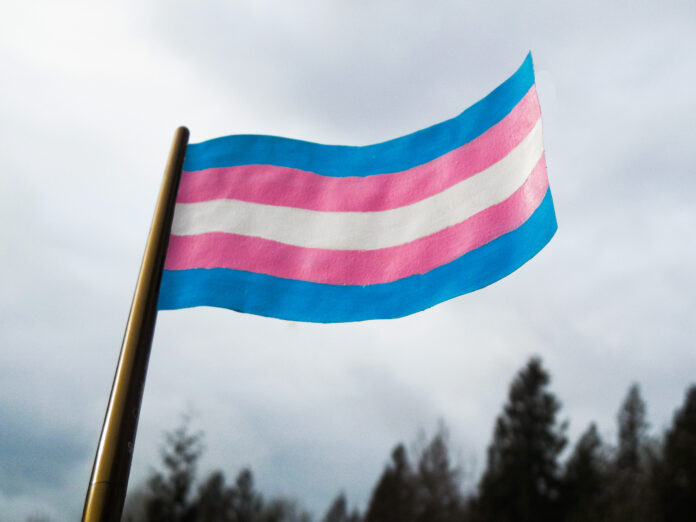
This is a photo of a trans flag on a flagpole outside.
PHOTO: Shirlyn Zobayed / The Peak

By: Olivia Sherman, News Writer

Content warning: Racism, transphobia, sexual harassment, and violence.

Dr. Victoria Thomas is an assistant professor of media, communication, and public engagement in SFU’s School of Communication. Her research primarily focuses on the hypervisibility of different genders and sexualities, particularly the representation of Black trans women in media.  Her newest seminar, Transformative Justice: A Revolutionary Praxis for Reducing Anti-Trans Sentiment, examined these ideas. 

Thomas started her lecture discussing the state of visibility for trans women in media. She started by addressing trans actress Laverne Cox’s debut on the cover of TIME magazine in 2014. This was an act Thomas described as the beginning of a “new civil rights frontier.” While this initial visibility was beneficial for introducing the world to trans rights and issues, it quickly led to hypervisibility. Thomas estimated that by 2020, there was “proliferation of lots of trans women” in the media. 

She explained, “hypervisibility doesn’t necessarily equate to something good.” Thomas noted a connection between an increase in Black trans women being on the covers of influential fashion magazines, like TIME, Sports Illustrated, and Vogue, and an increase in anti-trans laws and bans in the United States. She quoted Ahya Simone, a singer-songwriter, filmmaker, and Black trans woman from Detroit, Michigan: “Hypervisibility doesn’t always mean that people are safer. Hypervisibility can also make us vulnerable to violence.” 

Harmony Rodriguez, a writer and editor for Black Girl Dangerous, explains hypervisibility of trans women can lead to scrutiny and an increased exposure to violence, especially for trans women of colour. Considering the population of Black trans women is fractionally small compared to the overall US population, hypervisibility can make them a target. Black trans women are at the forefront of violence, unemployment, incarceration, and houselessness in the United States due to marginalization and hostile political climates. Thomas described this intersectional violence against Black trans women as transmisogynoir, accounting for misogyny, anti-Black sentiments, and anti-trans sentiments. 

Thomas explained the case of Kelly Stough, a 36-year-old Black trans woman, who was shot and killed by a pastor in 2018. The pastor, known for soliciting Black trans women for sexual favours, received an eight year prison sentence in 2023. “We have a system that is, once again, telling trans people that not only will we make it hard for you to live, but if you die, there are no consequences,” said Thomas. Judges and politicians interpret the law, but “they can only work within the system they are given.” 

Thomas also cited a culture of vigilantism that creates paranoia surrounding trans people and communities. “One thing that hypervisibility has done is create this monolithic representation of trans women,” which people often act on. “A lot of the policing occurs if a person doesn’t neatly fit into what you think a man or a woman should do.” 

She cited an incident in Kelowna, BC, where a man interrupted an elementary school track meet to demand a nine-year old girl take off her clothing to prove she wasn’t trans. While this particular child was cisgender, Thomas said this culture of vigilantism was to blame for the man’s behaviour, as he decided to police what he thought a girl or boy should look like. 

This is where the concept of transformative justice comes into play. “The state has proven time and time again that they don’t have the resources, or they don’t have the actual power to effect real change [ . . . ] so, we have to build alternatives to these systems.” Transformative justice is an approach for responding to institutional violence that doesn’t rely on the government, while emphasising “healing, accountability, resilience, and safety for all,” according to the resource hub Transform Harm. Thomas said donating to organizations and initiatives to help Black trans women is vital. She mentioned QMUNITY, a resource centre for BC’s queer, transgender, and Two-Spirit people, as a source of donations and learning. 

“You are either a part of the problem, or part of the solution,” Thomas said. “Neutrality is not accountability.”

Expert analyzes the rise of right-wing ideology in Europe

0
This is a photo of numerous European flags on flagpoles outside.
PHOTO: Antoine Schibler / Unsplash

By: Olivia Sherman, News Writer

Kurt Hübner is the chair of German and European studies at the University of British Columbia. His lecture with SFU, Europe on the Brink: The Rise of Right-Wing Populism, discussed the rising trends of right-wing ideology in Europe and some of the reasons these ideas and values are on the rise.

“Something is changing,” Hübner explained. “And it’s happening simultaneously: not in one country, but many countries in Europe.” 

The concept of populism is, as Hübner explained, the idea that “society is separated into two homogenous groups: the ‘pure’ people, and the elites.” This group of elites aren’t necessarily in positions of political or economic power. As long as “you have a distinction between ‘them’ and ‘us,’” Hübner said, populist ideology is present. 

According to Hübner, right-wing populists believe the outside group of elites are “causing all the problems,” and their goal is often to “protect the interests of the white, homogeneous, group of citizens in your country.” This is why many of the people deemed as an “other” in this equation are people of colour and marginalized members of European society, such as immigrants and refugees.  

Hübner described the concept of a “polycrisis,” where so many problems are happening simultaneously, and it creates a sense of stress on people and their governments. This stress can lead people to “find fast and easy answers” within political parties and ideologies that seemingly answer any problems that arise. These are the right-wing populist parties Hübner speaks of, who “claim to speak in the name of the ‘pure’ people, and they identify the causes or the problems [ . . . ] that are produced or caused by the elites,” such as issues with the economy, migration, climate change, and the ongoing energy crisis in Europe. While “democracies are dying slowly,” these autocratic parties are growing in number and in support. 

An example of this, Hübner explained, is Sweden’s stance on immigration. Sweden introduced “extremely harsh laws” that restrict “any kind of refugee status” for newcomers to the country. Refugees are aware of this, Hübner said, and apply for asylum elsewhere. 

“It’s also this kind of policy of, ‘We keep us safe, we keep our interests safe, we build this kind of wall around us, and others have to deal with the problem’ [ . . . ] that’s very much the policy of these rising populist parties.”

Hübner used the example of Germany’s Alternative for Germany party, a right-wing political party that originally stemmed from its stance against the euro as Germany’s currency. In recent years, the party has taken an increasingly right-wing and militant approach against immigration. The bloc has a current electoral sitting of 22% in Germany. 

About half of the global population has the opportunity to hand in their vote in an election,” in 2024. “I try to make the case that you don’t need those right-wing populist parties in government [ . . . ] I don’t think Europe is on the brink, but what I try to show you is that it’s moving toward it.” 

Pitching technical difficulties

0
A bored team on Zoom, watching their boss get their hair done while staring blankly at the screen
ILLUSTRATION: Jill Baccay / The Peak

By: Hailey Miller, Staff Writer

On a not-so-typical Thursday morning that quickly turned into an afternoon, staff members of The Peak sat down like any old day for their weekly online pitch meeting . . . but this time, with no Editor-in-Chief (EiC) in sight. 

Pitching shenanigans are supposed to start promptly at 11:30 in the morning, and end around noon, as they do any other Thursday. But, as you can probably tell, this wasn’t exactly close to any other Thursday. Us staff writers and editors eagerly logged in to our work accounts to get our pitch fix on and scoop up our must-have weekly quotas! To our surprise, we were greeted by a screen full of blank boxes with everyone’s names except for one. The most important of them all . . . drumroll please . . . the EiC! For someone whose job revolves around pitching punctuality, our boss clearly had more important priorities. 

Nevertheless, like the good employees we are, we waited. We sat in silence. Devices muted, screens turned off. We twiddled our thumbs, staring at blank spaces of walls and windows to pass the time. Of course, none of us were bold enough to turn on our mics and ask where Ms. Boss was, or even poke her in the group chat, like she always does for anyone who needs a little reminder. What a silly goose!

Finally, after what seemed like an eternity of silence, she showed up . . . on her phone, with the crappiest reception possible. And where exactly might she be joining the virtual meeting from, you ask? Well, none other than the hair salon, obviously! With bleached hair and her head still in the sink, us staff couldn’t hear a damn thing from her phone speaker as she began to justify her whereabouts and the superior importance of getting her hair done before heading off to this year’s student journalism conference that weekend. Okay, little mermaid! I guess, in that case, we’ll let it slide since she’s gotta look snazzy with some nice, new hair to show off and stand out as she represents our entire work crew at the national conference. And, I mean, we are talking bright red hair, people! 

So, the EiC  was late to her own meeting after spending countless hours in the salon chair with enough technical difficulties to give a vintage computer a run for its money. She was so muffled, we wondered if her phone was being rinsed in the water alongside her hair. Once she figured out we couldn’t hear her, the entire meeting was, therefore, dubbed to be typed in chat. 

So, anywho, we are now on a tight schedule, and the meeting’s barely started. As is every old Thursday, the EiC can’t get by without a burning ice-breaker question to kick the meeting into gear. By this point, we’re all half asleep but had to answer a question so bizarre we hardly remembered it as it left her mouth. Then comes the sports editor’s time to answer, but once again, we hear . . . silence. Dead air. A blank screen. Nothing in the chat, either. Do we not get the dignity of a response from . . . anyone

Our news editor barely finished the last sentence of her weekly pitches and had to dip out faster than it took to get the meeting started since it went so far overtime it clearly ran into other pressing priorities. We had taken it upon ourselves to attempt to turn our mics on to speed up the process, but between technical difficulties and audio cutting out, this hot mess express went from bad to worse in one click of a page refresh. 

Half the pitches weren’t even brought up in what turned out to be a very unproductive meeting since the EiC’s muffled, half-working phone could not type out list after list of pitches. Did we actually have section editors or were they blank screens? Was our EiC replaced with a 15-year-old rockstar who forgot she was, in fact, our boss? Fashionably late, as always! What a diva. 

Between figuring out who should speak up, to who should unmute, to who couldn’t even see the screen or use the chat, and finally, to those of us who just sat there in silence, this meeting was a shipwreck from start to finish. The chaos ensued from the late minutes of the morning to the overtime we didn’t get paid for far into the wee hours of noon! We were truly in the trenches. Maybe next time we’ll send her a little poke in chat!

The EiC of The Peak was found running away from the pitch meeting, clutching the editors. Will we ever see her again?

Metrotown munchies

0
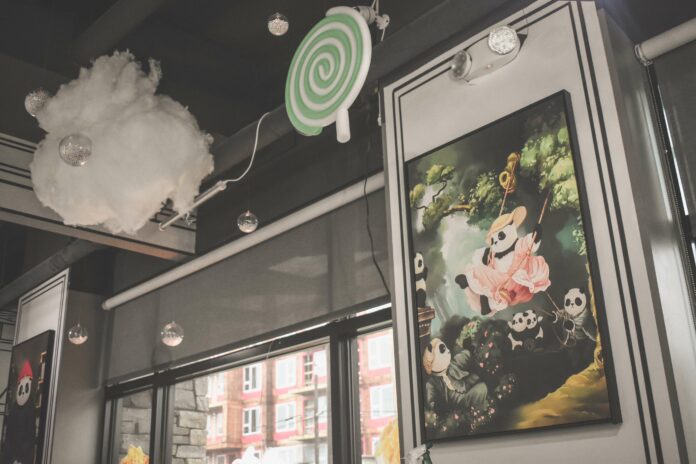
The interior of Something Sweet cafe featuring cotton cloud decorations and a sophisticated painting of a panda.
PHOTO: Amrit Kamaal / The Peak

By: Amrit Kamaal, SFU Student 

Stuffies
4820 Kingsway / $1–10 per person

Located inside Metropolis at Metrotown (with locations in Surrey and North Van, too), Stuffies is the perfect place to grab a quick treat, or ten. This modern Korean pastry café offers various animal-shaped treats, available in gluten-free and vegan options as well. Their viral cro-tai is a crispy, fish-shaped croissant with a choice of sweet or savoury filling. It’s derived from the words “croissant” and “taiyaki,” which is a pastry in the shape of a tai fish. Their bear-shaped waffle bite stuffies are their signature treat, filled with custard and served with or without a sprinkle dip. Their merchandise collection features all the essentials: tote bags, reusable coffee mugs, and the fluffiest teddy bears ever. A Stuffies’ rectangular water bottle is an essential staple in my backpack, as it fits between my textbooks. It is simply im-paws-ible to walk away from this bakery empty-handed. 

A row of cro-tai croissants, which are shaped like fish and filled with cream
PHOTO: Amrit Kamaal / The Peak

Something Sweet
6888 Royal Oak Ave #101 / Mains $10–20

Something Sweet is a hidden gem located near the Royal Oak SkyTrain Station. This location features a vast menu selection, from egg sandwiches, soup, and egg waffles, to crêpes and bingsu (Korean shaved ice). It’s a perfect place to get a quick meal or a sweet treat with your friends. If you’re a fan of pandas, you’re in luck! The menu also features a delicious, special boba drink called hello panda with a little panda on top. Something Sweet’s whimsical, yet calming vibe can be attributed to their hot air balloons hanging from the ceiling and many panda portraits (my personal favourite is the Panda Lisa). 

A waffled and bingsu on display.
PHOTO: Amrit Kamaal / The Peak

Mon Paris Patisserie
4396 Beresford St. / Mains $10–20

Located right across from Metrotown SkyTrain Station, Mon Paris Patisserie is a cozy Parisian bakery perfect for catching up with a friend. This bakery features a variety of baked goods, ranging from their viral croissants and macarons to the best chocolate bon-bons ever. Displayed are treats for special occasions, or for yourself. The best birthday gift I got was a chocolate Louis Vuitton bag. If you want authentic Parisian pastries but can’t afford a plane ticket, this is the second-best option!

A large selection of macaroons.
PHOTO: Amrit Kamaal / The Peak

SFU community members awarded for their media presence in 2023

0
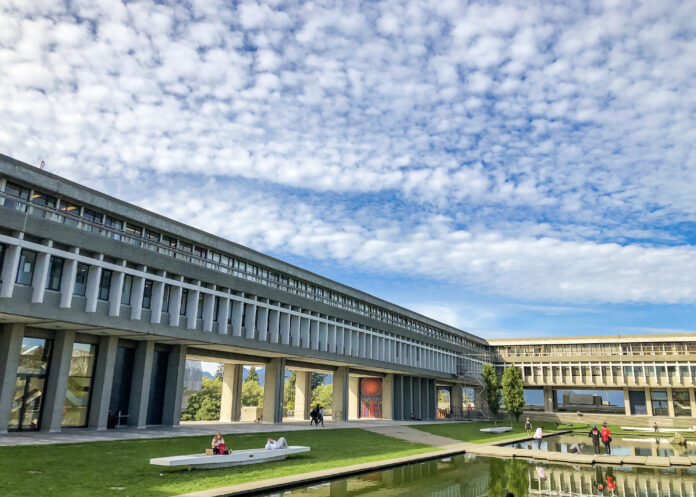
This is a photo of the SFU Burnaby Campus’s reflection pond and the academic quadrangle building surrounding it.
PHOTO: Allyson Klassen / The Peak

By: Eden Chipperfield, News Writer

The Simon Fraser University 2023 Newsmaker Award recipients were announced earlier this month to distinguish researchers for their work in media and news communication. The four award recipients have contributed significantly to their communities by engaging in different conversations including the invasion of Ukraine, the occupation of Palestine, food waste management, and policing data.

James Horncastle, a global humanities professor at SFU, received the Newsmaker award for his detailed commentary on global conflicts. News outlets, including the New York Times, Manager Daily in Thailand, and NDTV Network in India, have recognized Horncastle. 

Tammara Soma has pioneered community education for food systems and waste management through online dialogue. Social media has become a prominent tool at Soma’s disposal as she educates others about “food systems, security and equity,” she explained in a statement to The Peak. In 2023, Soma co-developed Food is my Teacher, a CBC documentary that focuses on the power and comfort of food. The documentary highlights how to use cooking and meal sharing as a means of connection and healing within cultural settings. 

“I am always reminded as a professor and academic that I am privileged to have the opportunity to do research and teaching as my career, but this also means serving those outside of the classroom and also bringing my learning to the amazing experts on the ground,” said Soma. “I highlight the importance of centering Indigenous voices in food systems education and also the important role of diverse community leaders in doing good food work across the country.”

Helping to navigate ongoing media trends and hot topics, from Taylor Swift to the Black Friday pandemonium, is Aviva Philipp-Muller. In a statement to The Peak, Philipp-Muller notes their detailed commentary on hot-button issues allows audiences to understand a “complex media landscape” through a “relatable and influential voice.” Philipp-Muller’s commentaryon the World Health Organization’s aspartame report was cited and mentioned in over 60 Black Press Media outlets. 

“It’s my honour to be the Emerging Thought Leader Newsmaker of the Year for 2023. There were some fascinating news stories that came out last year, and I always get so excited to talk about my research or any current events in the consumer behaviour space,” said Philipp-Muller

A pillar in BC’s crime and policing analysis, Robert Gordon received his first Newsmaker Award in 2007 (formally called the President’s Award for Service to the University through Public Affairs and Media Relations). Through the years, Gordon has been referenced in stories over 1,500 times, and his wealth of knowledge has made him a “sought-after voice for all major Canadian news outlets, including The Canadian Press, CBC, Global News, and CTV.” Alongside Canadian media, Gordon has been recognized at Vice and Fortune for his expertise. 

“I was extremely pleased to read of the University’s decision to recognize my career-long involvement with the print and electronic media,” said Gordon to SFU News. “It should be evident that I value our media colleagues and, in my view, the relationships we build with journalists are important; they are effective in transmitting our thinking and our findings to a huge audience. In the digital age, the media appears best suited to deliver information and encourage dialogue.”

What Grinds our Gears: Delivery drivers who don’t deliver

0
A group of packages in the back of a delivery truck

By: Cynthia Piña, Peak Associate 

OK, look. I get that delivery drivers have around 100 packages a day to deliver — they are short on time, on a tight schedule, and an apartment is probably not the ideal building to deliver to. However, I cannot help living in an apartment. I cannot help dealing with chronic illness that at times makes it difficult to walk — and therefore, make planning outings an ordeal. 

What might seem like a short and easy shopping trip to some people may require days of rest for me. So, when delivery drivers decide that delivering to an apartment is too big of a deal, mark a package as an “attempted delivery” without so much as calling, and then decide to return that package to the sender — fuck you. Sometimes, they decide to send the package to random pick-up points, which has now defeated the whole reason I chose delivery in the first place. I have left clear delivery instructions, and am literally home 90% of the time. Just because you cannot be bothered to call me, I now have to plan my whole week to get to wherever you left my package. 

I am begging everyone to please go back to using Canada Post, because I have had issues with essentially all other shipping companies over the past few years. Why are you paying someone to deliver something, when they refuse to deliver it? Genuinely — if a driver calls me, and I am actually not home, I am so sorry because I know this is inconvenient. Thank you for trying, but I would love it if shipping companies actually delivered when they said they would, or if they actually tried to contact me for delivery.