Home Blog Page 11

The Mush Hole comes to Vancouver

0
Courtesy of Ian R. Maracle

By: Niveja Assalaarachchi, News Writer

Content warning: Mention of residential schools

The Kaha:wi Dance Theatre (KDT) will, for the first time, bring their show The Mush Hole to Vancouver. The Toronto-based studio will be performing at Vancouver Cultch’s Historic Theatre from November 14 to 16.

The show is centred on the experiences of those who survived Canada’s first residential school, the Mohawk Institute, also known as “Mush Hole,” which operated from 1828 to 1970. The performance incorporates multiple lived experiences of what happened at the site, spanning across generations.

The Peak interviewed Santee Smith, the artistic director of the Kaha:wi Dance Theatre and the Chancellor of McMaster University, to learn more about the group itself and the background behind The Mush Hole.

The show will be a vignette that incorporates body storytelling into the theatrical performance. Smith said the set would include settings like the boiler room, cafeteria, and solitary confinement rooms, where much of the brutality of the institution was on full display.

Smith explained the name came from the fact that students at the Mohawk Institute worked on a school farm, where they were not allowed to eat any of the produce, and were restricted to only eating the mushy gruel served to them.

This level of detail was something Smith focused on when developing the script for the theatre production. “My family attended so it’s a personal story,” she said, “I did a lot of cultural research at the Woodland Cultural Center, which is a museum organization that oversees the Mohawk Institute, and they had a lot of work with survivors.” She went on to say that the work of the Truth and Reconciliation Commission helped reveal facts on what happened at the Mohawk Institute, and thus played a key cultural part in this production. The militarized nature of the education institution and symbols in the school was also on full display in the show, “So, throughout the piece, there’s very specific imagery [and] gestures—it was, at one point, a very militarized program.”  

Founded in 2005 by Smith, the Kaha:wi Theatre Company has focused on giving a platform for Indigenous voices and ideas. Smith told me the company emerged from her prior work as an independent dance artist and has now produced over 14 major works for various media sources. 

This is the first time the show has come to Vancouver, with most other theatrical performances mostly taking place in the east of the country.

“This is important for us, because we wanted to reach audiences across the country, and knowing that the similar history of Indian residential schools and the long-term impacts are still relevant,”

— Santee Smith, artistic director of the Kaha:wi Dance Theatre

Smith also saw her show as an important learning platform for all Canadians on the horrors of the residential school system, “I think it’s really important, it would be a great way to access, to understand that history . . . often people are coming to Canada because it’s safe and it has all these opportunities, which it does. But people don’t understand the extent of [its] colonial history and the impacts that are still happening.”

See The Mush Hole at the Cultch Historic Theatre from November 14 to 16.

Starbucks CEO addresses store closures and layoffs

0
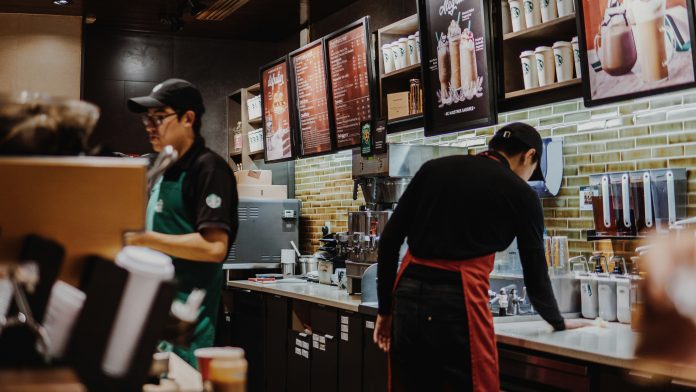
Employees working inside a bustling Starbucks.
PHOTO: Asael Peña / Unsplash

By: Persephone Alexander, Your CEO’s Underpaid Secretary 

Subject: Brewing Change Together: A message from the heart of your dear CEO

Dear Starbucks Partners (and soon to be “former partners” — semantics, really), 

I hope this message finds you well, or at least six blonde shots deep to even care about what is happening. As you may have heard, we will be closing a select number of stores and parting ways with approximately 900 partners across Canada and the United States. 

I would like to personally reassure all of you that this decision was made with deep compassion, rigorous analytics, and an Excel spreadsheet that analyzed your stations’ key performance indicators. Such indicators definitely do not weigh unionized stores any differently! This is just for the benefit of everyone. Really, we are doing this for you, our valued partners. Trust me!  

To those affected by these changes, we want to say: thank you. Thank you for not calling in sick when you actually were, and thank you for showing up with your own shovel when our stores were knee-deep in snow. Your tireless service is rewarded with freedom — from work. 

We will be offering a severance package consisting of an array of absolutely necessary heartfelt thoughts, a reusable cup to promote our efforts of sustainability, and one free drink voucher for your last working shift (which is already offered to all of our partners as a perk).

For those who remain, congratulations! You have been promoted from “partner” to “leftover.” Included in your new benefits are added shoulder tension from the newly implemented mandatory speed checks. The new system of work monitors will proceed as follows: your floor leader will ensure you are caught up with the four streams of orders (drive-thru, cafe, mobile, and delivery orders) by asking you if you are preparing the drinks — while standing over your shoulder. If you find yourself concerned over who is monitoring their monitoring, do not fret. Our executive team pulled an all-nighter to solve this dilemma. The solution is that store managers will be standing over their shoulder, while floor leaders will be standing over yours. Senior managers will be standing over the shoulders of store managers, while an AI-generated hologram of me will be watching over their shoulders. 

I can further anticipate your concern regarding the efficiency of this monitoring system. Do not worry, my team has gone on a month-long retreat to Las Vegas to rectify this problem. The solution is as follows: we will have our newly installed AI inventory system perform the job that humans have been doing since forever. Does the AI always count correctly? Um, not really. But who cares? We are cool. We are hip. And we are hiphopping all over the place. Just do not ask why we are doing this. Focus on the progress we are making by relying on AI. And do not fret, when that system makes errors, we will find a human to blame!

As a last note — I would like to repeat — this has nothing to do with unionization!  

Warm regards (as warm as a forgotten mobile ordered Venti Americano),

Brian Niccol, CEO of Starbucks Inc.

SFU employee spills the tea about her embezzlement-obsessed colleague

0
PHOTO: Gudrun Wai-Gunnarsson / The Peak

By: Noeka Nimmervoll, Staff Investigator

The following is a satirical and fictional commentary. 

Oh boy, do we have some juicy tea for you. Have you ever wanted to say, “Fuck the system!” and chug some milk while your boss has his back turned? Way to go, you sabotaging legend. But what if I told you an SFU employee stole $200,000 from the university to fund a luxury vacation to the Pochonos? How would you feel then? 

An SFU employee, Jane Doe, has allegedly done just that. The Peak spoke to a staff member of the academic and administrative services office to learn more. 

We will refer to the staff member as Madge to protect her identity. Madge volunteered information to the publication when a member of The Peak staff met in front of her car.


How did this fraud go unnoticed? 

“Basically, here’s what happened. Jane had been working here since 2007, and she was an alright lady. A little chatty, but we can’t all be perfect. Now, she was talking very openly about [the fraud] the whole time she was doing it. We all thought she was joking! Someone asked her how she financed her Rolls-Royce when she rolled up, and she said, “SFU paid for it.” I thought she just had a bad sense of humour. That’s no crime! One time, we were all out for a staff dinner, and she paid the bill. She asked all of us to e-transfer her, then said, “I’m just gonna pocket it all, though,” and everybody laughed. I guess she used the company card and wanted to skim us for our cash, too. That’s the kicker, huh? Steal from the man, sure, baby, I’m for it. But steal from your coworkers? Honey, a lawsuit isn’t the only thing coming your way. If you’re reading this, you better watch out.”


Why didn’t she have a boss? 

“Well, you know them top schmucks. They were trying to save money! Hah! That didn’t work out for them, did it? They assumed she could be trusted. Boy, oh boy, are they bad at reading people. And you know, I always thought I was a little wrong for eating all the office chips or yelling at people to hurry up with the microwave, but I think I’m in the clear! Hah! Alright, get this mic off me now. I’ve got things to do.”

We reached out to Madge to clarify that she was pro-theft. Instead, we received an out-of-office message that said, “Beat it.” 

SFU’s press release statement was released on an underground Reddit thread. Although they didn’t address how the fraud went unnoticed, why the employee lacked supervision, or how they plan to prevent this from happening again, they did issue a warning about any criminal activity among staff. 

“We are deeply saddened by the loss of our money. We love our money, and it is our top priority, always. If any of our employees are currently engaging in fraudulent activity, please step forward and let us know so we can sue you. It makes us so sad to have to do this, but we must. Compliance in this manner will be a requirement; otherwise, staff will be denied use of the Nespresso machine in the staff room. We mean it.” — SFU

CHRISTMAS CANCELLED: Mariah Carey refuses to defrost

0
Mariah Carey, with enlarged cheeks due to her plastic surgery, kicking Christmas decorations in the air.
ILLUSTRATION: Cliff Ebora / The Peak

By: Heidi Kwok, Staff Writer

BREAKING NEWS — Mariah Carey, the official “Queen of Christmas,” is refusing to defrost. The beloved American singer, best known for her 1994 hit “All I Want For Christmas is You,” remains stubbornly encased within her ice cube in the North Pole, despite desperate pleas from Christmas enthusiasts across the globe. This unprecedented act marks a shocking departure from her annual thawing pattern, which occurs every October 31 at precisely 11:59 p.m. EDT. Usually, Carey emerges from her icy hibernation to declare, “IT’S TIIIIIIIIIIIIIIIIIIIIIIIIIME.” 

Shopping malls worldwide were the first to notice the glitch, when, upon pulling up their festive playlists at 7:00 a.m. on November 1, store managers were horrified to discover that “All I Want For Christmas is You” had mysteriously vanished from existence. In North America, megachains such as Walmart and the Real Canadian Superstore were left scrambling without Carey’s seasonal anthem to force minimum-wage retail workers into a state of holiday cheer. Miraculously, a merchandise stocking associate we interviewed didn’t seem to mind. In fact, they even celebrated this misfortune. “Last year, I had to endure an endless loop of Carey’s ear-splitting, whistle vocals, and jingling bells for the entirety of my 12-hour shifts during November and December. My ears are still undergoing therapy for the trauma.”

Story update (posted 3 minutes ago): We are back with an update. Carey’s frozen state has prompted the US government to issue a DEFCON 1 alert. The Pentagon has deployed crisis negotiation officers to the Arctic and is actively monitoring the crisis. They are attempting to establish communication with Carey’s long-time publicist, who has reportedly barricaded herself, along with the ice cube containing Carey, behind the heavy steel vault hidden beneath the singer’s winter fortress. 

“My fellow Americans. This is an urgent priority of my administration,” President Donald Trump stated in an Oval Office address. “If Mariah doesn’t smarten up, I might just have to replace her with Onijah Robinson. I’ll do it. Don’t make me do it, Marinara Carney!”

An official list of demands has been published by Carey’s publicist, which, among 75 other stipulations, asks for “exclusive rights to the ‘Queen of Christmas’ title” and a “formal apology from Canada for allowing Michael Bublé to defrost before Carey, which ‘severely undermined the sacred timing of the holiday season.’”

Without Mariah Carey’s signature five-octave range and champagne-glass shattering G7 whistle register note, the world has been plunged into an eerie silence. In an effort to accelerate Carey’s defrosting, the Trump administration has proposed a controversial plan to speed up global warming by slashing more carbon reduction and climate action policies. 

“We do not negotiate with terrorists,” Trump yelled in his second Oval Office address of the day. “I’ve known this was coming for a long time, and I’ve personally baked in a contingency plan. As a first step, I’ve already withdrawn our great nation from the Paris Agreement! I will also personally oversee the suspension of US climate regulations, amp up oil and gas drilling in the North, and ensure that all renewable energy projects are cancelled. #Drillbabydrill #MakeMarianaSayItsTimeAgain.”

This is a story that The Peak will continue to cover as developments continue. We reached out to Mariah Carey for a statement, but received an autographed chunk of ice in return. 


The life of an SFU president

0
SFU president Joy Johnson in a stunning sequin dress, extending her arm into the air. Falling from her pockets are wads of cash. The crowd is cheering for more!
ILLUSTRATION: Olivia Blackmore / The Peak

By: Matthew Cullings, SFU Student 

[Verse 1: SFU student]

Her name was Joy Johnson

Spent SFU’s money without precaution,

While every elevator on the mountain was stoppin’,

That’s OK, she’s was online shoppin’.

This is her playhouse,

We’re just all dolls in a jailhouse,

Johnson’s the warden while we walk,

She screams, “STAY ENGAGED OR ELSE!” 


[Pre-chorus: SFU student]

I waited by the stage door — oops, I mean the AQ floor,

Someone stomped on my face. I looked to the exit door,

Wow, Joy Johnson stomped on my face with her stilettos.

I said, “You take all my tuition fees,

At least spend them responsibly.”


And she said. 


[Chorus: Joy Johnson]

Hey, thank you for your feedback to me, 

But I’m the Microsoft Excel balance sheet Queen. 

You don’t know how hard it is to be me!

And you’re never ever gonna — 

Wait, is that a wad of cash in your hands? 

NOT ANYMORE, I’m gonna buy a Mercedes-Benz

You don’t know the life of a queen of this universityyyyy, babe. 

Be right back, gonna increase my car allowance


[Verse 2: SFU student]

She was a legend. 

Joy Johnson — they called her Dennis the Menace

The accounting department looked all anxious,

When she walked in and demanded more blank cheques and mansions. 


[Bridge: SFU student]

They said she’s got a plan,

It’s not wise if she wrote it on a napkin in Comic Sans.

“It’s not budget cuts. I call it fiscal responsibility!” 

But no one knows what that actually means. 

If you’re a real one, you’ll let our money get laid,

Planting healthy seeds of real joy, not funding genocide, babe. 

It’s not fiscal responsibility,

If her name is GI Joy.

Joy isn’t spreading Joy — this song is getting very off beat. 


And I said, (Back to the track!) 


[Verse 3: SFU student]

JOY, LISTEN TO ME. Hey, the balance sheets have gone MIA,

Blew the budget on some new fancy art building,

All the while my department is underfunded, babe! 

Photo op’s scheduled at 3:58, you can’t be late!

While you’re still stomping on my face,

Can you actually stop? It literally hurts. Like, what the fuck? We get that you’re queen B and all but this a little bit TOO MUCH. I’m not going to keep on singing while you’re standing there and literally destroying me. Fiscal health is mental health, babe. And right now you’re destroying my physical health. 


[Outro: Joy Johnson]

You don’t get the life of Joy Johnson, babe!  

Hahahahahaha, thanks for the unforgettable song. 

Guess who owns the electricity in The Peak’s office, baby? 

Joy Johnson (moi) runs this show. This is my article now! 

Thank you, Hollywood! 

Yes I’ll probably be unemployed in a few years — just let me drive the university to the ground! No, there won’t be a penny left! Budget cuts! Cut, cut, cut! 

I love you, Sabrina!!!!! Come to SFU. I’ll pay your airfare!!!!!!!!

Good night! 


Dining workers speak to poor working conditions

0
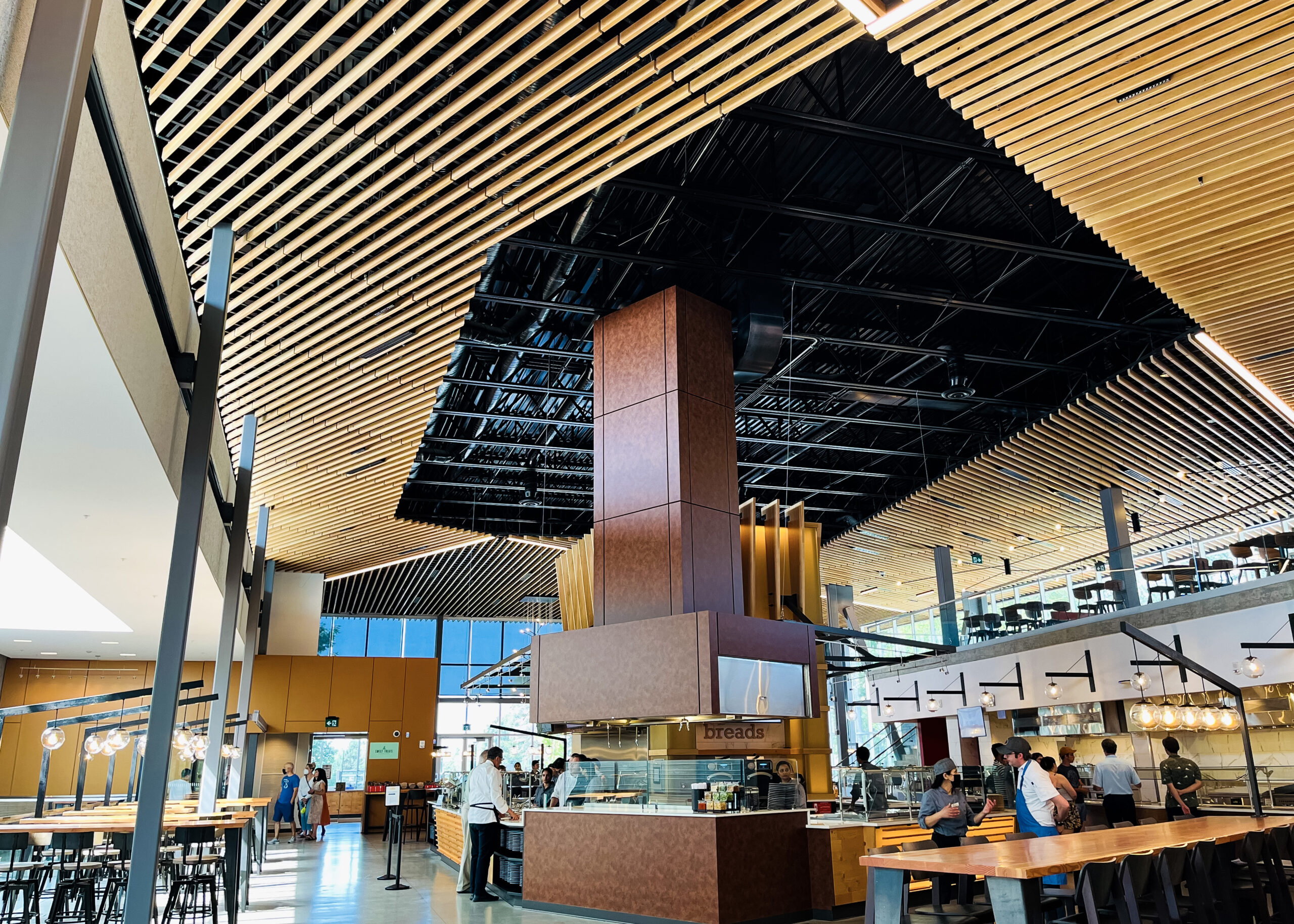
The SFU dining commons and food service workers interacting are pictured. The photo faces toward the ceiling, and there’s a sign that says “breads.”
PHOTO: Roshi Chadha / The Peak

By: Lucaiah Smith-Miodownik, News Writer

On October 7, a Reddit user posted to r/simonfraser concerning the possibility of a dining worker strike across SFU’s Burnaby campus. The message, which is from Contract Worker Justice (CWJ) @SFU, asserted that SFU “hasn’t budged on insourcing workers and is now trying to walk back its commitments to living wage.” The post also mentioned “a very heated labour environment on campus with several possible strikes and actions for precarious workers upcoming.” 

The Peak corresponded with Preet Sangha, a UNITE HERE Local 40 union representative, who spoke with two dining hall employees and forwarded their responses to us via email. Local 40 “represents workers throughout BC who work in hotels, food service, and airports.” Names have been changed to protect their identities. The Peak also reached out to CWJ but did not receive a response by the publication deadline.

Working conditions are horrible, people often skip bathroom breaks and even return to their station earlier so work doesn’t pile up,” Luke said. “Imagine how mentally drained most of us feel at the end of the day.”

“A coworker of mine was standing in a few inches of water in the dish room one day. He was told to continue working because there was no solution, and dishes needed to be done. His socks and shoes were soaked,” another dining hall worker, Kam, told The Peak.

“For many of us, this job has been our entire life,” said Luke. “We have been here for decades. I feed these kids like they are my own,” he added. “They are our future, and I want to make sure they are well taken care of. That can only happen if the workers here are treated fairly.”

As of earlier this year, dining hall workers make $22.60/hour. For Metro Vancouver, Living Wage BC lists the living wage as $27.05 per hour. 

“Once we buy our transit pass or parking pass for work, and pay our bills, most of us have nearly nothing left over,” said Luke. “A coworker of mine, who has a toddler, was crying to me about groceries. She said she felt so guilty leaving behind a packet of cookies that her daughter really likes,” Kam added. “She has to cut costs and so she felt that she should only be grabbing the basics [ . . . ] this is the situation for many of our workers.”

The Peak also asked about SFU’s living wage employer commitments, last outlined by the university in January.

“It’s all talk, no action on SFU’s part,” said Luke. “It seems like SFU is more interested in telling people they are a living wage employer rather than actually being one,” added Kam. “If SFU wouldn’t hire an employee who isn’t fit for the job, then why are they hiring a contract company who isn’t fit for the job? It’s hypocrisy. They need to do better,” he said. SFU does not employ dining hall workers directly; instead, it contracts through the food service company Compass. SFU stated that “matters relating to their specific working conditions should be addressed with Chartwells,” a sector of Compass.

Compass’ website states that it is a “people-centric organization,” noting that “safeguarding the health and safety of our people and customers is our moral responsibility and essential to the success of our business.” They previously reached an agreement with Local 40 around increased pay following SFU’s living wage commitment in 2022. No recent statement has been made available on the matter since workers have raised new concerns.

In the past, SFU has stated that they continue “to implement a living wage for employees who regularly work on our three campuses, whether they are employed directly by the university or by third-party contractors.” They have stated that contract workers have benefits like “access to recreation and fitness facilities, library borrowing privileges, and priority access to on-site childcare.”

“We are in the bargaining process and giving the employer a fair chance to respond; otherwise, we will certainly take action,” Kam told The Peak. “We will strike if that is what it takes,” Luke said.

“Taking care of students is what drives us all to continue our work. We want to continue doing this important work, we are pleading with Compass and SFU to give us the contract we deserve.” — Kam, dining hall employee

SFU’s new supercomputer, Fir, is now online

0
A row of metal cabinets housing the supercomputer is pictured. Above each cabinet is a small red sign that says “SFU,” and the room appears plain and cold. The floors are shiny grey concrete.
PHOTO: Courtesy of @SFUResearch / X

By: Jin Song, Peak Associate

SFU now hosts Canada’s fastest supercomputer, Fir. Designed for data and compute-intensive research such as artificial intelligence (AI), Fir came online in September and is the only Canadian machine in the global top 100 supercomputers.

Fir replaced its predecessor, Cedar, which was “an eight-year-old system at the time that it was decommissioned,” said James Peltier, director of research computing at SFU. Peltier is “also the site lead for SFU with respect to the supercomputing systems that are part of the national platform.” From a technology perspective, eight years is a significant number. Peltier said Fir is “significantly more powerful, significantly more efficient and environmentally friendly, and much more compact.”

“Necessity is the mother of invention,” he said. Fir, as an upgrade to Cedar, was needed to keep up with the demands of cutting-edge research, according to Peltier. The improvement in performance from Cedar is “anywhere from a twofold to twentyfold improvement” in terms of hardware, “given the similar amount of floor space.” In terms of efficiency, Fir has “moved away from air-cooled technology, which is 30–40% efficient, to direct liquid cooling technology, which raises the efficiency to 90–95%.” 

Peltier emphasized that the team “looked at every aspect of the system that we possibly could, within the pricing capabilities that we had, within the physical infrastructure that we have available to us, and made a concerted effort to ensure that we had the most performance with the least environmental impact possible. 

“SFU has a very strong commitment to being as green as possible, and one of the things that we’re looking at for any future purchases is how we can further improve upon those clean technology choices: moving from a diesel generator, for example, to a hydrogen-powered generator [ . . . ] or being able to better leverage recycled car batteries,” Peltier continued.

What excites Peltier about Fir is that “it is a national platform piece of equipment.” He said, “Only 30% of the research that’s done on the cluster itself is from researchers that are located in this region. That means 70% of the research that’s being done on the cluster is being done by a researcher that’s outside of BC.” Cluster computing is a “type of computing where multiple computers are connected so they work together as a single system.” Fir is a cluster itself, meaning it is a collection of computers part of a larger national network of Digital Research Alliance of Canada research computing infrastructure.

“It shows the true nature and collaboration of SFU, the province, and all of the highly qualified people that make up the national platform in providing this type of access to the researchers,” he continued. Fir is free for Canadian researchers to use.

Peltier emphasized the importance of Canada investing in infrastructure to stay competitive in the market in areas like AI and quantum to support cutting-edge research: Canada is “very much at the cutting edge of what’s happening in the edge of AI. We have some of the best researchers in the world that work right here in Canada on AI,” he said. “We have researchers who are working on the latest and greatest in terms of quantum networking, priography, and algorithms.”

“Being part of the national ecosystem is incredibly important to ensuring that we’re able to move the research community and world forward.” — James Peltier, director of research computing at SFU

Something Peltier noted about supporting research is, despite the competitiveness of the environment, “everybody’s really trying to move not just themselves forward, but [ . . . ] the world as a whole towards something that is greater than the individual. And that I get to be a part of that is amazing to me.”


Capitalism has no place in Islamic practices

0
a Quran on top of a side table, with a rosary on top of the Quran. There is an incense stick, and a plant in a pot right next to it.
PHOTO: Elif Leyla Kınalı / Pexels

By: Zainab Salam, Opinions Editor

In this social media age, we are invited inside people’s homes to witness their daily lives. We catch glimpses of the way they practice their faith, celebrate events, and live out their daily rituals. Some of that content details the festive rituals that Muslims partake in when observing the Islamic holy month of Ramadan. Unfortunately, a subset of those activities is misaligned with core Islamic teachings. 

Over the last few Ramadans, I have noticed, along with anyone who has spent time online in that corner of the internet, the growing visibility of capitalist consumerism among Muslim influencers. From lavish iftar feasts to content concerning home decoration, these aesthetic gestures, while seemingly harmless, symbolize something more complex. Purchase hauls and themed decorations showcase how capitalism infiltrates meaningful practices. 

At its core, Islam highlights the importance of sustainability. It urges people to avoid overconsumption — of food and material goods — and asks them to use resources with respect to all other creatures. The call to not harm others has always extended to nature. By interlinking our religious observations with novelty and aesthetics, we misalign ourselves with those foundational values. When did our efforts to observe Ramadan and practice faith become aligned with the notion of buying seasonal decorative items? I am not judging; I think having a nicely decorated home and a beautifully set meal is a wonderful thing. However, the manner in which some people participate in consumerist behaviour is a cause for concern. Some of those purchases are made from unethical sources that exploit cheap labour and harm the environment, contradicting vital Islamic teachings that prohibit the exploitation of others. How Islamic is that? 

There is a reason why making up for a missed fast involves helping those in need. Most notably, this can be achieved through paying Fidya or Kaffarah — each with its own set of rules. Both underscore that Ramadan extends beyond personal abstinence from food to encompass understanding others in our communities. Ramadan reminds us of the impact of socioeconomic hardships, where, through fasting, we experience the hunger that those of lower economic standing experience regularly due to societal failure.  

Obviously, it’s challenging to ignore the pressures of the influencer economy, where visibility often depends on aesthetic appeal. Yet, this does not absolve those individuals from their responsibility when sharing such content.

One cannot separate the foundation of Islam, and Ramadan in particular, from its hard stances against capitalism and harmful consumerist practices. 

This is not a condemnation of those who participate in such practices, but rather a gentle reminder that we need to do better by others and the environment. It is vital for those who observe Ramadan to be mindful of the true significance of the month and carry those values forward throughout the year. 


Mental disorders aren’t personality traits

0
a shot of an aisle in a bookstore that is focused on the Psychology books section. The only parts that are visible in the photo is the upper shelf of the bookcases.
PHOTO: Alicia Christin Gerald / Unsplash

By: Petra Chase, Features Editor

Content warning: references to ableism and ableist slurs.

I recently came across a jarring Instagram reel that said, “All my friends are lowkey schizo.” Surprisingly, the comments were nothing but positive, tagging friends and feeding into the idea that schizophrenia is relatable and quirky. While it seems lighthearted, in reality, it is reductive to suggest a chronic mental disorder can be a “lowkey” personality trait anyone can identify with. This type of content, which appropriates mental health conditions for punchlines and views, has become trendy. It goes to show how “delulu,” a term popularized in 2023, has become a gateway into further trivializing disorders for brownie points. It points to the need for greater awareness and support for people living with schizophrenia and those who experience delusions.

Schizophrenia is a complex chronic brain disorder that affects less than 1% of the population. It’s also one of the most stigmatized mental disorders. It affects one’s perception of reality, behaviour, and mood. Studies show that stigma delays treatment, increases isolation and social withdrawal, and worsens mental health outcomes. One of the symptoms of schizophrenia is psychosis, a condition in which delusions occur. People with psychotic disorders, especially schizophrenia, are also at higher risk of experiencing social issues, such as houselessness, due to disabling conditions and a lack of support.

Similar to the way “OCD” and “bipolar” are often misused as adjectives, “delulu,” which is a shorthand for “delusional,” has been misappropriated in harmful ways. Delusions are assumptions that are accepted as objective truths, despite evidence suggesting otherwise. For example, thinking you can finish an essay in a two-hour time frame, or that your celebrity crush noticed you at a concert, is not delusion. It’s optimism, or often exaggeration. “Delulu is the solulu” may sound catchy and cute, but experiencing delusions is anything but. 

Furthermore, a person experiencing delusions also does not realize or believe so. These beliefs feel real to them and can be extremely distressing. For instance, paranoid delusions can make someone feel like everyone is plotting against them or has harmed them in some way, without reasonable evidence. It often leads to social isolation and withdrawal, further contributing to stigma. The catchphrase perpetuates the myth that people can choose to be delusional. Without knowledge of these complexities, a careless attitude and internet virality make people inclined to take it further, with sayings like “that schizophrenic friend.”

It’s important to acknowledge that ableism is embedded in everyday language, to the point that people do not often notice it.

The shorthand “schizo,” similar to “crazy” or “psychotic,” has been adopted as a pejorative that dehumanizes and demoralizes people with mental disorders. “In the eyes of society, schizophrenia is awful,” writes Allie Burke, who lives with schizophrenia, for Psychology Today. Burke says people with schizophrenia become ashamed of the label because of its connotations. Burke also explains how negative connotations exist because “people fear what they don’t understand,” as there is a lack of awareness and public education around complex mental disorders. The multifaceted stories of people who live with them are often sidelined and misrepresented in the media.

There is no shortage of words to replace harmful and ableist ones — “imaginative” or “escaping into a fantasy,” instead of delulu; “particular” instead of OCD. It doesn’t take much to expand your vocabulary and make an effort not to contribute to harmful stigma about disabled people. 

We need more understanding around the complexities of schizophrenia, and more opportunities to listen and empathize with the lived experience of disabled people.

The resilience of Rohingya women

0
Courtesy of Tanjila Afrin

By: Heidi Kwok, Staff Writer

Tanjila Afrin is currently pursuing a master of arts in international studies at SFU. Before enrolling in the program, Afrin worked as a humanitarian aid worker. With a background in environmental science, she was deployed to Cox’s Bazar, Bangladesh, to support safe water hygiene and sanitation services in Rohingya refugee camps. Now at SFU, Afrin’s master’s research project spotlights the structural challenges confronted by Rohingya migrant women under an oppressive environment of displacement, patriarchal dominance, precarious labour, and as unrecognized refugees. The Peak spoke with Afrin to learn more.

Who are the Rohingya?

The Rohingya are a majority Muslim, ethnic minority group who are Indigenous to Rakhine State, Myanmar. Under Myanmar’s 1982 Citizenship Law, the government refuses to recognize the Rohingya as an Indigenous group, claiming they are illegal immigrants from neighbouring Bangladesh. Anti-Rohingya sentiments in the country are rife and based in Islamophobia and Buddhist nationalism. In 2017, the Burmese military killed more than 30,000 people, and over 700,000 were displaced, an event the UN has described as a genocide. Over 1.5 million Rohingya currently live in precarious camps in Bangladesh, with limited humanitarian support. 

“In Myanmar, [the Rohingya] are deprived of all kinds of civil rights, including employment, mobility, education, and any right that a normal citizen would have had effortlessly,” said Afrin. In the face of ongoing persecution and violence, returning to Myanmar is a remote possibility for Rohingya refugees who have fled to other states. “Many are hopeful for a resettlement process to a third country,” Afrin continued, “but it’s an extremely slow process.” Resettlement involves moving to a country that offers better civil rights, safety, and opportunity.

A culture of discrimination

Malaysia is a critical destination for Rohingya escaping the Myanmar military’s ongoing war crimes in Rakhine state. Afrin observed “solidarity, compassion, pity, and kindness” from Malaysians during that time; however, “over the years, there was this frustration, like, ‘we do not want to keep you forever.’ That kind of narrative started to circulate.” At the onset of the COVID-19 pandemic, there was a clear shift in public opinion in Malaysia against the Rohingya. Online hate campaigns and discriminatory rhetoric have become normalized. Dehumanizing language and stereotypes in nationalist campaigns aim to scapegoat the Rohingya for economic and social instability in the country.

She continued, “The compassion and solidarity diminished. Now, even many of my interviewees said they still think of themselves as a ‘burden.’”

Systemic challenges

Rohingya refugees are considered undocumented migrants in Malaysia and Bangladesh. Both are members of the UN, yet neither has signed the 1951 Refugee Convention. Refugees in these non-signatory nations, as a result, are denied the basic right to housing, work, and education, leaving them vulnerable to exploitation in the absence of legal protection. 

Obtaining a UN High Commissioner for Refugees (UNHCR) Card would reduce their risk of detainment and barriers to medical care, education, and other integral services. While Afrin observed that Rohingya refugees in Bangladesh had access to the UNHCR Card, a majority of those in Malaysia lack this form of identification.

Without the UNHCR Card, Afrin recalled Rohingya women telling her how they’d refuse to step out of their homes for fear of being confronted, arrested, or detained by authorities. Childbirth is another challenge. Rohingya women without status in Malaysia are forced to pay a foreigner’s fee, which can cost thousands of dollars.

Obtaining the UNHCR document is a lengthy process that takes years, and “even with that card, you face so many barriers,” Afrin reflected. “Just imagine, without the UN card, you just have to be invisible. And those women were invisible.” 

Intensification of patriarchal dominance under forced displacement

Ongoing persecution in Myanmar, and fear of repatriation combined with limited opportunities in Bangladesh’s refugee camps, push Rohingya women to Malaysia, where “most of them think it’s a better life,” Afrin remarked. With most unable to afford the services of smugglers, Rohingya women are confronted with a treacherous journey across international borders where human trafficking is rampant. They are coerced into exchanging their freedom through arranged marriages to Rohingya men in Malaysia whom they’ve never met. 

“These women got onto a boat and gambled. It’s a life and death situation. After that, that girl is completely dependent on her husband. She doesn’t even know if she’s ever going to see her family [again],” Afrin said. Without a formal education, Rohingya women in Malaysia are financially dependent on men. “There is a huge power gap,” Afrin explained. 

The devaluing of informal social reproductive work

Afrin commented on how informal work performed by Rohingya women, including social reproductive and care work, is overlooked by their communities: 

“The man who goes to work every day — he’s able to go because the woman is putting the food on the table. The woman is cleaning the clothes, washing, and taking care of the babies. All of these things are unrecognized.”

—Tanjila Afrin

“Even the women would devalue their own labour because there is not much consciousness around it.”

Afrin has likewise encountered women engaged in informal income-generating work, employed as cleaners, vegetable vendors, and scrap collectors in Kuala Lumpur. Many were divorced, widowed, or had husbands with disabilities. 

“And when in the context of a host country, the share of work trauma, barriers, social barriers, all these things kind of multiply, especially for a woman. So these are like multiple blockades that they face in their lives every day.”

Community resilience

Despite numerous challenges, Afrin reflected on the Rohingya as a community-oriented people. They would actively seek out their own village members while in Malaysia, forming community clusters with people from the same village or townships back in Myanmar. “They kind of know each other and build a support system. They help each other in a real and very meaningful way. They’re very engaged in each other’s lives,” Afrin noted.

“For example, if somebody just got out of jail, or a new migrant, or somebody lost their job — these are their daily life scenarios — or someone’s husband died or was expelled from work, whatever the reasons are, they would seek refuge with their relatives.”

“Women would also help each other to find work. And if they lose their jobs, which can happen in a day’s notice, they can borrow money from each other.” This was a survival tactic, especially during COVID-19 lockdowns.

“[Rohingya] women would often gather together — maybe arrange a small feast. And they would chat, laugh, and cry together. They would watch over each other’s children. They would support each other.”

—Tanjila Afrin

“So all these things, I think, are very important to them to survive as a community, as a diaspora, in the context of a host country.”