Go back

Cooking up a conversation with co-founder of Dashi Eats, Nneoma Chiakwelu

The establishment is Vancouver’s first Nigerian food delivery and catering service

By: Devana Petrovic, Staff Writer

Second-year Beedie School of Business student, Nneoma Chiakwelu, along with her business partners Ashia Jaji (Capilano University) and Doyin Agbaje (Douglas College) launched Dashi Eats, a Vancouver-based Nigerian meal service at the beginning of this June. The Peak had the chance to speak to one of the Dashi Eats founders, Nneoma Chiakwelu, about their start-up story, current means of operating, and menu intentions. 

Chiakwelu explained how the idea for Dashi Eats came into mind when she and her housemate were visiting a friend’s place. They all come from a Nigerian background, and in discussing their favourite meals from home, realized that Vancouver did not offer those staples. That’s when the three co-partners “decided to come together and bring the flavours of Nigerian meals to Vancouver.” Chiakwelu further noted that they “had been doing some research and planning since February to really put everything together,” but started taking pre-orders a couple of days before their official launch on June 1.
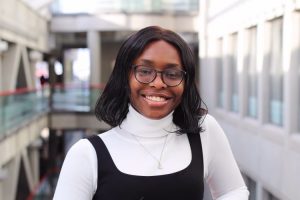

Nneoma Chiakwelu (top), Doyin Agbaje, and Ashia Jaji (bottom, left to right) created Dashi Eats to make Nigerian food more accessible. Photos courtesy of Dashi Eats.

While Dashi Eats is eventually planning on transferring their operations space to an alternative location, due to COVID-19 measures, they are currently operating from Chiakwelu’s own household kitchen. She clarified that it made the most sense “since two [out] of three partners live together.” Chiakwelu reassures, “We are all FoodSafe certified so we have been following guidelines for preparing food and also ensuring to take precautions when packaging and delivering orders.” 

When devising their menu, they intended for it “to have a feel of a proper restaurant menu.” Chiakwelu went a little bit into detail on the construction of their options: a finger foods and wraps section, a proteins menu (e.g. they offer grilled and crunchy chicken laps as well as a spicy grilled fish dish), a drinks and side menu (e.g. hibiscus infused punch and grilled plantain sticks), and a dessert menu. An entire menu is available on their Instagram page, where pictures of dishes are also posted. 

“We decided to start off with a few things in each category and then add others as we go along [ . . . ] we wanted each menu item to be satisfying in itself and then [also] be ordered with something else to make a full course meal,” said Chiakwelu on the their current menu, which they launched their business with.

They are currently taking orders through Instagram direct message, while they’re still working on creating a website for customer orders. More information and details on ordering logistics can be found on their Instagram and Twitter: @dashi_eats or for a secondary point of contact, they can be reached by email: [email protected]

Was this article helpful?
0
0

Leave a Reply

Block title

SFU professor highlights the danger BC faces from natural disasters

By: Niveja Assalaarachchi, News Writer 2025 was one of the most destructive years on record for natural disasters. Though much of the damage to infrastructure and human lives was seen in the Global South, much of the economic cost was seen in Global North countries like Canada. The Peak interviewed Tim Takaro, a professor emeritus at SFU’s faculty of health sciences, to learn more about how the growing destruction of natural disasters specifically applies locally.  In 2025, BC faced disasters like the flooding of the Fraser Valley and forest fires. Takaro explained that these disasters as a whole had afflicted large segments of the population, especially marginalized communities. For one, he pointed to those with chronic illnesses, as chronic conditions can increase the chances of sickness...

Read Next

Block title

SFU professor highlights the danger BC faces from natural disasters

By: Niveja Assalaarachchi, News Writer 2025 was one of the most destructive years on record for natural disasters. Though much of the damage to infrastructure and human lives was seen in the Global South, much of the economic cost was seen in Global North countries like Canada. The Peak interviewed Tim Takaro, a professor emeritus at SFU’s faculty of health sciences, to learn more about how the growing destruction of natural disasters specifically applies locally.  In 2025, BC faced disasters like the flooding of the Fraser Valley and forest fires. Takaro explained that these disasters as a whole had afflicted large segments of the population, especially marginalized communities. For one, he pointed to those with chronic illnesses, as chronic conditions can increase the chances of sickness...

Block title

SFU professor highlights the danger BC faces from natural disasters

By: Niveja Assalaarachchi, News Writer 2025 was one of the most destructive years on record for natural disasters. Though much of the damage to infrastructure and human lives was seen in the Global South, much of the economic cost was seen in Global North countries like Canada. The Peak interviewed Tim Takaro, a professor emeritus at SFU’s faculty of health sciences, to learn more about how the growing destruction of natural disasters specifically applies locally.  In 2025, BC faced disasters like the flooding of the Fraser Valley and forest fires. Takaro explained that these disasters as a whole had afflicted large segments of the population, especially marginalized communities. For one, he pointed to those with chronic illnesses, as chronic conditions can increase the chances of sickness...