by Madeleine Chan, Staff Writer
The return of Animal Crossing has finally come, and it was well worth the wait. The cute and colourful life-simulator is taking us to new horizons with this fourth installment in the beloved series from Nintendo.
Years before this game was even announced, I had been eagerly awaiting its arrival — even more so recently, wanting to quell my quarantine worries. This series was a pivotal part of my childhood and I was hankering for some of that good nostalgia to remedy my existential fears. And boy did it deliver.
I love that all the same essential game mechanics and quirks are still there like fishing, hitting rocks for bells (the game’s main currency), and picking fruit. Though, what makes this game so smart is the inclusion of many new and fresh features. Notable ones include a highly malleable landscape, an achievement menu, DIY crafting, and greater avatar customizability. These only serve to add to and expand previous iterations’ genius features, not to take away from them.
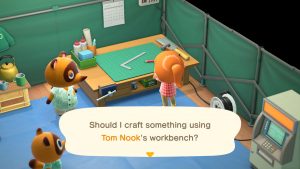
I am, however, a bit mixed on the achievement menu because it is tied to the new Nook Miles currency system. This system essentially rewards players for continuing to play the game by completing tasks like planting trees and visiting others’ islands. But, it also feels like it borders on the game mechanics from those mobile “freemium” games that entice you to keep playing everyday by rewarding you with digital capital. Tom Nook’s capitalist tendencies have almost gone too far this time.
Something that I am also not too fond of is the heavy use and reliance on your character’s phone for essential game progression. I sit in front of my Switch for hours on end to be able to escape the numbing and vortex-like qualities of social media, not replicate it. But for real, considering the “island getaway” theme, I would expect the place to be a little less digitally connected. A simple menu to house these features like previous games have, I think, would have sufficed.
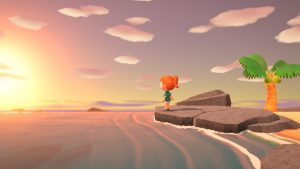
However, what it suffers from in trying to be too modern, it makes up in sheer serotonin. The simple atmospheric lushness that the relaxing music, tingly sound effects, and crisp, colourful visuals provide is enough to erase those concerns completely. I think that my boomer-like apprehension towards modern technology is simply out of my desire to go back to a world where we have no cares or concerns, where we roam free in construction-free landscapes, and lounge by a campfire at the seaside to be calmed by the consonant curl of the waves. A world, in fact, that is reproduced exactly in this game. Oh, how I wish I could simply gather things like fish and fruit and sell them to be able to pay off a mortgage.
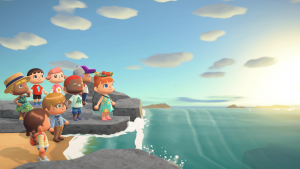
Anyway, another great new aspect that has me hooked is the additions to the multiplayer function. Previous versions of the game allowed villagers to visit each other’s islands, but now up to eight people can be on one island at once, making for an amazing alternative to an in-person social gathering. There’s also the addition of same-console multiplayer, meaning you and your family can enjoy duking it out for the daily money rock. Being stuck in your house never seemed so fun, huh?
Whether you think Tom Nook is a money-hungry capitalist, a benevolent socialist, or some other horrid hybrid entirely, this game really is worth the money. Take a break from your life’s troubles and go on a trip with this simple, yet endlessly entertaining experience.
Animal Crossing: New Horizons is available now in stores or digitally on the Nintendo eShop.