

By: Kitty Cheung, Peak Associate
“I wanted to soak up and bring back as much of Hong Kong as I possibly could.”
The first time I was called a “CBC,” I was having a conversation with my university Chinese instructor — the term stands for “Canadian Born Chinese.” I was taking CHIN 100: Mandarin Chinese I in an attempt to learn spoken Mandarin, improve my Chinese literacy, and, ultimately, get closer to my heritage. I remember feeling taken aback by my instructor’s comment. Even though it was true, somehow it made me feel like even more of an outsider to Mama China.
I grew up in Vancouvers’ Chinatown — a neighbourhood rich with Cantonese culture. I used to visit produce markets with my mom, holding her hand as she greeted friends in her native dialect. When my family moved away to suburban Surrey, I felt like I lost a precious connection to that culture. Since then, I’ve been trying to reconnect with my Guangdong roots, achieving only glimpses with the taste of dim sum or the odd Cantonese conversation overheard on public transit.
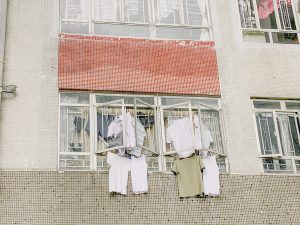
This summer, I had the opportunity to travel to Hong Kong. Prior to the trip, I was filled with a nervous mix of excitement and terror. This trip would be the closest I’d ever been to the “homeland,” as my mom had immigrated from Guangzhou, a city that shares a similar culture and language of Cantonese to Hong Kong.
It would be my first time leaving North America. I remember the panic that filled my body during the plane ride. The thoughts circulating in my head ranged from “What if this plane crashes?” to “What if I get robbed? Kidnapped? Caught in the protests?”
Once I touched down onto Hong Kong soil, however, I felt strangely serene. As the flight attendants welcomed us in both Cantonese and English, I remembered how much I couldn’t wait to be immersed in Cantonese culture and suck the short rib marrow out of this experience.
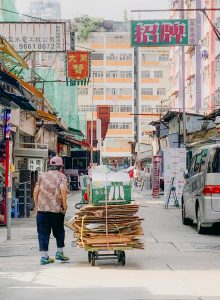
It was July. Hong Kong was stiflingly humid. I initially came to visit the Hong Kong Polytechnic University to represent SFU at a youth summit, but I knew there was something deeper drawing me here. On my first day, I was thrilled to hear my family’s language being spoken in the streets, in restaurants, public transportation, everywhere! This trip would be about identity — about reconnecting with my roots.
First things first; food. Having grown up enjoying Cantonese cuisine such as dim sum, bakery buns, and claypot rice, I knew I had to try the homegrown, “authentic” versions of these foods. I was surprised to learn that I actually prefer Vancouver dim sum to Hong Kong. Portions are larger back home and food prepared by the diaspora is just as authentic. I even discovered and fell in love with new dishes, such as the culturally iconic cart noodles.
I grew up visiting Vancouver’s Chinatown Night Market on summer nights with my family. I watched in amazement as street vendors prepared bubble waffles, stir-fried rice rolls, and dim sum on sticks. A new friend who I met in Hong Kong guided me through the Ladies’ Market in the shopping district of Mong Kok. My Cantonese grammar is terrible, but haggling with merchants became the ultimate test of my language skills.
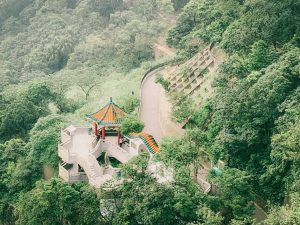
I spent that first week in Ho Man Tin and Hung Hom attending the summit with fellow university students from around the world. Our schedule was pretty lenient, meaning we had free time in the evenings to sightsee. We navigated the MTR transit system, rode the Hong Kong Observation Wheel, and crossed Victoria Harbour in a Star Ferry. We ate giant fish balls on Cheung Chau island, shopped at the Temple Street Night Market, and pre-gamed at 7-Eleven before bumbling down the clubbing street of Lan Kwai Fong. I remember venturing into grimy restaurants with wet cardboard as flooring just for a good bowl of claypot rice. Hell, I even got my sister a postcard featuring the Cheung Chau Bun Festival. I wanted to soak up and bring back as much of Hong Kong as I possibly could.
I extended my trip by a few days to visit my aunt and her daughter in Sha Tin. These were family members who I hadn’t seen since they visited Canada almost a decade ago. I’ve remained Facebook friends with my cousin this whole time, but it was still a shock to see this childhood friend now gearing up to pursue her Master’s.
The day that I met with my aunt, she took me grocery shopping. She asked what all of my favourite ingredients were. I pointed out the fish paste, tofu, enoki mushrooms, and cloud ear fungus that I saw in the market. The next day, she made dinner incorporating all of those ingredients. There was no better way to make me feel welcome and warm than that family dinner that she prepared.
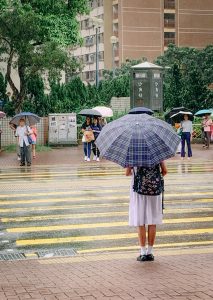
That weekend, my cousin invited me to a boat party. I had no idea what that entailed, but I was down to party with Hong Kong’s youth. Who knew I’d get to go wakeboarding during a thunderstorm? My social anxiety was exacerbated by both fear of the language barrier and the knowledge that my cousin was my only connection to the party. This dread eventually melted away as I ended up sipping chrysanthemum tea with women who had been educated in the United Kingdom or the United States and whose English fluency was on the same level as mine.
Upon talking to more party guests, I realized we were all in the same boat — not just literally. Most of the people who I spoke with also only knew one or two other attendees. Another positive was that whenever my wallflower instincts kicked in, I could just jump off the boat and go for a swim in soothingly warm waters. I couldn’t open my eyes in that water because it stung like all Hell, whether due to salt or pollution. Still, floating around in those waters filled me with a soothing happiness, a deep-set gratitude for this experience.
During my conversations at the boat party, I was open about being a visitor from Canada. The Hongkongers, most in their early twenties, seemed impressed by my Cantonese. Back home, my Cantonese proficiency (or lack thereof) would only draw out disappointed lectures from immigrant elders, so this was a refreshing boost to my complicated relationship with language.
On my last night in Hong Kong, I remember watching video clips of the attacks at Yuen Long Station from my cousin’s phone. These videos came from her friends’ Instagram stories. Illuminated in blue light, I stared in horror at masked men in white as they beat protestors and commuters alike.
We remained safe at home. With her characteristic dark humour, my aunt was laughing from the dining table. “Hong Kong’s gone insane,” she cackled in Cantonese. “Good thing you’re leaving tomorrow, eh?”
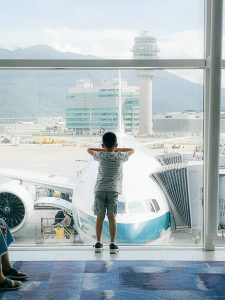
In light of the ongoing political turmoil in Hong Kong, I am extremely grateful for the safe trip that I experienced. On my last day, I ate beef noodle soup with my aunt, paid her back for the Octopus Card*, and set out to fly back across the Pacific, having satisfied a cultural longing that I had been nursing since childhood.
*the Hong Kong equivalent of a Compass Card, only on steroids


