Expensive prescription medications are cutting into Canadians’ ability to afford food and heating. (Andres Chavarriaga / The Peak)
By: Nathaniel Tok, Peak Associate
Quality of life factors for patients with spinal cord injuries
SFU biomedical physiology and kinesiology professor Victoria Claydon specializes in cardiovascular physiology, and was involved in conducting an international study published in the Journal of Neurotrauma studying actionable steps to improve the quality of life of patients with spinal cord injuries. Data was collected from almost 300 participants with spinal cord injuries around the mid-chest level.
Claydon found that those with spinal cord injuries ranked bowel care as the most pressing concern, followed by sexual function, bladder function, and pain. Wheelchair mobility ranked surprisingly low on the list.
Claydon rationalizes that those with spinal cord injury can damage their autonomic nervous system (ANS) which governs internal body functions such as bowel, bladder, and sexual function. Normally, the ANS would help in situations when the bladder or bowel is full, which results in increased blood pressure, by sending signals from the brain to reduce the blood pressure. However, a damaged ANS may have difficulty performing this function, allowing the blood pressure remain high until the bowel or bladder is emptied, which is turn could lead to irregular heart rhythms, heart attacks, seizures, or death.
Participants also described how bowel care affected their social relationships, prevented them from going out, and took a significant portion of time to manage (up to a quarter of the patients spent more than hour on their bowel care). Many participants even dehydrated themselves to help ease the burden.
Claydon acknowledged that curing spinal cord disease is not a reality yet, but believes that research could help find holistic solutions to help improve quality of life for those affected by spinal cord injury.
High medication costs force Canadians to cut back on necessities spending
A nationwide investigation ran jointly by University of British Columbia, Simon Fraser University, McMaster University, and University of Toronto researchers have found out that, in 2016, almost one million Canadians cut spending on groceries and heat to fund prescription drugs.
The study, published in the Canadian Medical Association Journal, involved surveys from 28,000 people and showed that paying for medication forced 968,000 Canadians cut spending on necessities such as food and heat.
Around 1.7 million Canadians (8.2%) that were prescribed medication in 2016 did not fill in prescriptions due to cost. Quebec had the lowest percentage (3.7%) of people avoiding filling their costly prescriptions while BC had the highest (8.11%) due to increased living cost and deductibles for drugs. The most common medications not bought due to cost were for mental health issues.
A side effect of Canadians not filling in prescriptions is higher healthcare cost: 93,000 people went to emergency rooms and 300,000 saw a doctor as a consequence of neglecting to fill out and take their prescribed medication.
The survey results concluded that the population of respondents who had difficulty filling in prescriptions, and also who needed more care, commonly included young adults, lower-income earners, and those without drug insurance. Women were part of this group as they might take more medication than men, such as contraceptives, and have a lower average salary.
“Correction: a previous version of this article cited Amir Singh as a candidate for president for the SHIFT SFU slate. We have changed this name to Amar Singh.”
Despite the campaign period for the Simon Fraser Student Society (SFSS) Board of Directors elections officially beginning on March 5, 2018, not all candidates for this year’s elections have submitted their platforms to the Independent Electoral Commission (IEC). In addition, bullying allegations were made on social media by a now dropped-out candidate, stating that he was “illegally cut” from his own slate at the very last minute.
Miscommunication regarding platform submissions
Earlier this February, notice for the 2018–19 SFSS Board of Directors elections was made available to Simon Fraser University students, faculty, and staff. The nomination period took place from February 19 to March 4, 2018, with the campaign period currently taking place, and ending on March 19.
This year, there are two slates running against each other, Inspire SFU and SHIFT SFU, according to an email sent to The Peak by Samer Rihani, a candidate for this year’s vice-president of student services. Inspire SFU and SHIFT SFU are headed by Jaskarn Randhawa and Amar Singh, respectively. In total, 35 candidates were nominated and approved for this year’s Board of Directors elections, with two candidates’ statuses still pending for approval, according to a file provided to The Peak by the IEC.
The Peak reached out to the IEC — the committee responsible for administering the student society elections — to inquire about when candidates’ platforms would be released to the general public. Dee Gorn, chief commissioner of the IEC, stated that the hard deadline for when platforms are to be submitted is this Friday, March 9, at noon.
“I did not have a hard deadline on platform[s] because if you’re campaigning for something . . . generally you want to have something prepared ahead of time and once you are given the go-ahead you do it. So the go-ahead in this case would be being approved, being considered eligible. But I find that this cohort of campaigners are procrastinating a lot,” stated Gorn. “I’ve had to full-on install a hard deadline, which apparently from what I’ve heard has never happened before.”
Gorn later clarified with The Peak that for previous SFSS elections, hard deadlines have been imposed for platform submissions. However, this method is rarely used. “We just are having a particularly slow-running campaign cohort this year, apparently. Timely submitting of documents has been a challenge. This is to their own detriment,” said Gorn.
Currently, there is no regulation within the SFSS bylaws as to when candidates should have their platforms submitted by, according to Gorn. However, Gorn stated that regardless of whether there was a hard deadline for platform submissions or not, this is like a job interview — there should be a level of professionalism, and candidates should have had their platforms ready ahead of time.
“I’m really not happy with [this] at all . . . Everyone has been procrastinating from their end. I’ve asked them repeatedly ‘please hand in your platforms, please hand in whatever you need to hand in’ and everyone is doing [it] at the last moment,” said Gorn. “I just got campaign literature given to me this morning to approve. So that means they only have a week and a half to campaign.”
The Peak asked Gorn if there should be a regulation installed for future SFSS Board of Directors elections, to which she said that she would add it to her list of recommendations once the 2018–19 elections end.
“I would probably put that down in my recommendations but keep in mind that we as the IEC, we have to work with the rules and regulations so it’s really up to the Board to pass those regulations,” noted Gorn.
Moreover, The Peak interviewed Rihani, and he disagreed with the statements Gorn has made about this year’s candidates regarding their inability to submit their platforms in a timely manner. However, The Peak was unable to find another source confirming this information by publication deadline.
“For myself, this election has been a true test of an individual’s patience and understanding. In terms of the IEC, we were only recently informed about the due dates of the platforms a mere few days ago, prior to this being told we could submit our platforms anytime before the 19th of March,” stated Rihani. “This sudden change has forced us to move much faster in terms of writing our platforms, while also leading us to take our time to ensure we do not write something we are not proud of.”
Rihani noted that for this year’s elections, the finalization of the slates was done last minute, which caused a great amount of stress on the candidates as a whole.
“For such short notice timelines and a large portion of individuals who were involved with Senate elections now being involved with SFSS, I would not state this as procrastination on anyone’s part, but rather adaptation to keeping up with terms of SFSS that we have been adamant in understanding clearly,” he said.
In addition, Rihani claimed that during candidate orientation, which is a mandatory session that all candidates have to attend in order for the IEC to approve their eligibility to campaign, numerous individuals asked the IEC questions regarding the budget they had for printing posters, videography, and funds for sponsorship. However, the IEC was unable to answer their queries and told them that their questions will be answered as soon as possible via email, according to Rihani.
“We did not want to make any further changes or movements to our slates UNTIL [sic] we received finalized information on behalf of the IEC, to ensure no one was penalized,” stated Rihani. “The individuals running for SFSS this year have been fast at work, working efficiently and at a rate that I must say impresses me immensely. Whether someone is on our slate, the opposing slate, or running as an individual, I’m honored [sic] to be running with all of these individuals and must commend everyone for their efforts,” he explained.
Bullying allegations
Parsa Kiani shared about the news on Facebook
On the evening of March 5, 2018, Parsa Kiani, an ex-member of SHIFT SFU, posted on social media stating that he was “illegally cut” from his slate.
Jimmy Dhesa, vice-president of student services, notified The Peak later that evening that a potential bullying incident might have occurred during this year’s elections. The post has since been deleted from Facebook. Kiani and Taha Sharifi, the other victim in this alleged bullying incident declined to comment on the matter when asked by The Peak.
The Peak reached out to Gorn about the incident and Gorn stated that she hasn’t received any complaints whatsoever, or even heard about the incident.
“When you mentioned this was going on, it was completely out of the blue. Nobody has addressed any of these issues toward me which is very frustrating. And even on the [potential bullying allegations] that you [shared with] me about illegally kicking people out of slates, I looked through the SFSS’s regulation and policy on referendum and election . . . and I can’t find anything that explicitly gives me [the] power to do anything unless somebody actually explicitly complains. Like actually [submits] a complaint form,” expressed Gorn.
In addition, Gorn emphasized that there is nothing she can do at the moment to resolve the matter.
“I feel like I have my hands tied [at the moment] but that doesn’t mean I don’t care. I will continue to look into this. I think that if this harassment and what not is continuing to happen, I’m sure that at some point, they will definitely step over the line and I will be there,” stated Gorn.
The Peak also reached out to Amar Singh, the leader of SHIFT SFU and the slate that Kiani and Sharifi were supposed to be in. Singh is currently discussing with his team as to whether or not he should comment on this matter with The Peak.
Important dates to know
This coming Monday, March 12, 2018, the SFSS candidate debate will be held at SFU Surrey in the Mezzanine at 11 a.m. On Thursday, March 15, 2018, the debate will be held at SFU Burnaby in Convocation Mall at 11:30 a.m, according to Gorn. At this time, it is unknown if a debate has been scheduled for SFU’s Vancouver campus.
Results for the 2018–19 SFSS Board of Directors elections will be announced on March 23, 2018 at noon.
When SFU opened in 1965, only 37% of the student body was made up of women and only 16 of the 126 faculty staff were women (that’s about 12%). As of fall 2014, 13,000 of the 25,000 students were women and the faculty staff was made up of 330 women and 634 men (34.2%). In honour of International Women’s Day, it’s worth remembering, celebrating, and honouring the women who worked, studied, played, and led at SFU.
This piece will look at our university culture as a whole, and into the work of women in two faculties: the faculty of arts and social sciences (FASS) which is the largest faculty at SFU, and the faculty of applied sciences (FAS) because science, technology, engineering, and math (STEM) is notorious for being male-dominated. According to a 2017 article from The Peak, the enrolment rate of women in the FAS recently peaked as one-fifth of all students were women, including 20% of students in engineering, 18% in computing science, and 11% in mechatronics. In short, just because we’re not honouring the achievements from women in your particular faculty, doesn’t mean that they are any less awe-inspiring, capable, and awesome!
SFU presidents, vice-presidents, and chancellors
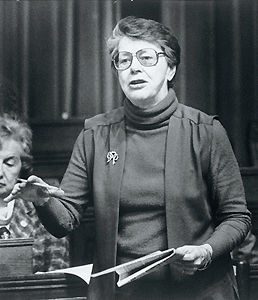
Pauline Jewett, image courtesy of The Canadian Encyclopedia
Pauline Jewett was the first and only female president of SFU, which was the first major Canadian university to appoint to appoint a female president. She served from 1974 to 1978. After she left SFU, she was elected as the Member of Parliament for New Westminster-Coquitlam, serving from 1979 to 1988. The Pauline Jewett House in residence is named after her.
Dr. Barbara J. Rae became the first female chancellor of SFU from 1987 to 1993. SFU is also her alma mater, as she completed a Master of Business Administration at the Beedie School of Business in 1972. The Barbara Rae Housein residence and the Barbara Rae Cup in women’s basketball are named after her. In 1991, she received the Order of BC, and in 1995 she received SFU’s Distinguished Leadership Award.
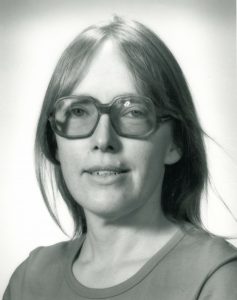
Liora Salter was the first (and as of right now only) woman to serve as acting vice-president, academic and provost of SFU (1989–90).
Dr. Carole Taylor served as the tenth chancellor of SFU from 2011–14. She is the second woman to hold the position. Previously, she was the province’s minister of finance from 2005–08.
Faculty of arts and social sciences
Dr. Gloria Gutman is a force to be reckoned with in her field, gerontology. Between 1982
Dr Gloria Gutman, courtesy of SFU News
and 2005, she pioneered the Simon Fraser University Gerontology Research Centre and the Gerontology Department. She has written, contributed to, and/or edited over 180 scholarly documents, 22 books, and over 300 conference papers. Not only is she an accomplished academic, she also founded the Gerontology Association of British Columbia. Gutman is queer positive, as her research interests include LBGTQ+ aging. In November 2016, she was appointed to the Order of Canada for her work and her advocacy against elder abuse.
Dr. Margaret ‘Maggie’ Benston is truly one of a kind. She was fluent in chemistry and philosophy, having studied both as an undergraduate before receiving her PhD in theoretical chemistry from the University of Washington in 1964. She joined SFU as an assistant professor the following year. In Vancouver, she helped found the Vancouver Women’s Caucusand published an article “The Political Economy of Women’s Liberation” in 1969, a text which defined feminist debates in the upcoming decade. She was also one of the founders of the women’s studies program at SFU, the first university in Canada to offer a credited women’s studies program. This resulted in the approval of a minor in women’s studies in 1975, and by 2004 the program began accepting PhD students. Benston taught chemistry, women’s studies, and computing science at SFU, teaching the latter two until her death in 1991. SFU named the Maggie Benston Centre after her.
Faculty of applied sciences
Dr Lesley Shannon, Courtesy of SFU School of Engineering Science
Dr. Lesley Shannon is an associate professor in the school of engineering science and the BC and Yukon chair of the Natural Sciences and Engineering Research Council of Canada (NSERC). The NSERC tries to educate youth, parents, and teachers on areas of study and research related to STEM. Additionally, she runs the Westcoast Women in Engineering, Science, and Technology, an organization who aims to raise the participation of women and other underrepresented groups in STEM fields of study and careers. In 2017, she was awarded the Wendy McDonald Award as a Diversity Championfor striving to eliminate barriers that hold women back from pursuing STEM careers.
Faranak Farzan, Courtesy of SFU Mechatronics System Engineering
Dr Faranak Farzan is an associate professor in the School of Mechatronic Systems Engineering who has studied and worked at Harvard Medical School and the University of Toronto. Adding to her already amazing list of accomplishments, she is also the chair in Technology Innovations for Youth Addiction Recovery and Mental Health. She leads research in finding non-invasive technologies to help youth struggling with mental health issues and addiction.
Dr. Angelica Lim is a professor in the School of Computing Science who completed a bachelor of science at SFU in 2008 and holds both a master’s degree and a PhD in computer science from Kyoto University. If this isn’t already cool enough, she runs the Robots with Social Intelligence and Empathy (ROSIE) Lab (inspired by Rosie, the helpful robot from The Jetsons). The lab develops robots that are useful and able to interact with humans, and artificial intelligence software that is able to understand human emotion. ROSIE is located on the Burnaby campus if anyone wants to check them out.
Gail Sayers, a basketball player, played for SFU from 1973 to 1978. The records in women’s basketball that she set upon graduation for the most points ever scored by one player (2,537) and the most rebounds (1,385) stood for decades. She was named the first female athlete of the year in 1976 and in 1977. At time of graduation, she held four other SFU records. In 1990, she was inducted into SFU’s Hall of Fame.
Debbie Brill was a member of SFU’s track and field team and the first woman to be
Debbie Brill, Courtesy of the Canadian Encyclopedia
inducted into the Simon Fraser University Athletic Hall of Famein 1986. At 16, she was the first North American woman to clear six feet in the high jump. She invented the “Brill Bend” (jumping over the bar backwards) and revolutionized the high jump forever. According to SFU Athletics, she set the world indoor record for a high jump in 1982 (with a 1.99 m jump). Although she has never won an Olympic gold, she has won gold in the 1970 Commonwealth Games, 1971 Pan-American Games and the 1979 World Cup.
Sheila Strike was a star forward for SFU’s basketball team. She competed on the Canadian women’s basketball team who finished sixth at the 1976 Summer Olympics the first year women’s basketball was an Olympic sport alongside another Athletic Hall of Fame inductee Bev Bland.
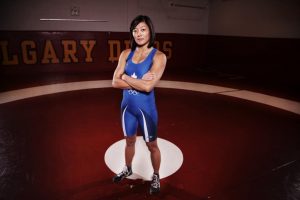
Carol Huynh, Courtesy of SFU Alumni Appreciation
Carol Huynh attended SFU from 1998 to 2004 and was on the wrestling team. She became the first Canadian woman to win a gold medal in wrestling at the 2008 Summer Olympics. In the 2012 Summer Olympics, she walked away with a bronze medal. In 2017, Hunyh was inducted into the Canada Sports Hall of Fame.
Michelle Waters finished third on the Clan with rounds of 78 and 81. (Photo courtesy of SFU Athletics)
On Monday and Tuesday this week, the Clan’s women’s golf team travelled down to Pleasanton, California for the Tim Tierney Pioneer Shootout competition. In only the second event of the year after a long winter, SFU continued to shake off the snow and ended the competition with a solid fifth-place finish.
They were lead by Belinda Lin, a junior, who shot rounds of 78 and 77, respectively, which was good for a ninth-place individual finish. She was in 12th place after the first day of the tournament, but finished with a strong second round to move up in the standings. Seeing her perform well is great for the Clan, as she was one of the team’s strongest golfers to end 2017, where she finished sixth place in the Great Northwest Athletic Conference (GNAC) Championships.
Just behind Lin was junior Emily Leung, who finished with rounds of 77 and 80, good for a 16th place individual finish. This was certainly a strong finish, but look for Leung to continue to improve during 2018, as she was the GNAC champion to end 2017.
Behind her were Michelle Waters, Estee Leung, and Jaya Rampuri, who rounded out the top five for SFU. Waters finished tied for 21st with rounds of 78 and 81, Leung was tied for 35th with rounds of 85 and 77, and Rampuri finished 80th with rounds of 87 and 91.
The Clan was the highest-placed team from the GNAC in the competition, and should continue to do well in conference play this season. They finished at 57 shots over par, with 633 total strokes taken at the Callippe Preserve Golf Course. Ahead of them were California Baptist University (+35, 611), Academy of Art (+38, 614), Cal State San Marcos (+42, 618), and Cal State Monterey Bay (+53, 629). Tied with SFU in fifth place was Sonoma State. It is important to note that all five teams are from sunny California, and therefore have had the benefit of being able to play golf more frequently in the off-season. The Clan should continue to improve as the season goes on.
SFU will be heading back down to California on March 19, when they will be taking place in the Otter Invitational. The tournament will span over two days, and will be hosted by Cal State Monterey Bay.
The team will now finish with 10 points instead of 29, only two behind UVIC. (Photo courtesy of sfuhockey via Instagram)
By: Dylan Webb
The Simon Fraser University men’s hockey team have missed out on the playoffs for the first time in the organization’s BC Intercollegiate Hockey League (BCIHL) history due to a ruling by the BCIHL player eligibility committee handed down just a week before league playoffs were scheduled to kick off. The ruling holds that SFU must forfeit 11 games that had already been played due to a member of the team having been deemed academically ineligible to play in the second half of the season.
The ruling states that the player in question was determined to be academically ineligible after the fall semester for failing to meet BCIHL minimum academic standards. Subsequently, the player played for a total of 11 games played between January and February 2018 before the infraction was discovered. BCIHL regulations stipulate that Simon Fraser University must forfeit all points earned in the games in which the ineligible player participated.
For the purposes of clarity, it is important to note that the player in question was a member of the team for the entire year and only become ineligible upon the submission of inadequate grades for the fall semester. In other words, this was not an example of a team flouting league rules to bring in an ex-professional player to get an unfair advantage. Rather, this was an internal mix up that unfortunately cost the organization a playoff opportunity as the team didn’t pick up the change in eligibility on their current roster until it was too late.
The ruling is a blow to an organization that had previously never missed the playoffs. It is also a frustrating and abrupt end to the season for a team that had been on an incredible tear over the second half of the season in which they picked up most of their wins and points and had built momentum for a playoff run. Ironically, this is the part of the season the ruling directly concerns. The academic nature of the eligibility issue has certainly called into question some of the clubs internal academic procedures and processes, which are likely to be reviewed during what will be one of the longer off-seasons for the Clan in recent memory.
The sensitive and frustrating nature of the issue has unsurprisingly resulted in a lack of enthusiasm for interviews dealing specifically with the subject. However, numerous members of the team have expressed support for a restructuring of the organization’s academic reporting procedures in the wake of the ruling this week in order to ensure any player deemed ineligible will be prevented from playing in any official league games. Possible changes to these types of procedures will be just one of many changes the Clan will ponder this off-season with a graduating class of six key seniors meaning there will be plenty of room for roster turnover.
March 8 is International Women’s Day, a time to celebrate all women and femmes alike for being amazing and magical beings. Now, if you’re not sure how to celebrate this special holiday, let me offer you a few ideas:
1)Stop making unnecessarily gendered products
So the other day I was at an unnamed office supply store and I saw a set of pens called Pens for Women. . . Pens. For. Women.
Is my wrist too delicate to handle your big man pen?!? I’m assuming that these pens for women are probably 80% full of ink and probably write about 80 pages for every 100 pages that your man pen can write. Not to mention that it’s pink because all women and femmes everywhere like pink. It forces the idea that “this pen is a woman’s pen. I cannot use it.” This is dumb — so please stop.
2) Start dogcalling
Many women are familiar with the customary practice of catcalling. It’s when someone — usually a man — attempts to communicate “I like you” by aggressively sexualizing them. ‘Cause nothing says seductive like being told, “Nice boobs, babe” by a rando. However, on this day, help them realize how uncomfortable it is to have some random person yelling at you while walking down the street. Turn it around on catcallers and call them out for being dirty dogs. Actually, don’t call them dogs. That’s too mean to dogs — they’re some of the only good in this world . . . and they understand the word ‘no.’
3) Give. Us. Pockets.
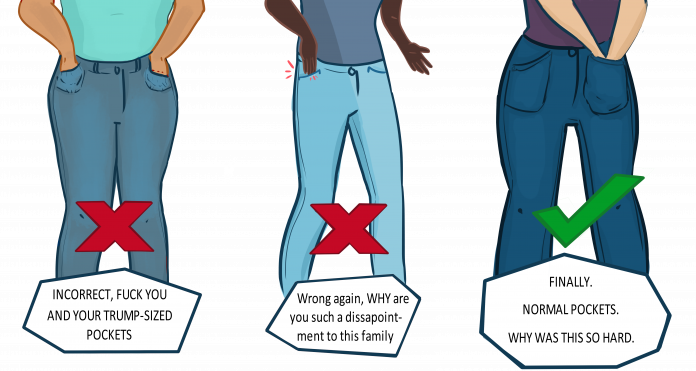
Misogyny can take on many different forms. Street harassment. Discrimination. Infantilization of emotions. However, nothing quite makes you tick like the realization that women’s pants don’t have pockets. (Now while clothing is not inherently gendered, we gotta acknowledge the fact that it currently exists within heteronormative gender constructs cause you know . . . the straights.) Pants that are marketed towards women either have one of two kinds of terrible pocket situations: tiny ones or fake ones. There’s literally no inbetween. Excuse me, but I have things I wanna carry in my pockets. My phone. Lip gloss. A pocket version of We Should All Be Feminists by Chimamanda Ngozi Adichie. For the love of not always wanting to have a bag with me, FIX IT.
4) Close the wage gap
Most women make about 80% of a man’s dollar. Complicate that by being a woman of colour and you have a better hope of finding a chip that can support the weight of guacamole than you do finding a woman who is being rightfully paid for the work that she’s doing. So this year, start looking for ways to close the gap! I wanna be paid well for the work that I do. I don’t want a thigh gap — I want a closed wage gap.
5) Listen to actual women
This one really shouldn’t be a stretch . . . but for some it is. If you don’t remember to do anything, for the love of all things beautiful, please listen to women and femmes around you. There is literally no one else that can tell you how to support women than actual women! Educate yourself, but also take the time out to ask questions; and when you do, listen to their answers. Creating dialogue is just one way of beginning to break down some of these systemic barriers that keep us divided. And maybe we’ll have a future as bright as the glow of Lupita Nyong’o’s dewy skin.
HAVE YOU RECENTLY ACCIDENTALLY ACQUIRED SUPERPOWERS BUT DON’T THINK YOU’RE INTERESTING ENOUGH TO CARRY AN ENTIRE FRANCHISE? NOT A PROBLEM! Here at HERO-FOR-LESS, you can custom-build your own easy to advertise superhero identity for yourself! Our basic package includes (but is not limited to):
1)Tragic backstory
Black-and-white flashbacks occurring at the climax of battle when an antagonist triggers a repressed childhood memory are universally adored. However, flashbacks are only effective if they draw sympathy from the audience — sympathy directly correlated to the flashback’s calibre of tragedy. Fortunately, this is what childhoods were engineered for! To build your new persona, you need a new ORIGIN STORY. Childhood is a magical place for superheroes to develop crucial insecurities, phobias, and a skewed moral compass that’ll bequeath them with the honour of being a loveable Anti-hero.* Kids have been desensitized to a protagonist with a single dead parent since Snow White first hit the silver screen in 1937. In a market completely over saturated with missing moms stunting generations of heroes’ emotional growth, you need to pick a childhood that’s harder, sadder, and more psychologically destructive then all the rest.
*Only available for men
Choose three to four time-tested catalysts for herodom!
(Dead parents included in every purchase!)
Beaten up in middle school for wearing light-up Sketchers.
Both of your parents loved your family dog more than they loved you.
Kids tried to bury you alive in your elementary school’s sandbox.
Never learned how to work a microwave.
Your best friend became a great Superhero at age 10 and then you became one afterwards and no one really cared.
Genuinely lactose intolerant.
Entire township tried to burn you at the stake for being ‘quirky.’
Abandoned in a strip mall as a toddler, raised by the employees of a Return-It depot
2) Villains
A hero is only as good as their villain. The days of hunchbacked mad scientists and their bumbling, grotesquely underpaid intern of a sidekick are OVER. Villainhood has transformed heroes’ ideological adversaries from kidnappers of orphaned kittens to well-dressed, multi-faceted characters (blamed largely on third-wave feminism). Though there’s no real way to know what cocky fucker your life-long enemy is going to be until they arrive, a little positive manifestation never hurts. Scan the very short list and look for a villain archetype that’ll be compatible with your own character development!
Intelligent Masculinity is no longer confined to fistfighting since there are less abandoned warehouses available to fistfight every single bad guy working for your enemy than ever before. Good vs. evil has become a battle of wits. Calculate your moves against one another from the comfort of your own home while getting other less important people to take the collateral damage. The times you’re thrown through a skyscraper window and straight across a regular office will decrease by 100%! Prerequisite: Have to know how to play chess.
Possible sexual partner Enemies to lovers has never been a hotter trend. Even though their morals are atrocious, when you’re grappling for the remote that’ll turn off the bomb — faces pressed close enough you could almost kiss — you can’t help but wonder that if your ideologies didn’t separate you, what would happen? This trope is a perfect choice for the busy hero who doesn’t have time in their schedule to envision creative and inspiring hero-villain character arcs. No work is necessary because an army of overly attentive, weirdly protective fans will help create your story through fanfiction! Simply peruse pages of their unpaid writing to find narratives you like and re-enact them with your villain.
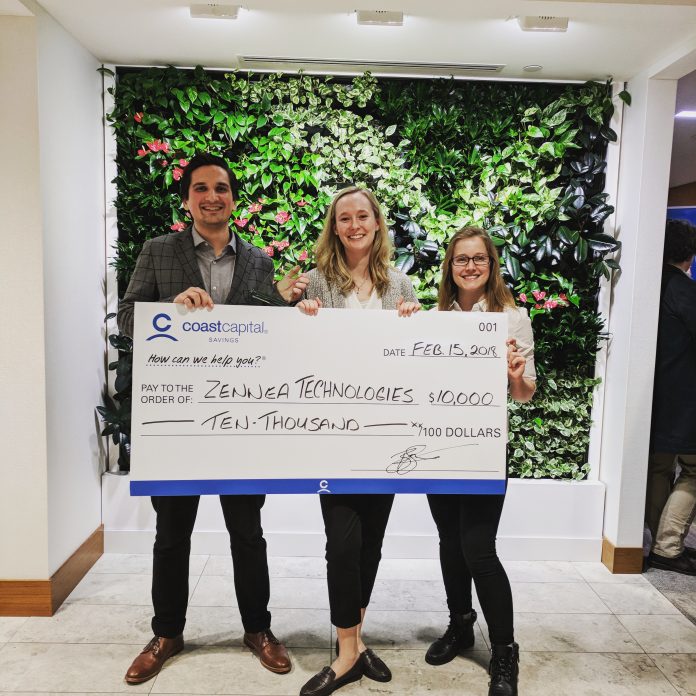
Zennea Technologies, a start-up company founded by four Simon Fraser University students, took home the highest honour at the seventh annualCoast Capital Savings Venture Prize. Their idea of developing an adjustable, portable, and wearable device that can help sleep apnea patients reduce their snore during their sleep, as well as other health benefits, helped them secure their win at the recent SFU entrepreneurship contest.
Earlier this February, the 2018 Coast Capital Savings Venture Prize was held at SFU Surrey. The event is an annual SFU entrepreneurship competition that invites SFU students, faculty, and staff to present their business idea to the community, as well as a panelist comprised of industry professionals.
The prestigious award, valued at $10,000 in cash and approximately $25,000 in in-kind prizes, is given to the team that has the best business model, idea, and potential for real-life application, according to itswebsite.
The members of Zennea Technologies include Ryan Threlfall, Rachel Chase, Nell Du, and Oliver Luo, all of whom are business and mechatronic systems engineering students.
The students are currently developing an alternate version of the continuous positive airway pressure (CPAP) machine — one that is much smaller and easy to carry. CPAP machines are used by sleep apnea patients during their sleep; it increases the air pressure inside their throat to prevent their airway from being constricted and collapsing. Sleep apnea is a medical condition where patients have irregular breathing patterns during their sleep, specifically shortages of breaths, and this is often caused by the narrowing of their airway. In addition, sleep apnea patients tend to snore louder than the average person, and a CPAP machine is worn to reduce the loudness of their snore, according to Threlfall, co-CEO of Zennea Technologies.
Unlike traditional CPAP machines, the team’s device which is calledZENS, will be battery-operated and has the potential to reduce snoring. Chronic snoring can cause similar symptoms to sleep apnea if no interventions are taken, according to Chase, co-CEO of Zennea Technologies in aninterview. ZENS also has the ability to track the patient’s overall quality of sleep (via a smartphone app), according to apress release by the university.
Moreover, Chase stated in aninterview that sleep apnea patients get a limited amount of oxygen in their sleep because their airway gets constricted by approximately 30%. This has serious health consequences for the patient because they could be breathing one minute and end up not being able to breathe at all in the next.
In addition, the team’s prototype uses transcutaneous electrical nerve stimulation technologies (TENS) to prevent a sleep apnea patient’s from suffocating in their sleep. TENS can achieve the same results as a CPAP machine, but it’s minimally invasive and more comfortable for the patient. For example, CPAP machines have objects connected to a patient’s nose or mouth, which can be extremely uncomfortable. However, TENS technologies stimulate the muscles that regulate a person’s airway without the need to connect objects to a patient’s mouth and nose. In addition, it allows them to move around more during their sleep instead of having to sleep in a fixed position.
The team has been working on their prototype for approximately seven months after reading about studies that have been conducted on TENS in the United Kingdom. The Peak reached out to Zennea Technologies but did not receive a response by our print deadline.
Zennea Technologies will use the prize money from the Coast Capital Venture Prize to purchase new devices, such as a portable ultrasound machine to further develop and test their prototype. The team will be relocating to Shenzhen, China for the next four months to work on developing the first 500 units of their prototype, according to Threlfall. In addition, Zennea Technologies hopes to have their patent-pending prototype launched in the beginning of 2019 to help sleep apnea patients improve their quality of sleep.
“As cliché as it may sound, it felt kind of surreal [to win the Coast Capital Savings Venture Prize] . . . After we secure a round of funding, we want to start work immediately on the next version of ZENS, and begin the process of creating a medical-grade version for the treatment of sleep apnea,” Threlfall concluded.
Los Angeles rapper Cozz’s new album serves as further proof that just about every artist on J. Cole’s Dreamville label is putting out more interesting music than the label founder himself. Effected is Cozz’s third release since signing to the label. While the hungry aggression of his early work has mellowed out a bit, there’s a sense of cohesion and maturity that makes Effected his most solid record to date.
Not every track stands out, but Cozz certainly brings his best work to his sophomore album. The laid back “Badu,” the pure groove of “Bout It” and “VanNess,” the quintessentially west coast “Effected,” and the narrative-driven “Hustla’s Story” (featuring a typically excellent Kendrick verse) prove that Cozz is an impressive rapper with a diverse style. He could stand to experiment a little more in the future, and maybe bring back some of the pure energy that made his debut single “Dreams” such a hit, but Effected is nevertheless a consistently great album. – NM
Victory Lap by Nipsey Hussle
In recent years Crenshaw, LA’s Nipsey Hussle has been one of the strongest voices on the west coast. The unapologetically Crip-affiliated rapper has translated his gang lifestyle into a sound that’s as progressive as it is indebted to old school G-funk. While each successive project of his has been better than the last, Victory Lap feels like Nipsey Hussle at his peak. Everything from the writing, to the production, to the overall message shows the LA rapper exceeding (the already lofty) expectations for a modern west coast legend.
Frequent collaborators YG, Buddy, and Dom Kennedy join impressive feature placements that include Kendrick Lamar, Puff Daddy, and Marsha Ambrosius — providing a plethora of talent to complement Hussle’s raps. “Dedication” and “Hussle & Motivate” are immediate standouts, but Victory Lap works best as a front-to-back tour-de-force. Whether it’s addressing political issues, or simply flexing his industry awareness and indelible position in the rap scene, this album is Nipsey at his best. – NM
Veteran by JPEGMAFIA
Baltimore-based JPEGMAFIA (Barrington Hendricks) — who is actually a US Air Force veteran — gives us a collection of interesting experimental hip-hop tracks in his fourth album, Veteran. Hendricks packs Veteran full of both satirical (dare I say, edgy), and serious political commentary. At times, Veteran’s edginess might be off putting, however, this album is carried by its unique production.
“Real Nega” and “ Thug Tears”show off his impressive use of sampling; the tracks “1539 N. Calvert”and “I Cannot Fucking Wait Until Morrissey Dies” get you lost in their glitchy production. Hendricks mixes both old school hip hop one-liners, and impressively forward-thinking production in Veteran. He really proves his versatility in this album.It’s a refreshing sound for rap in 2018. Basically, if you like Death Grips, you’ll like this album. – SE
Little Dark Age by MGMT
MGMT breaks their five-year hiatus with their new comeback release, Little Dark Age. Many of the tracks on this album reflect on their rising and falling out of mainstream success — and how quickly both occurred. “Me and Michael” is a synth-pop ballad about pop-stars who steal an obscure song and become popular. The track is a satire on how MGMT felt about their success.
In an interview with VICE News, MGMT said they always felt that they engaged in a “self-sabotage” of their band, not really caring about fame — heavily implying that their fall out of the mainstream was intentional. The lyrics “When you’re small/you don’t have very far to fall” in the track “When You’re Small” beautifully encompasses the sentiment that MGMT tries to get across: downsizing wasn’t a bad thing. Little Dark Age is a fun listen for both old and new fans, and is the start of a new MGMT. – SE
At our charity, Needy Kids of Canada, you can select a specific area of support or tangible good to gift an underprivileged child. With our donation model, you know exactly where your money is going!
Grape vine: $26
Give the gift of nourishment! All grape vines donated will be planted directly in our CEO’s vineyard. Once the grapes have been harvested and fermented, we will send one bottle of wine to a needy child. With purchase of this gift, you will also receive a postcard from our CEO’s vineyard.
Golf bag: $55 Give the gift of sport! Our corporate team will use all golf bags donated during tournaments. We pledge to donate 4% of all monetary prizes won by our team to a needy child, so that they can use it to join a community sports team.
Vibrating chair: $310 Give the gift of comfort! All vibrating chairs donated will be sent directly to our corporate headquarters. Studies show that a comfortable chair can result in increased productivity. Therefore, this donation will result in our employees maximizing their potential at their charity work — rather than spending time at a doctor’s office with an achy back.
Fishing rod: $119
Give the gift of food! Our executive team will use all fishing rods donated during chartered fishing trips. One out of every twenty fish caught will be donated to a needy, malnourished child.
Housing: $550
Give the gift of housing! All housing donations will be used by an executive at our organization towards a down payment on a house closer to our corporate headquarters. This way, executives can spend less time commuting and more time finding solutions to help needy kids.
School tuition: $1,020
Give the gift of education! Our executives will use all school tuition donations to send their own children to the top-ranked boarding schools in the country. This way, their children will have the necessary education to take over Needy Kids of Canada and keep it functioning in hopes of supporting the next generation of underprivileged kids.













 In recent years Crenshaw, LA’s Nipsey Hussle has been one of the strongest voices on the west coast. The unapologetically Crip-affiliated rapper has translated his gang lifestyle into a sound that’s as progressive as it is indebted to old school G-funk. While each successive project of his has been better than the last,
  Baltimore-based JPEGMAFIA (Barrington Hendricks) — who is actually a US Air Force veteran — gives us a collection of interesting experimental hip-hop tracks in his fourth album,
  MGMT breaks their five-year hiatus with their new comeback release,