Home Blog Page 646

WHAT GRINDS OUR GEARS: Revenge of the remake

0
Photo by GeekTyrant

Written by Alexander Kenny, Peak Associate

The overabundance of remakes, sequels, and superhero movies in theatres is starting to become incredibly boring. It feels like over half of theatre releases fit one of these categories! I can’t tell what’s worse: the most recent Terminator movies, or Jurassic World with Chris Pratt, which is just an extension of the trilogy which spanned from 1993 to 2001. These sequels are just unbelievably redundant. Once the nostalgia factor wears off, these films are just formulaic and capitalizing on franchises. Each is like a lazier version of its original from a few years ago — but, look, this one has Chris Pratt! If I wanted to watch something purely because of a brand name, I’d see Queen in concert. At least the original members are still involved. There are nearly two dozen movies in the current Marvel Cinematic Universe. A few of them have been great, such as Avengers: Infinity War. However, a majority have been forgettable, just one wave after another. They’re not big releases anymore, they just happen. It’s all become about milking brand names, which is truly reducing compelling storytelling. It’s fine when it happens every once in a while, but it’s done so frequently now that it doesn’t even register. We need more movies like Spotlight or The Post, with Tom Hanks. Come to think of it, anything with Tom Hanks is a movie worth watching.

Talking superheroes and superqueers with Dani McNeil-Willmot

1
Photo courtesy of Dani McNeil-Willmot

By: Lauren Wallace, SFU Student 

Fast Facts on Dani

Name: Dani McNeil-Willmot

Pronouns: They / Them / Their

Education: Bachelor’s Degree in Biology and Psychology from Cape Breton University

Past work and volunteer experiences: Advocacy work with previously incarcerated self-identified women, The Cape Breton University Pride and Ally Centre, arranging talks with medical professionals about queer and trans health, and lots more!

Fun Fact: Dani is a big comic fan, and really enjoyed our local Vancouver Comic Arts Festival.

Favorite Comic Couple: Harley Quinn and Poison Ivy


Walking into the Out on Campus (OOC) space is always a little daunting for me. The double doors feel like I’m entering into someone else’s personal hangout zone, even though I know it’s a welcoming space where I belong. Located in the Rotunda, I’ve passed by it daily since my first year at Simon Fraser, but I’ve been too shy to intrude on the cozy and quiet space that’s been sheltering LGBTQ2IA+ students for so long. Luckily, this time I had the pleasure of sitting down with Dani McNeil-Willmot, the new OOC Coordinator, to talk about everything coming up on the horizon for OOC.

Dani has been working in advocacy and creating safe spaces for LGBTQ2IA+ folks for five years, since the third year of their undergraduate studies in Nova Scotia, after coming out as queer in a small, rural community. Dani recounts the challenges of finding a place for queerness in their community.

“I made it my mission to get involved . . . I did a number of presentations talking about internalized homophobia, and the whole ‘coming out as being queer’ thing,” Dani says.  

Their role in advocacy and education spanned from talks with medical professionals about queer issues to talks with self-identified women seeking employment after incarceration, plus starting support groups with young trans folks.

“I just fell in love with it … [and it] snowballed from there,” Dani was excited to explain some of their first forays in the trans community helping trans youth and assisting with the Pride and Ally Centre at Cape Breton University, where they graduated with a double major in psychology and biology.

When describing their motivation to move out to BC, they smile rather wryly, and share their story of growing up in a rural, very small community, which definitely impacted their journey as they embraced not only their sexuality, but also their gender identity: “I wanted to have more access to services, to opportunities to get involved, and grow a little bit more . . .”

Dani then chose to pursue a masters in women and gender studies, to give an academic backing to the work they had been doing and add extra confidence to their voice. The gender, sexuality, and women’s studies program at SFU was a huge influence on their decision to move west, with SFU being the first university in Canada to offer such a program.

“Plus I knew I wanted to be on the West Coast anyways, because of the mountains and oceans and all of that good stuff,” Dani laughs.

The biggest hurdle they’ve had since making it out to the coast and starting as coordinator? Making sure people actually are aware of Out On Campus and its existence as a safe and welcoming space, especially with the new Student Union Building coming to Burnaby campus and OOC’s upcoming relocation to the SUB.

“Because we have been historically located in the Rotunda, I think the move in and of itself is going to be a big shift for a lot of folks.”

Not to worry, though! Dani reassures OOC’s regular and future visitors: “We are going to have a space in the SUB building, and I believe it’s even going to be a little larger.”

One of Out on Campus’ current features is its massive library. When I told Dani that I was a huge nerd myself, they immediately had a recommendation for a comic book with good queer representation, despite their heavy reading schedule for school and their having recently splurged at VanCAF (Vancouver’s Comic Arts Festival) — which features tons of local artists, including many artists who are part of the queer community.

“There’s a huge plethora of queer and trans local art and narrative that you can get your hands on,” Dani says.

In the mainstream, Dani is all about Harley Quinn — of whom they even have a tattoo, and whose representation and problematic reception they have even written a paper on once.

“But that’s a story for another time,” Dani laughs.

Moving forward as the new coordinator, Dani really hopes to push for spaces that are open to marginalized folks on campus, especially the BIPOC+ (Black, Indigenous, People of Colour) community and Indigenous students in particular.

“Historically, Out On Campus has had some issues with not being necessarily a safe space for our more marginalized folks . . . I want to make a very active effort to make this space safe for everyone, but particularly our most marginalized students, because that’s who safe spaces are meant for.

“Reaching out . . . and making sure we are partnering with the First Nations Students’ Association and partnering with the Indigenous Student Centre, and [not only] making sure we are making programming and events for these students, but that we are partnering with the areas of our school that can be the voice and actually drive which way our programming and events are going, and having OOC be a vehicle for enacting what they want to see.

“I want to create programming and events that are relevant, but obviously my lived experience is very different from many of our Indigenous students’ lived experiences.”

Dani is starting off their time at SFU with a long lineup of Summer events. The best way to stay up to date with OOC’s schedule, workshop, and events and activities is through Twitter, Facebook (SFSS OOC), or their newsletter — which you can sign up for by emailining ooc@sfu,ca.

If you’re like me and still feel shy about crossing the threshold into OOC, Dani closes our time with some words of encouragement, even if they admit this might sound cliché: “University is such a time for you to break out of your shell and learn a lot about yourself, which I know was a huge thing for me in my undergrad . . .  I encourage first years or anyone who wants to learn more, regardless of whether they identify as a part of the community or they identify as an ally, stop by the space, say hello. Get to know what we do, because we do quite a bit.”

As if telepathic, they go on to speak to my own shyness. “Just be willing to step through those doors. I know two sets of doors can be daunting for folks, especially if they haven’t entered a space like this before, but I encourage you to take that leap because it’s totally worth it, on so many different levels.”


The current SFU gym dress code isn’t working

0
Eva Zhu / The Peak

Written by Victoria Lopatka, Peak Associate

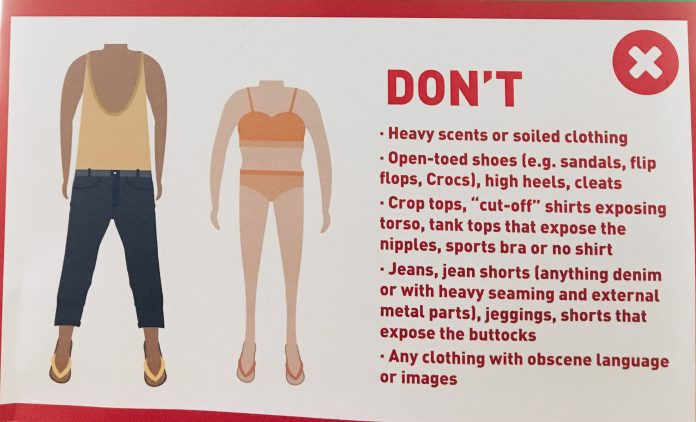
The SFU Recreation Dress Code, as outlined by posters in the gym, dictates that students must wear clean clothing, closed-toe shoes, shirts or tank tops that cover the nipples, lower back, stomachs, and waist, and shorts or tights that cover the buttocks. Students are asked to avoid wearing heavy scents/perfumes, open-toed shoes (like Crocs or sandals), high heels, cleats, crop tops, “cut-off” shirts that expose the torso, tank tops that expose the nipples, and sports bras (assumedly just a sports bra, with no shirt on top). Students are also expected to avoid jeans, jeggings, shorts that expose the buttocks, as well as anything with obscene languages and images.opinionsop

Now, I understand why some of these policies are in place. Obviously, you shouldn’t be wearing high heels on the treadmill, or wear jeans while operating workout equipment — do you even need to be told that explicitly? With other rules, I can stretch my imagination to think why they’re in place. As far as some of these policies go, though . . . I have some questions.

Specifically, I’m a little confused as to why crop tops, cut-off shirts, sports bras, short-shorts, and tank tops that expose the nipples are no-nos. I’m not sure how three or four inches of my stomach and back, or some extreme v-neck tank top, pose a risk to the health and safety of myself, other gym attendants, staff, or the gym equipment.

It should be pointed out that not all university fitness centers have restrictive dress codes like SFU. UBC’s Recreation dress code can be summed up quite simply: proper footwear must be worn at all times, athletic attire is “strongly encouraged”, and a shirt must be worn at all times.

A short history on dress codes

A dress code, for those who may not know, is a “set of rules or guidelines regarding the manner of dress acceptable in an office, restaurant, etc.” The first school dress code law was established in 1969, when the US Supreme Court dictated that schools could enforce a dress code in order to limit disruption in the classroom and prevent students from feeling uncomfortable.

Today, many elementary and high schools have dress codes, and there are many people that have a problem with them. Dress codes are often critiqued for being sexist, unfair, and/or unnecessary.

What do SFU students think of the dress code?

I caught up with some regular gym attendees to see if other students felt the same way about the dress code as I do. A resounding number of gym-goers I spoke to felt the dress code was unnecessary, juvenile, and almost insulting to the intelligence and maturity of students. Many students weren’t even aware of a dress code at the gym and were frustrated with it when I explained it to them.

“I was completely unaware of [the dress code]. I think it’s unnecessary. Completely. There are no children at SFU. Everyone is an adult and can decide to wear whatever makes them comfortable,” says Aidan Brown, a regular male gym-goer.

“I just don’t think they should be policing what we wear, I thought we left dress codes in high school,” another student, Charity Ywaya, adds.

Other students, such as Faisal Atif, pointed out the fact that the dress code doesn’t seem to be heavily enforced or followed: “I am aware that there’s a gym dress code, but no one really seems to care about it. At any particular time, there’s at least a couple [of] people who aren’t following the dress code.”

“Even CAs who are supposed to be role models or whatever to students, you know, people who are supposed to follow the rules, don’t really care that much about it,” Atif claimed.

When I entered the gym on a Monday afternoon around 12:30, I could immediately spot six or seven students who were breaking dress code. None of the violations stemmed from improper footwear or wearing jeans in the gym — all of them were instead related to the ban on crop tops, cut-off shirts, and tank tops that do not fully cover torso and chest.

Students overwhelmingly expressed that they would like to able to just wear what they want. Multiple female students said that they wish they could wear crop tops or cut-off shirts since they feel most comfortable in those types of tops.

“It’s really hot and sweaty so I don’t think it should matter if I wear a crop top or cut-off shirts. I’m not exposing my tits or anything,” says Laurie Solkoski, my fellow female student and new hero.

Despite the dress code seemingly not being strictly enforced, some students still get dress-coded. I spoke to a second-year criminology major who had experienced what happens when you violate the dress code.

Despite the dress code seemingly not being strictly enforced, some students still get dress-coded. I spoke to a second-year criminology major who had experienced what happens when you violate the dress code.

“I went to the gym in the morning wearing a shirt with cut-off sleeves, and one of the girls at the front desk told me that it was against dress code. She asked if I had a shirt on me that I could change into, but I did not, so she told me it was OK for today but that I can’t wear it at the SFU gym in the future,” the student said.

She described the top she was wearing, a T-shirt with the sleeves cut off, with armpit holes that show the sides of her sports bra and a small strip of skin. She also describes how, at the time, the dress code signs had just been put up, so the reprimand seemed “very out of the blue.”

“I think that the dress code as it is at the SFU gym is very juvenile. I would expect such rules at a high school gym, but not at a gym for adults. I personally do not wear crop tops or just sports bras at the gym, but I don’t think they are problematic apparel for a gym. They do not impede other gym-goers from exercising, so it seems like an arbitrary restriction.”

Not all students felt completely negatively about the dress code, though. “I believe it is somewhat necessary as the gym is a part of the professional learning space, the university,” Maryam Saffarzadeh says. When asked to elaborate, she continued, “It’s possible that the gym dress code is there because of safety reasons. There are guys who go there solely to creep on girls and I believe this could’ve become a bigger safety issue for girls if they wore more revealing clothes.” Sigh.

“The way I look at it, you’re there at the gym to get your workout done and leave, and not there to show off your sick chest, abs or butt,” Atif adds to his previous statements.

Other students, such as gym-goers Joseph Cameron and Celine Ho, felt that the dress code was acceptable, since some of its regulations were for hygienic purposes. “I think the dress code is alright as long as the reason is because of sanitary reasons, not for gender or biased reasons. I do not think it is necessary to have a dress code; however, I am willing to accept and abide by it,” says Ho.

None of the students I spoke to felt overwhelmingly positive about the dress code.

Speaking to fellow students confirmed for me that I am not the only one who thinks the dress code is unnecessary and downright silly. The passionate dislike for the dress code I was met with made me more and more curious: why do we even have a dress code, then? I decided to take my questions straight to those who make and enforce the rules: SFU Fitness Center staff and administration.

Stay tuned for part two.

 

SFU to begin new Sustainable Energy Engineering program in fall 2019

0
(Alexa Tarrayo / The Peak)
By Srijani Datta, Assistant News Editor


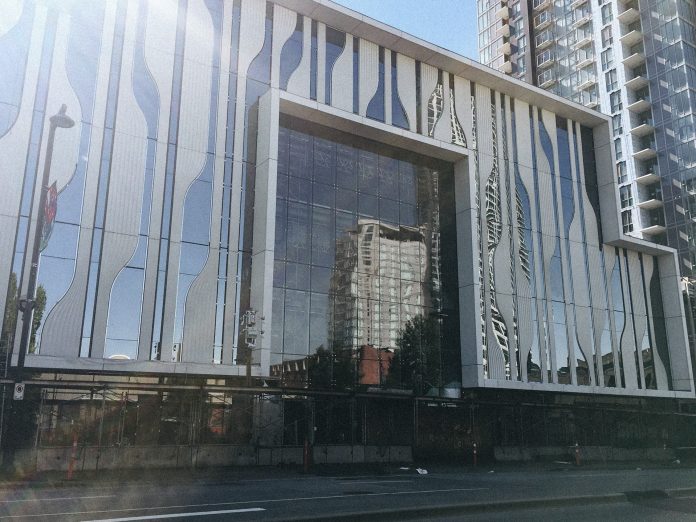
On June 5, SFU’s new Sustainable Energy Engineering (SEE) program was approved by the B.C ministry to be hosted in a new building being constructed at SFU’s Surrey campus.

The provincial ministry has granted approval to the Faculty of Applied Sciences (FAS)  to begin classes in fall 2019. The student capacity is projected to be 80 and 40 for first-year and second-year students, respectively.

SFU President Andrew Petter said, “SFU is hugely appreciative of the Province’s financial support for and approval of the SEE program.” He continued, “This innovative new program will create exciting educational opportunities for students, while helping to position B.C. as a global leader in cleantech and sustainable energy technologies.”

The SEE program is reported to be the first of its type in Western Canada. A recent addition to SFU’s program on applied sciences, it has been prepared to ready students for the cleantech energy sector. The program offers an interdisciplinary learning environment, aimed at preparing students to work in cleantech sectors, such as renewable energy and sustainable manufacturing. The program is also reported to prepare students for employment in other related industries as clean power generation and sustainable food and water solutions.

Students in the program will be offered access to new facilities, including engineering labs to be featured in the newest addition to the SFU Surrey campus which is set to be open in 2019.

The program is supposed to contribute to SFU’s expertise and faculty specialization in areas such as fuel cell materials and technologies, management of environmental resources, alternative energy, ecological economies, and technology entrepreneurship.

Kevin Oldknow, the associate dean of FAS, has been appointed as the program’s director. Oldknow stated that the SEE program will combine courses from other faculties, including those from science, environmental science, and the Beedie School of Business. “The program is unique in that its focus will be on sustainable energy systems, from beginning to end,” said Oldknow. He further added that “The program aims to be immersive and experiential, with team-based projects and integrative design experiences woven throughout the curriculum.”

When describing the workings of the program, FAS dean Eugene Fiume stated that the program encompasses “what they are telling us are key areas in the decades to come.”

“We are working with leaders in the cleantech sectors to ensure that our curriculum aligns with what is needed for students to be thought leaders ready to meet real-world challenges.” – Eugene Fiume, Faculty of Applied Sciences 

We are working with leaders in the cleantech sectors to ensure that our curriculum aligns with what is needed for students to be thought leaders ready to meet real-world challenges.”

Applications will open in fall 2018 with options for internal and external transfers.

Student fortune cookies

0
Illustrated by Marcus Blackstock

By: Nathaniel Tok

University life is fairly predictable. If you’re in a first-year math class, you get the 8:30 a.m. class. If you’re in your sixth year, you only attend classes when there’s an exam. The 4:30 p.m. 145 going down SFU is going to remind you of that trip you made to Asia. Et cetera, et cetera.

The Peak recently partnered with local restaurant Pande Expresso (they sell Chinese food cooked with coffee to give students their maximum caffeine dose) to create some fortune cookie sayings to help SFU students predict and navigate their future at SFU. Here are our favourites.

You will find new and interesting ways to be unmotivated

From stalking way more successful students on LinkedIn to giving up on that project for that one course that is part of your major but not something you wanted to do, there are always ways to lose focus and interest in studying.

Don’t lose heart, there’s always next semester

Got straight Cs this term? No worries, just try harder next term. As the number of terms in SFU (time) approaches infinity, the number of opportunities (sadness) to do better approaches infinity too. (I hope I made my calculus prof proud.)

time—>∞ sadness—> ∞

Never give up, unless you’re running for the bus

Back in my glory days of high school, I was the best runner in my PE class. Unfortunately, that physical prowess seems to have deserted me as I can never catch the bus just as it is leaving.

Do not worry about your problems in the rain, I assure you that UBC students have it harder
I have it from reliable sources that when SFU was built, our first chancellor, ex-UBC physics prof Gordon Shrum, was so annoyed at Raincouver that he made sure he could walk the whole of campus without getting wet. We, and not UBC, bear that proud legacy with our covered walkways stretching from Blusson to the WMC, while those UBC peasants hobble in their swamp.

You will find what you seek not within yourself, but online

YouTube videos explaining stuff from class, lecture notes from other universities, ebooks, random facts about how your great-great-great-grandfather might have been Genghis Khan (his descendants cover at least 10% of the Earth’s population) . . . You will find that one of the most useful things university teaches you is how to Google what you desire.

Bonus fortune cookie saying: Do or do not. There is no try!

The classic Yoda quote seems applicable here. But how can you do something without trying? Someone explain please!

Cheesy to gritty: the turning point for Batman’s character

0
Image courtesy of DC Comics

By: Saif Nayani

In February 1986, DC Comics began publishing Batman: The Dark Knight Returns, a four-issue comic mini-series by Frank Miller, Klaus Janson, and Lynn Varley. By the 1980s, people were used to seeing Batman as a source of cheesy one-liners and an overall campy atmosphere, thanks in large part to the character’s 1960s Adam West TV incarnation. But the Dark Knight Returns iteration of Batman wasn’t that . . . at all.

     The Dark Knight Returns centres around an almost 60-year-old Batman who has been retired for the past decade. Gotham City is a crime-filled dystopia suffering from one of the worst heatwaves in its history. A gang called the Mutants is rapidly gaining power through fear in the city, and villains like Two-Face are resurfacing to get in on the action. All of this helps set the stage for a triumphant and much-needed return for Batman.

This is by far my favourite Batman comic book ever written. Miller’s writing and artwork perfectly convey the bleak and dark tone of Batman’s world — a tone which, although synonymous with the franchise now, was revolutionary at the time. Every character, from minor to significant, earns emotional real estate in the reader’s psyche, making each action, event, and twist that much more impactful.

     The book is split into four issues, or acts, and while there is one overall story arc spanning the entire book, every issue contains its own storyline, each spilling into the next. Structuring a series like this is nothing new in the comics world, but I have never seen it done so brilliantly and fluidly as it is in The Dark Knight Returns. This is what keeps the reader in suspense, and forces them to keep turning the pages.

     The Dark Knight Returns’ publication quite literally signalled a return to form for the Dark Knight. If you have ever loved a Batman comic, movie, TV show, or game because of its gritty realism and dark atmosphere, chances are you have Miller’s The Dark Knight Returns to thank. Do yourself a huge favour and give it a read.

Memorandum of Understanding signed between SFU and NATO Defense College

0
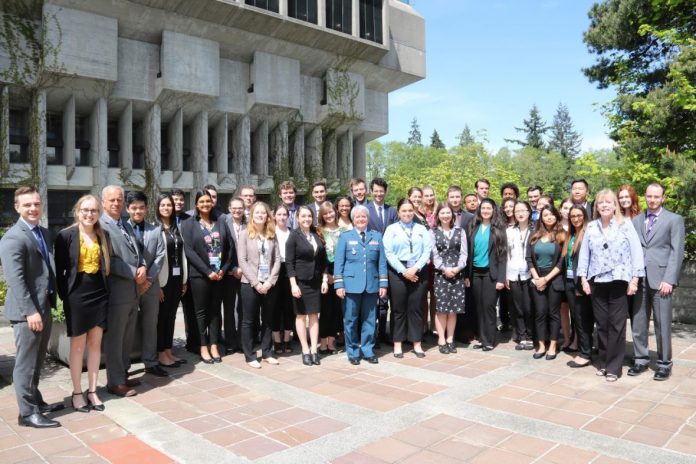
(Photo courtesy of Department of National Defence/Canadian Armed Forces)
By: Srijani Datta, Assistant News Editor


On March 29, SFU achieved a first for Canadian civilian universities when it signed a Memorandum of Understanding (MOU) with the NATO Defense College (NDC), giving the former access to NDC facilities and resources formally. According to chair of SFU political science department Alexander Moens, “The combination of comprehensive coursework and immersive learning is a first for both SFU and the NATO Defense College.”

     The MOU was signed by SFU president Andrew Petter and lieutenant-general Chris Whitecross, commandant of the NATO Defense College. The MOU is supposed to facilitate the work of the 2018 SFU NATO Field School and Simulation Program by helping both institutions coordinate scheduling, resources, mentorship, and site visits.

     On May 8, the 2018 NATO Field School officially opened at SFU Burnaby Campus. Whitecross focused on the advantages of the MOU in her Commandant’s Address to the students during the opening ceremony.

     “The NATO Defense College has put one of NATO’s core tasks – cooperative security – into practice by adapting our organization and providing a forum where future NATO leaders – such as yourselves – can analyze and discuss the implications of global events that affect defence and security,” said Whitecross. “I encourage you to take full advantage of the opportunity the NATO Field School and Simulation Program offers, and I am pleased that you will be participating in our Negotiation, Mediation and Decision-Making exercise during your visit to Rome this summer.”

     The field school is an upper-level program opened to both graduate and undergraduate students in Canada. The program helps attendees learn directly from military officers and top-level NATO mentors. Program highlights include a four-day simulation helping students experience the NATO decision-making process, at the NDC in Rome, Italy. The simulation will imitate the procedure used by NATO nations to seek political consensus, when responding to a United Nations request for assistance in a humanitarian crisis.

     The MOU between the two institutions have led to the inclusion of tours to the Western Canada military bases in the 2018 NATO Field School program. Other inclusions to the program are visits to the Canadian troops on NATO’s Enhanced Forward Presence and the Strategic Communications Centre of Excellence in Riga, Latvia, and the NATO Headquarters in Belgium.

     The MOU is stated to help the field school students learn the ropes of communication between political leaders and military officers. The program includes training students how diplomats and militaries negotiate on policies and implement them, as well as how objectives are formed and communicated, as a press communique.


“This innovative program will provide students across Canada with the opportunity to receive a world-class, interdisciplinary educational experience with lifelong value.” – Alexander Moens, chair of SFU political science department

     The program, once completed, is stated to provide chances for students to apply for entrance level jobs and internships in government services and related fields like diplomacy, military, international peace and security, and international organizations.

Make your own classy summer drinks

0
Photo courtesy of delicious.com.au

By: Courtney Miller, Peak Associate 

With great weather comes great responsibility . . . to celebrate with fancy patio-ready beverages! So we at The Peak compiled this list of classic, and not-so-classic cocktails and mocktails for your enjoyment. Drink safe!


Need-to-know: How to make a flavoured Simple Syrup

  • 1 cup water
  • ½ cup sugar (any kind)
  • ¼ cup flavouring agent (add more for a stronger flavour)

In a small pot, bring the water and sugar to a simmer, stirring to help the sugar dissolve. Add your flavouring agent and take off the heat for 15 minutes. Strain out the flavouring agent and enjoy.

Pro-tip: the smaller the pieces of your flavouring agent are, the stronger the flavour of the syrup will be. So for the jalapeño syrup, if you only like a little spice, slice the jalapeño in half and remove the seeds before making it into syrup. If you like a lot of spice, chop it finely with all the seeds.

Suggested syrup flavours: raspberry, orange, ginger, lime, lemon, blueberry, peach…


COCKTAILS

Note: Please note that most cocktails are mixed in terms of ratios, so make as much or as little as you want!

Beginner

Canadian Sangria

  • 1 bottle of red wine, preferably the cheapest your hard-saved money can buy
  • 1 sliced orange
  • 1 sliced lime
  • 1 sliced apple, core removed
  • 1 juiced orange
  • 2 cans of ginger ale
  • Ice

Pour everything into a pitcher. Stir. Drink. Repeat.


Hard Ginger Ale

  • 4 parts ginger ale
  • 1 part liquor (whatever you’re feeling or whatever you have)
  • Ice

Fill a glass with ice. Pour in the liquor of choice. Top with ginger ale.


Fruity liquor + Bubbles

  • 3 parts sparkling wine
  • 1 part liquor (anything fruity: peach schnapps, raspberry Sour Puss, grape vodka, etc.)

In a glass, pour in the hard liquor, then pour in the bubbly. Stick out a pinky as you sip.


Intermediate

Blue Hawaii

  • 3 parts pineapple juice
  • 1 part coconut cream
  • 1 part rum
  • 1 part blue curaçao
  • Ice

Fill a glass with ice. Pour the rum, cream, curaçao, and pineapple juice into a jar (if you have a cocktail shaker, use that, but I’m assuming that you, like me, don’t have money for that). Put a lid on the jar and shake vigorously. Pour over the ice.


Daiquiri

  • 3 parts rum
  • 2 parts lime juice
  • 1 part syrup (flavoured or unflavoured — your call!)*
  • Ice (optional)

In a jar, combine the rum, lime juice, and syrup. Put a lid on the jar and shake vigorously. Pour into a glass, prefilled with ice if desired.


Margarita

  • 2 parts tequila
  • 1 part orange liqueur (for a non-traditional margarita, pick a different fruit-flavoured liquor)
  • 1 part lime juice
  • Ice

Fill a glass with ice. In a jar, combine the tequila, orange liqueur, and lime juice. Put a lid on the jar and shake vigorously. Pour into the ice-filled glass.


Expert

Rainbow shots

  • 12 parts pineapple juice
  • 1 part grenadine
  • 2 parts vodka
  • 2 parts blue curaçao
  • Ice

Line up seven identical shot glasses. Add grenadine to a jar, and fill the jar three-quarters with ice. Using a large spoon (think serving spoon), rest the spoon bowl-down on top of the ice. Slowly pour the pineapple juice into the jar by pouring it onto the spoon. This effectively layers the drink. Pour the vodka slowly into the jar via the back of the spoon, layering it on top of the pineapple juice. Pour the blue curaçao over just the tip of the back of the spoon, so the curacao is only on one side of the jar. Immediately remove the spoon and use a strainer to keep the ice in the jar as you pour into your shot glasses, starting with the side of the jar with the blue curacao. As each glass fills, move directly to the next one without stopping the pour. Enjoy these proud summer drinks as your friends look on in awe.


MOCKTAILS

Beginner

Shirley Temple

  • 6 parts lemon-lime soda
  • 1 part grenadine
  • Ice

Pour the grenadine into a glass. Fill the glass with ice. Pour in the lemon-lime soda slowly.


Moscow Mule

  • 4 parts ginger beer
  • 1 part lime juice
  • 1 part club soda
  • Ice

Fill three-quarters of a glass with ice. Add lime juice and club soda. Top with ginger beer. Stir, if you’re feeling frisky.


Roy Rogers

  • 3 parts cola
  • 1 part grenadine
  • 1 Maraschino cherry

Add ice to a glass, pour the cola and grenadine into the glass, then top with a Maraschino cherry. It’s not an optional garnish, because you’re worth it.


Intermediate

Watermelon ginger spritzer

  • 6 parts cubed watermelon
  • 1 part ginger syrup*
  • 1 part lime juice
  • 2 parts club soda
  • 2 mint leaves
  • Ice

Blend the watermelon, syrup, and lime together. Stir in the club soda by hand. Pour the ice into a glass about halfway. Add watermelon mixture to the glass, top with mint.


Italian cream soda

  • 6 parts club soda
  • 3 parts syrup (whichever flavour you want)*
  • 1 part whipping cream
  • Ice

Pour the syrup in the bottom of a glass. Fill the glass two-thirds with ice. Slowly pour in the club soda. Pour the whipping cream on top. Serve layered, mix before drinking.


Maple blueberry mojito

  • 14 mint leaves
  • 1 part lime juice
  • 1 part maple syrup
  • 4 parts blueberry juice
  • 5 parts club soda
  • Frozen blueberries

Put 10 of the mint leaves in a glass. Use the handle of a wooden spoon to beat the leaves against the glass. Add everything but the frozen blueberries and remaining mint leaves, and stir. Garnish with blueberries and mint.


Expert

Spicy watermelon aqua fresca

  • 8 parts cubed watermelon
  • 2 parts coconut water
  • 1 part jalapeño syrup*
  • 1 slice of lime
  • 2 mint leaves
  • Ice

In a blender combine the watermelon, water, syrup, and ice. Pour into a glass, top with lime and mint leaves.

Comedic Poetry: A year in three acts

0
Illustrated by Cora Fu

By: Hannah Davis

FALL

Today is the day
First day back to classes
And I know I’m going to do it
I will kick these classes’ asses.

Now in my first lecture
And the prof already lost me
She whispers when she speaks
And she only talks about Noam Chomsky.

But isn’t this a bio class
Concerning microorganisms?
And I am perpetually worried that
I’ll commit accidental plagiarism.

Technically speaking,
A major? I don’t have one.
But my mom said I will know it
When I finally find my passion.

On my way to class
And I’m running hella late
I am only 2 weeks in
And in a constant panic state.

Fall semester is the best
If the weather isn’t wet
But my books, bags, and notes are soaking
And tomorrow’s my midterm test.

The days are getting colder
And the rain, it turns to hail,
And I truly do not know if
In my finals I’ll pass or fail.

I am sobbing tears of joy because
Winter break has come anew
Then this guy tells me to “get it together” but
He doesn’t know what school put me through.

SPRING

Spring is truly glorious and
all is new and bright
But the new semester’s nearing
And my chest is feeling tight.

I now enter the bookstore,
My wallet’s filled with dread.
Hopes of treating myself to something fun
Are all now gone and dead.

I forget my classmate’s name
So I say, “Good to see you, dude,”
I nod and smile, but they know I forgot
And I assume they think I’m rude.

Where did all my money go?
I ask with Starbucks in my palm
I’m so careful with my money . . .
I’m slowly getting robbed, all semester long.

Who IS this thief? I ask myself
Looking around me, right and left,
when my gaze lands on my own reflection,
I am victim to my own theft.

SUMMER

Wow, look at all these birds,
Feel the sun’s warmth, and see green leaves!
But now I am stuck inside
Enduring semester three.

The classes feel breezier
Since I can lay out in the sun
And reading for my classes
Is almost, ALMOST, fun.

The weirdest part of summer classes
Is the campers who keep appearing
I forget I’m on a college campus
When I keep hearing little kids screeching.

I don’t know what to wear
Because not all of SFU has AC
So I wear shorts and pack a hoodie
For temperatures from 10 to 103 degrees C.

I am a sticky, sweaty person
That’s what summer teaches me.
I have to unglue my legs each time I stand up
From every plastic seat.

At the end of this I hope I get
The rewards of a degree
But for now I’m in a cycle
Fall, spring, summer, small breaks, repeat!


SFU smart jewellery start-up keeps wearers safe

0
The company is launching its first Kickstarter in August 2018 and their first shipment in spring 2019. (Adam Madojemu / The Peak)
By: Amal Abdullah, Staff Writer 


SFU computing science and mathematics student Georgiy Sekretaryuk has co-founded a company that focuses on public safety. NERO, completely self-financed by Sekretaryuk, creates smart jewellery which, if tapped three times, sends the wearer’s GPS location in an emergency call to local authorities.

     While the product looks like an ordinary pendant, the outside of the gem has a touch sensor, and the inside has technology that connects it via Bluetooth to the wearer’s phone. The correlated phone app is connected to a server at NERO, which automatically sends a call to the RCMP and then five preset emergency contacts, once the user taps it three times. The pendant comes with a charger that attaches to it magnetically, and the charge can be expected to last two to three days.

Safety first

In an interview with The Peak, Sekretaryuk explained how his entrepreneurship journey began in in grade 12 when he enrolled in the YELL (Young Entrepreneurship and Leadership Launchpad) program, an incubator for high school youth. While the first half of the course was based on business theory, teaching the students topics such as marketing and entrepreneurship, the second half had them split off into teams to create their own ventures, and compete against other, Dragon’s Den-style.

     This is where the idea for NERO was born, and Sekretaryuk’s team ended up winning the competition. He then graduated from high school a semester early and started his post-secondary education at Douglas College. Later, he transferred to SFU to study computing science and mathematics.

     Sekretaryuk created the app because he felt that safety was a relevant issue to address. “When I was going through the YELL program, around the time that we were coming up with ideas, there was a major rape in India that happened, so our team decided to tackle the issue of safety,” he said.

     As a Ukrainian, he thinks about the war that is happening in his home country, and how women are not safe when they walk down the streets.

“When I think about the future, I think about [the] kind of world I’d like my kids to live in. I wouldn’t want my daughters to be disadvantaged just because of how they were born. If 50 years from now, I can say I did something for them, that’s worth more than anything else.” – Georgiy Sekretaryuk, co-founder of NERO


Preparing to launch

NERO has been working on the product for a year and a half. They will be launching a Kickstarter campaign on August 17 for the product. They are also planning to have a launch party around the same time. Their goal is to raise $50,000 in the first 24–48 hours. In preparation, they are marketing rigorously in order to gain public traction, efforts which include hosting a youth panel and what will be the largest self-defense class in Vancouver.

     For the launch, they plan to have the jewelry shipped from China where it is manufactured. They have worked with Red Academy, who has designed the user experience and interface for the app. After their first Kickstarter campaign, the first shipment of the product will be sent to those who supported them in the campaign in spring 2019. After they have received user data and feedback, the second shipment round will be out in September 2019.

     Following the first campaign, Sekretaryuk expects to fly off to China in September to make sure the manufacturing is done properly, while his co-founder will remain in Vancouver to organize events.

     When the team first came together, Sekretaryuk said that the first problem to tackle was team organizational issues. “We had no guidance, no idea how to structure team properly,” he said. They encountered roadblocks in areas ranging from manufacturing to branding to app development — “we had to take creative approaches even though [the] app is simple,” he recalled. Eventually, they started working toward the goal of partnering up with local authorities and the RCMP.


Future steps

As a company, while the current focus is on the Lower Mainland and the rest of Canada, Sekretaryuk hopes to expand NERO to the international market. He also hopes to be able to afford an office so that they can work with a larger team. Their current sales goal is to sell 500 units in the first Kickstarter campaign, and then sell another 10,000 units after second launch. “It’s a lofty goal,” he chuckled.

     He also would like to get accepted into an accelerator in San Francisco for further guidance and to continue creating events for community engagement. Besides that, Sekretaryuk aspires to get into creating partnerships in the community, especially to sponsor underprivileged youth with the product at lowered rates. “We want to create partnerships to help realize that corporate social responsibility,” he says.  

     While he and NERO have been immensely successful, being featured in the magazine BCBusiness, presenting at the BC Tech Summit, and pitching at Fundica 2017 as the only pre-launch start-up, for Sekretaryuk, success is knowing he did something good for others. “At the very least, even if I put my dreams aside, whether we succeed or not, the goal is to leave people who support us with something valuable, with something they can take with them further in life.

     “We have great support from the community, and the bottom line is to bring value to the people around us,” he said. “In turn, we know that’ll come back to us and bring value to us.”