Home Blog Page 645

Doug Ford’s election teaches us that provincial politics matter too

0
Photo courtesy of Getty/Carlos Osorio

Written by: Gabrielle McLaren

*This article has been changed from the print version to more accurately reflect the intent of the writer. 

Every summer, a Canadian province bursts into flames. Last year, it was literal forest fires in B.C. This summer, Ontario’s politics are moonlighting as an actual garbage-fire. This hyperbole may not be completely serious, but the lessons and consequences from June 9’s election are absolutely so.

Meet the winners: Doug Ford and the Ontarian Conservative Party (PC)

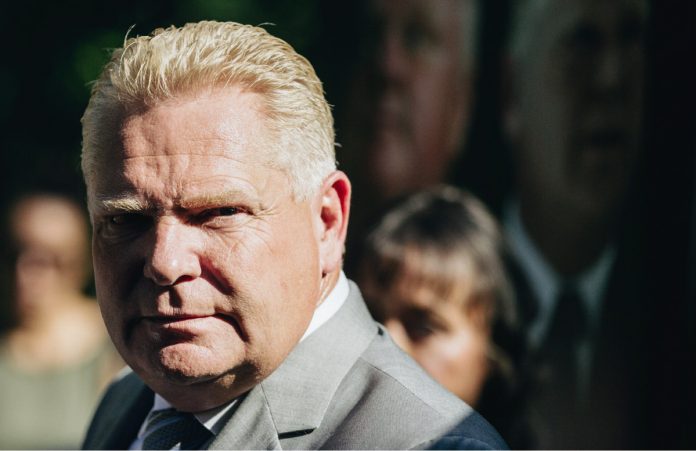
Ford became PC leader in March, with no previous political experience aside from some experience with Toronto’s city council. He’s the brother of the late Rob Ford, former Toronto Mayor. Where his brother was caught smoking crack cocaine in his office, Doug Ford has a history of dealing drugs in Toronto’s wealthy suburbs.

     If you think that picking a new leader four months before the election seems rushed, you’re right — but former PC leader Patrick Brown resigned from his position amid sexual misconduct allegations, and abandoned his second attempt at the leadership race once Ontario’s Integrity Commissioner started looking into his personal finances.

     Ford’s rise from city counsellor to provincial premier seems haphazard. Especially disproportionate is the fact that Ford didn’t win the popular vote in his party’s crazy leadership race, but brought them to an overwhelming majority with 76 of the province’s 124 seats. How did this happen? Party politics, my friends.

     Put simply, party politics are a form of politics where support relies more heavily on the party in question than on its particular decisions or policies. You may always vote for Party X regardless of its new policies, just because it’s Party X and you always vote X. You might disregard Candidate Y in your riding even if they are the most competent or experienced, simply because they are a member of Party Y that you traditionally dislike. While party affiliations themselves aren’t bad, party politics can lead voters to become uncritical.

A quick look at Kathleen Wynne and Andrea Horwath

The Liberals had been in power in Ontario for over a decade, most recently under leader Kathleen Wynne. Their loss was no surprise, not even to Wynne, but the severity of the blow definitely was. The Liberals experienced their biggest losses since 1943 (a loss of 48 seats), leaving them one seat short from the eight seats needed to remain an official party.

     Wynne’s approval ratings dipped to 12% (34% within her own party) despite Ontarians being generally satisfied with her policies. Ontarians were just over her place as party leader despite her qualifications, and threw their hypothetical Liberal baby out with the bathwater. While Wynne has definitely made some unpopular and hard decisions and earned some Ontarians’ distaste, sexism and homophobia may have had a part to play in her demonization.

     If party politics weren’t apparent enough, it’s worth noting that the Liberal and NDP platforms were ultimately quite similar. The NDP, under Andrea Horwath’s leadership, won 40 seats. Her party also became the Official Opposition, and performed better than it had since 1990.

     The rise of party politics has vast implications. For one thing, it encourages strategic voting, as opposed to encouraging candidates to vote for the candidate best suited for their particular riding and its needs. This election, long-time Liberal Members of Provincial Parliament (MPPs) have been unseated, like Jim Bradley, who won’t be in Queen’s Park for the first time in 41 years. When individuals and parties get confused, it means that candidates and leaders can get away with a lot more, protected by their banners. Example: the PC failed to release a full, costed platform before election day.

     A special shout-out goes to Mike Schreiner: not only is he the first Green Party Candidate ever to be elected provincially or federally in Ontario (Guelph), but he led the polls by 24%.


Electoral turnout was just plain sad

A measly 58% of Ontarians went to the polls in 2018, the Windsor-West riding boasting the lowest at 43.83% turnout. That’s about two out of five people voting. It’s 8% lower than the turnout for the 2015 federal elections (used to calculate the national average), which wasn’t so hot either, and 3% lower than B.C.’s 2017 turnout.

     According to Elections Canada, in 2015: “. . . the most common reason reported for not voting was not being interested in politics (31.8%), followed by being too busy (23.5%) … Other frequently mentioned reasons were an illness or disability (12.5%) and being out of town (11.9%).” Age and education are also commonly understood factors in low turnout. In 2014, only 34% of 18-24 year-old Ontarians voted — which was higher than the 24% in the 2011 elections— but historically, voter turnout for the elected party has always been higher when the PC came to power.

     Put simply: we care about this because a high turnout means that more voices are factored into the government’s composition, and our generation tends to slack. In Ontario, three ridings’ results were decided by less than 100 votes. That’s absolutely wild. The lesson here: numbers do show the power of a single vote. I have absolutely zero pity for the Ontarians who didn’t vote this election, and don’t want to hear any of them complain for the next four years.

Fuel to the fire: Questioning the first past the post system

A relic of the British politics from which Canada emerged, the first-past-the-post system has been seriously questioned. First-past-the-post means that small pieces of each province, ridings, each elect one MPP.  Most MPPs represent a party, and the leader of whichever party wins the most seats become Premier. Fair Vote Canada (an organization against first-past-the-post) calls Doug Ford’s victory a “false majority,” and even compare his election to Donald Trump’s rise.

     The numbers are jarring: Doug Ford’s government will have 76 seats after earning 40.49% of the vote while the NDP (the Official Opposition) will have 40 seats after winning 33.57% of the vote. The two parties are only separated by 396 848 votes, but seem worlds apart.

     B.C. will be holding a referendum this fall on the subject of electoral reform, possibly transitioning away from the first-past-the-post system. Broken promises regarding electoral reform are among the biggest catalysts for complaints about Trudeau’s government. The upcoming Ford government will add fuel to that fire. This may be of particular importance in Ontario, where federal and provincial ridings are the same, as far as Trudeau’s hopes for a 2019 re-election are concerned.

With Donald Trump’s horcrux comes populism’s Canadian debut

A history professor once mentioned that comparisons between politicians — especially extremists (she used Trump and Hitler as examples) — are not particularly helpful or productive. She recommended comparing situations and contexts.

      Here’s something that can be said for Ford’s election: for one thing, he did not ride on anti-immigration waves. But he did lie wildly.

     For example, while discussing each political party’s finances, he told journalists that: “We’re the only ones with the proven track record, that did what we said we were going to do, which was save the taxpayers money…” The track record from Ford’s time in Toronto’s City Hall is not as promising: most of this extra money came from the elimination of 1,268 full-time and 271 part-time jobs (despite his claims that “not a single person got laid off”) and he lost Torontonians 200 million dollars in revenue by eliminating the Personal Vehicle Tax.

     Now that he’s on the provincial stage, though he’s the first to complain about Ontario’s debt, his spending plan will add $10 billion to the already existing $11 billion deficit. To quote The Globe and Mail:

“With Mr. Ford, it’s populism with all its worst characteristics and few of its better ones: sloganeering, simplistic nonsense for policy, appeals to base instincts, and the belief that government is the problem, even the enemy of the people’s interests . . . It was only a matter of time before a reaction – or revolt – against ‘identity politics’ arrived in Canada, since it had already manifested itself in other Western democracies. It hit first in this Ontario election; it will hit elsewhere . . .”

     Gaps in voters between multiethnic urban regions and rural ridings are becoming more and more common in provincial politics, which makes Ford and potential copycats a matter of when, not if.

     One of my worries for Ford in particular is actually his Twitter handle: @fordnation. “Ford Nation” was a slogan under which Ford campaigned. With our Premier-designate so well branded to represent his supporters, I’m anxious to see how he’ll transition to represent all Ontarians, including the 59.51% who didn’t vote for him.

Consequences on the horizon

Ford has shown little interest in listening to racialized communities. He has promised to reinstate TAVIS, which one activist called “a racist police division,” and skipped a debate organised by Toronto’s Black community. Indigenous Ontarians are also skeptical.

     Ford will attack legislature that protects women, especially their rights to safe, secure, unharassed abortion . . . Ford has a choppy history with women, calling them shrews, little bitches, mentally unstable, and dismissing other PC leadership candidates by comparing them to “his wives and daughters.”

     Ford has a history of dodging journalists. On the campaign trail, he hired his own private journalist to cover his activity.

     Ford has neglected the province’s Franco-Ontarian minority. The French version of the PC’s official website vanished. Ford was the only party leader not to use French in his victory speech (Wynne’s was bilingual and Horwath gave us a ‘merci beaucoup’). When asked if he would learn French by Radio-Canada (AKA French CBC), Ford answered that he would love to — because that way, he could communicate with Québécers. Unfortunately, they do not make up his voting base.

     The future for Ontario, with Doug Ford at the helm, is uncertain. Keep an eye on the province, but keep its strange politics in mind as the Ford government unfolds.

SFU conspiracies: the ski resort theory

4
Illustrated by Marissa Ouyang

By: Hannah Davis

Does anyone else think it strange that Simon Fraser University is placed right on the top of a mountain? Do you know what mountains are for? They are for climbing, not learning. They are also for staring at, from a distance, while wondering how many bears and cougars live on them. Most importantly, mountains are for skiing.

None of this involves learning. That is why I know that SFU is not a university at all, but a future ski resort, and we, the “students,” are its future staff.

On a cold and snowy day one upcoming winter, there will be a reunion of every SFU student ever. At this reunion, SFU’s president will announce the closure of SFU: Simon Fraser University and announce the opening of UFS: Unbelievable Fun Skiing Resort.

Each part of the university will undergo a makeover to become more hospitable: the residency will turn into hotel rooms, the gym will turn into a ski and snowboard training centre, and the library will become a six-floor equipment rental and repair shop.

They will then announce the true significance of the diplomas that each student received when they graduated. On the back of the diploma, in tiny invisible ink, is a clause stating that in receiving their degree and graduating, all grads are actually agreeing to be a lifelong employee of the future UFS.

The first announcement will be met with confused claps, while the second announcement will be met with screaming and pandemonium. As people try to escape the mountain, we learn that the fake university knew all along that transportation to and from the mountain would be cancelled when the weather got a little snowy, and that students would be stranded on the icy peak.

While ex-students wander bewildered in the ever-falling snow, trying to think of an exit plan, the professors will reveal their true identities as various professional skiers with a passion for hospitality. They will explain one by one that it was their dream to open a luxury ski resort with a team of staff that are unable to quit. With the students trapped on the mountain, they’ll hand everyone their staff uniform, which the new staff will have to pay for, reminiscent of when they graduated and had to pay to rent their gown.

You know the new “student centre” building thing the Simon Fraser Student Society is building that no one cares about? That is going to be the hotel lobby combined with a luxury restaurant. And all the construction on campus? They are really making add-ons for the resort, as well as upgrading existing structures, not for us but for the future guests.

As you probably do not know, SFU actually stands for the Ski Forever Union, a secret group of people wishing to become the largest ski-resort chain in British Columbia and maybe even the world. Their motto is “Ski Forever,” which is both alarming and threatening, because it sounds like a command as well as a bad tattoo. You may think that this theory has no evidence to support it, but think about it. Why else would they build a school on something as inaccessible as a mountain, if not to trap us on it one day?

Adulthood 101: Student recipe box, part 1

1
Illustration credit, Tiffany Chan

By: Alannah Wallace 

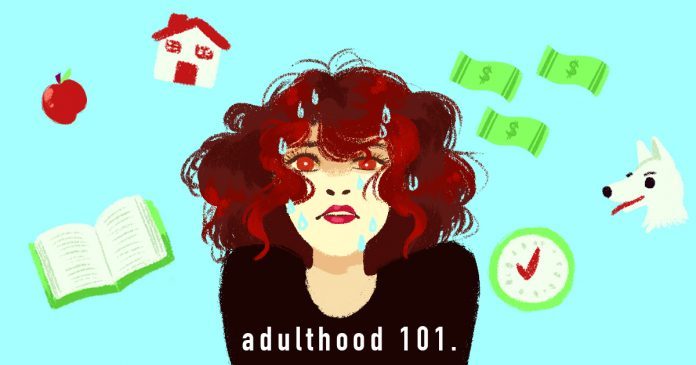
We all have those days where we just want to come home and throw together something easy that only involves a few ingredients. Plus, we don’t have time between midterms to be spending hours in the grocery looking for obscure spices we’ve never heard of before. Here are some links for some super simple recipes that don’t sacrifice taste!

Today’s recipe categories: Parent Pleasers, Vegan Dishes, and Easy no-guilt desserts. All recipes have been chosen because they’re easy, affordable, or require few ingredients.


Parent Pleasers

When we leave home to go to university, I’m sure each of our parents has an image in their head of their kid crying in the corner of their dorm room, eating ramen every night for dinner. Well, this might be true some of the time, but let’s show them we can take care of ourselves and eat something with real nutritional content.


Carrot ginger soup

The Ladle at SFU (R.I.P.) used to have this awesome simple carrot ginger soup on a weekly basis. I hadn’t seen it anywhere since their move, so desperate times called for desperate measures: I found my own recipe. This is pretty easy to make, and the ginger will help to fight off the mid-semester sickness that always goes around.


Pork with apple chutney

Even if you aren’t a chutney type of person, you will be after this recipe. Made of simple ingredients, the apple chutney mixed with the spiced pork tastes like an expensive restaurant meal. Your parents seriously won’t believe you made this.


Gordon Ramsay eggs

Are your parents coming from out of town to visit for a few days? Take breakfast as an opportunity to show them you know, not only how to survive, but also how to make uni gourmet. This new way of making scrambled eggs will change your life. They are so soft, fluffy, and creamy that you will never do a normal overcooked scramble ever again. Try adding dried oregano or basil.


Mac n’ cheese

Ignore the disappointment on your parents’ faces when you tell them you are making them mac n’ cheese for dinner. This recipe has more of a sophisticated spin on a classic cheap survival meal for university students. You’re not just getting out a box of 99-cent Kraft Dinner: this recipe has creamy sauce and additional suggestions to add veggies. Without any added flour to the sauce like the boxed kind, it is also easy to make this recipe gluten-free.   


Awesome Vegan Dishes

Below are multiple different dishes that incorporate a vegan’s main source of food, lettuce and carrots. Just kidding. Whether you’re eating vegan for the environment, your health, or ethical reasons, or if you’re just cooking for a friend; there are a ton of creative dishes for vegans out there that surpass the stereotypical meal of carrots and lettuce.


Crispy Spicy Roasted Chickpeas

Instead of reaching for a bag of chips, quickly mix together some salt, pepper, cayenne, cumin and olive oil for your chickpeas and roast them in the oven. These are so crunchy and satisfying, you really won’t miss the chips. This is a good way to snack but also get some protein while you’re at it!


Thai Curry

This is so easy to make, and one of the most filling dishes I’ve made. It doesn’t need any type of meat component to keep you full for hours. Impress your friends by making a sauce from coconut milk instead of using the jar from the grocery store, it’s way better.


Veggie Burgers

Veggie burgers can be hit-or-miss, whether you make them at home or order them in a restaurant. For this recipe, the author took special care to make sure their burgers wouldn’t be soggy in the middle or fall apart, and would be crispy on the outside, soy-free, flavourful, and could be cooked on the frying pan, in the oven, or over the BBQ. There’s a reason why this is a five-star rated recipe.


Spaghetti Squash Pasta

Not only is this dish vegan, but it is also the perfect option for people who are trying to cut down on carbs. Instead of regular pasta, this recipe uses spaghetti squash as its base, and nutritional yeast instead of parmesan.


Healthy No-Guilt Desserts

It’s easy to catch yourself binge eating while studying for an exam, pulling an all-nighter to get that last term paper done, or after waking up from a school-induced sadness nap. Instead of instantly regretting your binge session and spiraling closer to gaining that freshman 15, here are some sweets with a healthy spin on them so you don’t feel quite as guilty.


Coconut Oil Chocolate Peanut Butter Cups

Most of the ingredients for this treat are in its name — it’s that simple. The peanut butter cups you buy from the store have so much extra crap in them and contain ingredients you barely recognize. These are so easy to make: you throw together four ingredients, toss them in the fridge for only 20 minutes, and then you’re done!


Black Bean Brownies

Okay, hear me out for a second. I know it sounds weird, but it doesn’t taste anything like beans, I swear. It tastes great and you don’t have to feel so guilty snacking on these during exam period. It’s a great high protein way to satisfy that sugar craving during library sessions.


Chickpea Peanut Butter Cookies

Yes, I am trying to make you eat more legumes by hiding them in your desserts. These are easy to pack for classes, work, or hikes. Put them in a container and pop one in your mouth anytime you need a little sugar boost. Just make sure not to store them in a ziplock bag or you’ll end up with a bag of cookie-smoosh.


Quinoa Breakfast Cookies

This is another way to incorporate healthy food into sweets. Instead of using wheat flour as a base, quinoa is packed with protein, iron, and other nutrients while still maintaining a flavourful, earthy taste. Bonus: these cookies are filling and can double as a breakfast food.

Diverse casting in media lets people view themselves more positively

0
Photo courtesy of Disney

Written by Stefanie Baltasar, SFU Student

Representation and diversity in media matters. It’s not about being politically correct or about tiptoeing around discourse about racism and sexism. It’s not even about capitalism. It’s about giving people role models and main characters who are like them. Movies such as Black Panther, Coco, Wonder Woman and Star Wars: The Force Awakens don’t star a white male protagonist and instead, showcase more diverse characters. Fully describing how much that matters would take me forever, but here’s
a summary.

These are all examples of media where different people are being given the spotlight. It’s not pandering because these movies are not casually tossing in a stereotypical gay person or person of colour in the background to “diversify” an otherwise all-white cast. These movies give them the spotlight. When you have a protagonist that you can immediately go “this person is like me, this person comes from a similar background, from my background,” it makes a difference in how you view yourself. It’s going to make a difference to kids who will grow up wanting to be like Wonder Woman, Rey, or Black Panther. They now have someone to look up to that they can also instantly relate to.

Using historical figures is another great example. Yes, they were in the background and not the spotlight, but that doesn’t mean that their work was not important. Media doesn’t have to showcase the blatant racism in history to be important. Racism isn’t a part of Coco’s plot, but Coco is also a movie where anyone can relate to a non-white
main character, and that main character is not white. It maintains universality through common themes of growing pains and family fights, and Miguel isn’t a white American or Western European protagonist.

Coco can be considered “just another Disney/Pixar movie” and Wonder Woman “just another superhero movie,” but honestly, that’s not necessarily a bad thing. They stand out because Coco features Mexican characters, and Wonder Woman features a female superhero — but it’s also important to note their similarities to movies featuring non-female, non-Mexican protagonists.

The lack of differences promotes relatability and solidarity. It removes the assumptions that just because someone looks different, they have to be different and foreign to us. Canada is a multicultural community, with people of all different backgrounds living in close proximity to each other. With movies like Coco, Moana, and Black Panther, we get to know a little more about other cultures, about each other. Showing off surroundings that lead to stereotypes, like Coco’s grandma feeding him tamales (i.e. the tough Mexican grandmother “I will feed you” stereotype) and breaking stereotypes are both important.

If all you have taken from this article are some movies for your “to watch” list, then I’m still going to take that as a win. I’m hoping a day will come when we don’t have to make a big fuss about representation. It will just be there, as commonplace as a white
male protagonist.

POLITICAL CORNER: Refusing to reform Northern Ireland’s abortions law is a step backwards for the nation

0
Photo courtesy of The Times of London

Written by Winona Young, Staff Writer

The United Kingdom courts recently dismissed the appeal to reform abortion rights for Northern Ireland. This is an immense disservice to women. It’s plain and simple: Women need the right to terminate their own pregnancies. Anything less robs a woman’s agency over her own body.

A member of the Northern Ireland Human Rights Commission (NIHRC), Les Allamby, argued that the current laws in place were “incompatible” to human rights. Allamby is right. Dismissing a woman’s agency over her body affects her life path financially, physically, and emotionally. The Northern Irish Assembly has been at a hiatus regarding this decision for too long.

Northern Ireland is the only place in the British Isles where abortion is only allowed for certain cases. It is only permitted if a woman is physically or mentally threatened by the fetus. This is as if to say that a woman can only gain control over her body if she is severely in harm’s way.

Since it is the only case in the British Isles, UK Prime Minister Theresa May needs to be proactive with her voice and advocate for these women’s rights. Simply referencing women’s’ rights to abortion on the way to the G7 summit is great talk. But right now, it’s only that — talk.

The Northern Irish Assembly along with the UK haven’t followed countless European countries’ approaches to abortion. They have not recognised that over 66% of the Irish Republic’s voters voted to repeal their constitution’s old prohibition of abortion. It’s up to those in power like Theresa May to help push abortion reform for Northern Ireland. Otherwise, generations of women of Northern Ireland will suffer.

SFSS logo used to promote event without the society’s knowledge

1
(Photo courtesy of The Star)
By: Gabrielle McLaren, Features Editor


On June 21, students noticed posters going up around the Burnaby Campus advertising “Get-a-Grip 2018: A ground-breaking youth conference.” This year’s theme “LGBT: Let God Be True” concerned students as the posters had been put up by the Redeemed Christian Fellowship (RCF), a club recognised by the SFSS.

     According to the poster, one of the event’s facilitators is Kari Simpson, Executive Director of Culture Guard, a group which has received heat in the past for its treatment of the LGBTQ+ community and its opposition to BC’s more inclusive sexual education curriculum.

     As concerns grew about the nature of the event over social media, SFSS released a statement saying that they were not aware that their logo was being used to promote the event. According to the statement, SFSS has instructed the club to remove the logo from all materials related to the event until they have had a chance to meet with representatives from the RCF and learn more about it.

     According to the statement by vice-president external relations Jasdeep Gill, “Typically, clubs submit their requests for printed materials (banners, posters, flyers, etc.) in advance, which provides us with an opportunity to review these requests and approve or reject them for publishing.” According to SFSS, this protocol was not followed in this case.

     Guidelines for printing can be found on the SFSS Brand Guide and the SFSS Printing Guidelines for Departmental Student Unions and Clubs. The latter reads that: “All promotional material MUST include an SFSS logo, regardless of funds used to print the documents, to remain an active club.” The SFSS Communications Coordinator is responsible for reviewing all material and ensuring that it corresponds with SFSS values.

     The SFSS statement ends by noting that “The Simon Fraser Student Society stands in strong support of the LGBTQ+ community. We have a long history of LGBTQ+ advocacy and have also established and continue to support an active Out on Campus office. While we support the right of our student clubs to determine and advocate for their own beliefs, we do not support any speech that is hateful, racist or otherwise demeaning.”

     The venue scheduled to host Get-a-Grip 2018, the Anvil Centre in New Westminster, also announced that the event did not correspond with their space allocation policy, and that they would no longer be hosting the event. Simpson informed The Star of her plans to consult lawyers to contest the venue’s cancellation of the event.

     The Peak reached out to RCF and the SFSS for comment on Thursday night, but did not receive a response by the print deadline.

     More details to come as the story unfolds.

     With files from The Globe and Mail, The Star, and News 1130.

Witchling is a gorgeous, albeit incomplete, tale

0
Image courtesy of Renee Nault

By: Natasha Tar

I picked up this zine four years ago, yet even now I like flipping through it for the art. Witchling is a single-issue comic zine by Renee Nault, a Vancouver-born artist. The story follows a young woman and orphan, Jane, who’s outcasted for being small, extremely freckled, and able to talk to animals. She lives in a town called Lymes that’s next to a dangerous wood, which, like most dangerous woods, tends to attract people who are never seen again after venturing into it.

     The first six pages don’t contain a word of dialogue, but they are my favourite pages in the entire zine. The art shows a powerful dream sequence, rendered in watercolours and containing a gorgeous, peaceful woodland scene that becomes creepier and creepier as you read on. The whole zine follows this format, going from sweet and bright to dark and unsettling within a few panels. Despite this contrast, Nault masterfully balances these elements, keeping the art interesting and cohesive, and the dialogue snappy.

     The biggest problem I have with this zine, however, is that the story was never finished. Online you can find scenes beyond the first comic that should’ve been made into a second issue, but this never happened (which will always be a disappointment for me). I think this has something to do with her work on the graphic novel adaptation of The Handmaid’s Tale, which was apparently supposed to come out in 2017, but didn’t. Unfortunately, while her art is detailed and beautiful, Nault seems to be a master of empty promises, which deters me from picking up her stuff in the future.

Witchling is available online for free.

SFU PhD student awarded Wendy McDonald “Women to Watch” Diversity Award

0
(Photo courtesy of Careesa Liu)
By: Kitty Cheung, SFU Student


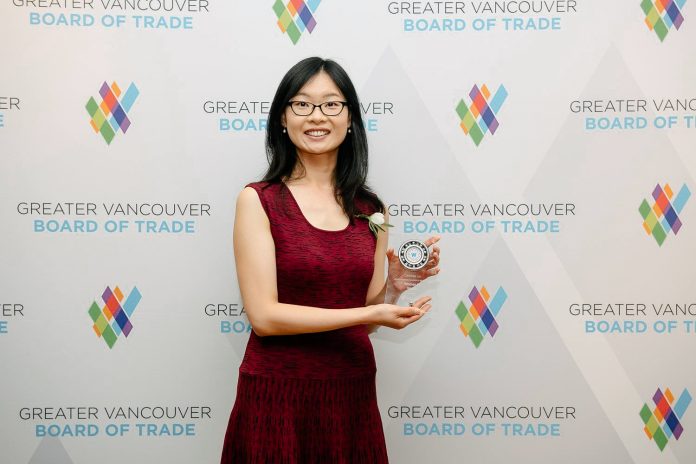
The Wendy McDonald Diversity Awards, hosted by the Greater Vancouver Board of Trade’s Women’s Leadership Circle, celebrates gender and diversity in leadership. This year, an SFU engineering PhD student has won in the “Women to Watch” category.

     Careesa Liu, a biomedical engineer and co-founder of the Surrey Collaborative Outreach and Research Experience (SCORE), is the 2018 recipient. She has earned the award for her research in brainwave-based technologies to assess brain function, as well as for her leadership in a healthcare training program for youth.


On women’s empowerment

Named after Wendy McDonald, the board’s first female chair, Liu describes this award, which recognizes women under 35 who have made a difference in their organization, as an “incredible honour.”

     “Wendy McDonald was truly a pioneer who helped pave the way for so many women afterwards,” wrote Liu in an email interview with The Peak. “She worked tirelessly and led her family business to become a multinational conglomerate – at a time when few women even worked outside the home, and in an industry that is extremely male-dominated.

“I’m still in the early stages of my career, and receiving an award in [Wendy McDonald’s] name is a great inspiration for me to continue pursuing my passions and try to follow in her footsteps.” – Careesa Liu

     As a woman succeeding in another male-dominated field, Liu encourages other young women wishing to pursue science, technology, engineering, and mathematics (STEM) fields to “believe in themselves, work hard, and persevere. But more importantly, they should also seek out mentors (male or female) who can help guide and support them in their career, as there will be difficulties and obstacles along the way, but having the right support will go a long way to ensuring their success.”


In the blink of an eye

Regarding her passion for research, Liu speaks about how “something as simple as blinking your eyes can actually reveal so much about how our brains process information.” As many brain function assessments are behaviour-based and therefore subjective, Liu’s research provides an objective and non-invasive method by measuring the brain’s electrical activity, capturing how it responds to certain stimuli.

     In particular, Liu is looking into the cognitive functioning behind spontaneous blinking with its connection to the precuneus, a region of the brain involved with neurological diseases and disorders.

     “Being able to capture precuneus function using brainwaves from blinking has the potential to open a new window into brain function,” says Liu, “and [it] enables improved monitoring of brain function in diseases like brain injury and dementia.”

     Liu’s previous work as a biomedical research engineer at the National Research Council Canada allowed her to witness the “impact that advanced brain technologies can have on improving the care and quality of life for brain-injured patients and their families.” Her current research involves developing a form of technology that is “portable with fully automated software, easy to use, and produces results that are easy to interpret,” allowing her to fulfil her desire of pursuing knowledge while helping people.

     When discussing her work environment at the Surrey Neurotech Lab, SFU’s first clinically embedded laboratory located at Surrey Memorial Hospital, Liu states “I work with amazing people every day who are driven and passionate about not only advancing science, but also creating scientific breakthroughs that positively impact people’s lives. Most days we run studies or are huddled doing our respective data analyses and other graduate work, but that never stops us from joking around or poking fun at each other.”

     Later this month, Liu will be heading to Australia to represent SFU as a delegate at the International Student Research Forum, where she will share her learning with health researchers from around the world.


Developing Surrey’s human capital with SCORE

Liu was inspired by the advancements in technology and infrastructure around Surrey’s Central City community to create the Surrey Collaborative Outreach and Research Experience (SCORE) with co-founder Sujoy Ghosh Hajra. This youth summer course enables students to gain hands-on experience with medical technologies by pairing them with partner organizations.

     Students in the SCORE program have the opportunity to learn from university researchers, business leaders, and tech innovators by participating in service-learning experiences, seminars, and field trips. The SCORE program has received recognition by the SFU Surrey-Central City Community Engagement competition as well as the 2016 Global Best Awards for Excellence in STEM Education.

      With the development of SCORE, Liu has also been granted the Spirit of Canada 150 Award for outstanding community service: “In a way SCORE is a way to give back to the community, and for the young students in the community to gain access to the amazing opportunities being created here.”


With files from The Vancouver Sun.

An impulsive tattoo of your significant other could very well lead to a cover-up

0
Photo courtesy of Joni Edelman

Written by Simran Randhawa

Tattoos usually symbolize deep commitment, not only in a monetary sense but also through the requisite pain endurance and the permanency of the alteration. Tattoos can serve as artistic self-expression, mementos of significant life events, or symbols of love.

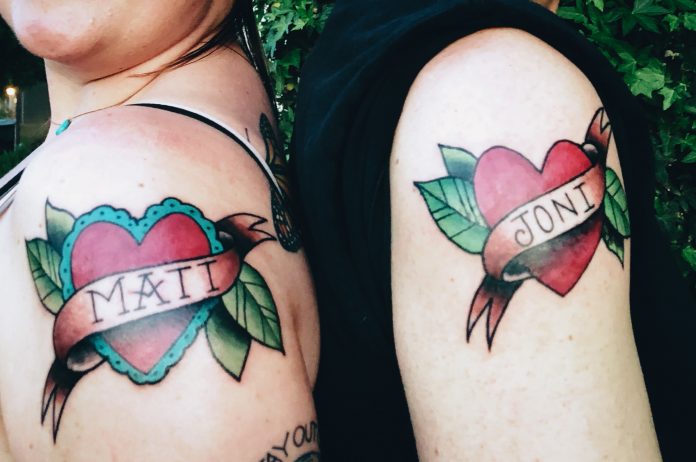
Over the past couple of years, people have started tattooing the names of their significant others or deceased loved ones. Getting a tattoo of the latter is a nice way to showcase their significance to you, but marking your skin with the name of your partner? That’s a dumb decision, considering the global separation and divorce rates. In 2017, the global divorce rate was 44%, up 3% from 2010 and 32% from 1960.

If you think your love will last, then congratulations! But what if it doesn’t? What happens to that patch of ink after you break up? You’ll either have to live with the regretful tattoo for the rest of your life or ask for an entertaining — well, entertaining for us — cover-up. From the infamous blackout cover or the simple strikeout, you scarred your body in a moment of passion. Does anyone not remember watching 500 Days of Summer? It should have taught you that your love is probably not the one that conquers all.

What makes relationships last is much more intangible than a tattoo: it’s commitment to the person in any situation, both good and bad, rather than extravagant overcompensation. It’s a good thing tattoos aren’t totally forever; there are always options of painful and highly expensive tattoo removal process to put a cherry on the already
painful breakup.

The latest in lovestruck tattoos are the two Pete Davidson got in commemoration of his girlfriend (and now fiancée) Ariana Grande. Not that this is the first tattoo ever created to celebrate Grande, as her fans have been doing it since she reached stardom, but getting a tattoo for a romantic partner is a little more risky than that. Davidson seemingly didn’t learn his lesson from covering up a tattoo of his ex, Cassie David. Davidson’s tattoos have been widely seen, so now the interesting part will be seeing how their
relationship unfolds.

The example of one Zayn Malik also comes to mind, back when he was still engaged to Perrie Edwards — you know, before Gigi Hadid. He got a massive illustration of Edwards on his arm and had to get that covered up with an even larger tattoo. That couldn’t have been a painless experience. As if that wasn’t a lesson enough, he was rumoured to have gotten Hadid’s eyes tattooed on his chest . . . yikes! Wonder what that cover up will look like.

Getting a tattoo is hit or miss. You could regret it in future because you no longer like looking at it, or maybe your workplace doesn’t allow tattoos. The worst tattoo regret of all is after
a breakup.

The pro of a tattoo in dedication to a romantic partner is that it’s a great expression of love. The only act topping that would be screaming into a microphone and having it go viral. The con is that you can’t take back the decision. You think seeing your ex is bad? Imagine having their likeness carved in your skin, or having to spend more money to remove it. None of these are feasible options to choose from. You know what some better options would be? Buy them a gift, cook them a nice dinner, or take them on an adventure. Don’t take the risk of a post-breakup tattoo cover-up.

The life cycle of the student

0
Illustrated by Tiffany Chan

By: Iain Edgar

To some, the student may seem to be a useless organism: a creature devoid of individual thought whose only purpose is to wander through the campus halls, wide-eyed and panicked. Organisms higher up on the food chain, such as professors and TAs, often see students as nothing more than parasites leeching off of them for the knowledge they have carefully gathered over their long careers. However, even these lowly life forms have a place in this ecosystem. In fact, every organism in the university depends on the tuition offered by the students for their existence — even the mighty professors.

The life cycle of the student displays three key variations, each shown in different stages of their university life: early, middle, and late. The first stage of the student life cycle is the early student, characterized by their bright eyes and enthusiasm. These hapless wretches complete their assignments and exams with cheerful exuberance, not yet understanding the toll the harsh university exerts on them. They still have bright ideas about the exciting ecosystems they could migrate to in the future: many speak of medical school and law school with hopeful optimism, not realizing the sad fact that most students never make it to such environments.

The early student leads a fearful life, going from hall to hall in a state of perpetual panic, feeding the ever-hungry professors with essays and regurgitating knowledge on command in the form of exams. There is no respite for them, for at any moment they could be given a new assignment, or suddenly recall the iClicker quiz they forgot they had the next day. Students flit from lecture to lecture, seen in magnificent droves throughout the hallways at key points in the day.

When not out and about, they are found huddled in lecture halls, their listening organs oriented towards the front. The early student has been shown to exhibit a particularly interesting biological adaptation: while their brains may be entirely asleep, their bodies can operate independently, scribbling down notes while they make up for the miniscule amount of sleep they received the night before.

It is around the second or third year that the student enters its next incarnation. Like a doughy caterpillar emerging from a cocoon to become a beautiful butterfly, so too does the early student lose its youthful enthusiasm. In its place forms a dour pessimism, and a dead-eyed shuffle. The lack of sleep along with the constant work have finally taken their toll, and from the ashes of the early student rises the next form: the middle student.

If possible, the middle student procrastinates and puts off even more than the early student, often not even showing up to class, claiming they will simply “retake it in the summer,” as if it were that simple. Many will take on secondary purposes at the university, performing research or providing assistance to the more tolerant professors while engaging in the most menial tasks. This is in the hope that the professor may offer them some evidence that they aren’t as useless as the rest of their kind in the form of a short letter.

The final iteration of the student occurs once they reach the fifth year of life within the university. If possible, this form becomes even more disappointed and withdrawn about their purpose at the university as they approach the end of their fabled “degree.” Often you will find them touting such false statements such as “Einstein failed math in school too,” just to make themselves feel better about their own grades. When this behaviour fails to convince even themselves, the late student will hastily hurtle to the end of their university career with reckless abandon, not realizing that, while the university ecosystem may be dangerous, the outside world is even worse.