Image courtesy of the North Carolina Appellate Practise Blog
By: Bernice Puzon
Summer is the time for beautiful weather, hanging out with friends, and if you’re lucky enough, taking a break from school. While you ideally want to be carefree during Vancouver’s most beautiful time of the year, it also helps to make some extra cash and gain work experience during a typically more laidback time of year. Finding a summer job doesn’t have to be a drag, and there are several cool opportunities throughout the Lower Mainland for students this season. Here are some options.
Job description: The beautiful Granville Island is a tourist attraction all year round, with its quaint storefronts, abundance of food, and charming marketplace. This definitely makes it an ideal place to work in the summertime. As a Granville Island Summer Ambassador for the Canada Mortgage and Housing Corporation, you’ll act as a front line of communication for visitors to Granville Island, providing information services and assisting at special events. Interested?
Deadline to apply: “The position will not close until the position is filled.”
Job description: Calling all aspiring anthropologists, historians, and, well, lovers of museums in general. This opportunity from the Township of Langley will have you handling exhibits and artifacts for their museum collection. You will be assisting with the set up, research, and marketing for upcoming exhibits while also trying your hand at completing your own curatorial outreach projects. Does this position speak to your inner arts and social sciences nerd?
Deadline to apply: Unspecified online, but training for selected candidates begins April 3
Job description: Think you have what it takes to help others in the event of an emergency? You could be doing this lifesaving work by being at the other end of the line and assisting those in need this summer. E-Comm 911 is hiring eight students to support the 911 operator program this summer. Full training is provided and there is an opportunity to continue this work on a part-time basis once you return to school in the fall. Students who are interested in a career in the public services sector might want to check this one out.
Job description: If you have a passion for working with kids, this annual opportunity will allow you to do just that while having fun in the sun. It’ll make campus seem a little less dreary since you’ll be making some extra cash while being looked up to as an almighty adult who offers guidance to the kiddos.
Good resources that can help you along
Indeed, LinkedIn, and job social media accounts: None of the above opportunities suit your fancy? Not to worry, as there are plenty of other search engines and portals where you’ll be able to find your next opportunity. Indeed has plenty of summer student listings, and unbeknownst to students, LinkedIn acts as more than just your online resume and has a fairly comprehensive listing of positions as well. There are also social media accounts that are specifically for posting jobs — one of the accounts I was recommended to check out as a communication major was the Twitter handle @BestJobsinVan, as Lesley Chang, the moderator of the account, shares positions on a daily basis.
myInvolvementSFU: This website is exclusively for SFU students, so you’ll have to log in with your SFU computing ID. It is a pretty cool job portal that lists on- and off-campus employment opportunities, volunteer opportunities, and career and development workshops that are happening around campus. Since it is a portal only available to SFU students, applying for on-campus job opportunities posted on here would mean you’d have significantly less competition than if you were applying for a position elsewhere. You’ll also be applying for jobs that are considerate of your student workload and schedule and will do their best to accommodate that.
Editor’s note: Want to have fun this summer? Check out our ‘Summer adventure roundup’
A road trip in the summer sounds like something out of a breezy, Hollywood movie. But you and your selected group of friends can’t drive? You’re looking for something a little more out there? I have you sorted, with ideas organized from closest to furthest from home!
Editor’s note: Prices below are subject to change based on time and season.
Victoria, British Columbia
The first destination is closest to home. The summer may be the perfect time to visit the province’s capital if you haven’t already! A ferry ride that takes you to Victoria is only about 40 minutes long and costs you a mere $17.20/person, with discounts for a group of 10 or more. Craigdarroch Castle is a must-visit when you’re in Victoria. It is one of the few Scottish baronial-style castles built in Canada, with beautiful stained-glass details and attractive woodwork. Another ideal day in Victoria for me, personally, would be a hearty brunch at one of the many restaurant options (check out John’s Place) and a visit to the Royal BC Museum. They have a wonderful natural history gallery with a mammoth-sized woolly mammoth exhibit, and a First Peoples exhibit with many tokens deeply rooted in the province’s culture and history. Finally, finish the day by taking a stroll through Victoria’s colonial streets.
Approximately a six-hour drive from Vancouver, Tofino is the perfect long weekend/summer getaway if all you want to do is relax and escape the city life for a few days. A Greyhound bus to Tofino costs around $53/person. Tofino is a good option for a lazy weekend trip, with a few outdoor activities. On the first day, when everyone’s energy is high, you can hike through the Pacific Rim National Park reserve and really connect with nature amongst all its greenery. The rest of your time can be spent in the hot springs at Hot Springs Cove, about a one-and-a-half-hour boat ride into Maquinna Provincial Park. Spend the rest of your holiday biking or lazing in the picturesque houses that are available on Airbnb.
Seattle, Washington
Seattle is the other, more international getaway for a (long) weekend. Just make sure you have the necessary documents and take one of the Quick Coach buses that run between multiple spots in Vancouver and Seattle! The fare for a ticket from Waterfront to downtown Seattle is only $48. It is not a rare fact that shopping in Washington is dramatically cheaper than in Vancouver, so shop your heart out at the many outlet centres. Some of the city’s many tourist attractions include the Seattle Space Needle, Pike Place Market, and the first-ever Starbucks! Want to try something extremely different? Get yourself a ticket for the Boeing Factory tour, through the Future of Flight Aviation Centre and geek out at just how exquisite airplanes are, for only US$25!
Maui, Hawaii
For a super sweet deal (found on secretflying.com), fly from Vancouver to Kahului for only $424. And do I really have to list out the wonders of Hawaii to you guys? Checkout ‘Hawaii Mermaid Adventures Hawaii’ to literally swim like a mermaid! If you ever get tired of the water and the golden sands, you can take a day to visit the Haleakalā National Park, which is the site of the dormant volcano, Haleakalā, and the pools of Ohe’o. These are freshwater pools and waterfalls among lush bamboo forests that are a breathtaking sight — Google it!
New York City, New York!
An easy flight that can be relatively cheap if you hop on a Cathay Pacific flight coming in from China and refueling in Vancouver (tickets are anywhere from $500 to $800, so book ahead!) Airbnbs can be approximately $50/night or less and the endless things that you can do in this city . . . The Empire State Building, the Statue of Liberty cruise (or the free Staten Island Ferry for a further-but-cheaper view), Little Italy, Chinatown, Soho, Times Square in Manhattan, and Grand Central Station are amongst the many popular tourist locations, but wander off the beaten path to personalize your trip. Food lovers going on this trip to New York? Track down the most authentic New Yorker bagels (tip: start at Zabars), or visit Katz Delicatessen for the love of the famous orgasm scene from When Harry Met Sally. From personal experience, I would suggest you don’t miss the Grand Central Oyster Bar, Junior’s Cheesecake, or pizza from any mom-and-pop shop that you can find.
Runner-up: Bangkok, Thailand
Vancouverites are especially lucky because if you’re going to fly to Asia from anywhere in Canada, this is the place to start! Secretflying.com occasionally sells round-trips to Bangkok for only $519, but the deals expire so keep an open eye and look around. If you want to unwind in a city that is famous for its wonderful mix of culture, history, and commerciality, Bangkok is for you. You can spend a day in the serenity of the Reclining Buddha at Wat Pho, or at the Grand Palace. Amongst the many other touristic attractions of the city, you need to take time out for street food when in Thailand. Places like the Victory Monument are where you can shop your heart out and indulge in some amazing street food. You can sample anything from assorted grilled meats, to some sour mango on a stick served with chili, to a Thai cotton candy that you roll in a crepe, to sticky rice with mango, to a special Thai iced coffee! (One of the few times following Tastemade on social media pays off!)
Editor’s note: Gotta work this summer? Check out our ‘Summer job roundup.’
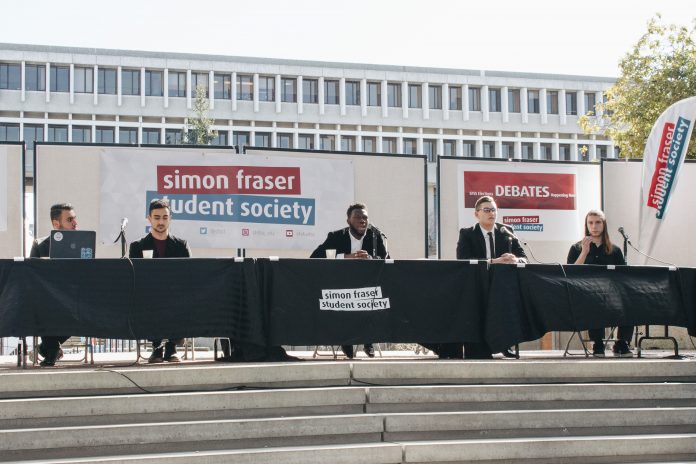
The two debates were held at the SFU Surrey and SFU Burnaby campuses. (Amneet Mann / The Peak)
The Simon Fraser Student Society (SFSS) hosted two debates in the week prior to the 2018 election voting period: one at SFU Surrey on March 12, and the second at SFU Burnaby on March 15. These debates, moderated by chief commissioner of the Independent Electoral Commission for the 2018 SFSS election Dee Gorn, invited candidates for each position onto the stage for a debate round which involved opening statements, audience questions, submitted questions, and closing statements, to give the candidates present a chance to defend their platforms.
For those who couldn’t make it out to the Surrey debate early in the week or the freezing cold Burnaby debate, The Peak presents a rundown of debate highlights for the SFSS 2018 debates.
At-large representatives
Alexander Krivoi was the candidate for only at-large representative able to attend the debate at Surrey. He emphasized his platform, focusing on the “social structure” of the school, calling SFU a “work-centred school” and stating that one of his priorities as at-large representative would be aiding SFU students in building “friendships that last a lifetime.” As a first-year computing science student, Krivoi admitted he was “not necessarily the most qualified,” when it came to internal experience working within SFU, but he cited four years of Downtown Eastside volunteering as evidence of his ability and desire to connect with the community.
At the Burnaby debate, Mohammed Ali, Arman Mohseni, Wareez Ola, and David Evans joined Krivoi on stage as the remaining candidates for the position.
Ali advocated for a wide variety of priorities such as a more connected community between SFU students, residence, athletics, increased awareness of the Kinder Morgan tank expansion project, needs-based grants, and a gondola. Mohseni’s platform was heavily focused on academic performance. Ola demonstrated a focus on increased SFSS engagement and accessibility of facilities for students on all three campuses. Evans, running as an independent, listed mental health resources on campus, fall reading break, and open textbooks as priorities.
When asked about their stances on increasing the SFSS’s contribution to the food bank, the majority of the candidates advocated for an increased contribution, with a percentage of the revenue from SFSS events being contributed to the service. They also proposed an increase in the number and diversity of events as a means of generating more revenue.
When a question prompted candidates to reflect upon how the current Board operates, candidates advocated for greater transparency. Mohseni and Krivoi mentioned consistency as an area for improvement. Mohseni identified continuity on the previous Board’s initiatives as a priority, so that initiatives could be carried through to the level of actionable steps. Krivoi spoke about conflict resolution between the candidates from different slates who are elected to Board, as he felt that in past years, the Board has experienced dividedness due to the issue.
Faculty of business representatives
Raunaq Singh was the only candidate for business representative present at the Surrey debate. His standout quote involved an assertion that “[business students] on average are definitely more engaged than other students at SFU,” and stated that as a representative, he would aim to implement that attitude to the rest of the student population as well. He advocated for greater involvement of the business representative in business club meetings as a way to establish greater presence among the business community.
The second candidate for the position, Jessica Nguyen, joined Singh in the Burnaby debates. The two candidates agreed on issues such as improving the 200-level course curves, increasing transparency between the SFSS and students, and improving the room-booking system.
Nguyen hinted strongly towards her experience working within the business community as part of JDC West, Young Women in Business, Enactus, and through her interactions with the current SFSS president as a strength for her candidacy.
Faculty of education representatives
Cameron Nakatsu and Leila Amouzandeh were both present at the Surrey and Burnaby debates as candidates for the position of faculty of education representative.
Nakatsu outlined “the classroom experience” as one of the most significant shortcomings he currently sees in the education faculty, promising to create a program that would allow the education student body greater volunteer opportunities in schools. Amouzandeh identified lack of engagement across all three SFU campuses as the main problem with the current education faculty.
In the Burnaby debates, Amouzandeh mentioned the program Steps Forward and increased accessibility as priorities she would pursue outside the faculty of education if elected as education representative, while Nakatsu aspired to bring greater awareness of the Professional Development Program qualification and application process to non-education students at SFU.
Both candidates demonstrated significant prior involvement in the community. Amouzandeh listed experience working as a peer mentor in the faculty, a Student Learning Commons learning and writing peer educator, and a member of the Education Student Association. Nakatsu spoke of his experience as current president of the Education Student Association, a SFSS council representative for the faculty, and student representative for the Faculty of Education Undergraduate Committee.
Faculty of arts and social sciences representatives
None of the candidate for the position of faculty of arts and social sciences (FASS) representative attended the Surrey debate.
However all three candidates, Ali Versi, Mehak Kalra, and Kailyn Ng, attended the debate at Burnaby, where they discussed issues such as increased mental health resources on campus.
Versi advocated for more events such as exercise sessions, meditation sessions, and animal therapy to be provided to students while they wait for mental health services. He also advocated for decreasing the wait time for these mental health services. Kalra agreed with placing a focus on increased events and departmental student union (DSU) meetings to promote mental health on campus. Ng listed more campaigns and an initiative to work for a mental health office, “a place for people to destress and gain knowledge for self-help, as well as drop-in counselling.”
Faculty of science representatives
Natasha Birdi and Gurprince Cheema debated about the level of engagement of students in science DSUs as candidates for science representative.
It was pointed out by Cheema that, while Birdi stated in her platform that engagement in DSUs has been experiencing an upwards trend, his research into attendance at DSU meetings concluded a decrease in engagement.
Birdi attributed the decreased attendance as being a byproduct of a lower food budget supplied for DSU meetings, and pointed to a 50% increase in attendance to the previous year’s science frosh as evidence for greater sustainable engagement.
Birdi was the only candidate for the position present at the Burnaby debate. She took the opportunity to demonstrate her extensive experience working within the faculty of science through science DSUs for the past five years, as well as her experience with the science undergraduate society. “[. . .] I know what needs are urgently required,” she stated.
Faculty of applied sciences representatives
Kiarash Mirsalehi was the only candidate for applied sciences representative that attended the Surrey debate, during which he focused in on increasing the space available on the Surrey campus for mechatronics and software systems students to complete projects such as soldering, which requires dedicated work spaces. He also advocated for greater transparency in the SFSS, stating, “I think the SFSS has done a fairly bad job of being transparent this semester.”
Fuyu Li joined Mirsalehi for the Burnaby debate, where the current faculty of applied sciences representative Jeffrey Leung asked the pair about the long-standing goal of applied sciences representatives to establish an Applied Sciences Student Union.
Mirsalehi maintained the position that “there’s no possible way we can get [the various applied sciences DSUs] to come together,” and instead of focusing on a student union, he advocated for increased faculty meetings between the DSUs and women groups already established in applied sciences. Li advocated for greater engagement and connectivity as a path towards a student union for the faculty, hoping to connect the student unions by giving students more leadership roles.
Mirsalehi had a strong moment in the debates as he highlighted his connection to the applied sciences community already, having gone to all DSU meetings and interacted with their respective presidents, worked on events such as frosh and dodgeball tournaments, and attended events such as the Polar Plunge and Pub Crawl. “How am I going to handle the workload? Well, I’ve been handling a great deal of it already,” he stated.
Li noted that her involved with the applied sciences community has not been as significant as Mirsalehi’s, but pointed to participation in volunteer events, Women in Engineering, and outreach programs as evidence of her involvement in the student community.
Faculty of communication, art, and technology representative
Amrita Mohar is the sole candidate for the FASS representative position. She attended both debates. The key issue she identified for the faculty is that historically, the communication, art, and technology representative does not have much of a presence or a voice in the student government, and this is something she hopes to change moving forward.
Faculty of environment representative
As the sole candidate for faculty of environment representative, Russell Dunsford did not attend the Surrey debate, but was present for the Burnaby event.
“I’m aware that I run unopposed in this election but, despite this, I still take the position and the campaign very seriously,” he stated, citing his involved in the environment DSU, student union, and faculty of environment during his time as a student at SFU.
Faculty of health sciences representatives
Yasmin Khalili was the only candidate for the faculty of health sciences representative position attending the Surrey debate. She reflected upon her faculty as having difficulty engaging students in events such as frosh, and proposed greater connection with other faculties, such as science and business, to learn techniques that will help the health sciences faculty grow.
For the debates in Burnaby, Christina Loutsik joined Khalili as the second candidate for the faculty of health sciences representative. Loutsik proposed impacting students outside of the faculty of health sciences by advocating for needs-based grants and open source textbooks.
To improve student life for health sciences students, Khalili advocated increased involvement of students in the faculty and creating connections between upper- and lower-division courses while Loutsik offered to hold more small-scale events so students can maintain the connects they make through their undergraduate experience.
Khalili also raised a potential initiative to bring forth more grants and awards for students that are based on factors other than academics to help alleviate student stress and financial burden, as well as needs-based grants.
VP external relations
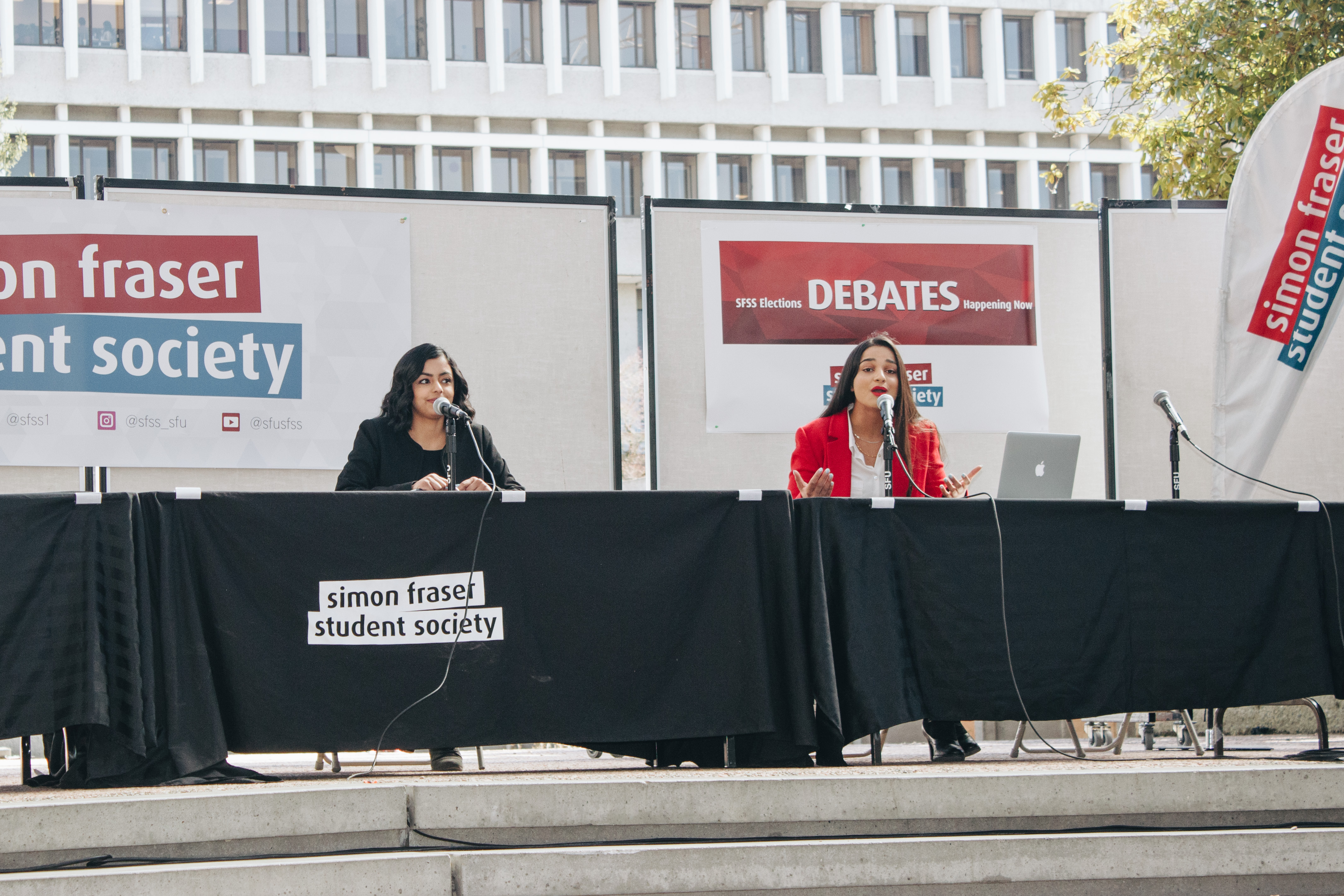
During the debates of VP external relations, candidates Jasdeep Gill and Livleen Sidhu presented different focuses for their platforms in the Surrey and Burnaby debates.
Gill presented a financial focus: she cited BC as the province with the highest amount of debt due to student loans, and outlined a plan to focus on needs-based grants for students, as well as potentially cut down the amount of interest rates the government places on student loans.
Gill also proposed meetings with the appropriate provincial government representatives to allow post-secondary institutions to take on personal debt to initiate student housing projects. Livleen noted that she had not written increasing student housing as a priority on her platform “because when [she] wrote her platform, [she] wanted to focus on things that were feasible.”
Jasdeep Gill (left) and Livleen Sidhu (right). (Amneet Mann / The Peak)
A key point Sidhu presented in her platform involved a greater focus on sexual violence prevention on campus. She demonstrated her passion for the issue through her experience providing opinions on SFU’s current sexual violence prevention policy as part of the Student Athlete Advisory Committee.
Gill agreed with Sidhu’s focus on sexual violence prevention, and proposed partnering with other student unions to determine the most efficient policies. “It’s not just an issue that affects SFU, but the entire province, and we can do a better job as a collective,” she stated.
VP university relations
Both Jackson Freedman and Colin Fowler as candidates for VP university relations demonstrated a focus on the gondola project and athletics during the Surrey debate.
Fowler mentioned a tailgate event the current SFSS attempted to organize, which fell through, as an example of the types of initiatives he would follow through on as VP university relations. Freedman, who was a part of the organizing committee for that event as FASS representative, pointed to regulations such as the alcohol policy on campus and due to the National Collegiate Athletic Association as reasons for why the event fell through, and pointed to ongoing efforts to overcome these barriers. Freedman also proposed optimizing the new Student Union Building to showcase the successes of SFU Athletics, and using the television screens around campus to livestream games.
The student group Hi F.I.V.E. made a strong showing at the Burnaby debates, as they questioned Freedman on the inconsistency between his current platform as VP university relations and the actions of the Board last year, on which he was the faculty of arts representative. “This year alone, your Board has rejected all of our funding requests,” stated coordinator Natalie Morin, “how can you convince health advocates like myself that you will keep your election promises?”
Freedman responded by outlining a plan in which the student group would be offered greater visibility and advocacy by him if elected to be a Board member next year. “A commitment SFSS made [this past year] was to contribute $75,000 to mental health in accordance with Health and Counselling [Services]. I’d like to see Hi F.I.V.E. have an important say in how that $75,000 is spent,” he commented.
VP student services
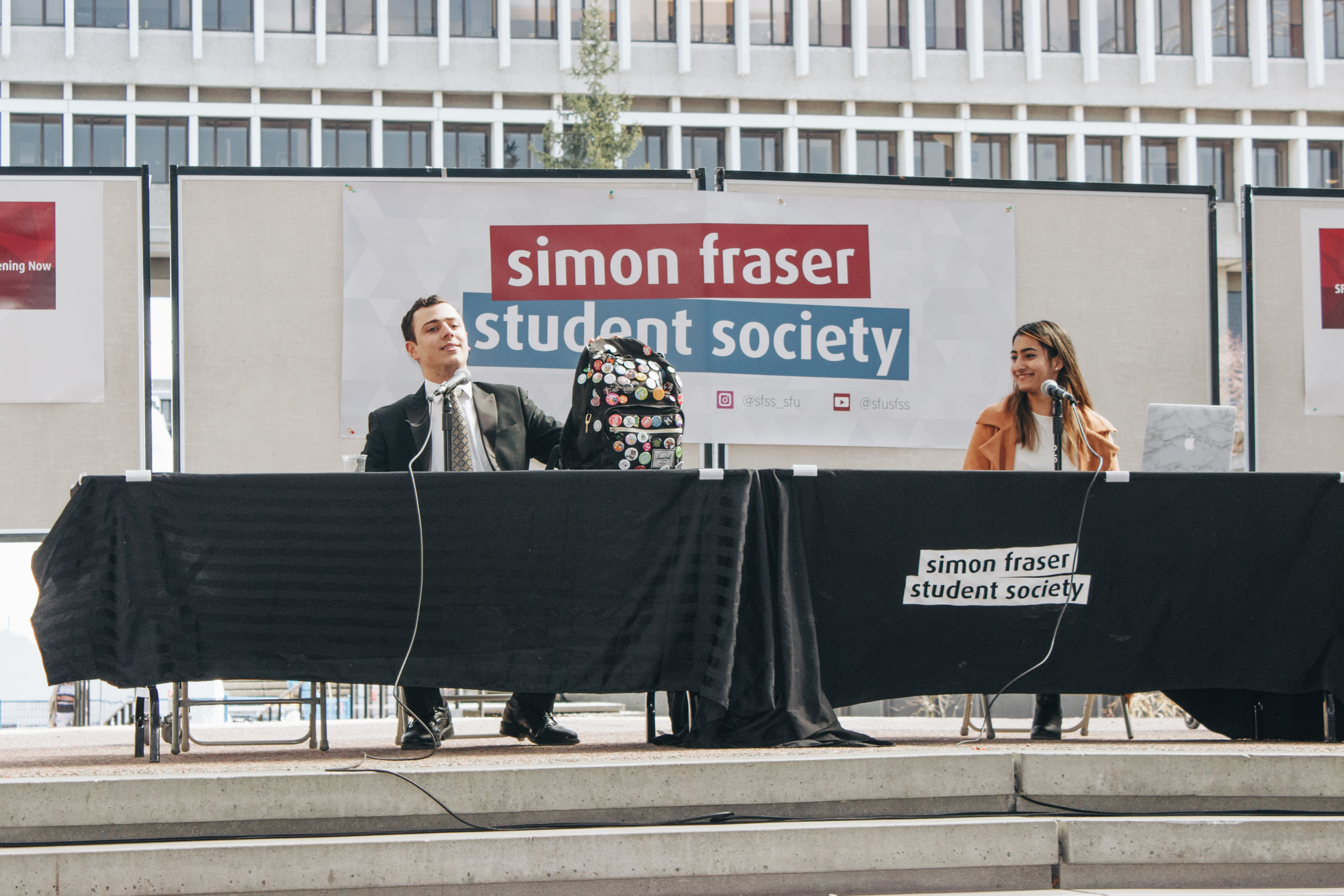
Samer Rihani was the only candidate for VP student services present at the Surrey debate. During his time onstage, he explained his “club matchmaker” proposal for SFU, modelled after a similar initiative from the University of Calgary which had proved effective for the post-secondary institution in increasing club engagement. The matchmaker algorithm would be presented as a questionnaire available on the SFSS website that would use a student’s answers to generate a list of the top clubs or activities offered at SFU that align with their interests.
Simran Sanghera joined Rihani as the second candidate for VP student services at the Burnaby event. The debate at Burnaby largely focused on the mental health of SFU students, which both candidates agreed was a significant priority of their platforms.
Samer Rihani (left) and Simran Sanghera (right). (Amneet Mann / The Peak)
VP student life
None of the candidates for VP student life attended the Surrey debate.
The Burnaby debate saw attendance from candidates Tawanda Masawi and Reza Mardan-Dezfouli. Masawi and Mardan-Dezfouli demonstrated significant differences in their platforms in relation to how they would encourage engagement at SFU and their stance on events.
While Mardan-Dezfouli advocated for a priority on in-person meetings between students and Board members to create more personal connections, Tawanda proposed a social media platform for all 16 Board members so that they can be more accessible to students on all three campuses. Tawanda noted that his proposal would require changes to the SFSS’s communication policies, but he commented that Mardan-Dezfouli’s plan of in-person meetings with all students was “not a smart goal, it’s not a cheap goal, and it’s not an attainable goal.”
Tawanda also noted that a key platform point for the InspireSFU slate was increased events. He maintained the position that “events are a temporary solution to a deeper problem, which is social isolation at SFU,” and pledged to target that problem directly through the SFSS. Mardan-Dezfouli retained that an increased number of events were the fastest method for students to engage with clubs and improve student culture.
Tawanda further dug into Mardan-Dezfouli’s campaign, calling his ideas “half-formed” and “generic.” He brought up one of the points of Mardan-Dezfouli’s platform regarding motivational events on campus: “I believe that [Mardan-Dezfouli]’s ideas on motivating people through mental health problems [show that] clearly my opponent has never heard of high-functioning. [. . .] I’m not so sure how hosting motivational speakers is going to address mental health problems at SFU.”
The heated debate between the VP student life candidates prompted Gorn to remind the candidates to “keep our statements peachy.”
VP finance
The Surrey debate saw no attendance from either of the VP finance candidates.
Matthew Chow was the only candidate attending the Burnaby debates. Chow spoke to a deep resistance to increase student fees for the purpose of paying for new student initiatives, advocating instead for cutting back on existing SFSS expenses. He also proposed education workshops for students to promote greater understanding of how the SFSS financial decisions will affect them.
President
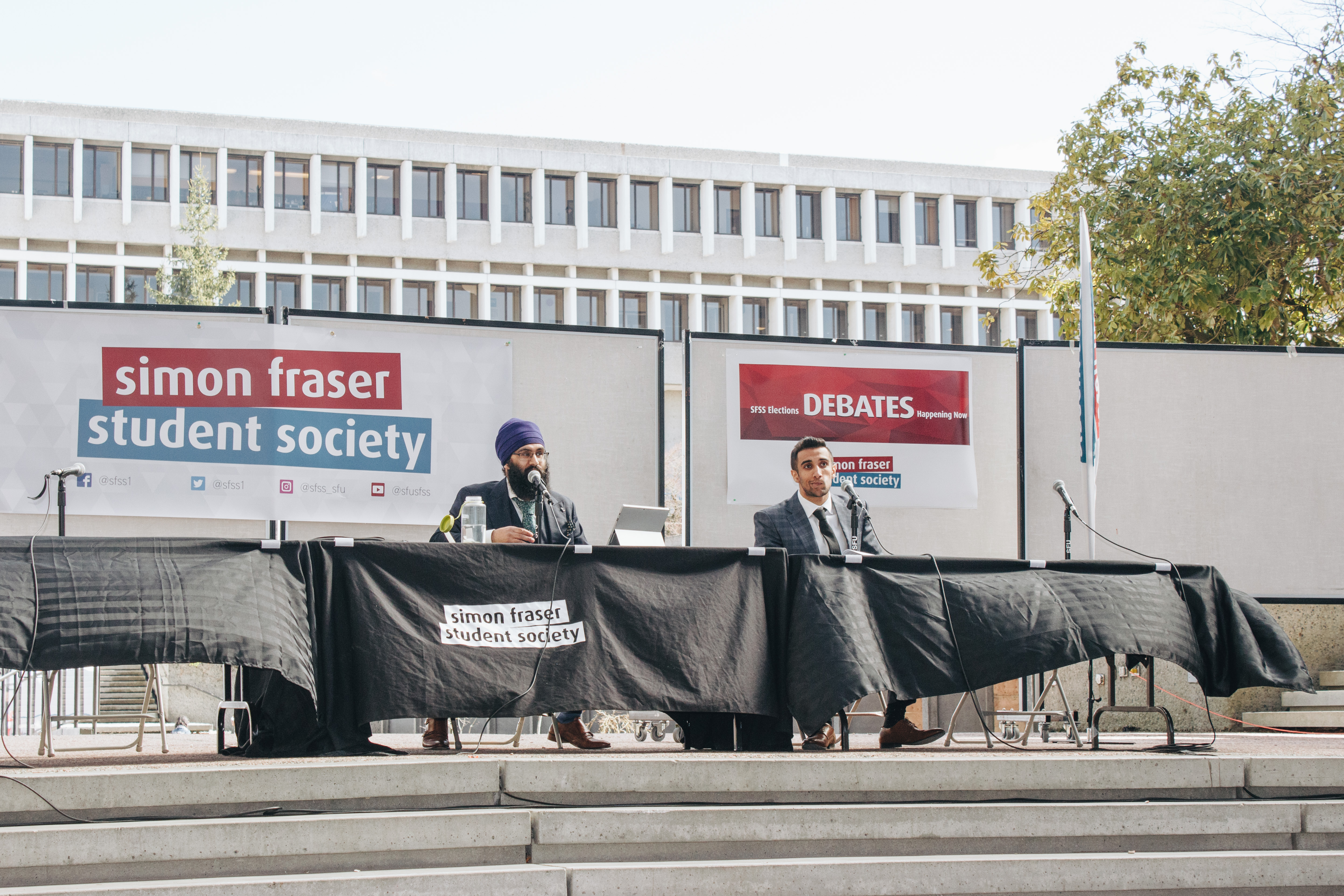
At both the Surrey and Burnaby debates, the two presidential candidates Jas Randhawa and Amar Singh took strong opposing stances towards the position.
Singh assumed the responsibility of bringing a fresh voice to the SFSS when he began his Surrey opening statement by clarifying that he “was not a career politician. [. . .] I do not have experience with the SFSS. I’m a fresh face.” When asked if he would classify his opponent as a career politician, he refused to directly answer the question but stated, “I have my own opinions, and we can talk about that afterwards.”
“I don’t want to degrade [Randhawa] for how he approaches things, but I think it’s important to be open and honest. But I just don’t want to degrade him in public.”
Singh further identified a large disconnect between the SFSS and students, and he proposed to mitigate the gap via an initiative titled “SFSS one-on-one” that would focus on building a relationship between students and SFSS.
Randhawa took the opposite stance as he advocated for team culture and minimal turnovers in the SFSS Board of Directors. “I believe experience is an important asset in the role of president.”
“My history of leading events with the student society, advocating for student concerns, and having knowledge of how the student society works will be beneficial for the upcoming year as the student society president.”
Amar Singh (left) and Jas Randhawa (right). (Amneet Mann / The Peak)
“In the past, when non-incumbents came onto the role, they had a difficult time just assimilating in and understanding the relationships that were formed with the university, our staff, and other groups on campus. [. . .] People can take advantage of you, seeing that you are a fresh face and whatnot. It has happened in the past.”
The recent bullying allegations that marked the beginning of this year’s election season was brought up during the Surrey debate. When asked about his views on the events, Amar responded, “We spoke with [the] people involved, [. . .] and they were saying there was no aspect of bullying, there was no aspect of harassment.”
Both candidates were asked about their plans to contribute to the Indigenization of the University as per the Truth and Reconciliation Commission. Randhawa advocated for increased access to student society and transparency as a strategy to promote Indigenization on campus. Singh mentioned connections to Reconciliation Canada as a channel he could utilize to support the cause.
“When it comes to Indigenization on campuses, I have a lot of background experience with our First Nations community, and I believe it’s incredibly imperative that we do what we can,” said Singh. He pointed to his plans to rename the James Douglas study area as an example of how he would support Indigenization of the university.
In the Burnaby debate, both Randhawa and Singh strongly advocated for their slates InspireSFU and ShiftSFU, respectively. When asked why mental health was not part of his platform, Singh pointed to his fellow slate members who had included the cause as one of their main platform points as a way to substantiate his platform.
“When I created my platform, a lot of it was looking at my team and looking at the holistic bigger picture,” he said. However, Singh ultimately agreed the lack of priority on mental health was an oversight of his platform.
Another strong stance Singh took was approachability: he routinely finished off his answers with an invitation to talk further on the matter. At the end of the Burnaby debate, he memorably recited his phone number to take further questions by phone.
The presidential debates overall assumed the predictable pattern of long, sometimes unfocused answers from Singh and short curt responses from Randhawa.
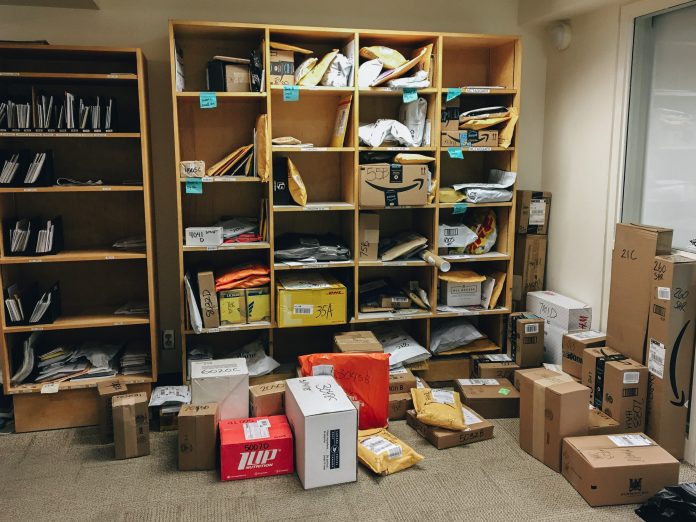
A student from Simon Fraser University has started a petition on Change.org for David Kor, the mailroom man from Shell House who is currently at risk of losing his job. SFU is moving the mailroom from Shell House to the Residence and Housing Office, and as a result, Kor would no longer be needed to serve students in this position.
In place of a mailman providing students with their parcels, the staff at the Residence and Housing Office’s front desk would assume the duty of handing students their mail.
The petition page describes the current situation in which Kor is being let go and talks about his friendliness, stating that he “has taken the experience of going to get mail and turned it into seeing an old friend that doesn’t just remember everyone’s name, but showers you with compliments and inquiries into your day with unrivaled enthusiasm.” As of March 14, the petition has garnered 2,366 signatures out of its total goal of 2,500.
In an interview with The Peak, Kor expressed sadness at being laid off and being told by his employer that he was no longer a good fit for SFU. He expressed a desire to continue to serve the students as the mailroom man, as he has done for the past 30 years, but admitted the scenario seems extremely unlikely.
However, Kor maintained a positive attitude towards the situation and expressed to his supervisor that his affection for the students would not end even if his job does. “I’m very happy I had many good days here [and] I shall have many good days in the future,” he said.
The comments below the Change.org petition are mostly written by students who have interacted with Kor at one point and are sad to see him go. One student described a time when Kor used his own credit card to help pay their UPS fee without blinking an eye. Another student recounted when Kor would relay to them news about their home country, even though he didn’t have to.
The initiator of the online petition has chosen to remain anonymous. They recently updated the site on March 14 with a notice stating that “there has been some progress in Kor’s situation.” However, they were unable to provide further details until they receive confirmation.
The notice also included a message from Kor:
“To the wonderful students that left messages of support. I am so grateful. Thank you.” – David Kor
Update: As of March 15, The Peak has been informed that Kor no longer holds the mailroom position at Shell House.
Canada and 10 Pacific Rim countries sign trade pact
Trade ministers from Australia, Brunei, Canada, Chile, Japan, Malaysia, Mexico, New Zealand, Peru, Singapore, and Vietnam signed a free trade deal to improve trade and remove tariffs. After the US withdrew from the trade pact, the remaining nations managed to drop key aspects wanted by the US, such as protection of intellectual property, and renegotiated the deal as the Comprehensive and Progressive Trans-Pacific Partnership. As one of the world’s biggest economies, the US was originally one of the largest supporters of the trade deal before its withdrawal.
Lack of aid for Papua New Guinea earthquake leaves victims angry
Papua New Guineans are angry at the slow delivery of aid 10 days after the region experienced a 7.5 magnitude earthquake. Although the Australian and New Zealand government have dispatched aircraft, funds, and personnel to help, many aid and government workers in area have been threatened by victims due to the lack of information and aid. The provinces of Hela, Southern Highlands, Western, and Enga are in states of emergency as Care Australia estimates that 500,000 people have been affected by the earthquake, and over 100 have been killed. Aftershocks are continuing to destroy homes, leaving villagers afraid to go out to find food and replant crops.
McDonald’s turns its sign upside down for International Women’s Day, sentiment backfires
McDonald’s franchises in the US flipped their iconic ‘M’ sign for the first time for International Women’s Day. The flipped ‘M’ — now effectively a ‘W’ — was meant to acknowledge “the extraordinary accomplishments of women everywhere and especially in our restaurants” according to a McDonald’s spokeswoman. About 100 locations in the US were thought to have participated, flipping their own store signs, as well as the logos on food packaging and staff uniforms. The sentiment backfired over social media, as users retaliated to the symbolic action under the hashtag #McFeminism. The restaurant was criticized over social media channels for substituting symbolic gestures instead of significant actions to promote social causes such as higher wages, better working conditions, and better responses to the sexual assault allegations the company faced in 2016.
Microsoft co-founder helps find World War II aircraft carrier
An expedition funded by Paul Allen, co-founder of Microsoft, has found the wreckage of the US World War II aircraft carrier USS Lexington more than 800 km off the eastern Australian coast. Allen has funded other expeditions which found other US, Italian, and Japanese naval ships. Allen provides aid to such expeditions in part because his father had served in World War II. The USS Lexington was sunk during the Battle of the Coral Sea on May 8, 1942 during which Japanese advance in the region was halted.
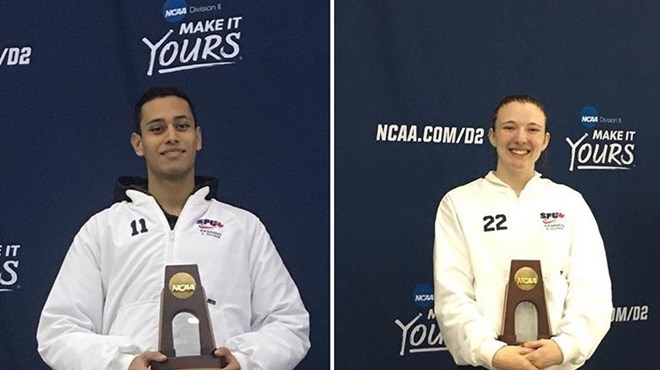
Swimmers Rolando Hernandez and Jessie Gibson are your newest SFU All-Americans. (Photo courtesy of SFU Athletics)
Editor’s note: At the time of publication, SFU swimming is still competing at the NCAA Championships, therefore some more All-American performances may still occur.
Over March 9 and 10, the SFU track team and SFU men’s wrestling team went to compete at the National Collegiate Athletic Association (NCAA) Championships, with the track team travelling to Pittsburgh, Kansas and the men’s wrestling team traveling to Cedar Rapids, Iowa to compete. For men’s wrestling, Morgan Smith became SFU men’s wrestling’s first two-time All-American, while the track team put out an All-American performance in the distance medley relay (DMR).
From March 14–17, the SFU swimming team will also be competing at the NCAA Championships, with the swimming ones held Greensboro, North Carolina. At the time of publication (March 16), however, the Championships had not yet finished, and so the final results were still not in.
Here are your newest SFU All-American athletes and performances.
Morgan Smith is now the only two time All-American in SFU wrestling history. (Photo courtesy of SFU Athletics)
Morgan Smith: All-American in men’s wrestling’s 197 pound weight class (third place)
Despite the All-American finish, Smith did not get off to the start he was perhaps hoping for, as he lost his second match of the tournament to number one seed Evan Ramos from Shippensburg University. The match could not have been closer, but unfortunately for Smith, he lost on a 6–5 decision. This was a minor blip in an otherwise stellar tournament for Smith, and he would avenge the loss later on.
In the consolation final (for third place), Smith and Ramos would face off against each other once again. This time, Smith (the tournament’s number five seed) would come out on top, and win third place as a result. It was a dominating performance, as he won 4–2. The two athletes have a history of facing off against each other, as Smith defeated Ramos in last year’s National Championship as well.
This caps off a terrific season for Smith, in which he went 41–8. With the third place finish, he is now SFU’s first two-time All-American in wrestling. More importantly, this caps off an exciting SFU career for Smith, who entered the season as a senior. Over the past three seasons, he has a dominant record of 108–18. In the NCAA era, he is arguably the greatest men’s wrestler that SFU has produced.
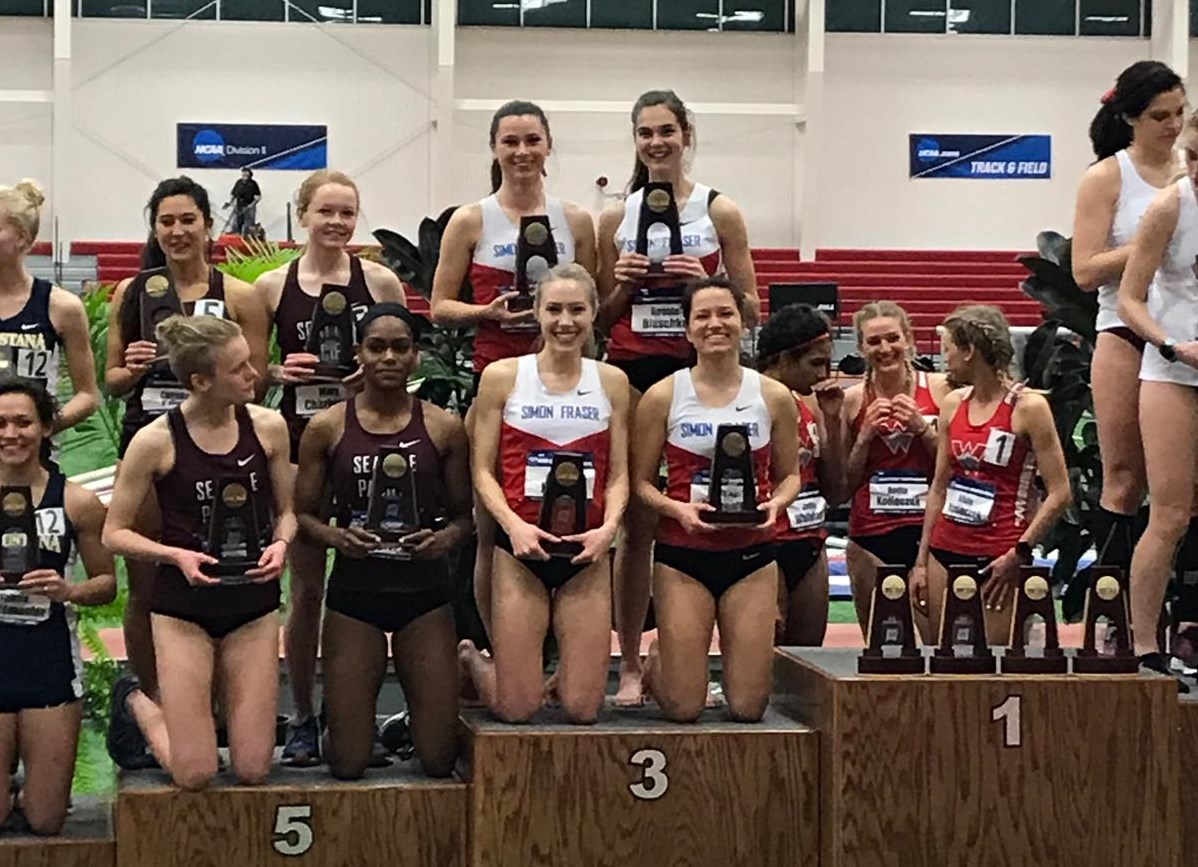
The Clan finished fourth, but was bumped up to third after Adams State was disqualified. (Photo courtesy of SFU Athletics)
Miryam Bassett, Renate Bluschke, Alana Mussatto, and Julia Howley: All-Americans in track and field DMR relay (third place)
Bassett got things started for SFU in the first leg, keeping SFU in the mix after 400 m in her first DMR for the Clan. In the second leg, Bluschke ran her personal best 400 m, putting in a dominant performance before getting the baton to Mussatto, who ran in the 800 m just a couple hours earlier. Despite this, Mussatto was able to move the Clan up three spots (from seventh place to fourth) in the 400 m stretch. The pressure was then on Howley, the anchor, who kept the Clan in fourth place to end the race, which matched their number four ranking coming into the race. The team would finish in third, however, as Adams State was disqualified, thus moving the Clan up a spot.
Three quarters of the group are in their senior season for SFU, with freshman Bluschke being the standout. As a 200 m and 400 m racer, Bluschke has enjoyed a fine first season for the Clan, capped off by some great experience at the NCAA Championships. She was SFU’s only freshmen to qualify for the tournament, and should continue to grow as an athlete as she progresses in her Clan career.
For Bassett, Mussatto, and Howley, this finish puts the cherry on top of their respective SFU careers, although they will still be competing in the upcoming outdoor season for SFU track and field. Bassett is typically a longer distance runner (800 m and 1,500 m) so running in the DMR was a relatively new experience for her, even though she is in her senior season. Mussatto, who also earned All-American Second Team honours for her performance in the 800 m, was a major difference maker in the race, and put Howley and the rest of her team in a position to succeed. Howley is no stranger to the podium, as she reached it in her first three meets for SFU’s cross country team back in September. Nonetheless, this All-American performance will certainly be another big takeaway from her fantastic senior season.
MacKenzie Hamill, Andrew Woinoski, Rolando Hernandez, Jessie Gibson: All-Americans inSFU swimming in a variety of events
Through two days in the NCAA Championships, the swim team has put together a great performance, with four individual All-American athletes already.
The first two to do so were Hamill and Woinoski, who were both competing in the 1,000-yard freestyle. After clocking their times in the preliminary morning heat, both athletes had to await their fate until the late evening when the final heat was done. With a time of 9:10.46 for Hamill and 9:12.50 for Woinoski, both got the nod as All-Americans. Hamill finished fifth, and in the process, set a new SFU record for the event, beating his time of 9:11.69 he set in 2016. Woinoski, on the other hand, narrowly snuck onto the podium, finishing eighth. Hamill is in his junior season for SFU, and will look to next year to better his record time once again. On the other hand, Woinoski is only in his sophomore year, and will have two more seasons to keep putting up All-American performances. Both athletes will be competing in the 1,650 m freestyle event on Saturday.
On day two, Hernandez and Gibson kept the All-American performances coming. Hernandez started the day off in the 400-yard individual medley (where the swimmer swims 100 yards of butterfly, backstroke, breaststroke, and freestyle) with a solid fifth-place finish. His time of 3:50.52 was two seconds faster than what he swam in the morning prelims, and narrowly missed Adrian Vanderhelm’s record of 3:48.07 set in 2015. Nonetheless, it is the second fastest time in this event in SFU history.
On the women’s side, Gibson finished fifth in the 100-yard butterfly for the second straight year, with a time of 53.83. Despite the same result as last year, however, she broke a 10-year record in the event for SFU, beating Vicky Sui’s time of 54.96 set in 2008. Hernandez, and Gibson are both in their sophomore seasons for the Clan, and will be looking to continue putting in strong performances in the upcoming years.
By: Danielle Davie, Courtney Miller, Aritro Mukhopadhyay, and Natasha Tar
“Magic” – Sia
Danielle Davie: This doesn’t do much for me.
Aritro Mukhopadhyay: It’s kind of generic.
Courtney Miller: “I’ve been waiting for a magic moment” for this whole song. Generally a fan-ish of Sia, but, ehh.
Natasha Tar: I’ve never liked Sia, but this isn’t as bad as her other stuff.
“Fadjamou (remix)” – Oumou Sangare, Tony Allen, St Germain
DD: It was nearly two minutes until this song did anything different, and even then it was stagnant. The last two minutes were different from the first three, but I still wish it did more.
AM: I don’t really listen to this kind of music, although if I had understood the tongue then perhaps it could have been different.
CM: The first part started strong, but yeah, after a minute or two of the same kinda thing it got a little boring. Doesn’t seem like a good remix.
NT: I feel like the original might have been better? Maybe it’s the remix that screwed it up.
“Athletes World” – So Loki
DD: It’s not terrible, but it is very generic.
AM: Catchy trap with unique theme and intent choices.
CM: The music sounded pretty good and then the lyrics started and everything went downhill from there. Generic AF.
NT: GROSS.
“Loup Garou” – Maître Gims, Sofiane
DD: This went a lot harder than I thought it would based on the opening chords. I’m into it. I would like it more if I could understand what they were saying though.
AM: Even though I don’t understand a word, the song is intense. Although after a bit of Googling, it seems to be about weed and unappreciated rappers, what a shocker.
CM: Yes, angry French. Other than that, the intensity is the only thing this song has going for it, tbh.
NT: GROSS but in French.
“Company” – The Proud Sons
DD: In the beginning I thought it would be a little more folk and a little less country. I think that I would have liked it more if it had used more folk elements.
AM: A good old rock and roll number mashed with a country lead.
CM: Yes, I’m about this life. Those harmonies are 🔥🔥🔥.
NT: Oh look, a country song! Surprise! If New Music Friday playlists are any indicator of the music scene, new country music hasn’t come out in about 20 years.
“Pink Lemonade” – James Bay
DD: This is by far my favourite on the playlist. It’s more upbeat than his work on Chaos and the Calm, and I really dig it!
AM: A must-have in your transit music playlist. Imagine yourself in a speeding 1960s Impala (preferably maroonish red with some rust), barren land on both sides, overcast and windy weather with miles ahead of you. The song also has a the F-16s kind of a vibe.
CM: The beat is pretty chill and there’s a lot of bass, but if I want ‘60s music, like, I’ll just listen to ‘60s music? They did it better and earlier. I mean, it’s fine though, I guess.
NT: The best thing about James Bay is his signature hat.
“La Même” – Maître Gims, Vianney
DD: I like this more than I thought I would when it started. I can understand some words from my very limited French knowledge. I wish I knew more.
AM: I like this song more than the previous one by Maître Gims. It’s got a nice ring to it.
CM: This is better than the last one, but also, why do they get double-billing?
NT: Better because it’s not rap.
“Morning is Coming” – Sting, Shaggy
DD: I heard “Angel” by Shaggy on the radio today. That was my jam back in the day! This one will never be my jam.
AM: I wish I was on a beach with some lemonade under a cool blue sky. This song reeks of the above.
CM: Why the fuck is Sting on here.
NT: This is pretty cheesy for reggae.
“Over and Over and Over” – Jack White
DD: I feel like high school me would have loved this.
AM: Perfect head-banging material.
CM: Yep, this is Jack White. The guitar is the best part here, otherwise pass.
NT: Yep, this is Jack White. The guitar is a Jack White guitar, Courtney, of course it’s the best part.
“Supercut (remix)” – Lorde, El-P, Run the Jewels
DD: I saw Lorde and Run the Jewels last week. Lorde was amazing. RTJ taught me that all bands should probably say their band name in their songs a minimum of 10 times. This remix was sick though. The perfect amount of the original song combined with something new.
AM: Chill, yet intense. There’s something about this remix that makes me feel like a tempest is about to strike, but you will want to listen to it over and over again.
CM: This sounds like it’s from a weird dungeon level on a video game. As far as remixes go, it’s not the worst I’ve heard. But 1:40 in, it goes too far.
NT: Yeah, I definitely get the video game vibe, too. And then it went rap, and everything good was ruined and eradicated.
“Loving Arms” – Ady Suleiman
DD: I don’t like this very much. It’s so generic.
AM: A feel good number for when the lights are dim and the wine is expensive.
CM: This is the generic you get in a Spotify ad. Vocals are clean, but that track is so dull.
Lorem ipsum dolor sit amet, consectetur adipiscing elit. Nullam tristique fermentum tellus, eget faucibus mauris dictum sed. Phasellus faucibus ultrices augue id hendrerit. Interdum et malesuada fames ac ante ipsum primis in faucibus. Sed efficitur, ante a ultricies scelerisque, nulla sem finibus quam, quis consequat eros nisi in dui. Praesent id purus augue. Duis dictum luctus iaculis.
Phasellus ultrices augue ac lorem pulvinar malesuada. Integer euismod nisi a magna pulvinar eleifend. Fusce est justo, cursus eu tempor sit amet, sollicitudin sit amet arcu. Phasellus malesuada tellus ante, vitae suscipit odio sodales sit amet. Cras ac ex quam. Suspendisse gravida ultrices eleifend.
Aliquam posuere purus dolor, ut hendrerit mauris porttitor non. Donec eros augue, ornare quis sollicitudin quis, ornare non nunc. Quisque cursus, nisl nec aliquam tincidunt, purus enim congue elit, tempus feugiat augue libero in justo. Integer iaculis in metus vitae congue. Morbi malesuada ipsum a elementum porta.
Donec at nisi orci. Proin iaculis diam in mauris hendrerit pretium. Fusce varius metus quam, quis luctus diam pulvinar quis. Sed varius vel lectus vel congue. Vivamus commodo, nisi quis vulputate maximus, ante magna aliquet erat, eget vestibulum ipsum eros nec ligula. Curabitur vel eleifend sapien, vitae gravida turpis.
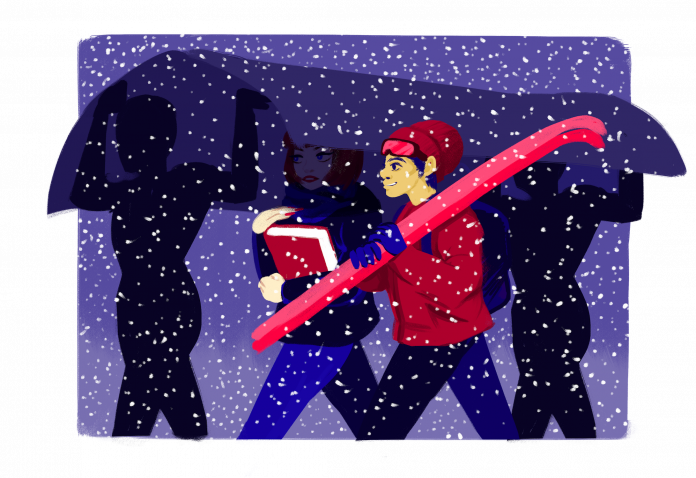
What to do when it’s raining cats and dogs It seems impossible to stay dry when it is pouring outside ALL the time. Apparently the clouds have minds of their own since they just randomly choose to excrete their not-so-glorious liquid onto us students whenever and wherever. Maybe they’re actually shedding tears for us miserable university students? While we can appreciate their sympathy, sometimes we aren’t prepared for it. Everyone knows that showing up to school in a simple raincoat and holding an umbrella doesn’t do the trick. SOOO . . . why not use a tarp? Tarps are great! If they work for tents during camping trips, they’ll definitely be an awesome way to prevent yourself from being soaked to the bone by the end of the school day! Simply set up a job description on websites like Indeed or LinkedIn and hire other young people who are in desperate need of work to hold up the tarp for you as you walk to class! Try it!
When there is 12 feet of snow Ah yes, snow! SFU students’ indisputable number one enemy! If TransLink and SFU fail us again and you have to trek down the mountain yourself, here are a few options:
Snowshoes: Forget those heavy ol’ snow boots which mostly collect dust at the back of your mudroom closet! They are clearly no match for the insane SFU weather disasters, and the weight of them will just slow you down! Snowshoes are the way to go!
Skis: Hey, it’s faster than walking, isn’t it? Bring your skis! If the next 145 bus isn’t showing up for the next two hours, what have you got to lose? Plus, skiing is great if you want to make your way down the mountain in a fun and efficient manner.
Flare guns: With what we’ve experienced this past winter, owning a flare gun doesn’t seem like such a bad idea! Since they’re normally used as distress signals, you can use it to send out a not-so-subtle cry for help. It’s also super helpful if your phone dies. Go get one as soon as you can before you forget!
When it’s -50 degrees Celsius The climate is brutal, no doubt. Even on dry days, (God knows we rarely get any of those) it’s still bloody freezing. Have you ever wanted to know how to truly stay warm? Wait for it . . . here’s the answer . . . bubble wrap! Work with me here — if you wrap yourself in at least five layers of bubble wrap before heading to school, you’ll be protected. Make the measurements, tape the ends, and place the wrap over your regular winter attire — around your arms, legs, neck, and head! You’ll feel as snug as a bug! With all of this gear, you will no longer be at mercy of the elements (or SFU)!